WATCH THIS To Turn Your Pain Into PASSION | Anton Gunn
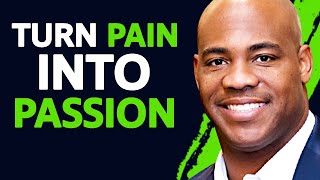
A recorded interview (Oct 12, 2021) where Anton Gunn describes the 2000 USS Cole terrorist attack that killed his younger brother and how that injustice drove him into public service and leadership coaching. He emphasizes service-first leadership, accountability, and practical steps leaders can take to 'make it right' when harm or unfairness occurs—framed around three core employee questions and a four-step culture-repair course (antongunn.com/freecourse).
Chapters
And so if you tell me that I'm doing something wrong, I'm more apt to listen to you because I know you're doing it from a place of wanting to help me, not wanting to hurt me.
I want to jump right in because obviously all the, all the things that you've done in your life, everything from being a presidential advisor to. I mean, all of it has come out of one profoundly painful moment that has now been turned into a mission. Would you mind talking to us a little about that? Because I know today's a special day.
Yeah. So at the time that we're recording this, it's October 12, 2021. And.
You'Re right about pain, birthing, everything that I've done. So 21 years ago on a Thursday morning, I got up at 8:30am and I was on my way. I was in graduate school, I was on my way to class, and like every morning I turned on the television to watch to Today show. And I remember Katie Couric saying that there was an explosion aboard a United States ship in the Middle East. And I thought to myself, there's no possible way that was my brother's ship. So my brother Sharon, my younger brother, joined the United States Navy in January 2000, and he was a sailor aboard the USS Cole. And when Katy Curry said that, I was like, no, it could not be him. And I would later learn that afternoon that my Brother Sharon was one of 17 U.S. sailors killed in the terrorist attack aboard the USS Coles. Two al Qaeda suicide bombers who lined a small skiff with 1,000 pounds of C4 explosive and pretended to be a trash ship and pulled alongside the Cole and blew themselves up, blowing a 40 by 40 foot hole in the side of the ship, killing 17 and injuring 39. And that day was the most devastating day of my adult life. Any point in my life at that point. Because my brother Stephen, we were really close. I was five years older than him. I was. I was his big brother. I mean, like, you know, if anybody got siblings, you know what I'm about to say, you know, the first time, you know, you're a leader is when your parents tell you to look out for your little brother, your little sister, you. You got to make sure they don't get in trouble, make sure they don't get hurt, make sure they get their homework done, clean up after them. And that was the responsibility I took. And Sharon was like my first leadership project. And so it did me such great honor and pride. And as his big brother, when he joined the United States Navy, to follow in our father's footsteps. And, you know, my grandfather and great grandfather, all of them served in the military. So when Sharon did it, you know, it was a lot of pride. But to know that after 10 months of service, he was killed in a terrorist attack. During peacetime, you know, I like to tell people this happened before 9 11. So before most of you had any idea who Osama bin Laden was or what devastation he would bring to the shores of the United States of America. I knew that pain almost a full year before 9 11. And so the only difference between 911 and the USS Cole was one year, one month and one day. We were 10, 12, 2000, and everybody else was 9 11, 2001. And so I was devastated. And the thing that I'll close with and, you know, just. Just about this main point is that.
None of us can control what happens to us. I mean, there's. There was nothing that I could do about my brother being on a ship on the other side of the planet being killed by two suicide bombers.
Yeah.
But I didn't understand why, because, you know, we were at peace, bro. When I say peace time, there was no war. This is no. There was no Desert Storm or anything. It was peacetime. The only bad thing about the year 2000 was Puff Daddy put out the worst album I've ever heard in my entire life. But that's my, you know, my hip hop humor in there. But other than that, it was. Life was good. Like, you know, my grandfather was in World War II. My great grandfather was in World War I. My dad was in Desert Storm, in Vietnam. My uncle was in Desert Storm, Vietnam. My other uncle was in Korea. They all were in combat and came home. But during peacetime, my brother dies, and so it just left me with this feeling like, this is not supposed to happen. Who allowed this to happen? Like, I could see if he was in combat, it could happen, but we were at peace. And I wanted to blame somebody because somebody did something or didn't do something and allowed this to happen. And so I got on this quest to, like, ask the leaders, the Secretary of the Navy, the captain of his ship, like, anybody who's in charge. How did you allow our ship to be so vulnerable, to be attacked by two Al Qaeda? So you got a $250 billion Navy destroyer.
Yeah.
And he gets blown up by two dudes in a small boat. So it left me empty, man. It was just empty and angry. And, you know, I just. I needed to do something. I wanted to do something about it. But I didn't know what.
Yeah, you know, I. Fortunately for you and I, you and I have become friends over the last little bit and able to spend some time with you and actually hear this huge part of the story over dinner. And, you know, I'm always trying to tell people, you know, our good friend Rory, he says it differently. I have my way of saying it, but it's the same truth. You know, the greatest purpose in life is serving the person. Used to be. Is my way. And he has his. His way of saying it. And he and I can fat. He and I can fight all day long about who said it first.
Right.
Yeah. But, you know, I've always told people that there. There are two other ultimate purposes in life. One is serving the person you once lost, and one is serving the person you now love.
Right. Yeah.
And it's interesting to me because this, this calling, this journey that ultimately became the flagship of your career, that's led you to where you're at today, really started in that moment. And what I want to do, as painful as the experience was, I'd like to go ahead and just elaborate just a little further.
Sure.
About basically the tension that was created to create change in the first place because you didn't get the response that I felt like you and your family, from my perspective now, I'm critical, Deserved.
Correct.
And as a result, I'd like for you to articulate that because one of the things I want the audience hopefully to hear is that even when things don't go your way or go your direction, it can be used for something beautiful. Would you mind elaborate just a little further?
Yeah. So, great, great. Thank you. And I'm, you know, I'm definitely happy to elaborate. So the main point is there was this deep sense of injustice and unfairness around what happened on the Cold and what do I mean, deep sense of injustice. Number one, a US Navy ship was attacked by a foreign entity.
In the United States of America. Never responded. Now, when I mean never responded, we got attacked on 911 and we unleashed all holy hell on Afghanistan and everybody else. And people who didn't even have anything to do with 9 11, we unleashed holy hell.
Yeah.
But after October 12, 2000.
There was no military response. Not at all.
None.
On top of that, when we began to peel back the onion to understand what happened on that day, what my family would learn is that every Navy ship undertakes 60 security measures when they enter into a foreign port. There's 60 things you got to do to. To protect the ship. All of the Sailors and to keep yourself at a strong defense position. 60 different security measures. Yeah, well, on that day, 31 of those measures were not even taken. The captain didn't take those measures. He didn't get advised to take those measures. He kind of was half cocked, if you will, you know, use that term all the time. And so it left me feeling like you didn't do your job, that your job was to protect that ship, to protect us against enemies foreign and domestic. And you dropped the ball. You didn't do your job. And then I would learn that there were other people who didn't do their job, who didn't communicate information to the captain that he needed to protect the ship. So I started to move up the chain of command and see all of these people who failed in their leadership, and none of them were willing to acknowledge the mistakes that they made, the things that they did wrong that left the cold vulnerable. And I couldn't even get them to admit the truth and much less say, I'm sorry. And they surely didn't take any action to respond. And because of that, it just kind of burned in me because I was like, listen, you're in a leadership position for a reason. Your job as a leader is to serve first and to lead second.
Yep.
And a big part of service is that when things go wrong, you hold yourself accountable. You own the accountability for when things go wrong. So if you screwed up, say you screwed up. If you made a mistake, say you made a mistake, but you don't deflect, you don't defend, you don't distract away from what was done and try to blame somebody else. Yeah. And then most importantly, you gotta be authentic with the people who have been hurt by what you've done. Yeah. And Stephen, it literally took nearly eight years before anybody at a senior level would admit that they screwed up and that they were sorry for what happened and wanted to do something to make it right. And so for me, what it kind of drove me into is actually, I got into a life of politics because of it. Because I was like, man, there's no way, shape or form that you deserve to lead if you're not willing to say, I'm sorry. There's no way you deserve to lead if you're not willing to be held accountable for the mistakes that you make or for the things that go wrong. And there's no way you should be in a leadership role if you're not willing to serve the people that you lead first. Yeah. And so it kind of drove me into politics. I Ended up deciding that I wanted to see leadership like I believe should exist. And I can't make anybody be a great leader. I don't have that power and resource and money. But always learned that, as Gandhi was quoted as saying. And I never really have found that Gandhi actually said this, but the quote attributed to him is, be the change that you want to see in the world. And so for me, I wanted to see more leaders who live the following values. The value of service, the value of empowerment, the value of building a legacy that matters long after you. And most importantly, the value of justice. And I phrase justice is just make it right. The world is unfair. Things happen, things go wrong. It's never going to be fair. And losing my brother was not at all fair. But just because the world is unfair doesn't mean you can't do something to try to make it right or make it more right. Every day we get a new opportunity to try to make it right and make it better for people. And that's what I ended up chasing a career in politics and looking for other leaders in public service who would do those kinds of things.
Yeah, I mean, and led you to the. Basically the cream of the prop. I mean, you've served. Served our nation yourself. You then were an advisor to President Obama for a while. And then now I'll speak from personal experience. Right. So I had the pleasure for the audience of letting you guys know that Anton came to a conference here and did a conference with myself. And it was. I intentionally pulled my team into the seats because I do I. Even now, it's hard for me to like, fight the various levels of injustice that we put upon ourselves as an economy and as a world. And, you know, and it was just to hear someone articulate. And the number one thing that I think everybody was talking and they've been saying it around the building since your talk, man. They said, hey, guys, I don't care what happens, just make it right.
Yes.
Just make it right.
Yes.
You know, how did you find that? You know, that obviously you take the injustice from that happened to your family. And again, I want to honor your brother today on this day especially, and honor your family. I send everybody love.
But I also want to take the time to say that, you know, that injustice was the catalyst to something amazing. And now you're a champion for injustice in a variety of different forms.
Yeah.
So I shared with you off air, actually, I shared with you after you shared something nice about me and you saw me interacting with my team. I was like, well, thank You. But I'm really not a great leader. I really did this bad.
So as someone who is not always led with authenticity, as someone who is cast blame but took credit, as someone who has not necessarily been the leader that my people needed.
How have you been able to take that mentality of injustice and then mold it into a workplace environment in such a way that allows, honestly, organizations like mine to thrive when so many, so many organizations are held back by their leader because their leader's blinded? Because I've been that guy. Yeah, I've been that guy. How have you been able to do that?
Yeah. So you know, this, that's a, that's a great segue because, you know, I try to. So I'll first say this injustice exists everywhere, so doesn't have to be in a terrorist attack. I mean, you know, you think about the daily things that we all do and go through. We all experience some level of injustice. So I'll give you one quick example. Say you and your wife decide to go out to dinner to your favorite restaurant in town. You have a 7pm reservation and you show up at 6:45 and you tell them you have a 7pm Reservation. And they say, sure, we'll be with you shortly. And you're waiting for your table. 7:00, comes 7:15, 7:30, 7:45. And it's 7:55. You're still waiting for a table. And then you see a couple walk in at 8 o' clock and they walk to the maitre d and says, we have an 8pm reservation. And the hostess says, right this way. And they take them to their table and sit them down. You've been waiting for an hour. You're going to feel pretty upset that you waited for a table and people came in after you and they got seated before you did. That's an injustice. You know, that feels completely unfair. Right. So you are going to expect that, that manager, someone at that restaurant is going to do something to make up for it, to make it right. You know, you don't know who made it wrong or whether they forgot you over there in the corner or they got the schedule mixed up or they wrote the numbers down wrong or the tables down wrong. You don't know what they did, but you just want them to fix it.
Yeah.
So every day in the workplace, employees experience things that go wrong that feel completely unfair. People get passed over for a promotion or they get reamed out in a meeting for something they didn't do or their team got downsized while another department is Less productive than them, got to continue to keep working. Or maybe they all got doc pay because they didn't finish a job on time. I mean, all kinds of things can feel completely unfair. And there are leaders who perpetuate that. There are leaders who watch it go on and don't do anything about it. And then there are leaders who really know it's wrong and screwed up, but they sit on their hands and they don't take any kind of action. And so we've all been there. But here's what I've stumbled upon, that if you're an employee at any level, in any organization, here's what you want from your leader. This is what everybody wants every day when they get up out of bed. And it's the answer to three questions. And these are the same three questions that every person can answer or get asked and they want an answer for. Matter of fact, if you think about it, they're tattooed on your forehead, but you can't see the tattoo, but they're there. Here are the three questions. Question number one is, do you care about me? Question number two is will you help me? And question number three is can I trust you? And so the point is, if you want to rid the unfairness, injustice in your workplace, you got to learn how to answer those three questions every day. Not in your words, but in your actions. What are you going to do to show people that you care about them? And if you show them that you don't care about them, what are you going to do to make that right? Question number two, what are you going to do to help your people? And if you ever stop helping them to be successful, what are you going to do to make that right? And then question number three, what are you doing to show them that you're trustworthy? And if you ever break that trust, which we all know is very fragile, it's hard to build and it's easy to break trust. If you break trust with people, what are you going to do to make that right? And that's what I've boiled this down to, is that I teach people a framework on how to make it right. And I'm going to just go ahead and give your listeners this. I have a free video course that I put together to help leaders in organizations fix their culture. When things go wrong, when they want to make things right and they don't know how and they want to build a world class culture is four simple steps and you can do it and you can go to antongunn.com freecourse antongunn.com freecourse Sign up and you get immediate access to my four part video series that's going to teach you more about those three questions. How to make things right. How to care about the people that you lead, help them to be successful and change your culture on your team and your organization.
Man, I love it.
I love it.
You know, it's. The reality is, is that, you know, when I went through that season, you know, because a couple different things that I used to kind of make it right. All right, so this is, this is after realizing that I'd been a doofus with a title, right? I was just somebody's boss. I wasn't a leader. I wasn't even trying to be right. I went to an event, I get to the event, spend the first day getting my teeth kicked in by really solid leaders that I'd never, I'd never seen before. Like I had never had anybody other than Steve Meyrick, my first mentor, like give me any insight in what great leadership looks, right? And you know, he's like, if, if this is, he was like rattling off all these different terms and then where the audience is like saying, this is what a leader is. Right? Right, right. He goes, if you're not this, it ought to be you. Like, guess what, you're the problem, you're also the solution, right?
Yeah.
And I was like.
Yeah, right.
So I get back from that event, I walk into the, the office we had at the time, at the time we were like 25 or 30 strong. I didn't have hundreds of team members at the time.
Pull everybody in. And for the first time, for the first time I opened my mouth and I cried and I basically apologized for three hours straight. I told them where I came from, I told them what I've been up against.
None of them had any idea that I'd been homeless or a high school dropout. None of that stuff. They had no idea. They just thought I was an ill tempered little guy who is just constantly trying to push the ball forward, right? Meanwhile, I've got people with MBAs and CPAs and ABCs and XYZs and all these different things, quote unquote reporting to me. So anytime they'd have an idea, I would shoot it down. Well, it's not my idea or do what I said kind of thing. And one of the reason I, reason I bring that up as a thing is not only was it trying to a time to make it right, but I think a lot of bad leadership happens by accident. Yes, right. Bad Leaders oftentimes have not been taught by great leaders. There are the rare occasion where you're just a doofus and you need to probably go to a special class. Right. But talk a little bit to me about the. How do you awaken? Maybe if I'm a team member working for a leader right now, right? So my leaders are doofus, he doesn't know he's a doofus, or she doesn't know she's a doofus. What can I do to hopefully open them up so they can learn to be a better leader and then improve my workplace by injustice, if you will?
Yeah, so that is a great question. So the main point I'm gonna start back to where you said at the beginning, is that we learn a lot of bad leadership behaviors from people that we've been around before. I mean, you know, some people, you know, your first job, that first role model you have in the workplace, whatever their behaviors are, usually are the things you end up duplicating into the work world and you think that's the right way to lead. I mean, there's some leaders who love to create tension in the work environment. They pit people against each other because they think that's a competitive edge. If my team is antagonistic towards each other, which is not even completely true at all, right? So they get these bad behaviors. And so if you work for a leader who's operationalizing some bad behaviors, I'm going to take you back to that third question that I talked about, is trust. Is that, can I trust you? So one of the things I know about every leader at every role is that they know that they're in their position and they're dependent upon the people who report up to them, who they depend on to get the job done. And so what I tell people who work for bad leaders is, are you showing yourself to be a trusted team member and ally? Do you have their back? Can you help them to be successful? So what I'm saying here to you is the more you show up and deliver every day, the more that leader begins to trust you and finds more security and commitment to you because you're committed to the work and you're committed to them. It is when you build that relationship that you can start to have honest conversation around what you want to see done differently in the organization. Because let's be real clear is if you come in today and says, you know what, this place is crappy and your leadership is terrible, you know, how is that really going to go over.
With your boss if you Come in. It's not going to inspire the change, let's put it that way.
No, it's not at all. And that's what I talk about in this course is I talk about, like, literally, the more you get to know a leader and what makes them tick, what motivates them, what inspires them, and the more they know that about you, the stronger your relationship. So, Stephen, you kind of gave the transparent pieces that you stood up in front of your team and you cried and you told them your story. You let down your guard, you put away your Superman cape, and you told them what you had been through. You created a connection with your team that is unprecedented. There's so many leaders miss the mark on doing the right way. Like, people want to know who you are. They don't care about your title. They don't care about your corner office. They don't care about what's on your business card or what's in your paycheck. They care about who you are. And so if you can find a way to connect with your leader and let your leader connect with you, you find that you have things in common, things that you can bond over. And it's in that bonding that you build a kind of trusting relationship that you can tell people when their stuff stinks and they don't get offended and fire you for it. But they understand that you have my back. You already showed me that you had my back and that you've been working hard. And so if you tell me that I'm doing something wrong, I'm more apt to listen to you, because I know you're doing it from a place of wanting to help me, not wanting to hurt me.
Yeah, Well, I know some of the other things that I heard that it's blended in there that helped me was specifically having that same input. So having someone who was number one, they were going to be a great leader anyway. Meaning they weren't. They weren't dependent on whether or not I was leading. Well, to follow me, for them to do their. To do their part. In other words, they took, like, personal accountability. And I'm going to do it this way. Right?
Yes.
The second thing that they did is they did. They worked really hard to build a relationship, and it took a little while to get my walls down, because, I mean, the reality is I've been through quite a bit in my lifetime, right. So my walls are thick and they were high. And the third thing that they did on that I think is important is they never dress me down or disrespected me in public. They always pulled me to the side over a lunch, a coffee and said, hey, I don't know if you realize this or not, but what you just said to the team offended a few folks. I'm like, well, what for? Well, because you, because this is what you said. Well, that's not what I meant. I'm like, yeah, but people judge you by your actions, not your intentions. So you know what? You're right. Next meeting comes around, guys. Last week I said Blankety Blank totally screwed the pooch on that one. It was a total accident. Here's I was trying to articulate Blank, and a lot of times I find that that goes a long way. But I think it goes back to your, your piece of make it right. But so much of make it right is personal accountability and relationship, right?
Yeah, for sure. 100% personal accountability, 100% relationship. And you raised something that really, you know, when we get into this whole space of diversity and inclusion, people talk a lot about, you know, diversity in the workplace. And I spent a fair amount of time helping organizations build those diverse, high performing teams and learning how to work together in, you know, cross cultural communication, if you will. And one of the things that you raised is that person pulled you to the side and had a conversation with you one on one. I call that calling in and not calling out. So we see a lot of this today that people love to get called out on social media or in Twitter or other places. I'm going to call you out because you said something offensive. You said something racist or sexist or bigoted or homophobic or you pick the definition of it. People love to call people out for what they've done. But you know what that does? That puts people in defense mode. It gets there fists up and they're ready to fight it out because you're attacking their entire person and their entire existence. And no matter who we are, we don't want our existence to be attacked. I mean, we're human beings as well. We have life experience. But if you call somebody in, which is, hey, let's get a cup of coffee, you mind answering this direct message or can I have a one on one conversation with you about something that I've observed that gives me great concern? Then you have that conversation one on one and you tell them how you feel and what they did and how it impacted you, and then say you may want to consider changing the approach or taking that back or even apologizing for it. It goes over a whole lot better when you Call people in rather than calling them out. And that's a skill that a lot of people don't have nowadays. And that's the reason why we see organizations falling apart from the inside out is because they have this culture of attacking people. And so whether it's over email or whether it's over the group chat or in the Slack channel, people will feel free to express themselves. And that's social media kind of giving people what I call this thumb thug mentality is that people love to thumb thug on social media. But we gotta get back to the place of, you know what, Can I have a conversation with you? Can we pick up the phone and, and talk about it? Because once you put it out there online, it's hard to take it back, but it's so much easier to have a contextual conversation over the phone.
One of the things that I discovered as part of that is, you know, when I was in my worst leadership style, I was constantly making statements, constantly telling, constantly talking at. Right. And then I had this interesting epiphany as part of my transformation from, you know, kind of my poor leadership to where I'm at today. And that is the consistent need to ask questions.
Yes.
Right. And can you help me understand. Have you considered. Let's explore that together. What if we took some time and tried to discover some different alternatives? The power of a sincere. I'm sorry, yes. Like those types of things I think go very underutilized. And, you know, you brought up the. The world environment for diversity and inclusion and talking and communication. I mean, at the end of the day, do you feel like one of the reasons that such a hard conversation in today's environment is because people aren't asking questions, they're just telling people how it quotes should be from their perspective, not having any background on how person A, B or C got to where they're at?
Yes, that's exactly the problem. And I'll give you a personal anecdote that a lot of people don't know. So before I went to go work for President Obama, I actually was an elected official myself. I was a member of the South Carolina House of Representatives. I got elected in November of 2008. And the district that I got elected in had never elected an African American in its history at all. And I was the first Democrat in 25 years. So the district was heavily Republican. It was, you know, Republicans were everywhere and it was majority white. So I was a minority in my own district. And so for some people, I was an anomaly. How can an African American Democrat get elected to a majority white and Republican district. And it was because I learned how to ask questions and I learned how to talk to people and find out what's important to them. And more importantly, Steven, those three questions that I told you about, do you care about me? Will you help me, and can I trust you? My goal every day was to show people that I cared about them. And the only way you can show somebody that you care is to make sure you understand them. And you have to ask questions to understand somebody. I wanted to know how you were raised, where you went to school, what's your favorite movie, your favorite comic, if you like comics, your favorite book, your favorite TV show, what's your favorite food? I ask people questions like, what's the best gift that you've ever been given? And then I shut up and I let people answer and tell me, what's the best gift they've ever been given? And so I do this kind of inventory intake on almost every person that I meet. And I do that for a reason. Because the more I understand where you come from, what makes you tick, what you like and what you don't like, I can lean into those things that you like to build a stronger bond and be careful not to do or say those things that are offensive to you and that you don't like. And nobody wants to be offensive or to be offended. So my whole point is, why don't we find ways to build on the things that we have in common or that we like, that we agree upon and understand that we're always going to have something that's different that we never will agree on. I mean, you might like Coke. I love Pepsi. You know, you might like the Atlanta Braves. I like the New York Mets. You know, it doesn't matter what our differences are, we will always find that we have more in common as human beings than we have. That makes us different. And we don't spend time focusing on what we have in common. We spend so much time today focusing on what makes us different. And then we take that approach and say, you know what, if I'm different than you on this, then I possibly should never like you or agree with you on anything. And some of my best friends that I've spent the most time with that I talk to on social media, that we, we, you know, ask each other question, deeper questions are people who are very different than I am, very, very.
Different, and they feel safe. Right?
Because.
Because I think. I think the truth, one of the things. So one of the things that I'VE picked up.
Not just watching you engage with an audience, but engage with my team, engage with me. One on one is there's an intentionality behind wanting to build true relationship. And it's not rapport, a sell or it's not manipulation to get you to do what I want you to do. It's genuine, like I want to get to know you. Yes. We may have some things that maybe we don't agree on, which is fine. And one of the things that I also discovered is when we really get down to that core nitty gritty when we're having conversations about all kinds of things in life, many times it's not really differences as much as it is preferences.
Yes.
And because there's no understanding, there's no connection, there's no way to really disclose. Oh, that's really a preference. And you know, I've been, you know, I've had really hardcore solid beliefs before only to find out that I was basing all of my beliefs on things that weren't true. Like me being, you know, spending five years as an atheist and then going down the rabbit trail to find my faith was a big deal for me. Right. So, you know, that's, it's, it's again, it's, how do we help people? And this goes back to the injustice side. How do we help people look past and go past the answers that they want and onto the truth?
Yeah, yeah. A big part of that.
It involves, you know, self discovery. A lot of times, I mean, it's hard to know somebody else when you really don't know yourself, you know, and some of us have to go on this self discovery journey of knowing, learning who we are, but more importantly, that we should always be in continued pursuit of greater understanding about ourselves and about the world that we're in. I read a lot, Steven, and I'm reading a 50 Cent's new book right now. Yeah, it's called Hustle Harder Hustle Smarter. Now a lot of people won't find inspiration at 50 Cent, but I will tell you, this is one of the best books that I've read recently. And there's a part of the book where he talks about you have to evolve or die.
Yeah.
And his whole point is that you either growing or you're dying. And I think the main point around understanding difference is your growth in understanding the people in the world in which we live. I mean, just imagine if you got so set in your preferences, your beliefs or your biases that you refuse to talk to certain people because at first Glance, they don't look like they fit into the mold. But that person ended up being the one person who helped you to transform the world for a positive good. But because you were so stuck in your ways and your biases and your preferences that you never gave them the time of day. I mean, it's almost like the person who you may not want to sell your product or service to because they don't look like they can afford it or they don't look like that, they would buy from me. I mean, when I was campaigning, Steven, it was every fiber of my body that sometimes they would say, you know what? I'm not going to knock on any doors in this neighborhood because I see Confederate flags flying on cars. I see Clemson flags flying on cars. I play football.
And.
You drive pickup trucks, and I drive a foreign made vehicle. So I could just drive in a neighborhood and say, you know what? Nobody in here is going to talk to a Democrat former football player who's a progressive, who believes that the south lost the war and they're traitors and we should treat them as such. Nobody's going to talk to me. I could have said that and walked away from that neighborhood, but I didn't. Yeah, and I knocked on those doors. People opened the door and they looked at me crazy. I didn't run. I didn't walk away. I didn't believe anything about them. I asked a question. I said, do you know who your representative is? If you don't, I want to introduce myself because I'm running and I want to ask you a few questions about what's important to you in the upcoming election. So when they, I asked them what was important to them, they started to give me answers of things that were important to them. And guess what? I found that over 80% of what they say was important to them was also important to me. Yeah, I was concerned about traffic, I was concerned about roads. I was concerned about growth in our community and our real estate prices going out of the wazoo. I was concerned about the same things. And then when I asked them about why they fly the Confederate flag, I had one or two people tell me that their family served on the other side of the war and that everybody in their family served in the military. Well, guess what? Everybody in my family served in the military. So then when we started talking about the lessons that we learned from family members who served, and yeah, that Confederate flag was something that we weren't ever going to agree on, but we all understood that our role right now was to be patriots for America and serve in the country that we're in right now and to do our part to make it better. So these epiphanies would have never happened if I had just assumed that nobody in this neighborhood is ever going to give me a time of day. And then I realized that in every aspect of business, in every aspect of life, we get confronted with these moments every day. And it's the greatest leaders around that realize that they have to grow or they aren't going to die. They're dying emotionally, mentally, you know, all aspects of it. You got to grow. And growth is. Is really connecting with people who are different than you.
Well, and I think, you know, it's. It's one of the greatest levels of your success will be to work yourself out of a role.
Right. Because if. If you're not. If you're not. And for guys, if you guys have not seen Anton speak at a conference, you need to check Anton out big time, first of all. Second of all, this injustice thing is real. Um, we can't act like it's not correct. But I do think that you've given us a tool for communication.
Yeah.
Because again, I think it comes down to understanding the differences or preferences. Because the one thing that even with the folks that were flying a flag that maybe you didn't appreciate that you guys had in common is you both lost people that you loved in a battle. Right. Right. And right, wrong or indifferent, everybody was doing it because they believed in. In America as a whole. So all of those types of things, I think, blend together. And. Which is why I think your work is so important, which is why I'm so happy you took up the mantle. I'm horribly sorry that you had to lose your brother as part of it, But I would dare say that he would be incredibly honored to see what his big brother's doing with it. You know what I'm saying?
So, yeah, I'll close with this. You're right. We all have our own journey, and we all have our path. And to be honest with you, had my brother not made the ultimate sacrifice and given his life, you and I probably wouldn't be having this conversation. You probably wouldn't know me. I probably wouldn't know you. I'd probably just be living and working and trying to be a good husband and a father. But it's in the tragedy when I wanted to give up on everything and just go back home and take care of my other two little brothers, that.
The Lord spoke to me and said, you can't give up.
You got to go in. And so for me, that meant to serve more. And so what I did in my darkest moment of my most pain, when I was in my most greatest need, I made a decision to serve other people and I started volunteering in communities, I started volunteering in organizations, got involved in charitable work, health care work, trying to help people to be better. And that whole commitment to service is what led me down a path to public service and then ultimately down a path of helping President Obama serve the nation. And now I serve every day, helping leaders and organizations build these high performing teams that are diverse, that have a world class culture with leaders that are admired by everyone because they know how to answer those three questions. But most importantly, they know how to make it right.
I love it, man. I love it. Well, I love you as a brother. Anytime you want to come on the show, you're more than more than welcome. Where can everybody else find out more about your homes?
Yeah, you can Definitely go to antongunn.com I encourage everybody to sign up for that free course. Yes, antongunn.com freecourse you can find me on all social channels, Twitter, Facebook, Instagram. But LinkedIn is really where I want to connect with folks because I can help you a lot more there on that platform. So just go to antongunn.com freecourse and that'll get you into my orbit and I'd be happy to help you going forward.
Awesome. Thanks a lot, brother. See you soon.
Thank you, man. Take care.
If you love that interview, go ahead and check out this next one right here.
When you're forced to level up, your habits start to change, your identity starts to change, your mindset starts to change. And that's what those core things are, the fundamentals that allow you to be able to level up and continue to add to your net worth and get to the next level in life.
More from Stephen



He Had Everything…Then A Heart Attack Changed It All | Dan Sachkowsky #Shorts




Paralyzed. Suicidal. Then He Surrendered, And EVERYTHING Shifted | Marcus Aurelius Anderson


Why You Snap At People You Love, The ALIGN Method, & Why ADHD Isn't A Disorder | Sara Hartley

