What Books Do I Recommend? | Life-Mastery Q&A
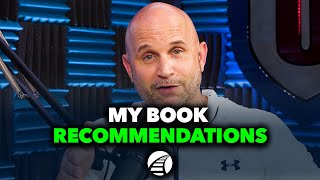
Stephen Scoggins answers subscriber Joel Cohen's questions about his morning routine, book recommendations like Atomic Habits and Built to Serve, and his top five success habits: dream big, focus, stay connected to loved ones, rest one day a week, and never give up.
Chapters
Welcome back to Q and A, guys. I can't tell you how excited I am. Here's why. We actually had one of our subscribers, Joel Cohen, shout out to you in Wisconsin, buddy. Who didn't just send us one question. Who didn't just send us two questions. Who didn't send us three questions. Who didn't send us four questions? No, he sent six questions. Six question. Dude, above and beyond. Shout out to you, knuckle bump. You're awesome. You rock. So this show is dedicated to you. This particular Q and A session is all about you, homie. I appreciate you. We also have your gift bag heading out just shortly as well. All right, so what was Joel's first question? Joel's first question was, what is your morning routine? Routines are very, very important when it comes to breakthrough or when it comes to actually becoming what we refer to as unstoppable, which is making consistent progress. Now, I've been in the similar routine now for probably about three years in that that I've tweaked it, I've refined it, I've tweaked it and I've refined it. So historically, here's. Here's a quick overview of what my daily routine looks like. I wake up somewhere between 5:30 and 6, depending on meetings that I have for the day. And before I even get out of bed, I spend time in prayer, meditation, giving thanks, having a moment of gratitude, asking about having a great day, asking about making sure I can connect with great people. Kind of like setting the tone for the entire day. All right, the next thing I do is I quickly grab, get up, throw on my gym clothes, which typically is a. As a Under Armour shirt with a rock on it, some kind of rock slogan, and some, you know, some tennis shoes and whatnot. Throw my air. My AirPods in, and I head off to the gym. Now, as soon as I get in my car, I throw my AirPods back in the console, and then I can very quickly turn on either YouTube or a podcast episode of something that I think is going to feed my mind, my body, or my soul. Now, I choose to rotate those about every three days. So every three days I'm listening to a specific type of content. So typically on Mondays, it's all about personal development. On Tuesdays, it's all about relationships. And on Wednesdays, it's all about just motivation, right? How do I take my life to the next level? Things I listen to music, tracks. Sometimes I'll listen to a collaboration, if you will. My good friend Evan Carmichael's got Obviously his top 10 rules, they kind of merge it all together and then I typically rotate through that. Okay. As and that's on the way to the gym. Now once I get to the gym, I'll typically stop the podcast or the YouTube content and then I'll actually go into the next phase, which is typically an audiobook. Yes. One of the reasons why I'm not able to read quite as many books like with my own two hands anymore is because of my time restraints. I actually bucket my day in 15 minute increments for the most part. Alright, that being said, I'm going to throw in an audiobook. I may listen to that audiobook twice before I actually set it down and pick up the next one. All right. And then I got to get a workout in. And of course my workouts are consistent. So I do chest and tries. One day I'll do back and buys. One day I do my abs and my legs, another day I do cardio 20 minutes a day, every day to make sure that I have the high level of energy and to make sure I'm always engaging in that kind of thing. Once I finish up at the gym, hop in the shower at the gym and get my stuff changed over, get into whatever, you know, comfortable clothes it is. Fortunately where I am in my life I can pretty much dress how I want to dress. So on days I'm meeting clients and customers, I may dress up with a button up or a blazer or something like that. Or in most days I'm wearing something like this, a T shirt. I'm definitely a T shirt and jeans kind of guy. Love that atmosphere. That's more of who I am. Right. I'm more of a successful blue collar kind of personality type, which is kind of weird. Right? Then I start getting into some of my meetings. Typically I try to do all my meetings that require the most of my brain power, my brain focus, almost all the time are done in the morning. Why I've learned that for me personally, I'm sharper in the morning. The things that are going to take up the most of my mental prowess, if you will, are done in the morning. I'll then typically order in a lunch because I typically don't have time to go out for lunch very much or I have brought something from home. One of the two. Okay, that gets me to about one o'. Clock. Alright. Now some days and sometimes I'll do the intermittent fasting thing. I don't do it as much as I used to because I'm at what I refer to as a healthy weight for myself. So I don't need to do that quite as much. However, I don't eat a lot of sugar, I definitely don't eat a lot of carbs, and I definitely try to stay away from fried foods. Okay. Not that my diet really matters, but you asked me about my daily routine. This is my daily routine. All right? Around 2 o', clock, I will typically pop some more Omega 3s in my body. So I'll grab a handful of the Omega 3s for obviously healthy brain power. And then I will typically go into what I recall, reflection zone. So I'll spend about 30 to 45 minutes reflecting on things that I want to do, things that I need to do. Kind of like an idea kind of timeframe. I'll have a lot of jotted notes, like I do right now, where I'll just jot some things down and kind of walk through that. And then I'll typically finish off the day with a few other meetings and engaging with clients or customers, maybe even team member concerns. Okay. One of the things that I do a little bit differently than a lot of entrepreneurs is I have an open door policy at my company where I spend a lot of time talking to my team about everything from their life to their performance to all kinds of things. Why? Because I want to be engaged in what matters to them. Because if I can understand what matters to them and I understand what matters to the business, I'm able to bridge the gap between the two entities and do something what I like to refer to as goal alignment. Goal alignment is nothing more than when you can take a company's vision and a personal vision and merge the two together. So I want to be able to say this is how the company can help you achieve that goal. Okay. And as a result, they feel appreciated and they work better. Okay. As people. And they know I'm their friend to a degree. Like, that doesn't mean I don't discipline and stuff like that if need be. So that's a quick rundown. Now that doesn't take into account film days. All right. I will typically have about five film days a month where I'll come in and we will film content. Now, my film days, most of those are all the same time and all on the same day. Okay, so we have a content calendar that we have that a lot of, like Joel's done here, where he's taken the time to send us a bunch of questions. I reflect on these questions. I think about, okay, what are the. What is the honest response how did this actually help me go from stuck to unstoppable? How will this help the audience? Things of that nature and those. Those things get now dropped into an editorial calendar, and then those days are filmed. So that's a very long explanation about my personal routine, but it's an honest one. Right? And then I head home and spend some time with my beautiful wife and my kids and try to connect with them. With my phone largely shut off, I am guilty about using too much social media. I'm still working on that. Why? Because I'm typically commenting to you. If you comment my Instagram, I'm typically responding. The reason you know I'm responding is because I misspell stuff. That's how you know. Okay. All right, so that's the end of Joel's first question. Joel. Hope that helped. All right, question number two from Joel Cohen. Joel, here's question number two, buddy. You asked me, what books are you reading right now? Okay, the books that I'm reading right now. The first one I just finished, which. This book is amazing. It's by far one of the best books that I've read in probably 10 years, I kid you not. My good friend Evan obviously took the time to autograph, and I have a few more. Only a few more copies left for people that ask questions. So, Joel, you'll be getting one, which is great, but Built to Serve. One of the reasons I like Built to Serve so much is because Built to Serve is all about taking the best of you and applying it to a passionate pursuit that impacts the most people in the lives. Okay. He's all about helping you uncover what your who is, what your what is, and what your why is. The reason those things are important is because far too many of us are spending so much time sleepwalking through life. And when you're sleepwalking through life, you end up feeling empty, alone, and frustrated. Right. However, if you can identify the things that Evan refers to as the who, the why, and the what all at the same time, and you get super clear on that, then it becomes much easier for you to actually walk out a fulfilling purpose. All right, so that's the one I just finished. All right. I just picked back up Atomic habits. Right. I've never been a fan of big. Been a big fan of the word habit. However, I do like routines. Routines reinforce what's important. All right, so that's the one I'm on right now, and I hope that helps.
All right, question number three. For Joel, the next question came to what books have changed Your life. All right, outside of the Bible. Yes, I'm a person of faith. You don't have to share my faith. But specifically in the Bible, the book of Proverbs, which is all about wisdom, which we all need more of and then the book of John. All right, in the Bible, those are by far my two favorites. I love those books of the Bible. At the same time, my non Bible book that I would choose that changed my life is actually a book by Rabbi Daniel Lapin and it's called Thou Shalt Prosper. As it turns out, there are actual principles to follow for success. But who to thunk it right? Thou Shalt Prosper is obviously a little bit of a lengthy book, but it is a book that I think everybody must read. And one of the reasons they must read it because again, it backs up making sure the best of you is being applied to the right areas of life. Specifically. Specifically, this book is going to be talking about how doing work that matters is important and uncovering what you can do in the work that matters to you can. Can also matter to others. Question number four from my buddy Joel. All right, Joel, you asked me what are some of your. One of my favorite. Some of my favorite books as a whole. I've got them in two categories here on the desk. I've got business and then I've got some personal quick rundown hung by the tongue. Love this as a business book. Talks all about how your words have weight and whether or not you're saying the right thing. And guess what? It's a super thin book. Okay, that's one. Next one is qbq. The question behind the question. That's all about answering questions that are driving the questions to begin with. So not what color is the car, but it's like why was the. Why was the paint of that car such a thing? Right. It digs into deeper questions that actually drive surface level questions. It allows you get clarity quicker. Okay, next one. Good to Great. Love Good to great. Jim Collins is a rock star when it comes to business books. Tallest old. Always talking about how to elevate and go from good to great is important. My next one is a playbook for business. If you're an entrepreneur, you're trying to figure things out, you need to get into the business. Dave Ramsey Entre Leadership. This is a Go to must read. This is a playbook. There are leadership techniques, there's marketing techniques, there's infrastructure techniques, culture techniques. Got to have this book. All right, now, excuse me, I didn't mean to hit the microphone. That hard. Personal books. I love mindset. Love mindset. Craig Groeschel, Fighter. I'm a warrior. I can't help myself. I love books about fighting, fighting the inner battles, fighting the spiritual battles, fighting the resilient battles. Okay. Shameless plug for my first book, Journey Principles. Right. This is about my life and how I overcame homelessness and got to the place I'm at today, which I think has done really, really well with people as far as helping them uncover what matters to them and why it's important. So Shameless plug there. I love this book. I wrote it on a treadmill. Took me a little while and then we did really well with it, so. All right. Timothy Keller, Every good endeavor. Start. John Acuff.
Financial book. Must read. Financial peace if you want financial security, stability, Financial peace. Okay. I've already done Built to Serve Must read. It's officially hit my must read list. And to back that up was Evan's last book, which is your one word.
You can sum your entire life up to one word. My one word is unstoppable. I will not quit till you get to where you're going. Hope that helps. Alright, question number five for Joel. What are your top five habits for success? You know, I actually get this question quite a bit, and if I'm being honest, on any given day, I may tweak them in order from time to time. But the first thing that I think is important for anyone who's trying to have any level of success is the ability to imagine and dream big. What does that look like for me? Well, one of the ways it looks like for me is a virtual vision board. That's what I use. I have pictures on my desktops, in my computer, I have pictures in my iPhone. I have things that I'm looking at on a regular basis to actually help keep things going. If we were actually on my computer right now, you would see that my desktop screen says help them become unstoppable and transform a million lives. I like to keep my big vision, my big dream out in front of me where I see it all the time. Okay. So when I feel like quitting and I feel like giving up and I don't feel like taking another step, I can actually see that. Alright. So I think success principle number one is going to come down to dreaming big and believing it's possible. Which sets the tone for the next one. Okay. The next one is focus and eliminate distraction. Focus and eliminate distraction. One of the biggest things that I learned about 10 years ago was that most of my success and failures were predicated on whether or not I. I had eliminated distractions and how much I was consistently focusing. Okay, for those of you guys who listen to the podcast on a regular basis, Journey Principles with Steven Scoggins. Right. You'll see Connor on the show a lot. Right. Connor's a guest host a lot of times with the show. Conor would tell you that my work ethic appears to be unstoppable and diligent. I have a high level of diligence that was a learned behavior and not an innate behavior. Okay, well, how do you take.
A learned behavior and turn it into an innate behavior? Practice. Lots and lots of practice. Practice always makes improvement. Every time, bar none. All the time. Okay, so that's number two. Number three is stay connected. Being a hard driver like myself, someone who likes to get things done, who likes to build strong things, who likes to be kind of energetic and passionate and driven and all this kind of stuff. One of the things that has typically been one of my bigger blind spots is staying connected to the people that I love most. Okay? So I have to intentionally make that a success principle, because if I don't do that, then I'm going to live an unbalanced life. A lot of entrepreneurs. A lot of entrepreneurs have a high level divorce rate. Why? Because they're married to their initiative of their business and not the person they married. That's not what I want. I am married to a beautifully gifted and wonderful and beautiful woman myself. Karen, my wife, she's amazing. I don't want her to feel second class, okay? I want her to feel like she's part of what I'm doing. So it's important to stay connected to the people that you love most. Mine is my wife and my kids. They get my free time. Okay? Period. All right, number four, this is going to surprise some of you guys. But. But get rest.
Get rest. Six days on, one day off. Minimum. Minimum. And one day off means you're not opening the computer to be creative. You're only kind of enjoying the reflection time, enjoying the replenishment. Going on a jog, going on a nature trail, going to the gym, right? Going for a swim, doing something that's going to just allow your brain and your mind to not have to overthink and all that stuff like that. It's just a matter of relaxing. Okay, number five. And this is vital if you are going to become successful in any area of your life, in any area of your life. Number five is one of the most important things you have to remember.
Never Ever, ever give up.
Never give up. Never.
If you give up, a lot of times 90% time is just before the breakthrough occurs. You've been digging and digging and digging and digging. You guys have seen that picture, right? On, on Facebook or Instagram where some guy's digging, there's a pot of gold or some diamonds off to the side of the wall. He's like, this far.
That graphic is about as true to life as it can possibly get. Right? If you sacrifice now, you need to sacrifice until the reward becomes a reality. General. And it could be in relationships, finance, business, any of that. Okay? So never ever, ever give up. If you believe in it, you keep going after it. Alright? And those are my five principles for success. Hope you liked them.
Alright, Joel, here's another one that you asked for and I found this one kind of interesting. I have never been asked this before by the community at all. And that's how much time do you spend a week a self reflection? How much time? So how much time a week do you spend in self reflection? I would say it this way. I don't know that I go a day without self reflection. And the reason I don't, I try not to go a day without self reflection is because I want to make sure that the actions that I'm taking match the intentions that I'm passionate about. Okay? Everybody can have a bad day. Everybody can have blind spots and struggles, kind of nip up and bite them in the butt. All right, Just being honest. I mean, let's keep it real. However, not everybody's going to slow down to reflect on the day that they had where they could have improved, what they could have strengthened or simply what to be grateful for. All right, so typically, like I mentioned in one of the other questions you asked, I like to have a prayer meditation moment. Okay. That is a, that is a place of reflection. There's also this moment just before bed when my mind's calmed down. I've spent time with the family, dinner's digesting all that kind of stuff. I kind of go into relaxed mode just about the 30 minutes before I'm heading off to like kind of enter into sleep mode. I'm doing the same thing. What did I like about today? What could have I improved about today? Now a lot of times I'll use my personally, I'll use my iPhone. Okay. And I'll actually use like a digital journal, okay. To journal my thoughts. I also like to do that because I like to be able to go back and look at what I journaled. You Know, because I have a tendency to see the prayers and things that I've asked for and things connections I was hoping for. Did they get connected? Did they actually happen? In almost every case within a short amount of time they do come to fruition, which is really good to see when you're trying to be a person of faith is like seeing what actually happened. Alright, So I think reflection should actually be done daily. Myself personally, alright, that's my personal opinion. At minimum, you're going to do it weekly, at minimum. And that would be something you would do on your day of rest. So I hope that helps. Always be asking yourself, hey, how can I improve? What can I be grateful for? And then what can I amplify those three questions daily, part of my cycle. Hope that helps.
Alright, last question for Joel and I took the liberty of ad libbing one of yours, so bear with me here. All right, last question came from Joel. Was this. What is your process for consistent improvements? What is your process for consistent improvement? All right, my methodology is this. Identify, okay? I want to identify what I can amplify and what I need to replace. So I identify, I then clarify, all right, I want to hone that thing down to get as much perspective as possible about that thing of focus for me. Okay? So if it's my finances, let's say I'm entering into a new real estate deal or I'm buying some new real estate property, okay? I want to understand that piece of property at its deepest level, you know, how long has it been basically constructed? Is it a new construction, is it something that's. What's the annual revenue, what's the annual or monthly rental income coming in, what's the monthly expense going out in property management, things of that nature. Okay? I want to get as much information as I can. So identify, clarify. The next thing I do, I do a little bit differently. And I'm not sure that everybody does this. Maybe they do and they're not aware of it. I also like to think of ways to innovate, innovate. So I identify, I clarify and I innovate. I innovate in such a way because I want to find a unique perspective and a unique way of taking action to get me a unique result. Alright? Now if I use the entire real estate piece as an example, one of the things that you're going to find when you start investing in real estate is that there are certain types of groups of people that do better with certain rental properties than others, right? There are certain areas, people that can actually afford A certain level of rental income versus other people that may not be in a position where they can afford quite as much. Well, I want to have a diversified portfolio and one of the ways I innovate is I invest my real estate things in single family houses, commercial buildings and then also possibly apartment buildings. That's a way of innovation. A lot of people who invest in real estate typically innovate or only focus on one of those three areas. I like to have a little bit of all three of those. That's a way in which I might innovate that area. Okay. I also try to. The next step is I try to apply, right? I want to apply an action that's going to give me as close to a predictable result as possible. Alright? So in this case, I might buy a specific piece of property that may have a specific set of circumstances. That is, it might be government funded, meaning the rental income is subsidized by the government because maybe It's a Section 8 property, it's a low income property, right? Well, those people, right, people that are struggling financially at that level are who I used to be. So I have a heart of wanting to help folks like that. However, I also want to make sure that I'm putting my resources to work where the return comes back. Alright? So the action I might take is I might diversify my portfolio a little bit and own 50% of government funded rental income. Does that make sense? It's a little bit more of an in the weeds kind of thing, but I'm trying to give you a real life example of how I actually use these things. Okay? The next thing I do is I reinforce with a routine, okay? What I mean by that is using the real estate example all over again. I want to have a systemized routine about making sure that I'm making wise decisions, taking great actions on a regular basis to give me the predictable result. Okay? I try to live my life nowadays without thinking in terms of reacting. I want to respond, okay? The difference between reacting is it happens in the moment where a response is something you think about, you gain perspective on, you look for roadblocks on. You organize a plan and then you work the plan to get the result you want, okay? What we refer to as grow. All right? So that's my process again. I identify, I clarify, I innovate, I apply, right? Some strategy, some techniques, some tip. And then I set in course a routine to reinforce the essentially results I want. So, Joel, dude, love you man. Thank you so much for sending us so many questions. I hope you enjoyed this, especially this this episode dedicated to you, man. I really appreciate it and love the fact that you're following. Keep talking to us, homie, and we'll keep taking good care of you. All right. I hope you enjoyed the question and answer session for today. If you want your question answered on a future episode or here or on Instagram, go ahead and email me at questionsrourneyprinciples.com and and I'll be happy to take the time to answer it the best way possible so you can begin to win in your life. Thanks again for watching.
More from Stephen







Paralyzed. Suicidal. Then He Surrendered, And EVERYTHING Shifted | Marcus Aurelius Anderson


Why You Snap At People You Love, The ALIGN Method, & Why ADHD Isn't A Disorder | Sara Hartley

