What Does It Mean To Have Faith? | Life-Mastery Q&A
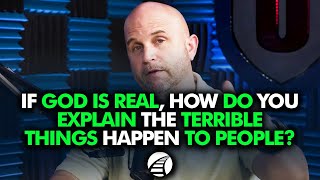
Stephen Scoggins answers audience questions about faith, healing, and surrender. He shares his move from atheism to belief, encourages people to borrow faith until their own grows, and frames healing as small steps forward while letting go of what you can't control.
Chapters
Hey guys, welcome back to the Journey Principles Q and A. I'm your host, Stephen Scoggins. I am here to hopefully answer some of your questions. We've got questions from the audience and we're going to walk through a couple things. So, wow. The first one's a doozy. And the question is. I've noticed you say borrow my faith. Currently I'm standing on the side of agnosticism, atheism, due to some things in my past. If God is real, how can you explain the terrible things that happen to people? Tell me about a doozy just to kind of get us kick started. I don't know that I can answer the question in three minutes, to be honest. But I'm going to give you the highlights and then I want you to go over to YouTube where I'll give you the full timeframe on basically answering this particular question. Because it's an important one. It's one that I personally had to face. So when I was growing up, I had some difficult circumstances of my own. I went through a difficult season of life from my childhood to my young adulthood and then even into my early adulthood. That caused me to doubt a lot of different things. In fact, I spent five years as a professing atheist studying things, everything from the Big Bang theory to physics to, you name it. I was trying to. Trying to validate that God was not real. And one of the reasons I wanted to validate that God was not real was because of the simple amount of pain that I'd been going through. I couldn't for the life of me understand that the pain that I was going through was actually well ordained by God or God would allow me to do something like that. If a God exists, and I think you're coming from the same place, let me say it this way. Here's one of the things I've discovered. A lot of times humanity will actually point the finger at God rather than point the finger at itself. And here's what I mean by that. I've discovered that the greatest pains, hurts and problems in the world are not God created, but they're man created. And they're man created out of areas of greed, out of areas of basically taking, trying to be more righteous or be stand out more than someone else. And I began to use the term borrow my faith. In other words, for people who are like I was in that. I didn't know what faith was. I didn't know what kind of role it could play, and I didn't know how powerful that role could be. If I let it loose in my own life, I just simply didn't know what I didn't know to say. To say it bluntly. And someone who I'm hoping to develop a friendship with, someone who I greatly admire, his name is Sean Bowles, began talking. I stumbled on a YouTube video where he began to say, borrow my faith. For people who don't believe necessarily what I believe, maybe they're a different season of life and sometimes you can borrow someone else's faith in order to increase your own. Okay, so the first thing I would say is realize that the things that have happened to you in your past may not be God ordained or God problems at all. There were probably problems and traumas and things that happened because someone else was in a broken state. And as my good friend Chris Licordo would say, hurt people, hurt people. Well, if hurt people, hurt people, then that's what keeps a repetitive bondage of other people hurting other people. Okay, What I had to decide to do and what I'm going to invite you to consider doing is to heal your. Like go through the healing process. Right? We're using faith. Okay. I leaned into God. I discovered more of my identity, I discovered more about my potential, I discovered more about my strength. And. And then I also discovered the very things that others would consider to use to kind of take me out of the picture, keep me held, bound or not, help me move forward. Those very same things specifically became the very same things that have led me to creating the organizations that I have today. Journey Principles As a whole, the Journey Principles Institute is centered around helping people overcome the same problems that I once faced. Right. Which is low self worth, lack of identity, not knowing a clear direction, not knowing who I am, why I'm here, or what I'm supposed to do about it. All of these different things, this entire organization is built out of that pain. Now, I would have not discovered that without my faith. So, yes, I invite you to borrow my faith and learn more about yourself in such a way that can prepare you for a brighter future that you probably can't even understand. Because if you'd have told me 20 years ago that, that I would be sitting here talking, talking to you today, I never would have known what to do, how to do it, or that it was even possible. It was my faith that led me there. So I invite you to consider borrowing my faith, going on a journey of self discovery and taking it to the next level. Hope that helps.
All right, so question number two is also centered around faith and discovery. And question Number two that came from the audience is I really am interested in understanding what it means to have faith in God. So many people have broken my trust in life. How do I consolidate that? Well, here's the thing again. I've come from a season of life where I had a lot of betrayal in my life, a lot of different things. Some of the things I'll admit here on air, and some of the things I won't because they have to relate to my family. And I don't want to shame or harm them any more than the suffering they've already been through. But what I can tell you is that thing that you think is meant to harm you in many respects will actually create the fullest potential in you. What I mean by that is everything that I used during my greatest moments of struggle became things that I use now in my greatest moments of strength. I've extrapolated everything that I could learn from those moments, all the relationships, all the lessons, all the parts, all the pieces, all the self awareness to make myself better. And as a result of making myself better, I'm now better aligned to make better choices. Now, I don't always have all the answers, but experience has taught me that I can trust my little wins. And when I trust my little wins, I'm able to actually take my life to another level because I'm building confidence over time. So even if you can't see the. As Martin Luther King says, if you can't see the whole staircase and you can only see one step, take that step. Because eventually you'll look back at the top of the stairs backwards and you'll be surprised at how far you've come.
So question number three comes from an audience member. Again, it looks like we got a couple of faith questions this time. Question number three. How can God love me when I've been down some pretty dark roads? Is it too late for me? The answer to that question is no. It's never too late. It's never too late to turn around. In fact, when you look at the actual meaning of the word repentance, which Christians use a lot, that word simply translates to return. It's to return back towards the Creator himself. I can tell you that I have done a lot of stupid stuff. It's a miracle that I have not been incarcerated or unfortunately or been drug addict or anything of that nature. It's a miracle. That's a flat out miracle. So you should never judge yourself based on where you've been. You should instead learn from those mistakes, learn from those things. Even take a time with a pen and a pad to kind of walk through it and say, hey, what can I learn from this? What can I learn from this? What can I learn from this? Well, how could I have done that decision differently to get a different result, to go through processes like that, to then actually extrapolate the information you need to help you move forward? The longer you take looking backwards, the more difficult it's going to be for you to move forwards. And if you want to move forward, you got to have a little faith. So I invite you to continue looking towards faith. I can promise you that God is not mad at you. God does not hate you. In fact, God is actually saying, I'm waiting to see the best out of you. Please come my direction. Now, if you don't share my faith, that's okay as well. I still think it's a great idea for you to keep moving forward. Don't focus so much on your past that it prevents you from looking at your future. And if you do that, I think you'll begin to win pretty much every day and build your confidence over time. But I am a big fan of faith.
All right, so here's a question that didn't come from the audience, but this is one that I consistently was asking myself on a regular basis, and that is, how do I actually surrender? I think far too often we talk about on the podcast and in some of the other videos that we do in whiteboard lessons and stuff like that on YouTube about surrender and about the importance of surrender. One of the questions I've gotten, and one of the ones that I had to become, I guess, connected with myself, is, how do I surrender? Surrendering is not basically saying a complete absence of control. It's saying that you are going to focus on the areas that you can control, and then you're going to have faith to let everything else happen and fall into place. Surrender means that you're going to give a greater effort into what could be rather than what has always been, because you have to surrender your level of control of a lot of different things, of the things that you've been trying to control. In fact, the people that I find that struggle with surrender the most, like I used to do, are people who are trying to control every aspect of life. They're trying to control how people respond to them, how they respond to people. They're trying to control how their career is going. And I don't mean not giving your best. I mean trying to control what your supervisor is going to think in his own head before he actually talks to you. All these different areas are elements of control, and I've learned a long time ago from a couple different influencers and people that have mentored me in my life that you have to hold life with an open hand. In other words, I go out every day with an open hand and I say I'm going to give my best today, and if I give my best today and I don't clench my fist to try to control the outcome, something wonderful and beautiful is going to happen. And I've been doing that for about five years now, consistently. And I can tell you that as I do this, more and more, more and more open doors are starting to show up. So surrender is all about giving your day your best and then making sure you give enough flexibility in your day for Divine to show up and help you do the rest.
Hey guys, I hope you enjoyed this week's Life Mastery Q and A Video. We're doing a new Q and A video every single Monday, and if you have questions you'd like answered, simply leave a comment with your question below this video or email us@questionsourneyprinciples.com and if we use your question, we'll send you a free gift just to say thank you.
More from Stephen







Paralyzed. Suicidal. Then He Surrendered, And EVERYTHING Shifted | Marcus Aurelius Anderson


Why You Snap At People You Love, The ALIGN Method, & Why ADHD Isn't A Disorder | Sara Hartley

