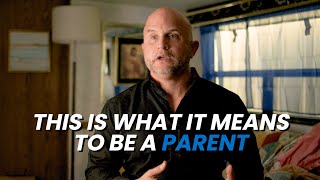
A first-person monologue by Stephen Scoggins on parenting philosophies: acceptance, intentional connection, and mentorship. The speaker contrasts love with enablement, emphasizes quality time over material provision, and urges parents to ask questions, respect boundaries, and help children see their potential to avoid harmful external connections.
Chapters
When it comes to parenting, you know, one of the things I'm reminded of is the person that actually turned me into the person I wanted to be was someone who accepted me for who I was in that moment. They weren't trying to change me to something that I was not. Instead, they were trying to elevate what was already there.
Love is not enablement, right? It's not accepting everything that they're doing as being okay. But love is basically saying, I accept you for where you are today.
It's really hard to father someone when you weren't necessarily fathered that well yourself, right? You're going off of experience or going off of what you've seen. I believe that every child and every parent should actually work together to uncover what the greatest relationship is for them. You know, I learned a long time ago that it wasn't about the money or the things that I could do with my kids. It was about the amount of time that I spent with the quality of that time. And in today's environment, today's times, kids more than anything else, are struggling with an identity crisis of being connected. So inevitably, what happens is if they can't connect with us as parents, they're going to seek that connection elsewhere. Because we were created to connect with one another and build relationships. And then it's a luck of the dice, right? Are the connections valuable and uplifting, or are the connections damaging and hurtful? At the end of the day, I don't want to leave that to chance. I want to let my children know that I love them, that I want to help them. I want to see them win.
It comes down to the intention. Are you actually respecting boundaries? Are you respecting the person's behaviors? Are you respecting their elements of who they think they are? Or are you trying to change someone without that selfless intent? That child or that parent is not going to bridge connection, which means they're not going to be listening. They're not going to be taking the time to take the mentorship you could be giving. Instead, if it comes from a selfless intent, people pick up on the fact that you were trying to help them become better. And when I think about my own story, even this story right now, I mean, the core thing is the father loves his child. He loves him more than anything else in this world, and he's trying to reach him, but he has no relationship. You see, I learned a long time ago that statements close hearts, but questions open them. So rather than talking at my children, I'm constantly asking questions about their dreams. About their ambitions, about their frustrations, about their struggles. Because in that I get to know them, I also open their ears to mentorship and levels of inspiration that they can't find any anywhere else other than relationship with me as their father. You've got to allow your children to see themselves at a higher level. You cannot let them see it solely based on where they're at and whatever school system they're in or whatever college they're in, whatever relationship they're in. You constantly have to be reminding them of who they could be. In fact, my first mentor told me a long time ago, he said, you have to be willing to do today what others won't so you can have tomorrow what others don't. You do it so you can actually attract more so you can learn to give to someone else.
My mentors and the people that poured into me gave me a second chance because they saw created value in me. They saw blessing in me. They saw abundance in me. And they kept speaking that over me and calling that out of me over and over and over again until one day I actually believed it for myself.