What You Need To Know About Podcasting in 2025
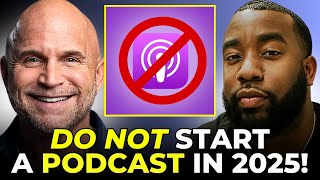
Sean Anthony and Stephen Scoggins discuss whether to host or guest on podcasts based on your goals. Sean's "30-show" model uses the "7-11-4" heuristic: 7 hours of content, 11 touchpoints, 4 locations. He built a Clubhouse community to 42,000 members and shares how to turn podcast appearances into business results through free resources and list-building.
Chapters
How do you know if you should start a podcast?
If you asked me in 2018, I would say everyone needs a podcast. Everyone needs a platform. Everyone needs to be on the show. Everyone needs to talk. They don't. Everyone needs, though, to have something that they're doing in their life that they're proud of, that they want to share with others, and they need to sit in the chair to be the expert. They need to be highlighted. They need to be uplifted. They need to be seen so that they can be heard for more people.
Guys, hope you welcome the one and only Sean Anthony Duke. What's going on, man?
Listen, man, I'm excited to be here with you because, you know, I've. I've definitely have been someone who has heard of your name, has seen your book on shelves, and so it's an honor to be here, man.
Dude, I appreciate that. Yeah. We're writing a new one now called the Entrepreneurship Edge. Hopefully to have it out mid next year, which we pretty stoked. Got to work on the Entrepreneur from the Heart, the head and the hands. You know, there's all these books about strategies and tactics. Not a whole lot about how to help with isolation and pride and arrogance and patience and all that stuff. So we're excited about that. But I'm excited to have you, man, wipe the media company, man. So how'd you get started, like, really leaning into, you know, helping. Helping, you know, thought leaders, like, actually get on, you know, shows that are good because, you know, the podcast world, there's like, a thousand bazillion shows. Most of them don't last past the, like, fourth episode, you know. So how do you, like. I mean, how'd you get started in it? And then kind of. Let's walk through the framework a little bit.
Yeah, man. Well, I got started in it because I'm a podcaster myself, you know, in 2018, I started a show while being a corporate brand manager of company that everyone shops at Target. And before that, I was brand manager of Macy's, and I started a show called Schools Over Now. What, man? And I just started interviewing everybody and fell in love with it. I started interviewing Ed Mylett, Seth Godin, Grant Pardone, Amy Porterville, you name it, right? A lot. A lot of the people you probably know or hang around, a lot of.
The things you just mentioned are good friends. Yeah.
Oh, that was awesome, man. I was at Ed House in Laguna, man. And that completely changed my life. But what I found out when I was podcasting is that I turned podcasting to A six figure side hustle. And everyone started asking me, hey, can you teach me it? Can you teach me it? And then I started brand managing the talent. So I started to see these gaps and realizing that the huge ROI was doing what we're doing right now. But being on the opposite side of the chair and being the guest on a really good show and telling your story.
Yeah, well, the crazy part is, is I'm sure you know this, this is no secret to you. I get, I don't know, 20, 30, 40 podcast preps, you know, like things come across my, my desk every day or essentially my email box. And of course we got producers for the show and stuff like that. So they do a lot of the screening and whatnot to make sure we have great guests like the ones you guys have sent across, which have been fantastic, by the way. So thank you. But in doing that, it's like, how do you. All right, so if you're serious about actually podcasting. So from my perspective, podcasting is nothing more than a vehicle to share great knowledge with people who need the knowledge, right? So if you look at it from that perspective, you know, how do you one, select the people that you guys want to work with to then put on shows? And number two, how do you get past the gatekeepers? Because the gatekeeper thing is real. Yeah, man.
The gatekeeper thing is real, man. I think what's important is you have to establish real relationships with podcast hosts, right? You have to, one, you know, be. It's a two way street. You don't want to just sit in anybody. You want to do enough research to understand what are the core principles of the show, what are the values of the show, how does it, you know, align to the actual person you're, you're potentially pitching to? And I think credibility helps, and I think what helps us a lot is a founder story. So, like, we'll take a talent and yes, they might be someone who's done amazing things. They might written a book, they might be someone that has a conference. But by us making the ask, I found out that a lot of people who make, you know, the, the ability to read the email, do their own research, right? They start clicking buttons, they start seeing Poro Max and they fall in love with the founder story. And, and the founder story is so unique. There's so many people who have achieved not a lot of great things. They have companies, but they haven't done the work that they're actually telling you to go do, you know, So I think, you know, having that Upper edge and knowing it's a two way street has definitely been beneficial.
Yeah, man. Well, let me ask you about this just in talent in general. So there's, in this world, right? So when you, when you get above, call it eight figures, nine figures in top line revenue as a business owner, you start getting a lot of attention from, you know, just outside places, right? And you know, that's a blessing, right? You work, you bust your. You buster hump. I busted my butt for over 25 years, but you know, several companies, one of which was super successful, that I exited last year, which is great and all, but at the same time, it's like it took me three years, four years, five years before people even had any clue what, who my name was, why I had the street cred, why I was worthy of being on, you know, different shows and different things like that. How do you break? How do you take someone that's maybe has done the major work right? They, they've done the thing right. They have the street cred, they got the knowledge, they got the wisdom, they got the T shirt with everything on it. Like they, they've done everything. But the marketplace doesn't know who they are. But yet you see a tremendous amount of potential based on what they've done. How do you begin to work with them, to position them in such a strong way to make them a viable option in the thought leadership world?
Man, I love that question. No one's ever asked me that. One of the things we think about is we have everyone do this podcast intake form. What I found out is a lot of people think they're good at pitching, or I think they're good at pitching themselves, but they really don't have the idea of understanding what that core message. And so what we do is we'll take all the articles or we'll take all the things they've. They've done in life, all the lifetime achievements, whatever that resume may be. And then what we do is we find a way to interestly tell that story in a uniquely different way. And what happens when someone has built the, the credibility. And I use Sunira, for example, you know, Sunera, you know, is a client of ours who sold a company for a billion dollars. Obviously a lot of people want to be like, well, what is this about? Right?
God bless you.
But then, but she's also working on her second unicorn. You know this, she's one of 20 women to have done that. That is extremely rare. So it's telling that story. See how he did that? Telling that story in a unique way that positions her, whether it's to be on a financial show, a business show, or even a thought leadership show like Jay Shetty, what she just did, you know, I think you really have to understand on how to take what you've done and spin it. And the worst thing I found out is that talent is the absolute worst at representing themselves. Like to get on a blowhorn and scream, sean Anthony, Sean Anthony. That ain't gonna cut it. What really does is someone else telling your story and being that barrier to bridge the gap. And I think that's what makes what we do so unique, is that we're able to understand what they've done, what they've accomplished. Even if they've been on shows, we know what shows not to even pitch them to, but be able to maybe pull those highlights. For example, if you wanted to do a relationship show right now, and I'm like, oh, okay, I haven't heard you talk about relationships, but you might have said something on a podcast that we can take as a clip that is social media proof to position you and mention that to that host of that show that you want to be on. So that's. Those are some, some strategies that we apply now.
I love that. And I was also thinking too, you know, early days. So I actually haven't. I personally haven't done a lot about outreach to get me on other shows.
I haven't.
I haven't even asked Ed to be on a show or nothing like that. Right. I just haven't done it. Right. I've been so busy building businesses. I've been so busy, busy, obviously doing my own show, trying to create own valuable content, trying to put great content on social, trying to, like, just, you know, really let the market know who we are and how we can serve them.
Right.
You know, so when I look at that, I also go back three years, four years when I was getting on a handful of shows here or there. And early days, I don't know that I was all that great at communicating what I was actually gifted at communicating. Right. It's almost like the lens that you're using. So I'll say this, you know, we have this new term that we're coining internally that'll be in the new book called it the Integrated Entrepreneur.
Right.
There's lots of terms and integration as far as, like, in relationship sectors, like, you may be grounded and emotionally intelligent and all these types of things. And I got, where I got to think it was like, dude, every single entrepreneur needs to be that way in their business. Right. And however, I look back four years ago at some early shows that I've done, and I realized that I was saying similar things, but it wasn't in a focused, clarified way that the audience could really, like, really grab a hold and say, I understand that concept. I love that concept. I want to apply that concept. I want to grow from that concept, like, to then make myself more valuable. And I'm just being honest with you and the audience in making sure that I show up the best as a thought leader when getting on these shows. So I'm a big believer there's a bit of a ramp up, right. You almost have to start with some lower shows to get some reps under your belt, right. To really kind of like really hone your message and stuff like that before you really start really striving to be on the larger shows. And I'm curious to know, do you think that's a great strategy? Just because that seems to be my journey?
Yeah, you know. You know, I think the first thing you want to do is you obviously want to get your reps in. I do think that there's an opportunity, once you start getting your reps in, to really swing and really swing for something big, especially if you have the background and credibility, have done something. There's this thing that I think a lot of entrepreneurs should think about, especially, you know, entrepreneurs that are in thought leadership or position themselves or talking on podcasts. And I'm not sure you probably have heard of it. Have you heard of the 7, 11, 4 method?
I haven't, no.
So, so what happens is that it's seven hours of content. Like, you need seven hours of content for a consumer to really understand your brand and really start to like it. You need 11 different, in terms of this, you need 11 different touch points and how you're able to interact with this specific person. And then you need four locations, right? You need to be seen in four locations. Those four locations could be Instagram, Facebook, Twitter, could be you speaking on stage, right? Those 11 touch points could be someone sharing your content, someone commenting on your content. Those seven hours of content, though, could be seven hours of you on podcasts, seven hours of you speaking on podcasts, or seven hours of someone interviewing you or your own show. It allows for people to understand you and get you. And I think people that are on podcasts, so many people on shows, and they're wondering, what's my roi? What's my roi? Your first ROI is really building, you know, the trust and credibility and Getting to know a completely different audience. Right. And so, like, right now, as we're talking 7, 11, or 4, someone right now is probably watching this or listening to this, clicking on the show notes, now binging seven hours of my content. Yeah, right. And then they follow, go through 11 touch points to four different locations before they're saying, hey, listen, Sean, I want to be a part of this. I want to know, how can I do a podcast tour? Right. Which is something that we specialize in. And I think that your approach of swinging at the smaller shows before the big shows, that's a smooth strategy. But don't sleep on those small shows. They have very niche audiences who are actionable and ready to buy. Sometimes these broad, mainstream shows, they take a little bit longer. You got to run ads on that.
Absolutely.
Yeah. No, I love that. I was also thinking, too, that.
From the early days in general, I think podcasters come at shows, from my perspective, in three different ways. One way is they come at the show, as in, what am I going to get from the audience? Which is, I don't think is all but healthy. One might be, how am I going to serve the audience and give them the best, you know, content I can possibly give them? How am I going to ask questions, you know, that really never been heard before? That's they're really truly curious and inquisitive and stuff like that, which I tend to lean that direction. And the third way is how to actually show up for the guest. So one of the things that I strive to do for my guests is I try to make sure I show up for the guest because they're taking the time out of their day and their energy to come on the show to share their valuable insight and wisdom that they've earned their street cred in. Right. And it seems like to me that that's the best way to really kind of go at the marketplace. It's like you go at it from a place of serving the guest as well as serving the audience, you know, so how do I ask questions that the audience is going to get the biggest benefit from while also showcasing the guest thought leadership, knowledge, personal development, space, all of that. Do you find that that method works really well? Do you guys have different spins on that? I'm just curious to hear your feedback.
Yeah, I mean, that method works really well whenever. Whenever you're starting a conversation, and the conversation is strictly in serve mode, and it's strictly led by curiosity. It's only allowing your audience to sit in the room with us and ask questions. That they probably would never be able to ask, Right. One, they would have to get the credibility that you've gotten to even interview the people you've interviewed. Right. So, you know, and it becomes a banking house of just knowledge. And I think what's so important is the action takers who listen to the knowledge, who then go out and apply the information. So I think you're, you're, you're spot on in that strategy there because everything else doesn't just, it doesn't feel right, it doesn't sound right, it doesn't, it doesn't flow right. It just doesn't feel genuine. So I would 100% agree.
Well, I was also thinking too that, you know, when you take the time as a thought leader to go on a show, right. If you go out there, if you got it with step one, which is serve the audience, how can I deliver the very best content to the audience? Okay, great, awesome. Well, the next step is how do I get the audience to stay engaged with me? So you mentioned binge watching content, which is obviously one primary method they're going to go and do that if they enjoy the conversation, all that good stuff. The second one is how do you get them to, what do you recommend to your, your folks about then getting them to some kind of resource that's free, that's, you know, that's, that's valuable content to the audience and then help them build their list, help them build their business, etc. Because I find that it's one thing to go out and create the content, put the content on social, get all the likes and the engagement, the comments and all that stuff. But then what, like you say one dumb thing and you've lost the real estate, you know, and I kind of look at the, the attention grab, right? It's so hard to get attention, right? You go from attention, then it's so hard to get engagement, like true engagement where they're actually wanting to get more of your information and are willing to, you know, download a free resource or something like that. So how do you take, how do you take, I guess, what's the strategy that you guys try to deploy in helping your thought leaders, you know, not just get on shows, but also build businesses?
Yeah, absolutely. I think you, you want to have the structure in place. You know, anyone that does like a podcast tour with us and we're placing them on shows because, you know, we manage, sound like actually just manage them, you know. So in terms, in terms of the podcast tour perspective, we always ask very, very good questions and Some of those questions detailing what is your purpose in wanting to do this right? So, you know, if your is your purpose wanting to, you know, grow your. Grow your following, is your purpose wanting to, you know, gain new audiences, gain new leads, or perhaps, you know, your focus might be you really want to get sales because you got a conference coming up and you want people to come out. Yeah, I think it's important to always offer something that people can grab that's tangible to build your list, you know, and for me, you know, when I started podcasting, go back to the founder story of this whole thing and how to really make it go crazy. You know, I found out that the podcast started kit so many people wanting to know how to do what we're doing now, how to set up what apps, what to use, was a huge hit that allowed for me to start gaining a huge community. And then also too, what are you doing to build community outside of you being on the shows, that now the shows become just another asset of the 711 4, you know, and whether that is, you know, online communities, you know, one of the online communities that really gave me a huge boost back in the Clubhouse days in 2020, you know, I had my own club called Podcast Secrets Revealed that grew over to 42,000 members, and I was on the clubhouse stage with Lewis Howes, Pat Flynn, Amy Porterfield. So the credibility was only rising. Right. So I think, you know, whether, you know, you have to figure out what that community is for you, whether it's school or have you. You got to have some things in motion while you're on these shows so that you're actively giving the audience other ways to get involved and hear more from you.
Dude, I love that. Love that. I'm going to go ahead and hit a subject that I know, I know you're passionate about, and that is whether or not people should do a podcast to begin with. Okay. I've obviously heard your insights. You can obviously share, share your heart again. But I am curious on the question after that is how do you know if you should start a podcast? Like be a podcaster versus just be a guest on a podcast show?
Yeah, I think 100%, if you asked me in 2018, I would say everyone needs a podcast, Everyone needs a platform, everyone needs to be on a show, everyone needs to talk. They don't, you know, everyone needs, though, to have something that they're doing in their life that they're proud of, that they want to share with others, and they need to sit in the chair to be the Expert. They need to be highlighted, they need to be uplifted, they need to be seen so that they can be heard from more people. You know, I'm a firm believer in that. I think, you know, it comes down to knowing, okay, should I start a podcast or once I start a podcast, you should ask yourself a couple clarifying questions. Are you willing to do the reps? You know, you brought up something earlier. Very few people get past three episodes.
Yeah.
Are you willing to put in the time, you know, the cheat code to get around now? Yeah. Oh, congrats, man. The cheat code to get around the time for a lot of people, if you notice, especially.
Entertainment type, type of clientele or just, you know, entrepreneurs in general is doing seasons. They know they can't go week for week, but they know they can buckle down. They can. They can carve out two or three days a month to have at least nine episodes banked in and call it a season. Right. So you have to figure out what can you truly do. But if you play the season game, you know, as good as me, the audience is going to find somebody else. Yeah, they always do. They have to. You have to beat out one out of six of people's favorite podcasts. People typically have six. You got to be one of their favorite six.
Yeah. All right, let's talk about the favorite six. How do you go favorite six? How do you get there? I mean, you. You guys are what, top 0.15 or.05%? Like, you don't get much higher than that.
You know, you're paying attention to listen notes. I like that. You know, I like that. Well, that's longevity there. You know that. That's a lot of longevity and consistency. Consistency there. You know, that audience knows every single Friday is happening. I've trained them to literally listen to me more than watch me, you know, so there's. There's three types of podcasters that I don't think people pay attention to. Here's the three types. There's the podcaster who's extremely good on audio. You can hear their voice, and it's like putting God between dogs. Yeah, like, you hear me, like, man, is that Morgan Freeman like. But you, You. You. You automatically just resonate with them. You don't want to even see them. You just want to listen to them so you can gain their wisdom. Then there's another podcaster who's really good at YouTube. Entertaining, man. They're a television show, really, you know, and at the end of the day, people like looking at them. You be Attractive to some people. There's some element in what they're doing in their life. Right. Or it might be a show that requires a high visual element. And then what I found out, Even with the YouTube type of podcaster, is that they sometimes don't have the strongest audio listenership. They didn't start off in audio. They didn't. Audio wasn't their core, you know, that wasn't their core audience. They came from a social media following. And then there's a unicorn. There's the audience. There's a person who's good at both. I mean, that they have a really good YouTube and they have a really good audio. They have figured out mass appeal, you know, and wherever you fall in that category, I think you have to lean on to what your strength is and keep providing it strongest there. But also you're doing the work anyway. Still make sure you're showing up on other platforms because there might be another, you know, a small audience that continues to grow with you. And for me, being in that 0.5% that you mentioned with Listen Notes, you know, that's an audience that we have been really focused on audio from the very beginning. And sometimes, you know, Stephen, sometimes I look back and I think of some of the episodes I've done. I'm like, man, that would have been crazy to travel to them. But wasn't nobody doing it, you know, and then, no, it was so uncommon, you know. The first person I ever traveled to was two people I traveled. The first person I traveled to was in New York. It was Mems. He had a song called this Is why I'm hot in 2007. And I interviewed him, became a great friend. And then the second person that I traveled to interview was Ed Malette in Laguna Beach. You have to figure out those pocket of when you're. You're willing to do it because it's a huge investment. But for me, at that particular time, I was still working a corporate job. I was literally going to see these guys on vacations, you know. So, you know, I think you have to figure out what it is for you. Lean upon that and, and keep going.
Hey guys, I hope you're enjoying the show. Steven Scoggins here. I've got something that I think is I'm just going to blow your mind. Imagine taking your life and your business to the whole another level. I'm talking about eight figure level and beyond. You see, you've been working your butt off to build your business to where it is now. But what if you could work Smarter, free up more time, make more money and impact along the way. How much would that be worth to you? You see, I can prove that basic steps, basic mindset shifts and subtle changes can make the biggest difference. I want to introduce you to the eight figure mindset makeover. It's absolutely free and it's here for you. It's a powerful summary of my top strategies that help propel me from the streets, if you will, to upwards of nine figures in quote unquote success as we like to chase it. This is more than just tips though. It's a complete mindset overhaul. Simple hacks that you can apply today to begin working on your unprecedented heights in your own business. I would like the honor to share these types of things with you that turn my dreams into reality so you can experience the same type of joy and freedom that I now get to live out in my own day. In other words, it's time for you to build your own unstoppable enterprise. And if you're really ready to take it to the next level and elevate your life and your business, this is an absolute game changer for you. So if you want to take advantage of this free resource, simply go to the show Notes and click the link. Or you can go to stevenscoggins.com backslash8figures. That's Steven scoggins.com backslash 8figure. Until then, much love. God bless. Let's get back to the show. Take care. Well, I know that for us we, when we set out to do this show, it's gone through a couple different title iterations in the last, you know, three or four years. I think it's been three years now, a little less than three years. And in doing that, we started early on knowing we were going to do audio and visual because we realized that people consume content in different ways. And then we have the, the producer, if you will, of the show. They'll go and edit slight, they'll make slight adjustments to the edits for the different audiences. In the grand scheme of things. You know, one of the things that's been the hardest thing for me in this world is it's interesting because on the video side I love doing in person, right? I just do. I mean, there's a different vibe. I mean, this is awesome. But you know, we talk about awesomer is like when you get to do it live, right? You can go from, you know, we take a normal 45 minute virtual podcast that goes for two or three hours, which gives you all kinds of content, you know, and then you kind of pull that together. I guess the difficulty, you know, post Exit is I have to get. I need. I know I need to get back to. Right. Doing some of the more live podcasts because one, I enjoy it better. I think the guests enjoy it better. Plus, we try to make it fun.
Yeah.
When we did live live podcast, when I was still in Raleigh, North Carolina, you know, basically last November, I moved to Utah Post.
Oh, man, I'm in North Carolina. That have been dope.
Oh, well, I still own a live event facility there in Garner, so maybe we'll hook up and do something there. That'd be fun. We actually did Ed Mylet's book launch at my place. We actually did his whole. His whole Max Out Live thing.
Oh, that's crazy. That's crazy.
Yeah. So that's how he and I became friends. But one of the things that I've realized is, you know, there's this element of wanting to get back to life. But we used to do an experience, so I would. I would pay to fly the guest in. I would take them out to dinner the night before, get to know them and just. And nature was a nice place, but, you know, it wasn't Wendy's, you know, you know, McDonald's. It was, you know, typically a nice restaurant. We go have dinner, get to know each other a little bit, come in, do a phenomenal show because you just. There's different insights you get when you're actually building relationship first.
Way different.
Right. Questions are different, takeaways are different, you know, and then at the end of the show, you know, we would typically invite them for an exit, what we would call an exit dinner, which is like, hey, just what do you think about the show? How can we make it better? And at the time I saw, you know, I was operating at live event facility personally on a regular basis, we also let them film, you know, content with Florida, seeing the LED walls and you know, kind of back backstage stuff for, you know, for their own sizzle reels. I say all that to say that.
One of the things that I would like to get back to when I'm hosting guests live is back to the experience model. At the same time, when I. When I choose to invest my own financial resources into and bringing that guest out one, I want them to have a great experience, but also I gotta make sure that that guest has the goods. Right. And one of the things that I'm trying to figure out how to do is how to. How to really validate that that guest has the goods. Which I'm curious to know, how do you guys validate, right? Because I'm assuming you guys don't rep everybody that comes to you. I'm assuming you guys, you can't. So, yeah, so, you know, so how do you, how do you determine as an organization, like who's. Who's got the goods?
Man, I love this question. There's two ways I look at the goods, right? So there's talent that we represent, like full blown on management. So let me, let me start there. So we represent, I'll tell you some of the talent. We represent the Polites who are on A E and Hulu. They have a show called 5050 Flip. They sell estate, $50,000 in. Sell the house in 50 days, sign for four seasons, second season airs November 9th. If you want to check it out, please do Fire show. We also represent Matthew Knowles, Beyonce's dad and Solange's dad. And we put him on many different speaking opportunities as well as podcasts and things like that, you know, and many other people as well. And so in that type of talent and that type of representation, when you're representing someone, you have a percentage of what's really happening. You truly evaluate before you even take them on one. You look and see, okay, do they have. Is a juice worth the squeeze and getting into this, right? Because we're out every single day talking about them, pitching them, and trying to make something happen. And the podcast tour perspective and vetting guests, right? So the podcast tour perspective, we're known for the signature 30 show podcast tour. The way we vet guests. We have a very high referral system. We have a very high referral. Very few chances, like you might see a post of me putting on Instagram telling you, oh, we just did something crazy, or you might see us doing something crazy. But we vetted everybody that we're doing something crazy with. And the referral process to me has been very rewarding. Because now you're working with a talent. Let's say we're working with you. You're 10 shows in. You're just signed for 30 shows, right? About 10 shows. You're having such a good experience. You're telling us about everybody you can think of. We are then evaluating their Instagrams. We're evaluating any shows they've been on, we're evaluating things they may have said. Then we're able to have a conversation on what it would look like for us to represent them. Because very similar to companies like CAA and wme, they can't just take everybody they don't even want to talk to you. Right. So I'll take it.
Come on. Ever.
Yeah. Yeah. So, you know, it's really. Are. They are. They are who they say they are. And, you know, and that's truly just crossing Ts.in the eyes. But what I found out, to your point, this is one of the main things I found out that we put into our system is the value of media training. The value of understanding what to say when you are asked a question. The value of knowing how to take a podcast interview where it becomes not a boring interview, but a good one where you are asked to be back. And, you know, so we've put, you know, in. In, you know, what we do, media training for those that need it. We have many different things that are coming very soon in partnership with some of the people we've worked with so that people have those assets, because we might get you out there, but if you don't how to talk, what's the point, Right? So we. We. We got to evaluate, man. We got to look at what they got going on so that we're as proud to announce them as they are to be working with us.
Yeah, man. Dude, I love that. I was also thinking, too, you know, I've had this happen in business before. I haven't had it happen in the media. In the media side yet, thank God. But.
In the business world, all right, let's say I go and hire a top, top C suite professional or an executive, okay, to run a segment of the business, and they're great people. They're doing great work, but then they do something dumb, right? They just. They have a momentary lapse of a. Integrity or something. Character flaw or character issue at the moment. And that character flaw gets known by the marketplace. Then the marketplace is like, dude, this person's still doing F, Y, and Z for your company. What do you think? Like, kind of. How do you. If there is there ever a time when you may have to fire a client when they're not operating in their, you know, in their.
In their genre correctly, Man, I love that question. You know, one of the things, you know, very similar to you in business. I'm telling you, one of the things I've learned, you know, I learned this, man. It was like. It was. It's like heartbreaking when those things happen.
Yeah.
You know, like, it's literally, like, because.
You spend time and energy with each other.
Right, man, it's like heartbreak, man. It's like. It's like, listen, I mean, I could probably use therapy for some of that type of heartbreak. But what I did when I had that heartbreak is we put systems in place so the heartbreak doesn't happen again without some crazy consequences. Right. So I'll give you an example. You know, when I started brand managing talent, I started brand managing some really well known people. You know, I brand managed Terry Ijeoma. The first year we were together, she did $30 million. I brand managed Richard Rogers who wrote a book called we should all be Millionaires. And this is when I really start understanding the value of what I was doing and the value of podcast placement. At that particular time I had people who were working with me even from a videography standpoint, who would go behind and make themselves sound like they're so amazing, who then get jobs like creative director of companies that I brought them into and it become the most weirdest vibe of all time and they don't end up working there very long because that person who hired them realized that they weren't the secret sauce. And I think what I learned from that situation and what I'm moving towards here is that you have to protect yourself with NDAs, young competes, all of those things before you can even jump into those conversations. And then one of the things that we do a lot of times with the talent that we have is that we put a contract before you do a podcast to it because we already know what's about to happen, you know, we already know. I've seen it so many times where someone starts a podcast interview, but they'll be on stage next week, you know, so there's so many upsides. I think you just have to protect yourself like you would in business in any other category story to be able to assess, okay, how can we help you? And so none of those things happen, right? Because when they do happen, dude, there are heartbreaks, dude.
And just you just reminded me of something too. I remember when we had a similar situation with NDAs, non competes and stuff like that, but we at one time we had them one sided.
So let's say we hired, let's say.
We hired a contractor and they're going to work before us and then serve our clients, right?
Yeah.
And so they're protected against like, you know, know, working for that client directly without getting verbal or getting written approval from us. Okay. Because from time to time it makes sense. It's like, hey, you know what? I actually, I think you should work with them. We don't want to work with them. You know, knock yourself out, enjoy yourself. You're about to you're about to understand some new stuff.
I also realized, and this is late stage of the business, I exited that we began doing it two ways. So it was contract and also client. So client couldn't go and solicit and contractor couldn't go and solicit, or employee couldn't go and solicit.
Right.
That they. We had to maintain that integrity bubble around the organization itself as a whole. You know, man, I love that.
I mean, you should, you know, and this is what I, what you're saying is what you've learned, you know, you had to do. I learned it the exact same way. And I'm like, dude, this is never happening again. And even, even I think I took another route. I'm thinking about now we're talking about this. One of the biggest blessings I ever had, and I would love to show you behind the scenes offline so you could just see and be wowed by it, is that, you know, the blessing I've had is that I spent many years running corporate and being one of the most highest performers of all time. I was promoted six times in four years. When I left Target, any given moment, hundreds of people could pick up the phone and call me and ask me about anything and needed my authority. And I had the privilege, man, of hiring so many amazing teams and having so many great engagement scores. And the coolest thing about entrepreneurship isn't that now I do it for myself. And man, I have a phenomenal team. And the team that I have, before I even hired them, I already knew. And you probably noticed by the email correspondence how fast they are. I already knew, Steve. I already kind of knew that they're going to be put in a position where they could try me. It's almost like I'm not how religious you are. But you know how, you know how that's this guy. Okay, okay. You know how that was a disciple and he knew one of them would betray him? Yeah, like, this is how I feel about business. I'm gonna put you in those positions where it's only human nature. So how do I protect myself? Where you don't go awol, go wanting to go do something crazy. And also too, that even the people that I'm putting you around. Cause there are a lot of seven figure, eight figure entrepreneurs that you aren't going to run off and get hired by them. Right. And so I tell people all the time when I jump on a meeting, especially new ones, whether it's with a VC or whoever may have you, hey, listen, we can have as Much free conversation as possible, because everybody on this call has signed everything that you can imagine, you know.
Putting that in the ethos.
I love that I put it in the ecosystem, because I'm gonna find out very quickly they're gonna love my people. So, you know, so don't get too excited because it can't even happen, you know, so. But again, I have the talent themselves also recognize that. And they're privileged. They love the environment, the flexibility. And I think what solves and stops that from happening is as a leader, you give them the environment that they want and the freedom, but pull back when you need to, you know, and sometimes you gotta be a little stern with it. And it's not always gonna be roses, but end of the day, it's going to be the best interest of you and the best interest of the company.
Dude, I love it. I was also thinking too, just Justin, just on that same subject matter, like a lot of the ones that I had to get involved with or step into situations like that, right. Where a lot of people I had already, in my. In my mind, had already prepared a path for them for a very lucrative future.
And.
And they go and do the Judas thing for 30 pieces of silver, and I was going to give them 90 pieces of silver. You know what I'm saying? Like, yeah. And it's. That's. That's what boggles my mind. Like, a lot of times when I'm sitting down with a new team member and, you know, we. In all the businesses I've done, we've always done some kind of profit share bonus system, whatever. So the more successful the company is, the more you get cut, whatever. And then we also would, you know, tend to create a hierarchy of different levels of, you know, progressing through the organization as a whole. But it boggles my mind how greedy. And I know we're getting off a podcast, but this is a.
This is just a very good combo.
How. How. How tempting greed is.
Yes.
How disruptive it is to not just the business, not just the client, but the person who is about to get a blessing, who stepped on their own blessing.
Yes, yes, yes. I mean, it's like trauma, man. It's like trauma. Listen, the person who did that to me, man, they would probably be the. The second in command if they just stayed down, you know, and they re. And the sad thing about it, though, you. You may have experiences I have. They always come back. Yeah, and they always come back. And it's like, hey, it's a rap, man.
I didn't mean it it's like a. It's like a relationship. A lot of times. This is.
This 100.
It is. I can't tell me, like, I've. In every single circumstance when I've had a very difficult ending to relationships, I'm just using. I'm using personal ones. And I'm talking like. Yeah, since I was a teenager. Right. I mean, a long time. Like, I'm having to, like, it's caused me to do some deep work, you know. But the. The funny thing is, is like in every single circumstance, by the time I finally get to the point where I'm done, I'm actually done. Yeah. I've spent time pursuing. I've spent time talking and chasing and doing all that kind of stuff. And I've spent time, like, trying to, you know, repair and all this. All this kind of stuff. And I get to the point I'm done six months after I get to the point I'm done, I've moved on. All of a sudden there's this epiphany about how. How amazing it was before.
Yeah.
And I've had it happen in business, I've had it happen in personal relationships. I've had it happen in family relationships. So I'm curious, since I know you, I can look at your face and see you've had some of that stuff too. I'm curious what boundaries have you put in place in an effort to like, draw that downward? It's not. I don't think you can eliminate it. But I'm curious what kind of boundaries you put in place.
Man, you just move way more cautiously. Your boundaries are, you know, when this happened to me, I didn't have any NDAs. I had no non compete. I just had a good heart and love and trust for people.
Yeah.
You know, so, you know, so it completely blindsided me and it. But what it made me do it is it made me buckle up, you know, and it made me buckle up. And, you know, things happen for a reason. I would much rather see someone crash out and find them what they think is a pot of gold right now before I get to where I'm going, you know, And I look at that, you know, as. That in itself as a blessing, but you always have to have those boundaries. I think now the newest boundary I have is that I have a phenomenal executive assistant where I'm rarely jumping in. And then when I'm jumping in, it's because I got to, you know, and I think that has really, really saved me. And I think also too, it's Gained a lot of respect from, even from an email standpoint, right. When, when you're not even, this is more like business related, like structure. Like when you aren't the person giving the message, but it's coming in behalf of you and then having to insert yourself after about five emails, the whole tone change. Now I get a perfect example. Man, we recently, I just left Canada last month and man, we had a phenomenal time in Canada. We did some of the biggest television shows Canada has to offer. I'm talking breakfast tv, ctv, E Talk. This is equivalent of the today's show, Good Morning America and the View and Entertainment Tonight. We did it with Matthew Nose and we caused so much commotion in Canada. You know, we're from the United States. I had every PR company you could think of calling me, asking how I pulled it off. Right. So at that point though, right. At that point I didn't have to jump in until I had to jump in and then everyone stopped talking, you know. So I think, you know, you have to have different, as you continue to ride in business leadership, just have different things at different levels require different ways to reach you. And sometimes the ways to reach you might require a little separation. So none of this stuff that's happening in me and you happen to them.
Yeah, well, that's the thing. It's interesting too because it's almost like we all have to have those learning lessons anyway.
Yeah.
Like it's, I think I, I, I, I believe in the easiest way to explain is I call it the power of contrast. Right. You can't know how something, how good something is until you know how bad something else is. Or you can't know how bad something else is until you know how some good something, you know, it' it's like the ying and the yang. It's the power and the contrast. It's the flow and the structure. It's, it's, it's wrapped up all on that, you know, all in that. Well, I mean, we call it eternity. Honestly, it's how eternity works, right? We, we know God is awesome because we know evil sucks, you know, you know what I'm saying? So I'm just curious, how do you and I know we're running out of time, but I'm curious, what are maybe the top four or five core values that you lead your organization with? Because I find that, that entrepreneurs a lot of times don't do a good job of creating the.
What'S the way, the best way to explain it. The guardrails of their highway. Right.
Man, I love that, I love that you're saying this. Keep going. Because.
You know, because I'm a big believer that if you don't define your core values and actually live by them, you can't train by them. Right? You can't tell your team what you stand for, what you stand against. This is who we are, this is who we're not. And I find that a lot of entrepreneurs that want to be uber successful, maybe they've gotten to six figures, maybe they've gotten barely to seven figures, but rarely do they get to seven, eight, nine, and ten figures without being able to communicate their vision, their mission, and their core values and the things that they stand for and stand against. As someone as successful as you are and the organization is, I know for a fact that you can, you have managed to communicate who you guys are and who you guys aren't. And I'm curious to know what, which standards you use.
Man, I love this conversation, man, because no one ever asked me those type of things. You know, obviously people, people will say all day long, oh, we got trust, we got responsibility, we got, you know, that's, that's all fluff. You know, I, I think with us, when it comes to our core values and who we really work for, right? Who we really represent, who are we really talking to? And I want to pull it up just so I can strictly say, if you're listening to this right now and thinking, okay, who exactly is, who exactly is this for? Some people sell products, man, and you've probably seen this. They sell products, they get the customer, but the customer ain't the customer that they should have made the purchase. Right?
Right.
So for us, and when I think about this, right, when I think about our core values, it's an entrepreneur, it's a thought leader that is looking to rapidly increase, like, their visibility, to establish their authority to connect with highly engaged, industry specific audiences through curated podcast appearances. Yeah, that's truly what it is. Right? And then when we look at this and we think about, okay, how do you do that? Right? This is how you look at leveraging these type of opportunities and the core values of our actual company is being one, a company that has true, authentic, genuine relationships who put the client and the host first, otherwise it won't work. You know, one of the blessings we have when we talk about podcast tour, we can take a talent and we know immediately the moment they sign up, after they take their intake form, who our strongest relationships are based off upon, who their preferences are. You know, another one of our core Values is that we can't guarantee everybody will. Like, you can't guarantee that we're gonna work really hard and land you on those 30 shows. That's what we can guarantee you in those aspects and in those categories and what we do and how we do what we do.
Dude, I love it, man. Man, Dude, I can't thank you enough for coming on the show, bro. Seriously, this has been awesome. You're welcome on the show anytime you want. It's funny, I, I say this all the time to the team or to the audience. That entrepreneurs can look in the eyes of an individual and know whether or not they're an entrepreneur or not. They just, they, they just know because there's, there's an intangible resilience that's needed. There's an intangible faith that's needed. There's an intangible strategic mind that's needed. Like, you need flow. You need to be able to have creativity and innovation and stuff like that, but you also need to have like the five steps ahead, the six steps ahead mentality. From my perspective, right.
The conversations that I enjoy the most are service minded, impact driven entrepreneurs that not just bring meaning to the marketplace, but they also bring authenticity to the marketplace because they are what they, they are. They live out who say who they say they are. Far I can't thank you enough, bro. Seriously, man.
Absolutely, man. Listen, I like this conversation, man. I like you, man. We should, we should do a whole lot more together. I look forward to like, like just making, you know, our relationship a lot tighter, man. And you know, the work you do, man. One thing that I, I enjoyed prior to even being on this interview is the preparation you've taken. You know, I watched, I sent to my team. I, I copied the link of. I think you sent like this thing, you sent this thing about preparation and what to do prior to video. Yeah, yeah, video, man. That video's fire, man. I said, I sent it to my stolen Carmichael.
He gave me the advice.
Oh, I love Evan Carmichael.
He's one of my best friends. Yeah, he's a good dude.
Oh, tell him I said, what's up? I love that guy. He also was a huge motivator for me and my life in corporate. I watch his videos every single morning. Yeah, phenomenal. But yes, you know, the preparation you take into doing what you do allows for me to feel more confident. The one and one, show up for you, two, to bring high caliber talent to you and three, knowing that you're going to take really good care of Them, man. And I, and I really appreciate that. And it doesn't go understated, it doesn't go unthought of, man. And we're going to continue to send you our best of our best. And guys, if you're listening to this, you got a lot from this conversation. You got how to apply yourself with podcasts, how to pitch yourself better, how to really understand what it takes to be a talent. You got to put in the work. Work, you know, you can't just show up and expect for someone to give you a meal. You got to go to war with them, you know, you gotta. You gotta put on the jacket as well, you know, So I appreciate you, man, and I appreciate doing this.
Yeah, man. Dude, I'm looking forward to doing some more stuff together. I want to learn more about what you do. We're about to. I'm about to hit the road again myself, starting beginning of the year. I took a year off after the exit, you know, to kind of like recalibrate and just work on content. You know, we got a brand new community we're launching. We got a brand new whole entrepreneurial system to take, you know, entrepreneurs from six to eight figures, you know, so we specialize in that because a lot of it comes down to people, process and systems, honestly, more than anything else. And, you know, I'm. I'm looking to get my own stuff out there more this, this coming year. So I'm sure we're doing some more collaboration.
Absolutely, man. And guys, if you can listen to this, I mean, I just want you to do. You know, I tell people all the time, you just got it. I've been saying this since the day I cut a microphone on. You just got to dream it, you got to believe it, and you got to go out and you got to. To get it, and you're going to get there, you know, and. And Steven, I got you, man. Let's do it.
Appreciate it, dude. I love it, man. Sean. And just so everybody knows, watching and listening, we're going to put all of Sean's links in the show notes, all that good stuff. So we didn't get a chance to, like, spout those off, but it's all right. We got you. Anyway, make sure you check out Sean and everything he's doing, not just on Instagram and whatnot, but also if you are a thought leader and you are actively looking to get your message out there and you've got the goods, that got the goods, meaning you've done the work, you've done the work, then definitely reach out to Sean and his team and see if they can't support you in this new endeavor. Sean, thank you again, buddy. I can't wait to do this again, man.
Absolutely, man. Talk soon.
All right, take care. I hope you liked that video. And if you did, make sure you check out this next video right here. One of the kind of qualms about Gen Z hiring Gen Z, whether it's true or not, one of the perceptions is a lack of grit. But. But if we look at someone's hard wiring and we have a role that's just a perfect fit, they're going to be fulfilled, they're going to be in their natural zone. Then we have to do our job of empowering them.
More from Stephen







Paralyzed. Suicidal. Then He Surrendered, And EVERYTHING Shifted | Marcus Aurelius Anderson


Why You Snap At People You Love, The ALIGN Method, & Why ADHD Isn't A Disorder | Sara Hartley

