When God Calls Us To Protect | Brittany Dunn
A 2026 YouTube interview (host Stephen Scoggins) with Brittany Dunn, COO and co‑founder of the Safe House Project, describing the nonprofit’s origin, faith-driven mission, and practical work against human trafficking in the U.S. Dunn recounts personal risk, explains organizational values (stewardship, transparency, integrity), summarizes service growth (organic referrals escalating into a national support effort), and outlines data/technology initiatives (SimplyReport) and a $2.8B, seven‑year collective‑impact plan to eradicate child trafficking. She emphasizes partnership, survivor-centered care, prevention, policy reform, and concrete indicators citizens can report.
Questions this video answers
January 14, 2026
Roughly 1% identified
Over 78% have involvement with child welfare at a young age
Year 1: 50 survivors served (organic); Year 2: 250 survivors served by Christy + part‑time staff; Year 3: 534 survivors served
A $2.8 billion plan over seven years
Chapters
We as a family have gotten the death threats. We've been swatted through the nights by traffickers.
Why do we not care? Or why do we seemingly not know enough to care enough?
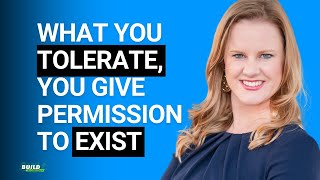
How can we tolerate the issue of human trafficking? And what you tolerate, you give permission to exist. You know, we've had images of our kids sent to us, and that's scary. But at the same point, if we allow for fear to determine what, what we're going to run toward, then we're always going to stop.
I think one of the things that God does really well is he rises up leaders to address things that break his heart.
As moms, as military spouses, as community members. It really became clear that if it wasn't us responding, then who?
Hey guys, welcome back. I'm super stoked for you. The first episode of 2026, as you guys saw last season with the PODC, one of the things that we did intentionally is we began reframing and stewarding how we go about the show. And one of the reasons we wanted to do that is because we don't want to just give content for the sake of giving content. We want to give you content that helps you rise, lead, and last but more importantly, steward what's in front of you so it becomes abundance rather than scarcity inside of you. And to that end, I've got a special guest, a friend, that of mine that I met during the Founder Con conference with Tamara Andrus a number of years, well, not a number of years last year. And I got to talking to her and I was like, I think you're amazing. I've got to have you on the show. And the primary reason we did that is because I wanted to make sure that I had someone that could give you a real perspective on what's really happening in the world. So today I have Brittany Dunn joining me, COO and co founder of the Safe House Project, specializing in helping serving those who have been human trafficked and even preventing human trafficking. So, Brittany, welcome to the show. Super stoked to have you here. I already love the off air conversation we're already having. So this is going to be fire for a lot of folks, but welcome to the show.
Can't wait to get started and just thank you for having me.
Oh, such a pleasure. So obviously you've, you've. It's funny when, you know, when we do these podcasts and we try to better understand the guest, even if I've already had like an interaction like you and I've had a couple calls and interactions around Nonprofit world and things of that nature. And one of the things I was really excited about was when you. You submitted, like, some. Some other additional background information. I was like, wow, I had no idea this was there. Okay. I'm not even sure where to start. So I guess where we'll start is just help people understand who is Britney. And then we can lead into how Brittany is now doing what she's doing.
Yeah. So my name is Brittany Dunn. And really at the heart of it, I am a defender of the vulnerable. When God lit my heart on fire for the issue of human trafficking, it was about 220 years ago now, and just out of college, was living down in Atlanta and was hearing about these 300 girls that were being trafficked every day on the streets. And so over the next 20 years, God has made my journey twist and turn and see a lot of different lenses on that. Also a military spouse. So have seen a lot of different communities and how they're responding to the issue of human trafficking. Spent time in corporate America for over a decade, and so really have been able to also really expand my tool set in order to figure out how to use that for Kingdom Impact. But I think the greatest joy of my life is my two kids and my husband and being able to be a mom and a wife is, you know, the greatest joy.
Yeah, I love it. You know, I'm also really excited that we were talking a little bit off camera and you were like, yeah, my husband is actually working, you know, more towards the Capitol Hill, trying to help us from that. That direction. I'm hitting it from this direction. So this doesn't just become a Britney project. This has become a lifelong, like, this is our journey together project. So how did you guys find your way into helping the vulnerable and trying to figure out ways to serve them, to give them a more, honestly, a more beautiful and meaningful life.
Yeah. So as I mentioned, seeing those numbers come out in the early 2000s in Atlanta around those 300 girls just lit my heart on fire. But at the time, I was still really invested into international business development, mergers and acquisitions, and that's where I was called to. But through the next. Really, over the next decade, we moved to San Diego. We moved to outside of Reno, Nevada. I was working about 200 days a year in Southeast Asia and Europe. And so I started to see how trafficking had really woven itself into the very fabric of communities. Of course, you know, at that time, I was like, okay, I'm on the corporate trajectory and things are headed that direction. My husband was deploying Consistently. And we had had one of our kiddos. But when 2017 hit, it was a year. I think I've just. God starts to prepare you for something before he's ready, you know, to launch you. And so I could tell a change was we were expecting our second. And I met my co founder through a couple's Bible study and she had a similar passion for the issue of human trafficking. And we just started to talk a little bit, not much. I didn't know her that well. And then December 26th of 2017, I had my daughter and three weeks later my husband deployed unexpectedly. So here I had a two year old and a newborn, a deployed spouse, maternity leave. And that's when God said go. And he.
I love his timing.
Sometimes it's truly incredible. And you're like, okay. And by the world standards, this is not the time to leave corporate America. This is not the time to start out and do something different. But what Christy and I really felt in that is that how could we, how could we tolerate the issue of human trafficking? And what you tolerate, you give permission to exist. And as moms, as military spouses, as community members, it really became clear that if it wasn't us responding, then who? And so at that we launched Safe.
House Project, which is coincidentally close to Safe Haven.
It is, I know, I noticed that. So yeah, we launched. We didn't know what God was going to do with it, but eight years later, we get to be part of the miracles every single day.
Well, not only that, going back to the God part of it. It's funny, I do see a lot of times he qualifies us before the assignment and then with the assignment, when it's his assign it, he supports it in many respects. Doesn't mean there's not challenges and things to work on and stuff like that. But you know, you guys have been a very successful non profit, you've helped a lot of people, you've partnered with amazing organizations, which I want to give you kudos to because I've, as someone who is philanthropic in nature or try to be, a lot of times a lot of nonprofits don't want to work together.
Yeah.
Even though they might be horizontally or horizontally or vertically integrated, like they're not even competing services, but yet it's almost like they compete for, they compete for the same dollars, if that makes any sense. So I want to applaud you guys for, for, you know, working with other nonprofits and really putting it out there, saying that we're actually here to serve. I'm Also convinced that that's a good reason why people trust you the way they trust you, and why you guys have become a trustworthy source to steward that into things that actually help the people that are being trafficked, whether it's prevention or care.
Absolutely. I think that that is probably one of the biggest missteps a nonprofit leader can make, is not partnering because it's about collective impact. When you think that estimates show that 300,000American kids are trafficked every single year, there's not one organization, one individual, or one policymaker that really can shift the tides of human trafficking in the United States. It's also not an issue that's happening in a vacu. And it's at the intersection of legal industry, it's at the intersection of law enforcement, it's embedded into government agencies. And so if you make the misstep of saying we're going to go it alone, then you're not leaving room for that partnership to grow and expand your impact. And so you have to look at it as a multiplication of effort. And the other piece with that is when you are open handed with what you've been given, then you might have puzzle pieces that are lying to somebody else's puzzle that they're working on. And when you give that to them, resource allocation and resource utilization, and then it really becomes scalable. And I think that that's the piece that people miss, is that they are, they operate from that scarcity mindset. And when you operate from that perspective and you're not open handed and you're not willing to collaborate, then you miss the opportunity to really see how you can use your gifts for service, not just for your own organization, but for others.
That's good. I really want to get real.
Yeah, let's do it.
And the reason I want to get real is because again, when I was preparing for the podcast, I went and watched even mutual friends that are involved in various projects, if you will, that large, important or helping people. But what I'm, what I'm not seeing is radical honesty. So one of the things I wanted to talk about radical honesty right now, real fast forward, is why do we not care? Or why do we seemingly not know enough to care enough to play a role in like getting this removed? Like, what is a stigma? Like what, what's at play?
I think there's a lot of pieces. I think that one, it's a really hard issue. The stigma plays into it. If for a long time it was taboo, when we walked into this space, I could clear a dinner table very quickly, just by bringing up the idea of sex trafficking. And it's. That's partly because we have a culture that has normalized sex buying, you know, engaging in pornography and a level of sexual deviance. And so that can get really uncomfortable. If you feel like you have had any history in that, there's a lot of shame attached to it. And I think we have to not just make space for victims and survivors to come forward and be honest about what they've experienced, but also create spaces where those buyers can get the help and support that they need to break those cycles.
I'm so glad you said that, because as someone who wants to operate as much grace and mercy as I can, one of the things that I realized growing up was that a lot of folks that unfortunately play an active role in mishandling another human being, let's put it mildly, experience that same trauma themselves.
Right? And I think we have to recognize that there's a lot of trauma in this world. When you look at the stats and you see one in four girls are going to be sexually abused under the age of 18, one in nine boys, we're not at a place anymore where people are immune to things that are happening behind closed doors at extremely young ages. And that sets them up for acting out in inappropriate ways as they grow up. And I think that's what has happened in a lot of ways. I think the other piece of it is that it is such a complex issue, and I think that until recently, we didn't fully understand all of those complexities. And I think that makes it challenging sometimes for everybody to feel like, well, how do I actually feel part of that? How can I. What can I do as somebody sitting at home on my couch trying to combat what feels like a criminal enterprise? And then I also think that there is a climate of fear around it. You know, we as a family have gotten the death threats. We've been swatted through the nights by traffickers. You know, we've had images of our kids sent to us. And that's scary. But at the same point, that doesn't mean that we don't still go up about against the darkest parts of this world. Like, if we allow for fear to determine what we're going to run toward, then we're always going to stop. We're never going to progress, and we're going to allow one of the deepest, darkest, most inhumane criminal enterprises to thrive. And I just can't tolerate that. I can't imagine a world where we say, oh, I'm Sorry, that's too big.
It's okay to hurt that scary.
It's.
It's.
Yeah. And I'm like, how we serve the God of the universe. And I believe that if you are operating under the anointing and the calling that he has called you to, he is the God of protection. He is the God of provision. He is the God that is Jehovah, Jireh, Jehovah, Rapha. I mean, let's get real. It's the God of the universe. So don't put my God in a box and then encourage me to run away from the exact thing that he's calling me to.
Well, and I think one of the things that God does really well is he rises up leaders to address things that break his heart.
Yep.
And there's nothing about at least my faith that says it's okay to even accidentally harm someone else.
Right.
Even the accidental nature of harming someone else should be, you know, rectified or redeemed in many respects. I do find it very difficult. I. You know, as someone who's philanthropic by nature, I have no shortages of people who are interested in financial help. The thing that I've struggled with is I've watched nonprofits that specialize in a certain niche. I won't say come and go, but rise and fall. Sure. And part of it feels like it's an endurance play. Part of it feels like it's not the full appreciation of stewardship. And, you know, even in this niche, there's. There's been other organizations that have rise really quickly, did a lot of really good, great work. It seemed like early on, and then began to have stress fractures and then essentially take a movement that was getting more. More line of sight. And one mistake, two mistakes, five mistakes, you know, that are. That are challenging by nature. Wreck the whole thing.
Yeah.
What are you doing with the Safe House project to prot your organization and protect people like myself who want to do good work with financial resource, with time, with whatever, to keep yourself out of the line of fire in an effort to actually keep serving people.
Great question. Because I think that that's at the core of so many organizations that they are seeking to do that. But it is so easy for things to enter in and that, you know, to give an inch. That continues to grow and snowball effect. And for us, from the beginning, we have really made stewardship of our core values, and that is embedded not just from a financial perspective. Obviously, we want to be extremely good stewards of the resources that we're given, but we want to be good stewards of our staff and the people that God's entrusted us to lead. We want to be good stewards of the survivor, that they know that when they call and seek for services, that they're going to get a level of excellence from us. And there were so many times where people like, well, why don't you implement, like, a baseline standard? Like, why are you always. Is always pushing for excellence? And it's like, excellence doesn't mean perfection, but it means that you're setting the bar for your staff, for your team, for the brand at such a level that people learn that it's credible. They learn that they can trust it. And so I think that's a huge thing. One of our staff members, she was saying that she was in line for coffee one day and she was like, somebody who's like, from another organization was about ready to order, you know, just the most most robust coffee and all the extras. And, you know, she's like, that's gonna cost your donors, like, 25 for you to order all that. And she goes, it's fine. And she goes, well, our organization, we like to steward and make sure that if any donor wanted to ever look at any financial line item, they could open up our entire books and that there would be a justification or a reason that that that expense happened. And, you know, I think that's a beautiful way that our staff just is.
Always.
Making sure that they're being extremely thoughtful because those dollars, if it's going $25 to coffee, it's not going to serve a survivor, and that's a huge problem. But maybe there's a day where you're trying to treat that staff member extremely well because they're coming off of an extremely hard case, and they should sport between that extra. Yeah, there's just always a balance, and I think that's so important. So I think financial transparency is king. You have to make sure you're doing that. The other thing is extreme ownership. We always say that we lead a team of leaders, and we don't want people to ever feel like we, as. As the executives are limiting their progress. For us, success is succession. So I would want any member of our team eventually to feel like they had the tools in their tool belt to step into a higher level of leadership or take over the organization. And then I think integrity and I. And when we do that as our core value, we got a little bit of pushback. People like, well, integrity can be subjective, and it's a gray area. No, it's not Integrity is living a life above reproach.
Yeah, it's holding yourself to higher standards and digging that toes choices.
If you believe in the moral law.
And.
Living in a life of integrity, these are the things that then pour out. And it's been amazing because we have, I mean that's how our entire program for serving survivors grew. That was not an original program of Safe House project, but because we were training hundreds of thousands of people to identify trafficking and then we had relationships with over 700 providers throughout the United States. The survivors and victims started calling, say I don't trust anybody else to tell me where I can go and actually get the services. You all talk to them, you've been on their, to their house, you've seen their leadership, you know, their program director, like I trust you to tell me where I can go and actually receive the support. And so, I mean in that first year, myself and Christy, I mean we were the ones receiving those calls. We served 50 survivors and it was all organic referral. It wasn't that there was a phone number. We didn't have anything formalized. They just kept saying, well you helped so and so, so they said you would help me. The next year, Christy and a part time staff member served 250 victims between two of them while maintaining all of their other responsibilities. And then by year three it was 534. And every year that has continued to multiply. And I think that just goes to show the quality of your brand is determined by how much you embed a culture of psychology.
You have to embody it.
You have to, you have to, you have to live it out in all areas of your life. And I think there's a lot of nonprofit leaders who've also failed in that.
Well, I also think there's, there's a trap. When people are pursuing the non profit world, they all have to be funded in order to do ever escalating levels of work. And I think the trap is, there's a trap that I have seen, witnessed firsthand where it'll get, they'll give us $100,000 if we do this or compromise on that or don't pay attention to this or, or, or, or, and unfortunately I think that's where trust and faith could, could play a deeper role. So I just want, I wanted to mention that for a second. There's something else I want to hit. So I want to hit stewardship and leadership. Yep, we're already talking about stewardship. I want to go back to leadership for just a second. You've Walked through seasons that most people wouldn't wish on their worst enemy. How has that shaped your leadership? How has it stripped you away? How's it caused you to become a person that can run a seven figure organization with, with aspirations of hire to help more people?
I think that unfortunately in order to lead well, you have to go through seasons of trial. And I think that it to ever believe that any of us are immune or that we can really lead people without having lived, it is naive. And those seasons have looked different and they will look different for each person. That doesn't mean that everybody needs to have, you know, this, this extremely hard consequence of a decision that they made. It may just be health factors or financial pieces or family members who have experienced things. But through that I think that leadership comes down to of course those experiences form us, but how do we allow ourselves to respond to them? How do we take the growth opportunities out of them? How do we strengthen our faith? I know that for me personally, you know, there have been those seasons where God has stripped away everything around me because he wants to get down to who I am at my core. And that identity factor. And if I believe that my identity is in safe house project, or my identity is in my marriage, or my identity is in my children, or in my success, then at the end of the day all of those things can be taken from me. And that, that would shatter me. If that's where my identity is rooted.
In, which is where a lot of leaders live, right.
And so then you get, you do one bad deal or you take one big risk and it fails and all of a sudden you don't know who you are. And I think that we have to get back to who, who we are as a child of God and the calling that he has put on our life. And then when those things do come at us and they, you may have to reframe our perspective and all of that, then it doesn't, you're anchored to the source. And I think that's been a really critical piece. The other thing in there that I think is so important is that God doesn't scale dysfunction. And so he is a good God and he's not going to add to your mantle of responsibility if he doesn't trust that your shoulders can bear the weight. And you know, Christy and I have always done known that our kind of our leadership style isn't that. It's just, oh, we do all this work and that's the only place in our life that we have to push ourselves. And you know, we do all our leadership team meets every morning at 5:30 and knows that the spiritual realm is a place that we have to war, but we also have to war in the physical. And so we as teams, like, we commit ourselves to really aggressive physical goals. So like this year we're going to climb the do the 29029 challenge, which is doing the vertical ascent of everest.
Wow.
In 36 hours in sun Valley, Idaho.
I got somebody introduce you to my good friend Jen Drummond. Climbed seven of those things, including, I think she's even, she's even done Everest. Yeah.
Okay. So, exactly. And so we're going to do that because when you push yourself, you're tearing your muscles and you're preparing your muscles to do greater. You're preparing your body to strengthen and climb the next mountain. And that was one of the things that I love that John Maxwell's like recent book really was talking about is like, as a leader, your job isn't just to scale one mountain. You're supposed to scale the mountain, find the next bigger mountain and keep going. And the only way you can do that is to train your body, train your mind and train your spirit to keep climbing. And that's really the huge opportunity.
So I obviously love the gym. Yeah, it's one of my, one of my, one of my grounding places. But it's funny, I just, I just. And it's, it's funny. It's always been there. It's like life truths are always around you if you're paying attention. Right.
So God wove the laws of physics into the earth almost.
Right. It's like, hey, you have to break your body to build it. Yeah. Like, you have to get the discomfort. You've got to put in a rep, you got to tear it, you've got to feed it nutrients, amino acids and protein. And it's, it's so interesting when you mentioned that in regards to leadership. The other thing that I see is leaders. And I'll miss. We're talking about John, he's a friend, so we'll just, we'll just use one of his lines. Right. Your level of your organization never gets past your level of leadership. Right. So you guys have done a, a really good job of continuing to grow and scale. And at the same time, you've also faced challenges of being an organization that's really well structured, well suited, well intended, and not getting first dibs, if you will, or not getting necessarily everything you need right away because of bureaucracy and all kinds of things like that. What gives you guys the resilience to keep moving forward. Because I feel like resilience is a huge part of leadership as well, and stewardship for that matter.
Well, I always go back. There's a pastor that we've been guiding from for a long time and his teachings and it's Pastor Mark Batterson. And he says, show me the size of your dream and I'll show you the size of your God and in those very.
In your mountain in front of you.
And I think that when you keep the eternal perspective, when you keep the vision that God cast, like in our first few months of launching, Christy and I would do these long prayer walks and God said, I want to make you the Susan G. Komen of the anti trafficking field. And it's like, like, okay, if he gives you a vision of that size, especially when you're two women and five kids under the age of five walking around a neighborhood with two deployed spouses, you go, okay, God, but if you give us that vision, then you're going to have to provision it. But that doesn't mean that those resources are going to be there overnight. There's still that we are called to co labor with God. And I think seasons of not getting.
What you want are just, it's actually divine protection.
My experience, it is divine. It's divine protection and it allows for refinement. So like this past year we applied to take over the National Human Trafficking Hotline. We did not get it. And that was extremely hard as the outcome. But that was based on three years of preparation that we were doing to scale the organization, to strengthen the infrastructure, to make sure that every single team was operating through the lens of the four disciplines of execution, that there were lead measures every week that were going to inform our outcomes. And so like we did everything from a practical standpoint that we could to prepare our staff and our team for that. And of course the outcome wasn't what we wanted. But in that God really honed everybody. He created different ways of thinking. He created new neural pathways. You know, he just develops you differently. When you're in those moments, renewing your.
Mind is actually scientific.
It is, yeah. And so what was crazy is I was looking at, we're of course closing out 25, looking at the impact. And so I pulled up earlier today the goals that the United States government requires for the operator, the National Human Trafficking Hotline, to achieve in year one of operation. And so these are metrics like fielding 2,700 calls every single month or you know, serving X number of survivors and keeping your Wait times at certain levels and things like that debt. So I was like, okay, well let me just benchmark us for about three months past that decision. How did we do? We have already exceeded every single metric that was.
I remember you. I remember you sharing with me offline that about 70,000 plus people aren't even going to have their calls answered.
Exactly.
Which is insanity.
Right. And so these are the things where I'm like, okay, God, what you did is you made us the national human trafficking hotline. Maybe not entitled by the world sandals standards, but. But everything that we've built, everything we've developed is doing it. And the crazy part is that contract would have required us to scale to a hundred people almost overnight in order to meet the requirements of it, which.
Is hard to do.
It's hard to do. It's expensive. People come in with a lot of their own.
Well, to get a hundred, you're probably Gonna look at 500. To get 100 people right.
And how much time and resource. So I was looking at that. Our team is doing that with a survivor support team of five and six interns. And the United States government is telling me that I needed to do it with.
I have all kinds of ideas.
And then you go, okay, got it. God, you're going to use your time, your resources, your people, and you're going to do things differently. And that is Kingdom Impact. And those are the things that God will scale. And he's going to do it in a way that is outside of the convention because he gets the glory. And that's the best part. Because if we had gone the other way, everybody been like, oh, well, you got everything worked out because the United States government came in and did this. It's like, no, nope, God's got us. He's working on it and he's going to do it. This is his organization, not mine. That's right.
I'm going to share a quick story with you. This, this may be empowering. I, I'm having a little hit right now. So for those my audience knows, I think you know by now because some offline stories, but God will speak to me about different things at a different time that are a lot of times they're not even interconnected. He likes to talk to me about other people's stuff. I'm going to share with you that not getting the contract was divine protection. It's going to create innovation that does not exist yet. And he's also reminded me to share with you the story about Elon Musk. So the federal Government and no, no harm against our government. Yes, it's got issues, yes. But it's also does some good like. Well, so we'll just, we'll just say it's an organization, its organization is learning how to not scale dysfunction. Some may some way somehow. But all that being said, so we don't get abnormally audited for no reason anyway, the federal, the, the United States government spent billions in developing the rocket program.
Yep.
Elon spent 10% of that and already has rockets that can reland on pads because of innovation, because it forced innovations.
Right.
So I wouldn't be surprised if there's a little Eloning going on right now. I actually have some couple ideas to talk to you about off off camera as well. But I want to jump back into the problem for just a second. One of the stats that I read that really breaks my heart is less than 1% of all victims are actually recognized. Why.
I think that this has been a problem that a lot of people have looked away from because it is hard. And the reality is that these are the most vulnerable individuals in our communities. These are individuals that you wouldn't necessarily go oh, I have enough time in my day to stop and pause and help because I'm busy or there's always an excuse. Right. The other piece is that to learn the signs and understand what trafficking looks like does take a little bit of effort. There are 25 unique business models of trafficking. So for a 8 year old who's being trafficked by their parent, that looks different than somebody being trafficked through the adult entertainment industry. And so there's in intention that it takes on behalf of a community member, a corporation, a policymaker to really understand it. And so I think that that's been there, but there's also, there's shame, there's guilt, there's a trauma bond between that victim and the trafficker often. And that's hard to break. It's hard to break cycles of exploitation.
It also seems like it's generational again. I, I keep going back to people who I know have gotten in trouble, not necessarily to the extent of full on trafficking, but like molestation and stuff like that. They grew up with it.
Right.
Like it was, it was legitimately. And so I think about what teaches us to be a parent and nine times out of 10 it's the parent that taught us as a child. Right. So if the parent that taught us as a child by definition was somehow injured along the way, then they're going to carry that injury into how they parent. Whether it be over aggression, over passivity, even getting involved in things that honestly no one should get involved with. So where I, where I struggle. All right, with so with such a sensitive and important matter is how do you stop the generational piece? Like you, it's like you have to have a break line. It's like it stops here, right? And then, then it can't proceed. And then obviously so the. But when it stops, the person that's essentially below that, meaning the person that's been injured recently now has to do a lot of internal work, a lot of spiritual realignment and a lot of things together to get back to baseline, to then not carry, you know, what they've experienced into the future.
Right. So to the point of it, like right now, we believe victim identification is roughly at 1%. And I will say that that means that a lot of the data that currently is not going to accurately represent the issue because there are underserved, underrepresented populations even in that 1% data set that we haven't identified yet. But where we do see, you know, some of those really, I guess evidence based trends would be over 78% have involvement with child welfare at a young age. And I think that there's a huge need in our country to really revisit the child welfare system that has incentivized the removal of kids from homes. And of course, if it is child sexual abuse, child trafficking, removal should happen. But there's a lot of cases where maybe that child shouldn't have been removed. And the vulnerability was created because they were taken from that family unit and placed somewhere else. And so we have to get to root cause analysis on this issue. And so a lot of what our team is doing is making sure that as we are serving individuals and now have the largest data set of individuals who have been trafficked in the United States over the past three years, we are de aggregate or de identifying that data and aggregating it to really try to source a lot of the trend data. The other piece is this past year we launched a new platform called Simply Report, which is an AI powered platform for community members to come on and report suspected signs of trafficking. So it's that those tips and information are coming in. It's allowing us to kind of fill in the puzzle a little bit and make sure that we are actually seeing, okay, this is how this criminal enterprise is being perpetrated against individuals. These are the vulnerabilities that somebody has that's making them more predisposed to trafficking. And I think if we can continue to, in a very ethical, ethical way, bring that data together in a central repository that obviously has all of the guardrails in place, Then where we can get to is the ability to really start to map this at different levels. Then our interventions for prevention become much more targeted. We're able to make stronger recommendations on policy that can transform child welfare, that can look at the juvenile justice system, that can look at food insecurity or any of the other factors that would line up to this. And that's gonna make us just so much more strategic. But going back to collaboration, that's why we always talk about collective impact, because you can't do that by yourself. Honestly, I need. Need the data out of the financial systems in order to help map that. I need the data out of the hospitality sector, out of tourism, out of trucking. When you look at how it maps and weaves together, all of a sudden you can see that, okay, there's a line that runs through all of this. And we're not asking for all the data in the world, but if we could get the. The outlier data and actually look at that in the totality of circumstances, you could systematically, I believe, start to track all trafficking behavior across the street.
You know what's really interesting is the organization mentioned that you want to have access to. To under. To better understand their infrastructure. You can find that same. You can find the information in the marketing channels of those infrastructures. So trucking. We'll take trucking, for example. There's ways in which trucking is marketed to people that use trucking services, etc. Right. There's. I guess what I'm getting at as I. We can talk offline, but I bet I. I could. I feel like I can see a path. One, two, man, come back to me. Come back to. It was. It was really. It was an important one. The second man, it went away from me. It'll come back. I know it will. I'm trusting it'll come back. All right, you'll come back to me when you're ready. Okay. So we obviously know the visibility is not what it. Where it needs to be. We can anticipate that someone who is going through the process of being trafficked and things of that nature obviously most likely feels sincere guilt, shame, likely some trauma bonding, especially if it's been their only norm. But I also know that it struggles with things that you and I have talked about before, like disassociation or disassociative behaviors, even multiple personalities.
Yeah.
So that makes the. The thing even more Complex. So let's talk a little bit about that. And then I actually want to get into Epstein.
Yeah, Yeah. I think that's an important piece to recognize because oftentimes people want to focus on, okay, well, why aren't the prosecution rates higher? Or why aren't we able to take out more traffickers than bad guys? And it's. It's like, absolutely, we want to get there, but it's extremely challenging in our current system when the victim, to your point, has a dissociative disorder, has complex.
Which was created by the trauma, which is natural human trauma response.
Yeah. And complex ptsd, you ten and a half psychological disorders is what the average trafficking victim has upon exiting a trafficking situation. And then we expect that without resources, without wraparound care, without medical, that at the moment they exit this. This horrific experience that for some could have been lasting decades. I mean, truly, we. Our oldest survivor we've served is 77 years old, and our youngest, you know, is 4. You know, these are things that can be part of somebody's entire life and story, and you expect the moment they exit that they're going to be able to order in a, you know, coherent way everything that's happened to them, be able to give you every single name description when they have usually been, there's malnutrition, there's physical abuse, there's psychological trauma. Like, yeah, no, it doesn't happen. And so we have to improve also. That's where the data, for me is so important, because I'm like, if we can source data from these other systems and get things like, how many times is a hotel door being opened from the outside or the inside on a routine basis? And you have these fact patterns that you can develop across other systems. You decrease the dependency on the victim to have to remember every single one of those details. And we are at a advancement in the technological age that to say that that information isn't available and we have to rely solely on victim testimony when that can come across as mental health is ridiculous. And so the systems have to catch up.
Yeah. Wow. I want to ask a question before we jump into Epstein. I just had this. A bit of a. So let's assume for a moment you have unlimited financial resources. Right. You can build whatever machine you want to build to firmly impact the area in which you're called. What do you do first?
Love it. So we have actually developed a plan for this. It's a $2.8 billion plan over the next seven years through collective impact. Not just, if I'm going to Safe House project by any means. But more, how do we aggregate funding in a real way to order those steps logically that really can work to dismantle and disrupt trafficking? I believe that in the United States that we have the ability to eradicate child trafficking by building that infrastructure. Currently, I think that that technological backbone is critical because you can't fight an enemy you can't see. And so data is king in helping map the response from there. Right now, this is a. I mean, we were calling this a pandemic before COVID and Yeah, I mean, it really was. It really is. And that means that you have to not just have. For curing it or eradicating it, you have to have prevention, but you also have to have treatment. And right now, we do not have enough services available to victims of human trafficking in the United States to help them overcome the trauma that they've experienced. And so. Exactly. So we have to at least serve those people. Otherwise, the reality is, to your point, about generational impact, impact, those victims are going to have children and those kids are going to have inherent vulnerabilities. And it's a. It's just a vicious cycle that's going to continue to perpetrate itself. And then the other big thing right now is those policy changes. We need to increase identification rates at the state levels. We need to put the right tools in place in order to do that and help with early screening and early intervention.
And I don't mean to cut you off. No, you. Is there a. Is there a way to. I won't say sidestep the governmental policies, but just do it better. I. That I have. I really struggle and I'm just being honest. I don't think I've ever been this honest before, honestly, about the. My. Some. Some things I struggle with when it comes to our working government, but I don't feel like if we're looking at the word stewardship.
Sure.
And it's not even about. I don't even think it's about willpower. I think it's about knowledge.
Yep.
I think it's about knowing what to do at the right time in the right way. Is there a way to somehow sidestep and just build it yourself?
And that's what we're seeking to do. We're seeking to do this outside of the government systems from a funding perspective. But the laws do need to change in some states in order to make sure that you have sustainability.
Okay.
So from a funding mechanism, I think that you can. And probably we should be building the Entire thing outside. Because then that data is protected. That information isn't. There's a lot of sensitive information in there that when put in the wrong corrupt hands can really be weaponized.
I knew what I thought of.
Okay, I just.
Super fast. Can you hold you. Can you hold your thoughts? Because my adhd, if I don't get this out, we're gonna be in trouble. All right, so you admit you said something about a repository. Okay. Information goes into a repository. You could easily have a. A basically a. Not a check mark, a area where. Let's say persons real name is Sarah Jesse Raphael. Right. I've changed one of the names, of course. Right. And the person's going. Has been through horrific stuff. But you need the information to figure out how to basically back. Back your way into the beginning. Right, Right. What about having an automatic assignability before it goes in repository of a alias so you can still track it, but at the global or at the global level or the Nucleus level, you can only have access to the alias. Alias.
Yes. And that's the way to do it. Because it should be done through. Because you want to be able to see the fact patterns in an individual, but you want to do it in a way. The other piece there is that it probably eventually would need to be tied to biometrics if you wanted to do that like at the healthcare system level.
The technology exists now.
It does, it does. But I mean that's sensitive piece. But when you think about the victims might end up with different identification that the trafficker produces. And if they've cycled back in like the name can get changed.
I already have five aliases.
Right. So essentially that's happening. But you want to be able to do it probably through biometrics in the long run. But of course that has its own hypocrite. Like then all the other legality pieces entering.
Well, I'm. I'm here for the long haul.
I know. Me too.
What I could do to help out.
My head is like I'm. Yes, solutioning, but no, I. So I think that. Yes, I think that we can build it out externally. I think it needs to be built externally. And then I think that we have to make sure that then the. That from there we'll be able to build those more effective interventions. I think that, you know, data could be segmented and created. Like right now our federal systems, data systems for law enforcement don't talk to each other like which is just. It's mind bottling.
But yet every phone will talk to each other.
Right. Or how many kids are missing in the child welfare system? And yet you know when your Amazon package is going to be delivered like these are.
This is why I feel like the biggest problem going to be, can be solved by the private sector. If the private sector is allowed to, to do it.
To do it. And I think we are. I don't, I think we're in a time where this is the. It is for such a time as this. Like this is the moment there is a plan, I mean our book, eradicating human trafficking. A transformative approach through collective impact. That is what the entire thing is. It's a blueprint of how do we get there step by step. Order this in a way that allows for us to help dismantle it. But I, I truly believe it can.
Happen and I want it to happen before someone has to experience someone, that someone that they love finding out that this has been going on and that person that they love. Because that seems to be where people get serious.
Right.
It's like, oh, this actually impacted my house.
Yep.
Right. And what I'm, what I would hope to encourage people to do is to understand that every house is your house. There's old adage, what it takes a village like to. And it's going to take, it's going to take a village really, really to kind of put this together, man. There's so many directions I want to go. First of all, thank you for the work you're doing.
Thanks.
And I appreciate you really stepping into the gap, being able to look out on the outside, looking in. You guys really take it seriously. And I don't mean that in a, I don't mean that in any kind of like weird way. Like you guys are legitimately trustworthy and you, you work really hard to stay that way. And you know, the, the book's a great resource and there's. You guys have done so much to get in front of so many. I, I pray that it gets in front of 100x this year. Whatever your goal is.
Go a thousand x.
Let's go a thousand next. Let's go million, let's. Okay, we'll just go. Endless eternity, right?
2.8 billion.
2.8 billion. There we go.
2.8 billion laying around.
Let me know which really I, I think, I can't remember if we started the show with this or I shared this off air. But again, $37 trillion is in the hands of professing faith based believers. Yet the annual need to solve most issues solve or basically have a working model, a business model, if you will, of basically tramping a lot of this stuff out is 7 trillion, right? Which means there's already an abundance of 30 trillion that's just being reallocated to. And I have to be cautious of this. I even have a rule. I'll share my rule with you after I say this. But being reallocated to selfish, selfish things, right? Like being Instagram. Instagram famous. But you know what I mean, like, you know, just like I have to show that I'm this to, to show other people think I have value. And it's, that's an insecurity thing. We try to tackle that, but, well.
It just goes that we serve a God who has a cattle at a thousand and yet we operate from that scarcity mindset. But I think it's a little bit of. I, I had this conversation over Thanksgiving which was highly entertaining because it was a very secular group that I was sitting with and like socialist, very socialist perspective, you know, just came at things very differently, believing that the government should really provide almost everything we need. And I, but the question had come up earlier in that is like, was the decision for separation of church and state a good decision? And it was like we took personal opinion, agreed, because we took God out and that gave everybody kind of permission to say, well, oh no, that's the government's problem to solve now. And so where the church had historically served of, you know, being with the widows and the orphans, they went, oh well, that's a social services project. Like that's gonna happen through taxes, like. And all of a sudden there was this transfer of responsibility and what God had told us to do as the body of Christ and we gave it to the government to do. And now we're seeing that.
Well, that happened in the garden too.
It did, yeah, completely. And it's like now we have a responsibility to take that back and say, okay, if we have 37 trillion dollars sitting around to solve a 7 trillion dollar problem and we're not doing that, I would say delayed obedience is disobedience. And to get your house in order because I don't care if you give it to anti trafficking, to food insecurity, to homelessness, to domestic violence. Doesn't matter.
As it turns out, even the pharaohs realize you can't take it with you. So.
Exactly.
You might as well do something positive with it. You know, I, there's again, there's so many different directions. I, I kind of want to go. I, I want to talk about Epstein for sure. Because I know that you have Unique insights into that whole situation. Even have a new book you're working on, which I'm. I'm excited to hear more about as well. So many different directions. It's funny that you, Jesus actually said that, that when you go to give, you're giving, you should be giving it, obviously. Render unto Caesar what a Caesar's. Thanks, Jesus for that one. Appreciate that, buddy. But I trust you. I'm your stubborn child, remember? I love you. But the other thing he said is basically the place to give is the less fortunate than the grace. The widows. There are 400,000, roughly approximately kids that go into that are in the foster care system that end up either incarcerated, rated or homeless. Like, there's a nook, there's a nucleus there. You're talking hundreds of thousand people of that we can trotic put a number on and trafficking. Like there's all this additional wounding happening right now because we're not stepping into the gap to fund the programs that could actually make the difference. And I feel like, again, if I'm speaking for myself, I feel like that's part of this because I don't know. To trust.
Yeah.
Like if I, you know, it takes me, it takes. It's really hard for me to go out and earn ten thousand, a hundred thousand, a million dollars. Like I have to work my butt.
Right?
Right. And I have to give and I have to serve and I have to sweat and I have to bleed and I have to fire and I have to hire and I have to work on me and I got to work on my team and build my infrastructure. And the last thing I want to do is, is turn it over to people who aren't trustworthy.
Right.
Who are going to be unscrupulous with it and somehow align themselves without. Without building an organization. So I know you guys aren't that way, but I feel like I had to say that just to make myself feel better.
Well, it's true. I mean, and I think even as, as you know, we've grown as an organization. In our early years, we did a. We had a grant process. That's how we started. We're like, oh, we don't know that much. We should be giving it to other programs. And we got burned so many times in those early years where we came back and we were like, wow, that program actually wasn't doing what they said or that the finances weren't used in a way. And so through that, we actually developed our national Standards of Care certification program where we go in and we evaluate safe house programs. Against evidence based and promising practice. And we look at all of it and we do a site visit and we bring a survivor leader with us who can call out the practices that are harmful and make sure that the things that people say that they're doing on paper are happening in practice. But you know, people are like, well, why did you create this program? And it, it never operates. I mean, it, it's a, I mean, because every single dollar that comes into this organization, every survivor that calls us, wants to know that where we are when we put them on a plane somewhere, they want to trust that the place that they are headed to is going to do the thing that they.
Said, which has got to be scary.
It's terrifying. I mean, we had a sweet survivor. Oh Lord. She was probably 57 when we recovered her. Had been trafficked since she was like around 12 years old. I mean, trafficked for truly decades. Got herself into a hospital, trucker was, it was a long haul truck driver who was her trafficker was going around this hospital trying to get her out. So we had the nurses on, you know, the phone and they're saying, we don't know what to do, we need to get her out. We exited her through a tunnel into a different admin building and had a team there ready to extract her. Got her to the airport and she's like, I've never been on a plane in my whole life. She was terrified. I mean, and here she had to trust that her whole life had been a life of abuse, of being sold at truck stops around the country. She had to try that. We were going to put her on a plane somewhere and she had a layover, which was terrifying because she had to trust.
Well, I mean, by definition she's been shipped all over the place. So this is just another shipping in some cases.
The biggest thing is she's like, I, I just don't want to give up my, my leather jacket. And we're like, okay, we will do whatever we need to. Because she was over. You know, things were going so fast and we had to find that leather jacket. And that was the thing that helped her get through that moment. But it's 10 seconds of insane courage that these individuals have to choose a life different than the exploitation they've experienced. And if we, if they can't trust us to be on the other side and provide the best services, then we shouldn't be doing the work.
Wow. I don't know how you do the work that you do without getting absorbed into the pain that's caused in helping those that have been suffering. Honestly, I assume that that takes its own toll and healing. Healing and. And whatnot. So again, I applaud you for it. Let's go ahead and do it. Let's talk about Epstein. I don't. I guess in one way I'm kind of grateful that some of the stories have come out long term and it's been a bit of a media thing. On another hand, I'm like, I can't. I hate that it's a media thing. What do we not know about the Epstein situation that we should know?
I think more than it's not knowing. Obviously the files are redacted, things are going crazy and it's complex. Like the challenge with this is that there are hundreds of victims and that represents a fraction of the hundreds of thousands of victims that are exploited every day around the. Around the United States. The United States is in the top three nations in the world for human trafficking. We are a producer of all of the this and there are thousands upon thousands of Epstein's in our community. They just all don't obviously wield the same power that he did. But a lot of them do. And I think that that's the piece is that we need to recognize that he's not one. He is a representation of many. But I think through that as well is that he created a moat around himself that is so deep. But that doesn't mean that all of the people that are on those lists. Lists. Also were perpetrating those crimes. And I think he did a really good job of creating a lot of smoke and mirrors. So some of these names that are going to come out, I'm sure as the files continue to come forward, they had nothing to do with it. They're getting caught up in it. But then there's those that absolutely did.
And those are the ones the name might be side by side.
Exactly. Photo. Like I mean I always look. I look at how many photos are coming out. I'm like, good lord, that guy must have had a photographer with him at all times knowing that he. If he could keep those pictures. Because this is not the digital age. I mean this isn't. Everybody was walking around with smartphones. He literally knew what he was doing so well and was so intentional about making sure that he had photographs with almost every single person that he.
The major of influence or major affluence. Yeah.
And then you look at the documentation of him writing down every single person. I mean he truly. I mean from a business sense he knew how to scale which is not in a good way, but there's many incredible criminal enterprises out there that are doing the exact same thing. And I think that's my thing, is I, like, don't turn away and ignore everybody else in your community. Be looking for these kids. These girls were still going into their high schools. They were still in places of worship. They were still coming into their friends houses, and that's where the recruitment was happening. So we as parents, as community members, as coaches, as educators, we have a responsibility to the kids in our community to protect them. We have to become protective factors of our kids. We have to ask the hard questions. We have to get in their business. I'm sorry, kids do not have the right to secrecy. It's just not.
Definitely not in the way that. I mean, I guess the struggle point is. And this is where. This is where leadership comes into play. Leadership, great leadership is simply a byproduct of great stewardship. Okay. If you want to limit the chances for your own children to be injured along the way, then the best thing you can do is show up as a great leader.
Yep.
Which is mentorship. It's being trustworthy. It's being the kind of. I heard that. All right. This thing popped up on Instagram, so probably a month ago. Love the quote. It was a. It was a young lady, and she was doing a story that then turned into an image, and it, like, grew from there. But essentially the story was this. She goes, no, I'm sorry. It was a father. The father says, I never want my daughter to ever say, I can't tell my dad. He goes, I want my daughter to always be able to say, my dad will know exactly what to do.
Yep.
Right. And the only way you get to a relationship. Right. That is not suppressing the communication that's present now. So being a great resource and being the person who put their phone down and stuff like that and be present and like, you can trust me. I've got you.
Yeah.
And if they bring something up that's uncomfortable that you just maybe don't want to hear or whatever, like, you're like, I know I need to hear this. Right. That's an exhibit of love.
It is.
You know, when I watch, when I look at Jesus handle the people, and I mean the people everywhere in the Gospels. Right. He always showed up in presentness and ready to listen. Like, he never led with what he knew about them.
Yep.
He always gave them a chance to communicate who they were, who they thought they were to him. And then he would really reframe and say, well, let me. Let me tell you're actually this right. And this is always better. But anyway, I say all that. I digress. But.
And I think that that's so true. And I think that's where I want things like Epstein, you know, things like Diddy, things that are pushing this issue into the forefront to not just be a flash across the screen or a sound.
Well, and there's going to be a considerable movement to make that a re. Make. To make it over. Up and down with and over with quickly.
Yeah, yeah. So I think that that's where, you know, we have a responsibility to empower ourselves with the knowledge and information to identify vulnerable kids in our community, to become protective factors over them, and then to know how to report suspected trafficking when we see it. And when we just do those simple actions of becoming an empowered and informed people group, then we can transform communities. It's really about. We always talk about the butterfly effect effect because the butterfly is one of the symbols that survivors really use as a representation of their experience. Because butterflies are some of the most resilient creatures. They look fragile and beautiful, but they can travel for thousands of miles. But at the same point, you have the idea of the butterfly effect, which is the idea that a flap of a wing can create a hurricane on the other side of the world. And we all have to flap our wings. Like, if we want to see historical change, if we want to see God move in the ways that we know he can, he's also calling us to do that alongside him. And so we have to step in and lean into the hard things if we want to see transformative change. But I believe that we can. And I think this is just one of those kairos moments that allows for us to really be part of eradicating human trafficking.
Wow. Well, before we get to the last couple of questions, I want to know where everybody can connect with you guys, whether they are potential victim or someone who wants to support what you're doing. Where can they go and where can they learn more?
Yeah. So simplyreport.com is the app if you need to report suspected trafficking. It's available in both app stores. Victims can reach out to our survivor support team. And then safehouseproject.org is our website for the rest of the work that we get to do. And we're available on Instagram and Facebook and X and all the places, of course. But yeah, so we're. We're just grateful. Grateful for you.
Well, my. My first of the last two questions is we've talked a lot about identification. What we haven't really talked about is what to look for. Can you give us a handful of things that would make somebody need to pull the phone out and send a message like what are we looking for in terms of identification? Because I. Obviously we don't. It's. It's a sensitive situation because you don't want to falsely accuse or bring light to somebody, but you also don't want to let something go. Right, so what are we looking for?
No, that's great. The first thing I will say is that there are definitely signs usually of fear of. It's not a lot of the physical indicators. We're not looking for the white man. It can be only 4% is abduction. Normally these, these victims, they have a trusted relationship with the person who's trafficking them. Whether 50% of MIN victims are going to be first trafficked by a family member. And so don't dismiss a familial relationship as not being suspected trafficking. So just that fear with kids, we see a lot of truancy. It might be that they are really engaged and outgoing for a period. And then you see just this massive behavioral shift towards secrecy. Multiple presence of phones, knowledge of sexual things that are outside of their age if they are dressing inappropriate for the age or weather. These are some of those things. But I think that goes back to why we created Simply Report is that Simply Report means that you don't have to be. You don't have to know, be an expert. You really just have to be concerned. And so it's built. We rebuilt how the US predicts when somebody's moving from extremists to terrorists. We rebuilt that entire behavioral matrix alongside a team of experts who originally created that in the early 2000s. So simply report is backed by over 700 indicators of human trafficking, predicting where somebody is in grooming to full control trafficking. So all you do is go on and interact with the chat and it will start to draw out those indicators. It will help connect the dots and then determine whether or not it's trafficking, which is allowing people to not necessarily have to do hours and hours of training to feel like an expert, but really just report your suspicions. You can even do it anonymously and then from there it'll go to the proper law enforcement agency or to our survivor support team for intervention.
Wow, thank you so much for that. I really, I really like that because I was sitting here thinking I was going, well, I don't even know. I don't know exactly that. I don't. I Don't know that I know that I'm. What to look for 100% of the time.
Yeah.
I mean, unless it's blatant. Right, Right.
Unless it's right there. And that's why, I mean, it's the totality of circumstances. And so. So the system also is looking at, like, maybe you see a, you know, an incident at a truck stop, and you report it. Well, you might only get part of it, or maybe you didn't see a license plate. Well, maybe the next person who comes in the parking lot reports something, and they give a little bit more information, different perspective. It's going to start to aggregate that information together into one tip. So over time, it can create that pattern. And that's what I think is so great, is it doesn't require the one. It requires all of us being the eyes and ears of our community, and we're. We're just intentional about slowing down a little bit and reporting what we suspect. We have the potential to truly change somebody's life.
Wow. Wow. Thank you. All right, final question.
Yeah.
If there's one thing we could learn from the entire Epstein situation or even the Diddy situation, what should be our takeaway that allows us to move forward in a more constructive manner?
One thing I think that we have to recognize that this is a crime of opportunity that has woven itself into the fabric of our community that is affecting hundreds of thousands of kids, millions more adults. And the difference between freedom and exploitation is you.
Brittany, thank you so much for coming on the show. I really appreciate you. Excited to continue to watch your organization grow, excited to be at whatever part we can help you be successful. Successful. Thank you so much.
Thank you. It's been a pleasure.
Awesome. Take care. All right, guys, that's gonna do it for this episode. Guys, look, as always, please, like, subscribe, share, comment, do all the things because the algorithms care, which is interesting because it teaches us that you're there so we can care about you. See, there's a. It's a complete circle. Hey, guys, I hope you enjoyed that amazing conversation. And if you want more just like that to help you level up your life and your business, you're not going to miss this next one. Take it out.
I just find a lot of people invest in a way where there's not clarity on buying their time back. There's clarity on, like, I want to have a big business. I want to grow my wealth. I want to do all these things, but it's almost like, it. At what expense? And so a lot of people they're buying jobs. Yeah, they're buying another business. It costs more time. They're doing an investment that requires much more of them.
More from Stephen



He Had Everything…Then A Heart Attack Changed It All | Dan Sachkowsky #Shorts




Paralyzed. Suicidal. Then He Surrendered, And EVERYTHING Shifted | Marcus Aurelius Anderson


Why You Snap At People You Love, The ALIGN Method, & Why ADHD Isn't A Disorder | Sara Hartley

