When you Feel Stuck in Life - How To Get Unstuck | Britt Frank
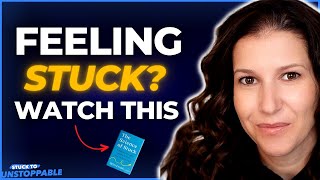
Britt Frank explains why people feel stuck and how to get unstuck. She recommends avoiding the question "why," making three micro-choices instead, and picking one "yes." Anxiety is unmobilized survival energy that needs a way out.
Chapters
The number one strategic way to go from stuck to unstuck is to not ask why questions. Don't start with why. Start with what are three choices available to me right now? People, places, thoughts, things, things I can do. And then once you get momentum, then we can figure out why and what and who and what happened to you that caused this to happen. But do not start with why.
It's 2023. It's time to make the best life ever, right? We hear that every single year. Hey, it's your New Year's resolution. It's your New Year's. This. It's time to do that. However, if we're honest with ourselves, most of us will follow back into whatever behavior pattern we had in 2022 and 21 and 2020. I would define that as not making progress, and I would define not making progress as being stuck. Now, I'm excited to talk to you because you actually have a background in the science of being stuck.
So.
So talk to me a little bit about the science of being stuck, because I think people should understand better why they have such a hard time changing their behavior patterns to ultimately get where they want to go.
I love that your stuff is called Stuck to unstoppable. Because, like, my thing is all about being stuck. And I'm sure you found this too. The number one story that I hear as a clinician why people think they're stuck is I'm unmotivated. I struggle with procrastination, I'm lazy, all of these things. And it's like, okay, well, not only is that not helpful, it's also not true. There are reasons that 2023 resolutions are dead in the water by next week. What is it? January 19th is quitting day. Historically, there's a reason that we do the same thing over and over. And it has nothing to do with laziness. It has nothing to do with lack of motivation. And the reason we stay stuck, one of the main reasons, is because we have all the wrong information. Well, if it's just me, this is who I am. I just don't have a get up. I can't focus. I don't. I. I'm not good with systems. It's like, no, no, here's how you drive your brain. And when you understand how your brain works, you can get going. So I have my forward facing. I, you know, I'm an expert in this, blah, blah, blah. But I'm also a recovering hot mess of a disaster of a human being. And so I've lived this from both Sides of the couch.
Yeah. Which I love because, you know, I find that people tend to relate to those that have already been there and done that. You know, one of the things that I've seen that I find pretty interesting is everybody has the opportunity to get whatever level of breakthrough that they're looking for. However, most of us, until something pushes us strongly, would probably not say we're willing to sacrifice today for a better future tomorrow. So what is it about the, the gravitational pull, if you will, on whether or not someone breaks through versus someone that doesn't? Because I know obviously you had a breakthrough in your life at different levels and numerous times. Obviously that's why you're so passionate about this, this particular category, which I love, by the way. But what do you, what is it in all your research have you, have you discovered that really holds people in that same behavior pattern?
And so this also, and this is my disclaimer with everything I do, assuming, you know, everything I talk about assumes you're in a safe enough environment and you have, you know, clean water and access to your basic needs. If you're in a war torn country. That's not what we're talking about here. So that's my disclaimer. And, and here's. This is sort of like if you want to get into the spiritual realm, know what Jung called shadow work or, you know, the subconscious self. A big dirty secret that I hear behind closed doors every day that no one will live tweet because it's not popular, is that we often stay stuck because there are benefits to doing nothing. There are benefits to not doing the things we want to do. You know, if you've got this, here are my intentions and here are my actions. The if the intention action gap is the Grand Canyon, I promise you there's a little benefit. And people get so upset and offended. I'm like, listen, I was a drug addict. I am not shaming people who are victims of X, Y and Z. However, you know, not having to risk financial resources, not having to upset your relationships. You know, a lot of people don't want to get fit because they're afraid if they get healthy and fit, they won't be attracted to their spouse. I have heard that often enough that that's a thing and no one wants to admit it. So when we are willing to get honest with ourselves about ourselves without shame, you can be honest and accountable without beating yourself. But when we get brutally honest with ourselves about not just what do I want to be, do, have, but what am I benefiting from not being, not doing, not having. That's the linchpin moment that change can happen.
Yeah, no, I love that. In fact, I was just thinking too, in some of the research that we've done, a lot of folks that have been through physical trauma, specifically sexual trauma, oftentimes either end up on the anorexic side of things and, or the, the obesity side of things as a protection mechanism to not attract would be assailant all over again. Which I think, I think kind of, kind of ties right into that. I'm curious, what are some of the benefits that you've discovered of the being stuck? I think you call them the four P's if you will, of being stuck?
Sure. I've got, I'm big. I've got my nine Cs and my four Ps and all of the things. And I am a sexual assault survivor. So, you know, some people get mad at me when they're like, you're victim blaming. I'm like, listen, I, I am captain of the compassion squad when it comes to certain types of injuries. Nevertheless, some of the benefits of us staying stuck is it's protective. Like you said, you know, if you've been sexually assaulted and you either don't eat and try to shrink and I've been on both sides of all of the eating disorder spectrums, or, you know, I'm going to take up more space or try to take up less space, it's a protective measure. And it pre it. In our brains, we think it's going to prevent harm. And those are some of the P's. It's protective. We feel like it can prevent things. And none of that is, I mean, none of that is optimal. But the thing that people don't realize is our brains are not organized for optimized living. They're not organized for productivity and happiness and entrepreneurial success and eight figures. Our brains are organized to conserve as much energy as possible and to keep us alive. And it doesn't mean it's like, great, I'm just going to stay on the couch because my brain is organized for suboptimal activity. It's no knowing how your brain works gives you, this is how you drive it. Like, I can't drive a stick shift. Like, if you put me in a car with a stick, it's going to be bad. But that doesn't mean that the car is bad. It just means I don't have the skill set and the information and all of these unachieved goals, empty day planners, abandoned resolutions. It's the same thing. If you have the skills and you know how to drive, you're going to get it done. So we need to know what's the benefit of the behavior? Because all behavior has a function. All of it. Even bad behavior has a function.
No, I totally agree with you. You know, it's funny, I. I've discovered a long time ago that self sabotage to me is nothing more of the subconscious like getting in the way of the conscious choice. Right. So if you become more aware of where you want to go and spend more of your energy and focus there, it seems like it allows for a smaller disruption for the subconscious to kind of interrupt you. Would you say that's probably accurate?
Yes. And I love that you named it because the self sabotage like the language and I'm not just nitpicky about words to be a snob. It's the language that we speak to ourselves about ourselves. It matters because our brains are listening all day, every day to everything we tell ourselves. Self sabotage is not a thing. The reason that we, we do what we call self sabotage is because we're trying to protect ourselves. Our subconscious isn't trying to interfere with our best life. Our subconscious is trying to keep us alive. And if it thinks the best way to keep us alive is to mess with our goals, it's going to. So when you make the subconscious conscious, which is shadow work, which I love, it sounds so woo. But all shadow work is, is taking all the things you're not aware of and making them aware. So now make conscious choices. Then things really powerful shifts can happen. And it, it's not like a. Just trust me. It's like this is how our brains work. Our brains are organized for survival, not for optimized living. And we can work with that and change it.
Yeah, no, that's so good. You know, I was just thinking to myself too, you know, when it comes down to it, as you're kind of used, you can see. I guess for me obviously I had a fairly traumatic numerous different things like just like you. Um, one of the things that became pretty self evident is the intentional focus of becoming increasingly more self aware on a day in and day out basis. I just had a meeting with one of my management teams and they're like, you do realize that when people want something in the company, they don't come to the leader. They go to you. And then you're. You disrupt that by accident. Because we know you're aware of this, but you can't help it because your heart's this Big like, dude, like, hook us up. Like, stop taking those, those, those conversations. And they're right. I do know that, like, I, I know that I want a team that does X, Y and Z. And I want them to feel, you know, like the, that this place is going to take good care of and I want them to perform at high levels and all kinds of stuff, you know, but even then, I have to stop in the moment. Like 30 minutes after that conversation, I had a team member walk in. It's like, hey, I got this going on. He said, you know what? I'm going to take a step here towards the right direction, becoming more aware, right? So I'll say, okay, well, here's what I want you to do. Rather than talk to me about it, go ahead and talk to your team lead about it, right? Because you're bringing, you're bringing yourself into your workspace, your business, on a consistent basis. You're bringing you into your relationships. You know, I think, I think I've forgotten who said it, but they said one of the greatest things you can do to change your relationships is to work on you. Right? That whole, that whole category. When we start looking at leveraging stuck for us rather than against us, and maybe use the shadow work framework, how. What are some tactical, practical steps? Like, if I'm going to change my daily routine, in what way will we do that?
So the number one, forget about shadow work and subconscious. And all of these, which I love, but like putting them aside for a second, the number one strategic way to go from stuck to unstuck is to not ask why questions. And I know it's counterintuitive because all of the business information say, start with why. Know your why. Like, that's cool. If you're talking about business development, that is not cool. When you are stuck in this gap between what you say you want and what you're doing. Because why? Just keep. See, why am I not doing the thing I want? I don't understand why I keep doing the same thing over and over. That's not helpful. Like, I can sit here and analyze your why and get out my whiteboard, but knowing why something's happening does not change it. To get from stuck to go, don't start with why. Why. Start with what are three choices available to me right now? People, places, thoughts, things, things I can do three little ones, not giant steps. But what are three micro yeses that I can pick from now? Pick one and go. And then once you get momentum, then we can figure out why and what and who and what happened to you that caused this to happen. But do not start with why. The number one contributor to staying stuck is starting with Y. Throw the Y, put the Y on the shelf. We'll deal with Y later.
So we talking. Are we going from why to what, then?
Yes. Yes. Forget why. What are three choices? What of those three choices am I going to say yes to find a yes? Because yes is where your gas pedal is. And then once you get momentum. This is a physics principle, a spiritual principle. It's just true. Momentum produces more momentum. You know, an object in motion will stay in motion. But asking why is sort of contributing to this inertia of the nothing and the stuckness.
Yeah, yeah. I'm a big believer in asking why only in the moments of reflection.
Yes.
Don't. I don't ask why in the moments of direction or application.
Yes. Like if a. If a building was on fire and you and I were having this conversation, like, okay, the building's burning, so why is this building on fire? I wonder.
No, I'm out the door. See you later. Peace.
Get out the door. And then once we're safe and once we've gotten to somewhere grounded, then we. Then why is actually incredible. Like you said, it's very important to know why. But you don't start with why when there is a moment that needs to have action. Do why. Step five. Do what? Step one. And watch how fast you get moving.
Yeah, no, I love that. You know, the other thing too, I was thinking of too, is as someone who's managed to myself break through some things and. And have a reasonably successful career so far, I would consider it successful. You know, I get to do some of the things that I love doing and help a lot of people. One of the things that kind of. Kind of sticks out of my mind a little bit is the importance of leading by reading. So I'm a big believer in one of the reasons that I was able to make a transition. I believe you made a transition because we. We got into part of our how and our what was like reading quality materials, getting quality mentorship, and going through those processes, which is actually how I discovered you. Because you have this brand new spanking book. Right. The Science of Stuck. Right. Which I just loved. Inside of that, I. One of my biggest things that I thought was the biggest one of. There's lots of takeaways, but one of the ones that I loved, absolutely loved, is leveraging anxiety for you when everybody else is running from it. Right. And I got to thinking, I was like, is Anxiety, really just being uncomfortable. Like, is it really anxiety? Right, yeah.
I'm smiling so big because again, I grew up with anxiety disorders. I've had what we call panic attacks. It's awful. It is a profoundly unpleasant feeling. However, anxiety is nothing but unmobilized survival energy. And so the more we medicate that energy, the less clear we are on what we want, what needs to happen, where we need to go. Anxiety is awful, but we need it. It's like without it, we're going to have no get up and go energy. So rather than trying to get rid of, how do I stop panic? You don't need to stop panic. You need to understand panic is energy. It's fight, flight, freeze energy to keep you alive. But you can harness that and use it to achieve your goals. Well, I just feel so, you know, making those sales calls just freaks me out. I'm like, my hunches. It's the story you're telling yourself about the sales call that's freaking you out. And since we're taking the why out of the equation, what are three choices? I could call this person, this person and that person. This person's the least scary. So do that one. Go. Once you take the story out of the equation, anxiety is pure, unmobilized energy that we can use. And again, I say that with a great deal of compassion, because if you don't know that's what's happening, it's terrifying. But panic doesn't attack. Panic is a response to the environment. But nothing in our physiology is out to get us. And so panic is not an attack. It is a response for sure.
And the reality is, I know you've done a lot of caveats and trying to help people understand that. Look, I've been there, I got it. I understand. I've. I've recently discovered that we all have to be one part line and one part lamb in any given moment. And one of the things that, in that framework specifically, that I've also discovered is if it's not truthful, it won't be helpful. Right. So one of the things I think we're both trying to communicate to everybody watching or listening specifically, is no matter where you're at, the thing that you're afraid of, the thing that you are trying to run away from, the thing that you're putting distance from, is probably the very same thing you need to surrender to. Right? My transformation came through. Element surrender. My son just went through this just recently. Quick. Just a super quick story. He recently began selling products up in Charlotte North Carolina, which is fantastic. He's brand spanking new. He's married. He went through sales training. And of course, week one out of the gate, I said, look, don't try to sell. Try to build relationships. Do that. He's like, okay, may sounds good. So at one week goes by, two weeks go by, three weeks goes by, four weeks goes by, and people that started with him were outselling him 10 to 1. So he comes back and he's all defeated. I'm like, what's going on? He's like, well, I just. I don't know. I just. I can't sell. I'm like, it sounds like you're not leaning into the thing you need to lean into. Sure enough, we have our Christmas break, our holiday break. He comes in, you know, we have our little son, dad, mentor moment. And he's got other mentors in his life. So I don't take full credit for this financial means leaves there, goes to the. Goes back to the marketplace, and immediately starts selling consistently. So he calls me, and of course he's excited. This is just a week or so ago calls me, he's excited. Guess what? I'm like, what? He's like, I sold seven. I'm like, really? Congratulate. That's awesome. What changed? He goes, I realized I was just looking at it all wrong. I was. I was spending so much time, like, trying to. They're not going to buy from me. Like, so much time and insecurity rather than just putting yourself out there. And I find that a lot of us, at least for me, would operate from an insecurity perspective that was actually built on a traumatic experience earlier that actually taught me a lifeline that wasn't true. So how does trauma shape our. Our behavior patterns and thought patterns as it relates to all the things that we're trying to basically bring forth?
And the trauma piece is huge. And a lot of people think that trauma only means that, you know, these horrible things. I had a bad childhood, or I was in a war or assaulted, but, like, there's a million ways that the human brain. I just think of trauma as being overwhelmed or your brain gets stuck. So, you know, if. If people are tripping out on the word trauma, just don't worry about the word. Has there been a place in your life where your brain was overwhelmed or flooded or not getting enough of the thing it did need, or, you know, getting too much of things it didn't eat? It doesn't matter. But trauma will always create a story of not good enough, not worthy Enough, not capable. Always, always, always. And again, it's those little story makers. They're not bad, these parts of us that tell us we're not good, we're not capable. It's just that they don't have the right information. That would be, like, to use the car metaphor, me sitting in an empty, you know, in a car with no gas and going, what's wrong with me? I'm such a bad driver. Like, I just can't do this driving thing. It's like, no, the car is like, the tank's empty and the gas station's up the road, and I'm going to help you push the car, and once the gas is full, like, off you go. And so people don't understand that these traumatic experiences from whatever level will create these stories, these narratives of not enough, not capable, et cetera. And they're just not true. It's just, you know, like, the thing that we think makes us broken are often our brains just doing what brains are supposed to do, which is keep us alive. And again, if, you know, the design of how the brain is organized and how it interprets, then, you know, I still have imposter syndrome. But when I hear that voice that says, don't say that, don't do that, don't write that, don't put that out into the world, I usually go, thank you for your input. I so appreciate it. So appreciate it. Thanks for being here. I got this. And then off you go. It's like managing a team. You want to listen to everybody's input, but that doesn't mean you're going to believe everybody's tale. So we want to put the stories to rest, and then that's why we want to just pick something and go. Because that interrupts the storytelling that keeps us stuck.
It.
Oh, the stories will always shut us down a lot faster than the task, no matter how uncomfortable the task may be.
Yeah, I mean, one of the number one things that I've routinely heard throughout the course of time we've had the show from folks that have, you know, started off in very difficult circumstances, done some really, really amazing things. Nowadays, nowadays, one of the number one things that comes up routinely, consistently is, like, if I had to choose one thing that could get you ultimate breakthrough, like today, like, to literally go from stuck to one thing, it's like, change the way you talk to yourself, period.
Yes.
For some reason, we. We beat our. We talk to ourselves in ways that we would never talk to our loved ones. Consistently. Talk to me a little about the science of self talk, since it's so important so we can maybe help the listeners and the viewers really break it down even further. I want to be able to get to them to the point where they capture it. It's like, oh, just like you were talking about, hey, I got this. Appreciate your input.
So, and this was one of the most fascinating things I discovered in my research and in my personal development and my healing and all the things is that, you know, I've seen memes that say, be the person your dog thinks you are. So it's like, talk to yourself the way you would talk to your dog. But instead of, you know, most of us when we think or we talk to ourselves, it's in, I suck, I can't, I shouldn't, blahdy blah. But instead of using I statements, talk to yourself in the third person. And there have been studies that show, and I'll explain what I mean, third person self talk actually produces better results because we tend to talk to other people more kindly than we do to ourselves. And when we yell at ourselves and we beat ourselves up, we release cortisol, which creates more of a stress response, which creates more of the thing we don't want. So instead of saying, oh my God, I just can't do this, it's, hey, but talk to yourself like you were giving a pep talk to someone on a little league team. Hey, Brett, I know you're feeling really awful. I know your stomach hurts. I know you feel like you're going to puke. I know you feel like the walls are caving in. But I promise you, I'm going to help you through this. You can do this. You got this. And it sounds so hokey and so cheesy. And I work with a lot of really high functioning people who roll their eyes and they're like, really bright. Like, I'm good enough and I'm smart enough and everybody likes me. I'm like, yeah, but there's science to prove that talking to yourself, using your name as if you're talking to someone else, it works. So I don't care if it's cheesy your way, my old way, your old way doesn't work. So just from an efficiency standpoint, if you switch from I, me, my to talking to yourself in your name or your pronouns, like, hey, okay, she, she really doesn't want to do this, but I know it's going to be okay if she goes, use third person, your name. That works because it creates space. And it's amazing how fast that one little shift in how you talk to yourself will work again.
It's the number one thing that I see consistently through everybody we've had on the show and everybody that I know that that has. That is, that's doing pretty incredible things. Right. I think the difference between incredible and our lackluster is nothing more than what we've just been talking about. Now, I am curious. I've also known several folks that in their traumatic experience seem to get to a place where they live in a victimhood mentality or in the victimization mentality. What is the science of stuck? How does all that. What. What can we do to help the victim mindset be eliminated and get them moving forward as well?
And this one is so, so it's such a sensitive area and it's the place where people tend to get really, really heated and they flex up because it' blaming victims. Like, legitimately, terrible things happen to people, Terrible things happen to you. Terrible things happen to me. And no one is taking that away. But we want to hold, and this is where like this binary either or thinking is totally useless. We want to hold space for two things to be true at the same time. One, what happened to you was really bad. And. And, and is one of the most powerful, like, qualifiers in our language. What happened to you was really bad, and it doesn't define you. What happened to me was really bad, and it doesn't mean I can't. What happened to me was really bad and. But here where this little shadow thing comes in, and I will only speak for myself, not for everybody, but for me, especially when it comes to the relational trauma and sexual assault trauma, intimate partner violence and all of these things, I didn't deserve it. What? I was genuinely a victim of certain behaviors. However, and I will admit this part of me stayed stuck because as long as I was with someone worse than me, I never had to deal with my own stuff. And it doesn't mean I deserved it and it doesn't mean that, well, you stayed. So, you know, if you stayed, it's your fault. No, no, no, no. We' victim blaming. I am admitting there was a benefit to my staying in incredibly toxic situations because I could point and go, look, well, he's up to I, he's bad, I'm good. There we go. But I had a very skilled therapist look at me and go, yeah, what happened to you was awful and you didn't deserve it, and you have some crap that you're probably going to want to look at or this is just going to be a cycle. But If I was in victim mode, that felt protective and again, compassion on the dilemma. But you can own what happened to you without being defined by it and without having it be able blanket that protects you from the work of self discovery. Self discovery smells. It's yucky, it's worth it, but it's icky. And so being in victimhood sort of defers that process.
Yeah.
And that's not helpful.
Yeah. No, I've also seen this technique.
Because, you know, we've worked with a handful of folks that they're the victim mindset. Again, love, grace, hugs. Like, come here. I know, I know it hurt. Come here. Like, let's. Let's love on you some. All of that in a bag of chips. However, one of the things that we've seen work, and I'm curious to hear your feedback on it, is sitting down in a moment of reflection and saying, okay, what is this mindset actually costing me now? What does the mindset cost me? Like, what is. What is it costing me to. To not open myself up to possibility of personal professional development? What is it costing me to not take care of my physical health because I'm worried about a future wound? What does it cost me to.
Not put myself out there for a new relationship once I'm ready, like, start working through some of those things? And it seems like we can get to a place where the cost of not doing work ends up being more painful than the cost of doing the work.
And that's when we change. And that's why I tell people approach this like, personal development, like, you would your business do a cost benefit analysis. Because often we know what it's costing us to not do, to not call, to whatever. But what are the benefits? Because like you just said, we have to shift the cost benefit ratio. Because as long as I was in my victim mode, which make no mistake, I stayed there for a very long time and I wanted people to coddle me. And now I understand that it wasn't until people started treating me as if I were a whole. When you speak into someone's wholeness and not into their injury, that's when things start to shift because people stopped buying what I was selling. You know, emotionally, it's like I. I can and I. And it'll never work. And poor me. And it's like I had people who refused to enable those stories. And I hated it when people spoke into my wholeness because it didn't feel good because they weren't coddling me. But there's a way to lovingly call Someone into their wholeness without denying them the reality of what happened to them. And that's really the art of making the cost. We want the cost column to be so high that you have no choice other than to go, okay, I surrender, I'm going to change. But as long as you're benefiting more than exhausting, you're not going to change. That's just humanity.
Yeah, well, I want to stay in this, this subject matter just for a second of trauma and vic and victim mindset, even self sabotage a little bit. Because I think at some level we, we've all done that. Like me getting a, as a teenager getting a bad grade and when I thought everything in my dreams was based on me getting a good grade, it could, could seem like a traumatic experience all the way up to physically being harmed and things of that nature. So we have, of both sides of the spectrum, but to that person it's the most important pain at that moment. I'm curious from your feedback and your, in your research, everything, how does the, how does forgiveness play into that? How does forgiveness of the events, the circumstances and the people free you? Or does it free you? Like what, what does it, what does the science show us?
And I'm really big on forgiveness as a operating human principle, as a spiritual principle. But there are a lot of faith traditions that m up this forgiveness thing by saying you can't heal until you forgive. And that is just not accurate. Like you do not need to forgive to create a new neural pathway. We know that trauma messes up your brain network and creates fight, flight, freeze responses and creates all of this stuff that we don't want. Forgiveness is a very high level, very like conscientious decision that you make. Like to forgive or not to forgive requires you to make a decision. But trauma impairs our decision making capacity. So it's not, not forgive and then you'll heal. It's let's heal your trauma and then you can figure out what you want to do with the forgiveness thing. But I spent some time in a faith based tradition that was very militant that if I don't forgive, I cannot heal. And that what that does is it takes my choice away.
Yeah.
Now the definition of trauma is you have no choices because if we could have chosen, we would have chosen not to be traumatized. So with this forgiveness thing, when you weaponize forgiveness and you take the choice away, that's, that's going to freeze people in place. So it's not that forgiveness is not part of the equation, but just like the why question. You don't start with forgiveness. Let's start with validating what happened to you. Let's start not with letting someone else off the hook, even though that might be in your best interest. It doesn't matter. Forget about them for a second. Let's focus on you. And then once you're healed up, once you heal your neural pathways enough so your nervous system is not like sounding the alarm every second of every day, then figure out what you want to do with forgiveness. But forgiveness is as a. You know, some people believe spiritually, if you don't forgive, you can't be a whole person. That's a personal decision. But if we're talking neurologically, from a trauma healing perspective, you don't need to forgive someone to heal trauma. In fact, forgiveness is a lot easier after your trauma gets healed. And when I say healed, I don't mean that it's never an issue. I don't mean you never get triggered. I just mean you don't lead with it. You know, I'm not bleeding out all day every day experiencing flashbacks. Doesn't mean I don't get triggered. Doesn't mean I don't need help too. It just means it's not the thing that's frustrating. Front center. So forgiveness, make that a step. Five steps. Make that a mile. Eight question. Not a mile. One question.
No, I totally agree with that. In fact, I would say that there's a certain level of healing that you will need to have in place before you're actually in a capacity to truly forgive. I do think ultimately long term, it makes sense to let go, but you also have to work that journey. You know, I was thinking through some of the things that I've been through in my life. Event set, event happened. When I'm nine years old, I don't even start working on the forgiveness pace now. I started personal development. Gosh, 16 years old, I started working, like, working on me a little bit, you know, getting here, a little bit information here, there. I was probably 28, 29 years old, 30 years old before I got to a place where I'd have enough personal professional development as well as enough internal healing to put my heart and my mind, my soul in a place to be open to truly forgiving said person, event or situation. Had I tried to do that too early, it wouldn't have had nowhere near the effect. In fact, I think it would have probably set me back because I wouldn't have been in a healed enough state to really deal with it.
I love that. And you Know the forgiveness thing, that the freedom to not forgive actually frees us up to create enough healing where forgiveness becomes possible. So like you said, it's not lead. And sometimes forgiveness just becomes irrelevant. Like for some of the assault trauma that I've had. If you ask me, do I forgive the perpetrator? It's like it's not that I have let it go and it's not that I forgive. It's just like I hope they're healthy and well because healthy and well people don't assault people. So like, it's not like it's more of a rational self interest thing. It's not like I forgive. It's more like, yeah, I hope that person's healthy and happy and thriving because that's best for humanity. If they're not like leading from their wounds, but like it forgiveness, sometimes you can just, you know, transition beyond where forgiveness is even relevant. It's like, it's not a. It's not a forgiveness thing. It's just I. I wish them well. Some people might call that forgiveness, but I just call it rational self interest.
Well, I mean, look at it this way. I look at it this way too. Like you are the person you are now due to traumatic events, but also doing to. Also due to the learning that has cost you or caused you to do as it relates to the healing portion, which has allowed you to actually give humanity back something really powerful level. So I kind of know the answer to this next question, but I'm gonna ask it anyway. I'm very curious to know because I always like to. I actually like to know the, the, the behind the scenes, you know, VH1 behind the scenes, right? This is how this band became this band or whatever. I love that kind of thing behind, behind people as well. The science of stuck. All right. I've. I've been digesting it. I absolutely love it. It's full of all kinds of content that is a framework and for people who are. Are legitimately trying to get there intellectually as well as spiritually and emotionally, I think it's a really powerful resource. How did one. How did you become so, so passionate about this concept of stuck and to. Why now? Why. Why science is stuck now?
I love that question so much. And the whole like everything happens for a reason that can skew into toxic positivity and you know, like, I would love to have the knowledge I have now without the trauma that sort of birth the knowledge, you know, like, can I have it both ways?
Yeah.
So, you know, people say, you know, there's step saying that I really love. It's that with enough healing and recovery, you'll neither regret the past nor wish to shut the door on it. So I tell people I wouldn't want to relive one second of my history, but I regret zero of it. And if I could go back and trade in what I know now for an easier life, I would say no, because again, I don't want to repeat it. But, you know, like, if I had to have that to have this, it doesn't mean that it happened for a reason. It just means this is the cards that I've been dealt. So. So I accept that and I surrender to it. So, okay, why stuck now? I started working on the book, oddly, before the pandemic, and then the pandemic hit and suddenly stuck was a quite literal state.
Global sense.
Yeah, a global state of stuck. So I wrote this particular book because when I was in early recovery and my brain was all foggy and I was either like being on drugs or trying to come off of them or being high on bad relationships or trying to detox off whatever, I didn't have the bandwidth to read the entire stack of books that everyone has on their nightstand. Like, here's the anxiety book, and here's the relational book and the boundaries book. I needed one book that sort of cherry picked the best of the best of what everyone was saying in like a CliffsNotes. Here's. So my book isn't like, here's Brit Frank's like, guide to life. Like, no, no, no, here's my show and tell of. Here's what I think the bottom lines about trauma are that you need to know to get started. Here are the bottom lines about how to channel and harness anxiety. Here are the bottom lines about how to set boundaries so you can have one place for everything. And then you don'.
In like, okay, now there's this fluff. And now there's this. It's like, take out the fluff. Here are the bottom lines. And I wrote that book because it's what I wish I had had. So I wrote that book for my younger self who. Who needed it.
Yeah, no, I. I love that so much because I. I'm always telling people, and again, some friends of mine argue about where, where this quote came from originally. But I've always believed one of the greatest purposes in life you'll ever have is serving the person used to be. Well, that you don't serve. You can only serve the person you used to be with the information that you know now based on where they are now. Right. And I love that so much because I love the fact that you're giving back in that capacity. We know we start thinking through the science of stuff. We start thinking through kind of breakthrough transformation next what I refer to as next level living. You know, it's, it's, it's crazy. I can speak for myself here. It's crazy to me that once you've been through the transformational process, no matter how painful the process of giving, call it giving birth or calling any number of. Of of things we know are very difficult, there is a certain beauty to it on the flip side of it. Right. And I think for all the listeners and the watchers, I want to our viewers, I want to make sure that they, they lean into that for 20, 23. Like, lean into the thing that's scary. Lean into the thing that's impeding your progress. Lean into the thing that you're. You're struggling to kind of like, make sense of. Right. Kind of surrender to it. And, you know, I'm a big believer that in time, if you surrender now and you sacrifice to the unknown, you get to live ultimately what you desire to be known. Right. So as you're putting all this together and you're. And you're looking at creating a movement, which you've been doing for a while now, is there a certain aspect of your, your book that really stands out to you? Is there one chapter that really speaks to you? Specific? I know as an author myself, like, I love every. You know, I love what we put out and I love what we offer the world. But there's always tends to be one or two chapters that are, like, deeply personal to me. Do you have any chapters like that in your book?
It's like asking me to pick a favorite child. Oh, so good. So, you know, your question earlier, why am I so passionate about this? You know, I grew up in a family with just like, a pretty sordid history, Severe mental illness, just a lot of shenanigans, a lot of just not good stuff. I really thought I was crazy. Like, I genuinely believed to every bone in my body that I was just doomed genetically and in every other way to just be a crazy person. And I would live out my years just being crazy. The biggest thing in this book, book, and it's a theme that I've woven throughout, is there's no such thing as a crazy person. Crazy is a word we use to label things we don't understand. And so, you know, whether it's the. Here's the neuroscience chapter or here's the relationship chapter. It's like you're not crazy up close, everyone's stuff makes sense. You may not know why, you may not understand it, but I promise you like crazy is just not a biological reality. It's not a thing. And so I really love the neuroscience chapter because that outlines here's what's happening. But I also love the shadow work chapter because like me personally, even though the book is like cherry picked bottom lines, I love a good deep dive. So I put footnotes. I've sort of breadcrumb trailed that for people who want a deeper dive. Understanding how to work on radical self honesty but without shame, I think is the key to all of this. Because if you are radically honest and beating yourself up, you're going to go nowhere. If you're lying to yourself, you're going to go nowhere. But when you can put radical self honesty with radical self compassion, watch how fast things shift. Like powerful shifts. It is, it's. People think if I'm compassionate on myself, I'm co signing on my bad behavior. And it's like, no, you can be compassionate and accountable at the same time. Those can coexist.
Yeah. And it doesn't take that long to develop once you put the, the intensity behind it. From what I've seen, I'm curious obviously. So I'm, I highly recommend the book myself, personally.
Thank you.
I mentioned, I mentioned everybody before. If you're going to grow, whether it's this year, next year or whatever, you're going to need resources to get there. You know, people always say, well, I know who I am and I know what I need. I'm like, if you knew who you were and what you need, you'd already be there. Right? Let's just be, let's just be radically honest with ourselves. Right? And I say that with love because I'm, I'm, I was one of those folks. I already know this and I already know that. And then I realized very quickly that books, resources, tools, mentorship are, are, are legitimately what it takes. Because the kind of stuff that you are sharing with the world and the kind of stuff that we both believe as it relates to breakthrough and transformation and all this kind of stuff is not taught in school. Like, like they'll teach you everything about history and they'll teach you everything about science and use this beaker for this and cut the pig this way and all this kind of stuff. But no one tells you how to, how to do shadow work. No one tells you how to identify your own strengths and struggles. The like. In a healthy environment, no one teaches you how to deal with blame and shame. No one teaches you how to deal with difficult upbringings or, you know, like it or not. Our parents, for example, they do have an impact, but they don't have to define your life. Right. They can impact your life. You can choose. Hey. Hey. I realized that my mom and dad maybe didn't do this really well. However, I really like this character trait. Right. They don't teach this kind of stuff in school as much as I wish they would, which is why I think everybody should go get the book for sure. And absolutely do that. I'm curious if, when, as far as continuing the conversation with you and learning more about the work that you're doing and, you know, not just picking up the book, but also maybe doing some work with you or, or something like that, what's the best way for them to connect with you?
So My website is scienceofstuck.com and I'm on Instagram, like for hours because I love talking to people. So I, you know, try to answer every DM and I try to talk to everyone who I meet there. So it's just at Britt Frank and Brit has two T's and those are the best way. And you can buy the book wherever you buy books. Bucks.
I love it. I love it. All right, so I got one final question for you, and I like to ask this of all my amazing thought leader friends. What is the definition or what is your definition of becoming unstoppable?
O, that's a good question. Okay.
So I'm stealing a bit of an author that I love, M. Scott Peek. He says mental health is a commitment to reality at all costs. So I didn't come up with that. So the definition of becoming unstoppable is a ferocious commitment to your reality without shame.
I love it. I love it. Brit, thank you so much for spending some time with me today. This episode is packed full of all kinds of good stuff. So I. I can't wait for everybody to re engage with you and learn more about you. They absolutely need to go pick up the book for sure. But yeah, we have to do this again.
This was so much fun. You're awesome. Like, anytime you want to dive into any of these things, please have me back because this was awesome.
I love it. I love it. All right, we'll take care.
Thank you so much.
I hope you liked that video. And if you did, make sure you check out this next video right here.
You cannot live in the past. It's like when you're driving your car, the rear view mirror is smaller than the windshield for a reason. You need more room to look forward than you do to look backwards. You can't do it the other way around. The same thing happens in our lives when we live in our past. We have to get out of the rearview mirrors, the good and the bad, and focus on today and start picking up your pen to write your story.
More from Stephen







Paralyzed. Suicidal. Then He Surrendered, And EVERYTHING Shifted | Marcus Aurelius Anderson


Why You Snap At People You Love, The ALIGN Method, & Why ADHD Isn't A Disorder | Sara Hartley

