Why God Never Gives You a Crown Without First Giving You a Staff
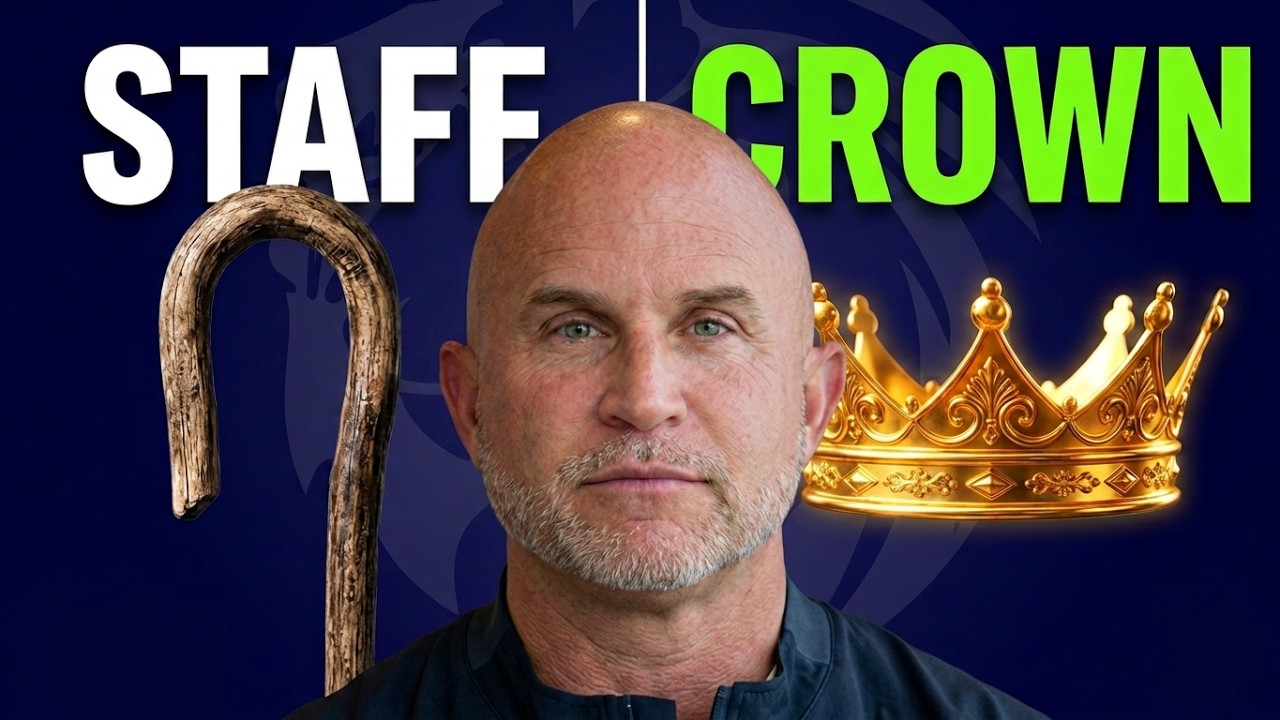
Stephen Scoggins traces a hidden biblical pattern where God chooses shepherds as the prototype for leadership: Abel, Abraham, Jacob, Moses, David, and Jesus all began as shepherds before receiving authority. True leadership is forged in private, invisible preparation that develops character before public crowns.
Chapters
Hey there. Welcome back. If this is your first time here, welcome. I'm Stephen Scoggins, best known for going from homelessness to building an organization approaching 9 figures in annual revenue consistently over the course of 25 years. And I spent a lot of time helping faith-aligned leaders build scalable companies with biblical principles that actually work. However, recently I have loved doing new videos like this because I feel like there's deeper meaning in Scripture, and different frameworks and patterns, uh, that when we adopt and we will use as quickly as possible, um, everything blossoms. Everything's good. Everything, everything is just wonderful. So today I want to give you what I think is one of the most profound hidden patterns running through the entire Bible. And I do mean through the entire Bible, all the way from Cain and Abel, all the way through today, uh, especially through Jesus's day. And here's the hidden pattern and the through line for today: why God keeps choosing shepherds. Do you know that God, on almost every instance, uses the shepherd as the core attribute of what it means to have integrated leadership? What's really interesting, it was one of the most shunned professions in the entire Bible, yet it was the first place that showed up when Jesus was born. Yeshua. So if you're a faith-aligned leader, you're going to want to pay attention to this because we're going to break some stuff down that probably will blow your mind. Because when I began researching for this video and putting this together, it blew my mind. Have you ever wondered why some of the greatest leaders in the Bible all had the exact same profession before God called them into their ultimate assignment? Abel, Abraham, Jacob, Moses, David, Even the first people to see the newborn Messiah were all one thing. They were all shepherds. Now, sure, you get one person, profession shepherd, great. Centuries later, you might get one more shepherd. Okay, great. You could argue maybe it's a coincidence. However, when you see this recurring theme, you're going to realize very quickly it's not a coincidence. In fact, I believe if you understand why God keeps choosing shepherds, you'll understand how God develops every leader he intends to trust with real influence, maybe some cases affluence. Because before God gives someone a crown, he almost always gives them a staff. So let's go a little deeper. The pattern that nobody talks about. Most Christians know the stories. Few notice the patterns. Genesis opens with two brothers, Cain and Abel, largely going back and forth. I believe, in contrast, God's showing us what it's like to be fully accepted and fully leaning into God's love, favor, and beyond, and what it means to resist it and try to earn it through actions and activities and striving, ultimately showing us that the shepherd pattern works the best. Here's an example. Cain was a builder, a farmer, a producer, culture creator. And then we have Abel. Abel was a shepherd, a protector, a caretaker. Genesis immediately introduces us to two different ways humans interact with all of creation. And now you can take that same interaction of creation and look at it from the interaction in the marketplace, in your home life, in your relationships, and beyond. The reality is, is one extracts and one protects. One manages resources, one manages lives. Neither occupation is sinful, but notice which offering God receives and why. Hebrews tell us that Abel offered by faith Faith changes work into worship. And yet Cain came from a place of striving and earning. What I've discovered in this study is shepherding changes the soul. Imagine waking every morning responsible for creatures that cannot survive without you. They cannot fight. They cannot navigate. They panic easily. They wander. Sound familiar? I call that humanity. Today's humanity. Culture. Chaos. Dysfunction. Wandering aimlessly. Getting in your own way, doing your own thing, breaking your own thing. I know that because I've also lived it as well. God wasn't simply teaching a future king how to handle sheep. He was teaching them how to understand people, because sheep reveal the human condition. This is one of scripture's most humbling metaphors. The more and more I studied it, the more and more eye-opening it became. God could have compared us to lions. He didn't. Eagles? No. Horses, no. Sheep, yes. Why? Not because sheep are stupid, because sheep are dependent. They lose direction. They require guidance. They're vulnerable. That isn't an insult. It's actually a beautiful tapestry in the making because it's really theology in the background. Humanity was designed for dependence upon God from day one. Sin, by definition, is independence. And I'm a big believer that God doesn't hate sin because for sin, He hates sin because of what it does to us specifically. Also understand that every shepherd lives between wolves and sheep. That may be one of my favorite insights altogether. You see, a shepherd spends his life standing between danger and innocence, between predators and the vulnerable. That's Leadership 101, Integrated Leadership 101. A CEO, a quality one, protects culture. A father protects family. A pastor protects the relationship that he's ultimately giving it a message to the congregation. A king protects a nation. Leadership isn't standing in front of followers. Leadership is standing between followers and destruction. Let's say that again. Leadership, integrated leadership, is standing between followers and destruction. One of the most interesting things you're going to discover about shepherding is the shepherd carries a rod and a staff. Now, the staff at one end is going to have a big knobby end to help safely guide sheep to and from, left and right, backwards and forwards. And the rod, on the other hand, is a device for protection, a device against the wolves and the lions and the things that would come and attack the sheep. The rod, for example, for me, I can see justice, boldness, courageousness, strength. The staff, on the other hand, many times I can see mercy, restoration, correction, connection. One without the other becomes some form of abuse, whether it's abusing others or abusing self. Too much rod, you get tyranny. Too much staff, you get chaos. Real leaders learn them both, and they steward the wisdom to know the difference. This is where the lion and the lamb framework actually live. It's not something that's imposed on scripture, but it's an observation of biblical shepherds' archetypes. You see, shepherds must have the courage of a lion while facing the wolves and the— basically the bears and all the things. Oh my, right? And they also have to have the gentleness of the lamb. So when tending is required, they tend well, including helping wounded sheep. So many times our Great Comforter is our Great Shepherd. This is one of the things I want you to fully appreciate, because most of success that you're going to find in life of becoming one part lion and one part lamb is nothing more than modeling Yeshua, the ultimate Shepherd. Look at history. I gave you 8 names already, right? Abel, Abraham, Moses, David, Yeshua. There is a pattern that's there. It's a really simple pattern, but it's a profound one. Okay, so let's look at it from this perspective. Why God forms leaders in hidden places. When you look throughout scripture, most of us, if we lived our life right now, we think that leadership is somehow already established, that we get to walk into it easily, that we already start leading, that we have the people that we're leading or whatever we're doing. The reality is, is most leadership is done in private. So much of great callings require great crushings. Those crushings in the moment you think are going to literally kill you, and what you really ultimately find out is they were all preparing you. David, Moses, Joseph, even Jesus all went through the same dynamic. Notice something: not public ministry per se, private preparation. David fought lions before giants. Nobody applauded. Nobody posted about it. Nobody even knew. But heaven knew. Some of your greatest acts of obedience are going to be done in private. And you think that one day, maybe someday, one day if, one day that I'm going to have value. What if you already had value? What if it was just learning to steward the value you've already been given? And what's really wild, more times than not, is God often hides his greatest training inside of the ordinary days. I'm a big believer in something I learned from the Ramsey organization a number of years ago, of a quote, if you will, that everything should be done with excellence in the ordinary. Because the excellence in the ordinary, by definition, are actually acts of worship. When we spend time doing things to the best of our ability in a given moment and then turning them back to heaven, all of a sudden heaven can both multiply the very thing that we've given back. What's really interesting is as leaders, as immature leaders, We want to control every variable and every outcome. And what's even more interesting over top of that is every time we do that, we actually get in our own way. What I've dedicated the rest of my life to doing is putting forth my best effort, stewarding the best of my possibility, but letting all the outcomes end up being in the hands that create all the outcomes. Because most times than not, if not all the time, I can't even think of one right now off the top of my head where I felt like an outcome should be X, Y, Z. And then God made it D-E-F. Now, in this dynamic, God's outcome was always far better than mine. So I'm learning this element of trust over sacrifice. So I sacrifice, I endure, I empower, I encourage, I steward, but ultimately I turn over the outcome to God. At the end of the day, God makes it rain. God makes the harvest possible. It's our job simply to plant the seeds. And that's what integrated leadership looks like. And when you look at shepherds, that's exactly what shepherds did. From having the birth of the sheep to shearing the sheep, to stewarding the sheep across miles upon miles upon miles, defending them, protecting them, healing their wounds. That is one of the greatest lessons of integrated leadership I've ever seen. So much so that when you— when Jesus steps on the scene for the first time in humanity, Yeshua, What's really interesting is that when he does it, he does it in a stewardship, shepherd-like capacity. You never see him smacking his disciples or talking and yelling at them angrily. You hear him connecting with them, stewarding them, shepherding them towards what they need to understand, taking time with them. For those who are slower on one parable versus another parable that someone picked up quickly, Jesus took his time, integrated leadership. Takes its time and it's also built from the inside out. Another key attribute of these shepherds is they often went away in presence and silence. I can't think of a single man that I've already mentioned to you already that didn't step away intentionally with, with intention. This presence practice, by definition, is what gives you the undergirding to carry the mantle that you're supposed to step forward with. Okay, so if we're going to take the shepherd archetypes and the learning lessons and the mentorship and the embodiment of what a shepherd is, Here's what I'd like to understand or help you understand. There is a bit of a shepherd's curriculum. There is a bit of a design. So here's part of that design. Imagine like this: God designed a leadership school, and in this leadership school, he's going to teach different types of classes that culture teaches today. Culture might teach you how to make more money, create more revenue, create more profit, get better marketing, stand out, be louder, personal branding, all the things. Okay. Kingdom culture, shepherd culture teaches very, very, very, very, very different things. First of all, the class might look like this: patience, waiting, long-suffering, observation, listening, learning, modeling, adopting, testing, failing, surviving, starting up, starting over, learning the lesson, getting the mantle created, and then walking one step out at a time. I also see it including other items like protection and sacrifice, dependence, solitude, discernment, humility, courage. Now ask yourself, where do shepherds learn every one of those every single day? They learn them in the spirit of presence. And in the spirit of presence, we learn to see ourselves differently. And as a result, the things that we desire with our heart eventually become the things that God desires for us in his heart, ultimately giving us our heart's desires because our heart's desires are now lined up with his heart's desires. Now, here's the tricky part, because this is where I think culture and kingdom culture get a little bit off-kilter. Shepherds may smell like sheep for a while. This deserves more time than you could think of to understand that part of the sacrifice is nothing more than the learning curve and the development. This development happens in patience and presence. And one interesting thing about the shepherd smelling like their sheep They carry the scent of their flock. Jesus entered humanity. He didn't observe suffering. He entered it. Incarnation isn't simply theology. It's shepherding. The greatest leaders don't manage people from a distance. They know them. They spend time with them. They invest with them. They know their strengths or struggles and their blind spots. They're also aware of their own strengths and struggles and blind spots, which is why it makes more sense than not to understand the shepherd nature. I want you to see a bit of a contrast, or at least a bit of a connection, a pattern. I call it the Abel's lamb and Jesus the lamb. The connection is stunning because first the shepherd offers a lamb, then thousands of years later, the Good Shepherd becomes the lamb. Genesis begins with blood as Abel is stoned by his brother. Then the Gospels culminate with also blood. The Bible isn't 66 disconnected books. It's one unfolding story and a very, very, very wise tapestry that when you peel back the layers, you see unbelievably how interconnected they are. So let's talk about what it means to lead well. What does it mean to be an integrated leader? It means to be a shepherd king. David never stopped being a shepherd. He simply traded his sheep for Israel. Psalm 78 says something remarkable. God took David from leading the sheep to shepherding, or shepherd, Jacob's people. Notice David didn't change professions. He changed the activity within the profession, which is where the strength is. Only the size of the flock changed in his case. That is leadership. It's also why God said after David, "He's a man after my own heart," because he led so well in the private and in the presence that God could trust him in the public. Now, it would be unwise of us to not talk about something more important, what I refer to as the anti-shepherd. This anti-shepherd is the contrast version of what integrated leadership looks like. You're going to find it a lot with the Pharaohs, with Saul, Nebuchadnezzar, Herod. They rule through insecurity, fear, and arrogance more than anything else. 3 of the major 5 constraints that I share and teach from at the business level. And in Ezekiel 34, they condemn shepherds of Israel because they fed themselves instead of feeding the flock. That chapter is devastating. God says, I myself will shepherd my people. Hear, hear this again. God said, I myself will shepherd my people. And then Yeshua, Jesus, arrives and says, I am the Good Shepherd. That, my friends, is not random. In fact, it's so not random that Jesus is claiming to have fulfilled Ezekiel 34. So let's talk about the great reversal. The word says become powerful, then serve. Jesus says serve, then receive authority. Notice the difference between power and authority. Power elicits control. Authority elicits truth. So many times the leadership that we've been taught in our American Western culture, day after day, week after week, month over month, social media this, social media that, is all about developing power and control. The interesting thing about power and control is once you get a hold of it, it's so addictive you won't let go of it. Jesus is saying service is the way to true authority. Now, what's really interesting, power can be stripped from you, but authority, if earned, will never be stripped. In fact, it'll be compounded. God never gives crowns before character. He just doesn't operate that way. So when your character gets resolute, it gets sound, it gets fully integrated, God knows he can trust you with more. Part of that is how he loves us. Because I've been in times in business and leadership before where I want the next level of revenue and profit and all this kind of stuff. But if I was honest with myself, the entire infrastructure structure in which everything was built on was dysfunctional. There was chaos in it. It wasn't solid. So had God honored that prayer and gave me what I was asking for, what would have happened was the business would have imploded, my character would have imploded, and I would have destroyed the entire thing. Sometimes God's no is actually protection of the shepherd, of the one who knows how to shepherd wisely. So again, God never gives crowns before character. He never gives influence before integrity. He never gives nation before sheep. As we kind of wrap up today's video, I want you to really just consider a few things. Maybe you've been frustrated in your life because it feels ordinary, hidden, quiet, unknown, unseeking, unnoticed. Maybe you're wondering why God hasn't opened that next door. What if you're in the pasture? What if you're creating presence? What if you're laying an authority-driven pattern? What if the pastor isn't punishment? It truly is preparation. Because over thousands, if not tens of thousands of years, what we see in Scripture is every time God prepares an anointed leader, he makes them a shepherd first. And that shepherd is always hidden in the cleft of the rock, out in the field, not in the public eye. And that's when the shepherd proves that he's capable capable or she is capable of carrying that next mantle and that next calling, if you will. That's preparation. It's not punishment. I've lived this. I know what it's like to be unnoticed, unrecognized, misunderstood, constantly outcast. A huge chunk of my life was that. Even in this world of thought leadership, I'm different. I know I'm different, and that's okay. I want to be different. I don't want to be a guru. I don't want to be somebody who's selling stuff on a regular basis just to align my own pockets. I want to be a servant. I want to be a shepherd. I want to be a guide. And all of my time and energy is spent on discovering this. This is precisely how I went down this rabbit hole to begin with, and then brought— I thought it was so valuable, I brought this video forward. Because throughout scripture, God has a bit of a habit. Before he trusts someone with influence, he watches how they treat what cannot repay them. Before he gives someone a kingdom, He gives them sheep. Before he gives them a platform, he gives them obscurity. Before he gives them applause, he gives them responsibility. Because God isn't looking for impressive builders. He's looking for faithful shepherds of service. And when he finds one, he may eventually hand him a crown. But if he's done his work well, the next thing you know, things are clicking. The shepherd will never stop carrying the staff because once true authority is given, heavenly authority is given, it's rarely stripped away. As we start to wrap up here, throughout scripture, I want to give you 4 recurring archetypes of leadership. The first one is called the builder. The builder creates structures, cities, systems, and organizations. Think Cain, Nimrod, Nehemiah, Solomon, in different expressions of that. The next is the shepherd. It develops, it protects. It's Abel, Abraham, Moses, David, and Jesus. Then you've got the prophet, which calls people back to truth. And then you've got the priest who reconciles people back to God. Jesus, Yeshua, fills all four perfectly. He is the master builder. I will build my own church. The Good Shepherd, the prophet greater than Moses, and the great high priest. For those of us who are entrepreneurs, executives, ministry professionals, or founders, that's deeply challenging. Building is a gift from God. But if our identity rests on only being builders, we can begin to measure success by what we've constructed. The shepherd and the shepherd archetype reminds us that God's first measure is not the size of the organization, but the condition of the people entrusted to care for it. Let that sink in. Many times we want to build kingdom businesses, kingdom ministries, and all this kind of stuff, yet we don't want to go to the pasture. Today is the invitation to come into the pasture or Acknowledge the presence within the pasture if you're there being developed right now. Just be faithful with the little thing. He'll make you master over much. That is the way in which I have seen this, experienced it, and now live it out. This is a foundational understanding when it comes to becoming one part lion and one part lamb. The greatest leaders on the planet are not remembered because they built the biggest kingdom. It's because they shepherded people with the heart of God. You can see that throughout history, even outside of the Bible. This is a timeless leadership message. I pray that it's blessed you. I pray that it's given you insight. I pray that you understand shepherding and integrated leadership better than you ever have. I invite you to go down your own rabbit hole with this. It was extremely fun for me. And until then, if you like this type of content, do me a favor. I want you to click right here for the next video. It's going to take you a little deeper. And if you just want to pay attention to the One Part Lion, One Part Lion podcast that we host with our special guest instructors and thought leaders, please click right here. Until then, I'll see you again. God bless. Take care. Peace.
More from Stephen



He Had Everything…Then A Heart Attack Changed It All | Dan Sachkowsky #Shorts




Paralyzed. Suicidal. Then He Surrendered, And EVERYTHING Shifted | Marcus Aurelius Anderson


Why You Snap At People You Love, The ALIGN Method, & Why ADHD Isn't A Disorder | Sara Hartley

