Why Most Businesses Fail (And How to Save Yours)
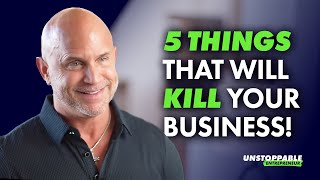
Stephen Scoggins (speaker) explains that most small-business failures are driven not primarily by external factors but by five personal roadblocks entrepreneurs create for themselves: ignorance (not knowing what you don't know), arrogance (knowing but not applying or refusing help), impatience (rushed, emotional decisions), insecurity (scarcity mindset that rejects others' ideas), and fear (paralysis and excessive "what if" thinking). He gives concrete remedies: pursue learning, practice humble confidence, slow down and plan, invite and listen to team perspectives, and build experience/information to reduce fear.
Chapters
Did you know that businesses die every single day? The good news is yours doesn't have to be one of them. Let's jump into how you can save yours. Why is it that most businesses fail in the first five years? You see, stats would tell you that it's marketing, it's leadership, it's sales pipeline, it's not having a business plan. It's a variety of different things that have nothing to do. What I believe my experience has been that actually prevents actual business success. And the premise is when I want to go build my companies, one of the things that I had to overcome more than anything else are these five specific things I want to share with you today. The reason I want to share them with you is because they all are associated with you. You see, you are going to be the lid to your business on a continual basis. I've said that routinely and across multiple videos because it is absolutely true. If you can't actually take the time to develop yourself and actually look at yourself with honest lenses, you're going to be in the way of your business success. And let's face it, nobody wants to have that problem. I don't even want that for you. I. I want your business to thrive and strive and go for it, baby. That's what I'm hoping for for you. But when I went to go build my first business, one of the things that I discovered very quickly was I felt on a regular basis several key emotions that ended up creating several key roadblocks that kept me from building a sizable company in a quicker fashion. And as I work with entrepreneurs, one on one, and community groups, unstoppable community. As I'm working with people all the time, one of the things I'm seeing is I'm seeing these same themes pop up and up and up and up again. So while stats may say you don't have enough marketing, you don't have enough capital, you got too much risk, you don't have a business plan, you don't have the right leaders.
None of that stuff is. Well, it's not that it's not true, but it's not authentically true, you see, because authentically true comes down to you and your specific roadblocks. These five areas are very specific roadblocks that all entrepreneurs have to tackle and face. The first principle and fundamental is actually ignorance. I know that sounds like really kind of derogatory, but it's really not. When I say ignorant, I mean you don't know things you don't know. And because you don't Know things you don't know. You're making on decisions based on information you don't yet know. Which means you're creating a roadblock for yourself because you don't have enough insight and experience of certain categories to make wise life giving decisions to your business. Which is why ignorance is so important. Well, how do you get around ignorance? Well, the first thing you have to get around is you have to get around your pride, right? You got to get around your ego. So as we break this apart, we have to get around the pride and the ego. Your ego is always going to tell you in some way, shape or form that you have it figured out. You know better than anybody else. But the reality is if you already knew how to be an 8, 9 figure earner, you would already be doing 8, 9 figure earner things. You ought to be thinking that way. Most times that's not the case. Most times we are living lives that are inauthentic. We are getting information that's not correct and we're trying to apply the two of those together to make a decision, to make it go a specific direction with our business. And then you get yourself into trouble. I know I did. There were so many times I was building a business, I wanted to act like that. I had it all figured out and all understood because I didn't want people to know that I didn't know what I was doing right. I was winging it the entire time. And while you may have a skill set, you may have information, you may have a business, all these types of things may roll up holistically into one. But if you're covering up for something, you're by definition selling a lie. So the number one way to tackle ignorance is to simply identify what you don't know that you know. You need to know. If you're not great with finance, great. You need to get some resources on how to build better financial health, better financial wellness. You need to understand certain documents in a business, cash flow statements, balance sheets, so on and so forth, right? If you don't have enough knowledge about marketing, how to utilize digital marketing or AI or social media marketing, great. There's great resources out there to go study up on that. If you don't know how to build great teams and develop your own leadership, great. There's more information about that. The trick is, is not letting your ego lead the way. That allows you to remain blind to your own folly. When you remain blind to your own folly and nebulae, what you're doing is, all you're doing is you're covering up what should not be covered up. The best thing you can do is bring all that stuff to the surface so you can actually deal with it. So that's how you're going to conquer ignorance. You're just going to be so hungry for learning that ignorance basically goes away on its own because you're so hungry to actually get the information and the insights that you need to actually grow and support your own business and your own lifestyle. That's how you conquer ignorance. Alright, the next fundamental kind of builds off the first one a little bit. Again, some of these are really kind of tied together, but they are uniquely qualified to, well, get in our way. And that's arrogance. Yes. Fundamental number two is arrogance. The worst thing you can do is go at life and your business as if you were the know it all, be it all. Okay, we just got to talk about ignorance. Ignorance is not knowing the information. Arrogance is knowing the information and not applying it correctly or not applying it at all. Like if you know based on the information that you should make different financial decisions, but yet your ego and your pride and your arrogance is keeping you making the same decision routinely even though you know better. Well, that's just foolish and we've all been there and done it to some level. The reality is that arrogance gets eliminated by humble confidence. Humble confidence asks for help. Humble confidence leads the way with honesty, integrity and loyalty and trust and empowerment and education and all that kind of stuff. Arrogance says, I know it all, I don't need your help. Humble humility or humble confidence says I don't know it all. I actually need some help and I'm willing to learn and listen. And that's how you're going to combat arrogance on a regular basis. If you're going to be the know it all, I'm telling you right now, you're in for a long road, a lot of pain, a lot of loss of profits, a lot of loss of sleep, a lot of loss of joy, a lot of loss of freedom. Because that means you're trying to control every single aspect around you and your business. And you can't do that and be successful. You have to do it differently. You have to think differently. You have to be humbly confident enough to be self aware enough that you don't have it all figured out that you're willing to learn and grow and mature and prosper in that modality. All right, number three, impatience. Impatience kills businesses all the freaking time. It's going to make you invest in the thing you shouldn't Invest in yet. It's going to make you make a bad marketing decision. It's going to make you make a bad hire you to make you make a bad vision casting session. It's going to cause problems. Okay? I don't want you to cause problems. There's not a single entrepreneur on the planet that doesn't believe they should be further along than they already are. That's me included. The difference is, as I now understand, that I can both go at a steady speed and be consistent and still get to the same destination many times actually quicker than I would if I just rushed into something. If you let impatience lead the way, you are going to make bad decisions. Well, how, Steven? How do I know if I'm being impatient? Well, what does your energy say? Are you shaking all the time? I just gotta go. That's it. That's what impatience feels like. Or are you blank? Okay, what's the objective? What's the scenario? What's the strategy? What are the tactics? What are the dominoes I need to set up? What are my priorities? Okay, great. List them all out. Great. Go, go, go, go, go, go, go. That's consistent progress versus I just got to go. I go, I got to go. That energy of feeling I have to go, I got to move. I got it. Without actually having a tactical strategy to back it up is going to cause you problems. Again, stats say all the other things. Lack of money, lack of leadership, lack of marketing, no market penetration. All this kind of stuff is being the problem. The problem is us as entrepreneurs. We can get the stuff under control. Our impatience under control, our ignorance, our arrogance. We get this stuff under control, we start operating like real CEOs, real data, driven, like, driven people that can make stuff happen. But you don't want to be in a rush. The quickest way to make sure you're not in a rush is to force yourself for a period of time to slow down.
Slow down. What's a day of slowing down or two days or a weekend or a week of slowing down and really evaluating where you are and, and what needs to take place to move you forward. Because when you operate from impatience, you're operating from emotion. When you operate from emotion, you're going to be more prone to make more mistakes. Lord knows I have made bazillions that have cost me millions of dollars Because I was impatient, I rushed. I wanted the result so bad I could taste it. And because I rushed it, I lost money, I lost time, I lost energy, I lost resources, I lost people. And I don't want that for you. You're worth more than that. You can build a fantastic business, but you're not going to do it from impatience. We want to find that line of flow and energy and consistency and, well, commitment, tenacity and diligence. There's a difference between diligence and impatience. Diligence is just hitting the same nail over and over again till the nails like penetrated the wood. Impatience is just whacking the hammer anywhere and everywhere you can find it a whack. And you're only at the nail every two or three times doing it that way versus a focused approach. Bam, bam, bam, bam, bam, bam, bam, bam. Oh, what do you know? It broke through. Wow. You can do this but you don't want impatience to garner your stuff. Alright, this next fundamental can cause you a lot of problems. Probably of all of them. I've actually again I've experienced pain from all of them, which is how I learned these lessons. But more importantly, this one is been a big one for me and it may be for you. And that's called insecurity. When you go to build a business based on insecurity, meaning you feel insecure about being in your niche, about being in your business, about leading people, about how you handle money, about how you market yourself. When you feel insecure, you're coming from a scarcity mindset. When you come from a scarcity mindset, you're always going to make emotionally based and mostly charged decisions. When you make emotionally based and emotionally charged decisions, you're gonna make big mistakes. One of the biggest example I can tell you about insecurity and how it shows up is when I went to go build the first company that I exited last year, one of the things that happened was I had a lot of people working for me at the leadership level that had a lot of college backgrounds, MBAs, CPAs, ABC, EFG, you name it. They had all kinds of acronyms behind their names. They went to school and they were successful and they were really good at their specific niche. Right here I was the high school dropout that had never done that before. Literally built the first the business I sold last year from being homeless from a trash pile of construction site and built into a sizable organization. Before I exited, my only offering to the team was sheer tenacity, sheer vision, sheer like I'm gonna figure this out one way or another. And while that can help you getting things going, it won't serve you long term because the people around you that need to be there to help you build your business and encircle you and make you stronger and grow quicker and further and faster. They're going to want to feel valued and respected and as if their ideas matter and their strategies and the techniques and the things that they've learned along the way to bring value to business, they're going to want to know what matters.
And when I was leading from insecurity, I did the exact opposite. They'd have a great idea or something, you know, just amazing, and I would shoot it down because it wasn't my idea, wasn't my strategy, wasn't my way forward. Rather than listening to the wisdom of the people that I encircled myself with, I shot it down because I felt like if I took their idea, I would be less of a person. I would have less worth and value in the business. It took me a decade to figure out that I always brought value to the business. The company I just exited, the CFO that I hired, you know, he was. He's like. He's a very strong cfo, and nothing was a better compliment than when he came to me one day, he goes, steven, I now see why you did it this way. This is a proven path to profitability, proven path to revenue. It's consistent. It's happening routinely. I see why you did it that way. Man, you should be really proud of yourself. Do you think you would get a compliment or an affirmation like that from someone who didn't feel like they actually had their own value and they felt like they brought their own value to the table? He completely rebuilt our entire way of categorizing expenses and revenue that made the company, well, honestly able to exit. I couldn't have done that without him. I know enough about Excel to be dangerous, but I don't know how to make pivot tables and vlookups and all this kind of stuff and pull data in from this source and this source and this source and create this custom dashboard. I don't want to do all that stuff on my own.
And had I tried to shoot down his idea of redoing all that, I would have been an exit. This is an example of where insecurity. If you're a leader and you're leading people and you're letting insecurity lead the way, you are shooting yourself in the foot. You want as many perspectives as you can get. In fact, here's a quick technique. No matter the size of your company, take your leadership team right now, you and one other person, or if it's three people or five people or 10 people, whatever you look at your mental boardroom right now, right Think. I want you to think about your mental boardroom right now. I want you, from now on, when you go in and meet with these folks, I want you to sit down and I actually just want you to have them share your ideas. Hey Sam, would you do me a favor? Will you share some ideas that maybe you have that can help us grow this business? Maybe some things that I'm not seeing outside. Looking in and Sally and then Jesse and then whoever else are on the table. Same concept. Great. I'm making notes feverishly. Okay, cool, cool. I'm not defending, I'm not like dismissing. I'm just shutting up and I'm listening to get all the way around the table. I'm going to take the data and I'm going to say, okay, cool. Alright, Sam, I think this is really good. I do have a couple of questions around it because I did it this way before and this happened. So I want to make sure we have a complete picture before we move the idea. But I like the idea and I'm going to do the same concept with everybody else at the table. I'm going to become the first person to invite people to speak and the last person to actually speak. Because when you do that, you're going to get rid of this insecurity thing because you're going to start seeing wisdom for wisdom's sake. Experience for experience sake. Yes. I'm going hardcore on insecurity because that's where we screw ourselves up. We make decisions based on an inferior complex. We make decisions based on like, I don't know, feeling like we're not worthy, we're not enough. And if we don't do it this way or have it look this way or whatever, it's going to be seen by the public or as whatever way. And the reality is that it's just not true. It's not true.
People are going to judge your leadership by your leadership. And some of the things you need to do to lead well is to listen well. Alright, the last one gets us all. And I'd love to say I got a perfect solution for this one, but I don't. Let's just be flat out honest. The only thing that I've seen that combats this next fundamental, this next thing that gets in our way, this next roadblock, if you will honestly, is continued experience and wisdom in your space. And we like to call this word fear.
Fear to move forward, fear to take a chance, fear to do the hire, fear to make the marketing pool. Fear to pick up the phone, fear to walk across the street and shake a hand like fear shows itself in so many different ways. So many different ways. In fact, one of the reasons that I literally say fear for last is because all the other four honestly are tethered to fear, right? Fear of insecurity, fear of impatience, fear of arrogance and ignorance are all tied to fear in some way, shape or form. In order to overcome the fear, you have to have options. In order to have options, you have to have information or to have information, you have to be looking for the information. That's the only way we conquer fear, right, is to actually learn to resonate with our own soul, resonate with our own being, resonate with our own way of doing things at a nervous system level. If you can get your nervous system respond in a healthy way, routinely, over and over again, because you have enough wisdom, insight, experience, information to make great decisions, you're going to notice that fear begins to dissipate. You can what if yourself all the way into a grave if you're not careful. There's a difference between saying what needs to change, what needs to be found, what needs to be amplified. Those are different types of questions than what is like. Like, why is this not going to work? What if this doesn't do this? What if this doesn't do that? What if that doesn't do that? What if that person over here doesn't get hired? What if, what if, what if, what if, what if, what if? If you what if yourself? You're going to eff yourself. Let's just call it what it is, right? I don't want you effing yourself. I want to see you win. I want to see you succeed. I want to see you grow. I want to see you prosperity. Which is why I'm being probably the most vulnerable I've ever been. Right now with you in this video, I'm being vulnerable with you because this, these five things added seven years.
Seven years to my entrepreneurial journey. Cost me millions of dollars, cost me valuable relationships that I wish I could go and repair. This is what gets in your way. This is what controls your mind. This is what operates your subconscious. This is what turns into conscious action, which turns into negative results. This, it's not the amount of money you have to go and raise. It's not about the size of the team you have. It's not the business plan. You see all the other things that statistics say that are in the way of building a successful business and call it cause. 8 out of 10 businesses to fail, they all have one thing in common. All of them. You. And when I look at you by looking through me and at me from my struggles and my building businesses, these are the things that popped up. These are the things that I really had to overcome. These are the things that turned me, you know, took me from six figures to nine. Like, these are, this is the stuff. And you can learn all the sales strategies and all the marketing strategies and all the business plans and kind of cash management stuff, but these things are controlling how you handle people, how you handle your mindset, how you handle your revenues. These are common denominators. These are root systems. So I want to invite you to put some effort into really sitting with yourself and saying to myself, hey, how impatient am I showing up today? How many decisions am I making today out of insecurity? If I'm honest with myself, am I lying to myself based on arrogance? Right? Is there information I need to know? What am I scared of? Why am I scared of it? Like, these types of things, these types of, like, internal dialogue things open up revelation. When you open up revelation, you open up inspiration. When you open up inspiration, you open up transformation. And since your business is never going to outgrow you, let's just say if we can fix this, just as I had to work on it, you can do some pretty incredible things in this world. So I hope you really enjoyed that content. Hope it really helps. It's the most honest content, honestly, I've given you guys in a really long time. It's the most transparent and vulnerable and real stuff. Which also takes me into this eight figure mindset makeover thing you've been hearing me talk about in the last videos. The eight figure mindset makeover is a series of videos I created just for you to help shift the gears from a six figure, seven figure all the way to an eight figure mindset. There are certain mindset shifts and hacks that eight, nine figure earners do that six and seven figure entrepreneurs don't. And if you can shift your mind, you can shift your results. So I want to invite you to take advantage of that. The link will be in the show description and whatnot. As always, I love you to death. You're amazing. You can do the most incredible things. And yeah, I'll see you in the next video. All right, take care. Peace.
More from Stephen



He Had Everything…Then A Heart Attack Changed It All | Dan Sachkowsky #Shorts




Paralyzed. Suicidal. Then He Surrendered, And EVERYTHING Shifted | Marcus Aurelius Anderson


Why You Snap At People You Love, The ALIGN Method, & Why ADHD Isn't A Disorder | Sara Hartley

