Why Most Leaders Fail in 2026 (It’s Not Strategy) | Mick Hunt
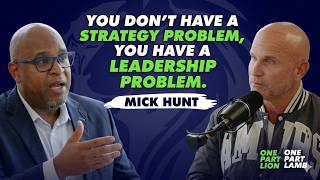
In this conversational interview, host Stephen Scoggins talks with leadership coach Mick Hunt about why many leaders are failing in 2026 despite having strategy. Hunt argues that the root causes are emotional immaturity, ego‑driven decision‑making, and a lack of true presence. He explains that culture is set by the lowest standard a leader tolerates, and that hustle‑driven speed gets a business to the door while depth and strategic thinking keep it there. The discussion covers the dangers of burnout, the need to slow down, and practical tools such as the Eisenhower Matrix, calendar‑blocked email checks, and eliminating urgent‑but‑not‑important work. Hunt shares personal anecdotes about his own Type‑A tendencies, the shift from micromanagement to delegation, and the importance of mentorship, mastermind groups, and external accountability. He also describes the Impact Impossible tour he co‑hosts with chef Robert Irvine, which blends leadership, community building, and financial literacy. The conversation ends with reflections on balancing “lion” (bold) and “lamb” (compassionate) leadership archetypes, the value of being present with family, and a call for leaders to cultivate self‑discovery and emotional intelligence.
Chapters
Speed builds momentum. Depth builds dominance. Hustle gets you to the door. Strategy is what keeps you there. And so I find so much more peace in the strategy. I will tell everyone, your culture is defined the lowest standard that you accept. So if you accept people coming in 5 minutes late, leaving 10 minutes early, that's your culture. Hey, you don't have to hit your goals or standards. But just give it a good try. Yeah, that's your culture. I think where emotional immaturity shows up usually starts with the leaders and their ego in making decisions. And I was the biggest culprit of that. So as a business, you don't need an open door policy. As a leader, you need a presence policy. In 2026, you're waiting for someone to walk into your office. They're walking in with a resignation letter, right? Because what they actually want you to do is Be More Present.
I've known Mick as someone who can execute at the highest level, but what I respect most is the evolution I'm watching in him. Mick Hunt has operated the intersection of entrepreneur service and impact through his leadership with the Robert Irvine Foundation and beyond. He's built in high-stake environments where execution matters and character matters even more. And we're deeply aligned that we're not chasing louder rooms, but instead building deeper leaders. Guys, please help me welcome to the show the one and only Mick Hunt. Mick, what's going on, dude? How you doing?
Man, I'm honored to be here with you, Stephen.
Bro, I am super stoked. It's— this has been a long time coming. We've been trying to get together on each other's calendars for a few months now, really. It's interesting. I was saying in the— when I was kind of letting the audience know about the— just a little bit about you before we hopped on, we're both really tapped into this new aligned leadership, like really kind of get to the heart of the entrepreneur, the business leader, the go-getter. I'm finding, you know, I've been saying recently that I've discovered that you can't scale dysfunction, you know, and your business, your environments are always going to be a, basically an embodiment of your inner world. And so we began talking a little bit just when we were texting back and forth. I was like, yeah, dude, we got to hit this hard. So you've done a lot of leadership things. You've done obviously a lot of great things already. Like, what are you seeing shifting in the marketplace with these leaders and why are you being so intentional about really helping leaders lead in a more bold fashion?
Yeah, man, it's because we're coming to the end. I think this year is the last wave of baby boomers that will have retired from corporate America, white collar, even blue collar positions. Which means that there's a group of people that are now leaders or that are going to be leaders that quite frankly haven't seen modern leadership, right? I mean, Stephen, I don't know about you, but I grew up in a time where it was, do as I say, not as I do.
And I remember hearing that over and over as a kid.
Right. And there's no questioning to what I say. Well, now, Stephen, if I tell you something, by the time I put the period at the end of the sentence, You're already searching to validate if what I'm saying is true. And that just didn't exist before. So we've changed just from information access, but then we've also changed society emotionally. And I think to me, that's the biggest gap of emotional intelligence is real.
Yeah.
And it plays a role in leadership. It always has, but it's critically more important now than ever because again, people validate everything you say.
Yeah.
Trust is the new currency, right? Yeah. Like they, my kids don't care about 401(k) and pension. Talk to them about it, they have no idea. I was told when you get a job, plan to stay there forever. Yeah. You get a good job, you don't leave. Now the mantra is more of, oh, I could get this job, but I have this side hustle 'cause I can go make money on Instagram or I can go make money on YouTube. So because that's changed as leaders, we have to embrace that and we have to change as well.
Yeah. Well, to that end, 'cause I, I, I 100% agree with you, by the way. And I also believe that emotional maturity or emotional integrity really is a learned behavior.
Right.
You know, 'cause we all bring our lives to, to work and business with us every single day.
Right.
We, we show up and, and we like to think, or we like to think to ourselves that we can compart— compartmentalize and somehow separate one from the other. But as someone who's, who's built and scaled companies alongside of going through the endings of relationships and all this kind of stuff, I can honestly say I wasn't my best, right? Like even trying to lead my teams, you know, a little more sharp tongue, a little more extra, if you will, you know. So when you're looking at the internal world of the entrepreneur in this emotional maturity space, what are you seeing as signs of work needs to be done? What types of behaviors are coming out that maybe they could identify with, like right now? Like they can think about, okay, well, you know, if you're not operating in a fully integral emotional maturity space, these are the kinds of things you're probably feeling and seeing in your business, your leadership, et cetera.
Oh, I can tell you exactly because, you know, you were talking about yourself. I was there too, man. Like, here's where it shows up. Shows up as ego in the decisions that are made. It shows in hiring decisions that you make. And the most important thing is your culture. Like, I will tell everyone, your culture is defined by the lowest The lowest, the lowest standard that you accept, right? So if you accept people coming in 5 minutes late, leaving 10 minutes early, that's your culture.
Yeah.
If you accept, hey, you don't have to hit your goals or standards, but just give it a good try.
Yeah.
That's your culture. Yeah. And so I think where emotional immaturity shows up usually starts with the leaders and their ego and making decisions. And I was the biggest culprit of that. And it wasn't purposeful. It wasn't intentional.
Yeah.
It was just, I'm extremely Type A. So when I was leading my first team of over 400 people, I didn't, we didn't need to win because of me. We just needed to win because I wanted to win. So whatever it took to win, right? Yeah. How many hours ever it took to get it done, making sure that we crushed milestones, ruined my team. Because I'm type A, I can run 100 miles an hour. That doesn't need to be the norm for everyone else. Because I don't celebrate small wins, did it mean that it wasn't acceptable for Johnny, Sally, Jimmy, and Susie who wanted those small wins celebrated? And so a lot of times that's what you start to see, but it usually starts with ego.
Yeah, the crazy part is, is we've glorified hustle culture or speed culture. Right. And I was working with a young entrepreneur. He's, he's, he's in the process of getting to 8 figures in top line revenue, which is— it's like, congratulations. Most of us never get to 7. So super excited for him. And, you know, he's like, look, man, I'm grinding every single day. I'm getting up, doing this, doing that. I'm doing this. I get home, I'm exhausted. And I'm like, bro, have you ever thought about maybe you need to slow down in order to speed up? Right. And I kind of gave him this framework of hustle culture to me is nothing more than throwing anxious energy at your business.
Right.
Right. Not, not disciplined, not diligent, not thought through. And, you know, I guess from your perspective, I know you and I share this belief. How does slowing down help you actually speed up and make better decisions?
To what you genuinely just said, man, like, I used to say this: hustle gets you to the door, strategy is what keeps you there. And so I find so much more peace in the strategy, right? Like, to me, that's where every visionary, that's where every true entrepreneur should live, in the strategy aspect of it, because hustle should be a part of the— and I say hustle, but, you know, the sales and marketing, the publicity, the promotion of whatever it is that you do. Is a job function, but it shouldn't be what everyone sees, right? Like what happens when you get that first, you know, 10,000 clients? 'Cause you hustled for it. Yeah. Well, strategy is how you keep and grow from there.
Yeah.
And to me that was more important. So I learned to be much more still, right? So that I could see the complete picture. It's hard to paint while you're sprinting.
Yeah.
Even, I don't know if you know that or not. Like I don't sprint anymore.
I'm ADHD. I might— no, I'm just kidding. I can't do it either.
But it's hard to do multiple things. And you know, like, we don't glorify the right things. Like, we glorify, to your point, hustle culture. We glorify multitasking. Well, there's actually no such thing as multitasking. You just switch task, right? You go from this task to the next, and then maybe you come back to this task.
Yeah. And you end up with a bunch of open tabs.
Right. It's very rare that you're doing so much at the same time. And so what I, what I learned to do, and this is kudos to, to my mentor, Daymond John, was he said, you know, Mick, speed builds momentum, depth builds dominance. And so I want to go deeper in the things that I'm doing so that I can dominate whatever niche that I'm in or whatever, you know, project I'm working on. I want to dominate it. I don't want to speed through it. It's about the depth.
Yeah, dude, that's so good. Yeah, I was just thinking too, there's also this dichotomy. Um, you know, my audience knows a good chunk of my story as far as being, you know, formerly being homeless and building a business. One of the real reasons I bring that reference up was because what I discovered was the founder hustles. Like, you know, you're literally creating something from thin air. Damon's a good example of that as well. Right. But you don't really get to a place where you could scale an organization like an actual business that can support you and give you back your time, your freedom, you know, financial resources to really pour into your family and team until you can learn to think strategically like a CEO. And I see this over and over and over and over again. I'm seeing founders consistently because they don't know any better, just like I did. I mean, I've been taught, trained by hard-fought experience and pain. I know you've got some of that under your shoulders as well. What do you think is the, the core impediment? What do you see when you're working with leaders and leading leaders that keeps them from really going from the founder mindset to a true strategical CEO mindset?
They burn themselves out way too quickly. Um, and this isn't just me, you know, the World Health Organization has data that shows that most CEOs, because of how fast they drive, or much— or, or many startups. Yeah. As much as they try to drive, burn out more than anyone else. And that's why their businesses, um, struggle. Because when you're burnt out, like, stress becomes easy. Yeah, you, you're easy. You almost embody it, right? Right. Um, you know, you, you mess up your cognitive clarity. When you're burnt out. So I think that's the real challenge there, which is why I slow down. You want to make sure that as an entrepreneur, you're giving yourself time, you're giving yourself mental health, mental capacity, and mental clarity, because that's what you actually need to get the job done. I mean, Stephen, I'm sure you've had this too, right? Like, whenever I'm in a good mood, I usually make really good decisions. Yeah. Right. I really do. I usually make really good decisions.
Yeah.
It's when I'm stressed or I have anxiety or, you know, I'm unsure about something. That's when the decision-making and the outcomes. Yeah. I tend to question. And so I, I'm just always about this, like fast is normally loud, but depth and slowness is lethal. Yeah. So, again, that's why I'm always gonna be on that train of move slower, think longer, think deeper. And that will reduce burnout. So, when I'm working with leaders, and I have several Fortune 500 companies, one of the things that I talk to them about is, let's walk through your month as a leader, as a CEO. We get into culture, we get into emotional intelligence, but I need to know who that CEO or EVP or SVP is. So that I can understand, like, a lot of this is just burnout. And if you're burnt out, guess who else is burnt out?
The entire team and the family for that matter. Everything around you.
Yeah, man.
Yeah, I was just— it has me thinking too that one of the most— it's crazy. I just turned 50 a couple of weeks, like literally a week ago. Thank you. Um, and it took me all the way from, uh, age zero, if you will, from, from, from birth to age 48 before I ever valued a practical presence practice. And it was after exiting, it was after on paper getting everything in the world you think you want or whatever need. As Torrey Roberts, a good friend of mine, would say, it was, I have, I have everything I need and most of what I want, right? And still feeling empty, right? Depleted. Getting the brass ring, if you will, or gold ring, whatever color the ring is, and still feeling as if I wasn't somehow worthy or enough. And I felt like worthiness drives a lot of leadership behavior, especially early stage. And I also find that also seems to be the only way through it is a practice of stillness. I started a journaling practice I call What I Hear You Say Is. Every morning, get up, or one of the first things I do after I have a mantra. I have a mantra that I do as well, and I just sit there and listen.
Yeah.
And I've been, I've been dumbfounded and in awe of what's coming out. What are some of the practices you're using to continue to go deep within yourself to then pour out to other people?
Man, so my companies that I actually run, so, so my 4 companies, we are deep into the Eisenhower Matrix. Eisenhower Matrix. I don't know if you know what that is, but essentially tasks or responsibilities or projects fall into 4 buckets, right? They're urgent but not important, right? They're important but not urgent. They're both urgent and important, or they're neither urgent nor are they important. And so the first thing that we do is eliminate anything that's not urgent, that's not important. Like we've got email systems that block that. We've built all of our AI so it knows like if you see this, it's not urgent, it's not important. But where most people live, believe it or not, is they're working on things that are urgent but not important. And so we have rules internally and, like we protect our safe space.
Yeah.
And we try to work on only things that are important but not urgent. And again, it's a huge identifier. And I would tell everybody, figure out and quantify what urgent and important mean for you. It doesn't mean that you don't work on urgent things. There are gonna be things that are urgent, right? Yeah. But you should have systems and processes to handle urgent. But a lot of us force things to be urgent that really aren't.
Right?
Stephen, it is not my fault if my business closes at 5 and you call me at 4:55 PM. Yeah. It's urgent for you. Yeah. Doesn't mean it was urgent for me. Right? They created emergency rooms for a reason, right? Call your attorney and see if you can be seen in 5 minutes. Call your family doctor, see if you can be seen in 5 minutes. Call your accountant. And ask them to fax you over paperwork. Fax, I just aged myself. To see your paperwork.
You're in a safe place. It's going to be okay.
Yeah. Thank you. Thank you. Thank you. I'm in therapy over that still. It doesn't work. So like whoever's watching, listening to this, understand your desk, your chair, your phone, your computer, your laptop is not the ER for your clients. And your peers, because believe it or not, your peers violate that more than anyone else. Mm-hmm. Create safe places because if everything is urgent that you work on, yeah, nothing is important. And the best of the best that I know only work on important things. And that is how you can get still by just focusing on important things. And, and don't let someone else's urgency become yours. Yeah.
No, I love that. I was thinking too, I've got a, um, In the same, in the same vein, the word distraction comes up, right? So I have a little of a philosophy. I can't— it's something I've been practicing for a while, but it's been said by other people, but it's eliminate, delegate, automate.
Yep.
Right. And really kind of really look at your business, your, in your day, honestly. And I found that one of the best ways to do that was to go just track your day for 30 days straight and then really take a hard look at it.
Yeah.
This statistically, since the evolution of social media, the average person is spending 4 to 5 hours of wasted time throughout the course of a workday or working day digesting media that's not really going to add— that's not necessarily add more benefit to their life. They're spending a lot of time in distraction mode. So then I began thinking, okay, well, one of the tactics that I have or the abilities that I have I've been blessed with is the ability to be hyperfocused. I can laser in and be hyperfocused. I can also be very distracted and I have to be accountable to both. Right. So, so the reason I say that is because what I've discovered is, and I was actually having this realization this morning, I was at the gym and that's where I had to do my best thinking. I was like, it was kind of coming in flow, is that it seems to me there's, there's two really big forms of distraction. There is subconscious fear. Right? And then there's the dopamine hit. There's the thing that gives you the dopamine hit that just makes you feel better. And then there's the thing you're resisting doing because you're scared for some reason about the out— what the potential outcome can mean, mainly about you, not necessarily about the outcome. Have you, as I kind of mentioned that, have you seen that as well in leaders? Because it seems like distraction from the inability to focus doesn't create enough bandwidth to allow stillness to come in naturally.
No, I totally agree. I think the biggest culprit is this, right? Like we've gone from, you know, everything was on a laptop computer in the business world to now everything's at your phone and we allow those things to happen, those distractions that you're talking about. So one of the things that I personally do, and again, it's a team rule and my clients that are listening to this, they're gonna hear this for the first time and go, oh crap, I get it now. Let's go. I only check my email twice a day and it's on my calendar to check my email. So I purposely, it's on my calendar when I check my email. And then from there it gives me the priorities that I need to work on or delegate, automate to your point. But I don't condition people that if you respond to me, you're getting a response right back. Right? Because, and I'm sure there are people that are watching that are watching this and probably have their email box open over here somewhere. Yeah, as soon as they get that notification, boom, there it is. I don't put email notification on my phone because that is going to distract me. I live by my calendar. So I would tell people, if distraction is a problem or a challenge for you, because Stephen's exactly right, like the less distracted you are, the more focused you will be. And I'm definitely not saying don't check social media, don't check your email, but put it on your calendar and give yourself time to do those things and fight the urge. Fight the urge to do it on your own because most of it is us, right? It's, oh, let me go check Instagram or let me go check LinkedIn. And then that leads us down other paths because we see something on Instagram or we see something on LinkedIn and it's like, oh, let me go check out this product or this service or look up this person. And that, before you know it, 45 minutes later, it's like, yeah, crap, I just wasted 45 minutes and I'm no longer anywhere focused on what I was doing. But I would say put things on your calendar. And again, my clients, you know, we talk through this all the time. If it's on your calendar, you're held accountable to it. And if it's not, it's not important.
Yeah.
And I would say if you can, and I know everyone can't, But if you can, watch what happens when you just take email notifications off your phone. Just watch what happens with your life. Yeah. Right? I don't even have social media notifications on my phone. I go on social media when I want to. And I go on every day, multiple times a day. Yeah. Because when I want to, not because I got distracted by it. Yeah.
I was just thinking that, uh, it was funny as you were, as you were sharing, I was like, there's a dopamine hit with every little red 1, 2, 3, 4, 5, 6, that, you know, and again, the world of media says that they want you to be engaged with their platform as often as possible. Right. So that makes a lot of sense. I actually also don't have social media notifications turned on, on my, on my device. I don't have email notifications turned on my device. I also just—
You're extremely focused when you want to be, right?
Yes, sir. Yes, sir. Again, I have, I have the ability to laser focus, but I think it was a learned trade out of necessity. Early on, almost out of scarcity or fight or flight, if I'm honest. So I go back 30 years when I started the first company out of necessity. And then my son came to me a few years ago and he said something powerful to me, and I've been saying it recently a lot because I really want it to sink in with a lot of entrepreneurs and leaders. And that was, he just wanted me to be more present when I was present. And the reason I think that's such a powerful thing is because, um, I've had these flashbacks of all these times where customers would call after hours. I would answer the phone thinking the whole world's going to come down, only to find out that I was getting conditioned, you know. So one thing is, I've been working with leaders on recently is your entire business is not going to fall apart based on one phone call, or the chances of it are gazillion to one, right? There has to be other dominoes and catastrophic events that kind of precede stuff like that, other things that we're paying attention to. Um, and I had this Rolodex of thoughts and of times where I, I could have been with my child, so to speak, my, my boys. And, you know, I can't remember how many times I was like, hey guys, just let me, just let me finish this one email, just one email. And what I just told her, I didn't, I just, at dawn, it just little— all this dawned on me at one time. I was like, what happened was, is I realized that every time I did that, I was saying that this in front of me is more important than you, but yet I'm telling you I'm doing this so I can provide for you. And it came to my attention, um, that the kids didn't care as much about travel and things and toys and all the things that I thought that I was adding value to their life All they wanted me to do was to lock eyes with them for a little bit. And I find that this holds true with podcasting, family life, right? There's power in presence, you know, and being— and not having dings and bings and going off. How have you— how have you seen that shape your own family lifestyle, your own leadership style, and encourage other entrepreneurs at this stage in the game?
Yeah, it's, it's funny. So I just did a keynote 2 weeks ago, and I started the keynote out by, and it was entrepreneurs, so raise your hand if you have an open door policy, right? And the whole room raised their hand. And I'm like, you all are missing the boat. In 2026, your open door policy, if you're waiting for someone to walk into your office, they're walking in with a resignation letter, right? Because what they actually want you to do is be more present. So as a business, you don't need an open door policy. As a leader, you need a presence policy that says, hey, I'm gonna spend, even if it's 15 minutes a day, being present. I don't care if it's hybrid situations, remote environments, like you can figure out how to be present. And how does that parallel into the home life? The exact same thing. Like, especially as a parent, And I'm gonna talk to the men here, like, especially as a man, right? If you aren't being present, right, you're leaving the gap for something else to raise your children. You're leaving a gap for someone else to build those moments. And I never wanted that to happen.
Yeah.
So I do focus on being present with my adult kids, right? I mean, all of my kids are adult kids.
Yep, mine too. I'm a 4-time grandfather.
There you go. There you go. You go, but I make sure that I'm giving them the time to be dad, to be friend, because it's critically important. And, you know, for leaders, I always say this, if your presence doesn't make a difference, your absence won't either. And so think about that in the household. If your presence doesn't make a difference, your absence won't either. And when you look at things from that lens, it makes you realize how important being present is. And to your point, Stephen, right, it's not— you'd be surprised at the little things that actually matter. Yeah. Same thing in business. The little things actually matter.
Yeah, man. So good. I'm going to have a lot of takeaways myself from this episode, man, in a beautiful way. It kind of leads me to a little bit of the next thing. So I get to speak. One of the things I try to do is I try to share with leaders and business leaders, entrepreneurs, everybody, from the things that are where I got it wrong. Right? Because while different parts of different things can celebrate what you get right, which is like 1 or 2% normally in a traditional leadership style until you mature, I like to share from where I got it wrong.
Yeah.
And one of the ways in which I got it wrong, especially early on, is I would suppress my superstars on accident because subconsciously— this is why I think knowing your inner world is so important— subconsciously, I wanted to feel needed. I wanted to feel like I had value. And I've watched other leaders along the way not want to delegate, not want to let go, because they feel like if they let go and delegate, then what will I do? So I was wondering if you could speak to that just a minute, because I know that we share a lot in common there.
Dude, so I was that person, God, from 23, probably till 30, right? And we call it delegation, but it was probably more micromanagement than anything, right? It was, and it wasn't on purpose. It was just, you know, I need to trust you to do it the way I would do it. And when I started delegating more, and letting people get their own joy and fulfillment out of what they were brought to the team to do and they could use their gifts. What I found, Stephen, was freedom, bro. And there's a mental freedom that I can't even put into words. And I'm sure you get what I'm saying. That it's like the job gets done, it gets done better than probably I could do it. And I had no part of doing it is the greatest freedom that you could ever have as a leader. I promise you. Yeah. For me, it started on the operational side because I felt like I needed to be like the head of sales and always doing the sales part, even in my own company. So the first thing I learned to, to completely get rid of was operations. I found the greatest joy when I didn't have to be the person always responsible for revenue. Yeah, right. And when you can truly have a sales center or sales organization or a revenue-driving department that, yeah, you're always going to be whatever it is you want to be as the leader, but it's not— it doesn't fall on your plate. Yeah, it's freedom. It's great sleep, as my grandfather used to tell me. It's good. It is. Yeah. And when your mental is free.
Yeah. You know what's also interesting You know, I help a lot of entrepreneurs kind of get their stuff ready for— I got a good friend of mine that specializes in it, so I kind of get them ready and I turn them over to him for, for them to help them, but get them ready to exit.
Right.
Most people have no idea what the value of their business really is right now. They also don't know the mechanisms to increase the value of the business. And they also don't know how much of a ding or discount you get when someone wants to buy your business if your business is dependent on you.
Right.
Right. And the old adage of great leaders create great leaders. You know, how have you seen things change and shift in the marketplace? Because obviously you and I both care deeply about making sure the inner leader is what's leading the outer leader. So what are you seeing differently, or maybe some strategies or tactics to help an entrepreneur or a business leader who's so used to doing it all themselves? They're, you know, they, they are that person who's scared to let it go.
Yeah. So one of the things that we have more of now, we probably have far more than we actually need to. So be careful. But, you know, when I started my journey in leadership, there were not a lot of masterminds. There were not a lot of coaches like, like a Stephen that could hold me accountable. Someone that's not in my organization, right? Almost someone that's not even family. Because I feel like one, when you're a part of a group and iron sharpens iron, you pick up things from other people. You then become a mentor to others by default. To me, that's valuable. If it's a paid mastermind or a paid accountability program or partner, I'm gonna hold it to even more esteem.
Yeah.
Because I'm investing in myself. Yeah. Again, when I was going into it, those things were very scarce. Now they are in abundance. So again, everybody be careful, choose the right people, choose people like Stephen.
Do your discernment.
Yeah, for sure. Yeah. But I would say that's where I'm going to start. I'm not a huge fan, honestly, of like online courses. I'm much more of a, hey, let's talk face to face. If it's something that is recorded, Stephen, I can promise you I'm not into it. But, but I do think that, and then internally within your organization, having some type of mentor program, right? I'm a huge believer in doing the right assessments so you can kind of see people that are similar and also people that I don't wanna say polar opposites, but people that are stronger in some areas, whether that's emotional intelligence, technical skills, or whatever, Creating those mentor setups within your organization is key, you know, and it doesn't matter about tenure, how long anyone's been there. Create those learning and communication experiences for your people.
Yeah, man, so good. You know, I love everything you're about and what you do. I do. I've had the enjoyment of kind of, again, watching on social and just watching the growth. And I was, I was sharing with the audience, like, he's done a lot of amazing things, but I'm really enjoying watching him is how he's even going deeper in self to then go deeper outside of self, which has been powerful. Is that the genesis? Is that the heart set mindset, if you will, of the Impact Impossible Tour? Is that— is like, what? Because I find that certain endeavors call you to it, and it seems to me that this is calling you to it. So I want to know why.
So breaking news, this is something that has only been said here, um, Impact Impossible is me and my very best friend in the world, Robert Irvine, celebrity chef Irvine, who most people see him and they know him as the celebrity chef. But there's two things that people don't know, or you'd have to get to know Robert to know. One, greatest leader I've ever met. I mean, you're talking about teams over 3,000 individuals that he leads. So many different businesses that he runs and his foundation, the Robert O. Brown Foundation, doing so much for our military veterans, first responders, servicemen and women, right? He also is the best, most financially literate person I've ever talked to. He is just so sharp with investing and financial strategies, and it blows my mind away. So we wanted to take all the things that he's great at, right? The leadership perspective, the community building, the financial literacy, and take like the one thing I'm good at, which is emotional intelligence.
I think you're a lot more, you're good at just that, but I appreciate the humbleness.
And, and really start an impact tour where we want to have entrepreneurs, leaders, again, no matter how new you are into this or how senior you are into this, and create an experience, create like a one-day just real experience and giving a lot of shout out to, you know, our USO, to the servicemen and women to, to really make it engaging. You're not just going to sit in a seminar. We're going to have music. We have comedy. Like, it's one of those things. But, but more importantly, what we're building is community because that's where impact starts. And so Robert and I were talking one day, like I've got my Lead Loud Summits that I do. He's every, every other day he's somewhere doing a speech. And he said, why aren't we doing this together? We're best friends. Why don't we do this together? And I was like, okay, who am I to tell Rod Irvine no? Twist my arm. Like, sure.
Yeah, that's awesome.
And so that's what we're going to bring to the world starting in June, probably in Tampa, Florida. I say probably, we're finalizing some details, but No, we want to make it very affordable. We want to make it community and we want people to just have an amazing experience. But when you leave, your mission is going to be making impact. And that's what the tour is about.
Man, I'm excited for you, bro. I really am. In fact, once the details are finalized, you got to text me and send them in and I'll send them out for our group and community as well.
Absolutely.
Invite some of those folks as well. Ironically, the first people I ever started speaking for a number of years ago was not the Homeowners Association or HBA. It was actually the USO. I was one of the signature speakers for about 3 years for the USO of North Carolina before they were— where they were merged with the National USO. So that's— you and I have a similar heart. I am— my great-grandfather, not my great-grandfather, my grandfather was a Pearl Harbor survivor. Okay, so veteran, um, pride, if you will, runs deep in our family, um, for the sacrifices and the things that are paid on behalf of us who, for a lot of part of the world, even though we got things going on in life, we, we do live free in this country, and there's a cost for that. And, and there's a lot of people that pay that cost on our behalf, which I just— I'm in awe of many times.
No, I That's one of the things that, you know, drew me to Robert for sure was that same thing that you're talking about. And it's just a passion, man. I mean, we are here because of heroes.
Yeah.
Right. And I can't go half a day without thanking 2 or 3 heroes and just talking to them about their service, the commitments that they've made. And so I'm always hearing some amazing stories of sacrifice, stories of humility, and that touches my soul. And that's, again, that's, that's why I'm here to make impact, bro.
Yeah, dude, man, again, you and I are, you and I are on similar missions, and I'm excited to kind of see where, where the friendship takes us as well.
Yeah.
As things kind of progress, as we're kind of wrapping up the last little bit of the conversation and the show, I'm curious, as we're kind of leaning into, um, leadership, right? So I have this philosophy I call becoming one part lion and one part lamb, right? So having the courage and the boldness of the lion in maturity, but having the compassion, the empathy, and the connection of a lamb in maturity. And not, not being controlling and dominant, which is what I call the immature version of the archetype of the lion, or not being a people pleaser and pushover in the, in the arc, in the immature archetype of the lamb. As you look at leadership in whole, it seems that leaders, at least in my experience, including myself, I vacillated from one to the other. So I was a very not so great leader, more, I would say, more dominant, controlling out of sheer force. And then I figured that, oh, I'm not supposed to be doing this. I'm really not happy with myself. I want to change this. And then I swung the entire other side where I began to let my, even my management team It's almost like I abandoned my post, if you will, as a leader for a while. Um, what is maybe one idea or concept or strategy that comes to mind based on what I've shared so far that can lean leaders into what I call integrated integration? So having the maturity of both archetypes simultaneously.
Yeah, one is self-discovery. Um, understanding who you truly are first. And, and once you know who you are, how and why do you make the decisions that you make? Because there are times that you need to be both of those archetypes, right? Not at the same time, obviously. Yeah. But you need to know when and more importantly, why you need to be the lion. And then you need to know when and why and what circumstances. You need to be the sheep so that you're not thinking about it. You never confuse the two. Like, I don't think there's anything wrong, um, with having multiple archetypes because different people need different archetypes, right? Like, I have on my sales team, I have to be the lion to one person and the sheep to the other 30. Yes. So it's the one, the one that I can be the lion to, we have, we have lion conversations, and then I'm sheep at the other Right. But, but no, but I understand why. Yeah. Because I know me first. You can't know others until you know yourself. And when you understand why you have to be or act in a certain archetype, like it makes it natural. It makes it easy.
Yeah.
And then you can get to know your team because the second part is understanding who they need you to be. In certain situations.
Yeah, bringing it back full circle, every team wants to trust the leader. They want to trust where they're going, even if they don't know where they're going. And I feel like the embodiment, being able to embody, um, the archetypes of maturity and being able to vacillate between the two when needed is— it's just a powerful skill. And I believe any, any and every leader can do it. Um, it takes a little bit of work, to your point, of, of understanding kind of where, where this is coming from to begin with. So, man, dude, I appreciate you coming on today and hanging out. Let's have such a great conversation. I know I got to get you back to your day. How can we support you and everything you're doing, man?
Just continue to be the great community that you are, because I know the leader of the community is you. And as long as everybody's being themselves, you're supporting me, man. Like, I'm honored to be on. I feel like I have like a new best friend. Absolutely. Can't wait to do things together. Like, there's some things I'll hit you up about offline that We can definitely do together, brother.
I'd love it, dude. Well, I'll let you get back to it, brother. Thank you so much. I can't wait to see you in person, bro.
Thank you for having me. See ya.
More from Stephen



He Had Everything…Then A Heart Attack Changed It All | Dan Sachkowsky #Shorts




Paralyzed. Suicidal. Then He Surrendered, And EVERYTHING Shifted | Marcus Aurelius Anderson


Why You Snap At People You Love, The ALIGN Method, & Why ADHD Isn't A Disorder | Sara Hartley

