Why Successful People Are Quitting Alcohol | James Swanwick on BUILD with Stephen Scoggins
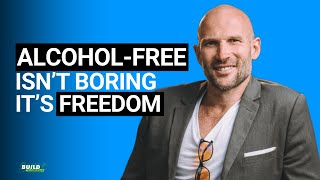
Recorded BUILD interview (host Stephen Scoggins) with James Swanwick about adopting an alcohol-free lifestyle. Swanwick recounts his own drinking and quitting (reports he has been alcohol-free since 2010), explains why he prefers the term "alcohol-free lifestyle" over "sobriety" or "alcoholic" (notes clinical shift to the term alcohol use disorder, AUD, around 2013), and describes Project 90 — a 90-day neuroscience-based stop-drinking program he developed. He cites a 2023 University of Washington study reporting a 98% reduction in drinking among Project 90 study participants, discusses mindset and reticular activating system (RAS)-based techniques, shares client stories (e.g., trauma survivor who became a thriver), and previews a documentary (working title Attractively Packaged Poison) planned for Q2 2026 that will examine industry lobbying, cancer links, and advertising. He lists resources: AlcoholFreeLifestyle.com, the book Clear (available on Amazon), Instagram @JamesSwanwick, and the Alcohol Free Lifestyle podcast. Swanwick also mentions recent population trends (Gallup July 2025 poll: 54% of Americans now drink; generational decline) and asserts alcohol is linked to seven types of cancer.
Questions this video answers
2010.
A University of Washington study in 2023 that he says found a 98% reduction in drinking among study participants.
Working title: "Attractively Packaged Poison"; planned for Q2 2026 (as stated in the interview).
He cites a July 2025 Gallup poll reporting that 54% of Americans now drink alcohol (a 90-year low).
He notes the clinical shift from using "alcoholic/alcoholism" to the term "alcohol use disorder (AUD)" around 2013.
Chapters
And it caught up with me. I wasn't an alcoholic. I didn't get a dui. I didn't wake up in a ditch, but I was drinking. The way that was normalized in culture, labeling yourself as an alcoholic or having alcoholism kept people stuck in a very rigid identity. Whereas alcohol use disorder, which is known as aud, is thought of as temporary. It's something that can be resolved, and that's my mission and my work. You're not powerless. You're powerful, full. You don't have to surrender to a disease. You can actually create the life that you want with a few simple little mindsets. Wow. I have the power to choose my lifestyle, to choose my mindset, to choose the meaning that I associate to not only that event, but to anything that goes on in my life.
Guys, I welcome my good friend James Swan. And dude, what's going on, man?
Thank you for having me here, Steven. It's great to speak with you and share some great stories of which I hope will support lots of your listeners.
I'm sure will. You've been on quite the amazing journey, obviously, you know, being the ESPN World Red Carpets and then actually developing Project 90. You know, I really want to understand more about that journey as we get started. One of the things I've loved about our audience, whether tuning in virtually or audio or visually or whatever, is they always seem to love understanding how someone became the thing they became.
Yeah, I grew up a socially acceptable drinker in my native country of Australia, in that I would have two or three drinks most nights of the week and a lot more on weekends. And I did that for almost 20 years until my mid-30s. And it caught up with me. I wasn't an alcoholic. I didn't get a dui. I didn't wake up in a ditch. But I was drinking the way that it was normalized in culture. And a lot of our entrepreneurial friends are drinking like that. And some of them don't think there's anything wrong. Some of them kind of suspect there's something wrong, but aren't willing to do anything about it or can't. And I was lucky enough to kind of figure out a way to quit alcohol and stay quit. I haven't drunk since 2010. And just the clarity and the focus and the energy that it gave me has just catapulted my life in so many ways. Not just with financial success in business, but in relationship. I have my first baby due this this year, coming up very shortly. Wonderful relationship.
Congratulations.
Yeah, thank you very much. I got ripped I got a photo shoot of my six pack abs on my 50th birthday, which I don't have anymore because I ate pizza and cake in the two weeks afterwards. But. But anyway, life is damn good, I have to say. Excuse me. Living life as an alcohol free man.
Yeah. Yeah. That's amazing. I'm actually you. And I don't know this or you don't know this. I'm gonna share it with you now. I grew up in an environment where my father was an alcoholic and he was that way probably.
He's been probably 35 or 40 years as an alcoholic now. What was interesting about him is.
I think he started kind of in the social environment as well with my grandfather. My grandfather survived Pearl harbor, which is obviously a big catastrophic event here in the United States. That was long before ptsd, and it also became a social norm. What I felt was interesting.
Was a little bit of guilt and. Well, not a little bit, a lot of guilt and shame. So my father lived with a lot of guilt and shame for a long period of time. He's been sober now for probably 35 years or better. So I'm super proud of me. He stopped drinking his last drink on St. Patrick's Day. I couldn't tell you exactly what year it is, but. But he's. He's become a more and more wonderful man. But he was never like an.
Abusive or mean spirited. He was kind of like the go lucky. It's like I just want to, you know, socialize and things of that nature. And sometimes I wonder how much of the social aspect of. Of wanting to fit in while also battling something internally drives or inspires or encourages, you know, behaviors. You know, I didn't have my. My first alcoholic beverage. T was probably 24, mainly because of the things I watched my father go through. So I say that in two different ways. First of all, I want to hear your thoughts on that. And second of all, what a blessing it is to have already walked a journey of sobriety, like extreme sobriety now for as long as you have, and then turn it into a mission while welcoming your first child into the world. I think that's amazing.
Well, thank you very much. I want to clarify a couple of things first, and then I'll definitely answer that. Answer your question. I actually don't refer to myself as being sober or practicing sobriety or being in recovery. I just describe myself as being alcohol free. To me, the word sober in the term sobriety implies that I was broken and that I had some kind of. And that I am broken. And under normal circumstances, I would choose to drink, but I can't because I have to be sober because things would just go horrible. And an actual. And also just another clarifying thing, you might be surprised to learn, Stephen, that in today's modern world, the term alcoholic and alcoholism doesn't actually exist in modern medicine. The phrase is now alcohol use disorder. And that changed about 2013. And the reason was, is because they realized that labeling yourself as an alcoholic or having alcoholism kept people stuck in a very rigid identity that was very challenging to move from. Whereas alcohol use disorder, which is known as aud, is thought of as temporary. It's something that can be resolved, and that's my mission and my work. I have an organization which is called Alcohol Free Lifestyle. And I help people to rewire their mindset around alcohol to get rid of this notion that they are an alcoholic.
Yeah.
Or that they have to surrender to a higher power. Like. Like certainly they would if they went to an AA meeting, for example.
Or that they have to go to rehab or that there's some fundamental character flaw with them because they're drinking too much. And so, yeah, that's why I kind of. I move away from terms like being sober and sobriety and alcohol and alcoholism and recovery. And instead I invite people to choose a lifestyle, an alcohol free lifestyle. And if we focus on that third word of my organization's name, which is lifestyle, and we break it up into three words. It's style of life. And the style of life is sleeping well, conscious communication, learning how to have conflict resolution with your wife or husband or your children, how to be present, how to make great nutritional choices, exercise, to live a life of appreciation instead of expectation. Other words, to be grateful. They're all. They're all lifestyle habits. And. And so my work really is. And by the way, this is not to dismiss.
No, I actually, I absolutely love this reframe. In fact, I did this about six years ago with Pete. The word ptsd. I would go to a. I was speaking at a warrior reset, you know, armed forces kind of deal, and the gentleman before me who is a clinical specialist in post traumatic stress disorder came up and I watched people's faces give up hope while he was talking because they felt like it was insurmountable and they would. They would always feel a certain way. So the fact that you're able to shift the mindset around this, even for me in this moment, I think is amazing and powerful because I also believe that there's nothing a human goes through or works through that can't be transformed into something beautiful later.
Yes. Thank you for saying that. And what I wanted to say was I'm certainly not dismissing the experiential feelings of your grandfather and your father. Sure. That went through that because, you know, they've gone through it. Their feelings are absolutely valid. What I'm. What I have made my mission about is to try to support people from. To choose lifestyles.
Yeah.
Choose the lifestyle, dude.
It makes a lot of sense.
Yeah. And in fact, there's a lot of neuroscience behind this. My whole 90 day stop drinking program and process, which is called Project 90. It was rigorously studied by the University of Washington in a 2023 study, and it found a 98% reduction in drinking amongst those study participants. And a lot of the reason for why I would submit that it was that successful was because of the neuroscience that we bring forward to our clients and to our members.
The traditional way of doing things for decades has been kind of like, you know, an AA method where it's like, I have a disease, I'm powerless, I have to surrender. Whereas the way that we kind of do it in ours, which is more neuroscience based, is you're not powerless, you're powerful. You don't have to surrender to a disease. You can actually create the life that you want with a few simple little mindset.
Yeah. You can transcend it. Yeah.
Yeah. And so.
I just think that's a simpler and more fun way of doing it. And just circling back to that whole thing around sober and sobriety. When we say sober sobriety, it feels to me like, oh, we're saying no to alcohol. But if we just simply change the words to alcohol free lifestyle, like in a lifestyle, we're saying yes to a lifestyle.
Yeah.
And what we now know about our mindset and the bundle of nerves in our brain, which are, which are known as the reticular activating system, otherwise known as the ras. What we understand about those bundle of nerves is that it is a lot easier for us to achieve a goal if we just focus on the goal and what we will do. However, it's challenging to achieve a goal if we're telling ourselves what not to do.
Yeah. Makes total sense.
Most of us are going out to restaurants and dinners who. And we're trying to cut back on our alcohol. And we're saying, don't drink tonight. I need to say no, don't drink. I shouldn't drink. I've got to quit. And now the ras is focusing on what we shouldn't do. And then we we end up ultimately in many cases doing that very thing which we're trying to avoid. Whereas if we just shifted it to the mindset and the belief and the verbiage being, I only drink soda water, ice and a piece of lime. Let's go. I'm going to walk into this restaurant tonight and when the waiter comes over and says, can I get you started with a drink? I'm going to say, yes please. I would love a soda water, ice and a piece of lime, please. And now we're focusing what we will do.
The body and the mind goes okay, I got it. And like a laser seeking missile, we do that very thing. And the consequence of that is that we don't drink.
Yeah. Wow.
Pretty cool.
Yeah. That's amazing actually. I mean again, I've, I've been very fortunate and blessed to be around a lot of, a lot of folks who have in, in the, we'll call the old vernacular as of this podcast who have, who have been, you know, practicing extreme levels of sobriety for some time. Right. And to hear this reframe.
I could actually see very easily how this would become an easier path for someone who simply wants to live an amazing lifestyle and doesn't want to be impeded by things that may cause issues with them. Leaving an amazing lifestyle or just a banana. I know that neuro linguist between neuro linguistics and stuff like that, what you say is, what you say is as, as powerful as how you say it. Right. Those two elements together. So I'm actually I'm, I'm profoundly surprised and blessed in this moment on this conversation, just with that, just with the last five or six minutes of how you see the world.
Of this alcohol free lifestyle. I, I'm sitting here, I'm sitting here almost wishing at some level that my, my father had, had seen it because again, again he, he dealt with guilt and shame and he dealt with guilt and shame because he would, every time he would, it would not go his way or something like that, or maybe there'd be a decision made, he would feel twice as guilty as he did before the decision. Whereas pursuing a healthier lifestyle, pursuing that, I could see that as being a lot more inspirational, a lot more powerful, a lot more self confidence building or building confidence within self. It sounds like a quicker method to what I call integrated alignment. Having, having wholeness of self. I'm, I'm, I'm dumbfounded to be honest with you. Just in this, just in this brief conversation already and how this reframe of sorts or this, not even a Reframe. This way of living, this way of being has never really been taught before. This is the first time I'm entered. I'm encountering this with you, honestly, James, and I'm actually really excited. I'm really excited. So help me understand, like, how you, how did, how did you, how did you see this new model? How did you, how did you not fall into the old model or the old way of being? Like, because, you know, his, like, historically, the science data is the sobriety thing and the AA and all this kind of stuff and surrender. Like, you're the first person I've ever talked to to date that sees an alcohol free lifestyle the way you do and then, and then backed up by as many amazing humans as you've already helped live this lifestyle continuously. So how, how did you make the transition?
Well.
I was always a learner. I wanted to learn. And so I used to be a journalist and I would interview movie stars and business owners and, and I would do that on behalf of newspapers and magazines. And then in 2010, soon after I quit alcohol, I was lucky enough to land a gig hosting the TV show Sports center on espn. And I credit the clarity that I got from being alcohol free for helping me get that gig.
Yeah.
So when I was there again, I got access to some of the world's top athletes and to their mindset and to win mentalities. And what I realized was that the existing model for millions and millions of people around the world, which is sobriety and sober and don't drink and do a dry January or sober October and then you return to drinking, is fundamentally flawed. Now, that was just an opinion, but then I went and dug into the research. Now, there are repeated studies which show, Stephen, that AA's actual success rate, when judged over the course of a, of a year, is less than 7%.
Wow.
There was a book by Dr. Lance Dodds from Harvard University called the Sober Truth. And in that book he described AA's success rate, and I'm saying success in inverted commas as being one of the worst in all of modern medicine. Now, has it helped millions of people? Yes. Has it helped tens of millions of people? Yes. It's been around 90 years. It has been extraordinarily effective for millions of people. However, it's been extraordinarily ineffective for almost 10 times as many people who've walked into an AA meeting and attempted it. Right. Wow. So to answer your original question, you know, how did I figure out that that was an inferior model and maybe anything other than that could have been slightly better was because I had access to some of the most successful people in this world. From my. From my position as a journalist. I got to interview some of the world's top Hollywood movie producers like Jerry Bruckheimer and learn what drove his success. I got to interview Brad Pitt, Angelina Jolie. I got to interview Kobe Bryant, David Beckham, Tom Brady. I then got to interview some of the world's top health experts. Dr. Michael Bruce, who's one of the world's top sleep doctors, nutritionists, Harvard professors, Cambridge University doctors. Like, I got to interview all of them. I went to Tony Robbins seminars.
I did.
I did a personal development program called the Landmark Forum, otherwise known as Landmark Education. I did experience. I did a 10 day silent meditation called Vipassana. I experimented with ayahuasca. That didn't have a huge profound thing for me, but I at least experimented with it. So what I did was I figured out that if I just took a little modality from Tony Robbins and a little modality from, say, Joe Dispenser, and I took a little modality from the Landmark Forum and a little bit from what Katie told me, a little bit from what David Beckham told me, what Kobe Bryant told me, I realized that there's a pattern there of performance.
Yeah.
And I put it all together into this process, which is now known as Project 90, which is what the University of Washington studied, which resulted in that 98 reduction in drinking. And I realized, wow, this is neuroscience. This is mindset. This is not having a disease. This is not being broken. This is not something in my brain, like the chemistry just plain doesn't work, or if it's not working as effectively from what we understand with this thing now called epigenetics, which means we can change the expression of our genes, we can't change our genetic code, but we can change the expression of our genes. Wow. I can rewire my entire mindset to not only quit alcohol, which is one skill set to stay quit from alcohol for which has been 15 years and counting now. Yeah. So that's why I am of the belief and it's statistically speaking and scientifically study wise now it seemed my belief seems to be proven at least. You know, I mean, I admit it, I'm somewhat biased. Right. But it seems to be proven that the neuroscience based approach for high achieving entrepreneurs, executives, or for anyone in general is the profoundly more effective way than the traditional methodologies that we have known about for 90 years. Wow.
Wow. You know, I'm one of the things I've heard a lot of is when it comes to behavior systems that are related to alcohol or substance substances in general is a lot of time it comes down to what's referred to as self medicating. You know, Pastor Wound past the trauma, past the thing. So I'm curious to know, have you seen any correlation yourself with whether it's your process or what you've studied so far with folks who are.
Or at least on the surface, it appears they're self medicating? You know, I, I jokingly tell people all the time I'm adhd, so I self medicate with caffeine, right? So I'll have a couple hundred milligrams of caffeine a day. And it helps keep me off kind of like Adderall or Concerta or anything else because I like, I like the way my brain functions when it's normally in its normal state. So, you know, I'm just curious because this is a whole other. Again, this is a, this is a paradigm shift for me literally, as we're filming this. And I think it's profound, honestly, and I'm glad to have been introduced to us honestly, and then also be able to put this out in the public as quickly as humanly possible because I think it is so different and it is so profound. But I also realize that people carry things with them on a regular basis until they've absorbed and integrated them in a healthy, in a healthy way that seem to cause self sabotaging, like behavior systems. So when it comes to the neuroscience, when it comes to the work that you've done, have you encountered issues with, you know, people who are over, you know, working through difficult circumstances that maybe some would say have been self medicating in times past, etc.
Look, anytime we crave a substance, whether it be a drug like alcohol or it's caffeine, or it's being a shopaholic or a loveaholic or a love addict or porn or overeating or partying or constant chasing of pleasure.
It's simply a behavior that is trying to deal with the discomfort of being with ourselves, of being us. Being with us. Being with ourselves is so uncomfortable at times for many people that the only way that we know, or the most effective way we know, at least in the moment, temporarily to deal with that discomfort is to get relief. It's like, oh, so to use an analogy, at the end of the day, oh, I just need a drink, have a drink. Oh, I've got this temporary relief.
Yeah.
Or it's like, oh, My God, I've got so much going on. I'm so stressed. Let me just go and look at some porn and jerk off, masturbate or whatever just to give me some relief or oh my God, I've got so much shame and guilt from my mother didn't love me or loved me too much or my daddy said this thing when I was seven and I made it mean something. But now I'm going to be a loveaholic and now I'm going to be in a series of romantic relationships where I'm craving the attention that I didn't get from my father. Right. And so it all plays out in very different ways. And the way that we try to seek comfort from that is through those examples that I just gave. Alcohol, drugs, chasing dopamine, hits from pleasure, porn addiction, shopaholic, loveaholic, Right. I show up in many ways, overeating, overindulgence.
However, when we do, when we identify that, when we have that self awareness, when we understand that what is driving these behaviors today.
Is the discomfort of our past, we understand that and then we're willing to face those things.
Then we. The sting, the pain, the, the discomfort of it starts to dissipate. I'm not saying it can happen overnight, it can, but it might take months, it might take years, but it starts to dissipate. Right. But instead of I have all of this shame and regret from the past and if we just shift it to, you know what.
I created this story, I created this meaning. The only thing that happened was that my dad told me this thing and I made it mean this thing. And that's what's been driving my whole behavior. Now we can just go, oh, okay, my dad said that thing. Now it's a neutral event. Likewise, if something really traumatic happened in our life. For example, I have a client, her name is Karen Grundhofer. I just interviewed her yesterday for our upcoming documentary which is going to expose all the alcohol companies for manipulating society into drinking its poison. But Taryn grundhofer is a 50 something year old woman, woman from Newport beach, very successful. She was in a mass shooting in California in 1991 when she was a 22 year old. She showed us her seven bullet wounds. Yesterday she lifted up her, her, her top, her blouse and showed us the seven bulletins. Right, Bullet wounds. She got shot when she was 22 years old on a college campus and she survived.
Wow.
But you know what? She had ptsd. Not dissimilar to what you described. I think your father or grandfather had and that showed up for years with her drinking too much, and she considered herself a victim. And she had victimhood for the next three decades. And she tried AA and it worked. And then it didn't work, and she drank, and her daughter found her drunk. And then suddenly.
She came and she did our process, but, like, forget our process and our program or whatever, like, irrespective of that, finally she managed to have this breakthrough where it was, I'm no longer a victim. I'm a survivor. And not only am I survivor, but I'm a thriver. And so that moment in 1991, being shooting.
I'm using her words, right?
Sure.
I have been playing the victim for three decades.
Wow.
I've been excusing my behavior because of that. Or I've been feeling pain from that event. Mental pain, guilt. She had guilt because she survived and her best friend didn't. Her best friend was killed, and she survived. She's had this guilt. But then she shifted the mindset to.
The only thing that happened was that I got shot and my friend was killed. And then she started to look at it through a more neutral lens. And then she started to come out and go, wow, I have the power to choose my lifestyle, to choose my mindset, to choose the meaning that I associate to not only that event, but to anything that goes on in my life. And now she has created new meaning, which is that beautiful event or that horrendous event has. I'm now turning into a beautiful opportunity, I should say, to go and be more connected to my children, to go and put good in the world, to go and help survivors of children traffic trafficking. She's created a nonprofit, and she's helping save children who have been victims of human trafficking. She's now healthy, she's vibrant, she's loving life, and most importantly, she's not seeking comfort from, in her case, a drug that we call alcohol.
Yeah.
It'S.
Again, I'm dumbfounded in the most beautiful possible way.
What you just described is what I would describe as transcendence. Right. So. So Viktor Frankl said, man, search for meaning, that as soon as suffering has its meaning, it ceases to be suffering. You know, so it's. It's. So the. The. You know, it's. It's. It's beautiful to have a process that obviously helps you live an amazing lifestyle. I think it's even more beautiful or compounding on its initial beauty that.
You are allowing or being a conduit of transcendence.
I mean, that's what I would that's so, you know, in my world, one of the things I've been talking about recently is becoming one part line and one part lamb. Now it's a, it's more of a biblical frame of reference from my grand, my other grandfather because I realized early on that, you know, a line immaturity is protective and courageous and all this kind of stuff. A line in immaturity is dominant, controlling and overly assertive and stuff like that. A lamb and its immaturity is people pleasing, is a, gets rushed over by people. However, a lamb in its maturity is, you know, compassion empathetic and giving. And what's so interesting about this conversation.
Is I can see that energetic capacity coming through, through even now, because I believe, I believe that, that, that what I refer to as one part Lyme, one part lamb, being fully integrated in a most holistic capacity is the only way to true transcendence, you know, to go from one level of your life to another level of your life. And you get, you know, you get the features and benefits as well as the new challenges that come with each up leveling.
My, my brain and my heart are literally going a thousand different directions right now, if I'm being completely candid with you in the most beautiful possible way. This is both a conversation I was excited to have and it's already superseded what I expected. The conversation even take shape and I'm not blowing smoke. This is one of the situations where I feel like there's been, there's been an up leveling in the consciousness as it relates to what we started off. The conversation is calling sobriety or helping people get to sobriety.
I can already see a bigger movement. I can already see a bigger picture at play, which doesn't surprise me that you guys are having the success that you're having with the process. One of the things you said and one of the pieces of information that I was looking as I was trying to prepare for the podcast was that this new alcohol, alcohol free lifestyle was actually one of the biggest alpha moves that a healthy masculine male could have. I'm curious to know what you mean by that, because I, I, I energetically feel like that's 100 true, but I'd love to hear the actual, like, expression of how that came into being.
Yeah.
Well, I'll give you one example. I had a client whose name is Gaetano and he's out in Boston, Massachusetts. He's a real estate investor. I would say he's probably about 43, 44 years old now, and he was a client of mine about four or five years ago, and he had been drinking and he joined our 90 day stop drinking process because it was causing consequences in his life, Broken up relationships and things like that.
Sure.
And he said to me, you know what? I'm a bit worried about going on a date. I'm going on this date tomorrow night with this woman that I saw and I asked her out and I'm really concerned that when she realizes I'm not drinking because I'm in this program with you, James, that she's going to think I'm an alcoholic or she's going to think I'm dull, I think I'm boring. And I'm really worried about her judgment. And I said to him, guy, his name's Gaetano. So we call him Guy G. A guy.
How about this? How about when she sees and observes you being alcohol free and not drinking the wine? How about she in her mind is going, wow, finally a man who's stepping up. Finally a man who's so confident in himself that he doesn't need alcohol to create a romantic connection. Wow, here's a man who's taking care of his mindset and his body. Did you ever think, guy, that maybe when she learns that you're alcohol free, that suddenly she's gonna have similar concern to what you just shared, that she's gonna be thinking that you're judging her because, oh, she's drinking alcohol. She hasn't quite evolved to that lifestyle of being confident of not drinking the social lubricant that we call alcohol.
Social lubricant. Yeah.
And his whole mindset shift, he's like, ah, yeah. So anyway, he went out onto the, to the date and came back onto our group zoom coaching call that we had the following week. And I said, how did it go? And he said, exactly how you suggested it could have gone.
Yeah.
The waiter came around, said, could I get you a drink? And get you a drink, blah, blah, blah. She ordered a wine and he said, I'll take a soda water. I said, a piece of lime. And she said, oh, you're not drinking? He goes, no, no, actually stop drinking. Just, you know, wanted to feel better. And I've started to notice I'm feeling better, et cetera. And she's like, oh, I feel so. I feel so like, again, this is five years ago, so I've forgotten the exact words, but words to the effect of she. She was now feeling like she had to prove herself to him as opposed he had to prove himself to her. So when I talk about It. It's like the biggest alpha male thing. That's just one example.
Yeah.
You know, for a, you know, let's call it a single man. But for those alpha males, or for those men who are listening, biggest alpha move you can make is be confident in yourself.
Yeah.
And to take care of your wife and your children and to be present. And when you're drinking alcohol, you're not present, you're distracted.
Yeah.
And when you're drinking alcohol, even socially acceptable amounts, by the way, this is not deemed that what society would call an alcoholic. I'm talking about you're one or two drinks at the end of the night, you're three or four. There's a consequence to that. And that is. And I'm talking to the man here, I know you've got women listening, but to the man I'm talking about, you're not as present with your wife or your partner. You're not as present with your children. If you've got young kids or adult kids, you're not sleeping the way nature intended you to sleep. Your sleep is compromised. And so you wake up in the morning and you're just a little bit irritable, just a little bit distracted, a little bit foggy. And then you got that story that starts to pop into your mind. I thought it'd be further along in life than this.
Yeah.
And that's in part because of you drinking. And then you procrastinate a little bit more. And just because you're operating now from the drinks at about a 6 or a 7 out of 10 compared to your potential, you don't make that additional sales call, you don't record that podcast, you don't hire that person in your business. You don't fire that person in that business. You can't think strategically. You allow your schedule. Schedule to get completely overwhelmed. And there's. You're doing all these kind of things without strategically thinking, and then you lament your business and the mediocrity that you've created or the fact that it's not growing the way that you desire it to grow.
Yeah.
Because you're having these socially acceptable drinks of poison each night. I mean, is that the type of behavior that you would call an alpha male man? He's got his together, I submit. No.
Yeah.
On the flip side of that, when you embody a family man, the kind of man who takes care of his girlfriend or his wife, the kind of man who takes care of his children, the kind of man who's present, the kind of man who Invests in conscious communication who goes and learns how to communicate with his wife in a non combative way. The kind of man who gets coaching on how to listen to his wife's complaints without trying to defend or explain, but rather to just listen and allow her to be heard. That's alpha male behavior.
Yeah, yeah.
It's not going to the gym and getting a big, big and jacked and going success and let's push through sometimes.
Yeah, sometimes that stuff's a cover up. I'm just being honest as, as someone who's had to learn the importance of presence. My, my oldest son came to me about three or four years ago. This is after I built a company, exited and done all the things the world tells you would make you happy and successful.
Right.
He comes to me, says, hey look, you're a, you were a great dad, you were a great husband. But there's one thing, if we could just ask you, if you were to work on one thing with your life, what would it be? And my audience has heard this, but he said if you could learn to be more present when you're present. He was, he was crying out to say, we don't, we want your attention, we want your intentional attention, not just you being in the room. And you know, that shifted a huge paradigm for me because then I'm beginning to, I began to pursue presence. I began to pursue grounded behaviors or ways to self regulate or ways to.
Self accept or go inside to get my, get many of my own answers right? That I've been trying to get, you know, a thousand different ways, right? Thousand different voices, right? And it dawned on me that the vast, and I'm speaking as a man here, that the vast majority of males have never been taught that or have never been led to really pursue true grounding, true presence, true.
True wholeness within self. And as a result, we spend time trying to fight the dragons, you know, climb the castles, you know, in my case, self abandoning early on for a long time, trying to be the rescuer, you know, that kind of thing. And what's interesting is this, this process that you guys have created that's been so effective, it's dovetails so nicely into just becoming whole.
I mean, which I think is just beautiful, honestly. I know we're running up on time, but one of the things I, I do want to know more about is I do want to know how people, because I guarantee there are people watching and listening right now, especially when we release it. I'm actually going to do a story on this specific episode. Which I don't always do when something touches me, I, I'll pop on and do a story. Just like if you guys need to check out one of One of the 10 podcasts we did, this is one of those ones because, because I do think, I do think this is a consciousness shift based on everything you described today, which is completely different than what I've seen in the marketplace. So first of all tell people where they can potentially participate in Project 90 and then I'd love to learn more about the documentary.
Alcoholfreelifestyle.com is where you can find all about our stop drinking services. I also wrote a book called Clear A Neuroscience Based Approach to Break Free from Alcohol without aa, rehab or Willpower. You can find that on Amazon. There's an audio book which I narrated as well. Social media. I'm on Instagram at Ames Swanik where I put out a lot of videos helping high achievers to finally break free from alcohol as well. You can find me there. And then finally we do have a podcast in Apple Podcasts and Spotify which is called Alcohol Free Lifestyle which can further support you to have a better relationship with alcohol.
Dude, thank you for that. Now tell me more, a little bit more about this documentary. I'm, I'm really excited to hear more about it.
Thank you. I am about to begin part two of a three leg series filming series. So I'm got a documentary that hopefully will be coming out Q2 of 2026 under the Working title of Attractively Packaged Poison. And it's designed to be a wake up call to society to educate those who maybe are not as educated about the detrimental effects of even socially acceptable drinking.
So I've interviewed university professors, alcohol free advocates, alcohol supporters. I'm highlighting the way that Big alcohol manipulates us in super bowl advertising and billboards to try to get us to drink alcohol. I'm looking at the history of alcohol from, you know, how it really formed American culture from the 1600s onwards. Looking at how Big alcohol is has been able to successfully lobby government to not have to put cancer warnings on liquor labels. Alcohol has been linked to seven different types of cancers and yet alcohol falls under the Department of Treasury, not the Food and Drug association, which means it's not open to the same level of scrutiny as food labeling is. I drank a bottle of Evian water the other day and I was like, I just noted the fact that in the ingredients of Evian, Evian water, it didn't say water, it said water, magnesium, potassium, sodium. Because they, they have to say what's in their product. This isn't a bottle of water.
Yeah.
And yet alcohol does not have to do that. The only thing alcohol has to say is that pregnant women probably shouldn't drink it and it may cause some health and drink, may cause some health challenges and drink responsibly. That's it. They don't need to tell you what else is in there, where it came from. Nothing. Think about that for a second. And yet the Food and Drug association literally has the word drug in it, which is what Alcohol is a drug. And yet it, alcohol does not get to be, not, does not get to fall under the FDA regulation. It falls under the Department of Treasury because they generate this tax from, from it. So those kind of things I'm going to be highlighting in the documentary. I'm not sure if we ever saw the film An Inconvenient Truth by AL GORE About 20 years ago about climate change. It was wildly successful, controversial at times, people challenge it, but noteworthy. Right. That was the seminal moment in culture, I would submit, because it really opened up the. To the masses. Oh, this environment thing could be, it could be a thing.
Yeah.
You can argue yes or no as much as you want, but like we know about it for sure, this documentary, I intend it to be that flag in the ground moment in society where we say, you know what, alcohol's reputation is finally crumbling. And I'll share this with you, Stephen. You know, there was a Gallup poll that came out in July of 2025 and it showed that drinking in the US is at a 90 year low. Only 54% of Americans now drink alcohol. That is the lowest that it has been in 90 years. Generation Z is the generation that has drunk less than any previous generation. The alcohol company's market share is dropping. Beer sales dropped, I think 4% last year. Wine sales fell off a cliff. They dropped 7%. Make no mistake. Alcohol's reputation is crumbling. And there is a societal shift that is going on right now. I've had this coaching organization now for 10 years. I was ridiculed in the first four or five years. People were like, what are you doing this business helping people quit drinking. There's no money in that. What, the bottom people just quit drinking. And I would put out these social media posts and people would kind of look at me like I'm this, you know, that, that poor hapless, cute guy doing a boring business on helping people quit drinking. Let me tell you something. Ten years after I started it, now that we're recording in 2025, people are now calling me a pioneer, you know, people are now.
I would define you as more of a. I would define you as a pioneer. I really would. Yeah, I think this is.
This only happens to me every so often, but every now and again I'll meet somebody brand new, obviously get to build a new friendship and stuff like that via the podcast. And again, there, there are just certain podcasts like that actually shifted me like this, this little. So I know if it's shifting me, it's going to shift those that are watching and listening. And the cool thing about in podcasting and you know, this is once it's done, it's out there. Like some of you may discover someone may discover this podcast 10 years from now or a week from now or the day it really, you know, and I just, I just think that's super cool. I know we're already over on time, but I'd love to invite you when, especially when the documentary comes, is getting more close to being released. I'd love to have you back on the show and talk more about that. I. You found a new believer, if you will, in kind of the work that you're doing. I would totally define you as a pioneer. You've clearly done your research, you've clearly done your own work. You come across as very grounded, very present.
Which, which is, which is a challenging journey to get there in some cases, for some, at least it has been for me. So anyway, dude, James, seriously, dude, I can't thank you so much for coming to the show, bro. Seriously.
You're welcome, Stephen. I really appreciate your kind words and it means a lot to me that this conversation has impacted you in, in such a way. So I appreciate you, sir.
Much love.
And we're done.
Dude.
Bro, I'm sincerely grateful I got a chance to meet you, man.
Oh, I appreciate that. It's very kind of you to speak that way.
I try to only tell the truth when it comes to the audience and I have never heard this content framed in this context.
And I could easily, I can, I can easily just feel how it's different and how. Why it works in comparison to past modalities. And then to, to take on.
To take on alcohol in general.
That'S, that's, that's a, that's, that's ballsy and beautiful at the same time. So anyway, is there anything I can do now or obviously in the future that can help you be successful?
I appreciate you asking me that.
If you ever come across a podcast.
That has, you know, business type folks on it, that you think maybe my message might be good on. I'd love that. An introduction if you know them, or just a rec. You know, just a recommendation, I can get my people out. I'm trying to particularly get in front of high, high achievers, you know, business owners and executives. And I've done a lot of health shows, but I found that the most impact I'm actually able to generate is when I go on, like, business shows, because that's where those kind of people are really struggling, and I really want to support them. So that would be the only thing, I think. And likewise. How can I support you, Steven?
You know, it's. You're, You're. You're already doing it, just providing a lot of value. I'll have a new book and stuff coming out middle of next year. I'm in the process of putting all that together, so maybe if time allows, later on, it makes sense for me to visit your show or something like that. That'd be amazing. The first person I think that comes to mind as far as what you just requested is a guy by the name of David Meltzer. Are you familiar with him?
Yes. Let me pull up his picture and I'm sure if I see him. Oh, yeah, David Meltzer. I think I actually, I already went on his show.
Okay, cool.
All right. Yeah, he was nice. He was a nice guy.
Yeah, no, he's a. He's awesome. He's. He's, he's super well connected in the, in this thought leadership role. And Randy Garn's another good person. He's just, he's not doing podcast. He. Let me give some more thought to it because I. People that have, you know, viewership of a few thousand a week or, you know, tens of thousands a month would probably be the ideal.
Relationships. There's. And I have a few of those. You may or may not have been on some of the shows, so I will have to kind of like, compare notes, but I'm very well versed in the, In. In the relationship category, especially here in the States.
Yeah, well, if.
Yeah, if you got someone, that'd be great.
Yeah, I'll. I may reach out to Erica, who's Ed Mylett's sister. Ed and I exchange texts from now on again, but sometimes he'll text me right back. Sometimes be a month where he follows back up. But he'd be. I think he'd be amazing fit for his show.
Oh, thank you very much.
Yeah, so I'll try to coordinate that one. That one may take a little time, but I'll give it a shot anyway.
That's a great, amazing Stephen. Thank you. And likewise, if there's anyone that's had a. Who's overcome alcohol, who's a successful person, I, you know, maybe, maybe there's an opportunity for me to interview them for the documentary. I mean, my, my schedule's pretty much set now. I'm going to Portland, Vancouver, Miami, Washington, Austin for it now. But you never know, someone, something might come up, and now that I put it in your reticular activating system, something might come of it. So, yeah. Awesome.
All right, well, let me. I'll noodle on it some more and stuff pops up. I'll get it. Get in action. But I believe in what you're doing. Thank you for doing it.
You're welcome. Thank you, Stephen.
All right, much love. Take care.
Bye.
Hey, guys, I hope you enjoyed that amazing conversation. And if you want more just like that to help you level up your life and your business, you're not going to miss this next one.
Check it out.
Well, okay, AI is going to do all of these things. What can I do with it? What can make my life better? How can I be more creative? That's where the reset mindset comes in, is that we embrace change and it's changing. We can either change with it and jump or we can resist it. Anything that we do or any way that we use AI, it's. It's whatever we put into it is what we're going to get out of it.
More from Stephen



He Had Everything…Then A Heart Attack Changed It All | Dan Sachkowsky #Shorts




Paralyzed. Suicidal. Then He Surrendered, And EVERYTHING Shifted | Marcus Aurelius Anderson


Why You Snap At People You Love, The ALIGN Method, & Why ADHD Isn't A Disorder | Sara Hartley

