Why This CEO Slept In His Car For His Team | Joel Puthoff
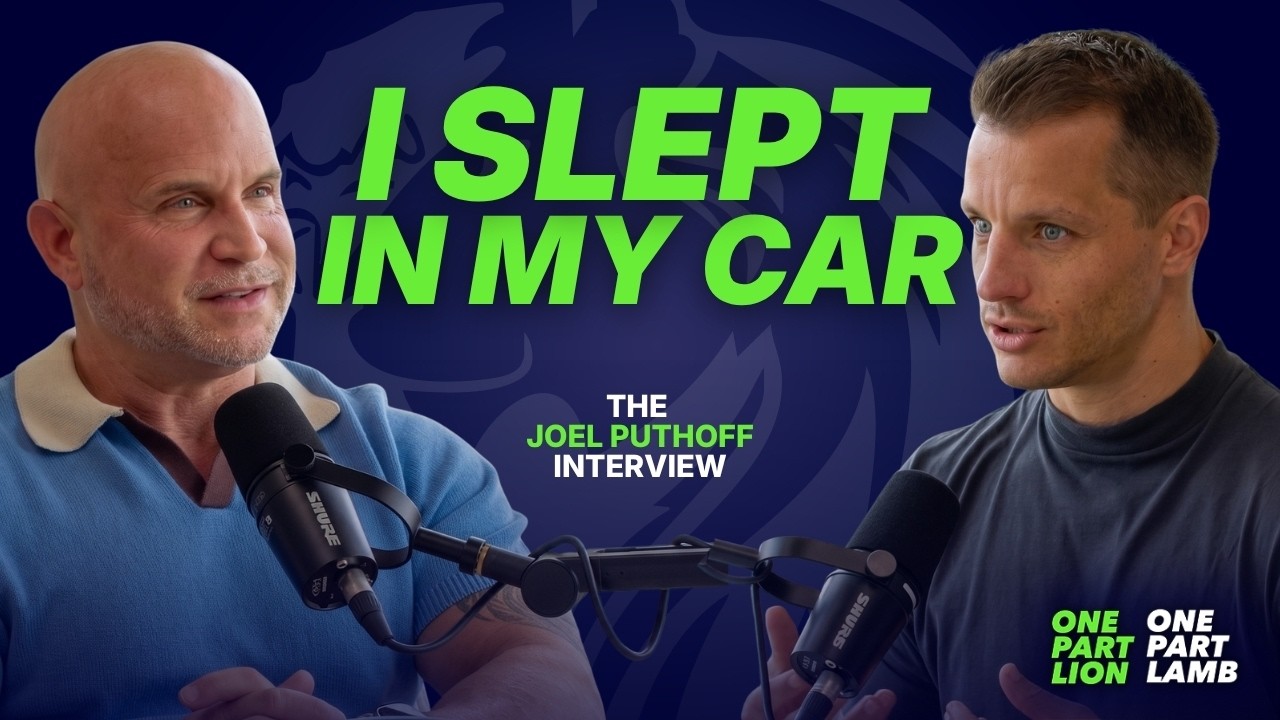
In this episode of One Part Lion, One Part Lamb, host Stephen Scoggins interviews entrepreneur Joel (Joe) Puthoff, founder of Lynxy, an engagement‑layer platform that uses geolocation and AI to turn physical events into real‑time connection hubs. Puthoff explains how Lynxy evolved from a simple check‑in tool to a "social DNA" system that matches attendees by shared interests, helps users make their top 10 connections, and provides post‑event attendee lists. He describes the challenges of networking at conferences, the difficulty of following up, and how Lynxy’s color‑coded Social Links help users prioritize conversations. The conversation also touches on the broader mission of fostering meaningful human connection in an AI‑driven world, safety features for women, white‑label partnerships with sports teams, and future ambitions to become the universal connection software for any venue. Puthoff shares personal anecdotes about his own sacrifices—sleeping in his car to keep payroll—and his habit‑stacking research that identified human connection as the most powerful driver of wellbeing. The interview rounds out with discussion of Stephen’s upcoming book, "One Part Lion, One Part Lamb," and how both hosts see Lynxy as a bridge between online communities and in‑person experiences.
Chapters
We were at, you know, fear of making payroll, and I was traveling and on the road. And man, I could spend money on hotels this week, or I could pay one of my employees on time that needs to get paid. And I slept in my car for several days saving money on travel and doing everything I could to make payroll.
My special guest today is the CEO and co-founder of Lynxy. He has also trained over 250 entrepreneurs himself personally. He's a serial entrepreneur. He's been very successful. Guys, please help me welcome the one and only Joe Putoff.
One of them was 20 years old. He was on my team. He was like a young prodigy on my team, and he kind of died in a freak accident. And it really woke me up and it put me through this like level of sadness. Do hard things. It's like choose your hard. I don't know if you ever heard that. Choose your hard or hard will choose you. Choose an easy life, hard will find you.
Yeah.
If you choose to do difficult things, figure out what the heck your purpose and mission is behind it. And curiosity, because you're going to need it. All the habit stacking that fuels human optimization— sleep, exercise, gut health, all these things. You know what the number one was? All the research supports human connection, quality Meaningful human connection.
Hey guys, welcome back to One Part Lion, One Part Lamb, where we help you get the integrated method to rise, lead, and last day in, day out, serving faith-aligned, high-capacity leaders each and every day. We want to help you get the skills, the methodologies, the techniques, the strategies, and the tactical tidbits, if you will, to actually move the needle. And as you know, for the last 6 or 8 months, we've— we have been really pursuing guests that have a deep well of knowledge in a variety of different subject matters that we think can add value to and for you on a consistent basis. And today is no different. My special guest today is the CEO and co-founder of Lynxy, a number one social— not a number, sorry, a number one platform that is currently making social networking now in-person networking all over again in events, in special circumstances. I love the app. I've been playing around with it at different events. I got to know our guest today through an event. And I'm loving it. He has also trained over 250 entrepreneurs himself personally. He's a serial entrepreneur. He's been very successful. And one of the things that, you know, I like is entrepreneurs that have been very successful but also had to go through some hard times to get there, which he and I resonate with. Guys, please help me welcome the one and only Joe Putoff. What's going on, dude?
Yeah, thanks for having me, Stephen.
I'm excited, man. So, you know, there's a lot of things we could talk about the app, and I definitely want to talk about it. Yeah. But what I, what I really want to talk about As we're jumping in, more than anything else, is you have this methodology, if you will, of relationship engagement and how it's kind of been torn apart. I think I was watching an episode that you did with our good friend David Meltzer, and you and your co-founder at the time were like, well, we realized during, especially like during COVID and during these other times, that basically the humanity was getting ripped away from humanity. The connection had been pulled away. And as someone who also trains in high levels of spirituality, obviously faith aligned with Jesus and whatnot, Yeshua. I also understand energetics. I also understand how the soul has frequency. And, what's really interesting is I'm watching you kind of pull this stuff together and make it cohesive. So, help me understand a little bit about how what you're doing is turning into building capacity versus borrowing capacity.
Yes. And, I love that you speak the language. Just the question alone tells me you're deep into energetics and understanding frequency and how humans can thrive. And, yeah, that's what I've always been very fascinated with in my life is what makes humans thrive.
Yeah.
And, you know, some people want to be great professionals. What helps them thrive as professionals? Some people want to be well-connected people. But, we live in this digital age now where things are shifting really quick. And, you know, through my time of, you know, training and working with, you know, a ton of entrepreneurs and building communities and leading events, I saw that our world was shifting in this digital age, and it was shifting to the comforts of their home. And then, the pandemic really perpetuated that. And so, when I see these shifts in humanity and kind of understand what makes humans thrive, there are different things, and I'll get into that here in a second, like what helps humans thrive and become their most abundant self. But, I did see the world shifting in ways where they have us fighting against race or religion or all these different things that pin us against our neighbor. And, it feels like there's—
Which is the opposite of loving Yeah.
And, it feels like there's these forces, whatever these forces are, whoever's enacting them, seems like they're pinning us against our neighbors in a way. And, it's just like, wait, we're so much more alike than we're unlike. Why are we battling over these little things when collectively as humanity, we're these abundant beings and collaboration is way more powerful than competition?
Yeah.
just being in business and being on my 4th company now, I've learned the power of collaboration and teams. And when you see forces come together— Stephen Covey, I read it early in one of his books, I think it was The 7 Habits of Highly Effective People— 1 1 3. And I was like, wait, that's bad math. I'm a math guy. And then you realize, like, wow, when 2 energies come together and they're in sync and they're going towards a similar mission and goal, those 2 powers together have a force greater than 2.
Yeah.
And they can be a power of 3 or maybe even 4. And what is that? And, and I built this It's like even brilliance framework, when 2 of those synergies come together, and Gary Brecka likes to call it like constructive interference. When those 2 forces come together, they can build this energetic field together to produce outputs that are greater than just one and one.
Compounding effect, yeah.
Yeah. And so throughout my journey of working with entrepreneurs that understand leadership and team building and getting those forces working well together towards a common goal, and then seeing people that are unable to do and they struggle with relationships, maybe because they struggle with some of the fundamentals of, you know, personal development, whether it's having good integrity, intentions, being a person of their word.
Yeah.
What are the things that really destruct that capability or that opportunity? And then what are the things that perpetuate it? And those are the things that captured my fascination when I was coaching entrepreneurs and working with different communities, is seeing the leaders that really understand, that develop themselves, and then found people in alignment with them.
Yeah.
to try to accomplish missions or goals towards whatever business or worldly mission that they were on.
Yeah, no, that's so good. In fact, I was thinking too, I know that in my— in some of the— what I'm also— I think one of the things I'm thankful of is vernacular is beginning to shift. I think people are beginning to be far more conscious about what they say. And, you know, in the Bible it talks about like the death and life are in the tongue. Right. Um, and that was way Old Testament back in the day. Like, it wasn't, you know, that was one of the situations where these are time-tested principles in that what you say about yourself is what you believe about yourself. Yeah. Or how you program yourself.
For sure.
Um, and out of the abundance of the heart, the mouth speaks. And out of the abundance of the heart, mouth speaks. If, if your lingo is such that is negative, your lingo is such that is hurtful, um, whether it's about yourself or about somebody— in fact, I would say that most of us won't say things We would never say things to our enemy that we actually tell our— we say about ourselves.
Yeah.
You know, which is pretty wild. But there comes this, this, um, this, uh, theology, if you will, of transcendence, right? Which is a word that I love. Um, some people, you know, back in the day it used to be a little more hokey. People like, look, that sounds a little weird. I'm like, no, transcendence is nothing more than becoming the next version of yourself.
For sure.
Right? You're leaving, you're leaving behind levels of yourself or elements of yourself that you've finally dealt with, you've finally grown through. Ego, pride, fear. Yeah. We talk about all the time the 5 constraints, you know, arrogance, ignorance, impatience, fear, and insecurity.
Yeah. Yeah.
Right. These are the behavior systems that I see that drive high-capacity leaders that they're unaware of. And it's not until we make the subconscious conscious that they can actually start to deal with them, which is another form of transcendence. But in that same vernacular, one of the things that's, especially with the faith community specifically, That I, I feel like I'm a bit of a bridge builder, you know, because a part of my journey was studying a lot of different things, um, because I wanted to know whatever I put my faith in was, was true and reliable and I could, I could anchor myself to it. And then as I, like, I, I began to study the life of Jesus, for example, um, I began to see a lot more overlap than not overlap. And then, but when I looked at traditional religious dogma, meaning it used to be more of— and I'm just saying this from my own perspective, right?
Sure.
a lot more control, right? Things were being done to control, control a people group, control a belief system, like that kind of things. But then when I would go study the life of Jesus, I would say, oh, he goes away all the time by himself, you know, to be with the Father. Well, what is that? Oh, that's being still. Oh, that's being present. Oh, that's sitting in presence. Oh, that's sitting with self.
Mm-hmm. Right?
Oh, that's a form of meditation.
Oh, wow.
Okay. That form of meditation is what I— when I look at Paul, I'm hearing Paul and he's like, well, yeah, meditation. And if you just look in here, see how he talks about it, is what's known as praying in the Spirit.
Yeah.
Right. But yet we use these vernacular words, as you mentioned earlier, to separate us.
Yeah.
And keep us from unifying in many respects. What's really interesting was, um, the thing that was coming up for me when you were sharing a second ago was the word isolation. Right? Nothing grows in isolation, but something will grow in presence.
Yeah.
Right? Which is another form of solitude.
Yeah.
Right? So how do we distinguish isolation from solitude before we go and build a community? Yes.
Well, yes, you said it well there, sitting with yourself and knowing that God is with you. The kingdom of God is within. And sometimes when you're isolated, that's a negative way to think about being by self. And when you're sitting with self in presence with God, you're, you're your whole, you know.
Yeah.
This is where you can heal. This is where you can get to know yourself. This is where you can break down barriers. This is where you can tap into your subconscious and try to understand, you know, what are my beliefs and were they consciously programmed by me? And they're really beliefs that I align with, or were they given to me, or are they still unconscious and I haven't discovered them? And so I look at it's really everything is about framing. And I've spent a lot of my career building mental frameworks for different Yeah. And myself. And I've got a whole list of like these graphics and illustrations that I build that are easily digestible, 5, 10 minutes, that just help you frame how to see the world. And you could look at, you know, everybody could look at an equation or a situation with multiple different lenses.
Yeah.
And you could look at it from a negative lens. You could look at it from a selfish lens, or you could look at it from a holistic, a healed, a—
Yeah, I try to look at these things from a place of curiosity. Yeah.
It's a superpower. And, and I was just recently on a podcast, not to shift into curiosity a little bit, with this guy that wrote Dare to Think Differently, Dr. Zaltman. And he's a retired Harvard professor.
Yeah.
And it was all about, you know, why are kids' imaginations dying at 9, 10 years old? You can see this, like, huge tapering off. And it was all about curiosity and believing that answers are right or wrong. And, you know, how our school system and religion might be, like, somewhat turning down imagination and curiosity. Well, curiosity is what fuels me every day. My number one belief now is I don't know more than I do know. I believe that I'm intelligent enough to realize that I don't know most of reality, and that keeps my fire and flame alive to pursue and try to understand what world we live in and how to transcend as much as I can from a human perspective into different dimensions of understanding or conscious understanding.
It's funny, they say that the beginning of wisdom is understanding you don't have any.
Yeah.
It's, it's so funny that as humans, we spend the vast majority of our life— and until we go through enough, um, circumstances, um, we spend the vast majority of our life essentially like trying to control outcomes.
Yeah.
You know, trying to make something happen, trying to quote unquote get rich, try to quote unquote find the one, trying to— that somehow all of these things are going to complete you, right? After chasing all of those things and even getting many of those things, I can say that I was just as empty in those moments as I was when I was homeless.
For sure.
And the funny thing is now I sit in a lot more gratitude, but it's not because of what I have. It's because of what's been done in me, through me, and now what I get to do for other people.
For sure.
I get to enjoy that process of curiosity, that process of experience, I had a client yesterday share something very difficult with me. And when we hung up the call, I was like, wow, she trusted me to share something with me that was super, super—
Like, vulnerable.
Vulnerable, transparent. She trusted me with something that she didn't want to tell anybody.
Right.
And, you know, and of course, she allowed me to speak into that. it looks like she'll get momentum from that. But the, the just the sheer fact that God has now given me an authority of sorts to speak into people's life in a way that will help them and serve them long-term and, and get them to this place of radical awakening. You know what I teach? You know, the, a lot of times we talk about the Integrated Alignment Method, right? So it's, you know, this is— I think that my, my 4-part framework, if you will, um, is Align. So Align is the awakening, it's the awareness that's getting started, right?
Mm-hmm.
Integration is the beginning, the process of actually loving the parts of yourself that you would normally resist, right? Then comes the embodiment phase. Now you embody these new beliefs, these new, these new levels of layers of, of, um, gratitude, love, joy, authenticity. Like you stop wearing the mask, right? Um, and then you get to expand. Most of us want to expand before we do the other layers.
For sure.
And then, so we spend all of our life trying to expand, expand, expand. And really the only way to expand is from the inside out, not the outside in. Right. So, you know, and the more and more I've learned about what you're doing, it's really interesting because the app that you're building is like super cool and, and stuff. There's also this, this whole other side of you, right, that is bleeding into the app, don't get me wrong. Um, but this whole other side of you that really believes in high performance and, and, and optimizing one's being— and I say being because it's like mind, body, soul, and everything.
Yeah.
Right. It's the holistic approach. What I found interesting, and I just found this out yesterday, so this is like the perfect time to talk about this. The statistics on the high-capacity leaders that do soul— I call it soul-level work, energetic work, okay— outperform those that do not 20 to 1.
Really?
20 to 1. Yeah. So if you look at the—
And that's transcendence.
That's transcendence right there. And what's really interesting is everyone that I have been researching as part of this awakening, if you will, that they've all went through. Um, Tom Patterson calls them life gates. Um, I tend to refer to them like that, but it, it's also like a birth canal. Like, it's extreme levels of development turned into extreme levels of compression and pressure and pain.
Mm-hmm.
To then release the things that aren't supposed to be there, pull in the things that are, to then be reborn, essentially.
Beautiful.
Right?
Beautifully put.
Walk me through how you see the process of transcendence and maybe some of the steps that you use with your high-capacity leaders that you now teach and train in how to elevate themselves. Because if it is truly 20 to 1, which that's what I've been able to find, Okay, then that means typically what's preventing someone from becoming the person they want to be, building the thing that they want to build, architecting what they want to architect, being in the relationship and whatever that they want, there's only one thing that's in the way, and it's actually self.
It's self. Yeah. And, you know, how I look at it is, you know, purpose can drive a lot. You know, what is your curiosity? What is your purpose? That can be a power to push you through some of these things.
Yeah.
And I'll start with a quick little story.
Please.
You talked about, you know, you said the word homeless and, you know, I even— and then you said gratitude. It reminded me of an experience I had. You know, there was a time where we were at, you know, fear of making payroll and I was traveling and on the road and it was like, man, I could spend money on hotels this week or I could pay one of my employees on time that needs to get paid. And I slept in my car for several days saving money on travel and doing everything I could to make payroll. And I could have been, woe is me, this is very sad. I could have had shame. I could have— it could have affected my pride. Luckily, this was part of my journey in the last few years that it made me realize, like, or I could reframe this and be grateful that I get to experience maybe what other people have gone through in their life. Like, I'd never slept in my car before. This sounded, you know, crazy to me, like the idea of homeless or like you're saving money on a hotel to pay your team.
Yeah.
And to me, it was— I entered that first night being like, man, I'm grateful that I get the experience to try to understand what other people might go through. And I could have, like I said, I could have taken it as woe is me. I could have been like, oh my gosh, this is very sad. I don't want to tell anybody. And I didn't necessarily start telling people this out loud.
Yeah.
But it was something that I was open to share. And to the vulnerability point that you just commented on, people almost welcomed it in. They almost felt like, wow, Joel's human. He's not just this guy that's always about performance and performance.
Yeah.
He has difficult times, too. And I think that's what so many humans go through difficult times, um, and, and they want to be able to level with people. And they're always— we live in this comparison world. And so I think sometimes when those walls are down and you show that you too have difficult times, it welcomes people to feel more comfortable in a world where everybody's dealing with their own situations and challenges.
Yeah. So it's, it's, so it sounds like it's a, there's a huge piece of simply Reframing it. Uh, I think Tony Robbins says what you focus on, you feel.
Yeah.
Right. Um, and I thought about that for a long time because I, I'm not as— it's funny, my team tells me all the time I'm a talking fortune cookie. Like, I drop one-liners like it's nobody's business. Um, but then I got to thinking about that. It's like, do I really believe that what I focus on, do I feel?
Hmm.
So I was like, okay, well, when I was focused on, um, lack, what did I find? More lack. When I focused on growth, what did I find? More growth.
When you focus on a red car, what do you see more?
The red car, right? The, you know, and so I understand the, like, the reticular activating system and, and, and, and kind of how that works. But one of the things that really stuck out to me is this, and you just mentioned it. So I had a couple thoughts. Um, the first thought is so interesting that you were like, I get to experience this. Like, you got curious about, okay, well, this is not ideal, but what can I learn from this?
One, from the physical place, but also from the emotional, the spiritual, physiological. Am I as well rested? You know, all the components. I got to go through it. I got to journal about it.
Yeah. Yeah.
And I took it as like, wow, what an experience. And people were like, oh, and then when I told a couple of people, it's like, oh my gosh, are you okay? Can, can I give you, you know, can I help you? It's just like, like, no, I'm fine.
Yeah.
They're like, what? You know, it's like kind of—
well, I think— but I think that's because the, the way that the American culture is specifically is, you know, if you have stuff, you have value. If you don't have stuff, you have no value, or you're somehow less than, or whatever. And then, but if you look at, you know, if you look all over the world, you go to Africa and kids are making, uh, soccer balls out of leaves, tying them all together, and they are just running around happy.
Having They're free.
They don't have electricity in many cases. We've helped some different communities with water and things of that nature in my history of my life. And it's so interesting to see where joy can find itself when the focus on the adversity or the pain or the transition or whatever is changing. The other thing that I just want to touch on this, because this is— so I too, I too have made extreme sacrifices at times to make sure my team was getting paid. Okay. Um, many of these leaders have had hard times at different times making payroll. In fact, a lot of times when I'm doing various keynotes, I might even done it with the one we did with MentorBox. Um, was I, I bring awareness to the sacrifices that these leaders are paying.
Yeah.
Right. Um, most times we're making these sacrifices and we are not talking about it. It goes back to the isolation piece, right? It goes back And that goes back to why these curated high-capacity rooms like what MentorBox 2.0 is doing and Board of Advisors and a few other companies are working towards does such a good job, is you're getting around your people. Yeah, exactly.
Right?
That you can kind of let your guard down and say, hey, man, I had a hard time with this. But one of the reasons I resonate with that is because one of the things I know that Lynxy is currently in discussions on one of their largest contracts and deals that they've had. I'm not sure what we can and can't talk about, so I won't push too hard there. I'm not surprised that those opportunities are finding you and your partner because of the sacrifices where you put your team first.
For sure.
Right? Hey there, I hope you're enjoying the episode. Look, I love making great content for you, but more importantly, we like creating great resources. So before we get you back into the episode, I want to make you aware of the Aligned Leader Index, which you can find at stephenscoggins.com/leadership. This is a one-of-a-kind tool that I wish I had when I was actually building and scaling my own organizations.
Why?
Because a lot of times the bottlenecks that we think are actually in our way are not really the bottlenecks that are actually in our way. And what the cool thing about this specific thing is, it's going to let you know what the number one constraint is internally, the number one driver that's actually in your way or being disrupted, where chaos and dysfunction are showing up. And number 3, probably most important, where your leadership Blind spot likely is. So if you're tired of your business actually running you and you want to take operational control over your organization, make sure you take complete advantage of the Align Leader Index. It takes 5 to 7 minutes and it'll give you instant clarification on the thing that's holding you back right now. Let's get back to the show. One of the things, and I'm bringing this up now because I was working with an organization recently, had historic success of being very successful in the marketplace. The last few years have been difficult, um, because of headwinds and some other things that happen in business. Like, my first mentor told me all the time that, hey, it's never going to be as good as you think it's going to be. It's never going to be as bad as you think it's going to be. Live in the gray. Like, so when things are great, be grateful, squirrel money away, all the things. When things aren't so great, still be grateful, right? And then look for the lessons you can learn to make sure you elevate, right?
Mm-hmm.
And my— one of the things that I counseled them to do is like, hey, if you're running into some capital issues, like just take a minimum living wage for a little while and take whatever that excess is that you've been so accustomed to and put it back in the company, or put it back in the team, or invest in the technology, or invest in the business. And what was really surprising was, is they were very resistant to cutting, quote unquote, cutting their own pay, even temporarily.
Really?
Right. So I had to do that for about 4 months myself in 2008 when the downturn happened.
Hmm.
Right. Um, I got a, a premonition, if you will, a vision said get out of debt. I got out of debt 6 months before the downturn happened, had no debt going into it. My competitors all had extreme levels of fun toy debts and RVs and boats and all the things, and most of it was financed because they've been living that way for a long time, so they felt like it was never going to change, right? And, uh, here it was, um, coming into the season, things got rough For a few months. I had built up some savings, not a lot, but enough to survive on for 3 or 4 months. And I felt okay, like putting my team first, making sure that they could feed their families and stuff like that. Some would call that self-abandonment, but I kind of call it an investment of sorts because years early when I first started the company, I got down to $4.68.
Right.
And to my name. Um, I chose to put it in an offering of sorts at a church I was attending based on an evangelist that had come into the marketplace. Um, there's a whole story behind that we don't have time to get into, but let's just say I felt compelled to take my last little bit and put it in the offering plate. Yeah. Come the Monday morning, I got $468. So I got 10 times that— 10 or 10 times— yeah, 10 times the—
no, 100 times.
100 times. 100 times the money, right, that I had invested as a moment of sacrifice. And so what I've done is I've learned to listen to my soul, and if my soul says this is an area that I want you to— this is an area I want you to sow into. When I bought this house, I was sharing a big part of that story. Some of that was a bit of a faith journey.
Yeah.
Right. I was like, should I, should I do this? And I sat with myself. I, I was in an apartment not too far from here because I just moved back from Utah. And I was sitting there, I was like, okay, I do my journaling practice. What I hear you say is— what do I hear you say about this relocation? The gamble, like the whatever. And, um, should I pursue this? Yes, pursue it. And then I told you the story about how the woman actually chose to sell me the house.
Yeah.
At, you know, at a lower, a lower price point than what she had gotten in a recent offer. So I guess I'm, I guess I'm going around my, my elbow a little bit, but I think what I'd like you to speak to, if you're open to it and amenable to it, is not just the curiosity and the way in which you chose to look at that situation, but also maybe encouragement to the the high-capacity leaders who are walking through or challenging times like that? Like, how— what are 2 or 3 things that they can do right now to walk through the difficult season of low cash flow, or, you know, and then like learn from it? Because I feel like, to your point, these are things that are designed to teach you.
Yes.
Like, I know how to steward more wealth now because of the hard things that I went through before.
For sure.
That's how I learned it.
Yep. You Yeah, it's, um, every situation can be looked at with whatever lens you choose to put on. And, um, you know, if, if you ever want to go— if you ever want to maximize your development, do hard things. It's like choose your hard. I don't know if you've ever heard that. Choose your hard or hard will choose you.
Yeah.
If you choose an easy life, hard will find you. If you choose to do difficult things, figure out what the heck your purpose and mission is behind it, uh, in curiosity, because you're going to need it to fuel you. And then as you put yourself in that fire, it's going to test you to release things that aren't serving you.
Mm-hmm.
And so what people can do is they can, you know, you know, implement the best habits into their life. There's many different habits that they can implement. And everybody's different. Everybody's gut's different. Everybody's situations are different. Everybody's resources are different. Everybody's teams are different. Sometimes the best thing you can do is let go of the wrong person on the Mm-hmm. Sometimes the best thing you can do is ensure that you get 7 or 8 hours of sleep consistently every night.
Before you make a big decision.
Before you make a big decision, or before you go out and perform, or before you go out and do whatever. You know, sleep is a regenerative superpower that we can utilize. And so, other things is maybe you're not using the first hour of your day to focus on intentional health and well-being. And, you know, you can focus on like, my morning started with the right stretching and fascia release. I'm a light guy, a light energy guy. When Jesus said, let there be light, I think there's a story behind that. And, that's part of what our podcast, Currents of Consciousness, is about, is similar to the jellyfish, this electrical light capacity that lives within us.
They call it Jewish mysticism, but it's in the Tanakh, Talmud in different ways. The grand scheme of things is the These souls. All right, so even in near-death experiences, right, they, they talk about how they have an out-of-body experience. Um, the soul itself is actually bigger than the shell in which it's in.
Yeah.
Right? And when it's in love and authenticity, they have scientifically studied that you can see that frequency with a special type of camera.
You can measure it too.
Off the body.
Oh, it's crazy.
Yeah. So I'm there with you. So keep going. I don't mean to cut you off.
Sorry. No, but yeah, you touched on so many things. Like, I've got so many things we could, we could hit on now. It's like love and authenticity. authenticity, or these amazing vibrations and frequencies that we can tap into. Are we being authentic? You know, what's another habit you can instill or something you can instill into your life? Be— figure out how to be authentic. Figure out how to be confident. And that starts with self-esteem and self-love, and then self-confidence can truly develop. And do you show up for yourself every day? If you don't show up, if you say, hey, I want to do these things, and then you don't do them, you literally naturally crush your self-esteem and self-love because you know you can't manipulate your own brain to I'm showing up for myself, when you know you're not.
Yeah, yeah.
And so you can't— there's authenticity challenges there. And so there's so many things that you can implement into your day. Morning routines, getting the right water and salt and lemon and creatine and magnesium.
Yeah, I did it today.
The right things that can fuel your body to start the day. Fasting is a superpower. Me and my friends were just talking about it yesterday. But ultimately, there's physical things that you can do to optimize your health, to start to tap into the expansive capacity that we possess. There's spiritual things that you can do, and this is what I get into my book a little bit.
Yeah.
Mental, body, spiritual, social. And there's different areas within your life that you can work on developing key habits and components and personal capabilities that you have. And that's where I got really passionate. After my third business, I kind of went through my second inflection in my life. I lost a couple of people really close to me. I gave my first eulogy.
Yeah.
It was really difficult.
One of them was really young, right?
One of them was 20 years old.
Wow.
And, uh, he was on my team. He was like a young prodigy on my team, and he kind of died in a freak accident. And it really woke me up, and, and it put me through this like level of sadness. And, um, and then I lost another person close to my life, and it put me through— and it was like the ultimate inflection point. I'm like, what is going on? Like, man, death is, you know, painful. And, and, uh, and then I like, you know, let go of my business. I sold my portion of the company, and I, I went on this like different pursuit of like Like, understanding my next business. And I'm like, what is this all about? Like, am I out here to make money? Am I out here to make impact? Like, what is this? And I learned through all this training of entrepreneurs and people that wanted to elevate their personal development, their professional development, I learned that there were areas that I was struggling in myself. And it took me on this, like, 4-year study of human development. And holy cow, the food pyramid was really, like, a terrible education.
Exactly. In the country.
And why didn't they give us mental frameworks and mental states? And as I started to learn all these hidden wisdoms of the world, I felt like that were kind of hidden from us in a way. I started to even read the Bible and encrypt the Bible. I felt like the Bible was slightly encrypted and it was written in parables. Maybe there was different messages within. And it got me deep into the study of Yeshua and Jesus the man and what he was really, you know, trying to—
Communicate.
Communicate to the world. And maybe we've lost some of these with the dogmas and the frameworks that, you know, were programmed into us at some level. And I just got really fascinated. My curiosity took off. And the more that I studied, the more that I was able to help my entrepreneurs and CEOs that I was working with.
Yeah.
The more that I was even able to help myself. And, you know, I had plenty of ego throughout my sports journeys. You know, I was great at sports. You know, that's— most people know me as an athlete.
Yeah.
And then an entrepreneur.
Yeah.
And that was an identity to me. And identity is a whole nother thing. It's like, what do we attach ourselves to? And in this comparison world, we see ourselves—
we often see ourselves by what we do, not who we are.
Exactly.
Yeah.
And how we want people to see us.
And then we come back to that. Yeah.
Yeah. And, and so as I started unpacking it for myself, it kind of left me a little bit naked in a way. And I'm just like, man, I feel like I'm a shell of the man You know, I'm like letting this ego go. How do I keep my confidence going? Like, I'm killing ego, um, but— and, and self-pride, the negative components of it. There's, there's, there's still maybe some good things in there, and I have conversations about that. But I was developing self-esteem and self-love and self-confidence, and like, whoa, there's like a pure self-confidence.
Yeah.
Compared to this like subconscious—
Which is magnetic. Ego.
Yeah. And, and it develops. Then I got into the electromagnetic energy of the human, and it took me so deep into what—
I think it'll blow people's mind how much current actually goes through a human body.
Amazing. Amazing.
Like, it recycles.
Yeah.
I mean, just the effect of just the brain itself is sending electrical impulses— well, what we could define as electrical impulses— throughout the brain all day long.
Yeah. And, and when you get that whole flow working, it— for some people, this is like they can't quite connect to it. And so I'm always trying to figure out how to articulate this so everybody can kind of understand and welcome them into this, like, science and understanding of the physiological capabilities of the human. But, there are capabilities that we can develop in our life that if we have intentional pursuit of getting rid of the things that are holding us back and developing the things that are really hard. And, that's where the fire, when you're in the fire and all these things are difficult, that's where you can really polish your being in a way.
Yeah.
Because I look at us as the is this organism that expand— can expand.
Yeah.
But, many times in humanity, we're fighting inflammation, we're fighting trauma, we're fighting all these things that contract us and that hold us back from being expansive. And, my 2 words going into 2026 are regenerative and expansive. How do I push so hard that I can push myself out of my comfort zone without breaking myself and then be able to heal? And then, if I can and then heal.
Yeah.
And then push. And it allows me to expand my organism from a sensory capability, from a consciousness capability, from a not afraid to take, you know, calculated risk and challenges in my life. But then how do I heal effectively? And all the things that we talk around about sleep and meditation and these other things are really a healing mechanism.
Yeah.
And we have these— not to jump into epigenetics, but it's something I'm so fascinated too. Is how do we, you know, as we— I don't see—
see, the reason we can jam on this, because I don't see them as exclusive from faith. They're all— I see them as translation tools to understand many of the communication processes within faith. Yeah. So keep going. Sorry.
Yeah. And so purpose and faith, like, how do we have faith to pursue these things and believe in ourselves and, you know, seek this self-discovery? And then as you do that, you get really in tune with yourself. And one word that I've loved over the last year is interoception. It's really being in tune with your internal self.
Okay.
And, when I eat something that's unhealthy, I'm like, I can feel that my body's like, no, no, no. When I eat something healthy, my body's like, ooh, nourishment.
Yeah, yeah.
It fuels me.
It's so interesting because most of us when we're growing up, we're not thinking, we're not even aware of how our body feels.
Agree.
Over the last 3 years, one of the things that I've been doing Um, as part of my journey, um, actually there's 2 things I want to come to, but, um, as part of my journey is this: how does this make me feel?
Mm-hmm. Like, and, and then sit in that feel.
Well, yeah, and then sit in it for a minute. Okay, well, I just had, you know, some fried food. I, I just, I know I did. I feel tired. I feel more sluggish, more tired. I don't feel my brain— my brain fog for sure, right? And then I might eat, you know, later, you know, eat and oysters or some salmon and something, you know, as Gary says all the time, it's like what God made.
Yeah.
Versus what man made.
Yeah.
He said, God, what God made is what you should be eating, not what man made, right? And I've noticed that as I eat more processed things, I mean, 'cause it's quick, it's easy, I'm traveling all the time, I throw a bag of Doritos, it fills the urge, like, for a hot minute, then I'm like, a little bit later, I'm like, ugh, right? So I find it interesting that one of the takeaways, I think, for the audience today is start asking yourself every time you do Every time you do or do not get sleep, how do you feel?
Yeah.
And if you feel alive and alert and awake, do more of that. And if you feel sluggish, drained, low battery, low process, then do less of that. Yeah.
And it's— there's really like the chemists that are working on these foods are brilliant. I've talked to 2 of them as I was like working to build, you know, even my food product, Smoothie Scoop. I've got this really interesting recipe. It's like a smoothie ice cream.
Yeah.
And it's like using superfoods, and people like absolutely love it.
And it's awesome.
Dude, this should be sold everywhere. This is like healthy.
Yeah.
Like, yeah. Anyway, R2 receptor on your tongue, they know how to trigger dopamine. They know how to make it taste amazing for your brain to light up. But those foods also, to your point, might not make you feel good afterwards, but they might light up your dopamine receptors and make you feel good. But at the end of the day, back to this epigenetics, is as you like fuel your optimal self, There are switches on our genetics. I think our genetics aren't set in stone. And, I think most people that have done any type of study around genetics would agree that our genetics can fluctuate over time.
It's adaptation.
Our telomeres, sirtuins, you get into how long somebody can live, anti-aging. And, this, not all my information is in my book, but that really began my journey of uncovering all this stuff and turning on my curiosity to be like, wait, I picked up this rock, this goes deep. I picked up this rock and learned something new. Holy cow, what is here? Let's go deeper here.
Yeah.
And, it took me deep into epigenetics that I believe there's these switches on our genetics. Not just I believe, there's plenty of science that backs this up. And, we can turn on positive switches in our life for our genetics and that could release certain hormones and dopamine and certain chemicals. And then, we can also switch on other things that can create chronic illness and inflammation. And, it's almost like your body's attacking and you can give that to your offspring. And so, if you're corrupting your body's physiological health and everything—
That's why I call them bloodlines.
Yeah. And, I think that's where some powers of the world want to tamper with those because they want their offspring and people in their circle to be the most robust and purebloods or cleanbloods or whatever it might be. And then, they're also manipulating certain genetics and communities to place certain things.
Even in its simplest form, it's about money.
It's about money and power.
Yeah. How much money and control can I get?
And, you know, civilizations were built around people, you know, whether it be, you know, employees or slaves for them to build their civilizations and getting them to fight the fight that they wanted, which is expanding their civilization power and resources. And, we still live at that at some level in this psychological biological level. But, if you can free yourself from the subconscious programming that maybe holds the individual back from finding transcendence, I almost have framed that whole situation for the reality of this world is there's powers that want us to think that we're not intelligently designed beings, but we're brilliantly intelligently designed. God gave us this amazing creation.
The human body is a giant battery.
Yeah, and soul field. And, we can expand it and we can tap into it, but we've got to break through some of these programmings and these things that have suppressed human potential. And, we need to expand ourselves. And, there's mechanisms that you can do to do that. And, as you do that, I think you can play with your genetic switches and you can tap into more transcendence and more epigenetic capabilities.
Yeah. I was just thinking too that when I was looking— so, So, uh, so I've been in this quote-unquote thought leadership space for the probably 7 to 10 years. Um, only the last 2 or 3 have I felt like I'm really me, right? So, and part of that big shift— and that, and I'll say the last 2 or 3, I mean, that's been a journey. Like, I'm more authentic now than I've ever been.
Amazing.
When there's— and there's probably another level that I haven't— that I will awaken to and keep going towards. But here's what the interesting thing I discovered was And maybe this is where transcendence really lies, right? So I'm starting to see, I'm like, literally, I'm seeing a couple in my mind. I'm kind of seeing some bridges connect, right? So I used to operate a lot in performance, right? I will do X, Y, and Z so I get the X, Y, and Z result, right?
Mm-hmm.
I'll model the people I admire, right? I'll speak like them. I'll try to get around them. Um, I won't share my, my, um, struggles, but I'll share my wins, right? Um, I call that performance, right?
Just performance relationships.
Yep, just performance, constant performance, right? Who do I need to be so you see me, right?
Not yours.
Or what do I need to do? Yeah, what do I need to do so you see me? Yeah, right. And What's really interesting is I find a lot of us, a lot of us do that. And some of us do it in only certain circumstances, like around your family or in the office place.
For sure.
Or like— and what was really interesting is, to me, the greatest transcendence that I've had recently is going from performance to authenticity. Not just me, right? I have nothing to prove to anybody. I have— I have— I don't have to do anything. Right, to, to earn respect or whatever. And the more I focus on being, right? So I, I say this all the time, that this actually came out one of my journaling sessions, if you will. My— I have a process called What I Hear You Say Is, um, that I do a lot, um, where I just sit. What I hear you say is today's date. I listen, see what, see what comes out. Um, which all that's always been profound. But one of the things that came out one time, this is listening should always precede doing. Doing should always precede being. I'm sorry, listening precedes being, being should precede doing, doing precedes becoming.
That's right.
So it's listening, being, doing, becoming, right? And inevitably, what I've discovered is the authenticity. When I was able to step into— you know, we were both at the same event. I had a chance to share. We both had a chance to share a stage together. And The feedback from the audience was really strong, and it was really strong because we were not performing. We were sharing.
Yeah.
Right. Sharing something that we feel like, you know, touches their lives. And so it was not uncommon to see tears and laughed and being silly and like all the things. What I've discovered about authenticity is it is truly magnetic.
Truly.
Right. So the opportunities that you've you say you want, you can't get because you're trying to control how you get there.
Yeah.
Right? Rather than releasing, just putting the best possible energy into the— what I think, I think, you know, even the, um, air that we breathe probably has its own frequency of sorts.
Yeah.
Because it's coming in and out. Something's powering this body.
Yeah.
Right? The, the body is born. It has, it has a heartbeat. It has electrical impulses coming from the brain. It has all these veins and all these neurotransmitters going throughout every limb of the body. Like, I'm not even thinking about— like, I'm not consciously thinking about waving my hands around right now.
Yeah.
Like, I'm just— it just happens, right?
Mm-hmm.
It's not until recently that people started saying, why is that true? Why does that happen? What can I learn about myself? Like, the body— the body— they say the body keeps score, right? I didn't realize this, but when I started doing a little bit of the some energetic work itself, I realized that I had trapped trauma in the body. Like these, these, um, low back pains, these, these knots in your neck that never seem to go away, right? What if it's actually not a muscle issue? And what if it's a trauma issue, right? And started— and so I started, I said, okay, well, it's— this is chronic. Let me start to work on it. Let me just try it. Let me try a different way. I was like, I'll be doggone if I'm good. I can stretch. I'm in the best shape of— I'm, you know, 50 years old, best shape I've ever been in my life. Um, you know, you got all the CAC scores and all the things. Like, dude, you're like a 30-some-year-old dude.
Yeah.
I'm like, well, that's amazing, but between the food that we historically eat from the traditional pyramid, the trauma that we experience— or the trauma, little t, big T, doesn't matter— Right? Because what might be trauma to me might not be trauma to someone else, right? Between the food that we eat, the trauma that we experience, and the environment in which we are, which is being force-fed many times negative things, right? Media consumption, stuff like that. Between those 3 alone, to me, there's no surprise that there's been a chronic raise in chronic illness in general.
Yeah.
I'm aware of people that were diagnosed with extreme levels of cancer not given very long to live, and went and did a holistic approach. They changed how they ate, they changed the environment that they were in, and they changed how they woke up every day. Yeah.
My dad.
Really?
Holistic.
Oh, wow.
PSA over 30.
Wow.
All of a sudden, you need to do this medical intervention, medical intervention, medical intervention. And we said, let's not do that because here's the outcome. And me, my mom, and a holistic doctor had a different plan. 6 months later, PSA under 10.
Wow.
No fear. Now it's 5, and game changer.
Yeah.
Game changer. And he's never looked healthier. Just turned 70. I was just back in Ohio this last week for his 70th birthday. And everybody's like, how is he 70? But from 5 years ago to today, he looks 10 years younger. And he changed his habits. He changed his approach. Bro, I can't even—
before and after. If you talk to him 5 years ago, I look like a different man. Yeah, yeah.
You look amazing.
Thank you, brother. Truly appreciate that.
And, and, and when you, uh, talked earlier about, you know, being in your authentic self and having that energetic field, like when I met you in New York, yeah, uh, when we were both about to present, I'm like, that's Stephen Scoggins. Like, I can feel the energy.
Yeah, thank you.
Um, and you know, there's a couple people that I was really looking forward to meet, seeing, uh, David Meltzer again in person and meeting you and a couple others. I was just like, when I met you, I was like, Man, he radiates energy.
I appreciate that.
And, it's so beautiful. And, that's why I think we're so passionate about this stuff. We've seen how it's changed our lives. We see how it can change humanity and kind of help create a new world. And, I currently am working, always working on different concepts around things that aren't fully taught yet in the world. And, I'm working on this, how energy can be transferred or created maybe Maybe even, which goes against a lot of science in the world, energy can be created.
But— I don't necessarily trust the science.
So, it's okay. Yeah. But, I'm just so fascinated with and I appreciate you sharing your story. And, I do think there are— our body is one whole system. And, right now, Western medicine is great for a lot of things. You break your arm, you do all these things, you need to go to a doctor. But, they also treat gut and kidney, and each one has their own doctor. And, it's all these separate systems or separate pieces when it's a whole system. What we put in our gut fuels our heart. What we put in our gut through our vagus nerve fuels our brain. And, I want to try to unpack a concept.
Please.
It's outside of my full understanding, but I think there's a ton of merit. And, where I'm trying to get is think of a snowflake or a water crystal at its full capacity. And, it's like this beautiful mosaic if you can just think of the most beautiful water crystal. And, that's pure clean mineral water. And then, if you think of chemical water, if you've ever seen it under a microscope, it's like a cryptic piece. And, you talked about your pain in your back, you talked about your trauma, your hole.
Yeah, yeah.
Well, there's more and more science coming out on how we are these bioluminescent beings that we have photons that live throughout us. that we are these quantum beings at some level with energy and light.
There's some evidence that when the Bible talks about us being clothed with skin, it wasn't animal skin. So, before the fall, we were walking with God in the garden, so to speak. There is some level of feedback from Jewish mysticism that that was Soul being.
For sure.
Before we were clothed in flesh.
So, sorry. Yeah, but mysticism, Gnosticism, for some people, those are scary words. And, maybe the world made us fear those words like mysticism bad, Gnosticism bad, when maybe there's some truths hidden within them.
Yeah, I'm just curious.
We're just looking.
Yeah. I take everything back to God.
Yeah, 100%. And so, if you think of this beautiful water molecule and we're mostly waters, we're dressed in skin as you would say, when you see people that are glowing, Typically, they're fueling themselves with clean water and the right minerals and the right things that fuel collagen production for skin-glowing health. And so, if there is a playbook for optimizing your electrical light bioluminescent being, I think it starts with the clean water that we put in and how we think about ourselves and how we carry this energy.
Mm-hmm.
And, it's communicated through light. Light is a communication highway throughout our body. And, our whole body is wrapped in fascia, which is fueled by collagen and light energy. And, I'm still trying to piece together where the photoelectric effect comes in because that's where energy is transferred through light.
I mean, Brecka's done a lot of science on the fact that just being out in sunlight, it's almost like the Superman because in Superman, the superhero, he gets recharged by the Yeah.
And, they've sold us that sun is bad and they put benzene and chemicals on us to block ourselves from this power source. When we're putting chemicals, now we have the sun baking chemicals into us.
So, is it the tanning lotion that's creating the cancer or the sun?
I think it's more the chemicals than the actual sun, but there's research out there. I'm not somebody doing the research, so I'm not going to put any claims out there on But, I do believe that we have using the sun and using the minerals and using clean water and doing other practices, we can enhance our water's fractal-like capabilities, its expansive capabilities instead of having corrupted water. And, combining that with the light energy, I think that's how we free ourselves from pains and knots and all these things that are in our body. So, it's an emotional game, it's also a physical game.
Yeah.
And now, it gets into the physiological quantum game in a way of how do you become your most expansive self.
Yeah.
It's light, it's water, it's reducing the chemicals, the toxins that are within us. And, if you combine all of these, I think what I'm trying to build right now is this expansive playbook surrounding all these different components so that you can free yourself from trauma and a corrupted fascia system light and you can have a more glowing regenerative regenerative skin and you can have a more regenerative body and you can heal at a higher capacity.
Yeah.
And then, you wake up the next day and you can push yourself further because you're not dealing with all these trauma or these other things that corrupt our energy, that corrupt our health, that corrupt our mind. And, it allows us to push further and then heal at a higher capacity and then push further and then heal at a higher capacity. And, I really do think it's tied to the water, The light and then all the other things that we do to heal pains or traumas in our life.
Well, no, I agree with that. I mean, just in the simplest form, whatever you put in your body is either going to hurt it or help it in general, just in its most simplicity form. Drinking lots of soft drinks, they've literally showed Coca-Cola taking rust off a bumper. I'm not trying to shame you, Coca-Cola. I'm just trying to say. But yet, we're putting that in our digestion. It's crazy, right? Sugars, all kinds of like chemicals that are made up in a lab somewhere, uh, versus drinking fresh water. Yeah.
And I know we're not perfect. Like, I was just hungry for my coffee right now, but I'm using—
but I use fresh water to make the coffee rather than out of the tap.
And you put a little, uh, lion's mane in there to get a little boost of cinnamon.
I did the— I do the salts. I do everything Gary taught me to do.
Yeah.
I have the perfect amino blend. Yeah. Like, I'm like, I'm doing everything I know to do. And, you know, and to that, to that end, you know, every time I go to do blood work, blood work is getting better and better and better and better.
amazing, you know. And I do the same thing. Like, I, I have the right spices in my gut, which are anti-inflammatory, which are cleansers, the different thing— different spices you can utilize for that. But then I was also home for my dad's 70th birthday, and I had a, um, you know, uh, Crown and Coke Zero, you know.
Yeah.
Not, not the perfect thing to put in your body, but I don't overthink it. I don't allow the, oh my God, I'm eating— I'm drinking something that's going to corrupt me. I don't allow allow the thought to corrupt my physiological health already more than the, the sugar that I might be putting in. And I, I try to be as disciplined as I can, but I'm not perfect.
Yeah.
And I could be better. I could say full no to any Coke Zero or anything like that, uh, and I probably have maybe one a month or something like that. But I'm, I'm not perfect, and, and it's okay. But if you have like a, a playbook and a template for what you do like almost all the time, yeah, if you step outside that 1 or 2 times, your body is in such a healthy state that it knows how to reduce or eliminate these toxins very fast compared to hold on to them. If you're consuming them all the time, your body becomes that.
Exactly.
And, if your body is really healthy, then it can find ways to— it's intelligent. It knows how to get rid of toxins. It knows how to decalcify its own pineal gland. It knows how to— which that's a wild thing to just randomly throw in there, but it knows how to cleanse itself and optimize itself because it's in a healthy state to where it can recycle through these things.
Not so good. In fact, I was just thinking, I got a good friend of mine, Tracy Dewes. She has a doctorate in a lot of different things, but one of the sciences that she studied like nobody's business is water. Okay? She's based out of California. I think she's in San Diego. And, she has big dreams of how to help water Nutrify, essentially. But one of the sciences that was actually studied is the chemical composition of water changes, strangely enough, as if you talk to it. Like, you like go to your you know so historically people are like you know they do they do a prayer of thanksgiving for their food and you can nourish my body blah blah blah right most of us don't realize there's there's an actual scientific benefit. of actually giving thanks for the thing that you're putting in your body. Yeah, right. Which I thought was just mind-blowing. And she, I mean, she showed the science. It was pretty wild. It was like this, like, here's the actual study, here's the actual video of what was going on at the microscopic level as we were doing this or not doing this. That's why you see people talking to their plants like, you know, you're so beautiful, I thank you for, you know, giving oxygen, like all these types. It's, it's, there's so much we don't understand.
Yeah. Right.
About what the environment that we live in does for us, the things that we put inside of us that do for us, and even how we communicate about ourselves do for us. I'll give you an example. My audience has heard this before, but one of the things that I typically do almost every morning, if not every morning, is a mantra. Okay. Before I get out of my bed, Before I come out here and journal and do my what I hear you say is or something like that, I'll say, I'm healthy, I am wealthy, I am wise, I am a steward of the Most High, and I love you, Stephen. And I'll do that 4 times, breathing in between, historically. And what was really interesting was, is I was sharing this concept on a podcast or a show not long ago. I've shared it many times, but on this one, and they're like, well, You know, how difficult is to— how difficult is it to do that, um, when you don't already have those things? I was like, well, I was doing those things before I had any of those things, right? So when I go— when I go get my— because I get blood work done about every quarter, and, um, every time I go do these things, I'm expecting a good result. Like, so that I'm— I'm telling my body, like, so I just had a— I had to get a tooth pulled in the very back of my mouth just like 2 days ago. Like, like very— looks like almost like a wisdom tooth. And I was literally last night— I mean, I've already done it— said, in Jesus' name, it's already healed. Thank you. Thank you that this is already healed. Thank you. It's healing so fast. And I'll be doggone if that joker ain't healing fast.
Yeah.
Right. And it just, it just goes to show that there's so much more that we just don't understand. Um, but part of my transformation going from performance mode to authenticity is the process of integrating the things that I resisted about myself. Like the things, the things that used to bring me shame, the things used to bring me guilt. Like, it's a silly one, being short.
Yeah.
I can't do nothing about being short. Like, it is what it is, right? And I have to trust that when I was created, that was a reason. So I had this really interesting, like, insight one time I was doing another journaling session. It's like, well, if I'd have made Eugenia taller, I would've had a really hard time breaking that ego for sure, right? Um, because I've already put so much in you to carry forward that if I'd have made you The Rock, there's humble Stephen never would show up for sure, right?
Kevin Hart wouldn't be who he was if he wasn't Kevin Hart.
Exactly, exactly. Um, I know we spent a ton of time talking about, um, you know, high capacity, like building this, this fuel, this— and I want everybody to pick up— where can everybody grab the book itself?
Because yeah, it's on Amazon, Capability Fuel. Yeah, uh, it's the only place it's sold. I don't market it, I don't push it. It's out there. It's a great book. I wrote it, uh, when I was, uh, 30 to 33 years old.
Nice.
And I published it in 2021.
Very, very cool. And it covers a lot of what we've been discussing the last little bit. So for the, for the next, uh, 20 minutes or so, I want to learn more about Lynxy. Yeah, like, that's, that's been the fun project for a little since 20— uh, 2023. Yeah. Um, I've had a chance to use the Both at the event and since. Help people understand what it is and why you created it.
Yes. Well, it's— to just start with like where Lynxy is today, and then we'll kind of backtrack and talk about the journey, is we're an engagement layer for the physical world. So any space or event or venue you walk into, it's like check-in technology. So we use geolocation technology and we're like this intelligence layer that helps people engage and participate And connect in real time. And so, we go to— everybody's been to different types of events, conferences, trade shows, music festivals, whatever it might be. And, maybe there's amazing connections all around us that want to talk about energy or business. The power of collaboration is really important to me, so I would walk into events and coworking spaces or coffee shops and be like, I bet there's amazing connections around me, but who's in a social mood and who do I align with? You got to go through small talk and you've got to try to break the ice. Just to figure out.
Do you like the same things as I like?
Yeah, it's like there's so much time and energy, you know, you know, put into trying to find our best connections in this world. And then, you know, what if there was a product out there that could help us when we walked into an event, make sure that we messed— we made our best 10 connections? That was the original concept of Lynxy. As I was training all these entrepreneurs and working with CEOs to build sales teams and scale companies, I was like sending all these people to events. And I'm like, why is there no softwares? The organizers want a better software. The users download it, don't really use it, and delete it after the event. I'm like, what a shame. You get all these people on your software, people barely use it, and then they complain that it's not helping them accomplish their number one goal, which is make their best connections.
Yeah.
And in business, the post-event connection, uh, experience is sometimes the most important— how you follow up. And do you even know who was at that event and who was your best connection? So we really built, uh, Lynxy out of a need for helping people maximize their time and energy at an event to find their best connections in real time, or to engage with the speakers and performers, uh, to create these engagement tools for organizers. And now we're even getting into fan engagement. You know, the Savannah Banana of tech, Jesse Cole, he kind of, you know, reinvented the experience by helping people participate in the game.
Yeah.
And so we're really this intelligence engagement layer for events and venues, helping people participate and connect, uh, profoundly with precision and purpose.
Yeah, dude, that's all good. I'll give you— I'll just give you some, some takeaways of things that I've experienced with events.
Yeah.
And how I see it helping, um, just from being someone who's actually been in the app. Uh, first of all, I go to events all the time. Um, a lot of times I'm speaking at the events, I'm teaching, I'm training at the events. I'm, you know, I'm doing things like that. Um, I'm meeting a lot of amazing people, um, some of which, uh, I'm okay like connecting with at a personal level, meaning here's my cell phone number, And others of which are like, hey, I want to stay connected, but maybe not at that level just yet. Right? Yeah.
Follow me.
Yeah. There's not enough relationship capital built. Right? And the other thing, and part of that is this other phase, which is I meet so many amazing people. I leave the event with the full intention of following up with everybody that I met that I wanted to stay connected with. And I have yet to do so 100% of the time.
Yeah.
I have yet— my best ratio is probably 70% of the people that I meet, I'm able to like immediately get on my calendar and like have a follow-up conversation with. And whether I'm serving them, um, in a client relationship, or whether that they're serving me in a current relationship, or whether or not we're just— we're, we're cross-lateral, we're trying to help each other make new introductions to people in the space, right? And these have been real problems. Like I, I was telling Connor from, from my team, who you've met, um, Yeah. And, um, I was telling him, I said, Ben, I'm going to all these events. Um, I've been doing a lot of stuff with, with David recently. Um, love what he's about and how he kind of benefits charity and all these things. Um, and I'm meeting, um, Rhonda, who's a mutual good friend of us with MentorBox 2.0, and meeting all these amazing, really cool people doing a lot of really cool stuff, right? And I told Connor, I said, dude, I can't keep up. I legitimately can't keep up with everybody that I'm meeting to follow up with them in the respectful way. And historically, what I've done is I've tried to get Melissa from my team involved, who does a lot with our company. But one of the things she does is she tries to make sure I'm where I'm supposed to be.
Yeah.
Because if you leave it to me, I will double book, double book, triple book, quadruple book myself on a regular basis. Right. And I think that— so that I have— because I have a sincere desire to be connected and be collaborative. The difficulties have come in with, okay, I meet someone who I, I need to know in 5 or 6 minutes, is there something here that we can discuss, or are we just going to be, um, friends, right? You know, just kind of like acquaintances, right?
Yeah.
Um, is there people like— you know, one of the last— one of the events I went to not that long ago is I'm very very interested in understanding how private equity works because at some point in time I may start a fund. And when I start that fund, I need to have a solid thesis because I don't want to get myself in trouble by the FCC and all the things. I want to do it right.
For sure.
And if I have my friends, family, and the people that trust me invest in something, I want them to have a great return or increase the likelihood that that return is very possible. So in these different events I've been going to, there have been people in the room that do private equity. That's what they do. They're private equity people, right? They, they start funds, they create funds, they know what a general partnership is, a limited partnership is, like, they— GP, whatever, whatever it gets. I'm like, but then I'll spend most of my time training and teaching other leaders at the level in which they're at, which I love doing. Like, I love being of service.
Yeah.
Um, because I could see things very quickly. Pattern recognition is like high on my radar, right? But then I'll miss, I'll miss some of those relationships. And one of the cool things that happened with the app Was I was like, oh, these 3 people love this space. I need to make sure I talk to these 3 people. Yeah, right. So I went out of my way to have conversations with those 3 people in conjunction with it. Yeah, right.
So anyway, yeah, so we built this color connecting system called the Social Links or building your own social DNA. And so every space you walk into, if you can imagine yourself building this color mosaic of keywords and topics that you were passionate to connect in. Every space and event you walk into, you can tap in, check in, and go live with Lynxy, and it'll tell you who else wants to talk about those topics or similar topics. And so, it's really just a way to find your energy, your frequency in real time so that you can sync into the people that you want to.
Yeah.
And, if you don't meet them during the event, let's say you're busy, we only have so much time at the event and everybody wants to maximize it. Sometimes companies are spending a lot of money to to send their teams there, but there's only so much time.
Yeah.
And so you only have so much time to make your best connections. We help you do that. But if you miss them after the event, it's like an attendee list and it tells you, hey, here's the 5 to 8 people that maybe you missed that are super aligned with what you are trying to build, what you're working on, the connections you're trying to make. And so you can find your collaborations during the event with precision and purpose or after the event.
Yeah.
And so we give this like post-event connection experience that nobody else is really truly focusing on that we're like, man, People need to find their people. And, uh, and then also like organizer, like you were up on stage that day and everybody puts on the big screen, maybe, hey, QR code, here's my website. And they really want everybody to get it in real time. Instead, as a speaker, you can just drop it in the app and then everybody has all your contact information. So for the speakers and the creators of the world, they can capture their full audience and they can get their, they can maximize their followers and make sure that people can find the link links and the platforms that they want them to find.
Yeah, dude, that's so good. So good. I was also trying to think too, um, one of the things that I, that I see you guys doing that's disruptive in the most beautiful way is bringing people back together.
Yes.
Right. So you're not sitting them into— I'm not going to say— we'll just say social media, the world of social media where you get to watch somebody from afar anymore.
Yeah.
Right. You're saying no. Well, if you guys want to stay connected, Here's how you stay connected in person.
Yeah, yeah. Because really, in this like digital AI age of intelligence, it's like, what is real? And like, you know, now we're living in this comparison world consistently, just seeing how people build their best profile.
Yeah.
Instead, like, Lynxy is investing deep into human intelligence in an artificial intelligent world and trying to lead like that human renaissance, which—
As it's becoming increasingly more valuable. Yeah.
And as I wrote my book, I studied all the habit stacking that fuels human optimization. sleep, exercise, gut health, all these things. You know what the number one was? All the research supports human connection, quality, meaningful human connection.
Yeah.
And so after getting done with the book and having my other business and being like, man, I'm fueled, I've got social abundance. Yeah, my Rolodex, my social wealth is amazing. But really, the world in the pandemic perpetuated it is trying to isolate us. And they're pulling us against each other and fighting against our neighbor. Our neighbor is the when in reality, if we come together collectively, we are a force.
Yeah.
And that fuels wellbeing, that fuels, you know, health. And so finding your best connections at an event or in real time where you go out in public, if we're the bridge, bring this back to a bridge, we're the bridge back into public spaces, helping you find your best connections to fuel your wellbeing. That's ultimately Lynxy's mission, is connecting 100 million people in person person, uh, profoundly, and, and really bridging the gap between the online community and bringing— using tech to lose tech back in real time.
Yeah, dude, it's so good. It's so good. You know, I'm— again, I'm thinking, I'm just thinking in terms of what the marketplace really needs, and I'm so glad that you guys are stepping up to create something to bring people back together.
Yeah.
Um, it's funny how we use tech to separate And now we're using tech to bring people back together.
Yeah, we're going against the grain. And some people are like, you're crazy. Why would you do that? Nobody wants that. Now people are like, wow, this is brilliant. You know, it's like, you know, it's the— as a founder, sometimes when you create something unique, you got to deal with, you're insane, you're crazy. You got to deal with the, why are you doing this? And then it's like, whoa, this— I see how this works. Like, this is great. This is brilliant. And so you just got to— everybody just has opinions. They don't always understand what you're doing. And luckily now for Lynxy, after, you know, being live for 16 months, we're really starting to pave our path and get momentum. So we're doubling down on that momentum. And as you said earlier, we just unlocked our biggest opportunity, and we've got new opportunities across the country that are really exciting. And we're just trying to close some of them. They're like enterprise deals. We have a SaaS model that you can just use our software or you can hire our team and we can do—
Almost like a white label or?
We are, we're getting into our first white label experience with a professional sports team right now.
Nice.
And, but, but some of it's just SaaS and you can use our software for events and to transform your venue into an interaction and connection hub. And then others are, we can be an ecosystem community builder for you, helping you with data insights to help you get to know your community together and to be able to foster stronger communities and experiences. Because the younger generation, what they've It is very clear they want experiences. And at the end of the day, what fuels them is shared experiences. So how can we bring people together to unite around commonalities and to unite around experiences? We bottle up that experience and keep it going long after the event.
Yeah.
To keep that like a community building initiative.
Dude, I love it. I love it. Guys, if you want to, we're going to have— we have the QR code here, up here on the, on the table. Feel free to scan the QR code and go check out the app for yourself. I'm sure Joe will appreciate that. Help me understand where you see it going in the next 5 years.
Yeah, right now I just see us like transforming. We want to be the universal connection software for all events and spaces. And so no matter what city you go to, you go to Chicago and you get off the plane, you're like, I wonder where people are gathering right now aligned with my interests. Oh my gosh, this brewery, this restaurant, this convention center. Holy, there's, there's a ton of people that want to talk about what I want to talk about right now going live or tomorrow night that this is like, these are my people. Like, how can you in your local city or city you go to?
Yeah.
We are like helping you find the pop-up experiences in real time that instead of, hey, should we go here? I wonder who will be there. Is this my types of people? Instead, you know, you have the intel that when you step into that space, the types of people you're looking for are there. And then when you check in and go live, you can find conversations and engagements in real time. But we do it in public. Everything is done through a safety lens. Does it make women feel safer? That is our number one. And so we, we find public facilities and events that we align with, and, and then we transform those spaces and events into, you know, connection hotspots. That's community building.
That's so smart. Yeah, I think, I think that would be the only risk is actually creating an— accidentally creating an unsafe environment.
Yeah.
For bad actors.
And here's the thing. If you go into the— if you go into public spaces, there's bad actors all around our world. And so they can be in there whether they know you're in a social mood or not. But the beautiful thing of ours is if anybody acts in weird ways, you can just report, you know, people in the wrong way. And so we're creating these like safe spaces to be able to connect with people that want to talk about about, uh, what you want to talk about and engage in, what you're looking to engage in. And so we're having a lot of fun with it. And now we're getting deep into fan engagement because people like, you know, the Savannah Bananas, uh, they want to, they want to participate. They want to be part of the action.
Yeah.
They don't just want to be sitting in the Coliseum cheering on their team. They want to be, they want to feel like they, you know, um, got to experience it with the team or were part of the team. So we're having a lot of fun with it and we're excited to see where it goes. We got a lot of, uh, exciting events and, uh, new partners that are coming in every week.
So that's so good, dude. I'm excited to use it when we start getting back to work. My goal is to have Lionland Live up and running, um, the early part of next year. I'll be slightly ahead of the book launch. I'm working on a speaker roster right now that would probably blow people's minds.
Nice. What's the book called?
One Part Lion, One Part Lamb. Amazing. Method: The Rise, Lead, and Last. Um, this is, uh, this is my— this will be a signature work. This is— I've put a lot of time, energy, and life lessons, if you will, into this, into this book. And I wrote it, I wrote it specifically in such a way that allows people to just see themselves clearer and elevate themselves quicker.
Yeah.
Right. So is it a—
Is it a duality piece or is it a masculine-feminine?
There's, there's, there's elements of all.
Yeah.
Yeah. It's because my audience has heard this a few times, but we teach a principle of maturity versus immaturity. Right. So an immature lion is egotistical, domineering, controlling, et cetera. And that can be a woman or a man.
For sure.
Right? And conversely, the immature lamb is going to be someone who's people-pleasing, self-abandoning, over-functioning. And that can also be a man or a woman. In my journey, one of the ways in which I learned it was vacillating from one to the other. I used to be all the one in immaturity, all the other in immaturity. I'm like, well, there's got to be something here. So we say that that being done well in maturity is carrying strength and surrender simultaneously.
Yeah.
So it's where your soul meets structure. And those things together, I think it's been transformational. I've already let a handful of people read the pre-release manuscript, and it's been life-changing for many of them. So I'm super excited about that.
That's so cool.
Enough about me. Where can I find out more about you?
Yeah, you can find me on Instagram is probably where I'm most active. Joel Puthoff. Lynxy Live is on there as well. So you can find Lynxy in the App Store at Lynxy Live, uh, redefining live tech.
Yeah.
And, uh, you can find me on LinkedIn, YouTube. We have a podcast, Currents of Consciousness, Currents of Consciousness, where we created this unique concept around the human jelly.
Cool.
Uh, the oldest species on the planet, the most evolutionary species, is the jellyfish.
Yeah.
And they have piezoelectric light energy. Um, and, but yeah, that's, that's mostly where I'm at, where I— and you can find my book on Amazon like we talked about earlier.
Love it, dude. Thank you for coming on, man. I had such a— I had such a great time.
Yeah, thanks for having me. Amazing.
Okay guys, that's gonna do it for this episode of One Part Lion, One Part Lamb. Would you do me a favor? Uh, as always, please like, share, subscribe, do all the things no matter what platform you're watching or listening on. And if this episode made something click in you and you feel like somebody needs it, please share it directly with them and say, hey, look, I love you to death. I saw this episode I thought of you. I think there's a lot here that would help us do a lot of great things. And if always, or as always, if you need anything from us, you can always find us at stephenscoggins.com/leadership. Check out the Align Leader Index. It will bless your life. It will give you answers to deep questions in less than 10 minutes. And the cool thing is, is there's nothing to sell you. It's strictly for you as a value add. And with all that being said, we will see you in the next episode. God bless. Take care. Peace.
More from Stephen



He Had Everything…Then A Heart Attack Changed It All | Dan Sachkowsky #Shorts




Paralyzed. Suicidal. Then He Surrendered, And EVERYTHING Shifted | Marcus Aurelius Anderson


Why You Snap At People You Love, The ALIGN Method, & Why ADHD Isn't A Disorder | Sara Hartley

