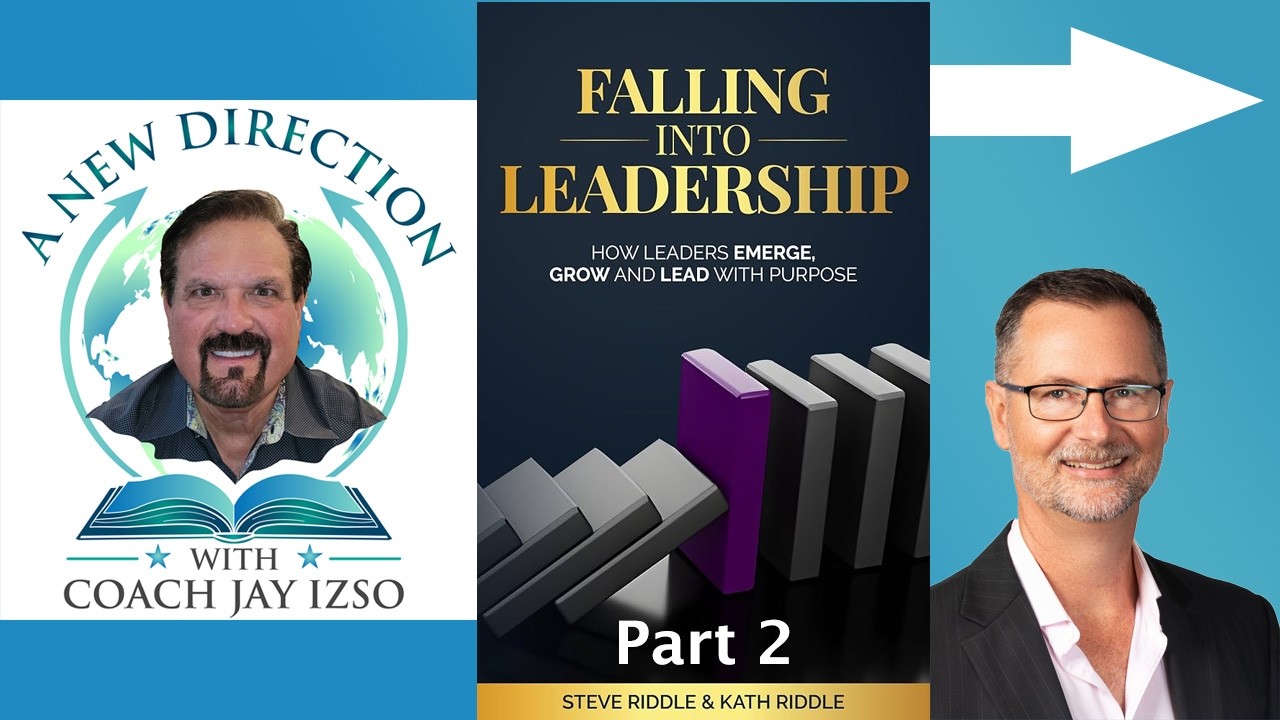
Nearly 400 Episodes Later, The Interviewer Gets Interviewed

On the 400th episode of A New Direction, host Steve Riddle interviews founder Jay Izzo, an executive coach and author. Izzo explains his core values through the acronym FLAGPERK and describes the four mindsets he sees in successful people: growth, open, outward, and opportunity. He measures success by relationship health, not money.
Chapters
And welcome to episode 400 of A New Direction. Morning, Jay. It's great to be here. For those of you who are regular listeners, you probably recognize I'm not Jay Uzoe, the usual host of A New Direction, but he is here with us today. You can see him on screen if you're watching. He will talk to us a bit later on if you're not watching, but we're going to turn the tables today. So Jay's on the receiving end of the questions, which I'm very excited about, as I think many of your viewers and listeners will be today, Jay. So a genuine congratulations on the podcast, by the way. 400 episodes is a hell of an achievement.
Yeah, it's been a labor. It's not really laborious. I have to be honest with you. A lot of people go to work. I get to go to fun because this is fun for me.
So yes.
Yeah. And thank you for doing this. This is going to be a blast. Everybody, you should be excited because this could be fun.
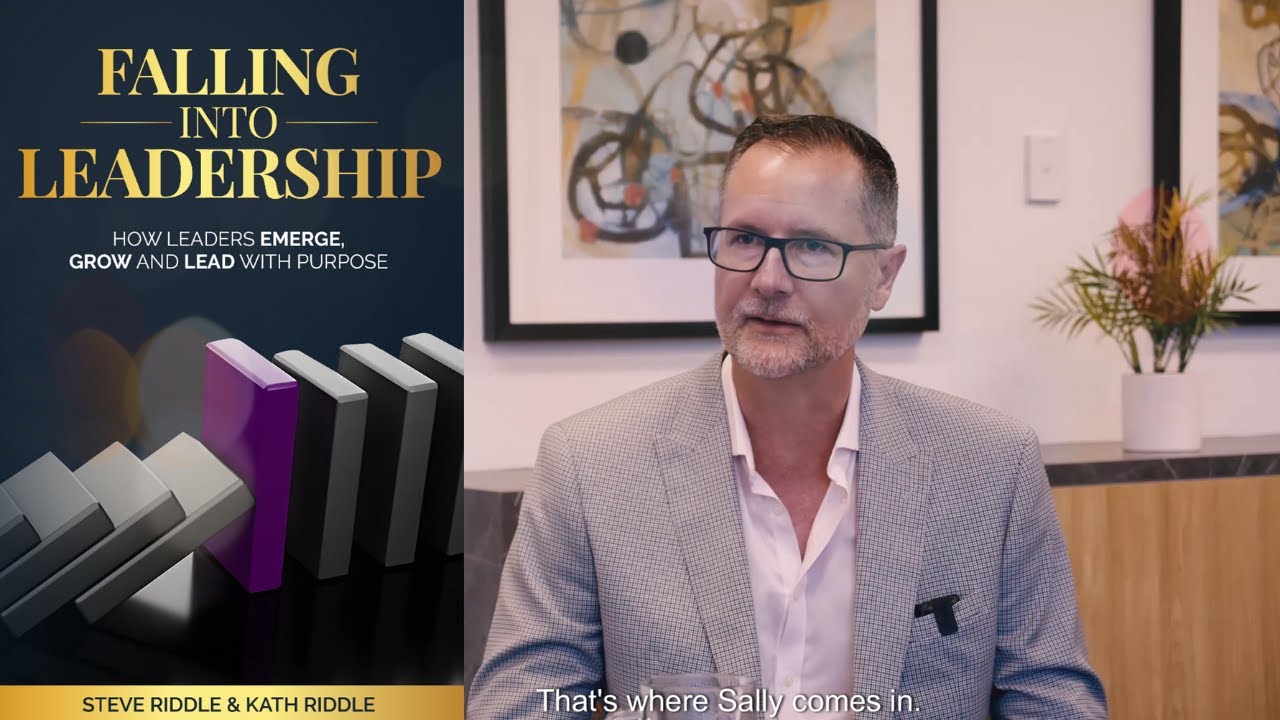
Oh, I'm pumped. I'm pumped. And maybe a bit of context, Jay, before we go any further. I think people have listened to you many, in many cases they've heard possibly 400 episodes. Like me, I only discovered you as a person and as a podcast earlier this year, but I've listened to probably 10 or 12. And maybe we don't know you all as well as we would like. And it's interesting because I know you're a very humble person. So the idea of talking about yourself in this sort of context, maybe it's not uncomfortable, but it's just a bit different. But having been on the receiving end of your 2 podcasts with yourself, I know it's exciting to be able to share a little bit about yourself. And I know many of your listeners will be interested, but probably don't know as much about you as they possibly could. So today is about exploring your early life, where you are now, how you got here, all with that view of translation. So for your viewers and listeners, it's always about what's one thing that you can take away from today's pod that is interesting, but maybe I can translate that back into my life and maybe do something differently as a consequence, not just know different but do different, which for me as a coach, that's pretty important. So we want to know about you, the coach, Jay, the leader, the mentor, guide. the author and all the other roles you have and do. And I know you do it because you like to help others, and today's an opportunity for that. And so we want to know more about you and why you do what you do. So we're going to explore nearly 400 leaders that you've spoken to, and you've read many books, not all from the authors, but we're going to talk a little bit about how you do the podcasting as well, because I think that's quite interesting. I certainly found it interesting. And you've spoken to many people— entrepreneurs, authors, leaders— and They've had the very good fortune, like myself earlier this year, to share their thoughts and stories. Just briefly, for those that don't know, my name is Steve Riddle. I'm a leadership coach and mentor, and my business Coach Station is based in Brisbane, Australia. So Jay and I have managed to build a genuinely good friendship in a pretty quick period of time, literally from 2 different parts of the world, so North Carolina and Brisbane, Australia. And as I said, Jay invited me into his podcast earlier this year. And we walked through my book, Falling Into Leadership, was written by myself and my mum, Kath. And in that first podcast, we had a great discussion about accountability, defining leadership, clarity, and many similar themes. But after we finished recording, Jay and I spoke for over 2 hours about all things life, leadership, sport, culture, and we connected immediately. And I know many others feel the same way after meeting you, Jay. And I think we solved all the ills of the world in that couple of hours. At least we felt we did. But to continue the conversation, Jay very kindly asked me back a few months later for a second podcast guest spot as well. And we covered again all things leadership-based and a bit more about my book. And we spent an hour or two after that recording also shooting the breeze and talking about things as well. But during that discussion, I had an idea that you as Jay's listeners and viewers would benefit from hearing more about the man and who he is by turning the tables. And that's what we're doing here today. So Jay, today you're on the other side, you're the interviewee, and I'm excited to hear more about and share with others a lot more about yourself. Some of it I've been fortunate enough to hear in the last few months as well, and I want, as I said, people to take something tangible and practical actions away from the discussion. So Jay, this is your 400th episode. I'm honored to be sharing this experience, so thank you for that from a selfish point of view. Appreciate it. And I think that's a perfect place to start. And interestingly, One of your followers on LinkedIn, Rakib Hassan, left a comment on LinkedIn yesterday after, or as a response to, the podcast promotion that you put out there on LinkedIn, and he wrote, after 400 conversations, being on the other side of the questions must be a different experience. I'm sure those conversations have shaped your thinking in ways you didn't expect. And I think that's a really insightful question that's worth exploring. So, you know, good place to start, as I said. With that in mind, Jay, What does episode 400 mean to you beyond the obvious milestone number? What's this really representing for you today?
I think, well, a lot of things, but I think the big thing is resilience. I think, you know, there were times probably that I was wondering, gosh, is this worth it? And my wife kept saying, you know what, you got to do this because you're good at it. And it was really important to hear the affirmation. And, and I think we'll probably get into why affirmations are so important, because we don't pay attention to them, because sometimes we're humbled by them and we don't really listen to the affirmations. But my wife kept affirming me that, no, you're really good at this. Don't, don't stop. You're really, really good at this. And I was having other people who were telling me, you're really, really good at this. And yet I, you know, I really wasn't seeing any financial benefit from it, right? But then I realized something bigger was happening in that people were reaching back. And I think the thing about the 400 episodes that means so much is that I've stayed with it. I've come to love it. And the bigger thing is people will tell me, you don't know how much that show was exactly what I needed.
Hmm.
And so I am so thankful to all the different authors and guests that I've had on the show, because I don't think they know, really, when people will come up to me or they'll text me or they'll write me or they email me and they will say, man, that Steve Riddle who you had on your show, I wasn't sure, but it was exactly what I needed today. And I needed to hear him because he made a difference for me. That I don't know how to put that into a summarized word, but that's what's the most meaningful is that we're changing lives and people and, and we have to remember that when you start doing this, you really are horrible.
It's like everything, though, isn't it? Well, with that in mind, Jay, your question. actually, without notice. But do you remember episode 1? And do you remember the first 10 or 20 episodes?
I do. I remember the first. So I did a whole bunch of— I did a whole bunch of episodes that I released all at the same time. So the numbers look askew, but it really is the 400th episode. So I remember the first people, it was actually my wife, who owns a real estate company and a mortgage lender, Who had a WWE, a World Wide Wrestling podcast that was huge. And I got him in and we started talking about real estate versus mortgages and stuff like that. I was— I think that was the very first show. And I was so bad. So, so bad. It was so horrible. No, I stunk it up, Steve. I just stayed with that. It was somebody stuck it up.
I'm sure it wasn't all that bad, Jack.
You can probably hear the first few episodes. There's a way big difference between what I had to do to improve my skills. But no, they were pretty rough. And I interviewed a bunch of people. And when I was first starting out, you know, you try to get guests and you don't know how to get guests. And So I would try to literally try to find people through LinkedIn who had a book. And then I would get hooked up with their publicist. And I would try to ask them, hey, send me a book. I'll read it and put you on my show because that was going to be my gig. My gig was going to be, I was going to do what other people didn't do. And I was going to read the book from COVID to cover and put you on the show. And, uh, that was a hard sell because I had no real following, right? But there was just generous-hearted people that were willing to— and, and the book was going to be initially a psychology book show. That was what it was going to be. And the more I got interested in the business world from— and, and I got more involved with it the more I went, man, I love this business psychology thing, which I did in grad school. It was a lot of IO psychology. So yeah, that's how it all started. And that's— and it's evolved and it's still evolving, by the way.
Yeah, absolutely. What was your first book, Jay? I'm curious. I've read— I'm going to talk in a moment about Lessons from the Farm. That wasn't your first book, though, was it?
No, no, it was Got Social Mediology: Using Psychology to Master Social Media for Your Business Without Spending a Dime. But the main title was Got Social Mediology? And it was a term that I coined. So there was no term called social mediology. I coined the term. And it meant the study of social media from the psychological and sociological perspective of the users of every platform and the unwritten rules, norms, and expectations of each platform.
Gotcha.
And so it was a It was a psychosocial anthropological model of how to interact with the different social media platforms is what it was. And yeah, that was the first one. And then we did a couple offshoots that we thought were going to be great and they weren't.
A bit like episode 1, right?
My publicist, my publicist, was so dogged determined that I needed to write 2 more books on social media and for athletes and for coaches at the time. And so I wrote 2 subsequent books, the Social Media Playbook for Coaches and Administrators and the Social Media Playbook for Student Athletes. And we didn't understand the political climate because nobody would buy it because it was such a political book. Because they felt that it was— they didn't want to get involved with free speech. And they weren't sure how social media fit in. So, it wound up doing really— it didn't really sell. It's still available, by the way, and it's still relevant to this day. It's just that we thought that every— We thought that every college administrator, coach, and student athlete because they were pocketbooks. They were small pocketbooks and it didn't happen, but it was okay. I learned a lot from that process.
That's okay. You know, if I listed all the things I tried and those that— and I don't see it as failure. I see it as opportunity and possibilities. But the ones that succeed, it's a little bit like venture capital investing. You know, a venture capitalist might invest in 10 different companies and one might succeed. The other 9 don't. You might lose money on, but the one that works, works. So, you know, have to try these things and ultimately your 3rd and 4th book or your 150th podcast or whatever it might be is going to be better for the experiences that have happened before it. So they're all part of learning. It's not a cliché, it's a fact. So I'm interested though, what do you do beyond podcasting? You're obviously pretty prolific in the podcast space, but in terms of your work and your role, what do you do beyond this A New Direction space?
So I'm an executive performance coach. I work with CEOs, business owners, founders, other professionals. I even work with athletes in terms of enhancing performance and in terms of business performance, mostly, but sometimes it's athletic performance from a psychological view. And it operates from a— I have a foundational principle. There are no business problems. There's just personal problems that affect your business. And I need people to understand that every CEO I've ever worked with, it has never been about some business problem. It's them. And it's usually— and it is always personal. Right? So, like, if a CEO is going through a divorce, which I've had one, Hmm. they don't understand how that's affecting The decline of their business because they're not— they think they're holding it together. They think they're compartmentalizing. Steve, listeners, I'm just telling you, you don't compartmentalize. Whatever is going on in your life, you are bringing in through the front door of your business. You may think that you're compartmentalizing it. You may think that you're doing okay, but I promise you it's not okay. Because you're affecting the business. So that's, that's, that's a big chunk of what I do. Of course, I write, but then I speak, right? I speak all over. I love speaking. I've always said there's never been a stage too small or too big that I won't get on and talk about something. And even if I don't have something, I'll make something up just to talk about it. So I do have to be thankful that I do have a gift for gab. My father had it. I have it and I love to talk. So, um, that's it. I also, um, am a broker in charge and, uh, consultant for, um, my wife's and my real estate company, uh, as well. Um, and so I, I do that, uh, you know, about 20, 20 or 30 hours a week. Um, and, uh, do a second podcast called Real Estate Right Now, um, as part of that process, because I love doing it. Uh, let's see, I think that pretty much sums up everything that I do, right? The podcasting, the coaching, the podcasting, the speaking, the authoring, and then the, uh—
It keeps you busy, Jay, without a doubt. This is a tricky question. I'm going to ask it. Do you have a favorite Amongst those, is there something that you feel both you enjoy the most and maybe the same answer to what's the thing you think you're best at within that range of options and opportunities?
I love doing the podcast. I love it. I love it. I love coaching though too. I think I'm a better coach And why do you say that? Yeah, it's because I have a natural God-given gift to be insightful with people. I can see things in people that they can't see in themselves. And it gives me— I can put the pieces together. And, you know, I've tested myself a lot in terms of psychological tests and assessments and also strengths assessments. And I, I am a person who can put puzzles and pieces together. I remember when I was in high school, they give you this test right out of high school before your senior year of what may be some attractive, some things that you may be good at later in life. And the number one thing that came up for me was private investigator. I'll never forget it. I was, I was gonna be a private investigator. And it now makes sense. It never made sense before. But it makes sense now. Because I love the puzzle. And I love the people puzzle. And when I am coaching, because I care about every client I have so deeply, and I care about their people. That I love the puzzle of trying to figure out how do we turn this around, right? And the podcasting, which I just love doing because I'm good at it, but I think I love doing it because I love to talk. But it's a puzzle for me too, because it's a constant puzzle of I get to learn every week a new book.
Right.
And so what am I going to add to my arsenal, right, that I can help others with? And for people who don't understand, when I read a book for this show, I don't just read the book. I take notes on every book. You know this. I take notes on every book.
Mm-hmm.
And then I'm trying to apply something that week from the book, at least one thing. That I'm going to do different in my business or in my life. And so, you know, when you wrote your book, right, I had to have a mind shift about a lot of things in terms of, well, what happens when you become all of a sudden become a leader? What is that mind? What is that mindset? Because, you know, we think about leadership that you're there. But we don't think about that transition from going from, well, yesterday you weren't a leader to, well, today you're a leader.
Hmm.
Well, how does that transition work? Well, that starts making the mind think, right? And, and so every book, there's something that I am applying. So I love, I love that. I love to speak and I'm an excellent speaker. I'm told, I'm told all over I'm an excellent speaker. The problem with speaking is Getting speaking gigs is not so easy. That's the hardest part is getting the speaking gig. And because my time is spread so thin, it's hard for me to just go focus and go, okay, I'm just gonna work on speaking gigs because I really love coaching people and I love doing the show. And then I want to write again. I really do. So yeah.
I think having all those avenues creates, keeps it fresh too though. I wonder if you were constantly coaching, I mean, you know, in the same space as yourself, it can be hard. You're taking a lot of other people's emotions and thoughts and that sort of thing as well. If you're public speaking all the time, maybe you'd get a bit sick of it. I mean, you do hear professional tennis players and athletes and so on can sometimes— it can wear thin, the constant travel or the constant training and travel and not living at home, missing my family, all those things. So I think that's true for anything in life, that too much of anything can be— it can feel like a good thing initially, but it can sometimes turn and fall off a cliff as well. Jay, as I've got to know you, one of the things, and thinking about you and your profile in inverted commas, you have a genuine focus on human behavior. And I think that comes across in the language and your values. As you talk, you use very values-based language. So I'm interested, when we talk about human behavior, what is that in your mind and why is it such a deep interest for you?
I don't think you could know who you are without your core values. And I'm very clear on mine. I did an experiment, and I still do it, but I really did it about three or four years ago, where I would ask people, "Tell me your top three core values," and nobody could tell me them. Right? They said, "Well, I think they're." No, no, no. If you if you tell me, I think they're this, then they're not that. And so. I got so interested because I know what my core values have, an acronym. It's called FLAGPERK, F-L-A-G, FLAG, P-E-R-K, P-E-R-K. And here's my core values: faith, learning, authenticity, gratitude. There's your FLAG. And then the PERK is positive attitude, effort through excellence, resiliency, and kindness, right? So that's the PERC. And I am guided, my decisions are guided by those core values. And I practice them every day. I'm not going to tell you I'm always perfect, but I'm getting better and better every day at making sure that, you know, if something comes across, is this going to compromise my faith? Is there a learning opportunity here, or will this take me away from learning? You know, can I still be authentic? Can I still be in gratitude? You know, if you know, can I maintain a positive attitude? Will I be excellent and give the best effort? Can I be resilient if it doesn't go the way I want to? And can I still remain kind? Because if I'm going to compromise any one of those things, then I'm not doing it. And so when I was asking people, just give me three, right? And they couldn't do it. It became clear to me that if you don't know your core values, then you don't really know what your purpose is in this world.
Spot on. Yeah, it's a driver, motivator. It's the reasons why we do what we do, often unconsciously. But to genuinely identify our values and articulate them, it's not just knowing what they are in terms of the words, but how you define each of them and how well they're being met or not in your life. It's then actionable, right? Other than that, it tends to be emotion. tends to be a feeling-based thing, not necessarily actionable. So I could not agree more. Jay, can you stick with us for a moment?
Sure.
I just want to hear a word from our sponsors. So you're listening to Coach Jay Izzo, podcast legend, coach, and my friend here on A New Direction. Every home holds a story. The nursery you painted twice, the porch where the dog waits every night for you to come home at 5 o'clock. When it's time to write your next chapter, you want a team that knows a house is never just a listing. For 40 years, the Linda Craft team have helped triangle families sell for what their story is worth. Ready to write what's next? Visit lindacraft.com. Lindacraft.com, where your next chapter begins. Now, I just want to, before we continue there, Jay, I have had a look at, you know, when we first met, I was curious about the real estate side of things and the Linda Craft team, so to speak. And I have to say, I wish we had a little bit more of that in Australia. The website's fantastic. There's a lot of content in there about transitioning for families to the local area and some of the things that are worth knowing about. And if you've got kids or pets or whatever it might be, it's all-encompassing. So I'm not saying this because you're paying me to, I'm saying it because when I looked at the website, I was genuinely impressed. And I thought, you know what, we're very transactional in Australia with our real estate. It tends to be buy, sell, not too much assistance. So a genuine point here for you and Linda, you know, this is very cool and I wish we had a little bit more about that. that sort of thinking in Australia, a little bit more holistic. So appreciate it.
She's going to be hearing this, so you may be hearing from her, Steve.
Oh, fabulous. So brilliant. So Jay, it's great. We're back on New Direction with Coach Jay Izzo. An absolute pleasure to have this conversation today. I'm Steve Riddle from coachstation.com.au, one of Australia's leading leadership coaching and mentoring providers. And as we've talked about already, we're turning the tables on Jay from interviewer to guest. So fabulous to be able to talk to you about your story. You mentioned something before we had that little break there about gratitude, and that forms a big part of your book. For those that haven't read it, again, I'm not here to promote your book necessarily, but it's worth reading. I bought a copy and genuinely enjoyed it. Lessons from the Farm: Essential Rules for Success. There's a copy over your on-screen left shoulder there, we can see it as well. But I'm interested, gratitude is something that I feel like I've always naturally had, but in the last 10 or 15 years, it's become a deep, deep core value for me. It's something that I recognize in myself and the humility that comes from our successes individually and as fathers and parents and husbands and friends and coaches and so on. But it can mean different things to different people. So when you think about gratitude, and it comes across a lot in your book, it's sort of an underpinning, I think. What is gratitude for you? Where does that sit in your life? And has it always been there, or is it something you've learned?
No, I had to learn it. You know, I didn't. My family didn't have money. It was it was a struggle. I grew up. I grew up in a struggle, and you know, I didn't understand gratitude. I didn't understand the power of gratitude, and I didn't for many decades. Quite honestly, I ran across the book. that put out a 30-day challenge. This is probably about 10 years ago, maybe a little more. A 10-day, a 30-day challenge of when you wake up first thing in the morning, write down, you know, between 5 and 10 things you're grateful for. And I thought, what the heck? I was listening to the book. And I said, okay, you know what? Just being a skeptical scientist, let me try it. And see what happens, and then I'm going to write you back and tell you after 30 days you were wrong. You were you're an idiot, and I could do it right. That's that was my attitude. By the 30th day, what I was grateful for started changing. Whereas the very beginning, it was you know like I'm grateful for a cup of coffee. I'm grateful for my wife. I'm grateful for my dog. I'm grateful for my house. I'm grateful for that. I have a yard, right? By day 30, it was, I'm grateful I'm not the same person I was yesterday. I'm grateful that I have people around me that just matter. I'm grateful for the gifts, the natural God-given gifts that I have. And that 30 days turned into 60 days, and then turned into 90 days, and then it turned into a year. And it has subsequently continued. In fact, I have, I have gratitude cards now and a gratitude jar that my wife bought me, these little gratitude cards. And I write in them things I'm grateful for.
Hmm.
This gratitude jar sits right here. And the beautiful thing about that gratitude jar is I can reach in from any time I've ever written gratitude, my gratitudes, and I could pull one out and I'm still grateful for today that I was maybe years ago. It's never changed. And it changed the way I think, it changed the way I do. And then I found research that supported that when you do gratitude when you first wake up, and you will do it consistently, it will rewire your brain, literally. And so my life is not perfect. Right. I mean, I don't tell people a lot about what, what's happening in my life, but I'll share. In February, on February 26th, I took a really bad fall in Costa Rica. And I had to have hip replacement. And I've re-tore 2 rotator cuffs after having had all 4 rotator cuff surgery done, and I can't have it repaired again. And I have— we're having to look at different opportunities. Um, I— my, my clients, um, I've been so successful with clients, they actually started spacing themselves out. So I don't have as many clients as often as I did because I— they— because they've been successful. So they only need me once a month and not every week, right? So that they all of a sudden, you know, business started changing, right? Those type of things. And then I had to go to the emergency room just this past weekend, had an intestinal issue. So there, my life is not perfect. But I could still be grateful. I could still be grateful.
And I— Can I jump in there? I'm curious, and I'm not playing with words here. Is those experiences and what we're exposed to in life are the reasons I think why we become grateful? So if we don't have those exposures and experience, both good and bad, what can you be grateful for? And I often talk about this with my clients and my daughters. Well, you have to have perspective. Perspective comes from opportunities, and they can be good, bad, or indifferent. But you have to have a bad meal occasionally, unfortunately, at a restaurant to appreciate what a good one is.
Yeah.
Before marriage, you know, you might have had a couple of girlfriends or boyfriends that maybe didn't work out so well, but that helps you to appreciate and have gratitude for and understand value, back to your earlier point, what is going to work for you. I just don't think you can have perspective in the absence of reflection on the things that occur to you. So it's unfortunate that in February in Costa Rica you had a fall, you know, that's the— but it helps shape it. I think that, you know, you probably had some gratitude for the fact that there was some sort of medical care there. You probably had gratitude for the fact that you had, you know, some coverage or whatever it might be. But these are the moments that help shape that. Otherwise, what would you be grateful and have gratitude for? It can't just sort of float out of the ether, I don't think. I'm interested in your thoughts on that.
Well, it's like, it's just a muscle that you have to go through to build. I mean, I think we don't like going through these things. And quite honestly, Costa Rica, they had no medical care.
So I had to go home the next day in pain.
I was in so much pain, I had to go home on a plane. back to the US because it happened to be the last day I was there. But that— all that said, you know, I— if you don't go through hard, difficult times, then you have no muscle. You're too weak. You, you know, if I'm— if I go to the gym, and I do, but when I go to the gym, I have to put my body in, uh, Aggressively bad situations that can be painful, because that's the only way the muscle can grow. If I just sit there and do a bunch of lightweight, I'm not really getting any stronger.
Hmm.
It may be easy, and I was at the gym, but without the extra weight, without the extra effort, without the extra push, I'm not, I'm not Adding muscle or flexibility. So life is very much the same. If you don't, if you don't go through things, if you don't have downs, you're never going to build the muscle of resiliency. And and and then you got to build the muscle of gratitude among that that says okay this. Yeah. Does this suck? Yeah, it really does. But you know what? I'm still grateful because clearly there's a reason. There's something I've got to learn here. Let me, let me figure out what I got to learn from this, because maybe there's something in there about me that's being— that is being tested, that I need to learn about me, that can I stay grateful in the midst of this circumstance? Answer: yes.
Hmm. I think I could have this wrong, but I think it was Carol Dweck who has popularized the view about growth mindset. And I think that's, you know, maybe being clichéd, lovely that our girls actually in primary school were exposed to that. Oh, you've got it behind you, beautiful. I think there's truth to that. You know, these things can sometimes be dismissed because they become overused and so on and referenced too much. So maybe I'm making the same mistake by referencing it, but I think there's value in that. And having that mindset of perspective comes from a mindset of growth and thinking about these opportunities. Are they going to burden me and become my problem, or are they going to be the things that are going to help shape that perspective and give me the opportunity to rebound and learn from that and do things differently next time. And I often say to my clients, there's no mistakes, like it's not even a word. There's no failure points other than the same error made multiple times. Like if you keep doing the same thing that's not a good thing in business or life and you keep doing it, well, that's a mistake, that's a failure point. But honestly, the rest of it should be just part of the learning. It's not good or bad, it is just what it is. So Which takes me to a point I'm quite curious about this, actually, and it was chapter 20, so the final chapter of your book Lessons from the Farm. And I don't think it was the final chapter by luck. I think it was quite well designed, but I want to explore that a little bit more. The title of chapter 20 is called The Greatest Lesson of All: Be You. And it's similar to what we've been talking about in terms of values and human behavior, I think, but I think there's more to it than that. So why was that the final chapter and what does that mean? Being you means what?
Yeah. So we get caught up into what can I do next? Right? What do I do? What do I do? What do I do? What do I do? You know, people think purpose is about doing, but we're not human doings. We're human beings. And when you discover who you really are, right, you're clear on your core values. And you understand that your purpose is not what you do, but it comes out of who you are. And that being your authentic self is the best gift you've ever had in your life. There is no one in this world who has the same gifting and talents and abilities as you do in the same combination. No one. It is your fingerprint on life, and I know what mine are, and I'm still discovering some. And I'm constantly on the lookout for what may be new that I haven't discovered, if I'm open to it. But I know that those things are my part of my authenticity, and people confuse authenticity with well, I'm just a natural curmudgeon. Well, no, that's not being authentic. That's you just being stubborn. Because none of us are born curmudgeons. None of us are born complainers. None of us are boring— are born bad people. None of us were. We all have something to offer and give back into this world. And the definition of purpose psychologically is doing something meaningful to you that positively impacts the world around you. And I am convinced that every child that was ever born starts out the exact same way, that there is an intention there, that you were meant to do something meaningful and make a positive impact on the world at the same time. And you can only do that when you decide who you really are, what your gifts are, what your values are, what your purpose is, because that's the authentic you. The people who would do bad things, that's not authentically who they are. That's what they developed.
Interesting.
That's not— that's what they developed. That's not who they are, because I don't think any child is born bad. I don't think when they first come into this world that you look at a child that's in a hospital and you go, well, that one's bad. No, we're all given the same exact start, right? We're all helpless. We all got a bunch of gifts, talents, and abilities. Whether, whether we get them exposed or not, that's a whole nother— that's a different question. But we're not born Bad. And so being you is about discovering who you really are, discovering your gifts, talents, and abilities, and then leaning into them so that you will do something meaningful that makes a positive impact in the world.
It's fabulous. Such a good message. And I know you live this. This is part of— again, we've never actually met in person, right? But we've had some good chats, as I talked about earlier. But I know you believe that, and that is part of who you are. You've said a couple of times today about it's not about being perfect. Just to tap into that, I couldn't agree more, but we're not seeking perfection, we're seeking improvement. And I think that's a lot of what you believe and what I believe, otherwise we wouldn't be coaching and mentoring. So, you know, spot— if we're at 64% now, as if you can measure whatever that might be, capability or similar, I wonder what 65% looks like, what's 66%? We're not talking about big leaps, we're just talking about incremental improvement. And that's a lot of the language and the values type-based language that I'm hearing you use. So it's interesting to talk about your— you've spoken to close to 400 people, right? You know, many, many thousands more in coaching and so on, but, and in other forums. But in terms of your pod, you've had 400 episodes including this one today. So I'm curious, underneath all the different industries and stories and the things that people bring, is there something that you identified, one thing or maybe two things, that almost every successful guest has in common?
Yeah, I do. Every single person I've ever interviewed, and I've interviewed a general who was in the bloodiest part of the Iraq War. And I mean, there's a guy who just wrote on Judd Weisgall, a good friend of mine who works with Fortune 500 companies, senior vice president, who just wrote, Jay is 100% authentic and lives his values. To him, to Navy SEALs, to Delta Force operators, to Bob Kohlhepp, who has an arena named after him because he was the president of a huge company. All these executives and huge leaders. John Gray, author of Men Are from Mars and Women Are from Venus, who's been on my show twice. Right. Loves doing the show. Every one of them have you. Every one of them have the same thing. Their mindset operates from 4 fundamental things. And Dr. Ryan Gottfredson and Carol Dweck probably have influenced this the most. First of all, they all have a growth mindset, not a fixed mindset. They all believe that they can change. And they all believe that others can change if they're willing to do that. Secondly, they have an open mindset versus a closed mindset. They may not—
they—
and Dr. Ryan Goddard really taught me something on the show once. He said, soft front, stiff back, with an open mindset, meaning be open to listening to everybody. But that doesn't mean you have to compromise your values.
Yeah.
Whereas closed people who have a closed mindset, if you're one political party or another, they don't want to hear what you have to say. Open mindset people don't care. They want to learn from you and want to hear. Then there's outward mindset versus inward mindset. Every guest has an outward mindset, not inward mindset, that they are more interested in what they give versus more than what they get. Every one of them. And then every one of them has an opportunity mindset versus a prevention mindset, meaning that they're not worried about what they may lose. Prevention, they're always looking at what can be gained. And I would say every guest that I've ever had have those four mindsets. And that's the that's the thing that just inspires me every time I do that. It's it's. It just helps me. That's what I find most common. It's not that everybody is this amazingly brilliant speaker or they're amazingly brilliant writers. Nope, nope. It's their mindsets. That's what makes them equal.
I love that. I often talk to my business partners, commercial property we've owned together, and those that I've partnered with in terms of business and You met my wife Julie a little earlier on before we started recording. I believe, and I fervently believe this, and many people won't be able to see what I'm doing, but I'm sort of crossing my arms here and talking about the gap that exists when we're both— when both parties or all parties are trying to give more than they take. It generally works out, you know, that there's a, yeah, I can't give you enough. If everyone's got that attitude, then it's very hard to see it failing. Doesn't mean because we're always going to get it right, but our intention and our behaviors then match that. desire to be providers too and givers too, I think. And the other thing I hear from what you're saying, or one of the things, is those that are successful see possibilities outranking risk. And, you know, the possibilities of success— I'm not really worried about it not working because I can see what it could be if it's successful. And as I said before, maybe we don't, inverted commas, succeed as much as fail, but when we do succeed, the power is so much more powerful and so much greater. So, Jay, stick with us. Brilliant discussion. I'm really enjoying this. So you're listening to Coach Jay Izzo, my friend, mentor, legend. I could describe you in many different ways, as many others are online at the moment, and you're listening to A New Direction. One agent can only be in one place at a time. The Linda Craft Team is different. A woman-owned boutique firm with 350 years of combined experience working together so you're never waiting on one person's calendar. That's concierge service, start to close and beyond. From start to close and beyond. It's why Triangle families have trusted us for 40 years and counting. Ready for a team built around you? Visit lindacraft.com. Lindacraft.com. Real estate done right. And we're back on A New Direction with Coach Jay Izzo. I'm Steve Riddle, leadership coach, mentor, and co-author of Falling Into Leadership: The Essential Guide for New and Experienced Managers and Leaders. to help you to become an effective leader. And we are turning the tables on Jay from interviewer to guest, and I think it's going very well, Jay. I'm enjoying this. I'm learning things about you, which I knew I would, and I'm sure many of your listeners and viewers are as well. So I'm curious in terms of the, I guess, beyond the podcast, what's your background? I think you grew up in a very small town in Nebraska.
Yeah.
Obviously, you've moved around a fair bit, played a bit of sport. So just give us the 3 or 4 minute version of your— I know it's a lot to condense, but what's your your history so that people understand, you know, some of that background and where your values have been shaped from?
Yeah, I was raised in Nebraska, town of Ithaca, 119 people. My job was I was a farmhand, ranch hand growing up. So the men who really raised me were farmers who I spent my days with, especially in the summer and after schools. And football practices. Avid sports freak. Love football. Right now we're in best season, American football, best season ever. But I'm a huge sports fan in general. I went to college to get out and got my bachelor's degree in psychology and my master's and my doctoral work in psychology at Washington State University. Floundered for years, had a dream, it went south. I did not meet the dream that I had. I did not have a plan B. And I floundered for years, decades, really. Met a wonderful woman in the middle of all this who I married. We'll be married 28 years in October. And who has just kind of been a kind of like a godsend guiding light. To that encourages me, and to this day, and then have had to have mind shift after mind shift after mind shift, and just tried a number of things till something stuck, and never quit doing that. I still don't. I still don't quit doing it. I, I don't. I grew up in a family that. was more afraid of what they may lose than what they might gain. So they never took a risk. I left, my family stayed in that little town. My sister still lives there to this day, because they don't take the risk.
So, and how about how often do you get back to Ithaca?
Every year, every— my best friend of 60 years, we've been together since we've been 2 years old. I go back and live on his little farm back there, and we go fishing, bass fishing for 10 days every year. Finally, we get up at 4:45 every morning and we are bass fishing. And I will do it every year until we can't do it anymore. And then when we can't do it anymore, we'll talk about fishing. But I will go back every year because my roots are still there. And I, and I left a lot of blood, sweat, and tears on the land, the farmland that's out there. And so did he, because we worked together on these farms. And so there is something special about it because there's a work ethic I have that has no fear about working.
Yeah. And that comes across in Lessons from the Farm, right? I think it's kind of the point behind the point. There's many, many messages. There's, as I said, 20 chapters in there, and it's a genuinely interesting read. And maybe it's because I grew up in suburban Adelaide in South Australia here, and then we moved to the country for my high school years. So maybe it's relatability, but I do— I hear how that shaped you as I've got the opportunity to talk to you on and off camera. I can— and then read the book and then talk to you again. I can feel how that underpins much of who you are and your values and the things that you measure success by. And it's probably no coincidence that the subtitle of the book, Lessons from the Farm, is Essential Rules for Success. So I'm interested, how do you measure success then?
Yeah, so it's altered from, you know, from the time I was young to the time, you know, to now. I mean, I think that's the thing that we all do. I don't think we ever want to admit this. But how I measure success today is not how I measured it earlier. Right? I mean, so often we measure success in things, stuff. Right? I remember I measure success in terms of my relationships. How strong are my relationships? How great is my relationship with my wife? If my wife and I are in a great relationship, I'm so successful. If I have a great relationship with my clients, I'm extremely successful. I have a great relationship with my listeners, I'm extremely successful. I have a relationship with you, that's amazing success. And so for me, and maybe, you know, everybody would think about it in terms of something else. I measure success in terms of my relationships. Are they growing? Are they healthy? Are they— are we doing things to nurture them and take care of them? Right? That's how I measure the success more so than anything now. Right? How well do I love? And how well am I being loved? That's success. I love that. My mother-in-law, I'll never forget, she died in 2012. And my wife and I, she— we had to move her here. And she said to me, the one thing I just don't want to do is die alone. And we were in hospice when she took her last breath, and I was holding one hand and my wife was holding the other. And we honored that. And it was one of the most beautiful moments. It sounds morbid and sad. It's not. It was one of the most beautiful moments I've ever been part of, to watch someone take their last breath, but to know that she knew that she did not die alone.
Special.
That is, to me, that was success. And you can't get more success transitioning this life to the next that you left holding the hands of people who love How do you get more successful than that?
Well, at a time where it's about as special as it can be, right? So it's funny, and I think we've spoken about this again on and off camera, but it just dawned on me, and I don't want to make it about you and I necessarily, but I will comment on the fact that I fervently, I would die on this hill. This is something I, it's ingrained in who I am. It's a core value as well as a belief. Relationships are the meaning of life. And put personality aside, I often say this to my friends and clients, and coachees, it's not about introversion or extroversion or any other measurement. It's actually about the fact we're designed and meant to be as humans, we're meant to be with other humans. And that doesn't mean that every human gets along with every human, clearly, sadly, but that's true. But I genuinely believe that relationships are key. And hearing you say that, it's again strengthening my understanding of you, but also why you and I have built such a strong relationship from afar so quickly. So it leads me to, I'm interested then to extend that a little bit more. Is there something you believed about success when you started A New Direction, 400 episodes a day, that maybe you no longer believe?
Yeah, there's quite a few things. I thought it would be a natural money-making thing. That never turned out. I did. I thought, oh man, this, this thing's gonna make a killing. It never did. But it did. But it was such a great— I'm glad it didn't.
Hmm.
I'm glad it didn't, because the relationship I have with the people that I get to speak with every week, and the relationship with the listeners who keep coming back and listening for more, I wouldn't change any of that. I wouldn't change. I wouldn't change the CEO of a company who texts me and says, "You know, you have one of the greatest shows I've ever listened to." I wouldn't change that. Thank and thanking me for influencing and changing his life. I got paid. More than any dollar amount.
Yeah. Which is making a killing, to use your words back, you know, not against you, but to paraphrase it, it is making a killing, right? Just not in the bank account. But it's, I would argue, a hell of a lot more powerful and important in this world than, you know, a few thousand dollars more in your account. Yeah.
Yeah. It's far more powerful, far more important.
Fabulous.
Yeah.
So I want to go right back now. It's a bit of a classic question, but before your books and your outstanding career, 400 podcast episodes, hundreds and hundreds of coachees and people you've mentored. Is there anything about the younger Jay, so the young lad that was growing up on the farms and helping out with the many— and again, if you read the book, there's some fabulous stories about exposure to different people and mentors in your life. Is there anything that you think you could learn from the younger Jay?
Yeah, there's, you know, sadly, he was so selfish. And so ego-driven, you know. And I guess we all can be that way to an extent. But, you know, sadly, he was so worried about himself that he often wonders how many people he missed along the way. Because I was caught up into circumstances or Things weren't going the way I wanted to go them. And I often wonder, you know, how many people did I miss? That, that's probably the regret that I'll always have is wondering how many people I missed. And probably the motivation why I feel like I have to— I don't want to miss. I know I'm going to still miss them. It's not because I'm not trying to, but I'm still going to miss them. But it's not going to be out of my own ego and selfishness. And yeah, that's the one, honestly, yeah, that I look back on.
Fabulous. Such a good response. We are getting close to having to wrap up here, which is sad. And it's incredible how quickly this time goes. But it's been brilliant to hear from you. So I've got a final question for you, and it's a bit rhetorical, but answer it if you can. What haven't I asked you that you feel like you'd like to share?
Well, I think there's one thing that just stuck in my mind all day today as I was thinking about this show. And it's a very simple little thing that my wife has taught me and that I've learned from other people, including you. And it's just simply this: get out of judgment and get into curiosity. That will change your life. If you will just get out of judgment and into curiosity, that will change so much.
I love that. Okay, I'm gonna push you harder here. Change in what way? That's such a great point and I subscribe, but just explain what you mean by those words.
Well, if I'm in curiosity, I can't really be in judgment. Because I want to know more about you. So I don't have time to judge you. And if I'm judging you, I'm comparing myself to what my ego says is what's important to me. If I'm curious genuinely, I'm not really interested in what I think. I'm interested in what you think. And then I'm not judging you against what I believe. I am really curious about— What you believe, why you believe it, and how can we bridge that gap? Because that's curiosity. So if I'm out of judgment and into curiosity, I have to change. Because now you become important, I'm not, because my ego is no longer in the way, because it's not about me. I'm not thinking about what I got to say next. Because I'm too curious about you.
It's a very giving behavior, isn't it? It's that positive gap that I was talking about before. Couldn't agree more. Jay, an absolute pleasure, my friend. Thank you. And I say this not lightly, I consider much of what I do an honor and a privilege. And again, it might sound like, you know, a bit of a marketing spiel. It's truly not. And this has been an absolute highlight. My wife, when we woke up this morning, because it's very early here in Australia at the moment, she said, good luck, how do you feel about it? I said, I actually feel really comfortable and I'm excited. And sadly, as I get older, I don't get as excited as I— as much as I used to. So this has been an absolute pleasure. I've been hearing some of those messages. I said right at the beginning, it's important that people take something away from podcasts and reading and so on and do something different, not just know different. And I'm sure there's dozens of things you've shared here that some people may have known, people have known you personally or have listened to your podcast, but I'm quite sure much that they wouldn't have known. So I appreciate the opportunity to be that guy that gets the chance to ask the questions and discuss this with you. And genuinely, congratulations on your 400 episodes. You should be extremely proud of that.
Thank you so much, Steve. Steve, this has been a lot of fun. So thank you very much. So let's wrap this thing up.
All right. So I've got a final message. Leadership is never about you as the leader, and yet it's many ways always about you. It is about you because you have a responsibility to keep developing yourself. As we've talked about today, there's a lot of self-introspection and reflection, and it's your judgment, your skills, and your capability, and your confidence, and many other attributes and skills of leadership that you must focus on. It doesn't happen by osmosis, so you need to keep growing so you can lead others well. But leadership, by definition, is not really about you. It is about the people around you, your team, your peers, the people you influence, and the relationships you build along the way. Excuse me. And relationships, relationships matter enormously, as we've said today. And I think Jay and I are a good example of that. We live on the opposite sides of the world, but we come from different backgrounds and experiences, and yet we've built a genuine relationship through curiosity, trust, and staying connected. So perhaps the thought I would leave you, the listeners and viewers, with is if you can identify one relationship in your life, professional or personal, that matters to you but could be stronger, you should ask yourself what could you do differently to invest in that relationship. Understand that person differently, be curious, and simply potentially create a little bit more connection, because very often leadership starts there, and we should always lead with impact.
That's awesome. As I say to you all over the world, you know what that is, Steve? You remember what I say to everybody all over the world?
No, I want you to say it. I was going to lead with this stuff, so you go for it.
Okay, here's what I say. You had a lot of choices. You chose us. Thank you. Give us thumbs up on YouTube. Wherever you listen to the show, give us a 5-star review and check out Steve's stuff, right, at coachstation.com. And you know what? Ciao, everybody.