The Accountability Blueprint Every Leader Needs

Leadership coach Steve Riddle presents his REOM accountability model for navigating workplace change. He argues leaders should focus on influence over control, tackle a few high-impact areas incrementally, and use weekly status reports and one-on-ones to align expectations rather than trying to fix everything at once.
Chapters
Change is a constant. You see it every day. I see it every day. There'd be very few people watching and listening to this podcast today that wouldn't be nodding and thinking, yeah, my job's full of change, has been for years. It's— we don't go through, oh, Steve or Gamit, over the next 2 weeks we're going to go through a period of change, but before that and after that it's not changed. I mean, there's various ramp-ups and ramp-downs, but— excuse me— but the reality is that we are always going through the change. So if that's true, and it absolutely is, Imagine trying to manage that change and facilitate culture and do everything we've already talked about in the first 20 minutes in the absence of that clarity and those systems and the granularity of those conversations. The key message would be we have more influence and control than we think we do. That doesn't mean we get to influence and control most things, but if we're focusing on the things that we have that influence over and we build the skill and capability and knowledge and awareness of how to influence that, It creates a lot of power, and I don't mean power in some dictatorial way. I mean power in terms of our feeling good about who we are and us feeling aligned to the work that we do. There's obviously a lot of different challenges. I think in the modern world, certainly in Australia, our legislation has changed in the last 10 or 15 years. So the employee has a lot of power and authority now, and that doesn't mean that the employer doesn't. But I've seen a lot of fear created from from many leaders and managers, particularly in certain sectors and industries. And that fear often leads to avoidance and it leads to judgment and assumption. And, you know, sometimes it can actually lead to— well, often actually it leads to situations getting worse, not better.
Yeah.
I want to be really clear, this isn't about resources and tools for resources' and tools' sake. This isn't about, as I said earlier, having policies and procedures so that we can lean on them and go, We've got good policies and procedures. They were all important, but the only thing that matters in my experience and my belief is—
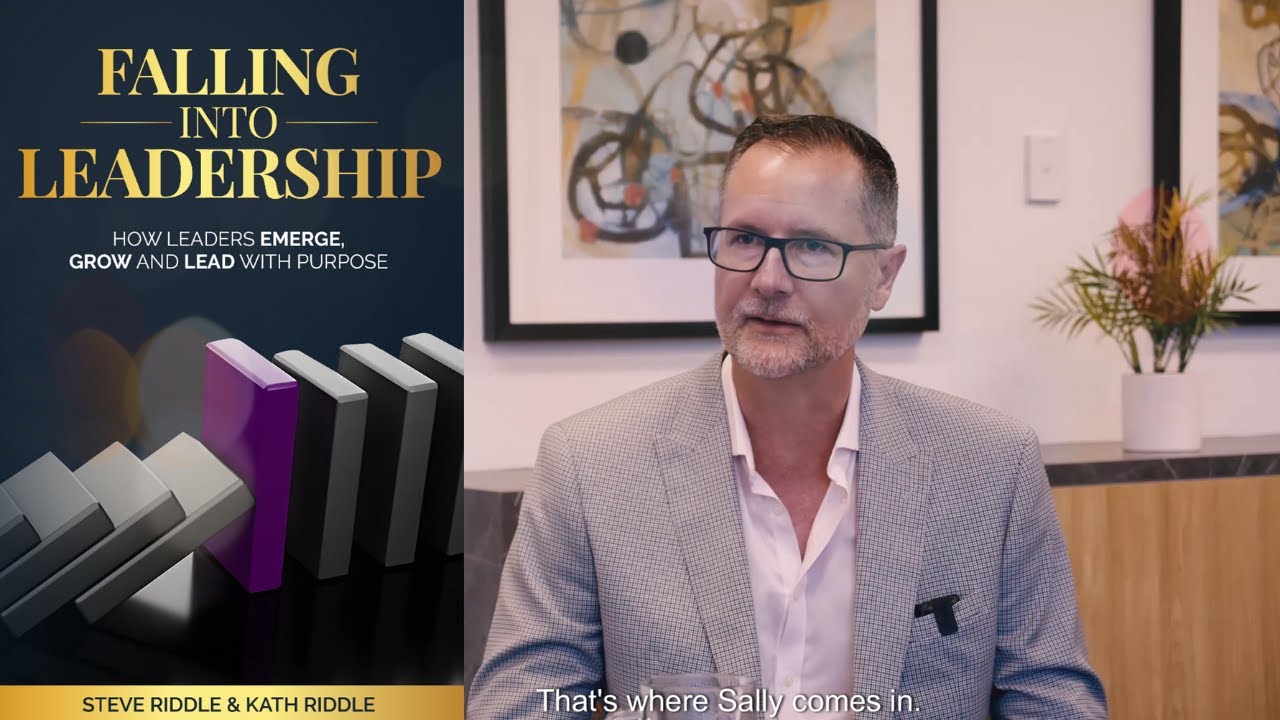
Hi there. Welcome to Business Leadership Podcast. In this episode, I had a discussion with Steve Riddle. Steve is a leadership coach and author who helps accidental leaders become intentional, confident, and effective in their roles. Drawing on years of coaching and real-world leadership experience, He translates the messy reality of work into practical tools and stories leaders can actually use. His book Falling into Leadership and his work with Coach Station focus on building healthier culture, stronger relationships, and better results for combining accountability with genuine care for people. Coach Station is helping create effective leaders. Listeners will walk away with usable ideas to lead themselves and their teams with more clarity, confidence, and impact. If you find value out of this discussion, we need your help to grow this channel. Please share, subscribe, and send us your feedback. Your feedback is very important to us. Allow us to focus on the right discussions to help you grow and scale your business. So thank you again for your time. Please welcome Steve Riddle. Hi guys, welcome to Business Leadership Podcast. Today we have a guest far away from Australia. So Steve, Steve Riddle. Steve, I've just gone through your book, very interesting book. And there's so many different perspectives you share in the book, so many stories in the book. So, looking forward to our discussion, looking forward to learning from you. Thank you so much for your time today.
Pleasure. Lovely to see you again, Kamit, and I'm genuinely excited about our conversation.
Thank you. So, let's talk about, you know, you've been working with a lot of business leaders, Steve. You know, you've been helping them, you've been coaching them, mentoring them in many different areas. What do you see some of the— if you can pinpoint some of the challenges, the common challenges that you see across the board, what people are up against?
Look, there's obviously a lot of different challenges. I think in the modern world, certainly in Australia, our legislation has changed in the last 10 or 15 years. So, the employee has a lot of power and authority now, and that doesn't mean that the employer doesn't. But I've seen a lot of fear created from many leaders and managers, particularly In certain sectors and industries. And that fear often leads to avoidance and leads to judgment and assumption. And, you know, sometimes it can actually lead to— well, often actually it leads to situations getting worse, not better. So, a lot of the work that I do in my coaching and mentoring is supporting people and helping them in terms of how they do what they do. But honestly, in recent years, it's been as much about overcoming fear and helping people to improve their self-esteem and confidence. And it's remarkable to me, Gamit, how often people will say, we'll be talking about a particular topic or a subject, and often the coachee will say to me something like, oh, am I allowed to say that? Or can I do that? And I'm like, no, not only are you allowed, you're actually compelled to. That is leadership. So it's creating a lot of doubt, a lot of fear. And yeah, a lot of my work is very much focused on giving people the capability but also permission. And 15 years ago when I started this, and for the previous 20 years before that when I was leading, I don't think that was as prominent. So, that's probably the handful of things that I would suggest are different now than they were maybe 15 years ago.
Yeah, I think that's a great point, Steve. Thanks for sharing that. You know, we have similar challenges in Canada as well. You know, a lot of leaders, because, you know, they don't know what, how, you know, which way politically that the statement's gonna go or So, a lot of leaders have seen that, to your point, I think they tiptoe kind of around the issues, trying not to get into trouble. But, as you know, from a leadership standpoint, there's some of the bold decisions you have to make. You have to confront the beast right head-on and simply deal with it, right? So, if you don't deal with it, there's a cost of everybody else around you going to pay for that. So, you know, this notion of, you know, tiptoeing around the solution, not dealing directly, and simply just trying to be safe and not get into trouble, I don't know how that's going to work out in terms of other positions. It may work on a manager's side or operational side, but on a leadership position where you have to address the situation, right, you know, confront sometimes, and sometimes make some bold decisions, I don't know if the tiptoes around that situation is going to help us or is going to go work against us.
Look, I think, and tiptoe is a good way of putting it. I often talk about avoidant behavior, and that's something that's become much more prominent. So the avoidance of dealing with the situations that need to be dealt with. And one of the outcomes, I can't give this to people, but one of the outcomes of my coaching mentoring that I often talk about very early, and then as people go through the program, they start to realize how to do that, is that it's important that we are holding people accountable. And most importantly, or I'd say more importantly, it's actually more about creating cultures of accountability. And I don't mean that as some cliché. It's allowing people to be accountable and own their role. And in that environment that we've already described there, Kameet, it's becoming harder and people are less inclined through their own fear. It's not just the leaders holding them accountable, but people in their own roles are struggling to be accountable as well. So, I'm finding that there's a lot of outcomes In the modern world of leadership that are probably less than ideal. And it's making, I would say without a doubt, it's making leadership harder. And then you add COVID and the remote work environment and, you know, I talked about legislation before. There's a lot of reasons why things have changed, not all bad. There's plenty of good things that are happening in terms of technology and opportunity as well. But it is certainly different than when I was, you know, started leading teams 30 or 35 years ago. So, Yeah, it's a thing. But just to talk to that really briefly, Gamit, accountability, incredibly important. But what I find is that if you're trying to focus on accountability for accountability's sake, that almost becomes, at its worst, it's almost coercion. It becomes a dictatorship and directness, and people do struggle to understand the difference often. And so, a lot of the work I do is the step before accountability, which is to ensure that there is real clarity and context around expectations. And if people are truly understanding and own and buy into the expectations and they know where that fits into the bigger picture and why we're focusing on those things, then they're much more likely to own it and do something with that information for their sake and everyone else's. But that's where accountability becomes owned and it becomes part of who they are and how they operate rather than it being, I'm waiting to be held accountable, or I hope my culture or my team are accountable. Well, that's just the sum of the parts. If we're all accountable individually, then the team obviously is going to be operating like a team, not just a group of people who happen to work together. So yeah, I've got a model called REOM, R-E-O-W-M, that I created, and that is focused solely on accountability and expectations. So that is the bedrock of all the work that I do because I find that the guise of how that's why I created that in the first place has become more prominent. And it's much more important now than it ever has been because accountability, I think, is lessening, sadly.
You mentioned a couple of very interesting points, Steve. So, I want to tie those 2 together. So, before we get to the model that you just mentioned, you mentioned accountability. Is that accountability on people or also accountability on leadership as well? And if you tie that, what you just talked about, delayed in a leadership, hesitation to make a decision or avoidance of making a decision, One of the items I've seen that when there's a hesitation of making a decision, we add time to the decision. And, there's a cost of not making a decision. A lot of people don't realize that not making a decision or delaying the decision is also a decision you just made. You want to add delay to it and there's a cost of that. Sometimes it's a financial cost, sometimes people have to pay the price around you. So, how does that tie to that delaying in a decision and the cost of it? And then, we're talking about accountability. What's accountability in leadership on that? Is it only accountability on our people?
No, great point. And that really flows back into my point about we're trying to create accountable cultures. So, it's accountability for everyone. So, a leader, and this is one of the anomalies that people know, but they don't always know how to do it. And so, much of the work that I do with my clients is about teaching them how to or helping them understand how to. Because most people are good people trying to do good work and they want to be accountable, but that doesn't necessarily mean they know how to. And that's not me being judgmental or insulting. Many of my clients and coachees would recognize that, but it takes a little bit of time to understand not only that accountability takes effort and that it's about everything we do every moment of every day. And when I'm developing or helping people, it's interesting to me how they're waiting for shortcuts and tricks and tips. some silver bullet. And I said, it just doesn't exist. This is like learning to play tennis. And if we're playing tennis well versus playing tennis at some lower grade, there's a difference. We're all playing tennis, we're all leading, but there's various levels that we can be playing at or leading at. So that accountability, to your question, is both allowing people to be accountable, and that only happens in my experience if people are very clear about what's required and also are capable of doing their job. And there's something, and maybe we'll talk about this later, I wrote a blog a few weeks ago about a topic called the Peter Principle. And it's a really lovely topic, not because it's fun, but it talks about people being promoted to their level of incompetence. And really what we're talking about there is people's capability to do the role at the level that's required. So, because you're a good SME, subject matter expert, doesn't make you a good leader of SMEs. because you're a good team leader in architecture or sales or whatever, it doesn't mean you're a good middle manager. So, it doesn't mean that because you've nailed your current role that you're automatically capable and able to do the job well at the next level and so on, all the way through to C-suite and executive level. So, that accountability starts early. And if we're really earning the right to do our jobs well, then as we get promoted, we've set ourselves up for the greatest opportunity to do that next level well. But I'll just go back a step. I rarely talk to my clients and coachees about promotability in terms of the end result. I'll often talk to them about promotability in terms of their current role. And in my experience, I know there's politics and bias and it's an imperfect world. But in my experience, the best way to get promoted and be successful in your role, and promotability is just one outcome, but the best way to be successful is to learn how to do your current role to to the best of your ability. You cannot do that. It's literally impossible if you are not sure about what's required or not capable of delivering on those expectations. So, as leaders, we need to be focusing our time and effort to become effective as leaders, not just managing. And management and leadership are both required. So, it's not a management versus leadership, it's management and leadership. And the simplest way that I put that, that is oversimplified, but it does make sense. is that we manage things and processes and we lead people. So, the management side of it is what we do, and the leadership side is how we do it. And I see a lot of people in roles of authority in management that are focusing on the process and the systems. And at worst, they will rely on, you know, policies and direction that comes from documentation. Now, that's all important. That's a bedrock. But if we are leaning into policy 5.4.1, And using that with our clients or with our teams to say, but you've signed off on it and you must do it. Well, that's pretty poor. It's not even close to leadership. So, I think from that point of view, it's a capability thing. It's an understanding of what's required. It's understanding about what the business is requiring. So, from an organizational standards and outputs and vision point of view and what our focus is this month, this year. And these things seem quite simple. And most people that have been listening to this will be saying, oh no, I get that. But because we get it, it doesn't always mean we know how to do it. And that's the point that I'd make about accountability.
Yeah.
So, and then the other point you mentioned there was around cost. The cost of not being an effective leader or effectively allowing people to do their job to the best of their ability is significant. And it's financial for sure. But gee, a lot of the time I see time as being a cost. And most of my people that I've worked with at various levels over the last 30-odd years have really struggled to manage their time. And I often don't talk about time management, but I do focus a lot on prioritization. And that's similar to accountability, it flows out of that and into it as well. If we don't prioritize the work that we've got, the many things, the 30 things I could be doing now, if I don't prioritize those into an agreed way with my leader every week, so on a Monday morning, there should be a 3-minute conversation with my immediate leader, whatever your level, And that conversation should simply be, here's the 15 things that I could focus on, but here's the 3 that are my real focus with my team this week. And here's the order of priority that I put them in. Are you in agreement with those? Or is there something I need to know that we haven't talked about since we last spoke in my one-on-one or last Monday that's changed? And I see a lot of people that are held accountable retrospectively. So I'll call that—
Yeah.
I'll say that better, retrospective accountability. And that is when we haven't agreed on the task, the function, the format for the week. And then later on, we get criticized or blamed for the fact we didn't do what my leader expected me to do. It's like, well, I wouldn't have because we never spoke about that. So, there's a lot of—
But if you set up the priority list, but to your point of the priority list, if you set up the priority list, once you have the list, it's very easy to align them with the company success result. Again, this is what we're trying to do as a company. You have your priority list. Well, let's take a look. Well, let's make sure that you can align that with the success of the company and the goals of the company. So, once you have that list, you can easily do that. But if you don't have the list, how do you align those 2?
Look, it is difficult, but what I would say is the conversations are rarely had, Kameel. This is the challenge. And again, I'm not trying to sound hypercritical. I'm saying this is the actions or inactions I see every day. And so, I've got a simple tool that I created years ago when I was working at GE. And it's a version of that, but it's the simplest tool. It's called a status report or sometimes a RAG report, red, amber, green. And it's literally half a dozen columns that are, here's my core priorities, might be recruitment because I've got a vacancy in my team, might be relationship with my boss, might be project X and so on. So, they're broad brushstroke actions. But then we move across the columns and all we're doing there is saying, when is this accountable by? Who needs to help me with this? And then the last column is the identifying of the actions that I'm taking within each day or week or month. And so, that sort of prioritization is, that document should be being brought to the table with my leader every single Monday and always reprioritizing. So, because we do talk about it on a Monday, it doesn't mean that it's set and forget. By Wednesday, stuff might have changed, but at least we've got a baseline of agreement between myself and my boss about where that focus is. And then when flexibility is required and a bit more reactivity rather than proactivity, then at least we're in a position where we've got some level of control. And the point around that and where your question comes from, I think, is we're often out of control and we're almost entirely reacting to situations. Very few of the people that I get to work with feel like that they have much proactivity at all, and it frustrates them. And it's not only for their employment, Gamit, it's then they're doing long hours, then their spouse or partner at home and the kids and friends are dropping off as well. And it's very important that we see this in a holistic sense. It's not just me as a leader or an employee.
Yeah.
It's me as a person, as a human, and the impacts that flow in and out of work are huge. So when we talk about cost, I see it as much more than just the financial cost, the sunk cost of inefficiency or ineffectiveness or lack of productivity. I see it very much as a cost to society and our impact as parents and friends and not going to the gym. I haven't been to the gym for 6 months. I used to go regularly and the impacts of those sort of things, mental health and physical health as well. So, it's significant and it's huge and it does matter.
Yeah. You mentioned the tool that, you mentioned that aligning all those items to the— so, when you're using the tool, Steve, do you keep it on just a higher-level management or do you bring the tool down all the way to team leads and managers as well? You know, on a top level, you're aligning that with the business goals, what are we trying to do? And with the president, it could be the person who owns a business. How about the layers down? Do you bring the same tool or there's a different tool to managing those priorities?
It's a great question, Kameet. So, let's think about what we're talking about here, and that's the prioritization of the tasks and roles and the things I need to do. And generally speaking, let's just say you're my boss and then I've got a team of 5. So, I would bring that document to every discussion, whether it's a project meeting or our one-on-one or informal catch-up or Whatever it might be. That is my, back in the day before I had tablets, I used to have a printed out copy that would be a month. I would handwrite on it and it would just be in a plastic sheet and it went to every single meeting. Now, to answer your question, I would expect that you as my boss would have a similar tool. Maybe it's not the same one, but your tasks, let's say you have 15 things on your list. Okay. And it's not a task list, it's a status report as we call it. So it's actually the formal formative functional things that you're required to do. Yeah, 80% of the work you're going to do this week or this month. And so some of those things on your list are going to fall onto my list and your other 3 direct reports. So let's say you have 15, 5 or 6, 7 might actually, or maybe 10 actually flow down into my list, but the tasks within that, my actions might be different. So you're responsible for customer service across this organization. My responsibility within that might be an audit function or something along those lines. So, my task might be a part of your story, but if you've got 4 direct reports, Kameet, and you're our boss, then our functional work that we do should in many ways very literally flow in and out of what you do. And then if you think logically about that, and let's just say we've all got your direct reports, the 4 of us have 5 direct reports each, there's 20 people below us or 16 people below us that have the opportunity to have the same clarity and opportunity to see where your requirements come into my requirements and some of my list becomes part of the list for my team as well. So to answer your question, absolutely, we should be using a similar or the same tool. And every week my team should be coming to me on a Monday, 3 to 5 minutes and saying, here's my priorities. Does that sound about right to you? Say, oh, maybe number 3 needs to skip up a level. I didn't get a chance to tell you, but I met with Gamit on Thursday and that prioritization shifted because we've got, you know, we had 3 weeks to do it. Now we've only got 2. That's okay. So I need to move that from number 3 to number 2. So it's very literal and it's like, well, I was gonna do that on Thursday or Friday, but I need to get that, get, you know, start that on Tuesday, Wednesday to get it done in time. Is that okay though, that I drop number 3 down the list or don't get it done this week? So that's the conversation instead of it being, you know, a week or two later, I'm saying to my team member, why the hell didn't you get number 3 done? It's like, well, because you told me that, um, Gurmeet said that there was a new priority. It's like, yeah, but we didn't talk about it. I didn't know that. Well, now I'm going to hold you accountable retrospectively, and I'm disappointed you didn't get done the thing we never talked about. So it sounds really simple and it sounds a little bit anal, a little bit too granular, but I just cannot find it or see a way, and I've not got examples where if we're not doing it to that level, it doesn't— sorry, if we are doing it to that level, it allows people to be accountable to their roles. In the absence of that— It's The disparity of understanding and the confusion that reigns and the reactiveness is constant. It just has to be. It's an outcome of not having those conversations. And I'll just say, Kemet, quickly, one-on-ones, which are an imperative. So every fortnight at least, weekly perhaps, but every fortnight we catch up and all we're doing is summarizing all the conversations we've had in between. So we're just saying, you know what, we had a little—
Yeah, but you're aligning their action items. Are you aligning the focus where the focus needs to go, right? So, I think you made such a great point, Steve. If you can do that on layers down all the way, you simply just focus everybody in the same direction. You have a tool to focus, at least you have a tool, an opportunity to focus everybody in the same directions just by looking at the priority list.
Correct.
Very interesting. I think that is something that a lot of business owners listening to us or team leaders or C-level, you take a listen to this and Try to understand what you just mentioned, Steve, that if you want to get a company moving in the same direction, everybody aligned with everybody's goals and tasks, this is probably the best way to do that. You could simply take a look at everybody's priority list and you can simply just, if you go all the way to the shop floor, each shop level, or somebody who's doing programming for you, you can simply take a look at the list of priority and assess in 2 seconds that those priorities align with the company goals in 2 seconds. It doesn't matter how many layers you have.
Correct. No, you're spot on. I'll just add to that, Kamek, because this is critical. This is the underpinning of success in my opinion, because we talk about vision, we talk about values, and we talk about standards and so on. You imagine this is a brilliant conversation, Kamek. You imagine if we have that rhythm and we've got that relationship, because what we're doing is also building trust between ourselves. We're building clarity and context between ourselves. Tomorrow we're better for how we're managing today. It's not like because Because we're so reactive and we don't ever meet, or my door's always open. I hear that all the time. I'm like, that's just a fallacy. Very few people walk through that door. But if you think about vision and values and so on, it's very easy then to understand what I'm focusing on because we speak about it all the time. But in our one-on-ones, we get to talk about it in depth. So Steve, over the last few weeks when we've been talking about your priorities and so on, you were quite nervous about meeting with John in that meeting, client John. And we talked a bit about how to prepare differently or set yourself up for success in that meeting. So, how did you go with that meeting with John? That was last Wednesday. Well, actually, yeah, the preparation made a big difference. And thanks for advice about doing X. And I didn't know that about John. So, that really allowed me to connect with him at a different level. And I felt the trust built more quickly. So, the one-on-one becomes the functional wrap-up and the overview of all the detail that we've got into all the granularity during the week. But now we get to roll that up and down to talk about who I am, how I've gone with my relationships, and how I've gone with the stuff I'm doing. And they're the 3 things in one-on-ones that we should always focus on. So, how am I going? How are we going in our relationship and all my other relationships, stakeholders or peers of my team? And then how am I going as a result with the stuff that I've been asked to do? And because we've been talking about the stuff, the tasks a lot, then it's very easy. But that's in most one-on-ones, 90% of the time, that's what we talk about. We just talk about the projects and the work we're doing. But if we don't talk about our relational aspects and also how am I going, then we're talking about the outcomes and the focus on the results and not the contributions that make that real. So, and then, you know, my point being, how much easier is it to have a conversation, say, well, we value respect as an organization. I now know you and what you see respect as. I know how you define it as my team member. And I can help you to connect the dots so that you can see how you contribute to that value. As opposed to it being up on a poster on a wall and we just hope that people connect. So, it's much more than just the stuff. It's connecting the values to your great point, Kameet, to the vision and the direction of what we were trying to achieve. We've got a big goal this year as an organization. This is your part to play and this is why it matters. And so, it's the flowing up and down. You can think that's a vision is a, we've got Project X to complete this year, you know, major piece of work. As we go down the channel, the granularity of that work that's required and the clarity and context that's required is imperative. It's not a nice-to-have. And I see too many organizations and managers that are kind of having these conversations, if at all, and then wondering why people aren't achieving what we think they should be achieving. Well, I don't know. It's often quite obvious. A plus B does equal C, mate.
There's always disconnect. To your points, I think all that is, those are benefits. But what I'm also looking at on what you just mentioned is such a great point that Company changes based on economic challenges, financial challenges, all that stuff. Companies sometimes change directions. So if you're using that kind of mechanism where you have those tasks like a priority list and, you know, all those items we just talked about, if a company changes direction and I have to change direction with the company just to make sure that, you know, I'm aligned with the company as a leader, if I'm changing direction, it's going to trickle down all the way very, very quickly. Because they also built upon those, those my priority list, whatever my priority list is, right? So economically, challenge comes in, I gotta pivot something to something new to make sure that company's viable, that we strive for success. I may have to change the way I look at some of the items, but if everybody's working on the same priority list, theirs is gonna automatically change because I just changed the direction because the company required us to change direction because something changed economically.
100%. So, Gamita, I'll ask you a question here. You speak to a lot of people in your work day to day. This is a side hustle and you do it beautifully, but you speak to a lot of people in the work that you do day to day and in podcasts. How often do you feel that people are talking about non-changing environments or environments or work where there's not much change? Like it's a constant, isn't it? Change.
It's constantly. Business changes, technology changes, economic changes, financial stuff. These are Items change, especially what we're going through right now. Look at how many technology changes, you know, world affair changes, you know, wars happen, this happens, a lot of stuff changes so fast. And if you don't pivot with those changes, you know, the speed of changes is way too fast. You know, you're left behind with the competition. Look what's going on with the AI. So, you got to change. But if you don't have the good system working with you, then how do you bring everybody on the same page when you're going through those changes and making those changes on the fly?
That's a bit— you literally answered the question where I was about to go. I would say to you, change is a constant. You see it every day. I see it every day. There'd be very few people watching and listening to this podcast today that wouldn't be nodding and thinking, yeah, my job's full of change, has been for years. It's— we don't go through, oh, Steve or Gomita, over the next 2 weeks, we're going to go through a period of change. But before that and after that, it's not changed. I mean, there's various ramp-ups and ramp-downs, but Excuse me, but the reality is that we are always going through the change. So if that's true, and it absolutely is, imagine trying to manage that change and facilitate culture and do everything we've already talked about in the first 20 minutes in the absence of that clarity and those systems and the granularity of those conversations. It is literally—
Well, you've been reactive that way, not proactive. You've been reactive that way. You're just responding to the change instead of just fixing it before that, right? So I think that's where we talk about— most leaders I talk to, as you mentioned that on a podcast, change management is one of the biggest challenges they have, whether it's technology changes, cultural changes, or team changes. Change management is where they spend a lot of time on. But what are you and I talking about, Steve, to your point? We're talking about managing that proactively, not reactively after you're making a change.
That's spot on. And I say this all the time. We're not trying to make an imperfect world perfect. We don't have influence on everything. In fact, we often don't have influence on most things, but you do have more influence than you think. And I will say to my clients and coachees, at the end of the day, if you can have 15 or 20% more influence because you are more proactive over the next 6 to 12 months, that 15 or 20%, it's an outlier in terms of its value. So even 5% more proactive versus that, 98% reactive, that 5% more proactive has a level of ownership and clarity. The people, your team will feel less pressure. So, if we can increase that, you can't really measure it, but if you can increase that 10 or 15%, not big numbers, but the outcome of that is significant and it's game-changing in terms of how people feel about their leadership and how people feel about their level of control. And what you're describing there is the tail wagging the dog. At the end of the day, if we are constantly responding and reacting to things that are happening to us, Then that's other people owning our time. And again, much of the work that I do is focusing on saving people time to give them the opportunity to focus on their development and then dedicate the time to their people that is absolutely required. Because that's the other thing we haven't spoken about. We do not spend anywhere near enough, generally speaking, anywhere near enough time with our people. And I listened to a podcast the other day and it was quite a senior CEO here, a CEO of Australia Post, our postal service. and one of our big financial firms, Ahmed Fahour. And yeah, quite a successful CEO and entrepreneur in Australia. And his point was that if we're not spending 50% of our time with our team, assisting them, guiding them, facilitating, connecting with them, helping them to understand the priorities and where they're struggling to guide, not do, but guide them and so on, then we've missed the trick in terms of leadership. And, you know, it may sound revolutionary to people and I can't tell you anyone at C-suite level that's spending 50% of their time. So it's not like it's easy, but it's necessary. And in the absence of that, then we become reactive. In the absence of that, we don't have clarity of expectations and then accountability falls away. In the absence of that, we don't have relationships. I'm assuming what you value. I don't know what you care about. I don't know what you're that good at. So I'm going to give you the job to be an analyst in my team when your job is better BD, you're a people person. And now I'm going to get your head in a computer to analyze data. These are the things that we do day to day. We're guessing and we're assuming. And that's a huge failure point.
Great point. I want to take this to another level, Steve. What you just mentioned, we were talking about, I want to build upon it, what we just talked about it. Have you considered, we talk about setting up priority, we talk about building a relationship with the people. Have you considered tying that to a financial model, something financial? So, we all give Performance bonuses. We all give compensation to people who perform well because it's a carrot and stick. So, you want to award people as well. Have you ever considered that people who are performing well on those tasks or they achieve those 3 tasks or 4 tasks you have, there's some sort of financial incentive to them? So, not only they want to do good, but there's some sort of financial reward for them to encourage them To even do better than what they're doing. Have you considered any of that models as aligned that with that as well? And would that work? Because the way I'm looking at that is when you have a three four terms, now I can measure it. I can measure that. Okay, you had a three tasks you completed. I can measure it, and I can measure. I can award that that that work because I was able to measure it. So if you can do that, I mean, you just moved not only people in the right direction, but you financially incent incentivize incentivize. provide incentive to even do better than what they're doing?
Yeah, absolutely. Gee, that is a can of worms. I'll try and keep this brief. I would say to you, think about what we've talked about, right? Now, if someone is being accountable, and it's not just some theory, they're being accountable to their role and they're building their book for the year based on their status report. So, the status report, I'm talking about, is an Excel spreadsheet, right? And every month, you just save it into a new spreadsheet, Remove and delete the things that are now done, update and so on. And so now you've got January, February, March, April, and so on, or financial year. And so at the end of the year, how easy is it for you at any level to be able to summarize all the information's in there? You're just grabbing the key half dozen or 8 or 10 elements from your great successes through the year. You've got all of it listed. I cannot tell you how common it is for people to get to the end of year if there's an annual review type process. Most people hate it. Like both the deliverer and the recipient, you know, so the leader and the team member, most people hate that process. And it's not the process, like most things, email is a pain in the bum for a lot of people. Email's not a problem, it's how we've learned to use it. Annual reviews are not a problem in terms of the process. One-on-ones are not a problem. We're just not that good at doing it. And again, I'm not trying to be hypercritical. I'm saying these are facts. I hear this every day. And so, we need to develop the skills to do these things well and have the right conversations, but we also need the processes behind it to do that. So, how we do that is to use these tools to advantage. And the status report summarizes in an annual perspective and all the one-on-ones we've had along the way. So, when we're talking about performance, we should be thinking about me not telling you how you've gone. It's your job as my employee and my team member. And we've got a great relationship where you're going to be honest. Otherwise, there's a big failure point anyway.
Yeah.
But it's your job to help me understand what you're challenged by. It's your job to help me understand what you've succeeded by. What have you been challenged by in the last week or two since we formally met? That's what a one-on-one is. And I said, you do it under the guise of how are you going with the relationships, stakeholders and customers as well as internal? How are you going and how are you going with the stuff you're doing? And I want to really reiterate that because that's the bits we miss that we always just talk about the stuff we're doing, the tasks. So, if we're actually having these conversations and I guess the rhythm, not process, but the rhythm is there, Then we have an opportunity to truly understand who's performing at a high level, right? And without that, how do you truly know? You're assuming a lot, or it becomes about likability.
Exactly.
Or I relate to you because you're like me. We're similar, 2 peas in a pod. So now I get you. So now I'm going to rank you higher at the end of the year or whatever it might be. And so that value that we can put on those conversations isn't just the moment and the clarity in the moment or the week. It's the clarity for the year. And we build on this. It's always an iterative process. But where I'll go really quickly with that, Gamit, is great question. I have a, again, I don't want to make it all about resources and tools, but on my website, I've got a lot of free available tools and resources. One of them is called a 9-blocker. And when I worked at GE for a decade, it was a version of that. I've got a more advanced version, but it's an interactive version that I've created there that you can literally go through and plot people on a 9-block set of cells. Top right-hand corner is people excelling. Bottom left is your people that are probably not going to make it or need a lot of work to do, and then areas in between. But within that, and it's just a process, but within that, we're measuring performance and we're measuring behaviors and we're measuring values and values alignment. And if we can focus on those things and all those 3 things and all those conversations, it's less subjective. We're creating an objective conversation and assessment of my team based on not just what I perceive them to be doing as a series of outputs and performance, but also how they're achieving what they're achieving. And that's where the behaviors and values underpinning that becomes then less about just the output and it's much more about what we're doing to achieve those and not just measuring the result. Because I've seen many people that have got promoted or get the monthly sales, often happens in sales, but the monthly reward based on things that they've done that look good as an output, but how they've achieved them have been— You know, not so great as an example. So we need to be measuring all those things. We need to have formative systems and processes and models in place to really get beyond our own biases and favoritism and all those things, the clicks that occur and make it much, much more objective rather than subjective.
So yeah, something you can measure.
Yeah. Go on. Yeah.
Something you can measure. And especially what, you know, a lot of business leaders I've been talking to, what they've been going through recently is Measure. Yeah.
Jump in there.
Sorry.
Probably.
Go for it.
No, go for it. I see a lot of things measured, but gee, there's a lot of things that still have high subjectivity and what are called personality-based assessments rather than formative understanding of performance and all the things that contribute to that performance.
And that is a challenge. A lot of business owners I'm talking to, simply what we've gone through with the remote work, not all the teams are centralized, then it could be decentralized. They're working overseas. So, What we're just talking about, the reason we spent, you know, I wanted to spend a little bit more time on was simply if you start using those lists, whether you're working remotely, whether you work in the same office or you work from home, you can still align everybody in the same path simply because you build that priority list and you align everybody in the same. So, it's much easier to measure that way than we're trying to measure performance many different ways because we work in a decentralized environment. Not everybody's in the same office anymore, right?
Correct.
So, those tools become very handy. But I'm gonna include a link to that tool you mentioned on your website. People can access that, or they can get a sense of it. But, yeah, especially in a decentralized environment we work in, those little tools will help people when they're trying to figure out how they measure performance and all this, you know, what we just talked about.
Agreed. I will say, though, we've spent, how long have we been talking? Half an hour. I wanna be really clear. Gee, it goes quickly. 35 minutes, it's gonna be. I wanna be really clear. This isn't about resources and tools for resources' and tools' sake. This isn't about, as I said earlier, having policies and procedures so that we can lean on them and go, we've got good policies and procedures. They are all important, but the only thing that matters in my experience and my belief is how well we use those resources to advantage. So, when I'm talking about, I've got many assessments, they're all freely available. When we're talking about a leadership assessment, I've created an opportunity for people to answer a series of questions, 15 questions around their leadership, and then a prompt that I've created. And I've got an AI tool that I created as well. It's called CS CoachBot. And to grab the information and put in there, hit the copy prompt and put it into CS CoachBot and it will spit out a report that will give them, here's what I'm seeing, here's 3 opportunities for you in terms of the gaps, here's 3 things you're already doing well, here's 5 questions you might want to reflect on based on what you've told us and other information. All that information there is only useful if people actually use it, right?
Yeah, it does.
It's phenomenal to me. It's not about the tool, it's about, because I'm all about relationships, I love technology and like you said, I've got A lot of information, but it's phenomenal to me. And again, I'm going to sound a little bit critical here, but I was talking to a client yesterday, a good friend of mine I've worked with for many years, and I said to her, it's straight— I struggle with the aspect of how much CoachStation content is just CoachStation content. I've got blogs and material on that, but there's millions of other sources. Your podcast is a great resource, right?
Yeah.
But it's interesting to me how passive people are around this information, and they will take it in, As if knowledge is the endgame, but knowledge is just the precursor to doing something different. We need to know more to do different or do more, but it's not the endgame. It's crazy to me how often people are just gaining that knowledge and not applying. So the whole premise for this is about relationships and action. Reflect and act is a term I use all the time. It's through the book, my book I wrote. It's about what does that mean for you? How do you translate that information into your world? Not just what does it mean to someone else's, How does it translate into yours, that assessment or that tool or REOM, the accountability model? Which parts do you do well already? Relationships is the first aspect. Great. Are you good at building that? In what way? What could you do more of? It's not about just looking at it and going, well, that's the information. It's translating into your world and then doing something with that information. And that's the whole point.
Yeah.
If people listen to this, do nothing else, Gurmeet, it's just to challenge themselves to do something more. and differently with the actions that they know they should, but often don't.
Yeah. If you look at it 10, 15 years ago or 20 years ago, Steve, the challenge was you don't have the right information. The challenge was to finding the right information, what's going to help you there. And having the right knowledge, whether it's from our webinars and all this stuff. These days, that's not a challenge. The challenge is we have too much information. I was talking to my son that The challenge for his generation is going to be too much information, too much knowledge out there in deciding. And, too much information also brings a lot of distractions around that. If there's 20 paths to go and you can't pick the right path, what do we do? We freeze as a human. We don't take any step forward, right? We just freeze. It's like traffic lights. They all blink in red. What do we do? We just freeze. We don't move forward, right? So, it's the same kind of approach. So, the challenge with them even in the current generation is that it's too much information, too much knowledge out there, making the right step. And to your point, executing whatever the right path there is. You know, when you decide the right path, taking action on that and executing the path and getting a result and doing a lot more than that. Otherwise, it's just information. It's not going to get you anywhere.
Spot on. And, Gamit, this is going to sound like I'm trying to sell to— I'm not. I'm passionate about what I do. I got to senior levels in organizations with Toyota and GE and others. And I decided 15, 16 years ago to go down this path for a reason, not to be a hero or to go, how good am I? But genuinely care about helping people. And I had 20-plus years of leadership experience. I was enjoying the coaching mentoring side, got some formal qualifications around that to validate that for myself because I didn't really know what it was. And now for 15 or 16 years, I've coached 600-plus people, several thousand people in workshops and different things. Now, again, that's not me big noting. The reality is I've then created a website with content. To give people the opportunity to have no excuse. So as I said, I'm not trying to sell this. I'm trying to give— I want people to use these tools. I've got half a dozen assessments at different levels. There's a leadership and organizational audit, which is a similar process, half a dozen questions and then a prompt that you put into my AI tool and it will give you information to tell you what you need to focus on based on your inputs. It's not— you can't put rubbish input in, good output.
Nice.
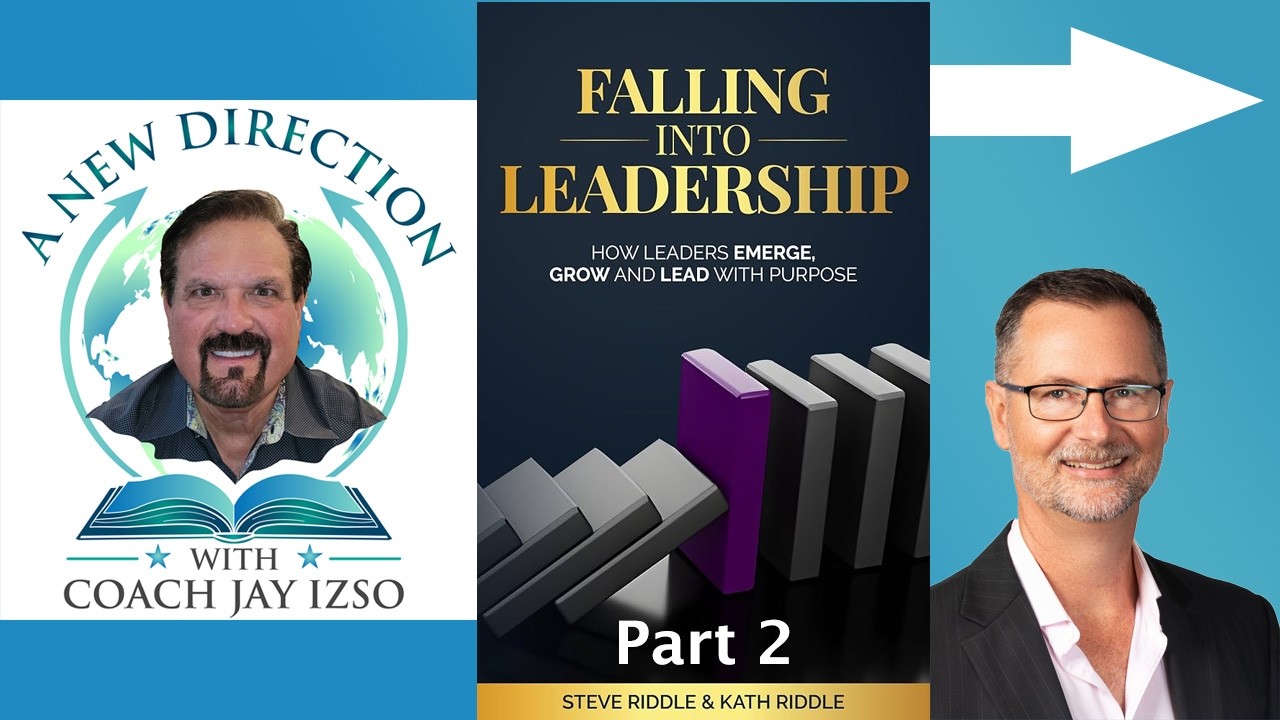
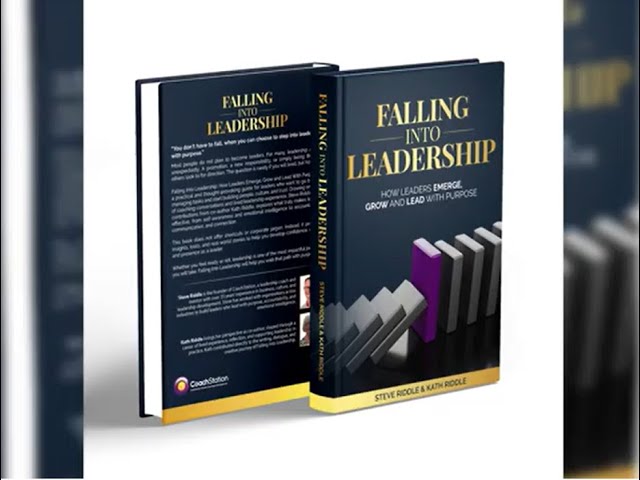
Information around change management. We've spoken about that, the RIOME model, interactive models around RIOME, that 9-blocker I've talked about. But again, I don't want to make it all about tools and resources. I'm just saying that's an opportunity. The book I wrote, Falling into Leadership, it's a book that covers 8 chapters and that's each chapter with the protagonist, the key character Sally. It's about following her journey and her journey is a representation of everyone I've ever coached. So people reading that now are reading it and going, Oh my God, I really relate to that. It's because, well, of course, because it's written in the guise of what you guys have been telling me. So again, I'm not being silly about it or again being heroic. I'm saying I've got a book, I've got AI tools, I've got other resources, interactive or otherwise. You've got coaching and mentoring, always happy to have a chat with anyone about their desires and needs or gaps or whatever it might be. So there's no reason not to. And here's the point that I'd say to you, Kameet, In the absence of using those and thousands of other coaches and content that's out there, I'm not saying I'm the only one or do it the best, but what I am saying is the reason I do that is to help people. And I don't want people to make it, have an excuse that I don't have access to the information or I don't know what path to take. It's like, well, I'm telling you, my website's just one of many, but, and my content is one of many, but it's pretty good content and pretty good insight. So if you are lost, use the resources to your advantage. And I guarantee you, you will be better for the experience if you apply one or two things, right?
That's all we're saying. And your website is very interactive. There's a lot of information there. You know, I was on it, you know, just doing some research. Great, great. A lot of tools. Talk about your book, Falling Into Leadership. You know, that is, I think that is a story of a lot of entrepreneurs. We were good at some sort of technical skills or some sort of trade. That's why we started a business, right? So, and all of a sudden we have to learn leadership or sales and leadership, two things, right? So, All of a sudden, we have to build that. So talk about the book. Is that what the problem you saw, that a lot of people got into leadership without any training? And what inspired you to write this book?
Yeah, great series of questions. The brief version, I actually started writing the book in March 2016. And I know that because I actually, in the last couple of years, I was hitting a bit of a wall, pretty busy. And so I engaged my mom, my mother, to help me to finish that last couple of years. And Mum's name's Kath. Mum did a great job of bringing a lot of the content together and creating a story. And she created Sally, who's a key character and so on. So, it made a bit of a story of it. But originally, 10, 11 years ago when I started writing it, it was simply to give a gift and a resource to my coachees at the beginning of their program.
Yeah.
And the idea behind it was to give them insight into the sort of things we talk about, some of the core concepts and models, But to make it an interesting read too, not just a dry series of blogs that have been brought together in a book. And so, we've managed to bring that together in a way that tells a story, and it's Sally's story, but it's actually everyone's story, as I said. And it covers all of the things, or it covers many of the things that we all have to deal with day to day working in organizations. And so, it's interesting, we've sold several hundred of the books at this point and given them to clients. And the feedback is consistently, I relate to Sally's story.
Yeah.
It's almost like people are really thinking about her within their world. It's almost like, I know Sally, and that's beautiful because, and mum deserves a lot of credit for that because that was a lot of her ideas. But the practical reality of that is how do you translate? So the end of each chapter, there's 5 questions, reflect and act, as I said. So what you've absorbed here, what resonated in your world? What's one thing you could do differently as a result? How could you make your world slightly better? How can you save time? How can you be more effective, productive, efficient? And they're the sort of things that we need to be thinking about and doing and not just reading and knowing, as I said before. So Falling in Leadership was written to give to my clients. It's got legs. I was strangely in Amazon in the US a couple of weeks ago. I made the top 40 list for 2 of the business genres, which I was quite proud of.
Congratulations.
It sort of got legs and it wasn't really why I wrote it, but now that I do have it out there, I probably see it more than just for my client list. It's a way to touch and help people well beyond Australia and my network. And genuinely, again, I'm not trying to promote it for the sake of promoting it. You don't make a lot of money from books, but I do want that to be a tool that people use to become better at leadership. That's why I wrote it. And Falling to Leadership, the premise for it is that we often are given opportunities and we are not necessarily ready for them. And there's a lot of people that are in leadership roles that are battling and struggling. And I know that because I'm often engaged to help them 15 or 18 months after they were promoted. And I often say to the leaders or HR or the organization, how powerful would this have been if you had contacted me 15 months before you promoted them and we got them ready for the role rather than now we're remedial coaching, doing remedial coaching work because it's not quite going as well as you would've liked. They're worth the investment, but the timing's not always great. So this is a book that's designed to not solve all the ills of the world, but to help that space.
Yeah, you know, there's, uh, you helping a lot of people, you know, definitely, uh, much-needed help in this area, uh, Steve, you know. So business leaders, we built— we get into business, you know, there's so many moving parts, whether we have to watch revenue, whether we have to watch economy, we have to manage team. There's so— when we're working on too many things, there's so many blind spots. And I think that's where the help like this comes in handy, so that we, you know, as a— when we deep down in and trying to move a company forward, we can't see all the blind spots. And this is where the tools like yours and a book like yours and, you know, people like you come in, simply say, listen, you know, there's a business as an inflection point. If you're stuck on something, let me see what blind spot you're up against. Not only showing us blind spot and then helping them to get over the blind spot so we can get to the next inflection point where we solve different problems, right? So I think this is where a lot of help comes in. Simply listen, you're stuck in an inflection point. You're not going to see it because you're in it. You're living through it on a daily basis. Let me see the blind spot. Let me help you get over that stuff and then you get to your goals and objectives. I think that's such a great help, great service that you provide to people, especially if somebody wants to be self-help. The book is there, website is there. There's so much information. What is the best way to connect with you, Steve? I'm going to include a link to your book and your website and all the contact information below the video as well. What is the best way for people to reach out to you?
Great. Thank you for the opportunity. My website is, as we've talked about, Yeah, coachstation.com.au. So coachstation.com.au. There are many avenues to resources within that. There's a Falling into Leadership on the menu, there's a Falling into Leadership link. I should say too, there's also a resource I created, a companion hub to the book. So it's its own page under that same menu that allows people to explore some of the content within the chapters further than just the questions in the book as well. And then, as we've talked about, the resources and tools section, there's many assessments in there. I genuinely encourage people, not because I feel good about seeing my website hits go up, but I genuinely encourage people to use those tools and resources. If you're struggling with change, there's 2 models in there and a descriptor. There's a whole page. We're talking 7 or 8-minute read. It's not War and Peace, but change management, emotional intelligence. I've got a couple other tools around balancing emotions and logic. We often react emotionally when we need to apply logic to the emotion to So, what I call a perspective scale. And that perspective scale allows people to apply logic when there's highly emotive situations. And so, there's a lot of resources and tools as we've talked about. And I don't want to keep pumping that. But explore it, explain. Because here's the thing I'd say, and maybe it's a good way to sort of start to wrap up. If you go to my website, coachstation.com.au, you've got a lot of resource. And that resource is gold. What you do with it is platinum. It's good to have that knowledge. It's good to have the information and the insight and the reflective piece that maybe you didn't have yesterday. What you do with it is really the whole point. And so that platinum, that absolute elevation is about you using that and then share it with your leader if you've got that relationship or a peer or a mentor or a coach or whoever, and talk about what this means for you. And then do something with that to really embed that as part of who you are. That's what development is. That's what growth is. That's what progression is. It's the point because if we don't focus on that, the world, as we've talked about, Gamit, the world's changing around us rapidly. If we're not at least keeping pace with that, then we quickly get overtaken and we get stressed and we feel lesser. Imposter syndrome kicks in and there's a lot of things that happen that are less good. And what we're trying to do here is to help people to become more comfortable, confident, competent, skilled, and so on. So it's a series of resources, but— You know, from my point of view, always happy to have a chat if anyone wants to reach out. I am in Brisbane here in Queensland, Australia. So, the time difference is there, but genuinely always happy to help. So, anything I can do to help, you just have to ask.
Yeah, I know it's an interesting discussion, Steve. I want to thank you for your time. You know, I, again, you know, definitely got a different perspective on our task list we were talking about. Just one of the topics we talk about, there's tons of stuff we can talk all day, you know. Maybe we got to do part 2 and pick a different topic and talk about it. But, there's so much to learn from you, so many different perspectives to gain. Business owner or business leader listening or watching us on a podcast, I will strongly recommend that listen. The link below this video, click a link, reach out to Steve. Well, get all the resources from the website and get a copy of the book. And then, if you still need help, reach out to Steve for discussion. Who knows where the discussion is going to go, right? We just talked for half an hour, 45 minutes. I learned a different perspective. I'm sure whoever reaches out to you, they're going to get a totally different perspective and they're going to learn so much from you and hopefully get over those inflection points we were talking about in a business, help them to see some of those blind spots and deal with that inflection point. So, before we go, Steve, any message you want to leave people who— business leaders who are always hesitant to take a next step to start working on themselves or working on the teams? Any word of you want to share with them? People a little bit on the edge, hesitant. You know, always there's always blame that, you know, economies when the economy gets better, then I'll do it. When this gets better, then I'll do it. You know, one day kind of stuff. Like one day I'll do it. So people who are a little bit on edge, any message you want to share with them to simply say, listen, start somewhere. What are we trying to do? So you know, stop using all those. You know, there's always going to be some challenges out there in a market, right? So. When do you start? How do you start? So, if you want to leave any message for them.
I love that. Thank you for that. There's 2 things I'll say. One's about you actually, but I'll get to that in a moment. The key message would be we have more influence and control than we think we do. That doesn't mean we get to influence and control most things. But if we're focusing on the things that we have that influence over and we build the skill and capability and knowledge and awareness of how to influence that, it creates a lot of power. And I don't mean power in some dictatorial way. I mean power in terms of our feeling good about who we are and us feeling aligned to the work that we do. And so it's about trying to truly understand the few things that are going well and do more of it, and then understand some of those gaps that are relevant. Just because they're gaps, it doesn't mean they might be relevant. If your job doesn't require public speaking, well, probably don't focus on becoming a better public speaker. But for the things that are relevant, then you need to focus on those things. And all you're trying to do each week, and I don't mean every month or year, Each week we should have at least one thing we're doing slightly better than we were last week. It's just progression. It's iterative. It's not designed to be boiling the ocean and trying to do it all at once. And that's the mistake that I see a lot of people make. They get overwhelmed by what it could be and the world is busy and changing. And so they try and do it all and it doesn't work. So they quickly revert back to who they are and what they've always done. The opportunities are definitely there and just do it comfortably and calmly and do it in a way that's nice and methodical and iterative. And that is where best growth comes from in my experience. And the second piece, Gamit, I just want to genuinely, I mean this not just to float your boat. I said to you before we started to record today, you have a very nice style and I felt very comfortable meeting with you the other week.
Thank you.
And I really appreciate how you have these conversations and I've listened to several of your other podcasts and I'm quite certain that the other guests feel the same way. So I genuinely want to thank you for the opportunity to Not just have a conversation and get me to spruik my stuff. It's not the point. It's about helping other people. And you do that day to day. And I just want to acknowledge that and say thank you for your time because I know you've got a real job outside of this. And this is an opportunity for you to contribute in the way that I contribute my way and you do in your way. And I just want to acknowledge that and say thank you for that opportunity too.
No, thank you for kind words, Steve. But people like you, when they come on a podcast, that makes everybody's life easier, right? It's simply Because you added so much value for people listening to, you know, watching us. That's just, you know, for me, that's an encouragement to, you know, keep doing that over and over because every time I talk to somebody, I learn so much. And definitely, the people who are watching, I'm going to, you know, we're going to add value to their experience as well. I think that the combination of that encourages me to keep, you know, having this conversation. So, but thank you again. So, about your, you know, for your time, great discussion, enjoyed it.
Thank you.
And I think we got to do part 2, pick a different topic from your book, and maybe we got to do part 2. We didn't get to the book yet. So, but pleasure talking to you. Great discussion. Thank you so much, Steve.
Thank you, Kamal. Have a great time. Thanks again.
You too. Thank you. If you enjoyed this discussion, I recommend to check one of these discussions on the top. Also, don't forget to go back to that channel homepage. There's a playlist created just for you, whether you're looking for business discussion, technology discussion, or process discussion, for business growth, all those categories are there. And I'm sure you will find something that you enjoy from those categories as well. So don't forget to send us your feedback, subscribe to this channel for any upcoming videos. Your feedback is very important to us, allow us to focus on the right discussion to deliver value for you on a weekly basis. So enjoy. Until next time, thank you for your time.