The Promotion Trap: Why Your Technical Expertise Is Holding You Back
Stephen Riddle explains why technical experts struggle as managers: leadership is a skill that must be learned, not assumed. Two-thirds of employees are disengaged, often because leaders skip the hard conversations and relationship-building that earn the right to have them.
Chapters
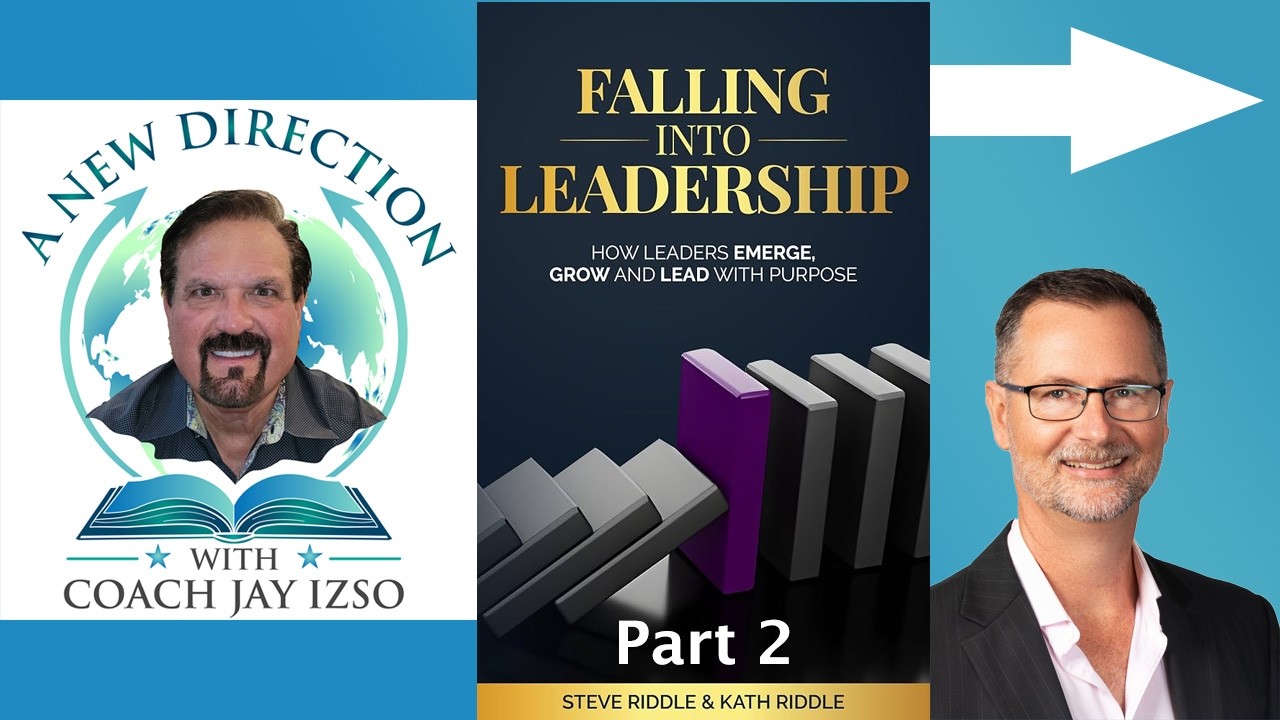
Hello everyone and welcome to New Direction. My name is Jay Izzo and oh man, do we have another great show. It's awesome. You know, sometimes they say the third time is the charm. You know, we had Stephen Riddle and I, Stephen Riddle, who wrote this outstanding book called Falling into Leadership with his mom, Kath. We had a really stimulating conversation the first time. The secondary title is How Leaders Emerge, Grow, and Lead with Purpose. And we tried to have a second show and it started out so good. And then something happened to the audio. And we were— I was at a complete loss. And it happened again where we had a complete loss. So the reason why we're starting late is because the fact of the matter is we did have some audio problems again, which for the life of me, I don't know why. It just happens. But let me just say something about this. First of all, this is an outstanding book. Listen, here's the deal. You know, I've heard it said that people don't find leaders, they emerge. Right? And oftentimes what happens is people get promoted to a leadership position and they often think, that what got them there will keep them there. Right? And that really is a very bad calculation, by the way, because often what got you there isn't what's going to keep you there. In fact, you're going to have to do some different things. And that's the thing about leadership that's so important is you're so anxious to get it because you think you're worth it. Right? And I'm not saying you're not. You know what? You probably are. But if you, if you have got to change once you get there, because here's the thing, you work so hard to get to that leadership position. But then what happens is, as you're working to that, now you've got people, a bunch of people, and you're not— and, and, and, and, and actually, you're the one who's responsible for all those people. So now what you're trying to do is you're trying to think, well, You know, I've been successful to this point doing it this way. I'll just continue doing that. Rethink that proposition in your head. And this is what we're going to focus on in part 2 of Falling Into Leadership: How Leaders Emerge and Grow and Lead with Purpose. And there's another part of this thing in this book, and that's the last word, and that is with purpose. And I think What happens is we get there, but we haven't created a vision and the ultimate purpose of why we're really there. Because if it's— if you're there just because it's a bigger chunk of money, you're wrong. Because it has nothing to do with that. It is so much bigger than that. And if you want to lead effectively, that's what we're really talking about with Stephen Riddle.
Yeah.
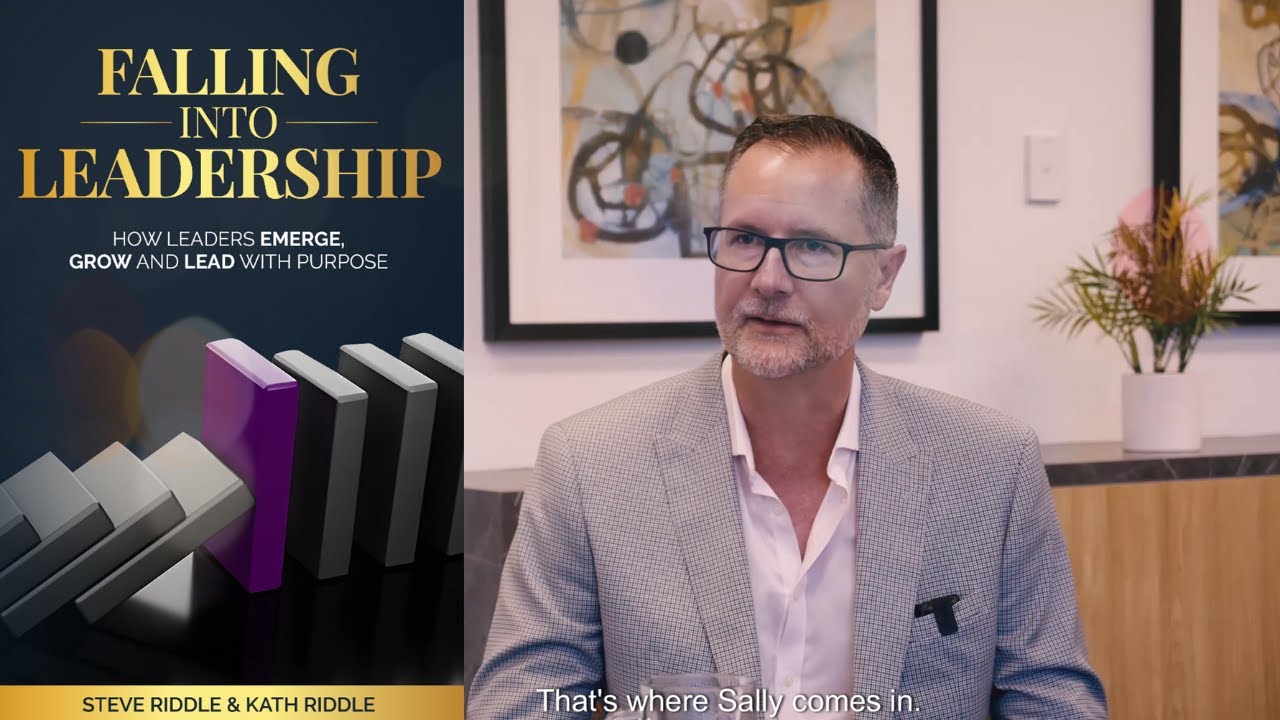
And I want to just say this, too, about this book before I, before I talk to him. And that, that is this. You know, I know that for me, that when I have gone into leadership and have had leadership opportunities, I have failed at times simply because I thought I was really ready to handle the responsibility, and I just didn't. And I didn't handle them well. And it took me getting knocked back in order to kind of understand what leadership really was and is. And so I also want to encourage those of you who said, hey, I've been in leadership, but it didn't work out well. Well, part of what we're going to talk about is, yeah, well, let's Let's, let's, let's get you some tools so that the next time you get into leadership, that you have these tools. And that's what Steve and I are going to talk about. So Stephen Riddle is a leadership coach, mentor, advisor with 16 years of coaching experience, more than 30 years of leadership experience across Australia. You hear it in his voice. As the founder of Coach Station, Stephen works with executive business owners, senior leaders who want to lead with greater capability, confidence, and influence. His coaching practice is built on the belief that leadership is a skill that can be developed, not a personality trait you either have or you don't. He's coached hundreds of leaders across a wide range of industries. He wrote this book with his mom, Kath Riddle. And I will tell you that readers have seen all sorts of benefits from applying the principles from this book. It generally feels like you're part of a session And it really does when you read this book. And he offers so many practical steps to overcome common challenges. He lives in Brisbane, Australia. So ladies and gentlemen, welcome to the show and welcome again for the 3rd time, Stephen Riddle. Steve, welcome back to the show.
Good on you, Jay. Great to see you again and thank you. Technology is wonderful, isn't it? Until it's not.
Until it's not, yes.
We've all had those experiences with Zoom and Teams and so on, unfortunately. That's okay. It's great to see you again. And thanks for the invite to come back for a second pod.
Yeah, let's talk about difficult conversations, specifically why leaders rehearse them endlessly and still do not have them. I think one of the things is that every founder— you said this— every founder and leader in both, in all across the board, has either avoided these difficult conversations or handled them badly. Let's talk about why and what they can do about it.
Yeah, I think avoidance is— actually, I'll just go back one step. In your introduction, you talked there about the importance of recognizing that leadership isn't, or leaders don't emerge, or maybe some people think they do. I think that the problem I have with that sort of language generally, and not because you've used it, but generally how people might lead, is is that implies there's a passiveness to that. And the thing that I'm constantly surprised about, and I think my clients are often surprised about, is how much effort is required to become an effective leader. And so the skills that are required are the same as any other skill. We spoke about this in the 3rd podcast quite a bit, but just to remind people if they didn't hear that, that the skills are like playing tennis or the violin or whatever it might be. It's takes thousands of hours to build these skills. So there's an interesting set of behaviors that I see commonly in people that they're a little bit surprised at how much effort they have to put in to become an effective leader. And the term there, you said purpose, to me, a key word there is effective. A lot of people are in leadership positions. That doesn't make you a leader. It means you're in a role of authority. And if you're leaning into that authority as your positioning and how you actually manage, not lead, then that's a fairly short-term, non-sustainable way to, to be getting things done. So yeah, we might be getting things done, but we're not necessarily doing it with and through people.
Let me jump in there real quick about what I meant by that, that they emerge. So the Navy SEALs, which is, you know, one of the, you know, you know, top forces, you know, forces, They always say, you know, they don't choose them. They emerge from the work that they do because they put them through such grueling tests that, you know, they— most of them drop out. It's a very small percentage that make it.
Yes.
And so then what happens is they emerge out of the work that they put in, right? Because the other ones fall out. So that's, that's, that's really where I'm coming from. I think it's— and the reason why I say that is because, you know, when I'm having watched these— the BUD/S training and watching them do that, you know, they always talk about, you know, we don't pick them. They emerge out of the work that we do with them. And I think there is something very similar to that here because they had to— they develop skills and mental toughness and all the— because they say it's the mental training is the hardest, not necessarily the physical training. It is brutal. But the mental training of building them over and over and over and how difficult it is, those people who are left are the ones who emerge out of it. So does that maybe make a difference if I say that?
100%. And good chat. I love this because it becomes conversational rather than lecture style. So I love that point. I would say agree with you on that. And maybe to bring the 2 points that we both made here together, the fact is there'd be no one that is applying to become a Navy SEAL—
Right.
—who isn't very passionate about the idea of becoming a Navy SEAL. And they've been in the forces for some time to that point. So their bedrock, their knowledge of what's required is probably pretty significant. They've spoken to other SEALs, people that have dropped out. I'd suspect that it's a very clear, or a sense of clarity for every individual before and early in the stage of becoming a SEAL as to what's required. And that's probably the point of difference. I hear what you're saying. So again, not to be argumentative or destructive. Oh, no, no, no. I think the point here is that there's a clarity there before they sign up, knowing that they may not make it. Most managers, when they're signing up for leadership, are less aware, in my experience, are less aware of that commitment required. and rarely drop out. And so there's a bit of a difference there. I think it's a great analogy or metaphor, perfect. I think there's a key point of difference though in terms of the commitment required, the knowledge of that commitment required, and the effort to do so. And they will bust their bums off to become a Navy SEAL. And that's where you and I are in agreement here. The effort required is incredibly important And it's not passive, it's a very active day-to-day activity, not just, I've got half an hour on a Friday, I'm just going to focus on my half an hour of my own development or speak to my team for half an hour. It's literally every moment of every day and that's the bit that surprises people. To be effective, again, not just to be a manager but to be an effective leader, it's what you do every minute, truly every minute. The email you write, the team meeting, the stakeholder meeting, client liaison, the one-on-one, whatever the whatever the facility or the tool or the resource or the moment, the opportunity, every one of those is the true opportunity to become an effective leader. And they're subtle. It's 0.001% of the time. It's not big leaps. But I think that's the, that's when I think about purpose and emerging and the gaps that I see, it really is a shock to people. And not everyone jumps on board, to be fair.
Right.
Many people, to your point about emerging and dropping out, they sometimes drop out Mentally, but stay physically, and that's a challenge, right?
Right, it is. And I think I think the analogy works here because because they do know that it's going to be difficult, right? They do, right? They know it's going to be hard. They know it's going to be grueling. They know that Hell Week is just going to be awful, right? And you know, very few. small group of people ever make it all the way through. But they're the ones who are effective. They're the ones who really emerge. They're the ones who really grow because they have really— they start to understand what it takes to do that. I think in your analogy, I think it's the same thing in leadership. I think there are The difference is, is that there are good leaders and there's bad leaders. And the bad leaders tend to be ones that drop away over time. Right. But the good ones seem to emerge and really, really shine. Right. And so I think to me, you know, when I look at effective leadership, you know, people will fall into leadership, but then You know, if they don't develop the skills, if they don't develop the mental toughness, if they don't develop the emotional intelligence and the mental intelligence, the spiritual intelligence, and I would even argue the physical intelligence, if they don't develop that, then they're going to fall out just like most of the other— these other SEALs, these guys who are trying to be SEALs do. And you just see the ones who are just bright light shining. That doesn't mean that a guy can't come back and learn something from that and try again, right? Because they can. Because, okay, they've been through it once, they didn't make it. They come back again and they go, okay, now I'm more prepared. And so I think there's a lot of similarities there. Is that a pretty solid argument or do you want to follow up on that?
No, it's great. I love it. It's a good conversation piece. I would say, and one of the key points of difference I touched on a moment ago to really reinforce it. The difference is in the Navy SEALs, and I've never been a SEAL, I've seen, you know, documentaries and so on, but at some point they point at you and say, you're out.
Yes.
It rarely happens in leadership, right? And frankly, it should happen more.
Exactly.
It sounds cruel, and I'm not being negative for the sake of it. I genuinely believe there's times when we, you know, in a professional and supportive way, but we should be able to make the call. And often it's the individual that makes the call because they're stress levels over time become so extreme, or they realize that, you know, leadership and management is not for me, or whatever it might be. But certainly in Australia, the opportunity to truly— and I'm not talking about managing people out because that's a very negative angle. I'm talking about truly supporting people to the point where they are able to self-select in a positive way, not in a, it's got the better of me for 18 months and my health has suffered, and all those good things. And by the way, my team has suffered and the business has and so on along the way. And that's the commitment piece that— and when I talk about effective leadership and commitment, that's the piece that is so incredibly important because the impact is incredibly massive, right? So it's not— I always say, if you've got 10 people in your team and you're an effective leader, you're affecting 250 or 300 people. It's the immediate family of these team members. It's the friends that they have. It's their health. It's all those good things. So I'm not trying to put more pressure on leads to say, hey, it's all about you. In fact, I would say this ironically, and this doesn't make sense to some people, but leadership is never about you, but it's always about you. And it's an ironic irony, right? So it's always about you in terms of your own development and always being ahead of the game and being effective. You can't be effective through hope. You'd be effective through practice. And as you said, and like the SEALs, they learn from mistakes, they learn from successes and so on. But the reality is that leadership is always about others. By definition, but it can't be in spite of your development, in spite of your skill set and capability, just the same as every other thing in life that requires practice to become more effective in.
Well, I think what we find too, right? I mean, I think you quote this study in the book. I don't remember exactly what chapter it is, but, you know, we know the studies have been clear that it's about 2/3 of the people are not engaged in your company, and it's largely because of bad leadership, right? On some level, I mean, they're just not engaged. Why? Well, you're not a good leader, so you got to develop some sort of sense of skill, some set of skills in order to be a better leader and to get your people engaged. That study has been consistent throughout the years of low engagement across the board. And I don't care where it is. It doesn't matter if it's US, Australia, Europe, or wherever. The statistics seem to be the same. 2/3 of your company is not engaged. Well, whose responsibility is that?
Hmm.
Well, I mean, that's the leader's responsibility, right? There's something happening in leadership that you're, you've got 2/3 of your employees not being very engaged. This is where the difficult conversations, I think, come in. Because, you know, we often say, well, we got to have difficult conversations with our employees. But maybe— and I'm just going to turn this around just a little bit here on you, Steven— but maybe we got to have difficult conversations with our leaders.
Oh, 100%. Yeah, the avoidance— I think the avoidance is more about the input rather than the output. So we're expecting things from our leaders that we're not necessarily providing to them. I could— I cannot tell you how many people, and as we've talked about, I've coached over 600 people and a lot more than that actually, but coaching in terms of a program, so more than 3 months, you know, a handful of sessions each person. And it's remarkable to me how often, and a little bit disappointing, but it is interesting to me, probably a better way to put it, how often people get to a point in their own development several months into several sessions into the coaching, they're starting to truly understand it and apply the skills. They're starting to recognize their part to play in it. So the self-awareness is increasing. as a result, their other awareness is increasing. And so their influence is improving as well. And all the good things that are happening, their time's coming back to them. So they're feeling like the weight isn't on my shoulders entirely and so on. But it's interesting to me how often they start at that point getting frustrated because they are starting to deliver what we would call more effective leadership. And yet deep in their hearts and their heads, they know that they're not receiving the same thing from their immediate leader. So unfortunately, like on an XY-axis, and I often draw this in my in my programs, the gap between what I'm delivering but what I'm receiving widens. And at some point, that becomes untenable for some people, and that's when they often leave. So we say, you know, different— the survey you're talking about there before is Gallup survey, Gallup organization. And Gallup's a good one for this as well. But many other organizations and surveys show that somewhere between 50% and 70% of the time when people leave a job, it's because of who they report to.
Right.
And that's probably not rocket science, and it's pretty well, well known. But Most of the time, that is because people are starting to lead more effectively and they're not getting the same. It's not reciprocal. They're not receiving the same. And they try and have those conversations with their immediate leader, but they fall on deaf ears. Or the intention is there from their immediate leader, but the action doesn't follow. And so it becomes frustrating. It's an incredibly disengaging and frustrating and disabling place to be. So in some ways, I don't truly believe this, but sometimes I say facetiously to these clients and friends, Sometimes ignorance is bliss, you know, sometimes not knowing better is better. I don't truly believe that because that's very status quo and mediocre, but I can understand at one level where that makes sense because, you know, I don't know what I don't know. So I don't know that I'm not getting good leadership from my leader because I don't know what good leadership is. So yeah, it's a bit silly, but that's truly the position that many of my clients get to where they become highly frustrated and many of them many of them, quite a few of them do leave their organization because of that gap, and then they seek that somewhere else. They seek that cultural alignment and the effectiveness of what they're doing somewhere else. Unfortunately, a lot of organizations do struggle in this space. So, you know, it's not, you know, the grass is greener and all those good things that we talk about. So yeah, it's a challenge. It is a challenge. It's why it matters. It's why I created Coach Station 16 years ago. It's why I started writing a book. And it took me 10 years because I wanted to get it right, you know, to help people in this space, not because I've got all the answers, but because there's an opportunity here for us to be better than that. And I think there's obligations of leadership, not just the commitment we make to ourselves because I get paid more, to your good point earlier, or because there's status, or it's good for my ego, but because there is a genuine obligation of being effective when you are responsible for leading and managing the 10 people in your team or 6 or whatever it might be. And the impact when you get it right is immense for society. I truly believe that for them and their families and everyone that's close to them, their loved ones. But broader than that, if we can be more effective in leadership, then we are absolutely contributing to society in a much more powerful way. And that's important. I'm not sure there's anything more important in my heart and head.
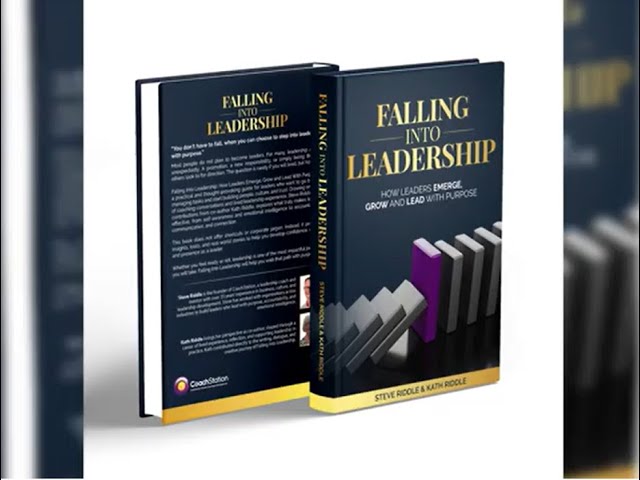
His name is Stephen Riddle. The book is entitled Falling Into Leadership: How Leaders Emerge, Grow, and Lead with Purpose. Fantastic. We're just getting started. You're listening to him here on A New Direction. Hey folks, got a new sponsor. It's called The AI RE Pro. It stands for The AI Real Estate Pro. If you're in real estate and you're kind of like skeptical about AI right now and you want to have just a basic introduction of understanding it and how to apply it back to your business, I highly suggest you check out theairepro.com. It is a self-paced course, and it's on sale right now. Normally it's $500. It's $99 right now, and you can just start right now on your own learning about how to apply AI to your real estate business. So check it out. It's the— T-H-E— AI Repro.com. Check it out. I'm telling you, it is going to be worth your time and it's going to catch you up very, very quickly. And also, um, we all know that buying and selling a home isn't just a transaction— action, it's a major life transition. Whether you're buying your first place, making room for a new baby, or downsizing for retirement, it can be incredibly stressful. That's why you need the Linda Craft Team Realtors. For over 40 years, Linda's been helping people, uh, all over the world navigate these big life changes. Her team doesn't just sell houses. They take the stress out of the process so you can focus on your future. Don't go it alone. Let 40-plus years of experience work for you. Check them out. Visit LindaCraft.com, L-I-N-D-A-C-R-A-F-T.com. And we're back here on A New Direction with my friend, Steve Riddle, Stephen Riddle. The book is called Falling Into Leadership: How Leaders Emerge, Grow, and Lead with Purpose. You know, Steven, before we get off these difficult conversations, what kind of conversations do you see that are so difficult that leaders, and maybe even employees, avoid having?
Yeah, it's a great, almost the cornerstone of leadership, really. I, it is interesting to me, we talk about, I think we touched on this in the first, in the first pod. But one of the interesting things for me is how people find hard and difficult conversations hard and difficult. and why they feel that they're hard and difficult. And for me, it's less about what it is today. So the feeling, the emotion comes from the sense of the fact that I have to have this conversation because I feel compelled to, and today at 10 o'clock is the time I'm going to do it. So that's the moment, that's the emotion and the anxiety and the different things that flare up from that. There's 2 key pieces here that I think people miss. It feels difficult and we define it that way in our minds because we haven't earned the right over the last 6 or 12 months to have what it what should be a pretty normal conversation, a conversation with purpose. And sure, it might have a developmental focus to it, but it feels difficult quite often because we feel like it's a confrontation. And those confrontations are an earned right. So if we avoided building that relationship and the connection and trust and the mutual respect and the context and clarity of expectations and all the things that make effective leadership effective, then of course, the inevitable, or one of the inevitable outcomes is that those sort of conversations feel hard, they feel difficult, we're challenged by them. So the 2 elements there are, have we earned the right and have I built the skill to do it well? And both obviously go hand in hand, but they're both critical. And it goes back to all of the discussions we've had in the first podcast and today already, that it takes effort, it's an active thing. And so I feel confident in saying those people that develop themselves, not to be perfect at these things, but develop themselves to build the skill and recognize it's just a conversation, But it's a conversation with purpose, and that's the difference. It's not just a chat, random chat, where I hope they pick up on the subtleties of what I'm alluding to. It's very specific and it's directed, but it's supportive and it's done in a way that's effective, not done in a way that's threatening or challenging or whatever it might be. So people hear that and they go, it sounds a bit soft or avoidant. I'm like, no, no, it's actually very firm and effective, and there's a difference. But you have to build the skill for that, and you have to earn the right to have that conversation.
There's a lot of skills that you talk about in this book that go into having these difficult conversations. And you've been probably 1,000, you know, have coached close to 1,000 people, if not more. When you look at all the people that you've ever worked with, where do you— what— because, you know, conversations are multiple skills. I mean, there's multiple parts to that skill. Right? If you were to narrow it down to maybe 1 or 2 things that you see skill-wise that these leaders need to work on, what would you say maybe the top 1 or 2 skills are specifically in order to have these difficult conversations that really you find that they lack?
Yeah, brilliant question. And for the listeners and viewers, we haven't set this up. But that's really what chapters 5 and 6 are of the book, right? So I'm not dropping that in for the sake of it. So chapter 5 is Speak Less, Lead More: When Questions Reveal More Than Answers. Chapter 6 is The Power of Connections and Relationships. So ultimately, I'll start with chapter 6 and work my way back. So relationships are not friendships. They can be. It's the title of it is The Power of Connections because we need to connect with people and to connect properly, we need to understand what someone else values. If we want to connect someone to the values, the company values that, by the way, we normally just whack up on a poster on a wall and assume that people give a, you know, give a rat's exactly what that means. That's the idea, right? Yeah, you know, I find that interesting. It's just like, well, you should care about them because we impose them on you. It's like, unless we find a way for people to connect to them, it's always just going to feel like words on a wall, right? Not because they're indifferent or they don't care or they're malicious. It's just, it's not meaningful. And so the way to make values— there's one way to connect organizations and people is to understand what an individual values. I spend a lot of time working on the personal value side of things. And when people know what values are conceptually and what their actual core values are, then there's a way for, as effective leadership, to draw that back to the values of the organization. There's got to be a reason they connect. And if we don't understand the individual's values, they're never going to care about the company values. It's just the reality, right? And so that's one element of it. There's many, but connections and relationships are the cornerstone of everything, my RIOM model and everything we do. In fact, I think relationships are the meaning of life. I fervently believe that when we are with others, personality aside, it's not about introverts don't respect connections and so on. That's not true at all. So the reality is that connections and relationships are an imperative. They're the cornerstone, the bedrock. Now, how do we develop those is an individual thing, and there's no right and wrong necessarily. But what I will say is things like values-based things like honesty, respect, trust, loyalty, seeing the results of my efforts, all those sort of values are the sort of thing that people are wanting to be understood. So how can I value you if I don't know what you value? How can I help you to feel motivated? I can't give you motivation, but I can create a motivating environment. But how can I possibly create that environment if I don't know what you're motivated by? And so it's interesting to me, we don't just build relationships to pat ourselves on the shoulder and say, hey, I've got a good relationship, job done. We do that to be able to positively manipulate those moments. And unfortunately, manipulation has a negative context, but it's actually— I manipulate all the time. Coaching is manipulation. Leadership is manipulation. It depends on intent and action and outcome. And so the reality is that when we've got those relationships and there's a depth to that, then we have the opportunity to influence. And I've not seen many examples, and I've, you know, I'll die on this hill. I'm pretty sure you can't influence in spite of a relationship or a connection, right? So that's important as a bedrock. And then chapter 5, to go backwards here, the speak less, lead more. That's really, to answer your question succinctly, the 2 most powerful skills in relationships generally, and certainly how that relates to leadership, are effective listening. So being present and genuine listening, not just hearing. There's a difference. Being inquisitive, curiosity, that all sits under that. And then the key skill, in my opinion, is the ability to ask effective questions at the right level at the right time. And so we hear the key things. So if someone's talking about, you know, blah blah blah blah, frustration, blah blah blah blah, last month of this, blah blah blah, the key things you're hearing are frustration and in the last month. So the questions are things like, that's interesting, we spoke 6 or so weeks ago and you weren't in this place, so what's been happening in the time since where you've been feeling frustrated? Why has that happened? What's been triggering that? So it's not rocket science, but what we don't do well is listen— often don't do well— is listen to those key phrases within the conversation to then drill down to understand what is making that person frustrated, for example, or what is frustrating to them. How long has it been happening? Why is it happening? So when we get to ask those questions, we get meaningful answers. It's now actionable. We have an opportunity now to do something with that rather than just not be frustrated or be happier or those sort of things. So the questions allow understanding, the relationship allows honesty, and the relationship and connection of trust, and with the consequence of both those things, we have the opportunity for actionability and progress and development and all the good things that we talk about. So I'm not saying they're the only things, but gee, I reckon they're the absolute cornerstones of effective relationships and consequently Yeah, I think, I think what happens is, you know, you point this out in a number of different ways.
You know, our curiosity isn't as curious as we'd like to believe it is. Because we're curious of what happened, and then we want to solve it. And that, that rarely is effective. Do you know what I mean? Because We try to solve the problem right away so we don't have to hear the problem anymore. But what we're really saying here is, hold it here, go beyond the problem. Why has this changed? What is different for you? Before we jump into solving it, because if we're in the— if, if we're immediately trying to solve the problem, then we're really not listening.
Hmm.
Because what we're hearing is we're hearing the problem, you know, but we're not investigating it long enough to really know if there's even a solution that's in our control, or if it's a problem that the other person is having that, that we need to help them work through, because it may not be a company problem, right? It could be, it could be a— and as I often say, right, there's no business problems, there's just personal problems that infect your business. But it could be a personal change that has affected the process. And I think, you know, this is why, you know, and I don't think we'll dig into it here. But this is why The Coaching Station's 5 Levels of Effective Communication model becomes really, really important in terms of Acknowledgement and the Basic Exchange, Investment, you know, Advanced, Flow and Mastery, which I don't know that we ever get to really, maybe. very little bit. But the point being, I'm not sure that we're as present. And I'm not sure that we're as curious as we'd like to think we are as leaders, because we're too busy trying to solve the problem so we can move on to solving the next problem.
I love that. Just 2 things on that. You say about mastery of communication, we never master something purely, but we have moments of mastery. Yes, I felt that with, with you, Jay, in actual fact, during our first podcast, but our chat afterwards, there's that real connection and the world sort of happening around you, but for 15, 20 minutes or whatever it might be, you're really in the zone. And that's when the mastery moment happens. So it's less about I've mastered it as an individual, it's more about those moments of deep connection and common thinking and then conversation and so on. So that's just a side point, I guess. But when we're talking about leadership and its relational aspects, and when we're thinking about the challenges of that, I think— and you're talking about solving problems, one of the things I find mysterious— I'm being kind— is how often we actually don't define the problem in the first place that well. So we're solving an assumed problem and what we often are seeing is the outcome of the problem and then we try and manage the outcome, which is a fallacy.
Right.
It's just— and I see this in many ways. I see this within KPIs. So I try and, you know, your target is 80% to make 80% of what budgets effectively or whatever, and you're achieving 75%. And so what we often do on the management side— and again, management, leadership both have a place, but managing is what we do, leadership is how we do it— so we tend to manage those moments and say, look, it's been 3 out of the last 4 months, Jay, where you haven't made target. You kind of want to work on that, make sure it doesn't happen again next month, right? And you want to impress me, or you want to get your bonus, or you want to keep your job, or get through probation, or whatever it might be, for all the right reasons, but I've just subtly threatened you. That's a challenge I put to you, but in a threatening way. It's not— it's an unsupported challenge is what I call it. As opposed to, let's work together and it's your accountability. I'm not going to give you the answers. This is what coaching does. But together, I'm going to challenge you, but in a supportive way. And together, we're going to work out why through the last 4 months you've only achieved 75% rather than your 80% target. So these behaviors in terms of identification are— problem identification are quite common. And so what we do is we see the outcome of that, in this case the target not being met or whatever, and then we try and find a solution without understanding the reason why it exists in the first place. And one of the key aspects of my coaching and mentoring is to really drill down. This is what I say about questioning, to drill down till you get to that really actionable point. It's only actionable when it's truly understood. And because we ask a question, we might get an answer, but it's rarely the right or the deep enough to be actionable. You've got to keep going and going and going. It's not the 5 whys. It could be when, how, who, what, or why. But it's just drilling down. But again, our job isn't to explore for the sake of exploration. Our job is to explore to get to the point. And that point could be the actionable piece they need or the identification of problems. Then we've got something that we can talk about with meaning and find a solution. But what we do is we often talk at the very surface level of question, answer, maybe another question. We think we know what the problem is. And then we start reacting rather than responding. And the reaction tends to be emotive. The reaction tends to be a little more surface level. And we wonder why we're shotgunning it and hitting the target with our pellets 20% of the time rather than 90% of the time.
Well, it's, it's, you know, when, when you say it, it's so obvious to me, you know, that oftentimes when we jump into the problem that we think we're solving, We're really not solving the problem at all because we haven't drilled down to the real problem. But because I think that our lives have become so busy and we're so concerned about getting things done, we don't take that time to really drill down to go, well, what's the real problem? Right? And so then we end up solving problems that isn't really the problem at all. And then I think the danger is we start becoming— we start managing to an exception because it really doesn't exist or it happened one time when there is— if we would go deeper, that's the bigger problem for the business. Right. And I think that's— there's a tremendous danger in that because we can look like we're solving problems, but all we're doing is really managing to exceptions.
Yeah, I love that. Beautifully put. That was a very good summary. Thank you. I would say this as a subpoint to that. You mentioned time there. My wife, my beautiful wife Julie, has worked in HR for decades. She's an HR manager of a large company that runs Toyota dealerships here in Australia. And we've talked about this for years. It's great. Our worlds collide in funny ways. We're the same, same but different. And I often say to her, it's a little bit frustrating about client A or culture X or whatever it might be about what's happened. She says to me, people don't have time. I get it. But that feels like an outcome in their minds that's a definable excuse, not an actual reason. And I look at— and when my clients often say this to me as well, Steve, you don't understand how, you know, I'm so time poor. And I do understand the fact that they're time poor, but what we're talking about here is the reasons why they're time poor. Do they prioritize well enough with their manager every Monday morning, 3 minutes to say, here's my priorities, the 3 things I've got, 43 things I could work on, but here's the 3 I'm focusing on this week with my team. Are we agreeing on that priority? Not just what I'm doing, but in the order of doing it. And the leader then gets the opportunity to say, actually, there's an update I didn't get a chance to tell you. Last Thursday's meeting means that priority 3 now needs to be priority 1, or whatever. It's great. So what am I dropping off to make that thing? It's an agreed priority list, right? And that's just one thing, but an incredibly important thing that I see missed almost universally. So that prioritization is important, but building, as we say, building the skills to make sure that you know how to not manage your time but prioritize effectively and feel like that you're working with your team. Because most teams, when we ask them, and I've done this hundreds of times, team members are not seeing the same level of effective communication that their immediate leaders who I'm coaching say that they're providing. They're not feeling the same level of congruence in terms of the, we're working towards the same sort of vision, not perfect, but generally the same. with the same broken-down action plan, and I know my responsibility in part to plan that and so on, that's not necessarily that effective. And the reason is the chicken and the egg. The reason is because the leaders don't have time to actually provide that sort of information and build the relationship and ask the right questions to get to the problem itself, not the outcome of the problem, and all the things we've been talking about. So we're bringing it home now here. So this is the point. If you don't invest in that to change, you will— it will— in 12 months' time, we'll be talking about Exactly the same thing in exactly the same way. In fact, maybe not exactly the same; it's maybe worse because it usually degrades over time rather than improves by osmosis. So our reality is that you know I said earlier about the obligation of leadership. We're obligated to have these conversations, to build the skill, to build the relationships, to provide certainty for people amongst the world, to allow them to be accountable in their jobs, not to just hold them accountable, to be clear about expectations so that they can be accountable. And all the things that we've covered and many more, and we cover in the book, and you cover in many other conversations as well. And that's why we do it, so that time will come back to you. It will not— you will not save time in spite of these skills and attitudes and behaviors and so on. All right, it will continue to be a problem for you. And this goes back to my very early point here to say it's surprising to me how few people invest in this meaningfully, even if they do it for themselves.
Yeah.
Even if they're doing it for their own benefit in terms of me feeling less pressure and having more time to focus on my family or, or my team or whatever it might be. In spite of that, still people will go, yeah, but I just don't have time. And the last point I make to summarize that is, yeah, but you recognize there, Johnny, or whoever it is, that you don't have time because you're not investing in the right things to allow yourself to get that time back. Circular argument, but it will not get better by blind hope.
That's beautiful. I love that. His name is Steve Riddle. The book, Falling Into Leadership: How Leaders Emerge, Grow, and Lead with Purpose. You're listening to him here on A New Direction. Hey, you know what? They tell me executive coaching is supposed to sound fancy, but where I'm from, it's about growing and winning. If your business is doing good, that's a problem because it's hard to go from good to great. And good doesn't ever build a legacy. So here, I'm Coach Jay. I take high performers already doing well. I push them into the absolute next level. Smart strategy, zero fluff, and I may throw in a bad joke or two along the way. Stop playing defense. Stop just being good. Let's be great. Let's start dominating. Let's talk. Let's go to jayizzo.com. That's J-A-Y-I-Z-Z-O dot com. And Linda Craft, Team Realtors. Um, you know what, I'm a little biased here, but if you're planning a move, you've got to check out lyndacraft.com. It is so much more than just a typical real estate website that has home listings. Linda understands that moving impacts your whole entire family. That includes your kids and your pets. That's why her website features exclusive advice from a child psychologist and how to help your children adjust to the move, tips from a veterinarian on how to move with pets. It's the complete emotional resource. For your family, see the difference for yourself. Log on today. Go to lindacraft.com. That's L I N D A C R A F T dot com. And we're back here on a new direction with my friend Steve Riddle. His book Falling into Leadership: How Leaders Emerge, Grow, and Lead with Purpose. You know, I opened up the show talking about that. You know, if you've been promoted to leadership, that what got you there isn't going to. what's going to keep you there. Right now, that's not a novel thought, right? I mean, somebody said that. But you say that, you know, like the technical expert who becomes a people leader and keeps leading the way they were rewarded before is just not going to work. And this is kind of the point of, I think, of your whole book, Falling Into Leadership, and having them— and I'm a mind shift guy. You know, I'm a mindset guy. So we have to have, we have to have different mindsets and we have to shift those mindsets. So talk about, you know, what do we have to do when I've been promoted but I can't use what got me there anymore?
Yeah, it is literally the trigger for me starting to write the book going back 10 years ago. But really the genesis for the book content was probably framing in my mind consciously and unconsciously 10 or 15, 20 years before that. And the reason for that was I saw a lot of good people that were put into roles of authority management and, and if they build that skill set, the leadership piece. But the thing that they're promoted for is almost universally because of their IQ and their skills that they bring to it. So we'll call it SME, so subject matter expertise. So I'm a very good accountant, I'm a very good architect, I'm a very good engineer, I'm very good whatever it might be. And that's always true. And it's not like when we get into leadership that they, that those skills drop away. We still need to have that depth of knowledge to be able to understand how to influence our team. Because what happens is, as of Friday, I was a good architect, I'll say, you know, senior architect, but still part of the team. And all of a sudden, our business has grown to the point where we are now big enough where we needed a leader of the architects. And so as of Monday, I'm now, you know, manager of architects, architect manager, right? Now, a few things happen there. One is, by the way, a side point, I'm now managing my peer group. So people that as of Friday were my friends and colleagues and so on, now I'm trying to manage and lead them. That's a big leap. I think one of the 2 or 3 biggest leaps that people have to make into leadership. So that's, that's one aspect. But the thing is that they know that they were promoted for their expertise and for their success for 22 years. I'm now 40 years old or whatever it might be. I've been working as an architect for so long, and that's about my design skills. That's about my contract. Management skills. That's about my stakeholder management, and so on, externally, and so on. They're all important skills, and there's an overlap here. But it's not the same skill set that is going to allow you to lead the 10 architects that they're now reporting into you. That's a 180-degree shift quite often, and it's a shift that people are either unaware of, as I said right at the beginning, or not prepared to make because the effort is extreme. It's the same effort that they needed to put in their 6 years of architecture. study at university or college and the subsequent role work experience they were getting working part-time at the architect while they were doing that, and the subsequent 15 years since then. It takes time and it takes a lot of effort. And it's— and I'll say it again, it's weird to me how they recognize they need to go to university for 9 hours a week and a lot of other subjects and studies and that, that they're doing throughout that, as well as getting work experience and so on. It's literally thousands and thousands and thousands of hours to become a reasonably effective architect. The same thing applies to become a reasonably effective leader. There's 2 things that come into that, I think. There's the unknown, that, that's a mystery to people, full stop, generally. And then there's also that, but what am I going to focus on to develop to become a good leader? And that's why coaching, mentoring, and effective leadership. So if you happen to have a really good leader you're reporting into, or a mentor or something, perfect, right? That's great. Or, or, and a coach or mentor external to the business that's going to help you to build the skills of effective leadership. Because just because we say we need to be effective leadership, or even what a leader is, that doesn't mean that people know what it is. And they certainly almost entirely don't know how to build those skills.
I think there's, there's a couple things that you say relative to this that I'm going to pull out of another chapter And that is the issues of self-awareness and emotional intelligence. And you do make a quote that says, the unfortunate truth is that those most in need of growth and development are usually the last to recognize it. And I think this often happens when people get promoted into it. And you feel free to challenge me if my assumptions are incorrect. But I think when people get promoted into it, they're oftentimes, because they're so focused on, I'm a leader, That their self-awareness and emotional intelligence, you know, really drops down and they don't really realize because they're in a new position that they really do need to grow and develop. Right. Which is, I think, that statement that you make in chapter 7. The unfortunate truth is that those most in need of growth and development usually are the last to recognize it because they feel like they've worked so hard to get there. There's nothing more necessarily that I need to do. And they don't understand that.
Right.
Now, maybe that's not 100% correct, but it seems to me that based on that type of promotion, that that often occurs. Is that fairly accurate, at least?
I think it's incredibly accurate. And let's be clear, and I know you're saying this, so just to reiterate that, we're not saying that the people haven't— the architect or whoever it might be for 20 years, that they haven't worked their bum off again to do the right thing. Like they've become a very effective designer or functional expert in terms of what they do. And yes, they've had to learn some influencing skills with stakeholders. And it's not binary. It's not you've got none of these skills, now you need them fully formed. It's just, it's a version of that. But to your very good point, the challenge then is that it's a mindset shift. I love it when you said that, to say, I know I now need to do this. And it's active. It's not passive. As I said right at the beginning, there's deliberate things I need to do. Now, where you get from that, you know, it could be from reading books. Going onto YouTube, attending a couple of classes. AI, you mentioned before in one of your ads, beautiful. You can have conversations with AI now to really help you. I've got a tool called CS Coachbot I designed 18 months ago, 2 years ago now, which is designed for this purpose. So any question you've got, and it's free so people can log on to my website and use it, any question you've got, it could be, I'm struggling with my leader at the moment. We were fine, but last week we had XYZ happened. What's 3 things I can do to try and recover X and Y? and it will give you responses and so on. So there's a lot of tools. And then obviously the human connection and the skill of nuance and discretion and all those things which comes from relationships and coaching and mentoring. So they're all avenues, but they're avenues that must be taken. If they're not taken, not must because I'm saying so, Jay, they must be taken because if you don't do those things and you don't develop in that space and you're not focusing the same as you focus for 20 years on your skills as an architect, the product, right? It's the same effort that's required, and it will take you that many years to become quite effective— not perfect, quite effective. If we don't do that, then you're going to find you're time poor, you're going to find you're very stressed, you're going to get engagement survey scores that the company does that are not great, you're going to find that, you know, people want to work in another team, you're going to find attrition is high, and so on and so on. The Gallup survey results and others prove this. And so the reality is that this really concerted effort is the thing that must happen because that is the thing you commit to when you say, I'm going to take on that responsibility of that role, and it's not a negotiable point. It is or it isn't. And if you don't do that, then the inevitable outcome is that you will struggle with it and it'll be stressful and you'll find it hard and you won't have time and so on. If you do invest in it, you will find that you become influential You're recognized within your organization and external as a, as a real thought leader and someone who's powerful in terms of their ability to influence effectively and truly get things done the right way. Not just getting it done, but getting it done through and with people, for example, because we're building skill set, we're building motivation, we're building all the things that allow people to be accountable to their job and everything we've talked about now for a couple of hours. So these are the reasons to do it for you and for others. But it's not passive. It is active. It's deliberate and it's real. And it's something that I believe, as I've said a few times, is an obligation, not a negotiation.
You know, you and I have talked off air about how we're hockey fans, right? And you and I are sports fans in general, right? Name an excellent professional athlete that doesn't need a coach.
Absolutely. 100%.
Right. So this, this is, this is where I find it to be so odd in the business world, right? You have professional athletes, I don't care what sport it is, that have— that, that seek out, seek out coaches and things like that and go, I got to get better. I got to get better. I got to get better. Help me find where— what is my weakness? Because I can't see it, right? I can't see it. So I need you. And then they point out, right, you know, this is where, this is where we're seeing where you're going on. And they work on it, work on it, work on it. Not till they get it right. They work on it till they don't get it wrong.
Right.
And I think you're kind of saying a very similar thing when it comes to leadership is that you can't do this alone. You really do need somebody who has a different set of eyes That can look at you and go, hey, you may not be aware of it, but you know what? You're saying that you're alone. Let me help you. This is what you and I do. And let me, let me help you because we got, we have a drone's eye view where you're in the middle of the forest. You don't know where you're at in it and what trees you're looking at. So there, you got to have some help with that awareness in the blind spots. And it generally takes someone else to look at it so that you can be the effective leader that you want to be.
100%, 150%. The reality, when I talk about relationships, the context I was talking about, for example, before was about you and your team. But that is just as powerful about you and your leader. That is just as powerful about you and your spouse or partner. That is just as powerful about you and your friends. Yeah, these are, these are human skills first. We're humans first, employees second. So there's nothing that we talk about here— obviously when we're talking about setting expectations, it's not, you know, hopefully you're not talking to your wife that way. Okay, you know, but the reality is— my wife's going to watch this later and laugh at me— but the reality is these relational skills are relational skills because they're human skills first. We just apply them in a slightly different context, but the purpose being the same in terms of the work context. You know, it's an earned right, as I've said a few times. So if you are practicing these things and you're really focusing on them the right way, and you're deliberate about this, then you will build relationships, right? That's one outcome of it. Now you need to also focus on relationships, but inevitably when you're doing these things, you're doing it through and with relationships as well. And so there's many outcomes and inputs that allow effective leadership and influence to be what they are. But no, 100%, couldn't agree with you more. And it's not luck. Now maybe that's the best way to put it. It's not a strategy I touched on it, I think, a couple of times, but blind hope is not a strategy. And yes, we all have luck in our work and, you know, we need to find luck. I think mostly we create our own luck, but there is circumstantial luck as well. But luck to me is a bit of a cop-out. I think the reality is that the people that I see are truly successful, those that put in most of the effort and then have a little bit of luck along the way. But to your point, you know, I often talk about Roger Federer. And he had a coach to the day he retired. I think the best tennis player ever. You could argue it. There's been, you know, a dozen or so that you could put up there. So you could use any of those, you know, any player. The number 150 ranked player in the world still has a coach. But they have a coach until the day they retire. Now exponentially, they're at the level like Roger Federer is at 95% by the time he retires. He's as good as it gets. Not 100%, but very close. But his incremental improvement is when he's working with a coach, it's just subtle, subtle no one else would see it, but it might be a slight rotation of the wrist on the forehand, and that's a 0.01% improvement in terms of— but what we're talking about here is the fundamentals of leadership, the big back here. When someone's effective, it may be 45% or 50% or 55%. And so the changes that we see and the impact that we see is incrementally greater. It might be 1% at a time as we apply different skills and so on. It's a greater impact because we're at a lower base. And so But, you know, as we improve and we get to 80% effectiveness— can't measure it— but then we're sort of trying to do the 0.0 or the 0.1% ourselves, or the 0.5%. And as we get higher on the rating, then it becomes more difficult to see the improvement. But the level that you're working at and the strengths that you're using and the skill that you've already got are so exponentially greater and impactful that you don't need big leaps. It's much more subtle the more effective you get. And that's again It's the same for anything else in life. I do not know why we see leadership as different.
Yeah, I agree. We've done an hour, Steve. This has been great. I don't think, I don't think you and I could have planned a better show, honestly. I just felt like this was a great show. I thought it was a great conversation. I love it. I love this with you. Tell people how to get ahold of you.
So coachstation.com.au is my website. You're going to get access to my book, Falling into Leadership. Jay, thank you again for allowing me to share that with your, with your viewers and listeners. I have many tools. I mentioned this in the first podcast, all free. I've got the CS Coach Pod access. Again, it's free. I provide a lot of tools and resources, dozens. In fact, I've got over 20 different tools, change management resources, emotional intelligence resources, personal values resources, several assessments you can do, all free, which will assess your strategic There's a lot of things on there, so I encourage you to look. Again, if you're taking anything away from today's discussion, it's about knowing that this is not passive. It's a very active thing. And so I don't challenge people to be a bugger. I challenge people to say, these are real things, and I've provided you with a lot of resources and tools to be able to help that. So it's no good challenging people and not supporting that. So go your hardest. You know, well worth having a look at those. Always happy to have a chat if anyone wants to contact me. Thanks, Steve. The opportunity is there to reinforce their learning, ask some questions that they're maybe investigating through some of the tools, whatever needs to happen. My passion is leadership. Leadership is actually a human thing. So anything I can do to help people in this space, I do it, and I do it regularly, both paid and unpaid. And I'm proud of what I do. I'm proud of what you do, Jay. It's a nice opportunity to support people in this way. And if you take one thing away from it and do something different from what we've talked about today, then it's worth an hour of your time. And if you need reinforcement, you know where Jay and I live. So always happy to chat.
Absolutely. Stephen, stay with me. Folks, this is a show, you know what I tell you, you're in control of 3 things: your attitude, your effort, and your resiliency. The fact of the matter is, we find ourselves in circumstances we didn't choose, and life sometimes delivers things we don't want. But you know what? You're always in control of your attitude. And a positive attitude is a great place to start regardless of what's happening in your life. That's coupled with your effort, which is tied to your excellence. Remember, the enemy of perfection is— the enemy of excellence is perfection. So remember, it's your effort that determines your excellence, how much you're willing to give. And finally, we all get punched in the gut and punched in the teeth, get knocked down. It's up to you to get back up again. Why? Because you're worth it. We want you on the team. I'll be back next week. Another great guest, another great book. It's going to be another great show. I love all of you. Give us a thumbs up on YouTube, wherever you listen to the show. Give us a 5-star positive review. And most of all, tell your friends to listen to the show, please. We really do appreciate it. As I say to you all over the world, you know what that is, right? Ciao, everybody!