Nobody Plans to Become a Leader. What Happens When You "Fall" Into It?

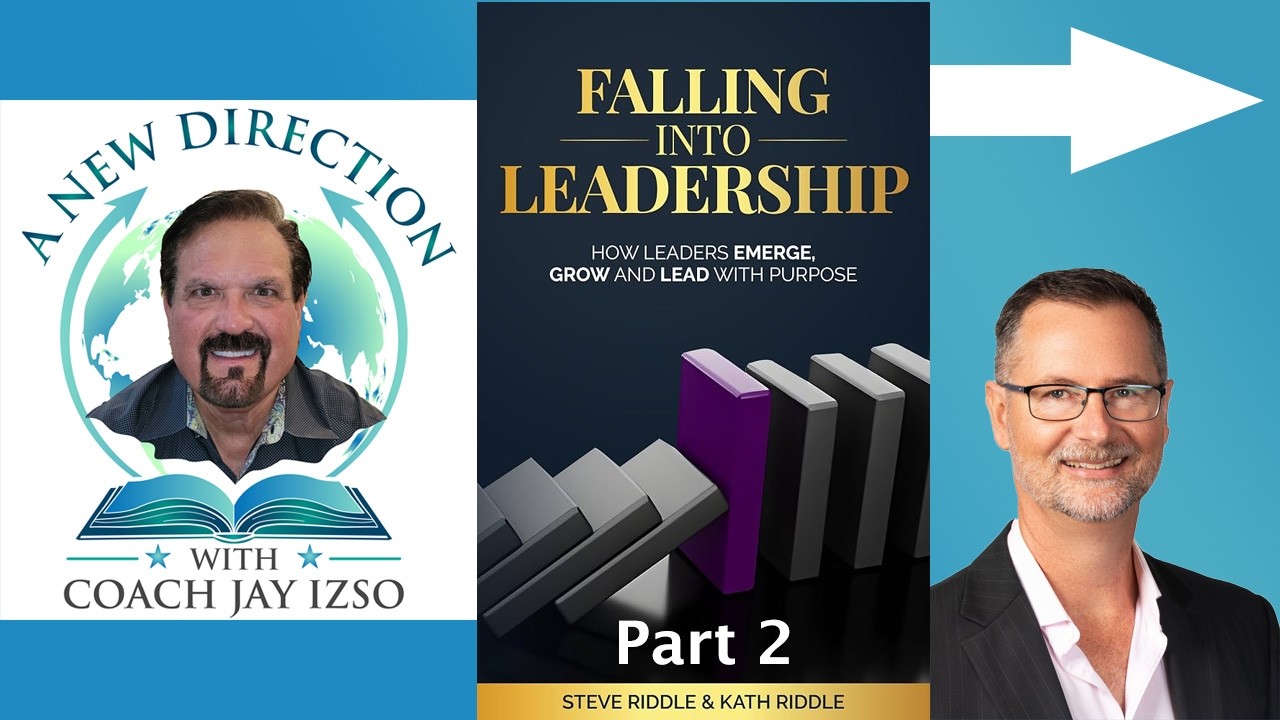
In this A New Direction interview, host Jay Izzo talks with leadership coach and author Steve Riddle about his book Falling into Leadership: How Leaders Emerge, Grow, and Lead with Purpose. The conversation walks through the book’s eight sessions, highlighting key concepts such as the idea that most leaders “fall” into their roles rather than plan for them, the importance of digging into personal history, and the use of a client case (Sally) to illustrate coaching techniques. Riddle explains his "levers" model that maps the many life roles a person occupies and how pressure in one role pulls on the others. He introduces the REOM framework (Relationships, Expectations, Observations, Measurement) for building true accountability, emphasizing that accountability should enable self‑ownership rather than be punitive. The dialogue also covers the balance between quantitative and qualitative measurement, the four‑element model of emotional intelligence (self‑awareness, self‑management, other‑awareness, other‑management), and the self‑esteem gap often seen in female leaders. Throughout, Riddle stresses that leadership is a skill, not a personality trait, that effective leaders must develop self‑awareness, manage emotions, and earn the right to influence through authentic relationships. Practical coaching tips, anecdotes, and actionable reflections are interwoven, ending with contact information for Riddle’s coaching practice.
Chapters
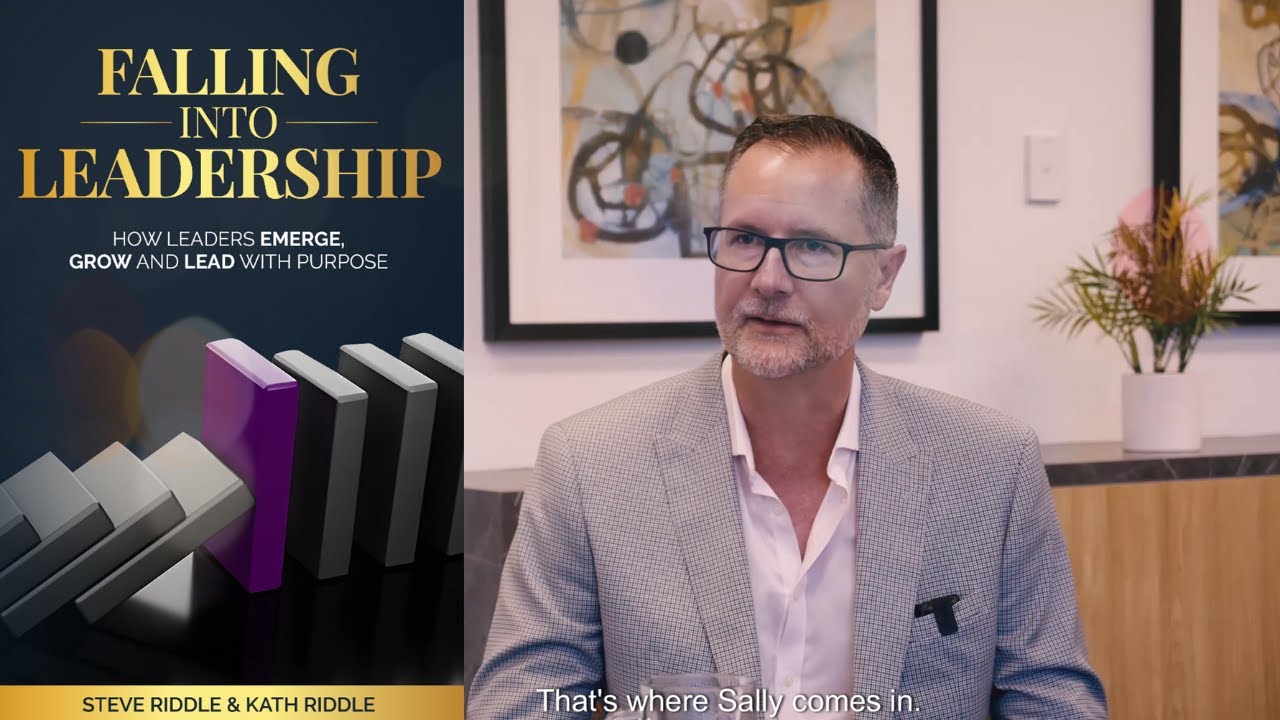
Hello, everyone, and welcome to A New Direction. My name's Jay Izzo. And oh man, do we have another great show for you. The book is entitled Falling into Leadership: How Leaders Emerge, Grow, and Lead with Purpose. Steve Riddle and Kath Riddle, coauthors on the book. I have Steve with me today. I would just say something about leadership. Here, some of you, you know, my listeners, you guys have been with me for almost 10 years, some of you. And, you know, here's the thing. Some of you fell into leadership. It wasn't something that was on the— if you had the play card of how you were playing this all out, it wasn't on the play card. And all of a sudden, you wind up having to lead. And for many of us, we wanted to lead. When we got there, All of a sudden we went, oh, that's different. I wasn't expecting that to happen in leadership. And regardless, if you've been a leader forever, the fact of the matter is we don't get things right as experienced, quote unquote, experienced leaders. In fact, we get many things wrong. Right? I mean, when I talked to Steve today, I don't know if we'll get to it. I hope perhaps we will. But you know what? So many of the problems that we have oftentimes when we're in leadership We focus on personalities. Oh my gosh, folks, if you're focused on a personality— and can I just say something as a psychological professional? OK, to all of you. If you think personality can be dumbed down to a letter, a letter, one letter, you have no idea what personality is because it's far more complicated than that. It's far bigger than that. And you can't— Take something as complicated as a personality and put it in one letter and expect that you know everything about a person. Because when you do that, what you've done is you've missed the entire person because you're only focusing on one dimension. It's bigger than that. That's what's beautiful about this book, because it's bigger than the personality. And not only that, I have to say this because it's in session 8 of this book. As a leader, what is the legacy you're leaving? And I mean this from the bottom of my heart. Who are you developing leaders, or are you just going to lead and go off into the sunset? Because as a leader, we got to be doing more than that. That's what I took away from this. When I walked away, I said, oh, you know what? Who did I leave in leadership, and did I develop that over the course of time? Right. And so there's so much, there's so much goodness in this book. It's really, it's really a unique way of writing this book, by the way. I found it to be uniquely written because I was expecting something different. And he kind of weaves in a client into the story and goes session by session. And it's kind of cool. We get to meet Sally. Now, I will say this about Sally. Okay. I don't know that I've ever had client quite as compliant as Sally was. OK, I want to put that up front. I don't know that I've ever had one quite that compliant. But I got it, because generally, there's a, there's a little bit more resistance when I'm coaching. So, but it's really, it's really well-written, a really good book. And I'm gonna enjoy it. What I want to do next, though, is I want to introduce you to Steve Riddle. Steve Riddle is a leadership coach, mentor and adviser with 16+ years of coaching experience. And more than 30 years of leadership experience across Australia. Yes, he's coming from Australia, 14 hours ahead of us. It's Thursday. As the founder of CoachStation— check it out, coachstation.com.au— Steve works with executives, business owners, and senior leaders who want to lead with greater capability, confidence, and influence. His coaching practice is built on the belief that leadership is a skill that can be developed, not a personality trait you either have or you don't. coached hundreds of leaders across a wide range of industries, helping them navigate the realities of leadership transition, accountability and performance. His work is grounded in practical frameworks developed over decades of real coaching conversations. This is Steve's very first book, and it's excellent, by the way. And he tells the story of Sally. What readers have said about seeing the benefits of applying the book In practice, they genuinely feel like you're part of the session. And I agree with that. I genuinely felt that I was part of the session. In fact, I was being, as a coach, right, as an executive performance coach, I felt like I was being coached too. And he offers all sorts of practical tips. He lives in Brisbane, Australia. So ladies and gentlemen, please welcome to the show my new friend, and I believe he'll be yours too, Steve Riddle. Steve, welcome to A New Direction.
Fantastic, Jay. What a beautiful introduction. That's fabulous. There's so much to that. I always feel a little bit uncomfortable with the decades of experience. Starts to make me feel my age. But, you know, 7 o'clock here in the morning, and I'm here, and I'm very much looking forward to talking to you today. So thanks for the opportunity.
You're very, very welcome. Well, this book is broken up into 8 sessions, right? And I'm gonna try to cover as many parts of these different parts. I'm gonna cover through the whole session, but little pieces of the sessions. But at the end of each session, and I just want the listener to know this, at the end of each session, he has a Reflect and Act piece, meaning he asks questions to get you to think about where you are at in your leadership. What are you doing and the actions that you're going to take to do that? So it's more than just a book to read. It's a book to absorb yourself in, to ask yourself, are you asking the right questions of yourself and of yourself as a leader. The first session is entitled Coach the Coach— Coaching the Coachee— not always easy to say— The Gravity of Leadership. And one of the fun, one of the cool things about this book I found was that you always have a quote from somebody to kind of set off the book. And the quote was from Jack Welch here: Before you're a leader, success is all about growing yourself. And when you become a leader, success is about, all about growing others. And I want to dig into something here. Because when you started talking to Sally, one of the things that you did is you started digging into her past.
Hmm.
Right? And I thought that was really interesting that you dig into past, because I don't think, I don't think people understand the importance of really digging into the history of who you are. Why is that so important as part of developing ourselves as leaders?
Well, there's several points I'm going to make quickly here, and then we'll delve into your question. The Jack Welch quote— can I just say, I worked for GE here in Australia for a decade, and I probably saw as many— and there'll be some Jack Welch fans out there, so I don't want to be controversial— but I saw probably as many, if not more, challenges of that style, the Jack Welch style, as any benefits. So I genuinely debated whether to have a quote for him in there because I wanted them to represent, I guess, morally and, you know, skill-based-wise and that that, you know, the things that represent, but it's a fabulous quote. And the quotes are not designed just to be a trick. They are designed to really relate to the chapter.
Yes.
So when we're talking about coaching and when we're talking about leadership, I think it's many things. And you said it beautifully before, Jay, it's influence, but it's absolutely about relationships. And people get confused by that. They often think about these things as friendships. And as I say to many of my clients, it's not about whether you have a beer on a Friday night or a barbecue on a Sunday. It can be that. It has a complexity if that's the way it plays out if you're leading people and you become quite close friends. It's possible, but we're not talking about that. What we're talking about is the connection, and that connection allows for influence to be real. And if we're not in a position of trust, if we're not in a position where we've— the term I often use is earning the right to have whatever conversations required. And these are often very positive conversations too. People often divert to the negative, the hard chats and those sort of things, and This is about earning the right to have an honest conversation where any question that gets asked is going to be discussed and delved into at an appropriate level. And I find if we don't get to— the skill of questioning and listening is so fundamental, and we'll talk about that later. But if we don't get to the actual point that's actionable, then we tend to work at the superficial. And the superficial really does limit the relationship. The superficial does limit the ability to become an effective leader. And you made a point in the introduction there about leadership is learned, and I truly believe that, otherwise I wouldn't do what I do. Having said that, not everyone that I've coached and everyone that I work with can be a genuinely effective leader. There's many that really focus more on the management side, and both, both management and leadership are required. It's not a managing versus leading. But in very simple terms, and oversimplistic, but a good way to look at it is that we manage things and we lead people. Or what we do is management, how we do it is leadership. And so they're both required, but I think by default most people sit in the management side of things, so they get things done, but they're not that skilled and sometimes not that interested in how those things get done. And that's when we burn people out, that's when we tend to cut corners, that's when we're not bringing people on the journey. And again, a bit clichéd, but bringing people along and allowing them to own their role and be accountable is really what book's about and what I do in terms of coaching. So there's so much more to talk about there. But that's probably the key, key few points that stand out initially.
So why is it that, why is it, because you made Sally kind of talk through her history of, you know, how she grew up. Why is that such an important aspect to get at, if we're going to be a dynamic leader, or we're going to be an excellent leader?
Yeah, it's a great question because we're humans first and employees second, and the reality is that who we are is shaped by millions of things. By the time we get to Sally's age or at my age, 55, we've experienced a lot of things, and that's helped shape our values, that's helped shape our skill sets, it's helped shape our decisioning and the things that we take for granted and the things that we care most about, and it's absolutely shaped how capable we are, our competence levels within leadership, but in everything in life. And if we put effort into the learning, because learning comes naturally just through experience and exposure, but it does require, to your good point, reflect and act. So what does that mean for me? Not just what does it mean generally, but specifically what does it mean for me, the reflection, and then what am I going to do about that? And so when we're thinking about our history, who we are, that is shaped absolutely by what we're born with, and you said it beautifully before, our personality. But there's so much more to us than that, and I'm an avid believer in humans, generally speaking, but it takes effort. And I think the thing that probably surprises people the most is the amount of effort that's required to become an effective leader. But then I equate it to— it's interesting, I say to my clients often, if you were going to become a reasonably good violinist or a pretty good tennis player, you know that it's going to take many, many, many hundreds or thousands of hours of actual effort and picking up the the bow and the violin or the tennis racket every moment of every day. You've got to be picking that up and practicing. For some reason, people accept that and unconsciously and consciously are aware of that. When it comes to leadership, and that's where the title comes from, we fall into it too often. We often— my clients are— I mean, it's not like they haven't put any effort into it, that's unfair, but they're surprised at the amount of effort. And part of the reason for that is that humans are complex. It's not like a tennis racket where the stringing of the racket, the type of racket, a bit of weather conditions, the surface— there's factors, but it's pretty linear. When it comes to humans, who we are and what we're shaped by and how we operate and what we're interested in and so on is very complex, and if we don't know that about people and their history, then how can we possibly influence? And ultimately, if we don't know that about them, we're going to influence from— or try and influence from our position, and the assumptions we make will almost always fall flat.
You say in this, in this chapter, this first session, that effective leaders recognize their own strengths and limitations, that possess the self-awareness to surround themselves with a team that complements their skills, both at work and outside of work. The self-awareness and emotional intelligence is crucial in managing the various roles we may have, because you talked about these roles in terms of levers. I think you may pronounce them levers. But—
Yes.
Talk about how our roles, the different roles that we play in life, how this kind of affects how we may lead or lacking that self-awareness may affect, may not make us the best leaders.
It's such a great question. It's interesting, I was literally talking to a group of 4 clients. I'm doing a group coaching session locally here. And I was talking to them in their second session yesterday and talking about How I mentioned a moment ago, how many assumptions we make, and that's okay as long as we're following through on it. But the interesting thing about the levers or levers concept is that we often expect and ask people to join the dots in a work situation or relationally or whatever it might be. We assume that they know the dots exist. And for me, the challenge is that in all of our roles in life, and I've translated those roles into the term levers or levers as as I'll explain in a moment. But ultimately, we all have different roles. We might be a friend, a husband or wife, an employee, a leader, a local member of the local sporting club or committee member, gym membership, different things that we do. And they're just the things that we do. Some of them are relational, some of them are internal, but they're the different spaces that we play in and we spend our time in. And what's interesting is that the pressures from one influence the pressures from another, and the benefits from one benefits others as well. But the simplistic model of concept that I've talked about is helping people at first to really be a little bit more overt in their thinking around what their roles are. And they, it's not just understanding the roles, it's the influence you have within those roles. So what can I be doing that's a little bit more effective or efficient in a work sense, probably more so, but how can I be better at doing these things? And the challenge with it is that every one of those roles and levers has an invisible cable connecting them. So let's just say I'm spending a little bit too much time at work and Sally, you know, this is where I introduced this concept, but it's very common in my coaching groups and coachees. A bit of pressure at home because we're spending too much time at work, as an example. And so your husband or wife is, you know, just a little bit of, you know, I'd like you to be home a bit earlier to help with the kids or help with dinner or whatever it might be. So we recognize that and we respect it. And so we pull that lever, just gently pulling that down. It's rarely 80%, it's usually 5%, 6%, 10%. And so we pull that down. Now, of course, that invisible cable influences every other role that we've got. So maybe now I'm spending a bit more time at home, which is appropriate. But then at work, the pressure might get— start to build up because I'm there slightly less. My friends that are calling me to go out for a drink on a Friday night or a dinner, you know, because I'm feeling the pressure of my time at home, I might say no to that sort of thing, and so on. And you can hear the flow of that.
Yeah.
I used to go to the gym 3 days a week. I haven't been for 4 months. And these sort of things, when pressure from one builds up and we are often led by others and by things and how that pressure builds, as well as self-criticism, by the way, and self-standard. But the reality is that as we start to react to each of them, that invisible cable has an influence on all the others as well. So I think it's really important to understand all of the roles that you have, and that as you are influenced by and are influencing each of those decisioning and where you spend your time and how well you do it, it has very much an impact on the rest of your life as well. So if we don't see those roles, and to go back to my earlier point, and see them as the dots that we need to connect, we tend to work in environments where— and we think of these things consciously and subconsciously as just individual factors. They're just things, but there's no correlation or link, and that's just not true. And I would say over 50% of the work that I do with most of my coachees works in this space in some way, and it's a difficulty for people to understand. So that's a really simplistic model, but it does help them to start to see how they do and what they do quite differently. So a little bit more detail to that. But that's the simplistic way of talking about the roles and levers.
Well, I've operated as a coach, as a belief system that there are no business problems or leadership problems; there's just personal problems that infect your leadership or business. And I think the myth for people, when they step into any job, is that they believe that they're leaving whatever their roles are behind. The fact of the matter is, you're one person; you carry everything in with you. At least that's my, that's my conclusion, that, that you can't just abandon something and think that that's not having an effect regardless of where you're at. So if I'm having, if I'm having a communication issue with my wife, let's say, for instance, Mm-hmm. I'm bringing that with me as a leader. Right? If I haven't been to the gym in 4 months, I'm bringing that into, with me as a leader. And I don't think that we can avoid that. I mean, and that was what I pulled from this was that, you know, if you think you can compartmentalize that, you're actually sadly mistaken because you're bringing all of that with you wherever you go. And so whatever lever or lever that we're pulling on, wherever that's at, that's coming right with you. I mean, is that a fair assessment?
I think you're spot on, Jay, and it goes back to several of the points I've made here. Life is complex. People are complex. If we oversimplify it, and again, I'm a bit of a keep it simple guy, so I try and keep life as simple as possible within the complexities that exist in relationships and responsibilities and so on. But at the end of the day, we are responsible for who we are. And if we're a leader, we are responsible for others as well. And we're not responsible in terms of we are micromanaging them or always directing them. One of the things that I see as a real failure point for many managers and leaders is that we are often dictating terms. I want to allow and create leadership so that people are enabled and allowing their teams to be doing the job that they're paid to do. So That's a really fundamental cornerstone of all this. But when it comes to our effectiveness and our relationships to influence, it is a complex thing. And to get to your earlier question, if we're not aware of the person as a whole, and if we're not aware that— I don't know, I had a quick example back at GE, and maybe she'll be listening to this, but I ended up having a 2.5-hour, I'll call it robust discussion, with the senior leader of my site back when I first started there. And it was a good discussion, but her take was that there's no place for emotions in the workplace. And I'm like, and I feel, 20 years later, I feel even more strongly about this. But I said, we're not automatons. We don't swipe on at the door and then just become robots. And that's unreasonable. It sounds stupid when I say it, but there are some leaders out there that actually really do practice that and thinking, well, it's your job to be practical and just get the job done and very tactical and operational and so on, I think. But how we get it done matters as much I'd say even more than what we do. And that's why I'm passionate about leadership, because that really enables people, allows them to build the skill with support and the capability and the self-awareness and the emotional intelligence to actually do their job really, really well. And some leaders I work with go, it sounds like that soft stuff, Steve. I'm not sure, you know, it's all a bit— Hang on, you in denial that it exists is about your denial. It's not about whether it exists. It doesn't exist because I say it does. You know, cultures exist because they do. Personality and behaviors and values exist because they do. So if we're not spending time in that space, then we make it much more complex for ourselves. And I just think that's, that's a really sad place to be, to be honest, because we are humans first, employees second. And that's a really important point.
That's awesome. His name is Steve Riddle. The book is entitled Falling into Leadership: How Leaders Emerge and Grow and Lead with Purpose. You're listening to him here on A New Direction. One click, It's all it takes for ransomware or phishing to shut your business down. Stop the threat at the source with Cyren, C-Y-R-E-N, by Data443. Powered by the world's most robust threat intelligence network, Cyren detects and blocks attacks in real time, protecting your data, your employees, and your reputation. Stop hoping you're safe. Start knowing you're safe. Visit data443.com. Check out Cyren and do it right now to see the solution in action. And Linda Craft Team Realtors. Listen, for, um, we know that buying and selling a home isn't just a transaction, it's a major life transition. Whether you're buying your first place, making room for a new baby, or downsizing for retirement, it can be incredibly stressful. And this is why you need Linda Craft Team Realtors. For over 40 years, Linda has been helping people, uh, in, in our community and around the world navigate these big life changes. Her team doesn't just sell houses, they take the stress out of the process so you can focus on the future. Don't go it alone. Let 40-plus years of experience work for you. Visit lindacraft.com.
lindacraft.com.
And we're back here on A New Direction with my new friend, Steve Riddle, and his book, Falling Into Leadership, is the book, How Leaders Emerge, Grow and Lead with Purpose. Steve, I'm going to jump to session 3, if that's OK with you.
Of course.
Holding the Mirror, Owning the Reflection. And just to put things in context, What you say, what, what are you seeing in yourself shapes what others experience leadership, which we've been basically been talking about. And you say, many leadership challenges stem from a lack of clarity, unclear expectations, inconsistent follow-through, and vague conversations about performance. So what do we do with our culture? Because we talk, we're about to start talking about accountability here. How do we get into real accountability if we've got these issues of lack of clarity, unclear expectations, inconsistent follow-through, vague conversations about performance. So how do we start, if we're doing that, how do we start working our way into accountability?
Yeah, it's, I think, all, like I keep saying, there's cornerstones. There are, I talk about things in terms of, in terms of leadership, empathy, absolute necessity, communication skills, particularly listening and questioning techniques, absolutely essential. And then allowing people to do their job to the best of their ability. That's the absolute cornerstone of all the work that I do, and my success and failures as a leader when I was leading teams for a couple of decades were based around the fact that about connections and relationships, as we spoke about, and the ability to help people to do the job as well as they possibly can. And it might sound really obvious, but you said in the introduction about how important it is to leave a legacy and to create more leaders. This is really one of the cornerstones of allowing that to happen. So I created a concept, it's called REOM, R-E-O-W-M, and the concept is taken actually from when I was at GE. I was introduced to another model called SOI, Standards, Observations, and Impact, and I thought it's very good, and I used it for quite a few years. I thought there's a couple of elements missing, so I didn't just create a new model, it was a version of something else. And the whole idea behind that is the cornerstone is that we have relationships, as we've talked about, that earns the right to have conversations and to talk about whatever is required. But the E and the O are really the essence of what you're asking there and the model. And the E is expectations and the O is observations. Now, really briefly on this, and there's a page on my site people can go to, coachstation.com.au, and really break this down. But what we tend to do is tell people how to do their job. And I think there's a hidden arrogance about that, not because most people are arrogant necessarily, But who would know how to do their job better? Once someone's been there for a period of time, except in the first few months, we're doing a lot more telling and setting expectations in terms of the role and how our software works and how we work with our clients and so on. But once people have got a capability and a level of skill, our job is to stand back as leaders and facilitate and guide and support. It doesn't mean you're not hands-on at all, but you're very much not doing the job necessarily. It's how well you're supporting others to do the job. And so if we're going to do that within an accountability space, we need to make sure there's absolute— and I mean absolute, best as possible, it's never perfect, but best as we can— having those expectations that have real clarity. And so instead of just telling people, imagine if we had someone who'd been in the job 6 or 8 months, so building competence but still fairly new, and we spent more time asking the questions about where they're going well or where they're feeling they're struggling or what, what are the things that are challenging you? What are you doing to overcome those challenges? And other fair questions. That's allowing people to really, really delve into their own role and own their role. And then when we get to the O, the third part there, all we're doing simply is saying, how did you go against the things that you committed to doing last week or last month? So it's less about us telling people, and that's the arrogance piece I mentioned. Imagine telling them this is what you need to do and then not asking, and then next week saying to them, this is what I've observed, this is what I've seen you doing. Now, you've probably seen them in operation a few minutes here and there, but again, how arrogant to think we know more about how they've gone against the things they've agreed to than the person living and breathing that 24/7. Accountability has to be something that we are allowing. It's not holding people accountable necessarily, it's making sure that people are being accountable. That difference is a bit of a mind-blowing moment for many of my clients because no accountability is bad, so it's all scalable. Then somewhere along the scale, holding people accountable, it's better than no accountability. So, and that's how most teams operate, most managers operate. But imagine if we could create an environment where people were actually being accountable and then you were able to facilitate and guide and just direct over the top of that. But that takes a lot of effort initially and ongoing, but the benefits of that are off the charts. I've helped so many leaders in this space, and when they enact that and start leading that way, they always say to me, I feel like this job's got so much easier. I feel like time has come back my way. I feel like my team respect me more. It's all these things. I'm getting comments from my leaders and peers about how well my team and I are doing. So these are the outcomes, but the effort in the first place is about many things, but it's absolutely making sure that every single person knows exactly what they're accountable for. And that accountability is just not about meeting KPIs. That's the output. It's focusing on the inputs and the contributions that make those outputs real and allows people to be really competent, comfortable, confident to do those things most days. They're not— we're not seeking perfection, but we're seeking high levels of performance and behaviors. Behaviors being how we do it, performance being what we do. So there's a lot to it, but that's the essence of that. And most people that I work with, not necessarily that strong in this space. We assume too much and we tell too much. But when they make that shift, it is literally— I keep saying cornerstone, but an absolute cornerstone for effective leadership. And I think almost the premise for the book, really.
2, 2 things that stand out to me immediately. One is, first of all, that we have a huge misconception, I think, in the leadership world about what accountability is. I think we make it very punitive, which it should not be. I think that's the first mistake. But then the second mistake is This idea that we hold other people accountable. I don't, I don't think that that's really true. People have to hold themselves accountable. What we can do is, I think, based on what I'm reading in your book, and I agree with, and you tell me if I've got this wrong, but what I hear from you in this idea of holding people accountable is that we're not really holding them accountable. We're putting them in a position where they're holding themselves accountable. I am merely a conduit, a reflection of whatever you tell me your accountability is for what's happened here. So I think, I think when we get to the O, right, because it's REOM, R-E, Relationships, Expectations, Observations, Y, or the Impact and the Measurement, is the, is the full acronym for everybody out there. But when we get to these observational states, where we're really, I believe, having an accountability conversation, right? It's not me saying you did this wrong or you did that wrong or you did this wrong. It's about what did you see in yourself, right? I like to think of it— I've interviewed a lot of military folks, especially Navy SEALs, Delta Force, generals even, and others who do an after-action report. What went right? What went wrong? What could you do better? Right. And I just think they're better questions because it has nothing to do with me saying, this is what you did wrong. I'm literally holding— I'm literally making you be accountable to yourself of what did you do really well? What did you feel that you didn't do really well? And then what do you think you can improve? I'm no longer holding you accountable because those questions make you hold you accountable to yourself. Because I don't think we can. I don't think we really can hold people accountable. Because once we do that, then I think that does become punishment. Do I got that wrong in the way I've interpreted that from you?
No, I think you're spot on, Jay. If you think about that, at its extreme, it's probably closer to coercion than influence. Yeah, right.
Yeah.
You think about that. If I, if you, if you are waiting as an employee or team member, you're waiting to be held accountable. Well, that's not you owning your role. That's not you being accountable, right? It can't— the 2 things can't be true at the same time. It's all a gray area, I get that. But in a literal sense, if you're waiting to be held accountable, then you are not being accountable. So, and something you mentioned there a moment ago, the M in the REOWN model is a measurement. I talk about this all the time. Don't be fearful of subject or seemingly subjective measurement. And by that I mean it doesn't have to be a KPI where it's a profit margin or a how many widgets did I create and so on. That's all important. I'm not dismissing outcomes and results in a measurement point of view. That's as well, that's important. But we do underestimate, and people fear this a bit because it steps into the leadership space. We can manage that. I know that your target's 10 widgets and you did 8. It's a literal objective thing, right? But the subjective side of how do you feel you went, here's what I've seen as your leader, what I've observed, so on, that tends to be a little less comfortable for people. people. And it's an outcome of much of the, the gains of effective leadership or becoming an effective leader, where you're genuinely comfortable to be able to, as I said earlier, talk about whatever's required. That includes my observations. So I want to be clear, Jay, it's not like your view as a leader doesn't matter. We're not just saying, now own your role and I'm just asking a lot of questions, end of story. It's both. But imagine if you answer— are actually allowing people to be accountable based on their observations, and then you're feeding your thoughts into the conversation. Rather than it being, let me tell you what I've seen you do. I've told you what you were expected to do last week, and now I'm telling you how you've gone. It could be, hey, I asked you at the end of it, what did you— in the E, the expectations, when we've talked about it backwards and forwards, I said to you at the end, so just so we're clear, you work through and tell me what you understand the commitment is you're making. So when are you going to do it? With whom? By when? So that beautiful little summary at the end is just giving clarity, and you can maybe go back and go, oh yes, I hear you, but you've missed this point. So you're really seeking that depth of clarity. Once that's established, the rest of it's easy. But if we don't establish that, the rest of it's impossible, because then we're retrospectively holding people accountable for what was never agreed or understood in the first place. So if it has been agreed and understood, then all we're doing there is saying, how have you gone against the things you expect that you agreed to? And now in that conversation, my feedback and thoughts and observations matter, but they sit back here a little bit more. They're a little bit more as part of the conversation 10 minutes into it, or however long it might be, and then it just feels like a natural flow. It's not avoidant. People say to me, well, it feels like you're avoiding it. It's like, well, if it's a serious matter and you have to tell and, you know, really get to the point quickly, then of course you're doing that. These are not one and done or, you know, one way only. But most of the time we're talking about things from a developmental point of view. And so for you to go, it's funny you say that, John. I really, really respect what you've done in the team meetings. I've observed that as well. And one of the things I've seen that I think you're improving is XYZ. And it just becomes conversation. So if that's true, John, and what sounds like it is because we're both on the same page, what's the next step? Tell me what you think you can do to become even more effective in that influencing in the team meeting or whatever the point may be. So it's just, it has so much more power. And I'll go back to my point before, that's when leaders start to lead and they feel the weight off their shoulders because it's no longer your responsibility to own everything. No wonder we're doing 14-hour days as managers, right? No wonder we, you know, working into the night and into the weekends and so on. when we're owning all 11 people in my team, me and 10 others, we're owning all of our accountability. Like, of course, it's going to inevitably be the burden that you carry. Well, the opposite— if that's true, and it is, then the opposite is just as true as well. And that's my passion for— genuine passion for leadership, because it has such an impact on the person, the leader, the team, and as you beautifully said earlier, who they are as a human outside of the workplace as well.
I think you said something I don't want the listeners to miss. Here, I just want to just say it a little bit differently, perhaps. You know, we focus so much on the quantitative measurements, and agreed, they are important, but the qualitative measurements are equally important.
Hmm.
So, you know, when I ask you, well, how do you think you've done? Right? Right. It's a qualitative measurement. It's not something that's going to necessarily show up on the bottom line of a, of your P&Ls. OK? But it is equally as important, because when that person puts in the position and says, well, and I know they're not going to say it exactly this way, well, if I were to measure myself on a scale of 1 to 5, probably based on that particular element, I've probably been a 2. Well, now I can have a conversation about, OK, well, tell me now, OK, What do you think you can do here? And from your perspective, because it's your position, you know what works and what doesn't. What do you think you could do to improve on that? That qualitative measurement, right, of that input, not the output, but that input becomes equally important, at least in my view, and based on basically what I would read as I interpret what you wrote, that we have to be willing to go into that qualitative more subjective, if you will. I don't know how much I like it, but that word, but it is a qualitative measurement that does have equal, I do believe, has equal importance. Do I have that right?
That's spot on. Yeah. And just on your point there, subjectivity and objectivity for me is that they're neither good nor bad. And I would argue that's true for almost all that we talk about. These things are rarely black and white. We often talk about them in terms of black and white. So if it's not that, it's that. And can I say as a side point, I think in our society now, certainly in Australia, and I assume in America, that's become really prominent. We see it in social media. It's like you're either with me or against me. We either agree entirely or we disagree entirely. And I think, when did we become so clear about these things when the world— we've said it today a lot— the world is complex and these things are very gray. So I often talk about these things as scalable, and it depends on the situation in the moment. And to go back to something you said before, just because I'm dealing with John today and we've talked about X and it's gone well, Tomorrow I might be having a different conversation with the same John, and it could be quite a fundamentally different moment because of— he might have had a little argument with his wife before work, or, you know, something's happened in the morning that's made the afternoon a little less, a little more stressful. And so even when we think we've nailed it and got it right with that particular person in a relationship and so on, it's still a situational thing that needs to be handled moment by moment. So when we are dealing with these things and we're talking about outcomes, results, It is absolutely about all of the outcomes and results, not just whether they're quantitative or qualitative or subjective or objective. They're about, let's talk about the real things here and let's make sure we're covering the stuff that needs to be talked about. And that's genuinely the greatest fear that many of my clients have. And I have many of them say to me during initial phases, session 1 or 2, oh, can I talk about that? Can I? I said, well, yes, and we'll talk about how to do that more as we go. But let me be clear, not only can you talk about it, you must talk about it. In the absence of this, you are not leading. In the absence of this, you are nowhere near as influential. If you are not talking at this level, what I call level sort of 3, 4, 5, where we're actually asking our next question and then the tertiary question to say, that's interesting, you started this with the point you said, I don't want to be micromanaged. I said, well, tell me what micromanagement sounds and feels like to you. And then they describe it and they'll often describe a situation they had in the last job or a person. I say, how did that make you feel? Why did that have an impact on you? Well, I started taking it home and I was getting stressed, and autonomy matters to me, and I haven't been able to be autonomous. And so I felt lesser because one of my values wasn't being met. They don't talk in this language, but that's what they're saying. And so, so do values matter to you? Tell me a little bit more about autonomy and the workplace that you're in, the role you're doing now. So you've started with, I just don't like to be micromanaged, Steve, and we've asked 3 or 4 questions and we've got to the point we're really talking about John wanting to be autonomous in his role and have some independence. So there's information there that's now actionable. If we didn't have those conversations and ask those questions, it's just a, again, subjective conversation. Well, I don't like to micromanage John, so I won't. It's like, what's that mean? It could mean hundreds of things. But now we know specifically at least one example of what we can do in a positive, not removing the negative, but adding the positive for John. And so we can absolutely help him to be a little bit more autonomous. Maybe there's some things I can do to facilitate a slightly different role or task to help him in that space. But it could be any value, anything that he— if we don't have those conversations, then we assume too much. And the other thing is, if he says, for example, respect matters to me, and we assume to know what he means by that word, because I think it's about being respected, for him it might be working in respectful teams and so on. then again, if we make that assumption without a little bit of a conversation, then we're going to get that wrong more than right. So there's a lot to this, and again, I'm touching on a few elements, but the whole opportunity here is to make sure that we're talking about the stuff that matters, to allow people to own their role and be accountable, and to be better and more effective at what they do. And if we're not, and if all we're doing is measuring a KPI and all we're doing is measuring an output, which is important, all that we do has results in it, but if we're not focusing on the things that contribute to those outputs, I think we've missed a trick massively.
I agree totally, 100%. His name is Steve Riddle. The book is entitled Falling into Leadership: How Leaders Emerge, Grow, and Lead with Purpose. He's awesome, right? Right? You get it? He's pretty darn awesome, isn't he? You're listening to him here on A New Direction. Data443 Siren provides next-generation anti-phishing and threat detection that works instantly in the cloud. It's the invisible shield that keeps your business running smoothly while blocking the chaos outside. So protect what you've built. Head over to data443.com. That's data with the numbers 443.com. Check out Siren. Get yourself protected today. You're going to be so glad you did because it's going to be awesome for you. And also, Linda Craft and Team Realtors. Listen, I'm a little biased. Here, but I think it's the best website in the world, real estate website in the world, honestly. Uh, if you've been planning a move, uh, you have to check out lindacraft.com. Honestly, it's much more than just home listings. They have that too. Linda understands that moving impacts your whole family, including your kids and your pets. That's why her website features exclusive advice from a child psychologist and how to help your kids adjust to the move, uh, tips from a veterinarian on how to move with pets. It's a complete Emotional Resource Center for your family. See the difference for yourself. Log on today to lindacraft.com, L-I-N-D-A-C-R-A-F-T.com. And we're back here on A New Direction with my friend Steve Riddle, Falling Into Leadership: How Leaders Emerge and Grow with Purpose, Grow and Lead with Purpose. I almost blew that. But I got it right here at the end. I'm going to move to Session 4, The Shadow and the Spark: How Emotional Intelligence Lights the Way. Here's the thing. I'm just going to put the context out, which you wrote here: How you lead yourself shapes how, how you lead others. Emotional intelligence transforms self-awareness into connection, presence, and leadership impact. Here's the thing, Steve. When we talk about leadership, I don't know, I don't know that I've ever been through a leadership course. where we've ever talked about the importance of emotional intelligence as being such a critical factor to being an effective leader. Let's talk about, let's talk about the emotional intelligence and as it affects leadership.
So when we talk about emotional intelligence, I think it's a little bit of a misnomer. Often people will talk about self-awareness. And that's important. So I'm not dismissing that at all. It's one element of emotional intelligence. So knowing self is really important. And the thing I'd say is, and I'll start from the end and work my way back, if we don't know ourselves and we're not self-aware, and then leading to higher self-esteem and self-worth and different things that flow into it as well. If we're not self-aware, we can't possibly be influencing and possibly be more other-aware, is what I call it. So it's pretty linear initially, but these things aren't, oh well, I'm going to develop myself to be fully self-aware and now I'll start to become more other-aware. It's, it's more progressive. It's more like steps or a lightning bolt than in some linear line. So, and by that steps piece, it means we plateau sometimes, and that's okay. People can be quite harmful and harsh to themselves, which is part of the emotional intelligence. I haven't achieved it all. And I'll make a quick point, actually, just to go out to come back in. Many of my clients— and I don't want to be— I certainly don't want to come across as sexist or anything, but this is particularly prominent in my female clients, and I have more female than male. historically. I think in the 16 years I've been doing this, I'm seeing this become more prominent. And by this, I'm talking about the self-esteem gap. And that, and much of that is about, it's a very gradual decline or increase. It happens over months and years, not hours and days. And that self-esteem gap I'm seeing is very much about people comparing themselves to others. It's very much about self-criticism. And the example I often use is, I presented to the executive team for 30 minutes. And I had 3 key criteria trying to get the point of view across, and it went quite well, and I think they accepted my 3 key points. But there was a moment halfway through, I used a bit of humor and it fell flat, and I really lost the audience for a minute or 2. And honestly, people start to feel sometimes afterwards, on reflection, they start talking about it like it's shame, like I'm a bad person, not I've made a mistake. And I find that incredible, right? But I understand why, and understand why that is. path people go down, but I often try and balance it and I talk about the reality. I said, don't overstate nor understate. And so whatever that— you said the 3 things you got across went well to the exec team, so what are the 19 things that went well in that 29 minutes, right? And let's learn from the one thing that didn't go so well, right? So was it the type of humor, the timing, the audience, whatever it might be? So we're not ignoring the opportunity, but that's a few percent of the whole journey. And if you're going to be self-critical about those things, that one thing, Gee, you've got to give yourself at least the same credit for the things that went well and the influence that you had and the impact and so on. But we tend to default to the risk and the downside, the bad. And when people do that constantly, and many people, my clients do, and many people do, then what you're doing there is starting to really chip away at your self-esteem. And so where I'm going with emotional intelligence, this has to be at least in part about how you see yourself and most importantly, how you talk to yourself. And if all you're doing is constantly criticizing self and feeling blame and sometimes shame for the mistakes you make, Rather than seeing them for the opportunities that they are. And I say to my clients, and when I was leading teams, the same repeated error or mistake is a point of failure. That's a problem, right? So I'm not saying just keep making the same mistake and don't learn. I'm saying making mistakes means you're pushing. That's a good thing, and we're learning from it so that you are better for the experience. And tomorrow we should always be better for every experience that we dealt with today, right? And if we don't see those things as learning, but we see themselves as blame, that's a problem. So back to emotional intelligence, there's 4 elements and Many of the listeners, and I'm sure you've heard of Daniel Goleman, and he's— I'm a bit of a fan over time. Fabulous. He didn't invent emotional intelligence, but he certainly popularized it and has written some great books. But the concept he has, and many are similar, but there's 4 elements. There's 2 about you and 2 about you and others. So it's simply self-awareness and then your management of self, and then other awareness and management of others. And you think about the other awareness and management of others, that's purely about influence. And if we see things simply from our lens all the time, and I value X or I define X this way, so I assume without asking that you do as well, or I think this is what is important, so I'm going to assume you think it's as important, or I am skilled in this thing, so I assume you've got the capability and skill. And this is the whole point about relationships. It's not just to go, hey, good, I've got good relationships. It's to understand and earn the right to have the conversation to understand them. So that we know what they mean by what they're saying and what they're doing as well. And so the crux of all of this and all the chapters to this and sessions to this point have been getting to the stage where we are very aware that I need to continue to build my own self-awareness, and that is your capability, skill, relationship building, emotional states, and many other things. And then once— or not once— as you build that, you're starting to think more about how that sits for other people as well. And that's the cornerstone. Again, keep using the word, but the cornerstone of effective relationship building and influence. You cannot influence from afar, and you cannot influence based on your view and observations and thoughts solely. They matter, never dismissing that, but they never matter more than the person who you're dealing with in the first place. How can it be? And yet that's how we often manage, and that's one of the fundamental differences between management and leadership in my perspective.
You know, I find it interesting in leaders that, you know, you mentioned the word compare. We have a phrase that is in the psychology realm, in the counseling realm of compare and despair. Right?
Right.
Where we compare ourselves to somebody else. And all we do is we despair in that. So there's no use in comparing. And then you're absolutely right. What we do here is We can give, you know, I speak, you know, all over the country and do that, right? And if I focus, it's really easy for me to focus on where I blew it. Okay? It's really easy to do that. But the problem is, I find that I got to leave the past in the past. Right? I mean, I'm going to learn from it, but I'm not going to stay there. Because I'm not staying there very long. Because if I stay back there too long, Focusing on what I did wrong, then I start to spiral down. Because we really don't spiral up, by the way; we tend to spiral down. And it's because—
Great point.
We're so focused on the negative part of it. And part of emotional intelligence, you know, as Goleman, and to summarize it poorly, but, you know, part of it is, how well aware am I of my own emotional states? How well am I aware of my emotional control? How well aware am I of how I'm able to express and understand my own emotions? And then this next part of that really is, how well do I understand and can really, really stop myself long enough to really listen and understand and empathize with the emotions of others? And when we When we can combine those 2 things, and by the way, that's an, it's an evaluation process. So as I start to learn and understand the emotions of other purpose people, I've got to reflect back on myself. OK, well, what does that say about me? Right, emotionally, what do I need to improve? And then, OK, I could see that, you know, I'm not really tuning in, or I'm not really digging in, or maybe I don't really want to understand where they're emotionally coming from. So then I have to reevaluate that for myself and say, OK, I got to improve on that. And then go over to the emotional others. And go, OK, am I really, have I really stopped long enough to really know what they're really saying? And it is a circular process here. And so I think, you know, the importance of that in leadership is that we tend to make everything so numbers-driven that what happens is we forget that your entire business is human-driven. Every aspect of it. That includes your employees. It includes your vendors. It includes your customers. Without people, you have no business. And it doesn't matter if it's B2B or B2C. Without people, there is no business. And so if you don't have the emotional intelligence piece really hooked up, you can't expect— not only you can't expect to have a good business, but you can't expect to be a good leader. That's kind of how I synthesized everything that you said. Am I okay there? Am I okay with that?
100%. A couple of points around that. It is interesting to me if what you are saying, and I completely agree, so if what we are saying is true, why is it we spend so little genuine time with the people that are going to allow us to meet the numbers and the outputs and the results that is our focus? A lot of people I work with and have worked with in the past, and I've worked as a coach, I've worked with over 80 organizations. This is a big and small, different industries and so on. I worked for 8 or 10 as an employee well before that. So this isn't— and I'm not saying I'm all-knowing because of it. I'm saying there's incredible consistencies that occur across the 90-odd organizations in my career that I've worked with. And one of them is that, you know, we expect people to just do, but we don't necessarily invest in that. I'm not saying we're malicious. Most people I've worked with are not bad people. But an expression I use is the opposite of bad isn't good, it's just less bad. And there's not too many managers out there or senior people that are trying to genuinely set up their teams or their team members for failure. But that doesn't automatically mean that they're that good at setting them up for success. And the success comes from exactly what we've talked about today. And it comes from being aware and, you know, being— and something you said there beautifully, it's being— emotional intelligence isn't just the awareness of it, it's the management of it in a moment-by-moment situation. So having the awareness and the knowledge and the skill is important in terms of understanding it conceptually, but it matters very little, like a lot of development matters very little if you're not applying it. And the application is that actually, Jay, can I just— I want to go back a step here. In that conversation we just had, I apologize. I feel like I could hear the sharpness in my voice and I want to— I'm just sorry, role-playing here. But I heard that in a one-on-one. I said, I just want to rephrase that because I think I saw your reaction and I understand how that could have come across the wrong way. So I just want to retract back on that and let's just have that part of the conversation again. That's a simple way to do it, but that's a very effective way to own your stuff and to make sure that you're recognizing in the moment that didn't go so well. And the whole point of that one-on-one, that conversation, is to be effective. And if you're feeling like the effectiveness is sliding, emotional intelligence is part of what allows you to own that and manage it. And usually people respect that. They'll say, oh no, I get that. I did think it was a bit unfair, but so now this is what I really meant, what I really said. And just reframing it and rephrasing it. They're the sort of things, again, a simple example, that allow you to be emotionally intelligent, just not know emotional intelligence, and there's a difference. And it's practice, practice, practice, practice. All very learnable, but if you're not doing it, as I said at the beginning, every moment of every day, not for 10 minutes on a Friday when you've got some spare time, if you're not seeing your development as being how you do what you do in everything you do, including the email, including the 3 minutes heating up your lunch with and you're meeting Johnny, how'd you go with that meeting yesterday? Did that go well? I know you were quite nervous. And then we should be, oh no, it went well, I was prepared and great. Great, I'm going to make a note of that for next week's one-on-one. Let's talk about that in more depth, but well done and congrats on owning it and doing something that you were nervous about and doing it well. Like, they're moments, impromptu moments that occur every day, and yet we seem to see these things in very linear transactional terms. And if we're not spending that quality time with people, I don't know how we're going to influence the actual enablers. I don't want to use the word tools because people aren't tools necessarily, but the enablers of the things that are going to actually help us achieve our goals. If it's not that, then I don't know, I've missed it somewhere.
We've done an hour, Steve.
It goes quickly.
It really does go quickly. Tell folks how they can get a hold of you. You've been great.
Oh, thank you. Look, I said to you before we started recording, I genuinely appreciate the opportunity, but I also acknowledge publicly, thank you, Jay, for all that you've done too. I listened to— I've been introduced to your podcast in the recent months and I've listened to quite a few. And for people like me, this is a lovely way for us to share our ideas. And my core value is to make a difference and contribute. It's why I wrote the book and why I engaged my mum late in the piece to help co-author it. But these are the moments where if someone takes one or two things away from this chat today, isn't that the point? And it's an enabling thing. So I just want to say thank you. So in terms of my contact details, LinkedIn, Steve Riddle in Brisbane, Australia. I have a CoachStation site on LinkedIn. Probably more prominently is, as you mentioned earlier, my website, which is coachstation.com.au. And in there is access to a lot of material and content. There's quite a few assessments. I'm not saying they're the only ones that are out there, but they've been created as a response to need. And as my clients have, you know, patterns have emerged, I've created tools around emotional intelligence and, and change management and the RIOM model, a communication model, and quite a few assessments, leadership assessments and different things as well. So they're all free to use. I encourage people to use them. But then if you find them of interest, to share them with your team. People, again, in coaching, go like, oh, I found that really interesting and insightful, and we use it in our coaching. Then they'll seek permission to use it with people that they care about. And I'm like, of course, like, why wouldn't you do that? So it's all there. And again, thank you for the opportunity to present that. And there's an access point to Falling into Leadership if you want to purchase the book as well.
Absolutely. Thank you so much, Steve. Stay with me, will you please? Folks, this is the show, you know what I say to you every week. You're in control of 3 things: your attitude, your effort, and your resiliency. The fact of the matter is, life doesn't always give us what we want. We always don't. We find ourselves in circumstances that we didn't choose. But you know what? You're in control of your attitude. It's not always easy, but you can control it and make it positive. 2 is your effort, and that's tied to your excellence. You decide how, whatever amount of energy you have today, you decide how excellent you're going to be with that energy. That's tied to your effort. And then finally, your resiliency. You know what? We all get punched in the gut, punched in the mouth. Fact of the matter is, it's up to you to get back up. Why? Because you're worth it. And we need you on the team. Thank you so much for joining me. You know what? You had a lot of choices. You chose us. I appreciate that. Give us a thumbs up on YouTube, wherever you're watching the show. You're watching us live. Thank you for that. Thank you for all the likes and loves and everything that you've done. here today. If you listen to us by podcast, will you give us a 5-star review and, and write something kind and tell your friends? Appreciate that too, as well. As I say to you all over the world, I am so grateful to all of you. And ciao, everybody. Ciao, everybody.