A Highschool Teacher's Journey into Real Estate | Real Estate Revolution Podcast | Episode 11
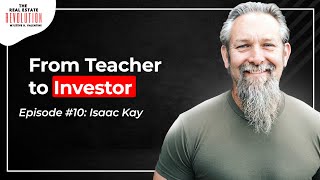
Isaac, a high school math teacher from Ohio, talks about leaving teaching for real estate. Steve D Valentine advises getting licensed for MLS access, building financial runway before quitting, and learning creative financing like seller financing and lot splits to solve seller problems and scale a rental portfolio.
Chapters
Coming up on this episode of the Real Estate Revolution.
Do you have any recommendations? When I'm looking for, you know, like the schools to become a real estate agent, to take the classes, are they all going to be pretty much the same or am I going to get a better education one place than another?
On this episode of Real Estate Revolution. Oh my gosh. We are talking to Isaac, who is a teacher. He wants out of teaching. After 14 years. He wants to go down the real estate rabbit hole. He owns one investment property. And I'm going to show you what it's like if you're ready to quit your job and what Runway you need and what real est estate really looks like and how you're gonna have an impact. Let's go. What's up, everybody? Welcome back to the Revolution podcast. Revolution Real estate podcast. I screwed that up. Just like I'm gonna try not to screw up my guest last name. So this is Isaac Cakes. I'm not even gonna try to pronounce his last name. He is a high school math teacher in Ohio. Correct?
Yep.
All right, so he's got some great questions. They're starting down this venture. They own one rental property currently and he had some great questions on my Instagram. So I invite him on the podcast so we can cut this up and really help add some value to those of you that probably have the same questions. Isaac, thank you. Second time we've done a call. We didn't really record the first one, but I'm super excited to have this conversation. So thanks for agreeing to do this and the audience thanks you too.
Yeah, I appreciate you having me and thank you also for, for all you've provided me so far. So if you're ready, I'll go ahead.
Let's do fire the first one.
Alright, so I am currently considering a career in real estate, leaving my teaching position. And my question was, where would you start? I don't know that I necessarily want to go like the agent route. I thought about, like the brokerage route. I've thought about title agency. What would you recommend?
All right, so you want to leave your current job, which I hear this from a lot of people. I want to go into real estate. Where do I start? So let's just kind of go down the path. What is the reason you want to get into real estate? Like, what's the ideal situation? Like, what is the plan?
So I would say there's two goals for me. Number one, I want to learn more about how people structure deals. And number two, I want, I recognize the Importance of having that solid network. And I want to build my network more quickly than I could do on my.
So two pieces to that. You want to learn how people are structuring deals, right? So let's just kind of break this down for the audience. Like, what is a deal? And this is always, like, everybody has the question, like, hey, send me your deals. What does it look like? Well, guess what? A deal is different for everybody, right? So structuring a real estate transaction depends on is completely different than the way most real estate agents look at things. Because we're in the investment world, we're in the traditional real estate world. And I like to morph those two things and go, how do I solve the person's biggest problem? That's going to make the most sense for all of us. And by the way, those of you that are thinking about wholesaling and doing some of this stuff, you're missing the opportunity by not having a real estate license. So first I'm going to tell you, Isaac, it's like, hey, if you want to go down the real estate rabbit hole, a real estate license is a great place to start. The reason I say that is because it gives you access to information. It gives you access to the mls. It gives you the access to properties, right? Which means I can go look at vacant properties and I can start to practice my investment routine, right? So you don't have to be an agent. But here's what I'm going to encourage you. You want to understand the process of real estate, how the transaction flows, what the biggest problems are, what the biggest hurdles are. Because if you understand those, you then got to start seeing, where do I get to add value to people in solving whatever the problem is. Now, you might not want to be the traditional agent, but here is the thing that I would recommend. If you're a traditional agent and you're putting advertising out there, what do you get more of? Yeah, more calls, right? So if you have more calls, you have more lead flow. Now, you don't want to be the traditional agent. Like, well, I really don't want to do listings, and maybe I don't want to work with buyers. But guess what this does. It gives you experience, right? That might not be the end game, but we want to get some experience from working with people to understand, like, oh, God, the house didn't sell. Or here was the repair issues, or here, like, so you start to see some of those things, right? And my advice with somebody new would be, hey, do you have some income? Runway, Right? So if you quit your job tomorrow and it took you 18 months to get your first paycheck, is your family going to be okay?
18 months will be close.
Okay, here's the cool thing. You got 18 months, which means, hey, I need to know kind of what our budget is and what do I need to do to start, like, you know, getting rid of that Runway and start adding stuff to it. Because if you have that Runway number one, you still have a job right now, right? We're not talking about quitting tomorrow. Correct. Well, if you didn't know, I've released my first book and published it is available on Amazon, Limitless Real Estate Strategies. I wrote this for anybody in the real estate business. I don't care if you're a real estate agent, lender, wholesaler, investor. This will help you change and break some myths that you think are out there. It will also change your life, change your legacy, and ultimately help you build wealth while creating win win strategies. So pick it up on Amazon today. You know, maybe the end of school year is coming up. I believe, if I'm not mistaken, teachers still collect some pay during the summer. Yep. So while you. Is that correct?
Yeah.
Okay, so you're collecting. Okay, so you're collecting some pay until summer. What do you do with your summer months? What if we made a plan, said Isaac. Here's the plan. We talked about 18 months of Runway, and if we started that in September, maybe it starts in October. But during the summer, while you're being paid, you're also doing your real estate school. Okay. You're working towards getting that real estate license while you're still collecting a paycheck, which means we still haven't eaten into that Runway. Okay, now we have that piece out of the way. Now what are we going to do for a brokerage? Well, my best advice for somebody like you is like, hey, let's go find a team that is going to mentor and train you. And by the way, if you start any conversation with a team in real estate by, hey, what are your splits? You lose right off the bat. Because here's what a team or team leader is willing to do. They're willing to give you a lead in hopes that you're going to bring it to closing. And that is your investment in their training. Okay. They're actually putting money up front in order to train you. If you can go through that process, because they may start you in cold calling, they may start you in lead, follow up, they may want you out working with buyers. Now, the benefit behind that is you're starting to learn the business. You're starting to learn how hard the conversations are. This business is not easy. It really is. Not everybody thinks like, oh, realtors make all kinds of money and they don't do shit. Right. Isaac, when was the last time you used a real estate agent to buy a house?
About a year ago.
Don't worry, we won't say their names, so don't feel bad about it. My question is, how much advice do you think or how much impact do you think they had on the transaction for you? This can be good or bad. It doesn't matter either way. I'm just asking from a consumer standpoint.
Very little. I've had that conversation multiple times. Yeah, very little. In that transaction, I believe there was very little benefit of having that realtor.
Where did you meet that real estate agent?
We used him to buy our primary nine years ago.
Okay, so then you bought a second or so that was the only house you used for him?
Yeah, and then we recommended him to several friends. He's gotten his fair share of business from us.
Okay. You referred him for a reason, though. Why?
He's very personable, and I seems trustworthy.
Okay. So he did a good job for you. And I want to remind everybody, like, anybody that's not a real estate agent, what Isaac doesn't see is all the crap that goes on in the background that we deal with that we try to keep from the client. Now, obviously, Isaac got in house. That was great. But it seems to be easy. And so this is where a lot of people go to real estate. Like, I can do what that guy does. Right. But they built a rapport some way, shape or form. And you've referred him to multiple people. So he's done something, right? Either he's communicated well, he did a great job. But you didn't feel like, well, what did he really do in the transaction? And that's because it would be awkward for me as a real estate agent. Go, Isaac, every time I picked up the phone, solved the problem. Him did something. I said, hey, I just want to let you know I solved this for you. Don't worry about it. That'd be weird, right?
Yeah. Yep.
Right. So the goal behind a real estate agent is to make it as seamless as possible in order to keep the stress from you and your family. So, like, let's just kind of look at that. So obviously your agent, you know, was educated, he was good at what he does, and you trusted him enough to keep referring to people. Is that type business that you want?
Yeah, for sure. And I think when I, when we bought our primary, he was great. Like I absolutely, 100%, he definitely provided value when we brought our primary home, when we bought our rental. I don't know that he was well versed enough in the rental space to be able to provide additional value on top of just finding a house.
Okay, let's touch on that for a second. If you have bought a primary residence and you're starting to think about investing in real estate, the person that did a great job for you helping you with your primary, even though you have a great relationship with them, may not be the person you want to utilize when you start going down the investment road. There are two types of real estate agents. Actually, there's more than two types of real estate agents, but like, like, let's just cut this one up. The primary residential real estate agent lacks knowledge in investment. And the reason they lack knowledge and investment is because a, 90% of our business doesn't invest in real estate and B, it's not taught unless you go search for it. I was born into it and bred into it and it became a passion of mine because I want to help people like Isaac understand the value of what they're doing, how to move the chess pieces and what it's going to look like right now. What I will tell you is that if Isaac wants to get in the investment space, it doesn't mean that Isaac can't work with me on the strategy side and I can't help him find an agent that is going to do the legwork in Ohio. The strategy is the important part. Right. And we've had some conversations, haven't we, Isaac?
Yeah.
Hey, this is, this is what this looks like. This is how we do this. This is how it's going to operate. Okay. The real estate agents, you know, in this, in this case, he did a great job. But if he doesn't invest in real estate, he hasn't experienced the pain, he hasn't experienced the pleasure. He hasn't experienced all the things that go along with investing in real estate, which is the ins and outs. So how do you lead somebody down the road in an investment property if you haven't done it yourself, especially in your own city?
And can I also add one more thing?
Absolutely.
He even, he does own rental property. At least one, I think maybe two. But even still, I think there's a difference between almost backing your way into, oh yeah, I own a couple properties versus really trying to grow a portfolio. And I don't think he has an intention of growing a portfolio.
So I want to touch on that for a second, because if you're going to get in real estate, this is what the goal is. If you get into real estate, I'm going to, I'm going to take you, for example, Isaac, you're starting down the path. You own one property, but your goal to get into real estate is to invest in more real estate, understand the structure, be able to guide people through it. But you're also going to be your own client throughout the journey because there's a goal of growing more and doing more. With that said, this is where agents kind of fall off of, you know, Isaac, you said this guy sold you a house nine years ago. He owns two properties. If Isaac is my coaching client, I'm telling them, hey, if you get your real estate license, the goal is to buy one property a year, at least for the first five years. And we're not just buying properties to buy properties. We're really going to understand the market and how to do it, and then we're going to speed it up because in that five years, you're going to expedite the process of understanding how those deals. Deals work, how creative financing works, how am I solving problems, what does it look like, right? And then all of a sudden you're like, crap. I bought four houses this year because all of a sudden you really understand the mechanics of how a transaction works and you start to understand the seller's pain points. So let me give you a great example. So this week I closed on a property, okay? We talk about how people see things and how they don't. Now my lender sent me to this seller and they originally called her, said, hey, mom is sick. She's going into a home. We need to sell her house. She lived there 50 years. My lender grew up behind, like, in a trailer park. Like, I can't believe my lender grew up in this trailer park, which I get to have all kinds of fun stories as the seller told me about Kelly and all the different things. So listening to their pain point was that mom is in this home and there's a $3,000 a month shortage for mom's care. Mom owns the house free and clear. I didn't focus on the property or the house. I was focusing on mom's solution, which was how do we create income for mom to extend the care, to not put a burden on the family. So what ends up happening? Well, the story ends with this. After several emails, we can put at the. On the Market for X amount, you get X amount of dollars. Great. You have cash in the bank. And now that's going to deplete every month. What if I can help you grow that money at least for 12 months to cover mom's care and then we can figure out what to do next. They liked that idea. So I bought the house for 210,000. It's worth about maybe 280, 290 fixed up now. Could I flip that? Yes. It doesn't solve the seller's problem, but I could do it. But what I can do is keep it as a rental. I have seller financing at 6%. I'm paying them a little bit bigger principal reduction on it. But here's what happens. This is the what nobody sees. I bought it on seller financing. I'm going to rent it. While I'm renting it, this lot can be split. I can sell the manufactured home that's currently on it and I can split the lot and put two more manufactured homes on it and double my rental property. And at the end of the day, the standard real estate agent would have made $7,500 because the seller wanted to sell. I will increase my net worth by $160,000 when this is all said and done because I want to see what the future brings and what is possible because I've experienced things. So remember when I said, how do we speed you up once you start to understand the dynamics, sometimes the building process. I just dropped my first manufactured home on a lot this week and I'm like, wait, I can buy a 1400 square foot house that's brand new with a warranty and have it drop shipped and installed with a lot for 200 grand? It's a pretty good rental property, right? I don't care what it looks like. I mean, it's really nice to be honest with you. I mean, it's sweet. So I'm like, okay, this is what's next. So as you start to experience one deal, two deals, you start to look at not what things are, but what they can be. That's why it's important to go through the traditional side of the business, because it leads to all things. So, you know, Isaac, if you're going to go through this, you want to be a real estate agent and you want to be an investor. I want you to be a real estate strategist. I want you to be able to do and train you. What I do and what I do is I solve problems for people. And the bigger the problem I solve, the more Income is generated or the more wealth is generated and the more problems are solved for people. And guess what? The sellers are coming in tomorrow on that house, and we're going to have champagne in the conference room. And nobody cares that I'm going to make money because it's been talked about. They're happy that I solved the problem. Mom's happy, everybody's happy. There's no shady crap going on. Does that sound like the business you want to run?
Yeah, absolutely. I want to be a problem.
Sound like fun? Yep. So I hope I answer the question like on the starting process is this is where we want to go because we want to learn the business from somebody. That's good. So my first two years in the business, I got very little money, but I learned from a genius in the business, which was my dad. My dad was creative. I was willing to sit at his desk every day and listen to him. I was willing to go on appointments. I was willing to do open houses. I was willing to talk to people because I needed to learn. And if you're thinking about real estate as an option, you've got to give yourself some Runway to be able to go, you know what? I will do anything you need me to do. If you want me to go sit and open a house seven days a week, I'll do it. You got to be willing to put in the work. If you truly want to be successful. Then you start looking at, okay, I've got a real estate license. Well, Isaac, you're a teacher. What's your sphere look like at the school? It's pretty good. You look like a likable guy. Right?
Looks can be deceiving sometimes.
Nah. But here's the deal. If you went back to all your teachers, like, I love my teaching job, but here's the deal. I'm learning how to build wealth through real estate. And I want to help you do the same thing because you're a teacher, and I know that teachers don't get paid enough money, and I want to help you in this path. So I'm going to teach you how to invest in real estate, how to keep your primary move into your secondary. Right. What kind of value does that add to your sphere? And the teacher position versus, hey, I'm Isaac. I got my real estate license. Do you want to buy or sell a house?
Right. Makes it much more specific.
And yeah, you now find your niche. Make sense. That was a long winded answer to your question, but it was great.
It was a good answer. And I, I think that after I initially asked you this, whatever it was, a week ago. That is kind of where my brain has gone is I need to. I need to see the entire side of what a transactions look like. And I think the going the agent route is the best way to do that. Do you have any recommendations? When I'm looking for, you know, like, the schools to become a real estate agent, to take the classes, are they all going to be pretty much the same, or am I going to get a better education one place than another?
Well, I'm going to. I'm going to try to contain myself here so I don't piss my audience off for a second. Right. Isaac, if I asked you which high school is better to go to for an education, are you gonna say, well, they're all pretty much the same and it's not gonna really matter anyway?
No, mine's by far the best.
Okay, here's the deal. You're gonna get the same knowledge. The instructors that teach you may help you learn better. Some people learn better online because they're okay with it. They're test takers. Some people want to do it in person. It depends on the person that you are. So if you're gonna go to real estate school, I'd go back to mine and go, dude, what's the best real estate school to go to? Here's the deal. It's. And I don't know what it is in Ohio, but In Phoenix, it's 90 hours of school. When you get done with that, 90 hours of school, you don't know anything about real estate. The only thing I remember is how many square feet are in an acre, which is 43,560. The rest of it, I couldn't tell you what was taught because it doesn't make any difference because you start to learn through experience, because then you have to go through contract law and some of the other things. And depending on which state you're in, you act as a real estate agent, attorney, all the things in one Ohio is not an attorney state, is it?
I don't know that you guys don't.
Need attorneys for closing. Like, did you go to an attorney's office or have an attorney for your closing there? Then you're probably not an attorney state.
Nope.
New York is phenomenal to do a deal in. I'm just kidding. I bought one house in New York and never again because it was such a train wreck. The real estate agents are balling up there, though, because they show a house, they sell it, and the attorney does the rest of it. But where I bought a house, it took 12 weeks to do title work, which was really weird in this market. The county that we bought, my wife's parents, they still use microfiche. They still use old school microfiche to do title work, and it took 12 weeks to do it. In Arizona, we can close on a house in 48 hours, no matter where it is, if we really need to. So, yeah, real estate school, not super important. Getting through the test and understanding. If you're a test taker and you can memorize knowledge, it doesn't matter what school you go to. If you're really wanting to soak it up, because that's the way you take tests, then you want to find somebody where it's going to be engaging in the instructors, and you're kind of going to enjoy the education. Me, I was like, get me out of here as fast as possible. Which was probably the same as high school. It was the same as when I went to trade school for mechanics. I don't want to read a book. Put a wrench in my hand and let's go to town. Like, show me how to do it and I'll get it. But book testing is not me. And I'm a scenario guy. Just kind of like we're having this conversation. Give me a scenario and I'll paint the picture. Yep, makes sense.
Yeah, for sure. Question number two. Ready?
Yep.
All right. So I've heard. I feel like so many conflicting viewpoints on holding properties in an llc. Everything from, you know, you need to from the start. You don't ever need to. Yeah, you need to, but only after a couple properties. What's the deal? What do you think?
Okay. Do you know why people suggest putting things in different LLCs?
I believe it is so that they can't come after one house because of something that happened at a different.
If you own 10 properties that don't have pools, that are rental properties, and you have landlord policy and you have an umbrella insurance policy, what do you.
Think your liabilities are going to be higher on? All of them, probably because of the one pool.
Well, if you don't have any pools, no pools.
Oh, it's lower. Your insurance is going to be lower.
Well, I mean, your, your liability is going to be lower. And so here's, here's the thing. I think you should also always consult an attorney. So just FYI, I'm not an attorney, I'm not a cpa, any of those things. Right. I'm just an average real estate agent that's figured out Some things. So here's the deal. We went through this. People are like, oh, you need to do one rental property per LLC. Do you know what actually comes with one LLC and one property? Well, when you own 80 properties like I do, you would have to have 80 checking accounts, you'd have to have 80 EINs, you'd have to have 80 tax filings. And by the way, if you want to protect all those, there is no money that can cross lines with any one of those because it pierces the corporate veil. Okay, so you didn't protect anything. Now here's what I will say. We started looking at things from cleaning up our taxes and how we wanted to build our businesses. And what I mean by that is that we started to take our entities and we started to separate them out. Hey, we're going to put these 10 properties in one LLC. We have a commercial insurance policy that has an umbrella policy for additional liability coverage. Right? None of them have pools. They are just straight up long term rentals. Okay? Now if something freaky happens at one of those houses, we have insurance that will most likely protect us. If I'm a negligent landlord, nothing is going to protect you. If somebody complained about an electrical issue that nobody fixed in the house burned down and somebody dies, you have a problem, either you or the management company that was supposed to be managing it. Okay? Now if I have those 10 properties and then I have a separate property that's a VRBO and it has a pool, it's rented out to different people, parties, different things. I want to keep that separate from everything. The reason being you're going to have different liabilities on a VRBO with a pool because of all the different people that are renting it. So I don't want that mixed in because of liability purpose. So I'm going to set that one aside and it might have its own LLC. If I'm going to do multiple VRBOs, again because you have different guests, different leases, different things, you may want to group those together, you may want to separate those out again. Talk to an attorney, talk to your insurance person. Like, what's the worst case scenario? If somebody trips and falls at this VRBO because they're hammered and they're dancing on the island, where's my liability? I only say that because I'm pretty sure I've had friends that have done that, or maybe I've done it myself anyway, so I'm not a huge fan of going full bore and going. I need to have a gazillion LLCs it really. Because here's the other piece. If I have. Depending on your goal, we have 80 properties. So we have 10 per LLC. Okay? Now the reason we did that is because those 10 properties support each other. Some cash flow, some don't. Some have bigger expenses than others. So they feed off each other, right? So they're constantly supporting each other. So that is a little business. I can create a separate P and L profit and loss statement for those 10 properties. And I can tell you what's producing, what's not. But I can also tell you the bottom line on those 10 properties. Is it producing? If I decide 10 years from now to take a portion of my portfolio and sell this as a business, I can sell the llc, I can sell the assets inside it and I can 1031 exchange it in something else. So I want to take the whole thing and go, here you go. Here's the profit and loss. Here's how it works. This is what it looks like. This is how it operates. That's why we separated it out. And here's the other piece that we did. This. We also took all of those LLCs. This is for a little bit more advanced on this, is that all those LLCs or sub S corporations. And we did that because each LLC gives us a K1. So it's basically the profit and loss for that business. I now do not have my lenders asking me for 95 bank statements, 95 leases, all the things that go on in it because all it is is a business that they see on my tax returns. Now I'm free and clear, providing all this bullshit that they ask us every time. And by the way, if you ask my cfo, the last time we did a refinance and somebody asked for 80 bank statements across the board because they're all on our schedule C in the taxes. And we wanted to separate that out and start getting it separated. So that's how we did it. We did it with our cpa like, hey, we want to do this. This is why. So we got advice on it and legal structure on it. So it really depends on where you're at and where you want to go. Did I answer all the questions?
Yes, but one follow up. I guess so. So we do have money flowing in and out, right? Our rental property right now is not a standalone business. There are times where we do have to put some cash in or we might take some cash out. So as soon as we start moving funds, the LLC is. The liability is pierced right away. Right?
It's different when you are going LLC to LLC versus right now, what you have is you have an LLC and you're doing owner contribution and you're doing owner draws. And the business has the right to do that. But when this LLC over here is trying to protect itself, it can't go and throw money over here. You can't transfer between bank accounts because some attorney is going to go through and go, oh, well, there's no corporate veil. They did this to protect themselves. But they were transferring money in between. When you're the owner and you're putting money in, it's a business operation function. And so you are doing owner contribution and owner draws. You're still the owner of the llc. And if you have that structured is probably a one or two member LLC with your wife, guess what, it flows back to you anyway. So let's go one step further. How do we protect on those things? Well, there's a couple of different ways. One, you need to talk to your insurance agent. My guess is the two properties you own are probably insured by the same company. Correct? Okay, so if you look at a Allstate State Farm, any of the big companies, you're going to go through and get an umbrella policy. Now, an umbrella policy is for the oh, shit moments. So when you have a landlord policy, you have policy limits. Somebody gets hurt, whatever. Let's say you have $300,000 worth of liability. Somebody falls in the pool, cracks their head open, they have to have stitches, it's your fault because you didn't fix the gate. Let's say it goes further than that. Somebody ends up with brain damage. And I hate going down these roads because it happens. And knock on wood, I never want to see it happen. But this is part of landlording now. They're like, you have this one property, they'll see they've maximized the policy limits. What's next? Well, if you have an umbrella policy, then that is going to be an additional insurance that is going to cover from any additional liabilities. It's also great with your cars, right? I mean, I've got teenage kids, so our insurance is like maxed out wherever it can be. Because I have teenage boys and they all drive like their wife, like my wife and I. Right. So protecting our assets was important. And you can put a lot of insurance in place to protect your assets. FYI, another disclaimer, go talk to your insurance. You know, make sure that you talk through these conversations in these situations so they can help you set it up. I have done this with my insurance agent with My cpa. I know just enough to give you the minor concepts of it. I don't know enough to guide everybody's situation because everybody has different variables in what they're doing. So you need to, like, pull everybody together. This is the piece of advice you want. You've got to have a team as you start investing. You have a cpa, you have an insurance agent. You probably have. You should have a property management. Right. And so. And you might have an attorney involved as well, where you're like, hey, guys, I'm doing this. Somebody poke holes in this. That is what you want as you start investing, is building that little bit of a financial team so that as you grow, they are also there annually to help you look through things and go, hey, we need to increase the insurance over here. We need to increase your umbrella policy. That's really important as you start to do the investing side of things.
Yeah, no, and that's advice I've heard before, and especially having them in the same room where they kind of know each other and can bounce ideas off of each other and hear what each other's saying and the importance of that. So, yeah, that makes a lot of sense to me. The last one's more of a fun one because I know how busy you are, and I know all the things that you've got going on. So what is the rationale or reason that you take time out of your busy schedule to talk to. To people like me just getting started?
Well, there was a time that I wish somebody would have taken the time I was fortunate enough to have my dad. And my dad really led me through a lot of great things. But I also believe that my dad could have done things a little bit differently. So I was trained both in the good and the bad. And so I always look back and I'm like, well, where did Isaac and I connect? Right. And I'm still trying to think about where did we connect was through a podcast or so.
Yeah. I think my wife went to Keisha's event in Phoenix and show she was listening to Cena's podcast, and I think she connected Cena through you.
Yep. So Keisha and Cena are very good friends of mine. In fact, Keisha is MCing my book launch event in June, and I coached them through a crazy time. When Cena lost his dad, there was a bunch of weird real estate involved in it, and they weren't really sure what to do. And so I coached them for six months, and then I sold them an investment property, and now they are like, Lighting the world on fire. So I always look at those pieces and go, hey, you know what? Isaac's here. He needs some guidance. And I want to have a greater impact because I believe that if I can do this more and more, and here's the deal. You agreed to come on here, and if you're impacted, is there one other person that's impacted that I may never know about because of one thing they heard? And it took me 30 minutes to have the conversation. Because a lot of the questions you asked today are things that hundreds of other people ask themselves all the time. And where do they get the guidance without some sort of like, oh, well, you should join my brokerage or you should join my team. Like, where do they get that true guidance? That there's nothing else there. Right. There's no other benefit other than giving guidance. So I like to give my time back because I have been successful. I enjoy my success. And I know that you're a young guy, you're a teacher. There's things that you want to do, and I believe that you reached out and you connected. And when somebody's willing to do that, even multiple times, because I think I canceled on you last time because I was busy. Right? And here we are again. I want to continue to have that impact. Now, as I get busier, am I going to have time for everybody? Probably not. But that's where you start building out. You know, where's my team? What does it look like? And here's all the information that I provide. So I'm grateful to do it. And I think that you've asked some really good questions. Right. We've had some great conversations, and I hope to help you with that Runway. And here's the other thing. One of my big goals and visions, Isaac, is that if you're willing to learn and listen and invest your time and energy. My big goal is because I'm with Real Brokerage, which is a national brokerage. If Isaac can be trained to be a real estate strategist, the way I do things, can we all work together and create better systems and solutions and solve more problems for people, no matter what part of the country they're in? And that's really the big goal, because, I mean, if you ask, you know, have you thought about it, Isaac, like, who would I go to in Ohio and say, I'm thinking about buying an investment property or selling an investment property? What are the best things that I can do and what should I know? Who would you go to? Right. Somebody you know, somebody you know but are they going to give you the actual advice and are they in the trenches and are you going to ask the right questions?
Right.
You know, I had a conversation today. This will give you an idea. I was referred to a client today, and I'm on the back end of their strategy. And I honestly am having a moral dilemma with how to handle this particular referral because the agent that referred me has two of her properties for sale right now, which she should not be selling. She wants to 1031 exchange and buy something up in Northern Arizona as a vrbo. And there's a way to keep these two properties, pull cash out, bring them to market rent and pay cash for the next one and still cash flow and cover everything. But if I tell her now that she's referred to me, you shouldn't be selling your homes. And here's why I have a moral dilemma right now. So I've reached out to the other agent, said, hey, I've got issues with where she's at, and you're not going to like it because technically I'm going to kill some of your income. And I'm not sure exactly how to do that, but this is exactly what happens. Somebody will call an agent and go, you know what? I've owned these two rental properties for 10 years. I'm ready to sell them, and I want to go buy a cabin up north. Great, let's get those houses on the market. Let me refer you somebody over here. Nobody's asked the question of the goal and the other thing. And when I was on the phone with this client, her goal in these properties and the money is to leave a legacy for her daughter. And there's a different way to do it. If you understand the tax benefits, if you understand how the 1031 exchange works, and if you understand how to pull cash out of things and refinance things. So I had a real dilemma today with how to do that because I'm on the back end of the strategy, and I don't know that I can fix the front end. And by the way, she's selling two houses. And when you sell two houses in order to 1031 exchange, you're going to have a tax problem. And if she doesn't close either one of these at the same time and 1031 exchange them, she could have a 40 to $50,000 tax liability per property. If she doesn't, 1031 it. Most agents are not versed in these things. And that's okay. I'm just saying, like, if it's out of your wheelhouse, then we need to have a strategy session and we need to talk to your client, and I will work a deal with you to guide the client into what they want to do. It's not always going to make as much money as you think it will, but that is one of the pieces that I've known is like, hey, look, I've talked more people out of selling homes than I've talked into selling them because it's more beneficial once you walk it out. So, you know, Isaac, I just listen to the things you're talking about and I think about, like, your industry and the teachers. Like, how amazing would it be for you to get your real estate license, understand the investing side, and show your industry that you were in. This is why I got into this business, because I've seen too many teachers retire with not enough, and this is how I'm going to help them get there. Do you think as a teacher, it like, how old are you, Isaac? I'm going to throw you under the bus here for a second.
I'm 36.
When did you start teaching?
When I was 24.
So got 13 years ago. 14 years ago.
Yeah. This is my 14th year of teaching.
Okay, 14th year. If you went back to you 14 years ago and said, isaac, I used to be a teacher and I want to make sure that you're set up because I know that you're not going to have enough retirement to live on. Unless you want to live on freaking Cheerios and rotten milk, this is what we're going to do. If somebody had helped you and given you a plan 14 years ago, every couple of years, I'm going to help you buy another house, it's going to be small. You're going to live uncomfortable. But when you retire after being a teacher for 30 years and you have three or four homes producing five or six thousand dollars a month of income, plus your retirement and your pension, what does that sound like?
It would be a different life.
How would your life be right now?
I might still be a teacher, but.
This is my point. There are things that, you know, every time a teacher calls and like, I want to sell my house, you're like, you know what? I don't think that's a good idea. I think we need to restructure your thought process. Can you make a sacrifice to go from point A to point B? Right. So I want to give you some of that. As you're thinking about this path is like, would you be excited about your colleagues or, you know, a young teacher that's 23. That's just starting going, you know what? How do I change this kid's life? It's one house at a time. It's one investment at a time. It's giving them a plan and a roadmap. Because I believe that teachers honestly love what they do. But in time, there's not enough money in it to retire, to do the things to travel. And I think that's why a lot of teachers get out of it. I could be wrong, you know, I mean, correct me if I'm wrong, Isaac, but you're in the industry.
I can only speak for myself, but you're. Yeah, you're reading my mind for sure. But I know a lot of teachers that, you know, they get to that point where they, you know, they have 10, five years left and they're like, oh, they're starting to count down. Only eight years left. And I'm like, I never want to be in that boat where I'm counting down the next day. Eight years, that's too long to be in the spot where, like, I'm stuck. I don't want to ever be stuck.
Yeah, yeah. I mean, it's. That goes into a lot of businesses where you get stuck. But I think that if we looked at the path of I don't just want to get into real estate to do the shiny object thing. Like, I want to buy and sell houses and I want to look at things and I want to help people and I want to make six figures a year. Like, if I told you how many times I've had agents come to my office and that is their deal, you're going in a different approach, which is, if I get out of my industry and I create a passion and a purpose for not only what I'm doing, but how can I go back into this and help the industry that I got out of change their life one house at a time. Now let me go one step further this. You're an investor. You know, there's off market deals. And Suzy, the math teacher that took over your position, she owns one house, and you've had a conversation with her, and now all of a sudden she's like, yes, I want to do this. And you're like, okay, I found an off market deal. Here's what we're going to do. This is, you know, we're going to keep your house. Like, you start being Rain man, which is where people lose me, usually after the first or second sentence. And like, if you got a plan for it, then let's Just do it. I'm like, I do, and I can solve for it. It's going to be painful, but it's going to be for the future better. And so it's just. That's where I kind of like, am in guiding you when this comes down to it. It's like, if you want to get out of this. Yes. You want to make more money. The bigger the problem you solve, the more money and income you are going to generate by doing the right thing and creating a path for maybe other teachers, or maybe it's a program. Maybe it's something that is a pool of people that could absolutely use your help and your knowledge inside the investment thing, where you're like, hey, you know what? Once a month, I'm doing a teacher seminar, how to build wealth. While you're teaching kids, while doing what you love. How many of you own a house? Oh, Susie and Betty. Neither one of you guys own a house? Cool. You guys are going to buy a house together? That's where we're going to start, right? There's so many options for it. And it gets really fun once you start to understand the mechanics of the business, and then you start connecting the dots and realizing the impact that you're going to have on people.
Yeah, that excites me. I gotta be honest. Like that.
All right, don't quit your job tomorrow, though. Don't quit your job tomorrow, though. Let's just get back straight.
Make it to Friday.
Jeez, your wife's gonna kill me.
Well, she quit her job at the end of last year, so.
Well, then we'd be even.
So.
So at the end of this call, like, what are you feeling? Is that. Is that a pathway that you think is attainable? Are you ready to work your ass off and start another career? Because I know you've been doing this for 14 years. What does it feel like?
I'm definitely ready to try something new. I. I guess when I first started thinking about this, I recognized the ability to help people solve problems. And I'm specifically thinking, like, you know, the person who's behind on their mortgage, their credit's going to shit, and they need help. Like, they need out of this deal. They bought it. They bought a bad deal at the time, they weren't ready. They weren't making enough income to be able to help a person out of that deal. Let them start over and help them. You know, if you go subject to. And all of a sudden you're helping them increase their credit score at the same time, like. Like, that is A win, win, win for everybody. So I love the idea of helping people like that. But the idea that you, that you suggested of helping teachers learn to be real estate investors is exciting. I like that.
It's a path and it doesn't just have to be teachers, right? I mean it's, it's any, anything is possible. So, you know, the addition to that is when I told you some people don't want to go get their real estate license, they just want to invest. There's so many more people that can be helped and there's so many opportunities that are provided if you're going to get into this industry and be in it. You know, it's like, I went to dinner, I had a client that was a first time homebuyer take me to dinner last night. Young guy, just came out of the Marines, he's 25, he's a door knocker for a solar and alarm company. And when I was referred to him from my lender, he's like, hey. He's like, you know, I really like the investment strategy of things. I'm like, cool, because this is my wheelhouse. You're 25. If I said by the time you're 35, if you follow the plan and the roadmap, you could own seven to 10 rental properties, would you follow the plan if you knew you could own $4 million? They don't appreciate a penny, they cover their debt service. By the time you're 35 and by the time you're 55, you had $5 million with a real estate free and clear producing $10,000 a month, would you follow the plan? He's pretty freaking excited. Yeah, he's like, let's go. Because we just closed on his house two weeks ago. And he's like, hey, when do we get to start looking for the next one? I'm like, now, because we got to keep you in the mindset. I don't want you to get complacent. Most people are looking at it from, great, I sold him a house and I'm going to keep sending him postcards and happy birthday notes for the next five years in hopes that he comes back to me. Well, he's not coming back to me. He's already entrenched into it and he's getting emails every month of like, hey, hey, we're getting ready to fire this back up. Are you ready? And oh, by the way, because I'm an investor, if I run across a deal at month nine, I'm going to call you and go, dude, I Got your perfect rental property. I'm going to secure it. I'm going to hold on to it. We're going to fix it up. I'm going to sell it to you at month 12. Are you ready for that? Because I'm ready. This is where it becomes fun. This is where it becomes life changing. You're changing people's lives. You're helping them, like, really, like, live and breathe, like, just by living in a house. But we got to change their mindset around it. And that's kind of your goal and your job. And by the way, the more people you're helping, the more opportunities are going to be out there. And there's going to be some of those opportunities. You get to capture yourself for the work that you're putting in. And that's what's going to change your life and your family. Because your life and your family is not going to change through sole income of selling houses. It's going to change by being prepared for opportunities. They come up and capturing those opportunities one at a time and building that wealth through real estate. Estate so that, hey, now I'm 56 and we own 10 rental properties and five of them are free and clear. And this is what it looks like for my family. It's something that I wished my dad would have done, but he didn't. And so that is, you know, it goes all the way full circle. Back to your question, why? It's because I believe that my dad could have done things different, but he didn't know how. And it was living paycheck to paycheck or commission to commission. And I want to make sure that people understand the how and the why behind it. And not everybody's on board. Somebody will go listen to Dave Ramsey and go, nope. Dave Ramsey said. I'm like, yeah, well, cool. Ask Dave Ramsey how my freaking appreciation was during COVID owning 40 properties, right. That I didn't put 20% down on. So we can go back and forth all day long, you know, when. When it comes down to that. So, you know that that's what I enjoy and I appreciate this, you know, conversation. I think this conversation is going to help a lot of people just kind of like, okay, what's next? I'm on the fence about this. Well, hopefully this will give them a little bit of guidance. Good.
I hope so.
It will. 100%. Did I answer all your questions? Are you kind of excited about what's next?
I am pumped. Yeah. You give me a lot to think about for sure.
Okay, well, let's connect and figure out what the Runway is so that you know what the plan is and where we're going and what we're doing and how we're going to build a lot of wealth for teachers.
I'm in.
Cool.
All right.
All right, brother. Appreciate you.
All right.
I hope you enjoyed that episode of the Real Estate Revolution. I hope you'll join me in the revolution through stevedvalentine.com this is where the podcast the Limitless Circle, private mentoring, coaching, and all the real estate that we do. Plus there's a few exciting courses in there as well that might interest you. Looking forward to connecting you soon. And I hope that you will share and subscribe this podcast if it had value to you.
More from Steve

It’s Not What Your House Is Worth; It’s What It Can Do for You (Pause, Identify, Respond)









