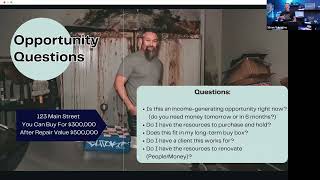
Steve D Valentine from Real Brokerage breaks down three ways to flip homes in 2024: full renovations, as-is sales, and wholesaling. He walks through a deal that bought for $300k with an after-repair value around $500k, plus checklists for buying and selling, risk checks like sewer scopes, and how to structure your business for taxes.
Chapters
And early on my career I was very heavy on the reaction side. And what leads to that is that when we look in here is going through and living in opportunity zone and talking about flips is there's places where we do need to pause and really take in to account what our business is doing, what our life is doing. And really diving in is like is this the right time? And the goal is that it's always the right time. The question is what do you do with the opportunity rather than not doing anything with it. So that's really one I want to jump in and share with you guys today. I'm Steve Ballantyne, I'm with Real Brokerage. I have been for almost three years now. It's coming in on my three year anniversary. I think I was agent like 2300 somewhere around in there. So it's been awesome to see our company grow. If you are from an outside brokerage, from our community, welcome. We love having you guys here. These calls are always open to other agents, other brokerages. So take what you can, learn from it, share it, try to impact somebody else with this if you can. That is my goal. The more people that I can impact and embrace and help them do what I've done and help them maybe not do some of the things that I have done is a really good place to be in. And so I've built a traditional business. We've done a lot of transactions in 25 years. We've done the investing, we've done the flipping and now I've got some goals with my agent community and my client community and that's where we're going with this. So let's jump into all the regrets that I have during my thousand homes that we have flipped. All right, when should you pull the flipping lever and why? If you're not familiar with this in real estate, which is why I absolutely love this business. When I got into the business I was in the automotive industry. There was only so much growth that you could do inside that business. You worked for somebody, you owned a shop or you did side jobs, like that was where your income was or you became a very, very unique specialist. My favorite thing to build when I was a kid was very large obnoxious trucks. We still own a few of them. But that was my passion when I was a kid. I what I realized there was no way to grow here. And I think a lot of us get into the real estate business with just a one track mind of I want to work with buyers and sellers and some of Us are not looking for the other opportunities that actually exist to pull different levers when they come about. And so, you know, real is one of those levers that I pulled. When it was the opportunity was presented. I did all the investment things that I could do with buying more stock with my commission and doing the different things and working towards the stock awards and the production because it was a way for me to give back and it was a way for me to pull that lever. Just like there's a way to pull a flipping lever where we start in the business and we're doing buyers and sellers and we've pulled that lever and it's great. And now maybe we're ready to add a little something to it. And that's what we're going to do today is we're going to talk about when we're going to add this lever and when is it prime and to know what to do with it. Because opportunities are everywhere and you can be paid for connecting the dots. You can be building long term wealth. There's so many different ways to do it. And that's what I'm excited to, to talk to you guys about. All right, before we buy our first investment, we need to determine a couple of things. One is the strategies in which can be applied to each property. We live in this world where the word flip means so many different things, but it really only means one thing to most people. And so it is not the only strategy. So we have to determine we're going to get into those strategies here shortly. The pros and cons of each strategy. The pros and cons are sometimes risk versus reward is the juice, worth the squeeze. And we kind of go through and so many people that I see wanting to get into this, their eyes wide open. I'm going to make a ton of money. And the only opportunity they see is that hey, maybe I can make 20, 30, $100,000 or what some of these guys have sold on TV. We're making all this money and it's not the reality. The numbers are not really there. But flipping a house and doing renovations isn't the only way to create money. When you live in the opportunity zone, it's knowing the strategies that apply where you're at in life. What I see a lot of people doing, and I did it this way myself, is our goal when we're buying homes to flip is to not buy a job that we don't get paid to work at. And what happens is, is we find a great opportunity, we buy the house we try to save money and we're scraping popcorn ceilings, we're painting on the weekends when we should be out looking for the next opportunity. So this is where we're talking about these different things of how do we know when to pull the trigger and what work we should be doing or not be doing. All right, let's talk about this. Let's redefine the word flip. Okay? Flip in the industry standard is anything that you would buy, renovate, resell for a profit. Pretty clear, right? And I'm going to tell you, we're going to redefine the word flip and start living in what we call the opportunity zone. Okay? Number one, when you live in the opportunity zone, after you've experienced your traditional business, you now get to start looking at opportunities because you know the basis of the business. So now I want to open your eyes up to what it looks like to live in the opportunity zone because some people are challenged by how do I make a decision of going this way or this way. Do I want to be 100% investment? Do I want to just do retail? I don't want to mess with the investment. And I can tell you this, there's going to be a time when you're in the traditional space and you all of a sudden start to lean into the investment side. And I'll tell you exactly when that happened with my dad and I, I wanted nothing to do with the investment side. When he was buying homes at the trustee sale and the market was in the tank. And in some points, I regret not being involved in that at that point, but I was on the other side of doing the REO business and I was crushing it. I was working my ass off. But if I put that same amount of energy that I put into Fannie and Freddie during that time and what they paid me into, what my dad was doing, I would have been 100% better off. I don't regret it. It was great experience. What I'm saying is that sometimes there's opportunities that we need to look at and we need to figure out when to start exercising those paths and starting to look at those. And there's opportunities everywhere. It's just how we see them. It's first when you're. When you're assessing the opportunity it's going through and being a problem, problem solver, right? We're trying to see what the solution is and where we can be or the problem is and where we can see the solution. So it's, number one, solve somebody's immediate needs. So what does that mean. Well, if somebody's immediate need on the opportunity zone is I need to get out of this house, I have 29 cats and I don't know where I'm going, I need three months to figure this out. Is there a number that works for everybody? Right. Because that's their immediate need. They have all these things. They don't want to relocate their cats, they don't want to have people come through their house. They're embarrassed. Can you solve that problem or are you just looking at from the traditional space of, well, the only way to do this is if you fix this up, put it on the market, then we're going to have all these problems with the traditional buyer so we can see the opportunity where we can really help somebody and point them in the right direction. Creates long term wealth. What if that same person in that situation is a house that potentially fits your buy box? Right. So now the buy box is there and you're like, this fits. I'm drooling. I'm going to not take any money on this or maybe a little bit and I'm going to keep this as a long term rental. Right. Short term income. This is where we get into listings or wholesales or any of those things where we're able to make a short, quick bump in income for owning the property or connecting the dots. Or it might be creating instant passive income. When you get really deep into the creativity financing in the real estate space, which is a crazy space to live in because there's no rules and it's how you create win win with buyer and seller and it's, it's a lot of fun to be able to solve the problem that way where it creates it. So again, it's an opportunity down the road. First flip, before I started flipping homes, you know, when I started we purchased an unsold listing from a client. Everybody's always like, where do you get the deals where you get things? Most stuff comes from living in the opportunity zone and helping our clients solve problems rather than living in the zone of I'm just a traditional agent and I can just buy or sell your house or represent you in that standpoint. We want to be prepared when these opportunities come up to help. So we had a client, the house wouldn't sell. I'm like, oh well, I'll buy it from you. And we did the creative financing. At the time, I didn't know anything about wraps, which I could have taken over as mortgage without a problem. Back then I didn't know anything about it. That cost us more money. We did all the work ourselves. There was, there was a hundred hours of labor. We sold it six months later, made 3,800 bucks. It sucked. I don't regret any of it. And I wouldn't change any of it because I realized the power of getting somebody in and getting it done. I realized the power of the creativity and never would have seen that had I not done it that way at first. But I'm hoping that you see some of the things and realize, like, hey, I can speed this up if I follow what Steve is doing, going, hey, I don't want to be in this process right now. So how do I make this better? Okay, this house was awesome. Let me give you a little background on this, which is really awesome in the connection piece. So you see this house and it was kind of abandoned. There was a massive water leak from upstairs to downstairs and. And we walked out and there was a tenant in it. They literally walked away from the house six months ago, let the water drip, it rusted a cabinet complete. There was a stolen car in the garage. It was a mess. So anyway, when you look at these, it was a no brainer. Which on this, you know, 1, 2, 3 Main street wasn't the address. You know, we bought it for 300 grand. The after repair value was about five. And we just went through these steps and figured out what to do with it. And the step that we landed on was, hey, there's enough profit in this to renovate it, make it great and put it back on the market. It also makes a great rental. Well, we actually bought it, renovated it, and then sold it to an investor. And it sits in their portfolio now, creating cash flow. So because we've learned how to connect the dots and bring it all the way around, everybody's winning in that nature. And why does everybody win? Well, the investor didn't have to buy something below market and put his cash into it. He got to finance all the repairs into it. And it was all pretty much done in house with no fuss. So this is how we capitalize on those opportunities. Because I sold it to my own buyer, you know, we increased our profitability by about $15,000 on that property. And it was because we live in that ecosystem. So as you get into this, you start seeing and living in these ecosystems in the investor space and that mindset, and it changes the way you look at everything. But we have to know when to turn it on. All right, there's three ways to navigate these opportunities. And this is where we're talking about, should I pull the lever? Should I not pull the lever? And here's what I really want you to think about these things. When you're thinking about pulling the lever, is it possible that you are gambling and you are risking it all and is it going to stress you out? I've done this. It's not great. We've done it with some pretty big properties. It's not a fun place to live in. So I'm trying to save you this headache of hey, let's break these down and figure out where I'm at in my life and business and what makes the most sense. So let's break this down. Okay, Three ways to navigate this. It doesn't meet your long term buy box, right? So if you look at a house, you're like, hey, it's a two story house, it's got four AC units on it. It's a good deal. This does not fit what I would keep as a rental. So that's out. Yes, right now, money. But I can't buy it. Okay, what do you do with this? So here's a scenario I recently oh, this is like a lot of my houses, right. I'm working on a deal right now with an agent. She calls, she says, hey, I can't do this flip. My clients need somebody to do this in time, which she needs to close on the property and they need six months to build a new house and then move into it. So we walked through it. She doesn't want to do the flip, but she does want to create right now income and she wants to solve their problem. So I'm going to buy the house. She just created $10,000 in a referral fee because I'm buying the house. I just bought the house. It solved for clients needs because now they are sitting there for six months while they do their new build. She's helping her with that. I've sat down at the kitchen table with the sellers and the other agent, which is interesting in these times and we worked all this out to where I'm actually wrapping their mortgage. I'm going to own the property, we've secured their equity and I solved that problem. So what happens is the agent didn't know what to do with it, but she did know to say, hey, I'm going to call Steve because we've done this three or four times. We're going to walk through this deal and either I'm going to buy it or I'm going to help her solve it and we're both going to Win on it. And that's the goal. So if you're in a place where you're like, I don't know what to do with this. The coaching that I offer is proven based, which means if you call me, you're like, hey, I've got this deal I need to structure. It's a 25% referral fee on whatever the gross profit is, whether it becomes a listing or a purchase or whatever. That's how I can work with you in scenario based training and go, here's what it looks like. If we get it together, we both win. If we don't, neither one of us gets paid. But I'm going to do my best to help you through it. Or you get into the third option, which is, yes, I have the money to hold this short term, but not enough money to renovate. This is where you get into what's called wholesaling or lipstick on a pig. Which means you're going to buy a house and you're like, hey, I've got 90 to 120 days, Runway. It's got enough deal on it to come in and clean the house up, paint it, carpet it, and turn around and put it back on the market and make a smaller profit. If you can do that, it's not stressing you out and you're sure on your numbers do that, right? Because the worst case scenario, you know, you make a commission, you make 10 grand. But did you use the house as exposure for your real estate business? Because remember, listings control the market. So the more you're looking at these opportunities, it's not just the opportunity to capture that. What can you capture around it? Okay, this is like the list that I go through with every property and kind of determine what can I do. So these are the regress that I have over time in my team. Just different things. We were so busy and I didn't build out systems around when we bought a house and when we sold the house to increase marketing or opportunities. So with every property comes greater opportunity because you probably own it anywhere from three to six months. How are you capitalizing on that opportunity? So let's dive into this right acquisition workflow. If people don't know you can solve their problem or connect the dot, they are not going to bring it to you. The reputation I've built in Phoenix is that, hey, in my industry, I could be called by my agents to figure out how to solve the problem with them. If people don't know that you're that person, they're not going to reach out to you. So you're never going to know and you're always going to hear about the deal after somebody buys it because they didn't know you were looking for it. So make sure that you're loud and proud about that. How does that look on social media and in your clients? It's very simple. Stop saying you're an investor, stop saying you know an investor, and start talking about how you're solving people's problems. If you are sending a mass email out, that's a video to your clients just says, hey, I know we're talking about commissions and all these different things right now. I just want to let you know that if you know of anybody that's struggling, has a hoarder house, something of that nature, that I'm always looking for investment opportunities and I would love to work with you or help somebody solve their problem. If that's something I can do, please reach out to me and let me know. It's very simple. You just have to get comfortable with that. And the best deals in anything, if that's on your social media and you're talking to your clients, the best deals and the best income derivative from flipping homes is dealing direct with seller, right? Until you find some other sources where these might pop up in your lap. Direct to seller is always the thing. And if you're always living in that opportunity zone, you're going to see more and more of this, right? It's the, it's the old thing of, you know, you buy a red car or red Lexus and next thing you know there's a bunch of red Lexuses that you see. So it's going to happen as you start living in the zone, you start practicing. Document your journey. What I mean is, don't think about what you're doing with this documentation. Document the houses, document your before and after. Document you with a paintbrush. Just collect the data. You may build something on this later, you may build a promotion, it may be anything. Just make sure you're documenting it along the way. Even if you're not posting it, just keep track of it and keep track of your, your loves and regrets during the process too. Like I hate painting, I'm never going to paint again. Or we lost money on this. This is why, just keep track of all that stuff. When you own something, look at putting signs in the yard like we buy homes or we solve this person's problem without putting it in MLS or we saw, I mean a great thing right now, go put signs in yards of homes that you Bought and say we sold this with no commissions, since that seems to be the buzz right now. So what can you work on the buzz with that? Does it create opportunities? So just think about these little things where they create opportunities in the ecosystem that you're already living in. I like to do it from a standpoint of putting a property in right when we buy it into MLS in most cases. Some houses that we know we're just going to renovate because there's a good spread in it. We won't do it. I like to put in MLS for two reasons. One, MLS is syndicated and you might be putting something on below market, but you may put it at a price that you really don't want to sell it at. But if it does sell at that, you're going to be happy. And this is where the trigger is pulled. So I'll give you an example. We just did one in Mesa. We put it on the market for a week at 350. It probably needs 30, 40 grand worth of renovation. It doesn't have a big spread in it for a flip. So it could be a great rental property for somebody. It could be a great lease purchase for somebody that wants to do the project themselves and then buy it later. Do you see where we get creative on that? Let's go back to why I did it. We put an MLS because we got 19 offers. What did I get out of that? 19 offers? I got 19 agents and 19 of their buyer names that I can now put in a list and say, hey, you made an offer on this property. I wanted to make sure that you wanted to be on this list when I have other things. So now I'm building the list by collecting data from those offers. Now you can go one step further and go, hey, I'm going to do an investor open house this weekend. I'm going to price it at this, and I'm just going to meet investors where they are. They can make offers, they can do all the things, and you can see where things are operating in this. Maybe you capture a buyer or two. Maybe you capture another opportunity in the neighborhood. If we don't look at these opportunities and how we can capture more business out of them, there's so much profit left on the table by not being prepared for other opportunities. Knock on the doors, 25 closest houses when you start construction. So if you start tearing things apart, go knock on doors, say, hey, I just want to let you know we bought this house from Ethel and you know she's super happy. We're remodeling it right now. If there's anything you have questions on or need some bids on, go around, make that round, try to connect with the neighbors. Don't say you're selling it, just say you're remodeling it. Don't tell them you're a flipper. All those other things like just go and create relationships. Let them know you just bought the house. This is how we did it. If there's anything to do. Simple, easy conversations. You're not pushing your real estate, you're pushing your connections around the property. And I can tell you, for every property that we have ever purchased and remodeled in that six months, there has been one or two properties that were purchased off market. There have also been one to two new listings that have come on market during that time, which maybe if we had a system in place, I would have been able to capture some of that business along the way. So I'm telling you, as you see opportunities, start thinking about how would I capture more opportunity with this. Here's what'll happen if you figure out a way to capture the opportunities that come with owning a property as a flip. It is the cheapest lead gen source you will ever own. You can pay Zillow $3,000 a month or whatever the referral fees are now. I don't know because I don't do it. Or you can buy a property and spend $2,500 a month on a mortgage payment holding costs and hold it open every day and bring investors in, maybe do some renovation. How many leads do you produce by owning that house and having every right to advertise it and market it the way you want? It's pretty powerful. You only need one of those a year to go. This is going to bolster my my career because of the control I have over this house. So start thinking in those terms is how do I capture outside of just doing the flip and the profitability because it all pulls together. Then you start looking at opportunities and going, even if I break even on this Property, it is 100% worth it because the system I have in place that will create maybe $20,000 in commissions now and how many endless opportunities going forward with referrals and other things because if you're good at this system, you probably have a good client tracker and a good referral database that you're marketing to and you're dripping on. So you have to think long term opportunities every time you do this. What is the possibility with it? Too many of us stop here and we stop asking what's next, what's next, what's next? And the opportunities are limitless when it comes down to what you can do when you own a house. As far as creativity goes, tease your audience with progress. I got this great idea from one of my younger agents. She's like, hey, if you give sneak peeks weekly and lead up to a massive open house in the neighborhood and those types of things, she's like, you're bringing people along for the ride. So again, going in the document process, think about how you want to bring your audience along, which will help you capture more people along the way. Create an interest list as you're doing that, remembering, if you're on social media, well, you're doing this journey. Say, hey, shoot me. Come on my text list so I can tell you when it's ready. Or those types of things. Just be prepared. Like, how are you gaining people's information and building relationships by owning this property? And again, there's 101 ways to do it. Neighborhood only reveal. Why is this important? Well, you bring the neighbors together, they're looking at a renovation. They all own similar homes going, do I want to move or do I want to just buy this one? That's done. Can you make me a connection of, can you buy mine and I buy this one? That happens more than you think it can if you're exposing it. The other thing, too, is if you're really good with your vendors. You know, I'm certainly lucky because of the structure that we have, because my wife owns the construction company that now I'm placing clientele in front of her, which is another piece of our business that we get to grow. But maybe you have a great contractor that you love, and you also create an agreement with them on referral fees of bringing clients in. I don't think there's any issues with getting referral fees from contractors when you're going through it. I have a little bit different referral fee with my wife, so you'll have to work that one out on your own. What we're doing, though, is creating systems of how do we expose this process and what are we looking for? So if you do a really pretty remodel, your focus is going to be more on that retail side. You're trying to find either retail listings or problems you can solve. If you're doing the investor side, you're like, hey, I want to start building my investor list a little bit at a time. How do I vet these people so that when I do have another opportunity that I can't buy. You remember the version of no earlier? I don't have the money. Cool. You have a list and you go ping those investors like, hey, I got a deal. This is what it looks like. I need to close in a week, whatever that looks like. You start finding ways to connect the dots. That is how it's so important, through exposure to go. If I own one opportunity a year and I work that thing for six months, what can you do with it? What can you do with it? All right. Steps to take with every opportunity. This is my amazing, talented wife, believe it or not. She is the general contractor and I am the real estate agent. I'm responsible for the crazy. She's responsible for the pretty. I give her lots of really bad birthday Christmas gifts and terrible houses. I just have to walk through them once she gets to live in them. So before you purchase, start thinking about things. What are my exit strategies? If I purchase a home tomorrow, what are my exit strategies? Do I lease it? Lease option it? What are all my strategies? And start educating yourself a little bit on those exit strategies. Is the risk worth reward? As the market tightened up after Covid and the interest rates got different, we started looking at risk versus reward. So our numbers got much better, saying, we have to buy at this price in order to make it work in this market. And it's a take it or leave it. And you get to that point where you're really tight. Now in the market, when we were going through Covid because we saw it was happening, it was really easy to make quick decisions because we knew, like, there wasn't a downside. Now, eventually music stops on musical chairs and it did with us like it did a lot of other people. And we got stuck losing a bunch of money in that 22 shift because the music stopped and we hadn't exited everything yet. So just remember there's some law of average here and you do enough of this, you are going to get bit in the ass. I'm hoping the things that I'm telling you today are going to keep you from that. At least some of it. And by the way, getting bit in the rear end a couple of times is not a bad thing. It keeps you from going back and playing with that dog. Am I buying a job? So if you're creating your numbers around things, I want you to really see the separation. Okay. When you work with a client, actually, I'm going to give you this analogy. You are the client. You are three people. You are the investor. Because you're taking risk, you're putting your family at risk, your kids at risk, whatever that looks like that you've built because you're the investor. Now you went and hired you as the acquisition person. You said, hey, I want to find something I can flip, blah, blah, blah. So now you need to pay this person as the investor. So this person as a realtor that I now am, I found you a house. I make 10 grand in that deal. Great. Investor paid me 10 grand to find him a property. Now investor is going to pay me to sell the property, my commission. So when you see the profitability in things, I'm getting paid to do my job here and I'm getting paid to do my job here, which brings money into the brokerage, which keeps me very bankable, right? Because I want my profitability in my real estate business to look really good because flipping is seasonal. So I want to bring as much profitability as I can into my real estate business. The other bonus on that is if you're doing that, the more commissions you pay yourself, the faster you're getting to your production goals in certain places, right? So I'm at real. And so look, I'll be honest with you. Half my production are paying myself commissions on my own properties because I have to pay my business, I have to pay my agents, I have to pay my staff. That's the way we do it. So you start thinking about like, oh, am I buying a job or am I actually being the investor and working the process? And you may buy a few jobs in your, in your time in this, and that is okay because that's where you learn the most. How long can I carry this? You have to learn to make quick decisions. The minute you have access to too much money and too many things around you, you will slow your decisions down, which will cost you more money. So you need to make sure that you look at properties and go, here's my exit strategy. It needs to be done in X amount of time. Unless you have found a lead gen source that you're using on it, then you can switch gears and pivot and then look at all your opportunities to do with it. What can it be? And you have to look at everything. We've looked at all kinds of stuff. We've looked at rehab centers, assisted living facilities. I mean, everything is an opportunity. So don't dream small. Look at things in a bigger fashion and stop looking things through the front door after you purchase. Start thinking about things. If you're like, yeah, I can buy this, start thinking about things. Am I going to need Capital, right? You probably should know this before you purchase it. But when you purchase, you're like, if I'm going to hold this longer, am I going to need capital? Do you know how long I can hold this? Right. So once you buy it and you start getting a lead gen, do you have enough income to further this process before you start renovating? Bids for everything. When I said we do the as is sale earlier, it's because we're getting bids on everything. I want to know what the sewer looks like, what the roof looks like, what the H vac looks like, because these are the things that will tank any profitability. And sewer systems are the number one uncovered things in the inspection period after the house has been remodeled. Because people haven't Learned to spend $250 on a sewer scope to make sure that it's intact because it is under the foundation. It will cost you a lot of money. We learned the hard way. So if you take anything from this call, I hope there's a lot of other things. Scope every sewer. It's 250 bucks. It's a great security, right? With your buyers and sometimes with your sellers. Get them to do it early. It's just a way to like keep a big thing from coming up. Then determine the risk reward on a full flip versus as is versus lipstick. So you can go through and go, well, if I do this, I can do this. So there's, there's many different ways to do that and spread that out. All right, when should I start flipping homes? When you feel comfortable in your real estate career and you feel that you have the knowledge and the expertise to start looking at the numbers in a form and fashion of I'm not going to lose money this way. Which means, guess what? This is like baseball. You're going to have to look or swing 10, 20, 30 times before you are comfortable with the numbers on pulling the trigger. And that is okay because the more practice you do and the more centralized you stay to what you know, the easier is to pull the trigger on things. So here's what that looks like. I'm in Phoenix. I've been doing this for 25 years. When I did my first flip, it was literally down the street because I knew the neighborhood as an agent, all the things, it was easy. I wasn't buying things two hours away. So you start looking at your opportunities and going, how do I keep these close to home and close to the vest, first off? Because then you're going to know a neighborhood. And when somebody calls and says, I live at 123 Main Street. You're like, yep, I want $300,000 out of this home. You're like, I'll give you 300 grand without even looking at it. That is what you want to be prepared for in those conversations, to get into that so you can turn it on when you feel comfortable. The biggest thing is that from here on out, it should always be on, because you're not flipping homes. You're looking at things through the opportunity zone lens and how you can help people in a different way than it's always been done. So. And you don't have to be the buyer right now. You have to be the problem solver. And the bigger the problem you solve, the more money you earn. Okay. And it's not always in the form of commissions. That's what I love about this commission conversation right now, is that things are paid in retainers, things are paid in dollar bills, and it's all in how you structure that through your agreements and how you get paid. So let's really look at all those opportunities. We're just. We're just pivoting right now. That's all. We're. As you're going through this slowly, which I really encourage people to do, do it slow, maybe do it with a partner, maybe do it with multiple partners, where you can spread that risk out amongst people and say, okay, let's try this, and this is how it's going to work. Try it. The risk is spread out. It's okay. You might lose a little money, you might make a little money. The only way you're going to know is if you try. So it's a. It's an ever evolving process. Don't worry about missing out on something. There will always be another one. So this is one of those regrets. When things were going fast and furious, I bought too many properties because I was like, yes, yes, go, go. And I got a little complacent. And then when I started seeing the numbers, which were lag indicators. When you start seeing lag indicators, you're losing five or ten grand a house, and you have 30 that you own now. It freaks you out. So I'm saying is, be very diligent on your numbers and really know them. And you're going to swing. You swing for the fences every time. Make sure that you capitalize on the opportunity and really know where all the opportunities are. So if you do decide to buy something on a tighter margin, it's because it's got a great location and it's got a Great opportunity to drag traffic. And it's a great opportunity for you to increase your real estate community or your clientele, those types of things. So like I said, it's not about the flipping. It's about all the different things that wrap in together that you have to look at as to how to enhance my business and how am I solving problems by understanding what this looks like. This is one of my famous sayings, which is, always be prepared for opportunity. So you're comfortable in your real estate space now. You're living in the opportunity zone, which means you are prepared to say yes and figure it out later. And what I mean by that is if you're standing there with a seller, they're like, just give me a hundred grand for this and I'm out of here. Like, okay. And when you walk to the car, you're going, oh, shit, I don't know what to do. But I'm going to figure this out. Because if the numbers are there and you're confident in your numbers, it's not about the money, it's just how to structure it. And you may need a coach or a partner or somebody to help you start structuring things while you get started. It's similar to, kind of when we join brokerages and we have this fee that we invest in the company, it's looking at the same way as like, hey, maybe I need to pay the fee or pay the dues to somebody that's done this and let them help me solve for it so that I can make a little bit of money. But the most important thing, I need to learn what just happened and how it happened. And the best way to learn is when you're in the trenches with it rather than being out here in left field going, yep, I made five grand, but I didn't learn crap. So I can't do it the next time because what's happening with the wholesale market is, guess What? They're making 10,000. And because they haven't learned over the years of how financing works, how private capital works, how to set things up, they make 10, I make 50. Because they haven't learned, because they haven't said, I'm not gonna. I'm not gonna take a fee for this wholesale, but I want you to teach me what you do. I wanna partner with you for the next thing. And if you start growing in that arena and you start being around those people, you're also gonna get connected to other people. And now you're. You're always living in the opportunity zone and Things start to just drop in. You're not necessarily searching for them unless you want to. And so we've built enough reputation to where enough properties drop in our lap, from agents, from clients to where it is just part of our traditional business and should be part of yours. I hate saying this, but this is true. Flipping really is gambling. And some of us would have better odds going to Vegas and doing red or black than we would flipping houses. Part of it is we don't have the resources. And what we've been sold on social media and on TV looks very much like this. There's a curve when that ball comes up. It's called informed excitement or uninformed excitement. You were just like, this is going to be so great. These guys are making a ton of money doing this and all the things. Then you buy your first house and now you have informed pessimism and you're like, this sucks. I hate this. I never want to do this. And this is where most people quit. The few people that stayed in it, they said, how do I make this better? With every time we do this, what are our standards? What are we going to do? I'm still. And then they get up here and now they have informed excitement and now they're ready to go. So when you're doing this, remember you were going to hit some of this curve and you're going to determine one way or another. It's okay if you decide this doesn't work for you, it's okay. What does work for you is that there's an opportunity with connecting the dots with an investor like myself that says, I know a problem solver, I can make some money solving the problem for this client. And too many of us try to keep too many things close to the vest. Part of it is our own industry and how we've changed things about. Sometimes we're collaborative, sometimes they're snakes. It's what I love about Real is that one of our core values is work hard, be kind, plain and simple. Right? That. That's what it comes down to. So back to the gambling thing. It's turning on the easy faucets, but you might not be ready for it. You might end up opening a fire hose and it tanking everything. And if you do the wrong thing at the wrong time, you may never come back to it. What's that? Scary. Garrett's gonna run through the chat, so I'm gonna open it up for Q and A. Anything's open. I got about 17 minutes. So not just from this presentation, from anything you got going on in your businesses anywhere in the country. I am wide open for questions. All right, Lorenzo, how do you structure the business L.L.C. s corp trust, in which order? Where do you put your payroll for your family to save taxes? Oh, got it. Okay, Lorenzo, this is great. I'm going to try to give you this as simple as possible because there's a lot of separations here and I'm going to give you my example. Some of this depends on the state that you're at and how you want to structure your real estate. So here's what it looks like. I have a trust is at the top and then the trust is the manager of several LLCs in which own multiple properties each. We also have Valentine PLC which is our real estate operations. And then we have the construction company and we have another entity that's kind of the spread across. Then you start looking at Valentine Group and my wife's construction company. Each child is paid out of those companies for the jobs that they do. And then we are issued. So we are a sub S corporation. We are paid a salary every year and then we are issued K1s into our personal for our taxes. So if you're in real estate, if you're not into the investment and the other stuff, take a deep breath for a second. The best thing I can tell you is seek out a great cpa. Make sure that your real estate business and your license is being paid to whatever your PLC or PC is so that you can set up your payroll and not be having the self employment tax. I screwed this up for 10 years. It's a regret of mine. But you got to have somebody around you that's going to help you guide through the real estate piece and how to structure your business and how to structure those assets. So that's as simple as I can make it right now. Oh, dude, you're in California. You need more protection than just that. I love California, but man, you guys are fighting the fires right now. So I don't know what that looks like for you, but it's. It's really finding either a CPA or a good attorney. Good CPA to recommend in Phoenix. Let me see. Kara. Yes, I do have a good CPA to recommend in Phoenix and. Hold on. Yeah, so it depends on how your business is structured with your flips. So just so it's, it's knowledge for you is that when you make money on a flip, it is taxed as ordinary income. So if you make a commission or you get income from a flip, it's ordinary income. Either way, it's taxed in the same thing. So doing trying to take money over here and pay yourself in an S corp situation where you're going to put yourself on payroll, there's got to be a specific reason for that, whether you own a construction entity or something. But the flipping income might just be a holding entity. We zero our flips out. We don't make any money on our flips. The construction company has paid a higher management fee, and the rest of it goes into my commission account. That's how we pull it out. Because I don't want a bunch of income over here because I want the construction company to be bankable and I want the real estate company to be bankable. And that's why we put the funds from the flips and we pay them out into those companies. So the flips are always zero at the end of the day. Does that make sense? Cool. Anybody else have any questions they want to go into? All right, it's free for the next 10 minutes, so there's no more. Then I'm going to bolt and I'm going to go on to my next thing. I appreciate you guys and hope to see you here next time.
More from Steve

It’s Not What Your House Is Worth; It’s What It Can Do for You (Pause, Identify, Respond)









