You Don't Have to Hit Bottom to Quit Drinking (28-Year Treatment Center Founder Explains)
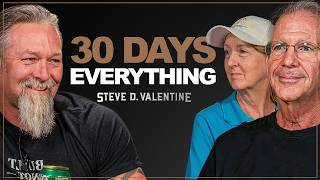
Mitch Prager founded Soberman's Estate after his last drink on May 25, 1998, and losses including his brother Jeff to opioid overdose in 2010. The men-only treatment center uses an "insulin" metaphor: clients build a daily practice they take consistently, like medication, rather than waiting for crisis to force change.
Chapters
You hear this expression about I had to hit my bottom. Well, the bottom is when you put down the shovel. You're digging a hole. Yeah, you could dig. You're right, you could dig as much as you want. Put the shovel down.
Bottom's different for everybody.
It's a good enough bottom today. You're thinking about do I have a problem or not? Don't wait till you die and get in a car accident.
Well, we got the tissues, we got Liquid Death, and we got two of the most special guests in my life here on Built Not Bought. So let me catch you up to speed. So Mitch built Soberman's from grief. Lost his brother Jeff to an opioid overdose in 2010 and his best friend Jerry to alcoholism in 2012. He didn't buy a franchise rehab. He toured treatment centers around the world, recruited a team, fought a town for zoning, and built from scratch a place that didn't exist for the kind of men who actually needed it. Built, not bought. Janice built her healing work from her own walkthrough. She released 45 years of her own trauma before she ever led another soul through theirs. Her horses aren't tools, they're partners. She didn't buy a certificate and call herself a coach. She lived it, then built a method, then built a school to teach it. That's built, not bought. Steve D Valentine was built. I was built by what happened here. What you guys built my marriage, my kids, the business, the portfolio, the community. None of this was bought back. It was all built day by day, and it started at Silverman's. Thank you, Mitch and Janice, for hanging out with me this morning. I am so excited about this conversation and where it's going to lead. So Mitch, tell me about yourself. Oh, good morning.
Yeah, my name is Mitch Prager, and I'm grateful to be here with you today, Steve, and be on Built Not Bought with my my partner Janice, who's been with me at Soberman's Estate since before we opened. She was a part of the dream of opening Soberman's Estate.
Janice, a little introduction about yourself? Anything I missed?
You know, I have a huge passion for what I do. And so Mitch and I argue a little bit about who manifested who. Mitch thinks he manifested the perfect neighbor to work at Soberman's Estate, but I know I manifested the best job in the world. Who gets to ride their horse or walk to work and doing what they love. I get to spend my day with amazing men like yourself, Steve D Valentine.
True story. I get to walk horses home. So what's incredible about this journey that I love about connection and reflection is that while I was in my stardom and I was doing through my deals and I was becoming this egotistical asshole, you were in the background building. You were building something that would eventually— I would end up there. And that's what's kind of incredible. So, you know, I go back to it. Most people wouldn't know that I was becoming that person, you know, deep down. And then to end up at Soberman's and in this massive rebuild in life and identity, I just didn't know it was possible. And so first of all, thank you both for all of the things that you endured for me to get here and all the experiences that you endured and went through, because they all made a difference to who I am. Because what most people don't see in the BUILD process is that it's the experiences that make change and they create difference. It's not the, you know, commercial rehab facilities and all their therapists and all the things. It's the experiences that you guys bring to the table personally that you teach others through their experiences to share with guys like me. That make a difference. Because I went to one of the corporate therapy places the first day and it sucked. Super fun. I have some questions for each of you and tissues that will slide. And, um, in case you get thirsty, there is a Liquid Death variety here on the table because these are amazing, um, after rehab sodas or during. Mitch, walk me through May 25th, 1998. Walk me back. What was the version of you that woke up that morning that you wanted to go and change a man's life, maybe the last morning of that man's life?
Yeah, that was the day of my last drink. That was the day of my last drink. I thought about quitting drinking in 1990, but it wasn't until 1998 that I actually quit drinking. That week, I was at my home office and my wife came into my home office and my wife pulls in the altar and takes my daughter's hat off her lap and says, you know, you're too drunk to watch her child and you need time apart. And so that was that week. And then a few days later, my buddy who got sober 8 years before I did came to visit for the weekend. It's Memorial Day weekend in 1998. And we went out and Steve D Valentine and I were friends since high school and he had been drinking 8 years before. And we had a lot of good times drinking. But that night we went out and he and his wife were not drinking. My wife was not drinking. They were having a grand old great time that Steve and I used to have many years ago. And I realized that this wasn't working for me anymore. I had dramatic things happen in my life. It didn't cause me to stop drinking. Like in '96, I had a heart attack. You know, the doctor came into my hospital room and he said, Mitch, I'm not going to ask you if you did cocaine, but I'm going to tell you if you ever do it again, you're going to die. So I quit doing cocaine in '96 after a heart attack, but I drank more. And then in '97, I lost a big corporate job, clearly because I was drinking. I came home and told my wife, hey, I got great news. I resigned and I got a good severance check. Truth is I had a choice to get severance check or get fired. And that was So I had major consequences in '96 with health, major consequences in '97 with finances, losing my job. And then in '98, I was about to lose my family. And that was my gift of desperation. I really wanted to quit drinking that day. And so my buddy Steve came out and that was that day I said to him, Steve, I said, Steve D Valentine, why won't you have I really want what you have. I want this great life without drinking. And we were sitting outside. It's a long story, but the gist of it is we were sitting outdoors and I was holding this glass and he said, can you imagine like that drink you have in your hand right now will be the last drink you ever had the rest of your life? I said, yeah. He goes, that includes beer or liquor or wine or anything. It has to be in that glass. And I said, yeah. He goes, you really ready to quit forever? I said, yeah. He goes, hey, then I want you to walk over to that outdoor fireplace there and smash that glass. And I actually did that. And then I smashed that glass and then went to a treatment in California for a while and came home. And that was the last Compañero I was in, was May 25th, 1998. So at that point, I got sober and from 1998, but anyway, as far as the journey goes, I was sober. You know, since May 20th, 1998, but almost a decade later, two decades later. Yeah. Almost two decades later, I realized with all my, I enjoyed helping other men learn how to enjoy their life without alcohol. But, you know, I should mention, did you go back into the hospitality business? I did open up my own recruiting firm. I was in the hotel industry for many years. And then after being in the hotel industry for many years, I started a recruiting company. We did recruiting for hospitality in the shed. So I had good skills with running motels and then through recruiting, I had really good skills with hiring the right people. But my true passion was really helping other men recover from addiction and alcoholism. And then in 2010, as you mentioned, I lost my older brother Jeff to an accidental opioid overdose. And then at that point, I had like 12 years of sobriety and I couldn't see my best friend, excuse me, I couldn't see my brother Jeff. Couple years later, 2014, I lost my very best friend Jerry, who I helped him for 5 years as his sponsor not drink. But after 5 years, he started drinking again. So in 2014, I lost Jerry as a direct result of alcohol. So he passed away. So there I was, 14 years sober, and I couldn't save my best friend Jerry. 2 years before that, I couldn't save my brother Jeff. So I thought to myself, why, what all these years of experience, our 14 years experience not drinking, and I couldn't save my best friend or brother. Had that thought of like, I should open up a place where Jeff and Jerry would go for treatment. But he had, both of them had the opportunity to go back to where they were in treatment. If Jerry actually had beds at 200 places where he had been, where he had been in that day, I said to him, look, Jerry, I got beds for you at these 2 places where you have been to treatment. And he refused to go. And similar story with my brother Jeff. So I didn't know where to send Jerry. Or San Jeff, where they would've gone treatment again. So I had that thought for 6 years.
So you're like, bam, I'm gonna go 5 acres and go buy 5 acres and I'm gonna go help people recover.
Yeah. That's what that looked like. No, nope. It didn't. You know, it was 6 years of thinking about like building a place. And after that, I knew the people in my life, like my wife, my friends, my therapist all said, Mitch, you've been thinking about this for 6 years. Go do it. And so, um, I, I took time out and toured other treatment centers and talked to a lot of people in recovery and said, hey, you were at treatment, like, what worked for you? What was the magic there? What happened in treatment? And so I sought out to build my own place, a place where Jeff and Jerry would feel comfortable. And that was quite the journey. You said it was definitely, um, a journey of just designing something from scratch and not trying to create, emulate. Yeah.
Yeah.
And it's in a place of, you know, my world, you can just, you know, be an online coach for anything, right? You sold one house and all of a sudden you're a realtor and you can teach other people how to do it, but that's not experiential wisdom, right? For you, you went through grief and personal pain, experiential wisdom to build something based on what you thought would help. So what's your slogan like that you give us?
Well, the slogan for Soberman's Estate is we want each man to enjoy his life for the rest of his life. But the slogan about the insulin, right? The insulin. Yeah. So basically, when you come into treatment, we say, look, you're going to be here for maybe 4 weeks or 5 weeks or 6 or whatever, however long you're going to be here. I want you to take notes.
Here's a journal.
Here's a pen. Bring this with you to each one of your sessions, group sessions or individual sessions, and take some notes because basically we, I want you to figure out what your own insulin's going to be. So when you leave treatment, just like if you were a diabetic, I would say a diabetic can live a long, good, healthy life as long as they take their insulin every day. Right. So an alcoholic or a drug addict could, could live a long, good, healthy life as long as they take their insulin every day. What is that insulin? I could tell you what mine is, but I've also learned over these 25+ years, almost 28 years trying to help other men. Insulin looks a little bit different for each person. That's why they take their notes so they can look at their notes and figure, okay, this is a plan that I can adapt for the rest of my life. Because that's the idea. Treatment is just one step. But as you know, Steve, we have, um, basically complimentary lifetime support because the accountability and the community is so important as a part of the insulin. But that's the idea, to really learn how to enjoy your life for the rest of your life, not just come— not just while you're at Silverman's.
So I'll tell you why that is so significant for me and probably a lot of people that end up at Silverman's. Because at some point in time we were told that the only way to sobriety was through AA. And while AA is a great foundational tool for people, there's more to it is what I believe. But it was Soberman's that gave me permission to go, what are the things that are going to keep my line in life, right? What are the things that I get to drive towards that drive me, that make my authenticity be me, right? So many people that you see, right, which is again why Soberman's is so important to me is why I send people and refer there. It's like, look, you can be sober whoever you want to be sober. It doesn't have to be this one direct path that everybody preaches. Find the things and the person you fucking want to be out of it rather than diving into, well, they said I had to do it this way and this way doesn't work, and now I hate my life because I don't want to do it this way and you gave me permission to do it my way. Which is go get in the pool, get in the gym, and build myself through it, right? So I just, I value that, that saying so much in my life.
Yeah. When you, when you mentioned AA, I have to say like, AA is wonderful. I mean, I have nothing wrong against, uh, we, we ask clients when they come in, they, they say, we ask them, um, are you open to AA? And if so, great. If they say no, we, we don't push it. I, I share my personal experience with that too. Like basically, you know, I have a younger brother and when we were teenagers, I introduced him to pot and, you know, and that worked for a while. And I introduced him to beer. That worked for a while. When I introduced, introduced him to Jack Daniels, that worked for a while. And when I got sober into AA, I introduced him to that. He didn't talk to me for 2 years. So I, I learned that you can't push that on, on anybody. Um, there's a lot of good points.
You can't live it out, right?
So, so we don't push on anybody, right? We, we do say there's some community and accountability and some things that we want each person to find their own insight. But really, there's nothing negative about it. It's fine. Find it away. Absolutely. Yeah.
Janice, you manifested the best job ever, which I don't call it a job because you really love what you do. You're devoted.
I know, fellow jockey.
Yeah. You get to walk your horses to work. How'd that happen? How'd you manifest it over what Mitch's story is? Let's tell the real story.
Well, so that's a funny one. Um, it's Mitch had a hard time when he was trying to build Soberman's Estate from the community. Right.
What was the community standpoint?
Well, all of a sudden there's a rehab coming in the community.
They're afraid of addicts like me being there.
Yeah. You know, nobody wanted it. Crazy people. So my husband actually went to one of the town council meetings and I heard they were pretty rough on Mitch.
Pitch for it.
Pretty much. There was a, there was a few. Oh yeah. Especially that got a little heated at times. And by the time my husband had gone and he didn't go for or against it, right. He just attended it with one of the other neighbors. And by that time the town had already approved it. And so he came home and said, hey, Janice, look at what this guy wants to do and handed me the whole list. And he said, he wants to do equine therapy. Why don't you give him a call? So I did, uh, went and talked to him and he sat down for an hour and a half. And through that conversation, I remember him backtracking and he said, there's one thing you said that really stood out to me. And he says, you mentioned treating the whole body, mind, body, and spirit, emotional, physically, mentally, and spiritually. They pushed back a little bit and he didn't hire me right away. So we went on like this for a few months. Because you weren't open yet. I—
You were the year before we opened.
But his thing was that we're still interviewing people. If you don't hear from me by such and such a date, give me a call. And I didn't hear from him and I called. But what I did in the background of that was I was working the corporate Toxic 60, the 80-hour-a-week job, and I started telling everybody I was going to step down because I was going to work at this place. So even though Mitch hadn't hired me, right, this was in like June, um, I started telling everybody I was going to work there. That's why I say I manifested the job because I had my mind set in it. I would sit, I would sit around and I would envision what it would be like to be doing a group session with a bunch of men. Sometimes I gave them names. Sometimes somebody walks in the estate and I'm like, I've seen you before. You were one of my guys. You know, I would sit and journal about it. And here I am. He did end up hiring me.
There's a specific path that both of you guys share, which is the heart for men in recovery. Why that one specific? Like, where does that come from?
For me, it was the experiences of my brother and Jerry that were in other treatment centers and other friends. 'Cause I had been sober, like I said, almost 20 years before we opened. And a lot of my sober buddies had been to treatment and they tell these stories about how they met this girl in treatment. And there's an industry term now, you say it's a rehab romance. And I'll tell you, Steve, I don't use the term lightly, but I don't, I say it never works out. And it's a scary word, never, but Now someone's going to make it work out just to prove me wrong, but, and I'm sure there's some, maybe 5 out of 100 relationships that meet in rehab work, but for the most part, it's a big distraction. So the guy goes into rehab and this is a big deal to go into rehab and he wants to work on his alcoholism and that's difficult. So find any excuse not to really look at myself and You know, I'll, I'll take it. So that was the idea. Like I, I wanted to open a treatment center where it was just men to avoid the rehab romance. And I also have found that the men are just in the group with men. They're more vulnerable, they're more open. And, and so yes, it's, since the beginning, you know, is that's how it's been. It's been, it's been just helping men and just, you know, that's been in my world of, uh, yeah, I'm married and my, I only have two children. They're both daughters.
So.
God bless women, loving ex-wife.
But, um, it's, uh, good catch. Supporting women everywhere is what Mitch is doing, right?
I'm supporting husbands and, uh, and, and sons and uncles.
And that is like what you said very much impacted me from having that lack of distraction and the conversations. And, you know, you end up leaning in sometimes to somebody else that's the, the opposite sex because they they felt or heard or whatever, right? And right. But you take that romance out and you take the availability for men to posture, to impress, or to whatever it is there. And that was my— I will laugh about my first run-in with rehab, right? My first day, which wasn't great. And sitting in that room with a bunch of females and males that were half my age, was no way like that was going to recover, right? The distractions, the conversation, like, it's not going to work. So Janice, what's you guys?
Yeah, I grew up in the alcoholic family, right? My dad was an alcoholic. Popples, Paul drink, grandfather drink. Um, and as a child, I remember, I'll just say embarrassment. Um, you know, how's my dad going to be today? What's he going to do to embarrass me today? Right? I remember my grandfather doing, you know, everything's funny when you're drunk, right?
Everything's good times. Of course it is.
Yeah.
That's how I remember it.
I remember being 4 or 5 years old and being thrown off the boat with a life jacket and everybody laughing, thinking it was funny. Meanwhile, me being terrified.
That sounds like some shit I would do. Huh, Christian?
But they think it's funny, right? They don't, I don't think people people realize that drama becomes through that. Sure.
So, you know, perception is reality, but he thought it was funny, right?
And we won't get in, you've heard many stories, Steve, so we won't, we won't get into a lot of that, but, you know, just having lived in the world of constant chaos, constant trauma, constant going through things, you know, I've been through a lot in my life, just as we all have, right? But Then I was turning down because I didn't want to sit because I got to numb everything up. Right. So I turned into what I didn't want to be around. Yep. And I started drinking as well. Love to love. Wow.
Why do you eat so loud?
I remember being 16 one time out drinking with one of my uncles and now it seems crazy. Even saying this out loud, but I remember being proud of the fact I could outdrink my uncle. I could drink him under the table at 16 years old, right? I could get up to work the next day and function and go to work. Won't need to stay home all day. And now I look back going, what the heck was I partying with my uncle for? Right? That sounds like the stupidest thing coming out of my mouth, right? I had a hard time getting out of it, but I quit one term. I did it just the ass.
How many years is that?
12 to 21.
Or how many years ago?
Give my age away there. But I know— I know for a fact that I wouldn't be here today if I hadn't quit. There's no way. If I hadn't died doing something stupid, I would have hit the playoff line.
How impactful is your past and your stories to the experience that somebody like me has in Suburbs?
It takes one to know one, right? So I feel like, personally, I get you, right? We as brothers in recovery will laugh at the same thing. We hear these horror stories and we can laugh at them because we have that in common. And so personally, I think it's really helpful. If I'm telling, I'm pouring my heart out to someone, they could be like, oh my God, you did that? Right. Or it, or they can say, oh, well I did that too. Because if I did that, they did that too, we have something in common. And professionally, if I'm looking at two resumes and they have the same qualifications and someone's in recovery, to me that's a big plus. So I hire the person when it's in recovery all the time, all else being equal. So it's like, I, I think that's important to have that that common understanding.
You know, one of the things for me, I think, is I've done the work, right? I've been through PTSD. I've been through a lot of trauma. Like I said, I've been through some pretty horrific, crazy things in my life. And I'm just, you know, there was a lot, a big part of that time I was a victim to all of this stuff. Right. And I am no longer that. Right. And not even a survivor, but me being able to, you know, we go from victim to survivor and that next step's creator. What can I do with this?
Yeah.
That's, I'm not my story. I mean, that's not who I am. Who am I now? And how can I help somebody else and move on and find the courage? Yep. And like the faith and trust to be able to move forward to realize Life was amazing. Mm-hmm. And we're, we're here to be able to live it. Yep. Not sit in depression and trauma, right? Trying to numb everything that's ever happened to us and have all life. Yeah. Right. So if I can, I think one thing, um, I didn't have the support. I never had anybody to sit with me in my darkness. So if I could be that person, I'm willing to match, you know, it's not about fixing anybody., but it's about helping them find their own answers. Yeah. Being willing to sit with somebody in the dark.
Supporting the journey, right? Wherever they're sitting.
Yeah. Right. Meeting somebody while they're out.
It goes back to that first answer. Like we were talking about that one day with fully resonating with Janice. 'Cause like I felt that same thing. It's like being a tree somewhere. It is physical, it's emotional, it's intellectual, but it's also that, you know, this is like a spiritual thing. Like you're sitting someone, then Janice has that That magic, like she—
yeah, have you ever taken a nap on Monday? I have, it's amazing. Mala bead nap time. That was the first time I learned about the mala beads in the garage with 9 other guys and our blankets.
And as I told you, Steve, the code for, uh, nothing is meditating, or now we're meditating.
Yeah. Oh, we were, we were snoring meditating is what was happening.
Be alert to have a deep, good meditation.
Those are the things that I look back at my experience at Silverman's and I always wish that the video camera was around because they were such hysterical moments, right? But they're memories that I get to experience and talk about. But those are— I mean, I remember hearing the mala beads hit the garage floor, like when it woke me up or somebody else, or the snoring. And it's always like one of my greatest memories of learning your storytelling ability when we do the meditation and learning the mala beads, which the same ones are still attached to my wrist that I got in the garage, right? 2 and a half years. They're very stretched out. Right. But going through that is the healing process, right, of finding— I had to learn and find out where my head and my heart got disconnected. What I learned was the more alcohol I poured on it, the further they got apart. And doing the work at Silverman's, like the horses and the therapy and the group and the guys, it was a combination of it that allowed me to find my head and my heart connection and what you guys have built through your experiences. And that's the hard part when I hear other people that are going to different places is that it's corporatized therapy that's supposed to be a path that has probably— I don't even know what the stats are, success to failure on it, right? And I don't want to call it failure. I want to talk, you know, just relapse. But when I know what I received in Soberman's for the high-end entrepreneur and the the businesses and the things, it just changed everything trajectory for me. So, you know, I appreciate what you guys built from the blood, sweat, and tears from the bottom. And now here's the hard questions. I want to talk about the experience with me as a client, what you guys have seen coming in, what you guys have seen through the process, as far as your system, your thing. How was I when I first came in? What did you see? So there's, you know, I know your memory's short, Mitch, so we'll see how this goes. As divulged earlier, I don't quite remember.
No, it's very short. But you know what? I, I get tough on both sides of this coin because you are a great guy. And I, when someone comes in, I can like look into their eyes and I can see, I can see that little boy and I can see the good things. You physically, your body's a whole lot better now, right? You, you were, you weren't physically in the same shape.
You know what?
When you just told the little story about how much you laughed with the bala beads, we have fun, right? Is it because right now you're better physically and definitely intellectually and spiritually? So I think you have grown in all those areas unquestionably, but I don't want to take away the fun part because— No, I'm serious, right? Because I remember we had a clinician at the time. He was a clinical director at the time and he He just didn't like when someone said, I got this, because he felt like we should have a prudent rational concern about drinking again. And if someone said, I got this, being like, I got this, it would just drive him crazy. So what does Steve do? He gets, you know, t-shirts or one that says, I got this. And they all come in the next day and Jerry just said they walked out of the room. But it was really funny.
So he, so he went worst nightmare with an Amazon account, right?
So he had fun with that. And so that didn't change. He still had a really good personality. And the other Okay.
Yeah.
We'll pause there. It's still funny. I'm looking at Steve's office here and the googly eyes. He's had the googly eyes. So, so Steve, when Steve leaves treatment, um, for, yeah, if you're out in the office still. So Steve leaves treatment and we open up the, uh, you know, refrigerator and every ketchup bottle has eyes. Every open the pantry and every little canister has eyes. And for weeks and weeks, the kids are finding eyes. So don't do that if you come to treatment, but months for months. Yeah. Several months. Exactly. You'll have a drawer you never opened before, like eyes peeking out at you. Yeah. The toilet paper had eyes. Everything had eyes sometimes. So Steve's always been a really good, fine guy, but no, obviously the physical part, you can't deny that they're in much better physical shape. And then, yeah, I mean, listen, no one wakes up, you know, on the best day of their life and says, you know, I'm going to go to treatment and they don't show up at treatment whistling Zippity Doo Dah. It just doesn't happen. So guys come in there at a low, you know? And so, yeah, I remember you come in and I remember you telling me in the first week, you're like, you probably won't remember this, Mitch, but you give me a tour like a year or two ago and I toured around and I wasn't ready for treatment at the time, but you know, I planted the seed. I remember that. And yeah. And so, no, you weren't at the best point of your life and no one is when they come into treatment. Yeah. So no, you're definitely a new man. You know, and, and, and I respect you now more too, cuz like we'd have conversations when you're like 2 months sober. I'm like, talk to me after you have a year sober. And now I realize, you know, then now you got 2 and a half years sober. It's like, you know, I respect you as a, you know, a brother in recovery now.
I can't believe you let me lead the alumni calls.
That's right.
Yes.
Here we are, guys.
Here we are. Steve's in the alumni calls. Absolutely.
Absolutely. And, and when Steve talks, people listen. And we got a lot of alumni now and Steve leads the alumni calls on Tuesday. I thank you for that. Of course.
Yeah.
I enjoy it. Tell me, tell me from day one.
You know, my first, my first thought was, okay, who is this guy? Right. True story. I don't think he wants to be here.
Not at first.
No, you can feel it from you. And they're grumpy, kind of, you know, obviously you did not look great. Um, and I remember the looks I got when You did the horses first time. It's that, that look of, okay, what the heck are these horses going to help me through? What the heck are these horses? Yep. But I remember after those first couple of sessions, watching that light bulb come on, going, huh, there might be something to this. I might actually get something out of this. And I think it took you, I think it took you a week. Yep. And I remember I can't remember if it was Z-Point or one of the other groups that I do, but I remember looking out and just thinking, okay, this guy's got to get it. He's going to turn this around. He's going to be here for him, not anybody else. Because when somebody shows up just for their family, just for their kids, it's not going to work. I got to be there for you first. And don't make me cry already.
Freaking did it to me first. You said no tissues. You have to cry it out. So there you go. No tissues.
There you go.
Cheers. Oh, you stuck some.
It's ready. But I remember watching that light bulb come on and watching you start to pay attention in the groups and take notes and listen. And then what was really cool after that was I watched you get the guys that were in the house with you. On board too. And I think you just have this sense about you of, hey, I'm in here to get myself better and you guys are going to jump in and do the same. Um, so I watched you kind of take that leadership role with guys in the house and they listened to you. And if somebody was over there on their phone, you were going to say something. You were going to get their attention and sitting here today. I am so— I don't cuss and you're not going to get me to. I'll say flippin'. I'm so flippin' proud of you and what you've done. Um, not just in your, in your own sobriety, but with your life and the way you're helping other people. I remember doing an exercise. And one of your sons wasn't speaking to you when you were at the house. Christian. But I remember doing an exercise asking you guys to come up with something you wanted to learn and try something new. Well, that's usually hard for somebody. I remember you said, I wanted to drift. I wanted to learn to drift. And I'm like, what is that? Yep. And you had to explain to me, remember Fast and Furious, the drifting in the cars? And you told me you wanted to do that. Yep. And in the back of my mind going, well, that's a pretty lofty goal. I hope he ends up doing that, but you know, it's almost a little bit of a good luck. And I remember the day you told me, I picked my son up and we went and did it. My son's talking to you. And I've rebuilt that relationship with him.
It only cost me $20 grand and a trailer and a car. But damn it, it worked.
Absolutely. But you took something in your experiences and that's when we get to hear those stories, I'll just call them stories, of somebody reconnecting with their family, reconnecting with their life, getting to be the dad that they're meant to be, not only for them, but for their kids, for their family. But you did it for you first. You had to go through your own things, Randy, first. You had to look in the mirror, get honest with yourself. And you were willing and courageous enough to do that.
And it was worth every freaking hard decision that we made.
The changes that I see in you are tremendous. When you left the house, you know, sometimes I, I hate to say it, but you can tell when somebody's not going to make it and it kills me.
I get, yeah.
Because I want to go up and I want to shake them and I want to go, look, you don't understand. You might not get another chance. Yep. And, you know, they're the ones that are got their phones out in groups, not paying attention, getting text but answer or something that tell you what you want me to hear. And you got real in there. You got honest, you got raw, you got truthful. And I didn't have any doubt in my mind when you left that you were gonna be okay.
Okay.
And that says a lot because I have been there since we've opened and I've, you know, I remember the first day everybody came there and I remember the day that they left and some of them haven't been. So fortunate, right?
We all have like time, energy, attention that are finite amount. And I do recall that, Steve, like you were very focused. Like, you know, we do allow cell phones and laptops, but I remember like, you're like, it would be that tough choice. I'm not going to— I'm going to be focused. And you were. I remember that. And you're still like that. Like I said, the core stays the same. We have so many benefits, so much more clarity emotionally, spiritually, physically, better. That commitment was there in treatment. And we, Jasmine, don't see that all the time. The idea with the cell phones, it was like, yeah, checking with your office manager so you can be present the other 23 hours a day. If I recall, like, you were like, I'm here, you know, you make 2 calls a week.
One was my CFO and one was my wife. That was it. Right?
And that was— You never missed a group. You never missed a session. No. Not one.
Because the goal was I was there. Right. And never in my life did I have 30 days to myself to focus on me.
And that was the goal.
Not that I didn't want to come back because I would, but right now it was I have 30 days, which I've never had to take a break from life. I'm going to use every freaking minute of that day.
And the idea at that time was, we want you back as an alumni. We don't want you back as a client. You know, and that's what came to pass. So yep, that's always the goal.
But that's the message. If you could, you know, if we could get that message out to the world, if you're going to go to treatment, no matter where it is, take that 30 days, check out. Do this stuff. You're serious about it?
Yeah, I mean, the reality is, is that it's, you know, Soberman's is an amazing stepping stone for when you're ready to make change. Like when you're ready, not an ultimatum, not a, oh, I need to go to rehab because my wife said, like when you're truly ready to change your life, you go in those doors, not willing, but the willingness to try and the willingness to participate to see what happens. And for me, it was, well, it's 30 days out of the last 45 years that I've lived and the next 45 years I potentially can live. So what happens if I do the 30 days and it sucks or 30 days and I change my life? Right? And that's the question, right? That's the question for anybody is, and, you know, what I took away from Soberman's, it was because I come from the world of masterminds and paying for influence and paying for coaching and all the things that I paid. It was by far the best return on investment in my life for the investment that I made there. You know, and, and fortunately for some guys, they've got great insurance. I was a cash pay because that's just the world we live in. But it was by far, because I had invested $100 grand in masterminds and things, right? And when I get to this, I'm like, I invested that 5 figures and it was the biggest return where we stick here, where I look at the return on that. It was a stepping stone. But I look at the return with Christian behind the camera. I look at 26 years of marriage. My wife has lost 80 pounds since this started, right? So change has been impacted everywhere because I chose to put one foot in front of the other. And so, you know, Soberman's, you know, I'm just so grateful for what the mission that you guys have been on and that you've stayed true to. And the passion that you have, and I'm grateful to be along for the ride when it comes down to it. So if somebody's in this place of despair and thinking, because I'm going to put it where I was, they're questioning how much they drink, they're questioning their things, they're questioning life fall apart. Where do they go from here? And what's the best thing that you would have to say about Soberman's in that space?
To that person who is having that thought. For me, that thought lasted 8 years. You know, and a buddy of mine says, you know, Mitch, you know, an average person doesn't think, do I have a problem with drinking for 8 years? You know, if I was about 7, there you go. So it's like that denial is so real. I think it's a real symptom of addiction is—
if you're asking, you probably have a problem, right?
Exactly.
You're questioning yourself, you probably have a problem.
Exactly. Most people don't wake up and become, do I have a problem? They just don't even think about it. And And so, and sometimes, you know, people come into treatment and it is a week or two when they wake up and realize, yeah, my wife made me come here. But then they look around the table and they're hearing their brothers talk and they say in their own words, like, wow, I really do have a problem. And I walk out. That's what I call that gift. You know what I mean? It's like, people are dying every day. And so there's such good help available. Sober Business State, you know, happens to be my baby, but there's plenty of good help available. But my message is, if you have a problem and you need help, it's great, I'm available, I'll help you. How do you get to that point of saying you need help? But that's the gift. Like, you don't have to die, you don't have to go to the hospital, you don't have to go to jail. If you're thinking like, I really have a problem, then there's really been help available. And that's the heartbreaking part, 'cause, you know, I lost my brother, I lost a friend who just didn't think, oh, it's not that bad. You know, it is that bad. It's getting worse. And so the idea is like, you're thinking like, Oh, you hear this expression about I had to hit my bottom. Well, the bottom is when you put down the shovel, you're digging a hole. Yeah, you could dig. You're right. You could dig as much as you want. Put the shovel down.
Bottom's different for everybody.
It's a good enough bottom today that you're thinking about, do I have a problem or not? Don't wait till you die and get in a car accident. How about you?
You know, I think people, there's a lot of different reasons people break. Mm-hmm. And I think a lot of it's to, it is to check out. I don't want to feel this. I don't want to deal with this. I don't want to face this, whatever that is. I think men, and I hate presuming that women thing, but I think men's, a lot of them don't know how to feel. They don't want to feel your feelings since like you've not been allowed to, you've not been, you know.
We've been conditioned to be that person depending on how we were raised.
Right. So when you start feeling things, it becomes a little bit scary. It's uncomfortable.
Right. Stuff your feelings, man up and make shit happen.
But what people don't understand and don't realize, when you're numbing out all those things that you don't want to feel, you're numbing out everything else in your life. Mm-hmm. Right? You can't feel happiness and joy, so you're miserable, so then you just keep numbing out.
And the things that you do think are happiness and joy are not.
Are not.
It's the only thing.
They're not peace.
It's an illusion, right? Right. When we're drinking, we think it's this sparkling, having a great time, all fun, but we don't see what's left. Yeah. We don't see the aftermath. Yeah. What it, what it's caused.
There were days I woke up and I'm like, what kind of aftermath did I leave last night? More than once.
But you're probably saying it like you are right now.
Exactly. I don't know what I did.
A bit of a joke, but it's true. Right. Was I dancing on the tables?
Was I?
Probably.
Probably. I know, ask my wife.
Right? But it's, we don't think about the consequences of that. Yeah. I remember a session one time, I had the guys like create a space in the arena that represented their addiction, one that represented their recovery. One of the guys says, I'll get the addiction part. Can I use the hose? And he stood there with the hose watering the arena. The other guys went and used some stuff to do with the horses on the other side. And when we were processing afterwards, he says, I'm sitting there with this hose and I almost am seeing this rainbow because the sun was hitting the water spray. And he says, it was just all sparkly and rainbowy. And he says, when we turned the water off, I looked down and here's this muddy monkey mess. And I'll never forget that because I think addiction is that. And no matter what the addiction is, chopping, Yep. I mean, it could be anything. It's ha— it's habits. It's the addictive behavior, right? But it's all— we think it's all sparkly lights and we walk away and it is this muddy, mucky mess.
Yep.
Right?
Yeah. 1000%.
Thank you so much for hanging out with me this morning and sharing the story and what you built, both of you. And what an amazing journey it has been. And I'm grateful for the impact you've made on my life and the surrounding people in my life, and they are grateful for you as well, because this wouldn't be possible without the things that you both fought for and believe in. And I'm grateful for the yin and yang experience with you, Mitch, from two different generations and having those conversations and where what you say is true, which is If you believe in the insulin that makes somebody better, then there's no room for judgment in how somebody gets sober. It's whatever works for them and keeps them on that path. And it's, it's really fascinating. So many things that I've uncovered, I guess, intellectually is, uh, it's an interesting perspective when you talk about it from that way. And if church operated a little bit the same, we'd have a hell of a lot less judgment out in the world.
Yeah.
Right. We can all be better human beings, however that is, but it doesn't mean we have to have the same belief system other than to be a good human and walk that path. Right. And so same thing with sobriety, right? How we got there is irrelevant. How we share with people we got there is the impact, right? Because how I speak to somebody or how I show up is different than how you show up. It's different than how you show up, which means we all have an impact in our own ways. And bring people to the place of choice in life. I think that's the, the last thing that I kind of want to finish with is that what I've realized in this journey with you guys is that it's 100% choice, right? And when you start to make those choices a little bit at a time, you start to see the rewards in it. And through the rewards, there's hard things, right? You still got to pick up a shovel. You still have to do the work.. And just because of 30 days doesn't mean it stops. It's the 30 days that started it, kickstarts life, right? When we kickstart life, it's okay to be the guy that needs the help, that wants the help, that wants to endure the change for the better. Mitch talked about, you know, potentially losing his family and Janice the same way and trying to reconnect. And for me, you know, rock bottom was just losing my connection and who I was and trying to figure out where my head and my heart went and rediscovering. So that came through support, and it didn't come through ultimatum either from my wife, right? It was choice. And what she told me was, when I come back from Alaska with the kids, I'm going to love you either way, but I can only support you one. And it was for you to go get help and figure out what the plan was. She wasn't going to be part of the plan. She wanted me to execute on it.. And so we did that and we did it together, but I'll tell you what, it was a bitch. The journey was a bitch, but everything was worth it to be here, sitting here with you guys, Christian behind the camera, and my wife retired, and all the things that have changed. So thank you for taking the steps and doing what you do and standing for what you do. Thanks for joining me today.
Appreciate you guys. Thank you.
More from Steve

It’s Not What Your House Is Worth; It’s What It Can Do for You (Pause, Identify, Respond)









