[Leadership] Get better at your craft & adapt to the changing sales environment with Matthew Stoltz
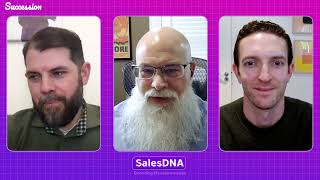
Matthew Stoltz, VP of Sales at Phena Vista, discusses how sales fundamentals like trust and product knowledge endure even as tools shift to virtual meetings and remote work. He contrasts instrument sales, where demos are logistically complex, with services sales, which demands deeper domain expertise and custom solutions. Practicing the craft through recordings and AI roleplay helps adapt to isolation while expanding geographic reach.
Chapters
Sales changes every day no matter what you do. That's something that's important to keep in mind is this is a shifting job. I think it's. Brian Burns on LinkedIn occasionally talks about this being a performance sort of sport. Right. And when you're performing, it changes every day. You know, even just from day to day. An argument that worked yesterday with one client doesn't work today with a different client. They have a different problem or a different way of viewing the problem. And so a lot of the basics of it, I think haven't actually changed. At the end of the day, you need to know your product, you need to be able to make a convincing argument, you need to be trustworthy and actually do what you say you're going to do. You know, and there's a bunch of just basic skills I think that have probably been needed since the first caveman found an interesting stone and tried to trade it for something. Right. There's your proto salesperson. He wanted something he didn't have or had a problem he needed to solve or she needed to solve. And you know, so trade for something. Well, it's the same basic set of problems that might have been trading rocks for Spears as opposed to trying to trade digital money of some description since none of this is actually done in cash or check anymore for either services or, you know, a half million dollars worth of electronics and glass or whatever it is that you're selling. So, you know, I think that's it's both changed hugely and hasn't changed at all.
Before we get into today's show, I wanted to tell you a little bit about what we have going on over here at Succession. So Succession is a life science sales membership that includes on demand courses to uplevel your sales skills, resources to plan and execute your sales process, a community for peer to peer networking and learning, and live workshops delivered by experts twice a month. You can get access to all of this as an individual for just $79 a month. Or you can uplevel your entire sales team with courses and customized learning designed for each individual rep. Come and join us over at Succession Bio. Okay, let's dive back into the show. Welcome everybody. We have another great episode for you here today. We have Matthew Stoltz. He's the VP of sales over at Phena Vista and he shares a number of great insights across the way sales has changed over the last few years. Years also how it hasn't changed. And then we really get into a lot of the differences between selling services versus instruments and then really tactical stuff towards the end here about how to actually influence the timelines around decisions. So it's a good, Good. A lot of good stuff in here. Hey, Matthew, welcome to the show. We're excited to have you here.
Thanks. Glad to be here.
Yeah. So we asked everybody the same question. Give us a crazy or funny story that's happening in your career if you have a couple, because I think we know you might have a couple. Hit us with them. Yeah.
You know, it's when I saw that, that that was sort of how you open these things, right. That it's an interesting question because to some degree, I would argue that there is nothing crazy or weird in sales, because if you're doing your job, you've seen everything crazy and weird, right? There are, you know, there are certainly odd things. I was at a course once, a microscopy course, when I was working for Zeiss. I'm watching half a million dollars worth of equipment bounce down the driveway on the front of a John Deere tractor, right? Because they didn't have a forklift. That just happened. They moved thing. And yeah, you sort of look at it and go, okay, well, it works, right? It got the job done. And it couldn't have been worse than the freight truck that it used to get there, right? So things like that, you got your standards of, you know, learning that you've lost a sale, turning the car around, going to where this person is, finding them, tracking them down in this sort of labyrinth of labs, and spending the next hour trying to convince them that they've made a mistake, that really you have the solution they're looking for. You know, and what today would probably be more problematic because security is a lot better than it was back then. But doing things like that and, you know, the common story, you know, if you haven't been blacklisted by an institution as a salesperson, I don't think you're doing the job quite right because you weren't pushing hard enough somewhere. So, you know, it's all those sorts of things, but they're. That's just the. The every day of sales, right? It's that constant change and flexibility that you have to do. And if you're not generating interesting stories to tell over a beverage of some sort, I probably not doing the job quite right.
Yeah. Well, one of the things you mentioned that is that things are always sort of changing when it comes to sales. And I think you have a couple interesting takes on that, which is, how have you seen sales both change and not change over the last few years?
Yeah. Again, I think this is a subject you spend hours going over. Right. And if you spend any time on LinkedIn or places like that, people love to explain how the world has completely changed, especially since early 2020, and I don't think we can argue that it hasn't. Right. Many things, both in our personal lives and our professional lives, are very different today than they were back, you know, before all of this happened. And so there's definitely different uses of technology. My change, sort of, I changed what I was selling about the same time as the pandemic. So I went from instrument sales to services sales at about the same time. So for me, I don't know how much of this is really unique to the pandemic and unique to what I sort of the difference. But obviously we're all more online.
Right.
And that makes a huge difference. You know, doing video calls prior to the pandemic.
Right.
We had conference calls all the time, but I don't remember doing a lot of video calls. There wasn't the expectation that you were necessarily sitting in front of a computer. Right. As a sales rep, you were out and talking to people. You were doing. At least I was. I was doing a lot of in person work. And that's definitely changed. Getting people's attention has changed. We're all getting more emails and slack messages and text messages and LinkedIn, you know. Right. There's a hundred ways to communicate and there's more of all of that. So getting people's attention on the prospecting end of things, I think is definitely different. It's not looked as kindly upon to just say, hey, I'm going to be in the building and I will knock on your door. You know, you just can't do that the same way you used to. And from what I've seen, clients don't want you there in person because they're as busy or they're not on site too. Right. A lot of the people I deal with, they're not at the actual office location, assuming there even is an office location. So, you know, where are you going to meet them? They're in Chicago. Well, you know, it's not all that useful to fly to Chicago for a company I'm talking to in Boston. So there's things like that that have definitely changed. But arguably sales changes every day no matter what you do. Right. And I think that's, that's something that's important to keep in mind is this is a shifting job. I think it's. Brian Burns on LinkedIn occasionally talks about this Being a performance sort of sport. Right. And when you're performing, it changes every day. And so, you know, even just from day to day, an argument that worked yesterday with one client doesn't work today with a different client. They have a different problem or a different way of viewing the problem. And so a lot of the basics of it, I think, haven't actually changed. Right. Because at the end of the day, you need to know your product, you need to be able to make a convincing argument, you need to be trustworthy and actually do what you say you're going to do, you know, and there's a bunch of just basic skills I think, that have probably been needed since the first caveman found an interesting stone and tried to trade it for something. Right. There's your proto salesperson. He wanted something he didn't have or had a problem he needed to solve or she needed to solve. And, you know, so trade for something. Well, it's the same basic set of problems that might have been trading rocks for spears, as opposed to trying to trade digital money of some description, since none of this is actually done in cash or check anymore for either services or, you know, a half million dollars worth of electronics and glass or whatever it is that you're selling. So, you know, I think that's it's both changed hugely and hasn't changed at all. And I, you know, thinking about this a bit this morning, I also thought back to, you know, we look at this and go, oh, our whole world has changed in the last four or five years. Think about things like the addition of the cell phone as a tool. Right. Or the addition of a laptop, being able to take everything you need to know and be able to share in a single box at the time, which may have weighed 8 or 10 pounds.
Right.
But that was revolutionary. Your computer on your desk. I mean, the monitor, you couldn't move without two other people. And, you know, the tower weighed 30 pounds and you don't have an extension cord that's 40 miles long to take it to a client site. So I think every generation of salespeople or micro generation, they see massive shifts in how this is done. But the shifts they're seeing are in the tools used, not necessarily the fundamentals of the job.
Yeah, it's interesting. It's, you know, back in the day, you might have wheeled in a projector with the transparency to go through your presentation. You kind of marking it up with a pen. I don't think half the people listening to this will know what we're talking about.
The British is an acetate.
Whatever acetate is. But, yeah, we'll. Yeah, you kind of had that back then, and now it's like, okay, let me just share my screen and show you exactly what I'm looking at, and you're halfway around the world. So to your point, the presentation is the same conceptually of him going to walk me through this set of information that I have, and we're going to talk about it. But it's just the tools in which you do it are different. One of the funny things that happened when we first. When the pandemic first hit, we were all at Citigo and we were doing virtual sales training because we had to teach people how do you, like, present yourself virtually on these calls? And. Yeah, exactly what Nick is doing right now, if you're on the video watching this, these are the views of what we would see. When people pull up their zoom, you'll see, like, the top of their forehead, kind of just like, see the chest, like, it's not even, you know, angled right. And, yeah, there were just all of these interesting challenges that we took for granted, which now. Or say we now take for granted of now. Everybody's used to this sort of digital communication. Whereas, you know, when it first happened, it was, again, a learning curve that people had, which is, how do I actually communicate over video?
Well, and even, you know, you think to when. When this all first happened, right. Just the stress of whatever the chosen platform of that day was not working correctly. And, you know, and today it's just like, yep, okay, well, you know, move from zoom to teams. The world ended. I'll figure it out as we're talking, you know, so we've just gotten used to this set of tools in this way of doing business.
One thing that I think is more difficult in the way we do business, often virtually, and I think it has a benefit as well, but it is that it's harder to build rapport and connections when everyone wants to go through zoom. You know, you don't get that time walking to your meeting remote for the coffee shop, just the talking.
So you have to kind of try.
And build that in. I agree 100%. The. The relationships are different. It feels a bit more transactional to me, the whole process, which. It's also more efficient. It's, you know, periodically, I still make a point of going into Boston and trying to see some clients and stuff in person. And you forget how much time it took just to travel and then show up and then travel to the next place. And in the course of a day, I can have 8, 10 meetings, no problem sitting at my desk. But I agree, you don't build that same rapport. And I still think it's. It remains to be seen how that's going to affect what we do.
So one thing I've seen, I think it affects in. Well, first of all, if you have met with someone like this now and so on the first time that. And then you say how many times you want to grab a copy or a beer. Often people are much more keen to do that because nobody does it anymore. But they don't do it with people before you've met them. But one thing I've noticed anecdotally is people ghost you less if you've had at least one meeting in person. So they're less likely to do that. And that may be because they're more invested today at the meeting, but it may just be that there's a actual person behind this and they're less likely to not be straight with you.
I agree. Well, but I, I would argue to a lesser degree than in person, this is one of the powers of video. I, you know, do we. Because there are still people who don't want to do the video part of video calls. They just want to do a conference call. I think video makes it better, right, because they can see you're a real person. They see your background, Right. They see that, you know, you do exist in a real space and that you're a real human. So that helps. But I agree in person there is a willingness to talk at that point that you just don't get. I think that's basic human nature. Humans were not built to do everything remotely.
Right.
We're built very much for small groups of in person sort of work. And this is a, it's a fascinating experiment that will. Time will tell whether all of this was a good idea or not.
So this would be very interesting. But yeah, I, you know, to that.
Point of sort of pros and cons, right. There's the efficiency gain by doing things virtually. And certainly I can talk to people in a much larger geography than I could. Right. When you're in person, I can do Boston today, I can do Philly tomorrow, I can fly out to California in the course of a single day. I can talk to California, Boston, Europe in the evening, I can get to Japan or Australia. So you open up a huge geography. But on the con side of all of this, I do think one of the things that has changed since the pandemic, especially in Sales. It has become a more sedentary profession because it used to be every day you were out and you'd go from building to building to building to building. And so you were moving around a lot more. And because I'm here in Boston. Right. I would take the train in most days because I just couldn't stomach traffic any longer. And so you end up walking a lot and you were up and moving around a lot. I don't anymore. I sit in this one location pretty much all day every day. I also have a feeling that it has gotten to be a more isolated role.
Especially for people that aren't like near the headquarters where they can't really can go in if they want. Yeah, especially if you're more remote. That's tough.
Yeah, it is. And I think, I think that's going to have an impact. We had a woman who was on my team recently, it's a couple of months ago now, she was great and she decided to take another position doing sales. Slightly different world of sales, but it had in person components to it. And one of the things she said was that sitting all day in her apartment, she found to be really lonely. And I, I get that. And that is hard. And I think it makes it harder to learn. I think it makes it harder to work with your colleagues because you just don't have that same connection. And so I think that is something that's changed. And I don't think it's a positive. I suspect it's true also for our clients who are not necessarily in person near as much as they were. But it's sort of an interesting thing. I've noticed. I do find that, you know, you don't have, you know, you don't have those relationships, but you just don't have that day to day interaction with as many people. Right. I mean we're salespeople. You get on an elevator, you start talking to people. I, I don't get on elevators anymore. Right. It couldn't tell you the last time I was on an elevator for work because just don't see people like that.
So weirdly what I can say is that I 100 agree with you. But as a weird juxtaposed to that, I guess is that the most social friendly team I've ever worked with, we built in the pandemic and was completely virtual. However, the reason I think it was was because it was at this intersection of this happening that we knew it was weird and we had to solve it. So everybody was driving to make sure we were social More than we would if we were in person because we knew we wasn't. And I think at that point I learned a lot of like skills and tips and tricks to try and build that virtually. That will be valuable as I go forward. But I don't think people coming into it now as the norm put the same level of effort in to make it social.
I think too we did like, you know, early days depend not that we could probably move off of the pandemic here soon, but like early days we over indexed on all of these happy hours and additional sort of thing. And so we had all of these like events and happy hours and like group discussions and meetings and all of this stuff. And then everybody got burnt out on that stuff. And so now nobody wants to do that. So it's like, no, we just got to like do our job. And then it's like, okay, I'm going to go out into the real world now. And you know, so.
Yeah. And actually just one, maybe one more thing on the what's changed in. And again this is something a lot of what's changed I actually think was happening anyways. But the pandemic forced us all to do it much quicker and sort of accelerated that experiment. One of the things that at least I've noticed is if you want to get better at your craft as a salesperson, and I'm a huge believer in the fact that in sales again it's performance, right? So you need to be practicing and getting better every day. The resources to do that today are vastly superior to what they used to be because you know, go back far enough writing books on tape, you have a Zig Ziglar tape or something like that. And you know there's, there's sales books or you can pay a lot of money to go to a conference, but with relatively little work today, you can spend 15, 20 minutes an hour every day working on your craft and getting better at it. So I think it's easier to get better. I think it's easier to adjust to what things are going on in the world today because you can see so much more of it in real time. And we are so connected on that front. So I think things like that, you know, there's another positive you guys are doing in succession I think is a big part of that. Right. Trying to get specialized sort of learnings for different industries. Because I do think that selling biotech is very different than selling, you know, commercial roofing. My brother in law sells commercial roofing. It's a, his world is entirely different than what I do. But we supposedly do the same job. I can now find people who are talking about what is different in selling life sciences. He can find people who are selling commercial roofing and what changes there. So the wealth of knowledge is good. Maybe a little harder to curate. Sometimes hard to find the good stuff versus the bad. But I also think that at this point, if you can deal with some of the other issues, there's never been a better time to be in sales because you can learn and grow so much easier. I think the AI things can wind up being really interesting with some of the ability to pull practice. It's one of the things sales has always suffered from. Right. There was no good way to practice. Everything was a live fire drill and somebody has. I, I forget who it is. But there is actually now an AI interactive platform where you can practice sales techniques. And I think some of that stuff is going to completely change how we train and work with young salespeople because you don't just have to go out and figure it out. Which was so much of how I learned how to do this.
Yeah.
Or just be a really terrible role play with a manager or somebody else on the team that everybody's cringing at and nobody wants to do. Whereas, oh, let me just pull up my AI that's trained as my customer and have a conversation with them. So actually it's funny you mentioned that because I've actually been talking to a company and hopefully we're going to actually be able to get something like that for, for our clients and members of succession where we can actually build a custom just set of customers that people can practice selling to.
I think it's going to make a big difference even just. Especially though I think back to early days when I first started selling. Whatever I was doing, I'm not sure it was selling but when I was out in the field, right. Trying to have conversations with people, I come out of the lab, right. So you know, I knew how to talk to salespeople because they kept showing up at our door again back when you could do those sorts of things. But trying to figure out how to have a conversation and get information and then get into the technical end of things. Figure out where your limits of knowledge are so you can go out and then work on those limits. The only way to do it was to go out and talk to people and take notes and go back and try to find somebody who could answer the question for you and.
Or have your manager there who can. Who has hopefully more experience and knows what they're doing so they can coach you. Because I think that was the way managers used to work with their reps is you go into the field. I used to be what, windshield time? Yeah. Literally get in the car and while you're driving you're prepping for the meeting. So you're talking about, what are we going to do? And then you have the meeting and then you get back into the car and you debrief as you go to the next place. So you have these like micro coaching moments that are happening throughout the day that just doesn't happen anymore or it's a lot harder to facilitate.
Probably a negative though, right?
That's a big negative. Yeah.
Right.
And I mean now it's like if you record your calls and you have like gong calls or something that you're recording, you can go back and listen to them and provide feedback. Like, I mean, I recently, I ran a poll a couple months ago, I was like, yeah, how many of you are recording your calls? Like 10% of people in life sciences are recording the calls so low. And so it's like you don't really have even the ability to go listen to your own game tape. Right. So it's.
Well, you know, it's funny you say that we don't record calls and in part that's because a lot of what we're doing, even at early stages, there's always, first of all, as soon as you record it, people change how they're going to interact with you. That I think that's just human nature to some degree. But also there's always this issue with confidentiality and I suspect that's not the case in every, in every industry. But as soon as a client, again, we're in the services world, so starts talking about disease areas, gene targets, protein targets. Right. This is all highly confidential information. And a lot of them, my sort of gut feeling is that they just don't want it recorded. Now on the other hand, you know, I do try to get on calls with the folks on my team to do that same sort of thing, but what I find is that it's not the same. People do not behave the same when their boss is on the phone. I don't care. You can tell me you do. It's not. And the other thing that I, I find often happens is if assuming you have any idea what you're doing as the manager, there is sort of this just natural desire to defer to you when things get even close to the edge of your knowledge. Right now I do the same thing. Right. If there's somebody on the call who knows more than I do about a subject, have fun. Right. I'm just going to punt that off to them. And so you don't have the same opportunity to really test how you do. And yeah, with. As things get hard, as it gets harder to get people on the phone, as it gets harder to build this rapport, you don't want to risk what could potentially be an opportunity because you're not confident in your skill set. So this is where I think some of these things are going to be useful and just going back to the record or doing the role play at sales meetings and stuff. And I remember when you used to get many DVDs of your role play sessions and you could go back and watch them. I think I still have one or two of them. I no longer own a computer capable of reading them and I've never watched one.
So I have one where I went on a two day presentation course while I was still working in the lab and I was like, everyone needs to know how to present Garnet. It's awful. It's probably the even, even the bit that was meant to be. They took a video of you before and then after the course. Even the bit that's after the course I look at and I was like, what is this more I'm doing. Right. But hey, we've all got that learning curve somewhere in our life.
Yeah, but that's interesting, right? It's like you did that in one course but now you've given hundreds of presentations since then. And so, I mean, you just naturally build that skill over time, right? Yeah. I mean, you're still pretty bad at presenting, but I mean, you get there.
I just like telling jokes.
You should just stand up instead. All right, Matthew, so one of the other things that you kind of mentioned in there that we wanted to talk about was you made the switch from selling instruments to services. And I know we have reps that are listening to this that may be wondering, what are those differences? Maybe I'm in service sales today. What's it like selling an instrument? Or maybe they're in instruments. What's it like selling services? What are some of the key differences, pros, cons there that you've seen?
Yeah. So I'm going to start by couching all of this with my very specific set of experiences. So my world was very much large capex, some of it custom. And I transitioned into a very much especially CRO, doing services based on imaging primarily. Right. So everything we do is custom, which makes and just has all sorts of interesting challenges. But there, you know, there are the obvious differences. I don't have to do demos anymore.
Or are they different demos?
They're not demos. It's a different proof. Right. You still have to prove. Right. The proof of principle is still there. So that's fine. As an instrument salesperson, I always viewed the demo as the absolute best opportunity to lose a sale. I hate, I hated doing demos. It could go brilliantly, right? It could go flawlessly. You could show them exactly what you want and they still don't buy it. But more often than not, something goes wrong. I mean, just think about the fact that you're taking again, that's a half million dollars worth of optics and electronics, loading it into a freight truck and shipping it halfway across the country for six months and then having it show up somewhere and hoping that it works. And sometimes it even did.
But also there you still have a chance to lose it.
Oh, yeah.
Chance that it doesn't work. You definitely.
Yeah.
Right.
So you just start with the instrument could be finicky because it's not brand new out of the factory and it's not perfectly set up. And it doesn't matter how much setup you do, right. You're always one little tiny motor somewhere from that whole system just crapping out and being useless. So there's that aspect of it. As a salesperson you also have. And, and I've taken all the courses and I've done all of this where it's control your demos. Right. But when you're doing a live demo in somebody's lab, something unexpected will happen. Somebody will show up with something you didn't talk about. Somebody will want to do an analysis that wasn't part of the, the original deal. You know, a scan that was supposed to take 20 minutes takes three hours. There are so many things you can't control that I've always viewed it as. It's a very high risk thing to do if there are ways to avoid it. You can't always avoid them. But if you can avoid it, there probably are better ways to prove what you. That your system works and it'll do what it's supposed to. So the proof has changed.
Right.
Because we don't. I don't do demos. That's great. I still have to provide and I think in many cases far, much, far more data showing that we have experience with the specific disease area, the specific cell type, whatever. Right. The specific technique that the client's interested in. So you still have to go through that process.
Do you have people that are like, have you done this exact same experiment with this exact target? And like, do you have the data to prove it?
Every call I go on is that exact thing. It's like what we want to do, nobody's ever done before. And you. And that's something you have to learn, right? Because I think in instruments it's a little bit easier in a lot of ways to deal with this. But I made the mistake probably two years ago, 18 months ago or something like that. Somebody wanted to look at, I believe it was lysosomes inside a cell. Fine, Right. From an imaging standpoint. And again, I'm coming at this because that was most of my career was selling instrument, you know, imaging instruments. Little puncta inside a cell or little puncta inside a cell. I don't really care what they're actually made of. There's a lot of details about how do you label them and what's, you know, the right control systems and all these sorts of things. But can you count little puncta in a cell? So I showed them mitochondrial data, also little punkta, actually more complicated puncta. Because now you're looking at fusion fission events and all these other sorts of things. And they looked at it and went, yeah, but I don't care about mitochondria. And it sort of had this light go off again. Got it. It would have been better to show them something that was lysosomal but irrelevant to what they were talking about. And so there's a lot more nuance to it. Right. Because I'm trying to understand, can the client make the leap with me if I show them something unrelated, how close do I have to get? I think in a lot of cases it is really just wanting to understand that you have experience in that same area. And so that, that is very different. But there are the custom, custom. Anything is different because you don't go in with a product per se. Right. I go in with a whole range of solutions which makes sort of that. Well, what's the pain point? Well, the pain point could be a hundred different things. And so I need to be able to do that and then in real time sort of pick from my product basket or my set of capabilities. What can I apply to that? So that's, I think, a little bit different to, again, when you sell imaging instruments, right, Everything's an imaging problem. If you tell me you want to do sequencing, it's a really, really short conversation. But what we do, you know, there's a lot of Ways you can tackle a lot of these problems. So I think that's different.
One other thing that we noticed is people change their mind all the time with what they.
Oh, yeah.
So especially with custom, it's like one day they want one thing, one day they want another thing. It's like, well, how many freaking quotes do you want? Like, make up your mind, right? Like, you gotta be able to guide them through that process to kind of like recommend what the best thing is for them at some point. Right?
Yeah, Building. Building rapport, building sort of that trust that you are experts in what you do, I think is critically important.
I think the other thing that people do wrong, and you've sort of Harrison and sort of alluded to a bit there, and you go in a room and you obviously what. Not what you do, but what some people do is, here's all of the things I could do. How do they work for you? How would you use them? Whereas what you need to do is go, I've looked at what you do in your company and here on all of the things we do, where I think you need to be looking is in this little niche section here. And it will solve this problem for you. People never want to make. Why were they going to put the effort in to find out how your benefit.
And I think that's a big difference in the services. If you go in with the idea that you have a solution before you've learned what the problem is, it just falls flat. They don't care. Right. Because you have to go in with the idea that that initial conversation especially the goal is learn a little bit about them, learn about what they do, share sort of a broad overview of what you're capable of and dive into where that's interesting for the problems they are trying to solve. And if you. If you start with your products, they don't care because that's just not how they're thinking about nobody. When you go to buy a car, right, you're not thinking. Well, most of us aren't thinking about. I know I want this many horsepower and I want this specific gearing and my differential and all this, right. I need to get from point A to point B. I need to put this many people on it. And on occasion I go camping, right? So that's my problem. What is your solution? Maybe it is not a new Corvette, right? Maybe it's a small suv, because that's a better sort of fit for that. So it's the same thing. It's just. It's real easy for us. Who are very product focused to go at it with a sort of product bent to it. The other thing that I, I think it's interestingly different. Budgets are less fixed. Right. If you go in to sell a piece of equipment, the client knows, you know, I'm going to buy a new microscope this year, I have $120,000. That's what finance told me. You know, they might have $3 million in outsourcing budget. Well, how much of that is for your particular problem? And I find a lot of the scientists don't actually know or it's very fluid based on, you know. Well, we came at it, we're thinking we had 20,000, but you're actually solving three problems that we had a hundred thousand, but it's 120 to get it solved here. But it solves three problems at once, so maybe it's worth it. Right. So there's a lot more flexibility there.
The other you can pull from versus like predetermined amount that you had to apply for for your CapEx budget likely 12 months prior.
Yeah. And then the other thing just in sort of a. Yeah, go ahead.
We say capex twice. So I just want to point out CAPEX is capital expenditure and is the process companies go through for purchasing large things.
Right.
Because some people don't actually know that if you've never been in equipment at all or never had to buy equipment, it may be a novel term.
So carry on.
On that same note, what, what defines capex is different at every company just because it's more fun that way.
Yeah, yeah. How can you make it more confusing? Yeah.
The.
And then the other thing, in a purely sort of sales process way, right. When. In a lot of things, when you're in the sales process, you can influence the timing of the decision and the PO spinning out the other end, Right. The timing of when it gets submitted to procurement and how it comes out of procurement. And typically you do that by, you know, some sort of discount, timing it based on quarters and that sort of thing. And from my experience, all procurement people know this game and they, you know, it's a dance, everybody knows it. You both use it to your advantage and you move on. And that's totally fine unless there is a very real reason that a project needs to start. Right. And then some, some providers of services, they're going to start this particular run of project, right. Animal projects do this all the time. They're going to cohort this particular set of assays or set of experiments on this day. If you're not in by that. You got to wait three months for the next one. But short of that, you don't necessarily have the same levers to influence this speed of sales, which is something that I'm still sort of trying to work through because I find that can be more challenging. The, the impetus to get it done is how big a problem is it and when do they need the results? And so then you work back from.
That and put a plan together that says, oh, you want the results in four months, but this project takes three months. And then there's this other stuff that has to happen. Oh, we needed the PO last week. Okay, go get the money. Thanks.
How often do people not do their own calculations? And you sit and do their calculations for me in front of them and their mind goes, oh, no, I need it yesterday.
Well, and the other one I love is they all needed it yesterday anyways. Right, right. And so it's like, yeah, but it's a three month, six months, a year long project. I don't, I can't change the laws of the universe to make it happen faster. But the other one that I find sometimes interesting is we need the data. Great. When do you need it? We just need the data right there. There is no for a board meeting. We don't need it to make a decision. We assume this development project's three years in the making. So if you get it to us next week or next year, it's fine.
Right.
It'll do all the same thing. How do you influence timing of a sales when, like, we need it, we agree we need it, but we don't necessarily have a hard deadline for when we need it. And I think one way you can.
Get at this is with if you have to prioritize this piece of data versus other data that they need.
Right.
So it's like they need some sort of like accumulation of data points. It's like, where does this fit on the priority list? If it's lower on the list, yeah, you're not going to align into a speedy timeline. But if it's higher on the list, you can get them to prioritize it because they also might need this data before they make another decision that might have to come after. So it's like you kind of have to like work this dance with them to understand what is the set of decisions and timelines that have to occur to ultimately reach like the end point they're going for. And then through that dance, you can uncover where the priorities lie. And then that's what you sort of like align yourself to.
I also like the. That's a great tip. Sometimes you can align to a. Just an arbitrary day. Right. And that sounds silly, but I've been in conversations where we're talking to people like, hey, when. When would you like to get this done? Can we have this done by the end of the month? And they'll go, yeah, seems reasonable. And now you've got a date to refer back to that they committed to. So they feel invested in that date because they were part of it, even.
Though it means nothing.
It's just a date you put on a calendar.
Yeah, that's true. Yeah, that's true. That's a good one.
No, that. Absolutely. But yeah, I mean, and there's all these sort of little bits and tricks in it, but it's. Yeah, it's something I've noticed. And the custom world is completely different than. Because I. Even when you're doing custom equipment. Right. Like, I'm not making anything in the world. I'm making optical systems. So I still have sort of guardrails. I have guardrails here at Phena Vista, but they're much broader and they're much lower. Right. We have things we try to stay within and then we have things that we could explore. So, yeah, it gets. It's a more nebulous process. I actually think it makes it more fun because you do get to get more into the science. It's a more interesting conversation. I feel it's more sort of partnership with our clients than it is really trying to sell. But it's definitely a different experience. I like it. I wouldn't. I'm not sure I'd want to go back, but it is different with what.
An old school sales rep, and I'm not necessarily recommending this, but he said working in services, you'd always just say to the customer when they ask something, what's your budget? If you want to do this on the moon, that's fine. And if your budget accepts it, we'll build a space program to get yourselves to the moon. But does your budget match it?
And he was really like, we can do that.
Just need to build the space program first.
What's your budget? And is there a limit on the time frame? Because if I've got to build a space shuttle, I need 10 years. Exactly.
Awesome. Well, I know we're just up on time here. Matthew, really appreciate you coming on the show. I think there's a lot of great takeaways for everybody in here, so really appreciate you joining us.
Yeah, my pleasure. Thanks for inviting me.
More from Nick
[Leadership] Creating a culture of coaching and skill improvement with Sai Guduguntla
[Leadership] Founder selling and how AI will change how team's work with Angie Schwab