[Leadership] Growing multiple startups and the sh*t umbrella with Ted Tisch
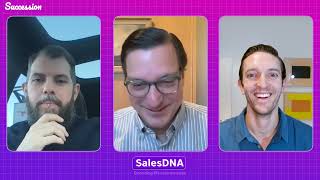
A recorded interview with Ted Tisch (Chief Agility Officer at Mammoth) about scaling startups and go-to-market execution. Tisch presents the ACB framework (Architecting, Contracting, Building/Scaling), describes the “shit umbrella” leadership heuristic for selectively exposing pressure to motivate teams, and shares concrete examples from Synthego (multi-channel sales, brand-building, CRM/analytics) and early CRISPR outreach.
Chapters
As you look at your career, look at it as segments. Always be curious about learning there's some work you got to get done in the eight hours or whatever time you spend that focus. But be curious about learning more in different areas. Right now, my title at Mammoth is Chief Agility Officer, which is a totally made up title. I was CEO, Chief Operating Officer. And we someone else came in and, you know, they needed that role to do their job. I was like, great. And it was like people always like, why Chief Agility Officer? And I'm like, it took me about a couple days to figure that out. The title. It's because I'm curious to go learn more about different areas.
All right, we got a great episode for you here today. We have Ted Tisch. He is the Chief Agility Officer at Mammoth, but previously he was the Chief Operating Officer at Syntago and he also led giant GM business unit over at Biorad. He's been in the industry for 30 plus years, I think is what he said. So lots of experience there and we got some great stories from him. But Nick, what were some of the things that stood out to you?
Yeah, I'm really looking forward to everyone hearing this one. You'll notice that I'm particularly quiet on this call and it's not because I'm sat in a car if you're watching this on video. It's because Ted had so many really useful nuggets of wisdom that I wanted to let him go and let Ted use up the time rather than me. So really excited to hear about the Shit Umbrella and some other pieces. But yeah, look forward to that.
Yeah, the Shit Umbrella is a good one and I think his framework for scaling and growing startups, the ACB model, is something that everybody's going to have some really actionable takeaways. He talks a bit about brand, he talks about setting goals and why your sales goals are oftentimes really high. And you're like, where the hell do these numbers come from? Well, he's going to share some insight into why that happens. So without further ado, let's jump right into the episode with Ted. Hey, Ted, welcome to the show. Excited to have you.
Thanks for having me. It's great.
Yeah, we're so glad that you came on. Join us today. I think it's going to be really powerful for all the listeners to hear like an executive's point of view and to how they think about growing a company, how they think about sales culture, how they think about growing sales teams. So really excited. But without further Ado, we did prep you for this. So you, I know you have a story coming. What's a crazy or funny story that you have that's happening in your career?
Yeah. So when I was at Bayerad, I spent 25 years at Bayerad and the last 10 years I was engaged or running sales teams and I was at the national sales meeting one year as a vice president, general manager presenting our next year plans and kind of wrapping up what happened that current year. 800 people in the crowd up at Squaw Valley, really nice venue, everyone's chill and I was pissed because we missed our number for just stupid reasons. And part of it was they were selling other things and obviously, you know, all that noise and the tone of my voice presenting to it was not motivational. It was pretty demonstrative. And when I got off the stage I knew I kind of choked the whole thing. But sometimes you just get your head gets in a space. My boss came up to me and said, guess what we're going to do? We're going to sign you up for public speaking classes and you're going to do that with all the scientists that are doing it. So the next couple months, every week I was in public speaking classes, about 30 of U.S. and like remedial and I thought it was a great. Actually I've walked away with like a lot of good lessons from, you know, don't forget that those classes have purpose. And I thought I was pretty cocky around how I was presenting. Well, I got schooled and there are things I remember from that very well that I practice today when I do public speaking. So never be afraid of learning even. And the second thing is if you get pissed at the sales Reps, they'll tell 800 of them.
So yeah, yeah, that's, that's, that's, that's good. Yeah. And I think it's good to know that everybody makes mistakes. No matter, no matter who you are, no matter how experienced you are, it's good to know. So good learning.
Yeah, a lot.
All right, let's dig into the content for today. So the main thing that we're going to be talking about with you is go to market strategy. How do you plan a sales team? How do you put your strategies in place? How do you think about compensation goals, all the good stuff that you need to scale and grow a sales team. So I know you have a model that you kind of use to think about this stuff. So why don't you kind of kick us off with that model and we'll go from there.
Yeah, yeah. So the model just to get out is called the ACB model. It's not rocket science but it's just kind of a practice around architecting, contracting and building. Okay. And can put slash scale because that's really what you're doing in go to market. And this can happen at any function in a company. Not just sales or going to market for new products or services. It's really around what you think around. You think about with you know, either surrounding yourself with experienced people or builders or, or having that domain knowledge which, you know, just my background. 35 years in life sciences, 25 years at a, you know, multi billion dollar company in the past eight years building up, you know, two startups from, from basically 18 people. You have to get your head around the parameters, around what you're trying to build. Architect. So think about pen and paper. Like you know, what does the architect do to build the house? They don't go get, go to the contractor right away. They, they start architecting, they start drawing, they do, they do landscaping, they do surveying to get the foundations in place. And that's what you need to do because you can experiment in MVP minimum viable product and try everything but it's, and that, that's part of the process. But that's not the only thing you really do have to put pen to paper. The second phase is contracting. So you need to get people in. And your first people that you bring in in contract may be temporary, they may be permanent, but they're not. They're, they're the starters, they're resilient, they, they go ask questions, they experiment. And those people are the people that really set the foundation. But that's just the starting foundation. And as you start to get success and move on, you build and scale. And those are different people. Those may be different people, I should say maybe different people because those are ones that think in broad base instead of like how do I architect and contract and get things going. And I've seen multiple. In fact my career is building on starting things and giving it to other people. I continuously had to reinvent myself every couple years to new jobs because of this model. But I still believe that that's, that's kind of the foundation of how we think around starting. Especially in a go to market scenario like you are in a startup or any business. New business area.
Yeah, any new business area that's coming up. Even if you're in a bigger company starting a new business unit, something like that.
Yeah, that's right.
So as you dig into the architecting side. What are some of like the first initial steps? Is it like goal setting? How do you, how do you sort of, you know, kick it off from that perspective?
Yeah, yeah, I want to spin it back, I want to focus on startup here a bit because I think big companies are pretty locked in their processes and it's there, there's variations, but they're pretty small. But in startup, you know, you really got to think around what's your business model, what are you trying to build to. Right. And one company, like a synthego, it was a multi channel, full on commercial model. It wasn't just like, we're going to have direct sales reps. We had online direct SDRs, you know, cold calling that you were running Garrison. There was a lot of, a lot of, a lot of work. We had distributors with Thermo. It was, it was multi channel. And the key that was driving that, taking a step back and peeling that onion was the sales goals. And where did those sales goals come from? I think this is what's behind the door that people don't get to hear. Okay. So yeah, yeah. In an executive in a series A or series B startup, you are taking your technology that you've developed. It's not perfect, okay. By any means. The product is probably, you know, pretty far along, but it hasn't been scale tested, it hasn't been fully validated. And you're out there trying to, as an executive trying to anticipate what does the hockey stick look like. Right? Because you can start up, you know, you get some ground, you get some traction and then you hockey stick up and right. Everyone does the hockey stick nine times out of 10. There's no hockey stick. But that's the pitch, right. And you think that you can do that with certain things come together. Well, in my experience that happened at Synth ago was that we were just raising Series B and our hockey stick, that was rational and practical, was not getting traction with investors. The VCs are like, okay, I can make my money somewhere else. So as an executive team, it got, the numbers got moved up. Okay. The sales numbers got moved up to the point that was triple what I thought we could do. Okay. And so that, that kind of happened behind closed doors that I wasn't a part of. But when we got to the first, you know, we got the fundraise, woohoo. And I didn't even ask what the new sales numbers were because I didn't want the first, the first board meeting with the new investor. You know, the sales goals were flashed up and I was like, what's that? Right? But I was head of commercial and operations and everything. And our CEO said, hey, you know, that's, that's what we need to do to get the money. And so all of a sudden it was like, okay, you just gave us a crap ton of money in series B money. We're going to focus that on commercial. And so we did that build out. So, you know, I think that that's the behind the scenes drivers of goals is sometimes they come from irrational places. I don't say that's a rational development of goals. You know, in the end we kind of delivered to where my plan was because liftoff can only go so quick. Brand development can only go so quick. But. But you gotta. But where's accelerator? And we hit that since ago. We really definitely hit the accelerator. It took a while because no one knew who we were.
But.
But yeah, that's, that's kind of where the goals come from, the sales goal. And then you, then you just got to figure out how to get there. We can talk about that.
Let's talk about that. So how do you sort of. Well, I guess the first part is how do you communicate those goals to the team? Right. Because you're getting a certain amount of stuff coming at you and then you have to figure out how do I filter that down and get that out to the rest of the team. So what do you kind of do in that situation?
Well, there's a term that endearing that a lot of the people that work with me know and it's called the shit umbrella. Okay. And that shit umbrella came on me with those sales goals. As you know, it was protected for a while and then it was kind of let through this umbrella. And I think this is really good for any sales manager out there, Anybody who's managing somebody. You're going to get access to information that not necessarily the whole organization needs to know right away. But you're operating under those principles. But there's motivation enforcing actions. You need to have to get people to do extraordinary things. And so sometimes you let that shit umbrella open a little bit more than you want and you give them some transparency to what the pressures are you're under. And I think that that's a really good motivator for people with context around it. It's not just like here it is, go hit the number. But sometimes it's got to be that. I think, you know, for me at Cynthia would go to market. So it's not just sales that you Think about, it's also product fulfillment. Right. You have to be able to make the product to the volume you're selling it at and that's a careful balance. Okay. And, and especially if your technology is not fully developed for scale. And at Citigo we struggled with that at the beginning. I think at any company, I think, you know, Ginkgo. Other places you struggle with automation. How much automation do you put in? What's the product? Does the product actually meet the market? And do you have that feedback going back and forth because you want the, the reps to bring back the information from the customers and, but you also need the, the, the operational team to understand the challenges of the field because otherwise they go, they'll easily go apart and blame each other for why you're not obtaining it. And my job is to put the umbrella around it and say, hey, this is the goal. We need to sell this much revenue with these types of products because we can make these products. Yes, we have the killer product coming up, but that's just not ready. So it, it's, you kind of, I didn't really answer your question, like how do you let it out? But I think the shit umbrella is something to think about is how much information and why you're letting information through to, to motivate people and teams throughout the organization.
Yeah, you open and close it depending on how much pressure you need to apply. So it's more like a sphincter.
Very much like that.
There you go.
Very, very, very name. Yes.
So now it's the shit sphincter. That's what I'm going to call it.
No, that doesn't sound good. And the people who, you know, when I left synth ago, the people who took over understood what that was coming like, I, I, my umbrella was removed and all of a sudden it was bing on them and they had, they're like, after a while they're like, oh my God. And it's like, yeah, that's what you, that's your job is to kind of synthesize the pressure, the, the goals, turn them into action and motivate people and not freak them out. Because, you know, some numbers are just really, really hard in startup. They're just, that's by nature you took the money, there's expectations and you have to deliver and, and that's not for everybody, just that resilience. You need that toughness, that grit. Right. We all talk about those things and it's kind of tossed away as kind of like a startup thought. Those are absolutely required and the best reps you have. Brian Schneider, who is one of our first reps at Centigo, that guy is full of grit, he's full of resilience.
And he knows, don't fill his head up too much. Don't fill his head up too much.
Oh, no. But it wasn't that way at the beginning. We were trying to figure out how to work together. Right. It wasn't smooth sailing at the beginning. You know, the thing I knew is that he had a great book of contacts. He was, he knew how to do this and that I could throw really tough stuff at him and he would go do it. And so, yeah, I'm not trying to blow up Brian here. I just say he's a really good example of somebody who, who can really exist in a really ambiguous startup environment. And, and you know, it's, it's not for everybody, but if you're ready, that's that it's, there's nothing more rewarding.
And I think you mentioned it earlier, right? You're talking about there's different people that you might have for this sort of architecting phase or this sort of contracting phase. Like the very beginning. They have a different mentality, a different mindset for how they approached not only sales, but any sort of role within an early startup company.
Yeah, yeah. I think, you know, I think interviewing a topic that's really interesting is like, who do you pick? You know, like if I was a sales rep and I'm choosing my career and like, Look, I went 25 years at like a 4% growth company, right. And then I go to the startup that has zero revenue. Yeah. I had to consciously make that decision. Right. I was like, I'm going to take all the crap that comes with, I'm going to read all the books, I'm going to talk to a lot of people and I'm going to build that resilience. And. But I was a noob, right? They were like, I'm bringing in this big company guy into a startup. Well, same thing with sales reps. When you're operating in a multi product, multi service type of know, multi billion dollar company sales, you, you are like one little piece and you really don't get exposed to all of it. Well, in a startup you get exposed to all the problems. And so you, if you're going to make that jump or if you're going to be in that, you have to find that resilience, that creativity, that moment that like, I'm going to thrive on this instead of be afraid. Now I'll tell you I would. I quit. Set to go in my head every quarter. I mean, like, let's get ready to write my resignation letter.
It's hard.
So I'm not like this robot, right? It's like there's things that happen. I was just like, this is the stupidest thing. Why am I doing this every day? But then at some point it builds up, and then the next day, I wake up and I get in the car and I drive into work and I'm like, you know what? This is still cool stuff. It's crisper. It's an emerging market. When am I ever going to get to do this again?
In those early days, too. You did some really interesting stuff to get those first customers, right?
Yeah, yeah, yeah, yeah. So there's maybe a quick little story here. I think, you know, one of the things is that this was 2015, 2016, so CRISPR was known and published, but scientists knew it. No one how to. No one does it well. And I think I heard a quote just last week that it takes like seven CRISPR experiments before you really get it to work well right when you're starting out. And so everyone's like, yeah, I know, I'll do crispr. And, yeah, the reality is they didn't, and we didn't either. And so I was calling up, you know, I did cold calling and the whole thing on upwork. I was lucky in a very, very. There was a lot of FOMO back in 2015, 16. All the CRISPR therapeutics ETAs were all getting built. And so everyone wanted part of the game. And so we were perfect timing. So I was sending out cold emails to, you know, the KOL KOLs out in the industry, and they're responding at 70% response rate from, like, people like Jennifer Doudna, Matt Porteus and Fang Zhang. You know, it's like crazy. I had no business emailing them, but I did. And it was. I think I followed your guidelines, Harrison. I was seeing that LinkedIn around. I called emails, right? It's two paragraphs.
It's.
What's it? Keep it clean. But it also had FOMO working for me, so I think those things together. But then I was missing the science side. Like, I didn't know crisper, like, how to do it. And so I hired a gentleman, Kevin Holden. Dr. Kevin Holden was part of Synthesis guess still to work with me. He was on those calls and kind of carrying the science side through. So the story is we went to Dr. Matt Portius's lab up in Stanford, and we had like 40 people. We brought on three labs. This was like, Cynthia is coming in and going to really help us with synthetic guide RNAs. And I get up and like, thank you for having us. And. And then, you know, so crispr. This is how CRISPR works. And immediately I get like 10 words out. Matt goes, hey, Ted, we know how CRISPR works. One of the big practitioners of Bible. I was like, oh, I took to Kevin and go, kevin, all yours.
Your turn now.
Yeah, yeah, so, so the lesson there just kind of the take home lesson was a couple one. When you're starting, don't be too full of hubris. Like, because I really, I wanted to show what I knew, but I was like, no, Kevin actually is the guy to do that. Second is use your team. Right? Use your team. I had Kevin there for a reason and it was actually more important Kevin got at building a relationship than me as an executive. And so I think in those, those team based calls, making sure you use your team and know. And that was just like first basic 101 mistake I made. It was hilarious. And I just felt like the dumbass idiot. Right? But, but boy, I haven't forgotten.
Yeah, it's like you show up and you just, you go through your presentation like you always have, rather than like sort of tailoring it to the.
Well, no, that was our first one. That was our first technical presentation ever.
Fun too. Oh, that's even better.
Yeah, totally choked that one down. Okay. But you know, that's part of that architecting. Right? And the learning. Right. You want to do is like, it's kind of too big a stage to do that, but okay. And guess what? Matt's been an advisor to Citigo since then for like eight years. So you know, I think, you know, talking to him afterwards and, and then, you know, we also had something he wanted and needed, so we needed. We had something we wanted. So that actually worked out well.
Thanks so much for listening to the podcast. If you could do us a quick favor, it with someone, you know, it would mean the world to us. If you want to up level your sales skills or just network with other life science sales reps, check out the succession community at Succession Bio. Join. Okay, now back to the show. So now as we talk about, you know, say like the next phase of scaling your company and you start to think about brand, right? Because we did things at Synthego regarding brand that I don't think a lot of life science companies really think about. I think it was a really big component to our success. So how do you think about brand versus, like direct selling? You know, we talk about all these omnichannel, you know, channels that we had for selling. How do you think about them and how do you balance them from like an executive perspective?
Yeah, there was a real. That architecting was intentional. So we thought around. We did customer segmentation. Like everybody, right, you have the whales and you have the long tail, right? High volume, low volume. And we don't want to waste time on low volume. And they needed a lot of training and education. Right. I didn't want to do that. We didn't have the resources. We wanted the wits. And so very. And online kind of casts a wide net. Not that everyone's going to order online, they're going to test you online, but they're not going to build relationships with you online. And it's a convenience. And so the strategy was we'll build direct sales in San Francisco and Boston, Cambridge. That's what we're going to do. Okay. So that's where Brian came in. And then I hired Jason Steiner to come in to be our first CL sales in the Bay Area, who ended up being sales manager and then, you know, moved on in different roles in. In Synto. And the key was, is make foundational beachheads there, okay. And really get people that knew what they were going to do, had contacts and were fearless about reaching out. And they were reaching out to the large comp. You know, not the large, large companies, not like, you know, Pfizer, but Crispr Therapeutics and tell you people were practicing it and wanted to learn more and they made a beach head there. And then what we did was we just expanded that, that, that direct channel out and, and made more reps. We built out the, the channel more obviously. When you do that, how do you do that? That's really important. And of course it's around brand, right. Because no one knows who sent to go. So the classic black T shirt that people have seen with Synthego, which, you know, engineering, you know, that came from the commercial marketing team, okay. And we hired a great couple members of the commercial marketing team that were driven actually not from the life science industry. I knew the life science industry was not full, sorry, commercial marketers out there in the life science industry of churn people, the people that came from the tech industry, they know how to drive analytics, they know how to do a customer adoption. They know how to drive, you know, interests and inbound interests. And so I hired somebody there and I, you know, and then had a real great creative guy inside And Adithya Bobby, thank you. Shout out to you guys. Really drove, you know that. And so we started just handing one of the big things with BI Rad we couldn't give away swag. Right. It's just part of the P and L. I was like, no one knows who we are. Just give those shirts away. We're giving them to admins of PIs. We didn't care one. Let's say I'm gonna wear it in the gym.
Great.
You're genome engineer in the gym. It's okay. You're, you're improving yourself and so trying to drive brand that and so taking care of the whales, you know, the large customers with direct sales channel and getting the leads in there and building out traditional lead generation and finding out the points of penetration, finding out the organizational structure, how do I bring TED in and when do I bring TED in, those types of things. But what was really interesting was building out the other parts of organization, building out a streamlined online ordering to make it frictionless. That's the thing I talked people on startup is customers don't want headaches about ordering. Make it frictionless. Okay. Especially if you're doing a custom business like you know, DNA and sequences.
Right.
And submitting, you know, Excel spreadsheets. So building out that, we smoothed that out. That was engineering and that was really worked. We had a great team there. The other side was how do you generate from cold call. Right. So how do you take MQLs or online, y', all advertising and then converting those marketing qualified leads as people build interest and flipping that over into sales qualified leads. Right. And that's, that's actually a really hostile territory between marketing and, and sales because what marketing thinks is a qualified lead, not necessarily is a sales qualified lead, you know, and that's, that's a big deal. So I spend a lot of my time managing that relationship. And is, is a lead a lead, right. And is it actually going to be revenue? And then of course who takes credit for which I didn't care about because I just wanted the revenue. But. But yeah, so.
So let's pause there for a quick second because that's a good point. Right? You cared about the revenue, you didn't really care who got credit. But I think in a lot of companies people really care about who gets credit when they're in their role. It's like the marketing person is like I drove this lead, salesperson is like I drove this lead. So how do you kind of talk to those people where they're worried about credit More so than they are. Like maybe it's like validation of their role and what they're doing versus their ability to report up to you on the metrics that you really care about.
Yeah, well, there's. So the interesting thing is that the marketing teams are not on commission. Right. They get no financial benefit from driving that number besides hitting company goals. Maybe there's a bonus or something like that, but that's got a lot of components to it. So I always felt that it was like ego and pride generating those qualified leads and then seeing that hand over to sales. They want that marketing qualified lead to move to sales and turn into a large number. So there shouldn't be that tension. It's all aligned. But the other side is when 80% or 50% of those marketing qualified leads turn out to be dead ends.
Right.
Dry holes. And it's not the marketing person's fault. They put all the qualifiers into as much as they can. It's just part of the process. I think it goes to the fact that, look, sales is a team sport and we have no problem with SDRs, account managers, sales support people, FA s, customer support, all those are part of the sales organization. Marketing is too. And you just kind of got to bring them in all together and make a team out of it. And so that was a challenge. I just think it's ego, it's pride, it's those types of things. And so just working with people to understand it's a team sport. This is a team sport. No one does sales on their own. It's not scalable.
Yeah. And especially too, if you think about sales as sales, as in like sales of the product, it's different than when you think of sales as a role.
That's right. That's right. Well, I think, I think that the other, the other part that thinking about this a little bit is analytics. Right. So how do you manage people and number. You manage people through numbers, I guess is the way to say it. You manage people through. What's the pipeline look like? If you're running a double pipeline, which we did, we ran a marketing funnel and we ran a commercial funnel.
Yeah.
What are the analytics? Are you really hitting the numbers? Are we setting aggressive goals? You can't get to your goal without the other guy. So are she going to be talking and vice versa. I think the only thing that changes everything is that with the sales team, there's a commission with it. So it's real money in their pockets. And so you have to be careful with how you deal with those But I think setting, building out Synthego, we started with, oh God, it was, I don't even remember. It was a CRM that was so bad. And then HubSpot was bringing out the free CRM. It was not just marketing automation in 2016. And so we got CRM for free. I think we ran that for a few years and everyone's like, that's crap. And they all were Salesforce jockeys from the previous companies. And so we ended up going to Salesforce but having that, those, those foundational systems and the teams around it to support it and build it out the way you want it. Because don't forget, you need that infrastructure behind it to drive those analytics. And so you need marketing automation. If you're going to drive brand, you need marketing automation to get your word out there handbooks, all the things that you do to go outbound marketing. And then you need to have the sales, you know, the CRM to drive the how you track. And then you know, as a, as a leader, you're looking at those numbers because that allows you to flow up to see your success rate.
So I think that's right. And something I think about scaling sales as well, whether it's the marketing or the direct sales part of it. That was already when I arrived at Cintigo. Not this to be too much of a love in, but when I arrived there, there were certain things in place that allowed me to do the part of my job that was most important. So what were you saying about people? At the beginning of a startup, you have to do everything, but doing everything's not scalable because it just gives many bottlenecks. And having those core teams in place to support the actual functions that you want to happen, I think is a better way to scale than just continually adding salespeople because you give back time to do other things. And I think that's something that was really key in that, in that architecture.
Yeah, yeah, I think that's right. Totally. And I think that the, the moving through that funnel right, from marketing to sales and sales structure is upscaling the team. Okay, so what we really need to do is think around sales time, right? How much time are you going to spend on calls? I mean, how do you build that structure? How time are you going to, and who's going to do, you know, the, the, the, the discovery, you know, selling cells that are going to be on the calls, they're going to do outbound emails, building that first beach head and then handing over to maybe a more technical rep, you know, That's. That's really important. And I think one of the things that, you know, Harrison, you did, and I think, you know, Len did and a few others in the company that were really very strong about this was how do we keep training in the product manager? Do we use product managers? Like Anya said this on previous podcasts, use product managers actually to train them. I expected my product managers to be technical experts, to be able to sell the value, teach to the reps on how to sell the value of the product, not necessarily the sales process, but the product. So that foundation was in place for the sales rep, so they had credibility, especially in this emerging technology area. But then we needed also our sales organization and function to be very clean so that we didn't have people chasing dry holes. And there are a lot of dry holes out there. A lot of people said they were doing crispr, but we found out they were doing crispr. They're not really doing was all about promise and dreams. The reality was not where it was. And we were forcing it down to people by training the sales team, but also training the customer. I think that, that. Building that strength, you know, from a sales rep, our best reps were the ones that were most technical. Okay, that's great, because they could actually run with the customer, but they also could articulate the value to the customer. And okay, Brian, here we go again. Is what's in it for me kind of thing. Customer first. I always say customer first. They're not always right, but customer first is what you need to think about as a rep, because, you know, that's. That's actually, you know, the person you're going to build a relationship knowing that you have a whole army behind you, supporting you with. With. With, you know, tools and training and fulfillment and support. So it's obvious when you're in a big company, because that's all in place. But when you're building it, you know, it's like, how do we need that? Or when is the time to do that? And, you know, some of it's intuitive. Some of it is a lot of sales reps telling you, we need this. This is. This sucks. Yeah. And then you got to figure out how to do it. It.
Yeah. And I think maybe if I might summarize a little bit of that, right. It's like you have the efficiency component, which is how well lubricated is the system, right? So how easy is it to get things done? How fast can you execute? Right? So that's all of your systems and your processes, and then there's the effectiveness component, which is how good are you in the moment? So when you're in that conversation, how are you actually performing? Do you have like the appropriate sales skills, knowledge, tools, resources to be successful in that moment? I think if you can optimize both of those components, I think you're going to set up that team for being able to scale. So kind of leading into that building component of your framework.
That's right.
All right, so last question we have here for you because we're running up on time, so we have a lot of newer people into the role coming into sales. We have a few experienced sales reps that are listening to this as well. What piece of advice would you give yourself, your younger self, about leadership, about making that transition into leadership?
Yeah. Wow. This is such a big question, right? Especially as you think around early in career. And I have actually two young adults in my family who are starting their careers and they ask me that question all the time. You know, I think as you look at your career, look at it as segments. Always be curious about learning, right? There's the work you got to get done in the eight hours or whatever time you spend on focus. But be curious about learning more in different areas. Right now my title at Mammoth is Chief Agility Officer, which is a totally made up title. I was coo, Chief Operating Officer. And someone else came in and they, they needed that role to do their job. I was like, great. And, and it was like, people always like, why? Why Chief Agility Officer and, and I'm like, it took me about a couple days to figure that out. The title, it's because I'm curious to go learn more about different areas, whether it's at scale, you know, different, different functions, or it's at different companies or different people. I, I'm just curious and I think so anything that I would say for someone who's just starting out is, yes, make your quota, kill it, do a great job. Or if you're managing people, make sure they're the best people possible. Make sure you get the best people. Make sure that they have clear goals, you know, especially in ambiguous times. Help them through that. Coach and mentor. But be curious about learning. Learn a little bit about product management. Learn a bit about commercial marketing. Learn a little bit about going inside the factory and finding out how they actually are making this stuff. And, you know, and asking people like, you know, if I give you an order that's 10x what I was giving you, can you do it right? And they're going to say, do you have a customer that can do that? Right. And that's like, all of a sudden that conversation becomes really fun. Right. And so I think just be curious about learning and growing. And that, to me, was what the advice I give my younger self. Is it probably to do that more? I don't know if it was possible, given what I did, except maybe jumping to start up a little earlier in my career than I did.
Yeah, yeah, yeah. I can double down on that one. I think the number one thing that helped me be, you know, remotely successful is just studying, learning, trying new things. I mean, the amount of books, podcasts, everything you just, like, consume. I love it. And I think it's when you have that knowledge, it gives you a foundation to then to apply your experiences to. Whereas if you're like, missing the knowledge, it's hard to take the experiences and understand, you know, maybe where. Where exactly it's coming from or how you want to apply, you know, the next experience that comes up.
Yeah, I can say that I spend a lot of my time coaching, mentoring right now, a lot of people, and I love it because it just. I can take that knowledge of experience because I. And pretty much any. Any. Any topic area and at least have a discussion with them and I'll learn from them. Right. I'm still learning. So I think that. Don't be afraid to coach a mentor as you start to move to, like, you get some of that experience and you have someone new on board. Don't forget what sales practices worked well with you. I think there's a lot. I think the best reps were the ones that called each other every day, like, hey, I have this situation I've never had before. It's not just always a sales manager, it's a peer. Not that you may take action on that, because that might not be the right answer, but you're at least talking through it in situations. And so I remember if I had, I was in so many cars right around the world, right, with sales reps, and we'd be driving on the autobahn in Germany. All of a sudden the phone comes on. All of a sudden there's a German conversation, right? That was my peer. She was asking me about the sales situation, what should I do? I'm like, oh, well, tell me about that. And then all of a sudden, for the next hour in the autobahn, we're talking about this situation. So, you know, don't forget that your peers are great resources to learn, but again, they're peers, and so they're not wise and old, you know, leisure. So they might not, you know, be careful in the actions. It's good, good information, but you still got to use your own judgment on, on what actions you take.
Well, yeah, this was awesome, Ted. We really appreciate you coming on chatting with us. I think everybody learned something. I know I definitely did. Even though I was there for, for some of these stories, I definitely learned some new ones. So really appreciate it because I protected.
You with the shit umbrella. Just.
You did? Yeah. So, yes, I didn't get rained on, thankfully. I appreciate that. Well, thank you again. And if people want to get in touch, what's the best way to reach out to you?
Yeah, I think on LinkedIn it's under Ted Tisch, and I'm happy to respond to people on LinkedIn. And there's a lot of communication. I just like the new business, you know, channels that communicate and so, yeah, reached out to me at ted Tisch on LinkedIn.
Awesome.
Thanks, Ted.
Thanks so much, Ted. Really appreciate it.
More from Nick


[Leadership] Creating a culture of coaching and skill improvement with Sai Guduguntla
[Leadership] Founder selling and how AI will change how team's work with Angie Schwab