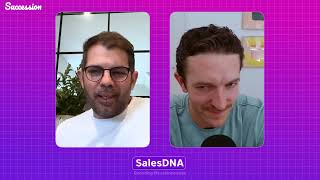
[Leadership] How the CEO of a public company views sales and marketing with Kara Cannon

A podcast-style interview (Sales DNA) hosted by Nick Clare featuring Kara Cannon, CEO of Enzo. The conversation (published Nov 5, 2024) covers sales and marketing alignment (written plans, transparency, informal cross-team communication), the changing skillset for sales reps (personal branding, social media, willingness to take calculated risks), challenges of leading a public company while acting like a startup, and the importance of strong sales management and non-management career paths. The episode mixes practical tactics, leadership philosophy (reduce complaining; focus on solutions), and personal anecdotes.
Questions this video answers
November 5, 2024
About 130 people
Over 30 years
Listed as one of the top 25 women leaders in biotechnology.
Chapters
I was listening to this other podcast. They were basically talking about how like from the outside, you look at all these companies, great brands, well known, and you think, wow, that must be a well oiled machine. And then you get inside of it and you're just like, oh my God, it's a complete mess. And it's like every company is the same, Everybody's dealing with the same problem. And so I think it's just important to know that you're not alone. Other people are going through the same stuff and you guys work together as a team and get through it.
Anybody who's been around for a while, you start to see that at those brands they're just really good at branding. And inside it's still the same people that are just trying to figure out how to get things done. And sometimes it's pretty messy inside. And I had this boss a long time ago and he was a mentor to me. He was the king of simple cliches that at the time, some of them were lost on me. One of the things he said, it was a little bit crude, but he would say when he was talking about other companies, you know, like in how we were going to compete, someone might say, how are we going to go up against them? They're so big. And he would just say, same ass, different rapper.
Before we get into today's show, I wanted to tell you a little bit about what we have going on over here at Succession. So Succession is a life science sales membership that includes on demand courses to uplevel your sales skills, resources to plan and execute your sales process, a community for peer to peer networking and learning, and live workshops delivered by experts twice a month. You can get access to all of this as an individual for just $79 a month, or you can uplevel your entire sales team with courses and customized learning designed for each individual rep. Come and join us over at Succession Bio. Okay, let's dive back into the show. Hey, welcome to another episode of the Sales DNA podcast. We have an incredible guest on the show here today. We have Kara Cannon, who's the CEO of Enzo, their global life science company. And she personally has over 30 years of experience spanning major companies like Pal Corporation and Dynal. And she has been on the forefront of innovation, leading strategic initiatives that have reshaped the commercial landscape of the life sciences. She was also listed as one of the top 25 women leaders in biotechnology. And so she's worked at startups all the way up to billion dollar corporations. So she's seen it all and so today we're going to really dive into some of her unique insights and the evolving role of sales in the life sciences. So, Nick, what were some of your favorite topics from this episode?
As a, as a general thing, I really enjoyed getting a senior person with that level of experience perspective on sales and marketing, considering they're not only senior and been in there for a while, they've actually done both of those roles. So that stood out as actually, the information that we were getting back was really valuable and very insightful. I particularly enjoyed the piece about what a. What a rep, a good rep looks like today in a company like Enzo and what you need to consider that you wouldn't have had to consider before to be a good rep. And there was some surprising skills that she mentioned within that.
So, yeah, for sure. I thought this was a really great conversation. It's not often that you get to hear from a CEO of a publicly traded company to hear how they think about sales and marketing within their organization, how they think about sales reps as a, as a whole. And so this is definitely one you're not going to want to miss. Hey, Kara, welcome to the podcast. I'm really excited to have you here.
And I'm excited to be here. Thanks for having me.
So, as you know, we give everybody the same prompt. Give us a crazy or funny story that's happened in your career.
So I. So I don't have a single story. One of the things you'll see about me is once you give me the floor, I try not to give it back. And I also, sadly don't have a super crazy story. But what I realized as I was trying to think about it is I have about a thousand embarrassing moments that I have collected over my 35 years of working. So I thought I'll just run through a couple of them, including the thing they advise you never to do at work, which is about two, two, two months into my first job, I cried to my boss and I never saw a man look so scared in his life when I started crying. So that was a little embarrassing. Taught me a few things when I was getting started. Also recall sitting in a really important client meeting and in front of a big room of people, someone from the client looked at me and out of nowhere said, you are way too young to be in the role you have. What is your father, the CEO? And I was like, dude, that's dumb. I reflect back on it. I think it might have been part of his negotiating tactic to try to throw me off guard or something. But that felt a little embarrassing. But the most embarrassing thing that I came up with because I really tried to say, if I'm going to start this podcast, let me come up with something that really resonates. I had the opportunity in my last company. I was just starting out. I had the opportunity to present to a room of senior executives that I hadn't yet met. I was a rising manager. I was super excited to have the opportunity. Super big deal. All dressed up in my suit, presentation. I was ready, spot on. Practiced. Here we go. It was in a U shaped room back in the day when there were lots of wires across the floor. I am someone who wears high heels. I'm only five feet so you know, I need a little extra height. You see where this is going. Everybody just sits down. I go to walk across the U to pick up a cup of water and as I turn around I trip over a wire. I was Superman. Like I didn't just trip. I flew across the room, spilled the water all over the place, popped back up and said, all right, let's go. And I'll tell you also embarrassing, memorable people for months, some a few years would keep bringing that day up to me. But I have gotten my head around it and I think that's part of why the one executive always remembered me and actually helped me as I was further moving up. So even the embarrassing things I think have potential positive outcomes.
Yeah. And I think I remember interviewing somebody and mid interview in a sort of a similar embarrassing scenario mid interview and it was in during COVID time. So it was Skype. They just like ah, just knock water everywhere all over my keyboard and like all of a sudden just sort of stood, shook it off and went don't worry. My husband calls me the water terrorist because I'm always doing this and just carried on and I was like that's a great trait that it was like unflappable and just carried on. It was almost a positive in the interview process because she could just move through it and not phase.
There you go. That's how you have to. Anything that comes at you, you have to be ready to just keep going forward.
That's for sure. Well, I know we're really excited to have you here for many reasons but one is that we get to hear from someone who's in a CEO position who has been in both sales and marketing and we get to hear your opinion about the age old question sales and marketing alignment. So I guess kind of kicking it off with that right out of the gate. What do you think are ways in which you think about making sure that sales and marketing are well aligned. Right. They have the same sort of objectives, goals. They're rowing the boat in the same direction, not arguing how. How do you try and, you know, mitigate these challenges that I'm sure many, many companies face.
Yes. Yeah, so. So I'm glad that the first question wasn't who I like better. I was waiting for. No, no, no, no, no, no.
We'll get there. We'll get there.
We're not going there. Nick. Listen, most of the things that I use as our guiding principles are not mind blowing. It's the basics. But often the basics are forgotten and that's when you get into trouble. So. So one of the key things that we're trying to do is coordinate. How do we coordinate? We make sure that we have some written plans at the start of the year. Another thing we try to do is transparency. Make sure everybody's aware of those plans. Make sure we have regular roundup meetings where we bring people together. And then one of the more important things that I've, as I've grown in my career, I've found to be key, and maybe I didn't realize so much in the beginning of my career, is the loose communication, the informal communication, trying to encourage the salespeople to get to know the marketing people. Stop with the emails. Stop with like, seeing these, like, faceless entities that you start to get frustrated with. Get to know them. Get everybody to realize that we're all in this together. We're all working to get these customers happy. And the more that I've been able to do that, the more you get people rowing the boat in the same direction, to use your expression, I feel like.
Because then you know that you don't. If you know the person and you get along with the person, well, I feel it leads to better discussions and dialogues where you probably know that they have your best interests at heart. Right. Or they're thinking about, you know, the greater good of the. The company, organization, et cetera. Whereas if you just, you know, hide behind your email or your slack or teams or whatever, and that's the only way of communicating with people. It's the wonder you just don't understand. Or there's probably miscommunications that are occurring on a regular basis.
Yeah, exactly. I mean, one of the benefits I had early on in my career is I was doing a lot of global traveling. And so you found yourselves with team members in weird places at weird times, sitting around an airport, sitting at Airport, fast food kiosks and you really did get to know one another. And then when you ran into a problem, you weren't so quick to judge because you were building these long standing relationships. So I was lucky to have that. And so now we have to figure out how to do that in a world where you have a lot more virtual aspects to the job and things move a lot quicker than when I was first, you know, in this space working. And you're so right. We just have to remember we're all just people trying to come here doing the best that we can. And that goes a long, long way.
Yeah, I, I have like an internal venture. When I hit one of those scenarios is are they doing this to me or are they just doing it? Because most times we assume it's being done to us when actually they're just trying to get something done. But if you've got that personal connection, you can actually ask them that.
Right.
As well.
So I think that's where. Yeah, it's another level.
Like even what you're saying there, it's like they might think the leads that they are sending are good. Yeah. Because maybe, I don't know, like sometimes people haven't been in sales. Right. Some marketers have never been in sales. So they don't know what it's like to follow up on leads and have all the other stuff that you have to do in your day to day role. And so if they are think they're sending good leads but you don't think so there has to be a discussion around it, otherwise it's never, the problem is never going to get solved. And so if it's just complaining back and forth like we're sending you leads, well, your leads are crap. Like it's not going to be a great, you know, working relationship. So that, that.
Oh, I was going to say your comment actually made me think of something super important. It kind of led me to a marketing person who's sending leads and not really understanding if they're good or bad. And one of the things that we've also been pushing is all marketing people have to get out of the office, go see a customer, go to a conference, call someone up, talk to someone. Because again, just as important to get to know your peers who are in their sales roles. You think this is a good approach? Show me how it's done. Go out to the customer and show me how it's done.
Would you ever. I think this would be a fun one. Put marketing in charge of following up with leads for A week or something like that. Be like, hey, you get the leads for a week, see what happens. And you, you pick up the phone, you make some calls, and then, you know, you'll. I think you'll learn real quick, like, from a quality perspective, you know, if you're. I'm saying this, if you're not having these conversations regularly. Right. You know, if it's something you just want to put yourself in those shoes, go for it.
No, that's. That's amazing. And, and I've done some of that. So. So again, another benefit that I had was my first role. I was at a startup. I was the fourth North American employee of a. Of a Norwegian startup. And so my role was technical marketing. But, I mean, there were four people, 10 people in the office. You came in, you did whatever you needed to do. You took orders, you answered phones, you helped ship product. Like, whatever needed to get done, we wanted to make sure those doors stayed open, and you did it. And so that instilled in me that mentality of everybody does everything. And so I have challenged marketing people when they dig in and say, this is good stuff. Then you push them to say, show us how it's done. You do it, you win on it. And then we'll show the salespeople along the same lines. Launching product. Sometimes you launch a product, you're so close to it, and you think it's so great, and you start talking about the great things about it, and you see in the room, it's like falling flat on your sales team. And it's like, oh, you better get out there and show them how it's done, because nobody's going to sell that thing if you don't go do some first. You know, first wins and, and learn what that, what that process is out there in the field.
I guess the worrying thing is, though, if you put your marketing team in charge of sales for two weeks and then they close more business, then what do you do?
Then we put back in the other direction and say, okay, guys, let's go.
I think, I think this. There's also something to be said too, about the sales team, though, which is you're getting people coming to you, leads, whatever you want to call them, and they know who your company is. It's on you to figure out how to turn those into dollars. Right? Like, that is why you get paid well in a sales role, is because you have the ability to take a person and work that account, that organization, not just like, follow up on a lead, like, take that lead as A, you know, as a trigger point to say, I'm going to go now outbound to this company, this organization, and go figure out how I can grow within it. Like that should be more of how you think about these things, like how can you be proactive rather than reactive? And I think that's just like a good sales mentality for a lot of people out there. So, you know, disarmament goes both ways. Because I see it from marketing's perspective too, because I've seen sales just get lazy on lead follow up and not doing anything with them too. So.
Well, as. As you all get to know me better, one of the things you'll see is, is I'm equally hard on everyone. I'm empathetic, but I'm equally hard on everyone. And one of the things I stand on is I've done almost every role so I feel I can be hard on, on people. And I always reflect on one of the best salespeople that I ever worked with. He was an extreme competitor and I'm pretty competitive too. And he and I would compete on the stupidest things. When I first knew him, I was in marketing. He was in sales. We went out to a customer site together. It was a university, so there was a lot of opportunity to move around and talk to people. And we had access into the, into the university so we didn't have to figure out how to get the door open. We're in there, but instead of us going hand in hand to each customer, because that's normally what a sales and marketing person does when they go out to a site together. We're looking at each other and we said, you know what we're going to do? He said, you know, it'll be fun. You think you're a better salesperson than me? Because I had told him I was a better salesperson. He said, let's split up, let's split up. I'll start on the top floor, you start on the bottom floor. We'll meet in the middle. Whoever gets more like hard leads or commitments wins and buys the drinks, which is stupid because the company bought our drinks at the time. But anyway, it was the idea of let's go and see who can collect more things. It was the most fun day. This probably was 20 years ago. I still remember that day.
Wow.
But he brought that out of me because he was just compete on anything. That's a guy that didn't need you to give him leads. He would figure out how to get the sales regardless. Right. So the more people like that we have, the more fun things get.
Who won?
I'm not going to. I don't want to talk about.
Oh, he got you. We know, Trace.
It was pretty close. It was pretty close.
That's good. That's good. I probably respected that you got close.
So you are a competitive story. That. That goes that competitive in my house, between my wife and I, even, like, we're really competitive. So if you've ever heard of the German bread stollen, which is like a Christmas bread, that's quite complex. We lived four doors away from a pub and one evening was like, right, let's make my wife's. I'm making stolen. I was like, I wanted to make that. We'll both make it, see who's better. And we was up till one in the morning, like, huddled in a corner of the kitchen so she couldn't see what I was doing and we couldn't. And then when we'd finished the next day, we even, like, chopped it up into little cubes, put flags in it, so we knew whose was whose and went round the pub making strangers taste it and tell us who's was best. Likewise. I don't want to talk about who's what. But. But that is that level of enjoyment in the competition. I think that's important. Not just being competitive, but enjoying that phase of it.
That's right. It is the. It's right. You're so right. The enjoyment matters. Right. It's the healthy competition. It's getting the excitement about the process and the win. There's nothing better than a win. Bragging rights. Love it.
No, that's fair. I mean, I feel like competition is. You don't want to be overly competitive where you are, like, pulling people down. But I mean, it's such a great part of sales. It's like being competitive with others, being competitive with yourself. I mean, I remember years ago, we had a room dedicated to our inside sales team and we had on our screen, anytime somebody would close a deal, they'd get their song played. So you could have, like a song preloaded with like a YouTube video or something. So anytime you close the deal, everybody in the room and, like, if the doors were open, everybody outside would, like, know that, hey, somebody closed the deal, their song is going on. So, like, that was always fun. Have, like, leaderboards up. So, yeah, I kind of missed that, to be honest. And I guess that's one of the things I wanted to talk to you about too, is like, what have you seen change a lot over the last couple of Years. Yeah. I think one thing that I've noticed is that, you know, if you're not in person, there's a lot of, like, camaraderie that's missed and you don't really build as strong of those relationships or like, there's not a lot of motivation as much from. From team members. And I'm sure that you might notice something similar. But I'm curious to see what you've kind of picked up on the last few years.
Yeah, that is one of the biggest challenges, both because you have more and more people off site. I mean, salespeople have always known how to work off site, but you've had all your operational people on site and there was less. There was less electronic stuff. Again, you know, email gets in our way a lot. Or when I say email, it's all of those electronic tools that we have to rely on that distance us from one another. There's nothing. Again, I'm very old school, but there's nothing like a phone call. You know, people underestimate the value of a phone call.
You can still pick up the phone. It's a surprise.
But yeah, yeah, yeah. And. And the connection you can still get with when you're talking to them on a quick phone call goes a long way. So I try to remind people of that. But that's definitely changed. Right. Everybody texts now. They don't call. So you lose some of that ability to connect. We've been trying. I am lucky because we're small globally. Enzo is about 130 people. So I have the ability to reach out and get everyone together on a regular basis. Virtually. We do town halls where we bring everyone together. And a big part of the town hall is a reporting mechanism, but we try to use part of it to remind everyone that we're in things together. We all win together, we all fail together. And if we fail, we're going to beat ourselves up a little bit, but then we're going to brush ourselves off and figure out how to go win again. And we try to do that to help bring that camaraderie back together. But yeah, the universe is challenging us for sure. It is hard to keep people connected.
And I wonder too. So you guys are a public company, right? So how is it we talked about this a little bit on the pre call, but acting as a startup but under the scrutiny of a public company?
Yeah, it's one of my nightmares. So I should probably give a disclaimer. I love the job I'm in. I love the company I work for. The People that are part of Enzo are some of the best professionals that I've worked with in my career. But working for a public company has its, its challenges for exactly what you just said is, is every company has pressure, but our pressure is very visible. It's the, the, the quarter to quarter deliverables to the shareholders. No forgiveness. And you know, trying to distill that down into the team competitiveness that to, to get us to deliver on those goals is a challenge. Right. I don't want to discourage people, but I need them to be mindful of the fact that we need to keep our shareholders happy. And you know, we are lucky because we, we are able to have some leeway. As long as you deliver in a quarter, you get some rope to do things, you know, the next quarter. We have gone through a change period over our past two years at Enzo, which has also been challenging but for me really beneficial because it actually gave us a window to make some significant changes and reworked our commercial team, restructured it again to try to drive towards this closer collaboration between sales and marketing. I have everybody rolled up under one commercial leader who grew up in sales. So now my, my head of commercial is a sales guy by training who's helping to bridge that gap between sales, marketing and after customer support. And maybe we wouldn't have been able to make some of these organizational changes if we were in a standard period. But again, because I just came out of a transition, I was able to make some quick adjustments. But you know, listen, it's challenging to have to report out as a public company, but at the end of the day, every company has their challenges. I was at a startup that was hard because if we didn't deliver, the doors wouldn't be open the next day. Right. So that has its own sort of stress.
Yeah, yeah. I was listening to this other podcast. They're basically talking about how like you from the outside, you look at all these companies, great brands, well known, and you think, wow, that must be a well oiled machine. And then you get inside of it and you're just like, oh my God, it's a complete mess. And it's like every company is the same, everybody's the dealing with the same problems. And so yeah, I think it's just important to know that you're not alone. Other people are going through the same stuff and you guys work together as a team and get through it.
You know, I love what you just commented on because anybody who's been around for a while, you start to see that, that those brands they're just really good at branding. And inside it's still the same people that are just trying to figure out how to get things done. And sometimes it's pretty messy inside. And I had this, I had this boss a long time ago and he, he, he was a mentor to me. So lucky that I had the opportunity to work under him. But he was the king of simple cliches that at the time, some of them were lost on me. But today I'll still have him in my head. All of a sudden I'll just like hear him saying some of these things. And one of them, you just made me think of him, Harrison. Because one of the things he said, it was a little bit crude, but he would say when he was talking about other companies, you know, like in how we were going to compete, and someone might say, how are we going to go up against them? They're so big and so wonderful. And he would just say, same ass, different rapper, same as the first shift. Shift. I can say the word. I don't know. You can edit it out. Am I allowed to curse?
Yeah, it's good. Good by me.
Okay. It's a little crude, but it makes it, it makes a point. So yeah, we're, we're all, we're all something different underneath.
Exactly. And the companies I've loved working with and for the most are the ones that have almost that we're in these trenches together mentality. So every company is going through something, especially at the moment, but the employees that band together and want to drive it forward together, the most fun to work with because you're in it together. You've all got the same goal when you're driving and that's just fun. It's hard work, it's stressful, but it's fun.
I wonder if. So I agree with you. I feel that way. One of the reasons I love working is I love the connection with other people. I've never asked non sales and marketing people if they feel that way. I have to go ask some of my staff. If you're, if you're someone who is in an operational role, are you just as I have to imagine, the team thing applies across the board. Have you ever asked anyone that?
Well, I used to be a head of operations.
You are. All right, so. So there you go. That answers it.
Yeah, we just blame sales and marketing. That's the only difference, right? Sales blames marketing, marketing blame sales, operation blames.
And.
But, but we're still in the trenches driving together. So I think it's the Same thing. And actually we're normally a lot closer because in a lab operations you have to be in the lab together. You're there weekends. I've been there at like four in the morning to make sure something's plated to go out in a shipment. So when you have that kind of thing and you need to go to the pub, I think they can be even closer and because they have the social aspect to it on a daily basis. But yeah, right. In my roles I saw the same thing.
Well, one of the other topics I know we wanted to talk about was sort of the evolving role of a sales rep. Where I think years ago it used to be you kind of get out into the field and you're going to go knock on some doors and you're going to go sell some stuff. And then it kind of has obviously changed a lot since then. But even more so I would say during COVID and then even post Covid, like the last two years, I think the. It's just become really challenging for sales reps to win deals because the customer landscape has changed a lot. You know, budgets are a lot tighter, funding is down. Right. There's a lot of other like sort of external factors going on. So I'm curious how you as a CEO think about structuring the sales team types of people you guys are thinking about hiring. Like how do you think about those things? Because you're setting up your company for the long haul. Right. You're not as a sales manager, you might be thinking about, I just need to get somebody in here to, you know, fill some shoes and you go sell some stuff. Because you're thinking about how do I structure this organization, hire the right people, put them in place to be successful long term. So love your thoughts around that.
Yeah. And again, it's becoming an extremely complicated world. And when I think about salespeople now, you know, it's funny, we started the call saying how to bring sales and marketing people together and somehow now salespeople have to be marketing people. So it's like, you know, you have these people that already had to have a whole interesting set of skills and now you're expecting their skill set to be even broader. Because one of the things I see is our most successful salespeople are great at branding and not just being mindful of the corporate brand. Right. Which is again, you have to train people on what your brand is and make sure that they're bringing that forward in there sales discussions. But our most successful salespeople have developed clear personal brands that they are using to get into the door of customers. And so for us, part of that personal branding, when it's done right, highlights that they are consultants, that they're technical but they're still, you know, available and that they are supportive. And you know, when it's done right, it looks like it's super easy. I have, I have one sales rep in particular that we're, we're lucky to have. She, she really innately understands social media and she's been able to use it to, to get into the doors of places that, that the other people would never get into, you know, and she makes it look so easy. But I think any of us who have tried to deal with social media, it's not that easy, but it's done right. It looks easy, but it's not that easy. So looking for, in the future, we're looking for these very well rounded people that are willing to take calculated risks, that are willing to try new things, learn from past mistakes, you know, be overly communicative with their peers and their customers. I mean, that's a lot to ask, but those people are out there. And you know, the benefit of salespeople is salespeople tend to be willing to take a calculated risk more so than most individuals. They thrive on connection and social media is all about a form of connection. So I think for us that's going to be a big part of the makeup of our future team.
I love that you're looking for people that are willing to take risks because there are companies out there that are the complete opposite, where they basically want you to be a soldier. Right? Do as you're told and don't cross the line. And the technology is moving so fast. Like I was just watching this video today about, or maybe it was yesterday, but like Claude released this new AI thing where it can take over your computer screen and like do tasks for you. Right? Like that's, that's crazy to think about. And like this wasn't possible six months ago, a year ago, the way AI has blown up. And so if you have reps that are willing to like learn these tools, spend the time within these different technology sectors to try new things, to try new techniques, to learn how they can connect these different systems, build different automation flows, those reps are going to be really successful in the future because they're going to know what's coming and they're going to know how to adapt to it. But if you're just sitting around doing the same old thing that you've always done, it's going to be really challenging because there's going to be so much technology that's going to come up and kind of, you know, pass you by.
Yeah, 100%. 100%. And, you know, again, Enzo's a smallish company compared to some of the guys we're competing with. So we have to think of clever ways to try to beat out the big competition that maybe doesn't have to take big risks, but can win just on brute force. Right. And strong brands that are entrenched in the procurement systems of some of our customers. So, you know, I'm. I'm supportive. I don't want people being chaotic, but I think that, you know. Yeah, but. But calculated risks, it's the only way we're going to. We're going to move forward.
I think the, the thing for anyone listening, though, you have to be comfortable with that risk yourself.
Right.
If you're a leader that doesn't want risk and you're thinking, I'm going to hire people that are going to take calculated risk, the flip side of people that generally take calculated risks are they're probably easily bored and they don't like to stick within the framework and the rules. So that's kind of the. The archetype of the person. Right. And you need to be able to manage both those sides of a person. Otherwise. Yeah. So I think often we talk about hiring the right rep for the right company. And when companies start or they're smaller and they go after a rep from someone like Thermo that knows how to sit directly in their lane and do nothing else, that. That's. That's not what you need at that point. But, yeah, I'm all for calculated risk.
That's a great point. It also puts a burden on our managers. You have to be a stronger manager if you're going to have people that are a little bit more willing to go outside the lines. Right. Because you have to make them feel comfortable enough to try it, but to be able to respond quickly when they start to get too far outside the lines and say, okay, all right, let's come back for a minute.
That's good. I mean, well, that actually is interesting because I think sales management, slash leadership is one of the least appreciated. Appreciated is maybe the wrong term, the least enabled group of people in an organization. Right. We do all sorts of sales training, marketing. You know, there's all sorts of courses and all sorts of things out there that exist for salespeople. Marketing people would have product people, but I think there's not Enough dedicated to sales management. And it's probably one of the hardest jobs. Like frontline sales manager might be one of the hardest jobs. Like you get all of the crap from above and below and you are now no longer responsible for your own number and you have to. What's the right word? And. And you're probably like relatively new into it. So you're trying to figure out how to both manage and lead and deal with personalities and this is like all happening to you simultaneously. So.
Personalities.
Yeah, yeah, exactly. Sales rep personality. So how do you think about like, you know, sales management as a function within the org and make sure that they have what they need to be successful?
Yeah, it's hard to add much to what you said. I mean, I agree with everything you called out. Sales management is. Is tough. And often the. The people that make great sales reps make horrible sales managers because you take away all the things they love doing as an independent contributor out in the field and then say, oh, because you were good at that, we'll make you the manager of all these other people. And then they find themselves miserable for all the reasons you called out Harrison. So for us it's really trying to find that balance, make sure that we're supportive of our sales management. I'm real lucky again at Enzo because the person that I have leading our global commercial effort that as I said earlier, grew up in our sales organization, he is a good balance between liking the analytics of management, the mentorship of management, yet still finds a way that he can connect himself to being part of the deals. He still finds a way to make sure he gets that time out in the field, goes out with his team so that he can keep that excitement up in his own head, but is very comfortable in giving the win to his team. So, you know, we just have to keep looking for the right people who want that balance and for those that don't, for the sales reps that don't. We have to come up with ways to give them career growth without them feeling like the only way to go forward is to go into that horrible.
Management role that is underappreciated. I believe that is an incredible comment right there. And I think anybody listening to this who's thinking about building career paths for the sales team, you have to do something with non management career progression because otherwise you're just going to lose people for more money from other companies.
Yeah.
Which is the worst thing that can happen to a company. Right. You have your top performing salesperson and you serve them up to the competition.
Yeah, exactly.
It seems quite extreme in the sales process. But I saw this when I used to work at AstraZeneca many years ago, and they completely changed their whole management process because they recognize this, they're not all good scientists, like good sales people want to become managers. And they actually divided out and created two linear paths that you could end up as like the full on head of department or you could end up as a principal investigator. And they were the same level, same qualification, like same influence, but one had no team reports and one had like seven or eight. And I think by identifying it early and building those paths out is critical for keeping everyone in that sales team happy.
Yes. Well said.
Nice. Well, we're coming up here on time, so I want to kind of ask one last question, which is, and it's.
Not, and it's not going to be which one I like better, right?
Oh, no, maybe we'll end on that. But you know, I think we've talked about a lot of things. I think, you know, sales reps are, you know, that things that they're doing well, things that they can improve upon. But I'm really kind of curious to get your hot take on this, which is what is something that you think sales reps should stop doing?
I think, well, it might be, might have been easier if you asked me if I like sales or marketing better. It's a tough question. Listen, again, it's, it's probably the same challenge I would put on anybody, sales, marketing, operations otherwise is reduce your complaining. But I have to explain that because that makes it sound horrible. All right, I, I, I love to complain. Anyone who knows me, you catch me in the hallway, I got something to complain about, you know, the traffic, the weather, something. But if you know me, hopefully what you also see is I complain for a minute and then I quickly pivot to, here's what I'm going to do next, here's how I'm going to deal with this. And I would say sometimes, you know, we have our team members, especially when they become more isolated, they get fixated on where they're stuck, they get fixated on the complaint or the problem. And so I would just encourage people to remind themselves that it's more fun to figure out how to get out of it, right? Like it's the game of like, fine. There's the challenge, there's the barrier. What are we going to do to move around it? And the more people do that in life, not just in their job, the more successful and the more happy they'll be. In my opinion.
That is so good. It's like, yeah. Instead of sulking in your complaint, right. Think about what are the ways that you can make it better. You can get around it, come with proposals, different ideas. Yeah, that's so good.
Don't wallow in your misery.
Yeah, right, right. Like for a minute. And again, I'm like, all for, like, let's just take a minute and say, like, life sucks. Yeah, this is horrible. And then it's like, okay, let's go now to move on.
Yeah, that's great. Well, thank you, Kara, so much. One last final question. Sales or marketing?
The top it. That's for next time if you have me back.
All right, well, thank you so much for coming on. It's great to talk with you and get to hear your story.
You too, Nick Harrison. Thank you very much.
More from Nick




[Leadership] Creating a culture of coaching and skill improvement with Sai Guduguntla


[Leadership] Founder selling and how AI will change how team's work with Angie Schwab