[Leadership] How to leverage scientific content in your sales process with Dan Sheridan
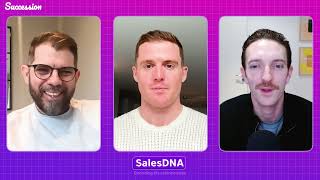
Dan Sheridan, co-founder of Colab, a medical-writing agency, explains why biotech companies need rigorous scientific content instead of generic blogs. He built the business from freelancing with his partner Ellen to a seven-person team, advocates for founder-led sales and failing fast to find ideal clients, and warns against AI-generated content that lacks technical depth.
Questions this video answers
March 25, 2025
Dan Sheridan and his partner Ellen
About seven or eight people
Chapters
I think with reps or starting a company or launching a product, there's a sort of ethos that I really like which is fail fast, fail fast. So you want as much data as you can get as quick as possible to decide whether this is the right way, the wrong way, move on. If you're launching a product and it's not going to be successful, you're best to find out in two months and not two years.
It's also really important because you get to learn like which client type you actually want to work with and sort of suits what you offer your company. As I said earlier on, like I'd be worked with absolutely any clients and some of them were a nightmare and it just wasn't worth it, right. Whereas now I have a good understanding and the odd times some clients would come to us and we can just tell by a few things that they.
Might say that when you started you're positioning yourself as I just need some business, so I just need to get some customers. And so it's okay to charge less because you just need to figure out what's going to work and you figure out what works and then you can grow from there and then you start to realize your value. So you start positioning yourself as a little bit more premium. And so now you have to position yourself with new prospects that come in and be like, yeah, well we don't do that stuff. You can go to look for freelancers who are just starting out and then that way you're really position yourself as that premium to work with those people that you want. All right, we're back with another episode of the Sales DNA podcast. On this episode we have Dan Sheridan, who's the co founder of Colab and they specialize in medical writing. So they're an agency that does medical writing, all sorts of different things like marketing content, blogs to much more technical, detailed scientific writing as well. So I think a lot of good stuff in here. He talks about his backstory, starting the company, different challenges that they face, founder led sales, hiring people, and then also gives some advice at the end of what you can look out for if you're ever deciding to start a company. What do you think about this one, Nick?
Yeah, I think the same thing. I think actually there was quite a lot of good nuggets in there when we were talking about sort of launching a company and how you assess what the need is for that product you're selling within a company. And I think there's a lot of parallels that can be taken there for sales reps and how you actually go out and build pipe and qualify your opportunities and take those. So I think there was a lot of parallels in that. And I also really liked his take on the risk. Don't think you have to have a big business plan to start a company and how you can just do you risk it.
Take a leap.
Risk it for a biscuit, as we say.
Nice. All right, well, should we dive in?
Let's do it.
Hey, Dan, welcome to the podcast. We're pumped to have you here.
Hey, Dan, what's yours?
Awesome. Well, as you know, we kick off every episode with a crazy story that's happened in your career, so give us one.
So it's not that crazy, but it's a bit amusing. So it was my first job out of college, out of my undergrad, which I feel is often how these stories happen. So I first positioned in Amgen, so, you know, one of the biggest biotech companies in the world. 20,000 employees in one of their manufacturing sites. I think about six months in, I got my first big project leading this sort of sterile sterility, sterility testing project, seeing the processes sort of maintain sterility under different conditions. And then at the sort of first major sort of stakeholder meeting, we had like QA manufacturing qc. Everyone in the room, now it's my time to shine and present the results. And I think one of the directors asked me, how's the test going? How are the results? And I was obviously trying to sort of stay as lift as possible, being the sort of fresh undergrad in the room. So I just meant to say, yeah, like, everything's all good. But I said, yeah, the results are all positive. Which to me think of this in like a microbial sterility mindset. Everyone. There's a big gasp in the room. Everyone thought, we are going to have to shut down the whole sort of production run because we have infection or infection in the tanks. But quickly my manager sort of stepped in and said, no, no, he doesn't mean that. He just means everything's fine. And I just sort of slowly sort of, you know, faded into the back of the crowd.
That's such a funny, like, only scientist joke.
Yeah. I just quickly realized, like, in these regulated, strict GMP regulated environments, you've got to be pretty selective with your words and the main glitch of matters.
Right?
Exactly. So you need to think about what other meanings they could. They could have. So now that always, I think for the rest of my time there, it probably felt like everybody remembered that. But I'm sure they all just laughed and you know, moved on pretty quick.
That's good.
So it happens all the time. I was talking to somebody the other day and they were talking about NDAs and being in the sales world, we're always signing NBA's long disclosure agreements. No new drug admission is what they meant. So like even in the same world, just moving one like department across, we're using different language so it really matters.
Yeah, yeah, for sure.
Nice. Well, I think where we want to kick this thing off is maybe a little bit around your background. What prompted you to start, you know, collab kind of where it's at today. I think it would be great background for everybody and then we can take the conversation from there.
Yeah, so I suppose as I said, so I did study science my undergrad originally just wanted to go into sort of big biotech, big pharma, you know, thought it sounded really interesting producing, you know, all these crazy drugs and treatments. As soon as I got in there I realized it was pretty dry and boring and repetitive. You know, you're, you know, we were producing sort of breakthrough drugs but when you're in it, you could be producing anything. You pump stuff into a tank, you pump it out, you package it. So I spent about a year in there and then I decided to go back to do some more potentially with the mindset of doing a PhD at some stage, trying to go a bit more into research. So I did Masters and then into a PhD in the Francis Crick Institute in the UK and I probably went a bit too far into the research side as a lot of people do. Sort of Midway through the PhD realized maybe, you know, a full career in academia isn't for them. I suppose I felt quite removed from the real world applications of science and like, you know, the big breakthroughs happening in industry and you know, reaching patients within my own PhD research. It was very sort of basic, very early on that got me into thinking about trying to, you know, do some part time work in other aspects of science are a bit more, you know, at the forefront. So this was also during COVID So I was working part time in a contract research organization. I was testing a COVID vaccine. So I was doing evenings in there alongside a PhD and that was good because, you know, scratched that bit of an itch of being a bit further along the sort of science pipeline. But again that was pretty repetitive and the minimum wage wasn't too appealing either. And so, you know, I still looking out for other, other opportunities that I could use my skills as a scientist, but still working a bit further along. So I sort of fell into medical writing. You know, I found a job advert online for a stem cell company in New York that needed a medical writer to support with their applications to the FDA for the new drugs. So I managed to get that, get that position and that sort of threw me into this world medical writing that I didn't even know really existed at the time. And that was actually a career for scientists and that you can work on really interesting projects but from your home, from your computer.
Did you always know you were a writer? Did you always write? Were you good or you just kind of fall into it and you figured it out?
I don't think I hadn't written that much. I think generally as a scientist, like the only writing you do is generally for your thesis and I don't think anyone really enjoys that because you have the pressure and you're trying to do it quickly and it's a bit of a pain in the ass. I think it was probably only when I actually started working on these interesting projects that I found I did have good skill set for it and I found it enjoyable. But yeah, no, certainly if you asked me a few years ago what did I want to be career in medical writing, I wouldn't have jumped on it. It was only trial and error that I thought it was really good. Yes, I suppose that got me up to sort of freelancing during my PhD and then just sort of snowballed into form an agency and now we're a team about seven or eight.
Nice. Snowballed into starting an agency. Okay, so give me a little more there. So you know, you're freelancing, you're chatting with, you're working with maybe a company here or there. What was kind of the tipping point where you said, okay, this is actually something I want to do more of.
So my partner Ellen, so she started doing it as well. So she worked in the nhs, so she started doing more of the sort of healthcare writing. So Colab sort of formed the name, which is sort of the collaboration of myself and Ellen, me the scientist and her sort of healthcare. So I think we thought, hey, we can just, you know, form this into a little duo company. And then, you know, we just found that there was this need for sort of specialist medical writing that wasn't a huge company, that wasn't agile, had all these layers of management. So we were getting really good sort of response rates from our clients. Slow. And then it got to the stage where, you know, we're working sort of every evening for four or five hours. On the weekends for 10 hours. And one of us had to quit our full time job. So it was either the PhD or Ellen in the hospitals. So she decided she would quit her job to sort of do it more full time. I think by me still maybe had one full time employee working for us and one couple of part time people. So she still have to sort of manage all that. And yeah, just you know, just slow and organic growth. We didn't really do any marketing or outreach but sort of word of mouth and referrals from existing clients just sort of kept bringing in new projects. We just sort of slowly grew the team to have the sort of the workload or the manpower to meet the workload.
That's exciting. That's really fun. I mean. Yeah. And I imagine too like along the way you're a scientist by training but then you have to figure out okay now I actually have to figure out how do I sell? Like this is a service to people. Right. You can't just like hope that people are going to come to you and like hey, here's our money. Right. You have to like, you know, develop some, you know, form of sales skills a long way too. Right?
Yeah. I mean that's was probably the hardest thing is learning all those operational and the business skills. And I've always been sort of quite hands on, you know, any of these new I suppose challenges at the time that, that we faced, you know, instead of just trying to pay someone to, to do the for us, you know, I tried and learn for ourselves. You know in our first year I did our sort of the tax returns, we didn't bother getting an accountant which probably maybe wasn't the smart.
Yeah, yeah.
But you know I always trying to think even, even if we are going to hire someone later on, I still want to have a good understanding of the sort of the basics. At least then we can have a set of conversation with, with your birth with, with whoever you have doing this, that task. And even now like I still pull up our accounting on things being like oh hey maybe you missed this and you know it is the case. So I think it is worth having having that knowledge. But yeah, as a scientist learning the business aspect was challenging and certainly just sort of learning as you went.
Yeah, I feel like there's. When you start your own company you become like you have to become like proficient in a whole bunch of new domains that you're just not used to like I don't know, invoicing to Your point? Accounting, sales, marketing, like everything that you, like, think is a part of running a business, you have to figure out then, you know, on your own, basically. Or have to figure out how you make enough money when you can pay somebody or bring somebody on to help solve those things. And so, yeah, it's definitely. It's not as simple as, oh, yeah, I'm just going to like, you know, launch this product or launch this service or spin up this agency. Right. There's a whole other, you know, set of steps that you have to follow too.
It is amazing what you find interesting and want to get involved in when you realize it could save you money though, but, oh, I'll do that. That's going to save the business of money. That sounds great. Sounds a lot of fun to learn that for seven hours.
Yeah, I think that was one of our major focuses when we started, was just trying to keep their costs down, keep things lean. You know, we didn't start, we didn't start with this sort of end goal of, hey, we're going to start this big agency, we're going to, you know, ask someone for investment to just hire out all these jobs. At the beginning, it was just sort of gradually going from freelancer into an agency and then suddenly you have all these more responsibilities and tasks that you have to deal with. Yeah, just learning as we go, trying to keep the cost down by doing things ourselves. Our first website, I built it on wix myself.
Nice.
So it was like we launched our website for a hundred pounds or something.
Keeping the cost down is great, but unless you can bring business in, that's a bit of a challenge. Right, so how did you find your first sort of walk into having to do selling? I presume it's your first looking at the sort of your LinkedIn profile.
So I suppose a lot of our early work sort of came through some freelancer websites and yeah, I suppose I did listen to some audiobooks and podcasts and stuff on sales. So, yeah, purely just sort of learning on the fly. You do quickly learn sort of what proposals or pitches work and which ones just flop. So a lot of sort of trial and error. So I think for us that was just the main way. And, you know, one of the major challenges is like pricing. You never know when you're beginning how much you can price for things. So it's all just about trial and error. You know, you give a client a price for one project, they just accept it like that. You think, okay, maybe that was a bit too low. You go, no, you go Too, too far the other side and it gets rejected.
Yeah.
Sort of find that middle point that works for everyone.
Yes. With anything you're selling, whether you're a rep or a company, everyone's saying yes, you're priced too low. If everyone's saying no, your price too high.
Right, right.
It's a, it's a fairly simple equation.
I think after, you know, four or five clients and you sort of get a bit of a feel of what sort of sales tactics work, what proposals work, your pitches, the costs, what you need to highlight. So I think it's. You can't figure out, you can't figure out what works on your own, even without too much experience in, specifically in sales.
Let's take a quick break from the podcast to talk about what we have going on over here At Succession, we work with 40 plus life science sales companies to help them find more opportunities and close more deals. We provide a range of services to support your sales growth. So whether it's increasing top of funnel opportunities with done for you, lead generation in person or virtual sales training reinforced by personalized training plans, recruiting top sales talent, or just building custom AI workflows to help make your team more efficient, focus on selling. So if you're ready to transform your sales strategy, visit Succession Bio and schedule a call with Mick and I and see how we can support you. It's like you're hitting on something important which is like you just need enough at bats, right. You just need to start having conversations with people and that's where you're going to get those insights. I know we were guilty of this early on is like thinking that, oh yeah, we're going to put together this stuff like these packages that we think people are going to want. And so you spend a lot of time doing that and then all of a sudden people are like, I don't want that. And then like, can you just do this instead? And it's like, maybe. And so I think you really have to have a lot of these conversations. This is true. I think if you're a sales rep too is like if you're coming into a new company, it's the same concept. You're going to have to learn how to sell this product, the service, whatever it is, and it's your trial and error too. Like, you can't just assume that you're going to be as proficient as all the reps that are there. No matter how good the training is, you still just need at bats and you need reps and you need practice to just know what works and know what's going to fit your style.
Yeah, for sure. I think early on, you know, when I did sort of jump into the freelancing I was just trying to work with as many clients as possible, working on as many projects as possible, but it was also to build up that sort of experience in sales and you know, the business side of things. But it was my first time jumping into this new career, medical writing. So I just wanted to work on absolutely everything. Whether it was writing a pretty simple blog article for equipment company or designing web pages or you know, really technical stuff, really technical regulatory writing for the fda. I sort of worked across absolutely everything quite quickly. I was just sort of grabbing whatever I could, doing a lot of sort of outreach to clients, trying to get, trying to get the foot in the door. So that certainly built up. So technical expertise on the actual writing and the projects but also I would say just getting those bats in, seeing what pricing gets rejected, what gets accepted. Our proposals seem to hit well and also just sort of face to face chatting with clients, trying to get your value across. So I think early on I was charging probably a super cheap rate at the time but it didn't really matter because it was just building that sort of ground level of the foundations I suppose.
I think with reps or starting a company or launching a product, there's a sort of ethos that I really like which is foul fast. So you want as much data as you can get as quick as possible to decide whether this is the right way, the wrong way, move on. If you're launching a product and it's not going to be successful, you're best to find out in two months and not two years. But you can only do that with enough at bats for one of a, an English version of that. You can, you've just got to keep trying. And it's the same with SALS as well. Right. You're going to have all of these conversations but you have to have them.
To find out people are interested.
So you fail fast at the ones.
That are not interested and you can spend your time on the ones that are. And it's the same extrapolates out up business levels. Yeah, it's also really important because you get to learn like which clients, which client type you actually want to work with and sort of suits what you offer your company. As I said earlier on, like I'd be work with absolutely any clients and some of them were a nightmare and it just wasn't worth it. I probably wasn't going to fit for them, they weren't a good fit for how we did. Whereas now, you know, I have a good understanding. And the odd times some clients would come to us and you can just tell by a few things that they might say that. Whether it's on the pricing, you say, hey, we're looking for this, but done at a really cheap rate. Now just isolate.
Yeah, well, that's not going to work. Sorry.
No, we're probably not the right people for you. We probably go find a cheaper freelancer that will suit that budget. So I think that's also important, understanding who's actually worth working with.
I think this is true. No matter what it is you're selling, right. It's like, how are you positioning yourself? Right when you started, you're positioning yourself as, I just need some business, so I just need to get some customers. And so it's okay to charge less because you just need to figure out what's going to work. And then you figure out what works and then you can grow from there. And then you start to realize your value. So you start positioning yourself as a little bit more premium. And so now you're in. You have to position yourself with new prospects that come in and be like, yeah, well, we don't do that stuff. You can go to look for freelancers who are just starting out, you know, if that's the kind of stuff you're looking for. And then that way you're really positioning yourself as that premium to work with those people that you want. Right. So it's like, you know, through these conversations, you're going to identify your ideal customer, you know, ideal customer profile that you want. You're going to develop that, and then those are going to be the people that you want to, you know, focus your effort around, Right?
Yeah. And I think it's super important to, as you say, to understand and pinpoint your sort of value and what you're actually offering. So, you know, you're not falling into that race to the bottom just on costs. Which when you, I think when you, when you're starting out, that's all you can really compete on. You haven't got the case studies or the client list or the portfolio. All you can say is, you know, hey, I'll do it cheaper, quicker, maybe.
The parallel here for, like, we have a lot of, obviously, reps and salespeople leading to this. The parallel here is where I've seen a lot of reps, values, they go into a conversation of something they know their company does not do, and they think, well, I'll say maybe, maybe we could do that. Maybe I'll start an internal conversation, maybe we'll build a whole new product for you.
Right.
But then all that happens is you get the customer half interested. You are hoping that you're going to swap what they want halfway through the conversation to something you actually do and all it does is suck time, credibility and energy from you. And I think this is a mistake that you could make at a business level, but definitely make as a sales rep level because if you don't have control over the exact product, just move on from the maybes and sell the stuff you know you can sell.
That's, I think that's a parallel here that a lot of our listeners will.
Have seen made the mistake or if you're new, potentially you're going to make that mistake. So be aware of it.
Yeah, I think even for us as a medical writing agency, there is such a breadth of projects we could work on, you know, technical regulatory writing, manuscripts, marketing, content, social media. So one, I suppose one thing we have been doing recently in the last couple of years is sort of more sort of streamlining what we offer. The sort of core things that we know we're good at. We're not going to let down any, any clients, you know, down that pathway. So I think it's whether you're selling a service or a product, it's, you know, to what you're good at, you know, the clients are going to appreciate you retaining the clients, they'll refer you or if you give them a half baked project half, halfway down the line just because you try to adapt your offering to what they need it. No, it can hurt your brand, your reputation, your existing clients.
The quickest way to go sales pipeline or a business is referrals. And if you do crappy projects for people don't want, you're not getting referrals.
You probably get negative referrals too. Right. So which isn't good. Yeah.
Where is it people talk about the negative things like when you have a negative impact on someone, they'll post about it like three times more. So you get three negative to one good comment.
So yeah, so you see the name of the, the Google review to see on restaurants or anything. It's generally only the bad experiences that people take the time to highlight.
Nice. Well, I do want to transition to something related to content, something that we can use to help maybe other founders, the sales leaders, even reps. It's like where do you see content as a channel that anybody in biotech can really leverage more effectively.
You mean sort of personal content like your own branding or for a company.
I'll leave it open, but I think maybe more brand specific because I think that probably fits a little bit closer with what you guys do. Right. It's like how can we as a, there's the personal content side which I think reps can do a lot better with. Right. But then there's like the company side where from a company perspective there's lots of different ways that you can leverage content, a lot of different types of content that you can use. You know, some content's good, some not so good. Right. So where do you see a lot of the opportunities, like when clients come to you that you can provide your expertise and really provide that guidance to them?
Yeah, I think the content spectrum, you know, if we talk about blogs, application notes, white papers, you know, sort of marketing content that brands focus on, you know, it's so easy to do it badly. You think, hey, I just need some, some blogs sitting on a website, you know, they'll drive some, some search engine traffic. But you know, it's so easy to see like crappy content from just from a mile away. And if you just click onto a company's blog or the resource, their insights section and you just see all this, you know, originally just really quickly written content, not much value there, very high level. And more recently just these sort of spammy AI blogs, ChatGPT, you can tell that from mile away.
Let's delve into the fast paced industry of biotechnology sales. Right. No human would ever write that. Right.
So then, I mean it's just sitting on the website, it's not providing any value. I think it actually harms the brand image. People say, okay, there's, there's no scientist writing this. It's just probably someone in the marketing, marketing team, you know, spamming this out. In comparison, if you look at like really well, well done sort of marketing content, I always use 10x genomics as an example of that. They've got like a really good blog. It's not one of our clients. I wish they were, but I always highlight them because the content's really good. But it's technical blogs, it's got data that they've generated from their own teams. Now you can read one of their blogs and you'd be pretty well versed in a particular single cell sequencing application just from reading this one blog. And it's like it's always going to be hard to quantify. Is that going to then generate leads and sales, but just for the traffic it brings on and the brand image. And 10x are known as the leading in sort of single cell applications. And a lot of that is around certainly the products, but also just everything that sits around the product, the marketing content, the downloadable resources. So I think if it's done right, it's sort of technical marketing content. I call. It can't just be an SEO blog. It's good for bringing in traffic, but it's not going to do much for anybody. But you know, if it provides real, real value to a scientist that they, they can then go back to their workflow and say, no, I can introduce this new information that I've taken from this blog or this website into their workflow. You know, you're making their job easier. And now you're more likely when they are looking for a solution that they might come back to your company and purchase your products.
I guess what I'm kind of hearing here is it's less important about the format of the content and it's more important that the content is done really well. It's that if you have content that looks like everybody else's content, then it's not going to stand out. There's nothing going to be really differentiated there. And even worse, it could just be crap content. And then people are like, like, this company must be crap because this is crap content. Right? So you don't want that sort of association. You're almost better off not putting anything out than you are putting out stuff that's not. And I think that's, you know, a, a challenge because everybody's, there's this mindset of like, oh yeah, we gotta do SEO, right? We gotta do content. And like, if doing content for the sake of doing content isn't going to be something that's going to drive the needle. Like, you should be investing. If you're gonna do it, you gotta invest heavily and make sure it's like good content, high quality, you know, and going to actually like move the needle for, for the business and resonate with your, with your customers. Like if you were to maybe like a litmus test is like if you were to take your most recent blog and send it to your top customer, would they look at that and be like, oh, this is great and like learn something new. Or would they be like, what the hell? Did you send this to me? Yeah, that must be a good thing to, you know, test.
Yeah, I always think it's like, even before you start writing or producing content, think like, is there actually a need for this? Is it helping someone? Is it providing some value? Is it providing a solution? Or are you just generating it to have content sitting on your website that no one's going to read? No, no one's going to read it because there's no value there. There's no point like spending the time and the resources to producing this. So I don't want to say it's a good question at the beginning. Is this actually useful to someone? If it's not, you know, it shouldn't be made.
Have you found AI being good at certain things when it comes to writing? I personally don't think if you give it a prompt and say write me this thing that is going to be any good. But have you found it useful in certain ways, like if you prompt it effectively, what have you seen work there?
Yes, I think, I mean, I suppose the main issue that I feel with ChatGPT and these AI tools is like the content that it produces, even on like scientific content, it is actually good and you can read it and you know it's going to be relatively similar to what a human's going to write. The issue is when everyone's posting the same content. So like if there's 10 companies in the single cell sequencing field and they're all just saying, hey, write me a blog on the newest trend in single cell sequencing. And now you're seeing just with that one sort of one quick prompt, you get a full blog put on your website. Now you're seeing that same thing across 10 different companies. And that's when it stands out that, okay, now this isn't actually expert content, everyone's just producing the same stuff. And it's like now it's now more important to actually have that. So human content that isn't just that stands out of that baseline of all this AI generated similar stuff used from the same prompt. So I think although the content is good and there is a lot of value using AI, it's now trying to stand out above it is a challenge in terms of using it. We do use it sometimes to generate briefs or again, sort of quick, quick summary of various topics, try and pull together some information good for that. ChatGPT itself is quite limited, I think for a set of scientific uses and that it's not great for referencing and actually finding academic sources. So we do have another tool that we work with called Causally. So they're a UK based AI company, but they work sort of pretty much only in the sort of pharmaceutical field. And everything that that search engine gives you comes exclusively from Scientific databases. So. And it gives me the full reference list. Everything's referenced that's good.
And they're actually real references. Not like, I don't know if you. I don't know how bad it is anymore because I don't really use it for references. But it used to be chatgpt would make up names of publications and like findings, and it's like none of these things were real. I feel like it's happening less. But I just remember that was wild and people would cite it, people would cite that in their own papers. This like fake publications that didn't exist.
This is the modern equivalent of when people used to cite Wikipedia. Right. And it's like anyone can write that.
And it's just Wikipedia is pretty accurate, I feel like now.
But like it wasn't because anyone could write it and it wasn't always reviewed.
They've changed. Precious now that's fair.
Yeah, yeah, the original ChatGPT was a joke. I mean, I think it used to like piece together like an author list with a title for something else. So first glance you'd be like, oh, I actually know that author. At least when I was sort of doing some research in my own PhD. But then it's like you realize, no, he didn't publish anything with that title and the link's fake. So yeah, I mean, it's a good thing. When people talk about AI, you sort of immediately think of ChatGPT, but there is a lot more specific tools to life sciences and, you know, technical street coming up now is trying to find them and use them. You know, they're much better.
I will get ChatGPT to help with content sometimes, but the way in which I've approached it, which I think I found I get better results, is I will just brain dump my ideas, so they're my ideas and put them out there in some sort of like semi structured series of paragraphs and then use ChatGPT to help me formulate them into a more coherent story. And then I'll add extra anecdotes and pieces in there as well. And then that way I'd say the majority of what's gone in there is my thought process. It's just shortcutting the time in which it takes me to formulate it into something somebody would want to read.
I also love using this tool called Whisperflow AI where you can just like talk to your computer and it turns any of your voice to text it. It's actually like really good. And so I just will talk at ChatGPT and just like go on a monologue for like a couple minutes about, like, what it is that I'm trying to get out of it. And then like, it works so much better than just typing in, you know, one sentence and whatnot.
That's literally what I do. But I wanted to sound smarter, so I said I'd write it.
Yeah, I think these are all the use cases that AI is really good for. You know, if you just ask it to create me a blog on this topic, you know, you want to get some generic things. The references will be fake, some of the information may be false, but it's using it in these more creative ways. I think it's where the real value is.
Well, Dan, it's been a pleasure. We're about to run up on time here. But one last question for you, which is, so, yeah, there are, I'm sure people out there that are listening that are thinking of starting a company, maybe have started a company, but what's a piece of advice that you would give them? Something that you wish you would have known before starting? Colab Asking for a friend.
Harrison. Just ask.
Yeah, exactly.
Yeah, seriously, company, you know, maybe in the last year and a half.
Yeah, I think it's. It's easy to fall into this mindset that you think, you know, hey, like, you're going to plan out a business plan and, you know, try to, try to build a company in your mind. And then like on day one started, like, now I'm going to quit my job and I'm going to start my company. And, you know, there's a lot of risk in that and you probably need some investment. I think the safest way and what I did is sort of started as a side hustle. Work evenings. You can test it. Does the product or the service, does it have market fit? Do people like it, get a few clients, make some sales, you know, and you find that tipping point where, you know, now it's maybe whether it's your income, you're matching your income from your 9 to 5 based on your side hustle. That can be a good time then to sort of move full time into your business. Or it's just a sort of time constraints, you know, you're spending less time in your company, but it's more profitable, then it's a good time to move over. I think taking that sort of organic, slow mindset, you don't need to have everything sorted out on day one. You can just test things organically on the weekends. And also just understanding that you don't have to be the absolute expert in it either in some cases I'm almost the more most junior member of our team at colab we got postdocs and really experienced scientists and I always lean on them for their scientific expertise so you don't always need to be the most experienced person to start a company hire in that expertise and grow as a team together so I think it's a good it's easier to think I can only start a company in this when I'm the absolute most experienced person doing that but I don't think it's.
The case that's really, really good advice that's like very I would say counterintuitive or it's not something that people would think about it's like normally you would start a company because you're like hey I'm the best at this I'm going to like go do that but yeah I think that's really smart.
Cheers guys.
Yeah well thanks Dan appreciate it and we'll see each other.
La.
More from Nick
[Leadership] Creating a culture of coaching and skill improvement with Sai Guduguntla
[Leadership] Founder selling and how AI will change how team's work with Angie Schwab