[Leadership] Strategic and solution selling for complex deals with Kinga Bercsenyi
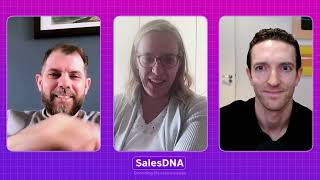
Kinga Bercsenyi, newly promoted SVP of Business Development at Arctoris, talks about selling complex drug discovery services. She explains how CROs evolved from outsourced lab hands to strategic partners, and why accumulated experimental know-how and risk management matter more than speed alone.
Chapters
Yeah, I think it's a really interesting question actually on overall, how much thinking is going to be required on the long run, because frankly, ChatGPT knows a lot more papers than I have ever even heard of. But I think where we come in as human beings is the type of questions we can ask. And then where us coming as CROs is that of course, all of those previous experiments that were run and we have recognized that making this protein cost 20k and that's like a huge impact on the budget, would never be something that could be retrievable from an AI. It's like this like human lived experience, if we can call it that. I'm really clutching that straws because I hope we will continue to have a job. Yeah. And then maybe creativity around it as well as like how you. You mix between timeline pressures, budget pressures. You want to bust a patent, but you have to follow the patent, even though they used an essay that was like popular in the 80s. And there's so many better essays now out there. But if you want to bust it, you have to use the same one because no one's going to believe you that you have a better asset. These sorts of things still require, I think, a bit of a human touch.
Before we get into today's show, I wanted to tell you a little bit about what we have going on over here at Succession. So Succession is a life Science sales membership that includes on demand courses to uplevel your sales skills, resources to plan and execute your sales process, a community for peer to peer networking and learning, and live workshops delivered by experts twice a month. You can get access to all of this as an individual for just $79 a month. Or you can uplevel your entire sales team with courses and customized learning designed for each individual rep. Come and join us over at Succession Bio. Okay, let's dive back into the show.
Hey, welcome to another episode of the podcast. Today I've managed to tie Harrison up and pin him down so he lets me do the intro for a change. Managed to stop him talking. Today we have Kinga on the show. She's recently promoted to SVP of Business development for Arcturus. It's a really interesting company around AI and drug discovery, but I'll let her explain more of that. What did you like about this episode, Harrison?
Yeah, I think we talked about a few things that are really interesting. Sort of the changing role of CROs, where in the past the CRO might have been just extra hands or an extension of your lab, but now they're Being expected to be more strategic and provide more insights and guidance and advice to, to their clients. I think we talked a little bit about solution selling complex deals, obviously AI and drug discovery and then how to use tactical listening to help sort of elevate yourself in a conversation with people that might be more experienced with you. So a lot of good stuff in here.
Yeah, I really enjoyed the stuff about how to tactical listening and also like you said, how what kind of level you should be at when you're in a conversation was really good. Well, what do you normally say then? Normally make me say at this point, let's dive in. Let's do it.
Hey Kingo, welcome to the show. We're excited to have you here.
Hi both. Thank you for having me.
Really excited to have you along.
Awesome. Yeah. And so we prepped you a little bit ahead of time, gave you a heads up. So we asked the same question to everybody. Give us a crazy or funny story that's happened in your career.
Well, I didn't realize it was crazy until you told me so, so I might invest, tell the audience about it. I guess it's, it's the way I exited academia and entered into BD was on, I guess we could call it serendipitous circumstances. I was very keen to exit. I was too loud, had too many children. Scientifically I was very successful, but just didn't seem like the right culture fit for me. So I phoned up as many friends as I could based on LinkedIn posts of Palm trees and good life. That was like my primary selection criteria as to who must have a good job. I really didn't know what I wanted to do other than that I wanted to do a job that would reward me based on performance and not based on perceptions, which is, I think, something that academia is notoriously famous for. So, yeah, I spoke to one of my friends, asked him to have a coffee and we actually did a consultancy workshop with University College London before together and we ended up leading the same team and it worked super well. We were really gelling together really well. And he said, well, instead of a coffee, how about a job? So that came as a bit of a surprise and I had no idea what business development was. The only kind of concept I had of it was that it would be something like Dragon's Den. So it would involve a lot of confidence building and having nice chats with people who care about performance rather than about perceptions. So I basically said yes. And I had a grant with the Vaccam Trust at the time and Another two years to go on my postdoc, but I've already published a really good paper and I really just like, I think I needed it for my emotional and mental well being to have a change. So I just said yes, I gave back the grant and frankly I don't think I had any of the qualifications that they would have required for the job on paper. So that helped me immensely to jump out and it turned out to not to be Dragons Den, but maybe even something better. So I think I, I really found my own luck in a way, but I definitely needed luck to be where I am today.
That's awesome. And for those from America that are listening, Dragon's Den is the UK version of Shark Tank.
Yeah. And I think there's a, seems to be a common theme with people that have made the accidental jump is that they seem to embody a quote that I like. And I think Richard Branson, which he said something like, if someone offers you a great opportunity, you don't know how to do it, say yes and work out how to do it.
Right.
And I think that's a lot of the ways people end up into the sales process and probably that risk taking helps them.
Yeah, I think it's self selecting, isn't it? Are you crazy enough to say yes to something? You don't quite know what it is, but there's palm trees involved. So from my perspective, what a straightforward choice.
There you go. Yeah. I mean, so many of the stories that we've heard from everybody we've talked to on this podcast just accidentally fallen into sales or very serendipitously it's happened. And so, yeah, I think for those that haven't yet made that jump and are thinking about wanting to make that transition, it's like, just go for it, right? Give it a shot and see if you like it. I mean, one of the key points that you made is you're now measured on performance and so you're responsible for your success and you're not, your perception is no longer, I mean it's a little bit of a, of a, you know, still evolved a little bit but, you know, it's still heavily based on performance. If you're crushing it from a sales perspective, people will, you know, respect you, you'll stay around, you're going to get paid well.
So, yeah, absolutely. And I think another aspect to it is this remote working and flexibility in terms of working hours as well. Uh, I've got quite many children, I should name it three. Because when I say these people always think of five plus. But no, no, no, not quite. But just too many for academia. And I always felt like I was seen as the lazy one a little bit in the lab because I would do my experiments and then I would have to rush to pick someone up, statistically speaking, every day pretty much. And then here it's such flexible working, especially when we work globally with clients. Um, sometimes I can work after bedtime, for example, and I'm seen as this like really incredibly hardworking person all of a sudden. Whilst in academia, I had my best ideas after bedtime, but nobody acknowledged that as work. Yeah, it's really, it's this measurement on performance rather than time that is a big factor for me.
Yeah, I think it's interesting you've got three boys and when Nick's got three girls. So opposite ends of the spectrum here.
Definitely get them together one day and. Yeah, observe the mayhem that follows.
Exactly. You said you have many and I've all got three and that's normal. When you say many, I think 12. Right. Because three is normal. So many must be multiples of men. Something else you, you said as well. You said you found your own luck to get where you are today. And while we're here, I just wanted to say congratulations because where you are today is a recent promotion.
Right? Yes, thank you very much. I've just been made senior Vice president of Business development at Arctoris.
That's awesome. Congrats. It's exciting.
Thank you.
So the recognition and hard work of whatever hours they may be pays off.
It definitely does. And I think it also fills me with self confidence that I don't have to measure myself either on number of hours. And yeah, again, that's another funny story. And where I used to work for my postdoc, it would be measured on the number of cheese clubs that you'd attend. And I was notoriously bad at cheese clubbing because it was gonna be a fast. You know, I love cheese. What was I saying?
So anyone who's lactose intolerant never gets promoted.
Never, never.
You have to eat the vegan cheese.
Yeah, no one wants that.
Awesome. Okay, so you made the, you made the transition into sales and you started off in CROs. And I think you, you've pretty much been more service providers for, for your sales BD career. But yeah, I think we've, we were talking about this on the pre show about how the CRO or the role of a CRO is changing and that it needs to continue to involve, to evolve in order to keep up with the Rest of the industry. Maybe you can share a little bit about how was it when you first started, kind of how is it transitioning and where do you see it going in the future?
Yeah, so I would say when I started, which wasn't that long ago actually. So I think the other upside is much faster career development than in academia. I think six, seven years ago was when I made the jump and I was a bit of an unconventional bd. Although I would say the CRO that I worked at first, which is Champions Oncology, was already recognizing this shift that was happening, that we needed bds who were experts. Or there's this famous saying from American CBOs that know enough to be dangerous. Yeah, but basically salespeople started to be expected by clients to understand the topic of the conversation. And actually they recognize that if we could be partners, like you know, maybe not same level, but very close to the client in understanding, then we would sell more. And then this ties really nicely in with solution selling. So clients not only not have a lab anymore, sometimes they will also lack the expertise or we have seen 20 studies that are very similar in terms of structure and what made them succeed and what made them fail is something that we have as a know how, which no biotech or I would even dare to say pharma biologists would have under their belt just purely because of the number of studies we see is way higher than the number of studies they would have run. So this kind of experience combined with relevant expertise. So I have a PhD, but that's, you know, more for decoration for the wall. What is really important is that I was a scientist and I keep myself up to date as well with the science and science and it positions me really well to advise clients on how to get to their research questions even when they think they know, they might not know what the intricacies of, you know, plus minus 2 mouse is easily 5k. That makes a huge difference in the outcome of your study. But of course it's a balance with the budget. So if you have a BD who can be credible in that environment, you get a much better outcome both for the budget and also for the scientific question at hand. So this then forms into something that we call solution selling, which one would think that the client's responsibilities come with a problem for. But we tend to find that the beginning of the conversation compared to where we end with the conversation is quite far away from each other. So essentially it's a consultancy role that I really enjoy personally.
Walk us through that a little bit because I Also noticed that most people come to you or come to sales professionals or to other companies where they think they have a particular problem or they're trying to maybe get to a particular outcome, but they don't actually know what the real root cause of the problem is, what are the symptoms of it, what's the actual extent of the impact. They don't know all of the different potential solutions out there. And I've seen a lot of younger, more inexperienced reps kind of have the false belief that because they're talking to a PhD or because they're talking to the customer, the customer knows best or the client knows best. They know the problems that they have, they know what they need, they know their solutions, they've done all the research. When we know as more experienced people, like, that's just not the case. So how do you navigate that? When a client comes to you and says, hey, here's what's going on, how do you sort of challenge them around their assumptions without it coming off as, I don't know, being rude or like telling them, you know, what to do or show them that they're not, you know, they haven't really figured this stuff out on their own.
Yeah, I think it's a really delicate balance to get right. I think luckily for actorists and the CROs I've worked with before, I was always in this subject matter expert type of a role. And all of these companies existed because there was a need other than just the lab or just the service itself. So the starting point of the relationship, unless it's called cold calling. Right. Which is different. Or some sort of like scientist.com type of a request which just comes in and is sent out to 10 CROs. Most people do want our input, but of course they don't like hearing that their question is not the right one. That's pushing it a little bit too far. But it's building this relationship. So not necessarily straight away undermining the question, but working around it together. And I think taking people on the journey with you is what makes them feel like that they can rely on you and then ultimately be an extension to their team. And of course, now I had enough years of being surprised, you know, by really senior people really appreciating input with way more experience than what I have. But I've run 20 of those essays that they were looking to run, and they haven't run any to date, or they have run one, for example. So I think sometimes looks can also be deceiving in terms of who knows more and as long as it's an amicable, you know, peer to peer relationship and we are not forcing our opinion on other people, they hopefully will leave the call feeling like they've been advised really well. And I do the same with my team as well, who might have less experiences to empower them, get them to shed or see examples. I think when you see examples of these cases where you wouldn't have thought that you'd know anymore because the client is extremely senior in a large pharma with 40 years experience, and then you have an example where it's like clear cut case that you did have something to contribute that was of value, then it fills you with confidence, and then you can carry yourself forward with this type of attitude, even if it's just, you know, stopping by at a poster, at a conference. Yeah, I think it's something that builds up over time, experience.
I think that a couple of things you said there, I just wanted to highlight. Highlight, not mansplain, highlight, because they were really important. That's a reference to something we was chatting about earlier. So I always say to people, you need to walk into the room as an equal, and that's important in both directions. And you said this, you don't want to be acting like you're superior and no more. But equally, if you put yourself as a inferior person, then everything you say has less value. So you have to come in as an equal. Know where your expertise are, but also know where your limitations are. Because if I walked in and started trying to lecture you on AI drug discovery, I'm really gonna foul and show my limited knowledge.
Right.
However, if I started talking about stem cells, an area I'm particularly passionate about, you would be able to. We'd be able to have a good conversation where we can both add to it. And I think that's the key, is going with the confidence in what you know and know, that you probably have a broad understanding of the landscape better than people in the lab can because they have to work so hard on their one thing. And if you can do that, you get really valuable interactions.
Yeah.
I mean, especially this case that you mentioned where you run this assay 20 times and they haven't. So the same sort of concept, like if you're a rep, you've talked to 20 of these different types of clients, 50 of these different types of clients in the past. You've seen the sort of aggregate of challenges or aggregate of problems that they faced, and also the solutions that they've tried and or failed to deploy. Right. So you have this like all of this knowledge that you can share with this other person sitting across from you who doesn't have that. So it's like a different set of expertise where they might have the expertise in their science, in their domain. You have the expertise in like everything else that surrounds it that you know really well.
Yeah. And I think that's worth its weight in gold. And it's also not something we charge for. So I think the upside of working with Crosby like ourselves, is that you actually get advice completely for free and then it's your choice whether or not to place the study with us. Some people might still choose to place it with another provider who might be located in a different location where FTE prices are lower, for example. But overall we are building these type of relationships with a view on long term investment. So there will come the day when the study will be complex enough or logistically it will be too difficult to work with. China, for example. Then we will be in prime position because we have the expertise and the know how and are willing to share it. And of course I'm not talking about anything that's like previous client specific information. It's just high level knowledge of how to power an animal study, how many animals to put in each group or what sort of controls to use in a plate based essay which we just accumulate a lot of knowledge for that's not specific to any client but can be useful to everyone in the field. I think in a way it's similar to this idea of publishing failed experiments which nobody does, but we have seen why it has failed and then we can warn people from cutting corners with controls in particular. I think that's a recurring theme is spending all that money on a control just seems to be waste because we all want to test as many actual live compounds as possible. But then you might get data that you cannot interpret and then the whole study is worthless in the end. So that's the kind of know how we bring to the table.
I was going to mention exactly that with you, that actually you've seen some clients will come to you and say I want to do this and you could sit there and go well you know better than me, so we'll run that. But if you've literally seen the exact same thing fail and cost people tens of thousands of pounds of wasted budget or why would you not tell them like only benefit was to your your target. Right. So to share that information confidentially that I've seen something similar. We don't recommend you do it that way. Is, is nothing but valuable to them.
And it's valuable to the entire industry. Right. Hopefully on the long run it will mean that patients can get drugs that actually benefit them at a lower price. So we, we make healthcare as well. I'm always trying to look at the bigger picture too, and I think we are in this really exciting area where we have a lot of advancements largely thanks to AI right now. I think it's really picking up right now. It's a really exciting space to be operating in, but there's a lot of unknowns and people will be burning money along the way because sometimes you don't know how good These predictions are. ChatGPT is hallucinating, we all know it. Whether or not that should be classified as lying, I think someone needs to look at that. But I can mention to a client, well, hold on, I've seen it hallucinate before. You might want to double check that link that it has provided for your prediction that it actually exists. And then that can save a lot of money and then further down the line it will reduce hopefully the R and D cost because that again is another really varying trend, is that R and D costs are just rising and number of new drugs is not increasing, which means we are just spending more and more money and not getting the outcome we need overall as an industry.
So are you seeing people come to you just as a side note, with experimental plans that they've drawn up through ChatGPT and different systems or so people.
Are using it in like different shapes and forms. Some people are bolder than others. I've just been to an AI conference in London and I've seen an interesting use of large language models which is actually to democratize AI. I don't know if you heard of this concept before. So basically the idea, large pharma in particular is now they have built all these models, but the majority of the workforce is unable to use them, so they actually make their own chatgpt within the micro environment. You can now just ask one question, which is your question. So your only job was as a chemist or a biologist is to define the question and then ChatGPT is going to pull the different models in the background together to give you the answer to it, which I think is a genius use, because as much as we are unable, I'm a biologist, we are unable to understand the code as much as arguably we should try harder, probably, but we will probably never get there to the level. And if these language models are enabling us all to use these models more, I Think we can get really creative and I think the sky is the limit as to what we can get out of it. So that's the new use of the language models that I've just seen and I find it quite intriguing overall.
So do you see that then as. Okay, so if one of the value adds that CROs have is the advice or some of the strategy that they can help provide to these to companies, do you see that as a threat to CROs? If you know, I can as a scientist just go log into either my Pfizer GPT and ask it a question and get my answer.
I guess there will come the day when none of us will need to think and just type, type questions. But I don't know how soon that's going to happen. So these systems are locked within the organization. Right. So nobody has access to it. Of course there's a question around open access. I don't see the large pharma releasing these anytime soon, do they?
Yeah, I don't see that happening anytime soon.
Yeah, that's where our six children to worry about.
Yeah.
If anyone's just joined, I mean my three and your three, not our six. Like we don't have six together. Yeah, three and I have three.
Three separate ones.
Yeah, three separate sets of children for their generation to worry about.
I doubt my husband is going to watch this one back but yeah, be safe. Let's make out there. Yeah, I think, I think it's a really interesting question actually and like overall how much our thinking is going to be required on the long run because frankly ChatGPT knows a lot more papers than I have ever even heard of. Right. But I think where we come in as human beings is the type of questions we can ask. And then what us come in as CROs is that of course all of those previous experiments that were run and we have recognized that making this protein cost 20k and you know that's like a huge impact on the budget. Would never be something that could be retrieval from an AI. It's like this like human lived experience, if we can call it that. I'm really clutching at straws because I hope we will continue to have a job obviously. Yeah. And then maybe creativity around it as well as like how you, you mix between timeline pressures, budget pressures. You want to bust a patent, but you have to follow the patent. Even though they used an essay that was like botulin in the 80s. And there's so many better essays now out there. But if you want to bust it, you have to use the same One, because no one's going to believe you that you have a better asset. These sorts of things still require, I think, a bit of a human touch and I guess there's a lot of psychology in there as well because ultimately our clients are the biotechs, but really the client is the VC behind or the farmer who is going to buy these assets because ultimately that's the, the source of the funding for the research. So we wanted to think like quite high level and position things the right way. And these are the, these are the sort of relationships I enjoy the most because we really, truly feel like we are part of the team. And yes, we are contract research, so they pay for the contracts that are in place. But our input is welcome and we can feel like we own a chunk of the project and can be very proud when it progresses. If an asset goes to a phase one, phase two, I feel like I've contributed something even though I've never been in the lab myself personally and literally all I've done is added an extra control, but still it's a contribution to something tangible. So that's what makes me really excited about my job. And I happen to also make money for the company obviously and help us grow and make sure that we achieve the margins we need to achieve then be able to service the industry better in the future.
I actually think that for anyone who listens to this, potentially who's thinking of making a move from the lab into the sales process, that actually I'd be involved in projects in the lab for large pharma where they progressed through and became either a drug or into phase one or whatever. And I've got that sense of achievement. And like you say, if I've been heavily involved in helping with projects, I get the same level of that feeling of achievement as I did for when I was part of the company. Is when you're external because you say you're a part now, you're actually supporting. And I think that's the key part of it. I really enjoy.
Yeah, thought leadership.
You get to have your hands on a bunch of different stuff too. Right. It's not only you're on one project forever, you have your hands on a bunch of different ones that you can help contribute to. Even if you just have one contribution, it's, you know, it's great.
How are you seeing my attention span? Can you imagine me on a five year project? God, like that?
I can barely keep your attention for 35 minutes to record a podcast.
Patience is a virtue that I lack too. Unfortunately, So I got very excited with the readiness of precision medicine and personalized treatments. And this logic contributed to my jump to, to clinical trials. But then I had to face up to the fact that if I thought animal studies were long, some of them would be six months long. I was thinking, where, when are we gonna see the data? Yeah. When we started discussing some clinical trials, 15 years, I was just thinking of myself, you know, with the walking stick and trying to harass the wives of my kids or husbands of my kids to get let me into their homes as the mother in law because that's no matter what. Yeah, it was just too long term for me. And actually coming back to early drug discovery is really exciting. The pace, it's slightly crazy. I think if anything it makes me even less patient, which maybe I should actually be driving to like get to like normal patients levels instead of faster, faster, faster. But my mind really enjoys the challenge. And also there's all sorts of weird and wonderful ideas that are out there that people are daring to break the norm and don't want to follow the normal drug discovery process, which is you need to find a hit, then you need to validate it, then you need to get from your hit your lead. And there's like a preset number of experiments that used to be compulsory to do and they're not anymore. With the advent of AI, we can skip some experiments, but of course there's always the risk that it wasn't tested. Right. So ChatGPT told us that it's not going to be toxic. That doesn't mean we should give it to a human being. Maybe just not quite yet. But at the same time, the time saving is incredible and the money saving is incredible and the new ideas are just incredible to see.
Overall the question there is like I can totally see the time savings, but is there actually a monetary savings if you don't do a lot of that validation work early? Because then you're, you're kind of moving to more expensive things faster. So it's like you might be going to trials quicker, you might be trying to do like more expensive studies faster, which I don't know, might have a higher percent chance of failure. Whereas if you had validated it earlier, you could have cut it off before it even made it there.
People who cut these corners have a different attitude to risk. So it comes with a certain type of a profile and it also means they will fail faster. So I think they just move a lot more aggressively. So let's say before you would take one target that's your favorite target and you want to develop a drug for it and you just nurture that one. And then when you are getting to these experiments that are a bit like questionable whether or not this is still a good idea to progress with because you only got this one, you're not going to let go of it and you are going to continue honestly wasting money on trying to get it to the clinic. I think if you look at success in clinical stages it's pretty low. So as I think we see right now, majority of assets actually have been developed. This like nurturing the baby way, the new way to do it is that you don't get attached. You do 10, 20 simultaneously and yes you cut corners here and there but your thresholds for failure are also much higher and you don't take any prisoners. So if doesn't look good, you move on.
Got it.
This way. Sorry Nick.
That's why I had three kids. Same principle. One of them would be successful, the rest we're gonna get out of the way.
Let's just keep going. Yeah, I think over overall it will balance itself out as as cheap. That would be my bet. And we will have maybe higher success rate in clinical trials as well. Of course there's also a risk of us dropping something that could be really good. I think right now we have what a 95% attrition rate. So yeah, at least.
Right?
Yeah, pretty much nothing gets the cheaper you.
So the theory is the cheaper and quicker you can get candidates Canada drugs or therapeutics to clinical is actually how you save the money. Not by failing before clinical because most drug candidates fail at clinical anyway. Right? Is that what we're saying? So a lot. Well a lot of one. So we get them there quickly with good enough data and then we get them out of that process quickly as well.
I think on both ends we need to just fail quicker. But for that we need people to not to have just one project because something to understand from the or project leaders perspective that project is their job. So if, if they were to say this target is not a good target, they might not have a job to come to on a Monday.
Oh, interesting.
So I think we need like a whole like re reformatting of these job roles. And this is where AI companies are incredibly good if you ask me because they have like again much less attention spent moving much faster whilst at large form. I think traditionally people have been confined to groups that are largely defined by a target because they're expert in the target is fantastic. Right. But if, if somebody's Expert in, I don't know, one of the map kinases then. I mean, they're expert in signaling, I would say, and kinases and phosphorylation, and they can probably repurpose their skills. But I think traditionally it's been really like an entire department being X overall. Yeah, yeah, yeah.
Interesting. Yeah. Well, that's, that's those great insights, but we're coming up right on time. So I have one last final question for you. We'd like to end with something tactical, some sort of piece of advice that we could give to other sales reps out there. What would be something that you would recommend to them? Maybe something along the lines of how we were talking earlier, some of the. How do you dig into those deeper discovery level questions that identify that problem?
Yeah, I think my advice would be to listen. It's really hard to do because you have a sales pitch. Right. Most of us will have a slide deck. Have to get through the slide deck and in the end also have to establish men. Are they going to do. What are they going to do and how much is it going to be worth. But it's really a good idea to. To sit back and listen and also like observe the clients, to really get to know them as a person and then be able to partner with them that way and then go on a journey together. I think overall you get much better sales outcome if you approach discussions this way. I would say even if it's a product, I've never really been selling products, so wouldn't want to venture into that too much. But for service, definitely building relationship is key. And if people feel listened to, even if you disagree with them at the end of the call, I think they're going to take it much better overall and then hear you out on the long run. So that would be my advice, I think. Tactical listening.
Yeah, that's good. Tactical listening. I like that. That's a good. That's a good way to end this. Awesome. Kingobel, thank you so much for coming on the show and sharing all of your wisdom. Congrats again on the promotion and thanks so much.
More from Nick
[Leadership] Creating a culture of coaching and skill improvement with Sai Guduguntla
[Leadership] Founder selling and how AI will change how team's work with Angie Schwab