[Sales] How to partner with your FAS to close more deals: Ania Wronski
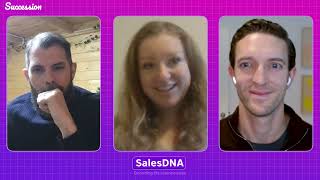
Podcast episode featuring Dr. Ania Wronski (PhD, molecular biology) discussing how sales reps in life sciences can effectively partner with Field Application Scientists (FAS) to advance deals. Key points include role distinctions between sales and FAS, using seminars to multithread opportunities, building strong rep–FAS relationships through communication and vulnerability, and being specific in messaging to customers.
Chapters
As a salesperson, you have to control the conversation a little bit more. Maybe if it's going in a very, very technical discussion, especially if you only have one or two people from the other side on the call, highly recommend saying, hey, this sounds like a really great conversation. What about we set up a seminar or a secondary discussion to go through the science? It sounds like there's a lot of interest. Can we talk about how this will impact your day to day or what we need to move this forward if this is of interest, what you guys need to see so that you can really get to what you need for that opportunity to progr.
Welcome to the Sales DNA podcast, where we decode life science sales by interviewing the best sales reps, scientists and leaders in the industry. Today we have Dr. Anya Rosky, who holds a PhD in molecular biology from the University of Queensland. She's held FAS positions and market development roles at companies like Thermo, Fisher, Mission Bio, Synthego, and now Namocell, part of Biotechni. Anya and I met years ago at Synthego and she played a big role in my technical education, entering the life sciences. So really excited to have her. And in today's episode, we're going to explore Anya's journey from the lab into commercial roles, her insights into what make the best sales reps and how to best work with your fis. All right, let's get started. Hey, Anya, welcome to the podcast.
Yeah, thanks, guys. Lovely to see you again.
Yeah, it's great to see you too. So, as you know, we start every single episode with the same question. What is a crazy or funny story that's happened to you in your career?
Oh, this is a hard one. So I picked this story because I think it's one about knowing where your priorities are in terms of when you make a decision. So in this story, I was traveling from, I think it was like Columbus, Ohio, to the Bay Area to give a talk at a really big pharma company. We were in a lineup of four different companies that were all kind of pitching their products to this huge company. It was our first time getting in there and we were first, and then our competitors were after us, of course. I get on the flight in Columbus, Ohio. I had a layover in Chicago, I think, and my flight was delayed. And it keeps getting. Getting pushed back and back and back, and I'm like, crap, I'm not going to make it to the Bay area for the 9am start that we have the next day. And I was first up, so I can't be late you might see a poor coming into the frame. That's my dog, Boba. And so I had to make a decision of, like, do I get off this plane and try to catch another flight? Luckily, I had some tools at my disposal. I saw there was another flight on a different airline that was going to the Bay Area from that airport. So I got off the plane. As I'm walking to the next gate, like, I worked out which gate it was. I called the airline, was like, I need to cancel this flight. It's late. I'm not going to make the connection. Can you refund me? They're like, yep, I get to the next gate, I buy a ticket on the spot. It was like $500. Because it was like, you know, as people are walking on the plane, I'm getting a ticket for this flight. I get on the plane, I get into the Bay Area around midnight instead of, like the next day. Being late was able to get to the Talk. And about six to nine months later, we got like a $2 million PO from that account. So, you know, to me, I had that ability to know kind of where our objectives were. And so I knew that spending $500 up front was totally going to be worth it in the long run. And I had that autonomy because of the management that I had at the time to make that decision without even asking anyone because it was such a split second decision. It was so late at night that no one was going to be checking to approve something like that, and no one even questioned it. So that's kind of my crazy story of, you know, knowing what you have to do to kind of get the sale done.
Yeah, definitely worth $500 in exchange for a couple million and a nice po. That's awesome.
Yeah.
Yeah, that's a. That's a crazy story.
Sometimes your boss would be outraged until that PO comes in, because there's a time frame between you spending the 500 and the PO where you've got to prove it was worthwhile.
Right?
Yeah. Well, the funny thing was my none of my expense reports. I never actually had to put in an expense report for that job. It was a very unique situation. So no one ever questioned it. They just approved every expense I ever had. Even when I had to add to my credit limit because I maxed out that card. They never questioned it. They just added more money.
One of the companies I work for had that similar kind of policy. And then when they started checking reports and I realized I've got to actually explain why I've got a receipt from the smoke shop, Amsterdam. And it isn't what you think, but I actually had this happen. Yeah, that was a challenging.
Yeah, yeah.
If we to, like, actually explain every expense report, I think that would be pretty. Pretty challenging because there's always some interesting ones.
Yep. Sounds like this one definitely paid off.
Yeah.
Yeah. Pun intended. All right, so, yeah, let's dig into it. So, you know, the topic at hand when we want to talk about is, you know, how reps can best work with their fas. So you've obviously been at FAS now, multiple different companies worked with a number of different, you know, reps. What are a couple, you know, quick tips and tricks that you can give to the reps out there that have fascinating.
Yeah, absolutely. So I always think of an FAS as really your magic bullet because they really allow you to set. Step back from the technical side and have the sales side to yourself. Because sales is not easy. I mean, you got. Everyone who's listening to this knows just how challenging sales is. You have to think about the mentality where that person is, who else you need to involve in the deal. There's so many steps and components to that. I'm not saying you shouldn't be technical. You should absolutely know your product and the value props. But what the FA can bring is this added layer of really listening to the science that's being done and coming in with the true value. That may not just be kind of the value props that marketing gives you to just tell people it's really around. You're doing it this way. What if you did it a different way? Because often the product that you have solves a need they may not see. And so the fas, we're really good at pulling out those unseen needs and really kind of poking at and challenging, truly challenging. Kind of the rationale behind scientists, because as we all know, scientists are very stubborn. Ironically, they really like to do the same thing over and over again because it's consistent, you can reproduce it, and it's hard for them to move into something else. But if you really show them how much, maybe time or efficiency or results, they're going to get to benefit, that's where the FAS can be really useful.
Do you think that comes better from somebody like an fas, where, you know, the, you know, the customer on the other end knows that, hey, they're not maybe tied to a quota like a sales rep might? Do you think that helps?
Yeah, absolutely. And I think, you know, unfortunately, people who come as a sales rep, you guys have a stigma there's totally one around that. Even if you're super personable, super scientific, you may even have advanced degrees, the scientists may only see you as someone who wants to sell them something, which is true. You are trying to sell them something, but they may not be seeing it where you're coming from, which is you're trying to help them usually. But the scientists can come in much more at that scientist to scientist level and really help push that conversation more into that very technical realm that honestly, as a salesperson, you shouldn't be able to have those conversations. If you can have those conversations. I don't think you're probably focusing enough on the craft of sales versus really the technicality. Because as an FAS we also get exposed to lots of different scenarios. And so as an F.A. s, you're kind of a baseline expert in lots of different things. You know, for example, on our product, we can bounce from bacteria to. To IPSCs, to protoplasts, you know, plant cells and to T cells. You know, we kind of have a baseline understanding of all of those different things. As a salesperson, including all of the other things you guys have to do, like Salesforce maintenance and all of the processes you guys have to follow, I think it's way too much to try to do both. Well. You can do both, but not well. And so I think that's where the FS can really help when in bringing more of that diversity to the conversation.
I feel a technical person, so sometimes I almost don't want to use an FAAS because it's like challenging for me to accept that with my ego. But I think what you say is really important. And if you work for a company that hasn't got FAs, would you say it's more valuable to appoint somebody that role rather than do two things?
Yeah, absolutely. And I think there's other people who can play the roles of F.A. s. So, for example, at Synthego, we didn't have F.A. s. And so the sales team, like Harrison, and both, and both you are aware of, we leverage the product management team as more of that technical expert. So if there was someone who needed a huge level of that technical insight, then we can bring in someone like the product team, who often is quite technical as well. The other thing is, even if you can answer the question, this happens all the time. Even if as a salesperson, you can answer the question, but you have an FAS with you. Like you said, Nick, I know it's really hard, but try not to jump in. Because having the two different voices is also really important because it shows the value the company is going to bring if you close this out. Because the other benefit of having an FAS is that post sales support, which is incredibly valuable because they've got someone that will tell, you know, know what they're doing and be able to jump in and help them with anything that they're looking for because they know what. What also they're working with. And that often as a salesperson is not your highest priority. Right. You've already won the deal. Yes. You may get some pull through revenue from consumables or a secondary instrument, if that's your gig. But your job is primarily done. And so having an FAS to take some of that load off so you can focus on the new deals that you are really nurturing is a huge benefit both for you and for that customer.
Yeah, it makes a lot of sense, I think, especially around the delineation between what types of questions to answer. If your. If you have the luxury of having an fas, you have that person there to answer those types of questions. Now I think one of the challenges that comes up though is then you can end up sometimes in this really back and forth question and answer dialogue where the deal doesn't progress forward. How can a sales rep ensure that they are still helping progress the deal forward? And it's not just this troubleshooting conversation or this very deep technical conversation where you're not talking about, say, the business impact of making a decision or not.
Yeah, absolutely. So I think that's up to the salesperson because you guys are still running the show. So most F.A. s will always go back to the salesperson in terms of them running the meeting itself. It's still your meeting. Especially if it's an intro meeting. I would recommend especially earlier meetings, making them a little bit on the longer side to give yourself that space. Space. Because sometimes that technical conversation can really pull that researcher in. I've had ones that go for like 90 minutes because the peer person on the other side gets so excited and like essentially tells you all their grants and everything they're working on. And the sales has very little space, very little oxygen in that conversation. And so as a salesperson, you have to control the conversation a little bit more. Maybe, you know, if it's going in a very, very technical discussion, and especially if you only have one or two people from the other side on the call, highly recommend saying, hey, this sounds like a really great conversation. What about we set up a seminar or a secondary discussion to go through the science. It sounds like there's a lot of interest. Can we talk about how this will impact your day to day or what we need to move this forward, if this is of interest, what you guys need to see so that you can really get to what you need for that opportunity to progress.
You mentioned something really interesting there, which was a second step or next step as a seminar. So we saw a lot of great success at Synthego with this where we would run seminars for labs for different institutions, whatever it might be. But I find it really interesting that you mentioned as a follow up step to a sales conversation, how do you kind of imagine that working? You know?
Well, so I think you need to get interest before you can start a seminar because you need a champion, as we know, you need someone to set up the room or to at least book the room. And not just that, but more importantly to bring people to the seminar. Because, you know, it's great to have a seminar, but if you have two people in your audience, it's not, you know, it's probably not worth your time.
Both might as well be a meeting then.
Yeah, and an fas, that will absolutely be a meeting. And so that champion, you need to kind of give them something to be excited about, which is why you want to have that initial conversation first. And then if there's a lot of interest, bring in the seminar. And I say it that way instead of having multiple calls, for example, because in that seminar you can then identify who else is of interest. And this is really important, especially for companies that may not be huge and may have multiple groups as part of the purchasing decision. Or especially academic groups where again, often multiple labs are being part of that purchasing decision, especially with cores. And that helps you get more buy in from those other groups and identify what points you need to hit, what you need to demonstrate for them to see the full value of your product to actually complete the purchase.
Yeah, that makes a lot of sense. I think that. I think also too, seminars are a great way to multithread in an opportunity, especially if they're in the same lab. You can get introductions to other people who might be involved. So you're selling an instrument. Well now all of a sudden we do a seminar for 10 people. Now you have 10 different opinions, 10 different potential champions that you can leverage to go make a business case to the, you know, the PI or whoever is running that lab are making those decisions.
Yeah, absolutely. And on the topic of how you would actually structure the seminar, again, it should be a collaborative effort between The SALS and the technical team, the fas, whoever. I don't usually like having one person give the whole talk all the way through because you do need to hear both the voices. So I highly recommend sales, starting the seminar, giving a little bit of an introduction. I for seminars, I always like setting up the problem first. So really talking about the pain that you envision the majority of the audience having and then diving into what your how your solution solves that pain point, because you're really going to catch the audience's attention. And then the FAS or the technical person can come in and, and show the case studies, the proof points to really demonstrate how you have solved that problem in the different use cases that would be relevant to that audience. And then the salesperson can come back, sum everything up together as a conclusion because you're always the point person for that deal. Obviously you don't want people circumventing you and going to the FAS because they think, you know, they're a scientist. I want to talk to them. So that's kind of how I would consider structuring it and seeing if that works for, you know, the flow of the teamwork that you have.
Thanks so much for listening to the podcast. If you could do us a quick favor and share it with someone you know, it would mean the world to us. If you want to up level your sales skills or just network with other life science sales reps, check out the succession community at Succession Bio. Join. Okay, now back to the show. All right, so one other question I would love to get your opinion on because I'm sure you've worked with, I know you've worked with a lot of different reps. What have you seen the best reps do differently from the rest of the reps?
Oh, that's a good question. So I think the best reps know how to do that trade off. So in, for example, in my team, we do a lot of demonstrations and so there's undoubtedly a point at which something goes wrong. And the best reps have this like, almost like unsaid language where they will look at the, the FAS who's going, oh crap, something just went wrong. And the salesperson will be like, let's go get lunch or come over here, I want to show you this. Tell me about this instrument and we'll distract them. And it's not just obviously when something goes wrong, but just knowing that dynamic, knowing when to jump in and out to make that flow smooth because you want to make it a very frictionless process. And. And the best reps and FAS relationships I've seen are ones where they're truly just friends. They really get each other. They. They get each other's communication style, and they work just really well together. Obviously, you don't have to be friends. There's always some relationships that don't work. You can't pick. Obviously, your fas. Usually you're just there and they're there, and you have to make it work. But even if you can't really identify, even if you don't like their personality, because we're not going to like everybody just working out, the most important thing, I think, is how they communicate and how their style can be fit into yours and what adjustments you need to make. Maybe you're a very written person and you like things in writing, and they're a very verbal person. Those two styles can clash unless you find a middle ground where you can communicate effectively. Because the most important thing between an FAS and their salesperson is really their ability to communicate, because you don't want to be out of sync anywhere in the sales process.
Is there any tips you'd give them for building that? Because regardless of, like, if your friends is easy, you're going to have that unspoken communication why Harris and I don't have it. So is there any tips we can give for building that kind of interaction with your fis and your. Your sales rep?
Yeah, that's a good question. I. So I recently read. Read this really good book called the. What was it called? The Unsold Sale. I just recommended it to you, Harrison. I can't remember if you remember the title, and what they recommend is to. To anyone. When you're trying to get to know someone, when you're trying to make that connection with someone, which is obviously very important as a seller and a buyer is. And this is going to sound a little ridiculous, but find something about them that you will fall in love with. And what they mean by that is find something that you know really makes you curious about them or makes you really admire them and really focus in on that, because they're probably going to have a bunch of negative attributes. Everyone does, and that way irritate you. But if you focus on the positive rather than the negative, that will help solidify that bond. And everyone loves positive reinforcement. So again, leaning into that positivity and letting them know, hey, I love the way you talk to customers and really helping to reinforce that relationship that way, I think is one of the best ways of doing it and being a lot more on the positive side rather than negative, because again, everyone's going to do things that, that frustrate and annoy us. But it's not very productive to really focus in on that. So I think that's a good strategy to really help build that relationship is. Is, you know, see something that you really like about them and, and just concentrate on that.
The Unsold Mindset was the, The Unsold Mindset was the name of the book. Yeah, yeah, it's on my, it's on my list for. Up next.
Yeah, to, to get to that point as well. You need. So I'm a bigger advocate of accelerating bonds between people because as a salesperson, that's one of your biggest goals, to accelerate that bond. Not falsify it, just accelerate it. And I was reading psychology about this and TED talks, and one of the biggest things they say is the more open you are about you, yourself, your personal life, the easier if other people find it to be open. So I think that could go quite nicely, hand in hand with that, to find those things that you can fall in love with. I really like that. That phrase.
Yeah, yeah, absolutely. The vulnerability side of things obviously is really important to building those connections. It's a fine balance between being too open and transparent and, you know, not enough. But, you know, just. I think the, the best way of doing it is to tell people when you're struggling because I think that opens. It's. It's not too much information. You're not over sharing about something that may be overly personal, make them uncomfortable, but you're just admitting that, hey, like today, it's not my day. Like I was struggling to do basic tasks. You know, it's. It's a Wednesday. I'm halfway through my week. I'm just looking forward to getting this day done. Like little things like that, I think, you know, show that you're human, that you're not this like invincible person that. That can't be connected with.
Yeah, I love that Nick. Nick always talks about his three daughters and that always sparks a conversation with people and gets them to connect at some level.
Yeah, absolutely. And I think especially on a customer side, like we were in a meeting, we had spent six hours with these customers because we did a demo with them and we were, we had a lot of waiting time in between this demo because of what we were doing. And we just started chatting randomly about exercise and all this other stuff. And then the quietest person in the room, who was the most important because she was the decision maker, we start ended up Stumbling around, around, like, running or hiking, and she suddenly, like, perked up and started talking. And it really, like, helped connect her to the whole group. Like, these were her colleagues that we were with that I don't think they even felt very close to this person. And just kind of finding that one topic that was completely random and that really helped open her up was really helpful in everyone's relationship.
The other one is my go to, because it's a passion of mine and it's an easy one to find, is food. So especially if you speak to somebody who's not based in the country they live in, they miss the food of home. And it's such a, like, opener for people to discuss and just share.
Mm.
It beats the weather, that's for sure.
Oh, yeah.
It beats talking about the weather.
Yeah, yeah, absolutely. That's a good one. I like this one.
I think maybe switching gears a little bit, I would love to hear more about your story and your transition from the lab into different commercial roles and what helped make you make that decision and what took you down those different paths that you took.
Yeah, gosh, that goes pretty far back for me now. So I loved being a lab scientist. I. You know, they always talk about how good your hands are, how good, how steady you are, and how consistent you can get your results and. And I had pretty good hands, I have to admit. I love doing everything, whether it was animal work or. Or anything else that we had. But my issue with, I think the way that science academically is run is that there's a lot of inherent issues with the process. And so obviously there's still issues now. And I think more and more people are identifying it as Vasus. Ten plus years ago, when I left the bench, where I felt like the system was very flawed, and I didn't think that I alone could change it. If I felt like I could have changed it, I probably would have stayed. And I actually even had a tenure track position I was offered that I didn't take because I felt like it wasn't worth staying in academia. And so I started looking around at different roles. And luckily I was based in Boston at the time, and we had a very strong postdoc community as well as a strong grad school community. And we always hosted a lot of events. And so I would listen to all of these people from all different types of careers, and that really helped me identify, you know, where do I want to be. And we listened to people from, you know, legal more on that, that IP front, tech transfer, sales, R and D Obviously, project management, like everyone came in and the one person who came in that really piqued my attention was an fascinating. And you know, I love the fact that they could talk science but still be away from the bench and still be very connected with, with scientists and the science they were doing, but still kind of consider more on that commercial side, more of the strategy behind how you actually sell products. And I never felt like selling was on the dirtier side. I think a lot of people think it's like the dark side. But I always felt like good products help move science forward. Without, you know, a PCR kit, you would still be. Or a PCR machine as well. You would still be using buckets at different temperatures and your experiment probably wouldn't work 75% of the time. You know, we've come leaps and bounds even in the last 10 years in terms of what we can actually do, because companies exist to improve the workflow of scientists. And so I think good salespeople use that as their basis for how they sell rather than just to make money and make commissions. And obviously everyone has to have a job, but I think that intrinsic motivation of helping scientists do their work in a better way is always that big draw for a lot of us. And so that's kind of how I made my leap to the first FAS position. And it was actually through a salesperson. So I told them that I was interested and they're like, oh, we have an FAS position open. Let me refer you to that position. I got an interview straight away because it was through a referral. I interviewed for the job. I was one of two candidates. The other candidate was actually more, had more experience in the, in the realm that I was interviewing for. It was a little bit outside of my, my research area, but because I presented well, I had a lot of practice presenting at the time I got the job. And that sales rep even threw me a party to celebrate and brought me a cake, which is really lovely of them. And, you know, we're still in touch today. So that was kind of my first foray. And I have to admit my. The first salesperson I worked with as an FAS was really integral to the way that I approach any role now. He was very customer centric. It was all about what can we do to help the customer. And I still kind of bring that every day based on how he interacts with customers.
Nice. Love that, love that story. It's, it's always something I think people overlook when you got to move into a commercial world which is you actually get more insight into a bunch of other people's research and the science that they're doing, versus if you're doing your thing in the lab, you're really focused on one thing, so you can actually broaden your spectrum of what you know and what you learn and who you talk to. Just another added benefit of kind of moving into the partial side of the world.
Yeah. And I think FAS jobs have gotten a lot more interest lately because I think they are that perfect intersection of using your technical skills and getting a taste in all of these different areas. And one of the best things is you don't usually do the experiment. So you come in as like the savior on the white horse, help them fix the experiment, and then you leave and they get to do the experiment. So you know that that failure that you constantly see over and over again as a scientist, it's a little bit less as an fascinating. I mean, obviously you still get failure, but you're technically the one trying to help. So it's signal. It's a different light.
I was going to say something that you said that I think is really important. I didn't want it to just sort of slide under is about the value you're adding to the customer, and that's really important to you. But I think the face is the reps, the product people to keep that heart of what they do, are the people that customers still speak to. So when you walk in that room, if you're thinking about adding value agnostically to your product, obviously you're going to sell your product at some point, but agnostically to that, when you email them next time at this company or another company, they speak to you again. And I think I didn't want that to just sort of slide under as an undertone, because it's really important.
It's a small world, right? Everybody knows each other.
Yeah. Yeah, absolutely.
Awesome. Well, we're running up on time, but we have one last question for you, Anya. If there's one thing sales reps should stop doing, what would it be?
Oh, something they should stop doing. I think it's being generic. You know, something we talked about in the last happy hour that you guys hosted was this idea of using those vague terms like accelerate your research. I completely hate those for all the reasons that you mentioned in your recent post, Harrison, It's. It's to cast such a broad net. You're going to get very few bites on that. Honestly, I do think that your effort is more on that middle line of you know, try to have messaging that's going to resonate with more of your customers. And be specific. You know, we did voice of customer and we talked about how we're going to increase their crispr workflow, increase their efficiency. And people were like, well, which part? Like, are you going to help with the transaction? The clonal expansion? Like, we weren't specific enough. And maybe they don't have, you know, maybe they never take it into clones. So our product is irrelevant for them. So having more of that specificity, obviously you're probably, you guys are very well versed with Brian Schneider and his like, what's in it for me? Mentality. But I think that's completely true of, you know, why should they be listening to you? Why should you capture their attention? We're so distracted in today's world that it's really hard to capture that attention. But we do it by giving them something that's interesting, that challenges their current worldview or that gives them information that they didn't consider, and that's really hard. But if you can find it and do it well, it's a no brainer.
That's how you separate yourself.
Right.
If you can be different from everybody, you're going to stand out in the sea of sameness.
Yeah, yeah, absolutely. And it's there. You just have to test it. You know, you just have to go out and see what works.
Awesome. Yeah. Well, thank you, Anya. It's been a pleasure having you here. We'll let you go and get back to the rest of your day.
Yeah. Thank you, guys.
More from Nick
[Leadership] Creating a culture of coaching and skill improvement with Sai Guduguntla
[Leadership] Founder selling and how AI will change how team's work with Angie Schwab