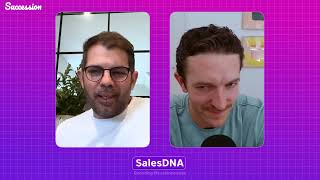
[Sales] Leaving academia is like fight club with Leonardo Motta

A Sales DNA podcast episode (Apr 30, 2024) featuring Leonardo Motta, Harrison, and Nick Clare. Motta recounts his deliberate move from academia to life-science sales and gives concrete job-search and role-transition advice: research target companies, tailor CV/LinkedIn, treat the job hunt as a project, and prefer smaller firms for broader responsibility and faster visibility. The episode emphasizes rapport-building (matching communication styles, remembering personal details), cross-cultural awareness (books: The Cultural Map; Learning the English), practical CRM habits (check past interactions; log keywords/notes; send curated papers/articles later), and a customer-first mindset — provide research summaries and resources so a good salesperson “saves you hours of literature.” Key behavioral guidance: be honest, stop being pushy ("silent is no" in the UK), and use value-first outreach to nurture long-term relationships.
Chapters
And I always tell people, if you talk to a good salesperson, they will save you hours of literature because they will summarize, these are the technologies, these are the pros and cons. This is why or when you should consider this over dead. And here are the original papers. If you want to do your own research, but now you don't need to start from scratch. A lot of people, some of the stuff we sell, oh, I heard about it, but I'm not sure it's for me. That's when you jump in. That's when they're giving, they're opening the door. Can you tell me more? Can you explain when or why should I consider? And that's when you bring in value. Selling in this opportunity is a consequence. If it's good for them, they'll probably go with you. You are the one that helped them navigate through all the noise.
Before we get into today's show, I wanted to tell you a little bit about what we have going on over here at Succession. So Succession is a life Science sales membership that includes on demand courses to uplevel your sales skills, resources to plan and execute your sales process, a community for peer to peer networking and learning, and live workshops delivered by experts twice a month. You can get access to all of this as an individual for just $79 a month, or you can uplevel your entire sales team with courses and customized learning designed for each individual rep. Come and join us over at Succession Bio. Okay, let's dive back into the. Hey everybody, welcome back to another episode of the Sales DNA podcast. We have another great episode today. We have Leonardo Mota. He shares a ton of great insights from his experience as a key account manager at Active Motif and tells us a lot about his background, getting into sales, how he proactively prospected and found the right accounts to get into to get interviews with, to find the job that he actually wanted. And then there are some like incredible nuggets in here around cultural differences. And I think especially the way that he thinks about nurturing relationships with prospects through content and resources. Some really good technical stuff in here. Nick, what stood out to you?
Yeah, so one of my geek areas is cultural differences and building rapport. And I think there were some really good nuggets in there around that. And it's good to hear it from somebody who's, who's worked in multiple countries and some great book recommendations around that too. So that I really enjoyed that.
Yeah, you could tell that he really likes to go out and learn and dive deep into the Content. I think it's also one of the reasons he joined Succession as a way to uplevel his sales skills. And so, yeah, you could really see that he's got this, like, always learning mentality. And I think that has led to his success as well.
Wow.
Great. Awesome. Well, with that being said, what do I always say, Nick?
Let's jump right in.
All right, let's do it. Hey, Leonardo, welcome to the show.
Thanks, Harrison. Thanks for having me.
Yeah, it's going to be. It's going to be a good one. We appreciate you coming on here.
I'm really glad to talk about career in sales.
Yes, I know that's one of the main topics that we wanted to get to today. But before we do, we asked everybody the same question. Give us a funny or crazy story that's happening in your career.
Yeah, well, I have one that it's funny to tell, but I learned a lot. I was in the job and in the career, to be honest, for about two months. And I had a call with a guy that purchased an antibody. So it was not a big sale anyway, and the guy wanted to complain that the antibody didn't work or something like that. And I was really new to the job. I was trying to be polite and friendly, but the guy went on and on and wouldn't give me a gap to speak. I let him take over the meeting over teams at the time and I think we spent more than an hour and I was listening, listening, and he complained about everything that is wrong in the biotech industry. To some point I agree with him, but I just said something like, okay, I'll see what I can do. And I went to my tech support and when I replied, obviously I couldn't do what he wanted. He wanted us to test the antibody on his type of sample on his application. I was just trying to be polite and say, okay, I'll see what I can do. But his email to me was, because you promised me dates, you promised me that and you didn't deliver anything. Where do you think you're going to go in this job? And I felt really bad for a couple of hours and then I talked to my manager and she told me, don't worry, you always face people like that. Just, it's not personal, so move on. Says always gives you the chance to improve for next call. So, okay, I honestly forget about it. And maybe a year later, I was trying to develop a local seminar and I mailed a guy that was organizing a seminar in sync with my goals and I completely forgot was the same person. And then the guy emailed me again. Did you forget that I asked you this and that? And now you ask my help to organize an event. Who do you think you are? And I was like, oh my God, I can't believe that I completely forgot. So, couple of lessons I learned. First of all, always check your CRM for previous interactions with your customers before you may especially if you're asking something, if you need his help to whatever. And the second lesson was it's much better to rip off the band aid and be honest. I cannot do this. I don't think my company will be able to deliver this because even if that's a tough conversation, that's honest and transparent. So you set the expectations right from the start. So I always remember that I panicked for a while. But I think I learned good lessons.
I think the ripping off the band aid fast is also good for sales process. So if you fail fast, then you can move on to the things that worry your time. Whereas being nice to somebody over seven emails, that's not going to change anything. Wastes their time. Wastes your time. Builds expectation.
I think.
Yeah. How far?
Especially when you're learned to the job, you think interaction is leading somewhere, but not always. Some people just like to talk.
Yeah, you were. It seems like you were overly nice to this person, letting them ramble on for an hour on the call. So yeah.
I think I was intimidated. I didn't know how to handle, you know, I should have taken over the conversation and steering the direction I wanted. That's what I would do now.
Yeah. So what do you think's changed? Just confidence for you between. Between now and then?
Yeah, definitely. And I guess, you know, in the initial minute or so I always open with a open question and my purpose is not the question because I know that the guys are working. I read about them online. It's to get a sense of their personality to this person really likes to talk or is really to the point. So I try to adapt to. Yeah. The personality of the customer.
There's also. There's a couple of things that I find useful is when you got somebody like that to ask yourself a question, you can ask them if you're brave, but I would ask yourself a question at least. Is, are they looking prevent. Are they just annoyed and they want someone to vent to or do they want a solution?
Right.
Because if they want a vent, maybe you let them. Like if they want a solution, you can stop them and say, well, this is going nowhere. But it's normally One of those two things and you have to kind of ask yourself that question.
No, that's a good point. Yeah, true.
Yeah. The other interesting thing that you mentioned, which is important I think, for a lot of sales reps in general, is matching your communication style to the type of person and the way they like to communicate. So in your sort of rapport building at the beginning of the call where you're hopefully not talking about the weather, you can use that as a way to ask them questions to see how they respond in kind. So like, if somebody responds and they go into a long story about their dog or their cat, that's just like walking around behind me, right? If somebody just goes into a story about that, hey, maybe they like to tell stories, maybe they like to talk a little bit more. If they ask you a follow up question and like you're sort of having a dialogue, that's the type of person, you know, that's going to want to go into more detail, be more open to a lot of different questions. Whereas if you ask them a question and they're just like, yeah, all right, like, so what do you got? You know that they're going to be direct to the business and probably not want to hear a lot of different questions and stories.
And on top of that, you can actually do that sort of group. But then you have to go with almost generalizations. So I know we're going to jump into in a bit talking about cultural differences, but for example, I was once talking to a group of people in Japan and a colleague of mine joined the call and I'm very brash and loud and outgoing and I have to really tone that down because that's not how work happens in Japan. And they were shocked that I'd changed my tone and changed my sort of pace.
You're like a chameleon.
Yeah, well, I try.
No, that's totally true. And also I think the zoom teams times that we live in make this a little bit harder because usually when you go in person, you're walking down, you know, the canteen to get a coffee or something. And this small talk happens kind of naturally where some people will talk about football, the weather, the dog or whatever. Some people will jump straight into the data and you can tell, okay, these people, they don't have time to lose or they don't want to lose any time. Talking about, yeah, life in general. Some people, the moment they say hi, they will start talking. So my perfect, is this my data? Blah, blah, blah. And then, you know, okay, with this person, I'll be straight and direct.
Yeah, for sure. No, that's good.
That's a.
It's a good thing to call out.
Yeah, I would, I would say as a salesperson, I, I learned a word called a polymath, and that is somebody who likes to just start hobbies, learn them, and then start a new hobby. And it's something seen as a negative, but this is definitely me. But if you do those kind of things and you have many hobbies or many interests, it's really easy to connect with people wherever they want to connect, whether it's football, whether it's food, tea. So hours guy, just soak up any knowledge you can around small areas just to. To build that bridge between people.
And it's easier to remember the guy that likes dog then the guy that works on this type of disease, because you have a lot of people that work on similar things. So I use that to remember, oh, this is that guy that we talked about this.
I agree.
I think it's a good way forget.
Like, if they talk about, like, their dog for I. I was listening to a podcast and one of the things that they were trying to get all of their sales reps to do is to ask the person about, like, the name of their dog, the name of the cat, the name of their animal, whatever it might be, if they have one, and then to remember that, because then in your second call, you always ask, hey, how is, you know, how's the name of dog doing?
Right.
How's Rufus doing today? Right. And it's always like a great way to sort of show that you cared. So they had a whole. Put a section in their CRM that said like, animal name. And it's like, it's. It's pretty interesting how, how they, how they did that. It's just like, basically force a way to, to build rapport.
And, you know, Harrison, we can start jumping to entering in sales. And one of the things I talk to friends or colleagues that think about or ask me about is, guys, it's not because you're doing it on purpose that you're faking it. I really like dogs. I really like bats. I really like football. I really like. So I'm just doing, like a purpose. It doesn't mean I don't care. And I really like to know their stories. Obviously limit this to a couple of minutes, not a whole hour. You have to go on and do something later. But I agree with you. It really creates some rapport because the person can tell you, like, the story.
Yep.
Yeah, I think it's more like if somebody comes to your house, right? You on purpose, you make them feel welcome, you invite them in, you make some food, you make upper T. Like it's a similar thing. You're in a new process that's quite awkward sometimes and you're meeting new people. But we're most experts at meeting new people, so we try to make it comfortable for you. And that's our process. It's not a contrived. We just want you to be comfortable so we can have a productive conversation.
Yeah, I agree. That's a good point.
All right, nice. Well, that, that'll be some good stuff that people could take away there. But switching gears a little bit, let's talk about sort of your transition from the lab into sales because I know you had to move, you know, I think locations multiple times. Right. So, yeah, we'd love to hear a little bit about that background and maybe some of the advice you'd give to other people on their journey.
Right. So a lot of people I know moved to sales kind of by chance or because they couldn't find the next postdoc. But that was not my case. I moved intentionally. I realized at some point I really like negotiation, dealing with suppliers. When I was still a postdoc, other environments I worked, I had to handle some part of the budget. And I realized I can do this and I like to do this. So I start planning. The first step was you gotta find people to talk about because, you know, in academia it's like the fight club. We don't talk about living academia in academia. So you've got to find people that similar to you. And I found a podcast. I found I always take the chance to talk to reps when they come to visit me. I was a post op, so they were trying to show me whatever new product. And I always took the time to ask, how did you start? In the beginning I thought, do I need to take a sales course? And people said, no, you need to study well the products. You need to be able to travel, talk to different people. So they gave me valuable insights. Some of them I still have good relationship on LinkedIn. We see each other at conferences. Some of them were very kind to review my CV cover letter when I was applying for jobs. And I tried to do that as well. When people ask me, I try to be there for them, like someone was there for me before. And then I started taking it more professionally because I think people don't realize when you are in academia, you're probably doing this for about 10 years between undergrad, master's, PhD postdoc, and then you want to do a whole new career and you don't know where to start. And you think you can just sit in front of a computer and send cvs. And you may, you can try, but you will spend a lot of time and you will have the feeling it's getting nowhere, but it's part of the process. So what I did was I read books on sales, I read books on living academia, I watched whatever I could find online on YouTube. I know nature and science have blogs on like nature jobs and they have very valuable insights of people that either change jobs or are considering to. And eventually I did like a project, you know, a project management gun chart. So what are the tasks I must do? So update my CV in a business style. Update my LinkedIn in a way that I can be found at Glassdoor, other social media that are helpful for that. Every day I would get home and spend between 15 and 30 minutes because you know if you set up yourself for a big task, it's very likely you will give up. So I would spend 15, 30 minutes researching on companies I would consider working for. So I would go their website and try to understand what are they doing, what's their size based on LinkedIn information, how many employees, what's their revenue based on Glassdoor. So you start having a feeling, oh, this is a big company, this is a medium, a small. Are they hiring? Yes or no. And then I really took it seriously and I knew it was not an overnight thing, it would take me six months to a year because that's what everyone says, especially when it's your first job. So I really did like a project management platform. And every day I felt I was progressing and eventually I got a few opportunities and choose the one I felt was right for me.
You know, the funny thing about what you did there actually is predominantly the skills you need for your Q account role. You, you looked at the market, you assess the landscape you accounts and then you put a task together to go after those accounts, right in the initial state it was for yourself, then you move on and it's for key account manager for your company. But the skills you put together there were very relevant to the job you was about to do. You may not have realized at the.
Time, but true, but I realized when I was going through job interviews, okay, so why should I give you the opportunity? You have no sales experience, blah blah, blah. I said, yeah, I don't have sales experience, but I'm able to do this And I would show them my PowerPoint and my Excel spreadsheets. When I have a task, this is the way I approach them. And I'll do the same with the sales. You just need to help me with the specifics.
Yeah, yeah, that's, it's really good. You basically did a sales process to get that, to get hired, right? So it's not you don't have sales experience per se, but you have sales experience because you basically are selling them on you, on you. So you prospect it into these accounts to get access to the right people to get an interview, get a meeting, right, like, like you would in sales role. And then now in that meeting, it's now your, your chance to close. I think the interesting part in that process too though is you proactively looked at companies that you would want to work with. So I think we see a trend where people will just try and apply to every job that they possibly can. But I think what, what you did uniquely is you specifically looked for the right company, the right type of size that you were looking for. Maybe know, maybe give us some of those criteria that you were looking at. You know, was it, was it related to the type of work that you did in, in the lab as your postdoc or were you kind of looking for something different initially?
I start with companies that the reps that approached me were nice because I, I honestly believe this is a top bottom behavior. You know, when you are in a nice environment, you're nice to your customers because you're not overly pressured or stressed or you don't like your job or your company. So I always had this feeling if the rep is nice, probably they have a nice atmosphere or at least it's where I would start. And I was not wrong with my choice. Obviously I don't have statistics number to prove that all of them were nice, but the one I chose I'm happy with. And I think the communication style also tells a story because you know, marketing can be as creative as they want, but someone has to approve. So I think if they choose to approach customers in a friendly, not informal, but more fun way, I believe someone that is approving probably is a fun person. So those were the companies I chose. And in terms of size, I always talking to people in general, not only on sales or in biotech. I never really wanted to be part of a huge company because everyone says it takes ages for you to be noticed or for you to grow. And having at the time 35 and starting a new job. I thought, you know, maybe I don't have sales experience, but I have life experience. I have relationship experience and I want to grow fast. So I prefer go to a smaller company where I nullify, do my job well. I will be noticed. Like at my company, I can talk to the CEO the moment I want because of the size of the company. You know, people know each other by name. If I have a question, I can email the person in charge so things can move a little bit quicker. We have other limitations when compared to big companies. But yeah, personally I prefer to be part of a medium small company and be able to steer things in the way I want. Maybe I'll change in the future, I don't know. But that's the, the choices that made sense for me at the time and yeah, I still stand by them.
Yeah, that's great. I think we've, we've talked to a few other people on the podcast as well to kind of talk about the differences between the big company and the small company. Even, even within that, there's some of these larger companies, you have different types of roles. You have the people that are hunting, trying to find new opportunities, new business. And you have people that are more managing accounts and managing relationships for existing business. And yeah, I think it's just a different personalities or different traits that make up the right people for those roles. And so I think as you think about it from job search perspective or even just looking for a new role if you're already in sales, it's how do I match my skill set, my personality with what I'm good at to what that company needs? And I think that's always really important.
Yeah, and I guess another difference I didn't know before, but I know it now. In smaller companies, usually you do a little bit of everything. So although my title is key account manager, I have to prepare my slides sometimes, which is a little bit of marketing. Marketing can help me with that. But we don't have the capacity for marketing to prepare everything. For me, I have to organize local events. So I think if you do a little bit of everything, you're in a better position to choose what you really want to do next. If you want to, you know, develop further in your company or move, but you have a better understanding. Like some companies will have 10 reps only in London. I'm in charge of the UK and Ireland, so I have a better understanding of the whole market and I can choose. If I don't want to travel, then I'll go to a company that needs someone very local. If I Like to do the way I'm doing. I just keep in companies that one person can handle the country. So it gave me a better view of the, the whole scenario.
Yeah. I always joked that with small companies, one day you could be asked to prepare slides for the board and the next day you need to change the bin because no one's around to do it. Right. And there's, and everything, there's, there's no, there's no. You can't be precious and you have to be brave. I think it's those two things.
Yeah, yeah, that's a good one. Okay, so one of the other topics we wanted to talk about. So you are originally from Brazil, but then you came out to the uk, then you went back and then now you're back in the UK and covering, you're pretty, pretty good sized territory in the UK and Ireland. So what are some of the cultural differences that you've seen being in these different areas?
I'm looking out the window at gray, cloudy, horrible sky and I have a Brazilian and a Californian sitting here in England. Like what are you giving? Right. So this is better be a good reason in order for why you.
Let me start with a funny story. I considered this story from the beginning, but this happened when I was still a postdoc, had a meeting with my PI and I, I said, okay, I'm going to do this and that. And he asked, have you considered doing this? And I said, yeah, but you see it this way, I think, blah blah, blah. A couple weeks later, weekly meeting, I showed him the results and he was like, why didn't you do the way I told you to? And I was like, you gave me a suggestion. You asked me why didn't I do like this. And that's when I realized, oh, that's an English person telling me what to do. In my mind it was just a suggestion like have you considered doing that? And on top of that I had some other issues with different people and I realized, okay, I want to make my living in here, so I have to at least understand. I don't need to agree 100% of the time, but I have to understand what are the small lines that I'm not reading between the behavior and for example, with my PI I start being very, very crystal clear at the end of the meetings. So this is what I'm going to do this week, next week. This is when I expect to show you this and this is the way. So I proactively change a little bit the approach to be 100% sure. We were on the same page on everything we agreed. So this is some of the differences. And once you, in the beginning, you can take things personally, oh, this guy don't like me, or this guy is playing games with me. All this kind of stupid thoughts pass through my mind. But again, I'm a very geeky guy and I look for knowledge in books and content. And I found some books about it. The best one is, I believe, the Cultural Map. I don't remember the author, but if you Google, you'll find it. And this author ranks different cultural behaviors or countries or regions in seven big areas. And it will rank from country A to country B, who is more, for example, hierarchical or neutral. So in some cultures, it's very difficult for you to challenge the boss. In other places, it's very, okay, you're just giving your opinion. So you've got to be aware of those kind of things. And not only it helped me talking with people in the company or at the time in my research team, but with sales, I believe that's crucial. And especially in a country like the UK that is multicultural, you can go all the way from India, Japan to South America, passing by Nigeria, South Africa, Turkey, and obviously all the European countries as well. So the quicker you realize, okay, this person is very direct. This person likes small tab. In some cultures, like South America, getting personal, it's a matter of trust. If you don't spend the initial 10 minutes talking about life, the person just thinks you're cold, you're distant, and it will be hard to make business with them. They. They kind of don't trust you. But in some other countries, if you spend 10 minutes talking about your dog, this guy is not serious. He's not professional enough. I don't want to do business with a guy that wants to talk about the dog. I, I have only 30 minutes for a minute for a meeting. You cannot spend 10 minutes talking about the dev. So the quicker you learn that subtle differences, it will make your life easier. Obviously, end of the day, it's about the product, the conditions. But it's much better if you start on common ground and have a good understanding of the personality of the person you're talking to. Yeah.
And that kind of ties back to the beginning of our conversation, which is how do you sort of build the rapport at the beginning? So, uh, yeah, coming full circle, were.
You sad about your PI? And some of the phrases in English is particularly difficult. I mean, English, English. Because even Americans sometimes don't get the directness of it. And I Had a German boss, and his favorite phrase was, I almost agree with you. Because to a German, that sounds like, oh, I'm 90% there. But in an English phrase that means, I never agree with you, and I think you're an idiot. Like, it's so different to.
To.
To what people?
Yeah. There's another book that is really good if you like this kind of anecdotes and cultural differences. It's called Learning the English. So this woman is an anthropologist and she's English, and she decided to analyze English people from an anthropologist point of view. So how people behave in a pep, how people interact, what this sentence really means. So one thing that really gets me, my wife is Brazilian as well. When we got here, when you ask someone, how's your day? And people say, not too bad, I don't like that sentence because you were expecting your day to be bad and you're happy, it's not too bad. In Brazil, we would say, I'm fine. When you say I'm not too bad, it means you're going down. But they're not too bad. So over time, you understand that's just cultural differences. It actually means unfair things. But it took me a while to overcome the differences and kind of read between the lines.
Yeah, you got me.
The one that got me when I first moved here was in. In the US or say like, oh, how you doing? But in the uk, they're like, oh, you're all right. Like there was something wrong with me. Like I looked like I was pissed off or something. And so that one was. That one is still sometimes weird to get over. Yeah, yeah, Nice. Okay, cool. So some good stuff there around, you know, build a rapport and different cultural backgrounds. I think one of the last sort of topics we wanted to touch on are what are some of the sales skills, tactics, things that you're seeing work really well right now?
So one of the things that is working for me, and again, maybe this has to do with the size of the company, but I like to help people in general. So when someone asked me, do you know if this would work? I still had the science skills on me. I tried to find papers. I know that some places you don't have the time to do that. You just pass this to tech support and you have to move on to your next meeting. Luckily, my job really fits my personality because I like to do that. And I truly believe as human behavior, when you give something, people give you back double or triple. So if you take the effort, you know, to find a paper that Works for that person without any commercial activity on that. When I do that, I don't think, oh, this guy now will definitely buy from me. I just trust that if I do this to 100 people, most of them will come back. And if they don't buy by person, if they don't buy directly, they will talk about me to their colleagues. So you're building a reputation. So I always go that extra mile in terms of, you know, I have the science skills so I can understand their project. And I like to really dive deep. As much as some people don't like to overshare about their projects, some people want to show you the slides and the results. And I always like to find something for them, even if it's not something my company selling, if it's not something they're ready to buy, but just give them. As if I was a collaborator, you know, just talking informally, oh, have you heard about this paper? And I always make notes at the end of my meetings on like a big Excel spreadsheet about keywords that potentially could be helpful and some point in the future, I find a paper about something. And I remember I talked to someone about this, so I can easily control F on my Excel spreadsheet. Oh, if it's this guy, and then I send an email out of the blue, oh, I found this paper. I remember we talked about it.
So.
So I can see now, three years later that it is helping me, it is building a reputation. When I go back, people remember me or someone tell, oh, that guy recommended you because you help him with this and that. So, you know, go a little bit out of your commercial role because it will pay itself out in the long run.
That is awesome. I love that tactic of basically taking away something and documenting in a spreadsheet in your CRM somewhere where you can then come across a paper, come across something that you see, an article, a post event, whatever, and then being able to just like send it to them, no questions asked. Right. You want to talk about how do you nurture and keep relationships warm? I mean, that is just awesome. I love that you do that. I'm going to steal that and share that. I think that's just the way to like, uplevel sales as a whole. Right. If everybody did what doing, everybody would have a better relationship with, you know, their sales reps. They would have a more positive experience. So, yeah, I really like that one.
Yeah.
Not only is it good for you and good for them, it is good for the industry. Right. Because it gives the value to the Customer and shows that reps aren't just secondhand. So secondhand car salesman that want to get your money cost. We're adding value. Like, here's something I've seen that I think will interest you. Go enjoy that. No, no questions. I think that's really great.
I think the other interesting angle that you could do with this, it's kind of like a yes. And. Which is everybody out there has a particular scientific background that they're good at. Right. Or things that they have experience in. And the customer they're talking to may not have experience in that realm. And so if you can provide like adjacent value to them based on your unique experience, super valuable. I know Nick when we were back at Citigo, you know, he's got a background in cell culture. So, like, we didn't sell stuff related to cell culture. However, he could leverage his background to provide like immense value to customers around cell culture that was like adjacent to like, you know, crispr editing. So, yeah, I think that's something that people often overlook. It's that you have experience in something that is highly valuable to the person you're talking to. You don't have to be the expert in their science, but, you know, find ways that you can share your expertise.
You know, Absolutely. I like what you guys said about. Yeah, the reputation of salesperson. And it is for a reason. Because some salesperson are really bad. I mean, they just want your money. And sometimes you have to because it's something you're buying and it's essential and you feel, I don't know, trapped. Because I don't want to handle. I don't want to do business with this guy. But I have to. So one thing that I always have in mind is if someone is giving me their time, why. Why are they doing that? What would they like to get out of it? And then I remember not only when I was a customer as a postdoc PhD, but in life in general. We are buyers more often than we are salesperson. No matter what's your job. So what is the kind of salesperson you remember kindly because they helped you? Like, I was buying a car. I know nothing about car. So obviously I needed someone to guide me through. And you can tell when someone is just trying to push you. The most expensive one. What's your budget? This also, I have this. That is exactly 10% above your budget. You're not helping me. You just know how. How much I can stretch. Like, you didn't even ask what kind of car I want. So it's the same, right? If you get to a customer, oh, so this is my new product. This is the price. Why am I talking to you? I can find that information online, not only from you, but from all your competitors. If I'm giving you 15, 30 minutes, bring me something so I don't have to read for myself. And I always tell people, if you talk to a good salesperson, they will save you hours of literature. Because they will summarize. These are the technologies, these are the pros and cons. This is why or when you should consider this over dead. And here are the original papers. If you want to do your own research, but now you don't need to start from scratch. You don't need to be a lot of people. Some of the stuff we sell, oh, I heard about it, but I'm not sure it's for me. That's when you jump in. That's when they are giving. They're opening the door. Can you tell me more? Can you explain when or why should I consider? And that's when you bring in value. Selling in this opportunity is a consequence. If it's good for them, they'll probably go with you. You are the one that helped them navigate through all the noise.
That is another gem of a quote. A good salesperson will save you hours of literature. I love that. I think that's a great way to think about it and have the value that you can provide as a rep. Awesome. Well, we're right up on time. Leonardo, this has been an awesome conversation, but want to kind of maybe leave the listeners with something a little bit different, which would be if there was one thing that sales reps should stop doing. What should that be?
Oh, I think especially in England, you shouldn't be pushy. You know, people usually say no is no, but in here silent is no. If, if they are not answering, that's fine. Maybe they're not ready. And people would be surprised how many customers come six months later. Oh, I noticed your email and now I'm ready to buy. Now I'm considering it, so just leave it. They have your message if they want to come back. So just move on to the next lead or the next, the next prospect. No one wants a pushy salesperson.
I agree with that 100%. Yeah, I think there's like the difference between like polite follow up and being pushy. Or they could even take the approach that you have and you know, document keywords on things that are interesting and then just share relevant content without any ask and you'll stay top of mind over the course of 612 months.
Yeah. Yeah. And if they want, they will come back later, but then they are opening the door and, yeah, they're. They're inviting you to come in.
Yep. Awesome. Yep. That's another good one. Lots of great nuggets on this episode here. So really appreciate you coming on, sharing your wisdom, a bit about your journey and. Yeah, we'll talk soon.
Thanks.
Excellent. Thanks for the time, guys. Have a nice one.
More from Nick


[Leadership] Creating a culture of coaching and skill improvement with Sai Guduguntla
[Leadership] Founder selling and how AI will change how team's work with Angie Schwab