[Sales] Leverage data and tools to improve your sales success with Hannah Roddy
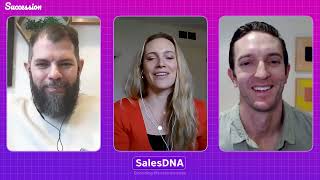
Hannah Roddy, an account manager in life sciences, shares how to sell to researchers without the sales stigma. Use CRMs and LinkedIn sequences, track what messaging works, and treat every meeting like it's your only shot to learn something.
Chapters
I think everyone has a stigma of, like, a used car salesman and someone just being pushy, not listening to you, maybe even trying to sell you something that's not going to help you. And those roles might exist out there, but for me, selling in the science is selling to researchers who are way more intelligent in my experience, than myself. And they know what they need, but you're just helping them realize what your specific product might be able to help with. And that doesn't always mean that what you're selling is going to be the best fit for them. So there's a lot of transparency that other sales opportunities might not have. But I would say the thing that broke my thought process of being that kind of salesperson was realizing a. It's in this industry, it's, again, selling to very intelligent people, selling something that they are doing already. It's not something that they've never heard of. And you're just trying to convince them to buy something and realizing that you're really there to help them and help their workflow and help the science at the end of the day. So it feels good.
All right, Nick, we got a great episode for everybody here today. We've got Hannah Raddy. She's a account manager for Namocell, now part of Biotechni. She's got a wealth of experience, and she's going to be telling us a lot about how she overcame the stigma of getting into sales. How you can leverage data and tools like LinkedIn to help you sell better, how to actually build your network so it can facilitate you moving between different locations. And as well, she's got two great stories about not only an ipo, but also being acquired recently. So lots of great stuff in this episode. What stood out most to you?
Yeah, I like Hannah. I always enjoy chatting with her anyway, so this is a great one to listen to. I really like that she's seen a couple of perspectives of company exit strategies, as in IPO and acquisition. I think that's quite rare to have somebody with both experiences and that she's such an experienced senior rep that can share some great insights and tools and things that reps should be doing really good.
Well, Nick, what do I always say?
It's time to jump in.
Hey, Hannah, welcome to the podcast. We're really excited to have you.
Hi, Erin. Hi, Nick. Thanks for having me.
Yeah, so good. We give you a warning and we make sure we tell everybody ahead of time, but we ask everybody the same question. Give us a crazy or funny story that's happened to you in Your career.
And I appreciate the warning because I had to think on this one. So my role has been hybrid, I would say majority of remote. So I think a lot of people during COVID can probably relate to this. But the funny instances that would happen with having your pets at home all of a sudden in your workspace. And early on in my career, before I had an office space, so basically it was like my bedroom and a very needy couple of dogs and a bird. You know, we just never know. They say, like, your zoom calls are going to cancel out background noise, but. So you never wanted to call attention to things necessarily. But I would have, like, WWE fights happening on my bed between my two dogs, and you just hear, like, teeth clashing or growling. And like, sometimes no one would be phased. But I've been on a couple of calls where all of a sudden I just see some heads cocking and some confusion. I have to explain it. An older dog that loved to just come nearby and burp really loudly, having to explain that that wasn't me and, like, turn off my background and show them a cockatiel, and they would just decide to sing the song with his people while I was on the call, you know, it was just like a constant zoo, but I think relatable, especially, like I said during COVID and then fun and just made. Made the conversations always really light and entertaining and got people talking pets. So that was always funny. And then. Yeah. In person, man, I don't know. A campus I haven't been lost on for a long time. So, like, really learned early on. Get there 30 minutes before, plan to walk three miles, trying to find where I'm supposed to go. Going up the wrong elevators, entry lab spaces. And seeing someone just like, you know, dissecting a mouse brain. Yeah, but those are my funny stories.
Dissecting mouse brains was my job for a while.
Really?
Yeah.
Dissecting our hippocampi, man.
It's the. Yeah. I've heard some interesting ways of putting those guys down. And it's. It's hard. I don't know if I could do it, but there's Some people get creative.
Yeah. It was a long time ago, but. Yeah, but relating to your dog story. Harrison can't really enter this conversation because he's a crazy cat person. It's not.
I don't.
I don't understand it, but I've got a dog.
There you go. The cats like to walk across your screen. My sister, when I lived with her.
Yeah. Or jump on your lap and then they just, like, pop up and like put their face right in the front of the screen. Say hi.
So, yeah, attention seekers.
One company I work with, or I've worked with, the CEO has a cat and he'll sit in his office in his chair and has the camera positioned and you can't see the cat. But what I'll say is he's currently stroking the cat on his lap, but you can't see where the cat is telling him he has to make the choice of bringing the cat higher or the camera lower. We can't have this like out of shot caressing.
Absolutely not.
So that's funny. That's one way to start a conversation.
Yeah, that's great. Yeah. What's going on here?
Awesome. Well, let's dive in. So we wanted to talk a little bit today about some of the different data and tools that you use throughout your sales process. I think you mentioned it being one of the biggest learnings and takeaways that you've had.
Yeah, absolutely. Well, I guess some backstory on that. I kind of fought tooth and nail that I wasn't going to be a salesperson at one point because there is such a just an idea behind what salespeople are. And it's super old. And I'm really glad that I gave it a shot because it fits my personality. Um, but another thing that I also fought tooth and nail was like, this is a person to person thing. How can you have data involved in something that's a human to human connection? But I think changing that mentality really was a breakthrough for me and was a big shift in my career and in my success because I didn't realize that we do it all the time, even informing friendships and forming relationships. You know, there's things like listening. We know it increases someone's like, likelihood to like you. And that's not a bad thing. It's just working on your own personality. And so in the same way with sales, tracking data is really important. Obviously you don't follow things step by step and it is person to person, but there's things that really help you and it's important to learn that about yourself. It's not about how it affects other people, it's about what it brings out in you.
One thing that I think would be good to touch on that you mentioned is how you didn't originally want to get into sales and kind of had this bad stigma. What got you over the hump, because there's a lot of scientists I know that are in the lab, people just coming out of university trying to Figure out what they want to get into. And sales is an obvious option because it kind of has this, like, overcasted shadow of being this negative or, like, really pushy, you know, role. So love to hear your thoughts on that.
Yeah. And I do think it maybe was at one point in time. I think everyone has a stigma of, like, a used car salesman salesman and someone just being pushy, not listening to you, maybe even trying to sell you something that's not going to help you. And those roles might exist out there, but for me, selling in the sciences is selling to researchers who are way more intelligent in my experience, than myself, and they know what they need, but you're just helping them realize what your specific product might be able to help with. And that doesn't always mean that what you're selling is going to be the best fit for them. So there's a lot of transparency that other sales opportunities might not have. Um, but I would say the thing that broke my thought process of being that kind of salesperson was realizing a. It's in this industry, it's, again, selling to very intelligent people. Selling something that they are doing already. It's not something that they've never heard of, and you're just trying to convince them to buy something and realizing that you're really there to help them and help their workflow and help the sense at the end of the day. So it feels good.
Yeah, I like that. It's like having that right mentality of like, hey, I'm here to help, and maybe my product or service can, you know, provide value to you, but maybe it won't. And so it's just like, how can I help? And make your experiment, your project more effective.
Exactly.
Yeah. It's really important, though, the point you raised because I accidentally fell into sales and didn't want to be there, and the stigma I really didn't want. This was like a job I had to take. And it took me time to realize that I was loving it and I should stop fighting it.
That was me.
Yeah. And I think that I hear this over and over again from people. So if most people in sales accidentally fell into it, it must mean there's so many other people there that didn't hit those crossroads by accident would actually love it. I think it's a real shame that they're not out there, because they would.
Be great reps. Well, they say, you know, sales is like the oldest profession and that basically every job has an aspect of sales. And no matter what you're doing, I.
Mean, everything and at the end of.
The day, any crew selling yourself.
So yeah, yeah, that's a great, that's a great point. I mean, everything around us has been sold and, or purchased, right? So any piece of equipment, this desk, this microphone, camera, everything is being sold and being bought. So, you know, sales is just, you know, throughout everything that we do. Thanks for listening to the podcast. It would mean the world to us if you could help spread the word by sharing it with someone you know. Succession is a life science sales membership that includes on demand courses to up level your sales skills, resources to plan and execute your sales process, community for peer to peer networking and learning, and live workshops delivered twice a month. You can get access to all of this as an individual for just $79 a month or up level your entire team with customized learning paths built for each individual rep. Come join us at Succession Bio. Okay, so now let's get back into sort of the data side of things, right? Maybe some of these different tools that you use in your sales process to help you be successful.
Yeah, Salesforce. Everyone who's in sales or not on sales knows about Salesforce. So having a good CRM to keep things organized is really important. I'm like super old school and I love to keep notes and I have a planner all the time for me that just helps me visualize things. I'm like, I don't know what it is, I just can't trust it. Technology is not going to wipe away everything that I've ever done. So I have every notebook from every job. But it's kind of nice too, because I'm like, if anyone ever moves anywhere, I can't find them on LinkedIn, the grid's down. And somehow in this apocalyptic world, I need to have a notebook of everybody I've ever talked to. I'm ready to go. But yeah, having, having an organized CRM, having LinkedIn is huge. I, I really utilize that and I think there's a lot of people who don't, but I think that that's a missed opportunity and maybe we could talk about that later. And then, you know, currently I'm actually evaluating different platforms for my current role to create, you know, sequences, email sequences, and to just kind of organize everything. There's some really great ones out there. I've been really impressed with my trial with Apollo and you guys actually put me onto that, so thank you. Yeah, and just being able to organize kind of LinkedIn, get snapshots of companies, of people, of who's hiring, of the revenue that's out There the different projects and to have it be organized, it just really, you can do it all yourself by having open like 50 browsers. But something like Apollo just keeps it organized and all in one place. So yeah, sequences are important. As a salesperson, you're running around, you're having meetings in person, you're having things turn on your calendar, you're going to shows, you're traveling. So to try to remember, even having a planner and even having your notes or reminders in your email to like retouch out to this person, it's hard, it's hard to stay on it. So having something that's automated is great.
Yeah. Even if it's automated manual steps. Right. I think one of quickly defined sequences for people, a sequence is a step, a set of emails, phone calls, LinkedIn, touchpoints, whatever it might be. It's just a sequence of these over a period of time to try and engage with a potential prospect or even existing customer. And one of the great pieces that you mentioned is you can have automated steps, but it could be automated steps for like a quick follow up email. Let's say you responded to somebody and you know, you, you want to remember to respond back if they don't respond to you. Right. Because that's a common thing that comes up. And so being able to automate and set these things up and using technology to help is super valuable because you know, I think there's, I think a challenge within this industry specifically is that people will go and buy a list of names and email addresses and then they just send them the same templated email and then they hope that somebody's going to read it and respond. And so there's no, there's no additional follow up or if there is additional follow up, there's not like real value or meat behind that follow up. And so I think that's where sequences can really be valuable.
Yeah, I think this is the, there's a stigma behind sequences and automation and I think it's correlation is not causation assigned this. Right. And I think it's the quality of the outreach people do when they automate something that is making it look bad as opposed to automating something being the cause of it being bad.
Completely. Completely. Yeah, that's a really good point. And I personally love it. I'm LinkedIn above even sending emails, but I think the combination of the two is really important. But I love LinkedIn because I think it's a lot more personal and it has a little more consent than just getting an email because They've had to accept you or read your message. They have a face to put to the message that's incoming. And it's not something, to my knowledge, there's not something that automates LinkedIn messaging going out. You're still physically having to type that and connect with the person. So I like it. Oh, you're like, yeah, there is, there's.
Some, there's some stuff out there and.
I want to know.
Yeah, well, one thing that's interesting with that is what some people will do is they'll put an emoji in their name. So in their LinkedIn name, they put an emoji in there. And so what it does is it catches all of these automated LinkedIn bots and that will do this automated message, like, hi, first name. Because the high first name will have the emoji in it. And so it's, it's how you can know if somebody automated it or not.
It's also, why not the emoji bit? But why you don't. So what you said was you connect with people and you can message them. That gets really high responses because you've already made a connection. I think when people use Sales Navigator in mail, I've seen very little traction with people responding to that. And it's because that's generally where the automation process comes in and people use the spamming of people through that way, right?
Yeah, I like that and I like the personal. I think it goes a long way to actually, you know, look into someone's background and maybe you have things in common. I'm a huge advocate for LinkedIn and I think I want to connect with, like, everyone on there because it's great to have mutual connections that then you can kind of draw lines and the degrees of separation, you realize, are very low. And. Which is cool, you know, you have different things to talk to about people talk to people about. So it doesn't have to be jumping right into what you're trying to sell. It's connecting and having those organic conversations where you're actually like, wanting to learn about what they're doing and what's working for them, what's not.
Yeah, the, the good old pitch slap, you know, or the connect and pitch. Right. I sometimes will see connection requests and I'm like, this person's title is like, I'm 100% just going to get pitched right after I accept this. And so, yeah, there's definitely that stigma. So you have to, again, figure out ways to stand out. And with all of this automation that exists it's like the personal element is so important. And, you know, a lot of people are scared, I think, to do it because it takes a long time and it takes effort, and people always want the quick way out. And so with everybody taking the quick way out, you know, you end up with all of this noise that exists out there, and instead, all you have to do is just put a little bit of effort in and be personable, be thoughtful, and you're going to, you know, massively connect with more people because you're going to stand out from all the noise.
Totally. I also think people avoid it because if someone rejects you for sending an automated email that you are sending to a bunch of people, it doesn't sting. But if you're like, oh, my God, I went to this college too, and someone's like, I want to talk to you, it hurts a little bit.
That's true. Yeah.
Yeah.
The fear of rejection and the pain of rejection is real. Right. It's also just one of those ones you got to get over to as a sales rep. Right. Because it's going to help no matter what, 1,000%.
I always joke on here about my ego, but I just assume they don't realize it's me. If they reject me, they must not know it's me.
It's fine.
And then I move on.
They've confused me with another negative spine.
I have a negativity filter.
My ego.
There you go. You do kind of need that. Yeah, you do.
Yeah.
It starts early on. It starts with your, you know, early working in restaurants and, like, going into the. The walk in fridge to cry because someone, like, rejected you. And it just builds with calluses.
I worked in bars, so. Yeah, you get there.
Yeah. Yeah.
Well, there's another way, I think, you know, you've leveraged your network really well. So you recently moved, so moved from the west coast over to Florida and the East Coast. Um, but how have you, you know, leveraged your. Your network that you built up, you know, on LinkedIn and whatnot to. To help make that move easier?
Yeah, well, first, I mean, for my role, I, you know, need to be in person, or they need to have someone in person in San Diego to end up taking this over. But how, you know, having the Internet, having things be virtual, being able to have calls is, like, huge. To be able to run on the different side of the coast or the different side of the country is fantastic. But looking forward, you know, whatever comes, when it comes to making moves, I feel like. And this speaks to a lot of People in a lot of different careers. I've had a lot of life changes in the past six months that have just really made me realize you have to go for the moves that make sense for you, chase the things that you want. And that might mean moving to a place that doesn't maybe make the most sense for your career, but having LinkedIn, having something that you've networked and you've continuously shown your network of people what you're capable of, how invested you are in your companies, I mean, sales, at the end of the day is you, you're selling yourself. And there's a lot of different roles that, that's the same. You know, being the best in your field and knowing that you can move to a place, but someone might pick you up in a different, in a different location or at least say, I have this connection. Because they've seen the work that you've done, they've seen how dedicated you are. You know, it goes the same. Don't burn bridges at your, at your jobs. Just have a lot of respect, a lot of kindness and a lot of authenticity for what you're doing and it helps you. You know, it doesn't. People connect and people want to introduce you and people want to see you succeed. So again, going Back to like LinkedIn Because I think that's where you market yourself. That's, that is your page to show the world. People go crazy applying for jobs on a lot of different sites and that's great, but you know, you throw up your banner that you're hiring and it's been really heartwarming, I think, to see that with companies going out of business. And I've seen a lot of researchers looking for jobs and the network that pulls around of people saying I know someone at this that you'd be great for. It is like an active resume and it's an exciting thing to see. So yeah, again, follow. Follow what is right for you in your core. You know, moving to Florida and leaving San Diego in such a biotech rich area is definitely, it hurts my heart in the terms of my business. But having a fantastic company that really supports me, that is looking out to either create a role for me or will help you with something else in the future by giving me some letters of recommendation or some intros is just huge. It's huge. You know, you can't change the life things that you need to do and that takes priority. And I've always had mentors and leaders in my companies that encourage that, you know, live life. Your job is not your life, but it's important part of your life. So you know, make sure that you're, you're just continuously marketing yourself so it makes those transitions easier.
Yeah.
Recently we're talking to a group of sales reps and there was a lot of pushback around. Why should I do anything on LinkedIn? I don't feel comfortable posting. I don't feel comfortable you're using LinkedIn for company or business related purposes. And I think your points of what you've just said, it takes it bigger than. It's just like from a prospecting tool. If you just think of it from a prospecting tool, you know, I could understand why, you know, there might be some people who wouldn't want to use it. I mean I don't fully get it because like you should just use it because it's a great tool like point. But there's also other areas around building a network, sharing your expertise. If you're going to post about your experiences and your expertise, when you connect with people, they are now able to see that content that you are creating. And so you're building these richer, deeper, you know, relationships completely.
Completely. And you can put, you know, some of your, I don't, I don't like if people go and treat it like Facebook and put everything like really personal on there or start getting into arguments. No, but to put a little flare on your, on your own personality, I'll post things with like a little of my humor sprinkled in there as it's like a work post. And I think things like that are also important because people look at you and they're like, what? I want to work with this person?
You know, I also think it's really important is when you've made a move somewhere and you've got your network people. Often I've said this for other things. When you look at a job description they will self reject because it says like based in San Diego or something. As a hiring manager I've often put these things because it's desirable. But actually if the best candidate comes from somewhere else and it's somebody I know, someone I trust because of the network and I know they can perform, I would rather have someone based in Florida servicing the US than putting them in a hub with somebody I don't know and don't have a track record with, I think that's more, more common in smaller companies because you're not going to have like hundreds of reps started around. But I would definitely say that that's one of the reasons Your network so important is that that level of trust in the hiring managers as well.
That's a really good point. Yeah. Harrison, with your move to England, I mean, did you rely at all on. I know maybe you've had this, this all set up, but. Yeah. What was that like?
Yeah, it was, it was interesting. So I, I mean I knew Nick, but I had actually never been to London, never been to the UK prior. Yeah.
So no way.
It was like, I'm doing it, we're making it happen. And I think the biggest thing for me was, well one was like we had like working hours were completely different. Right. So I was just like working. So I had to like find things to do, to do during the day, which was a lot different. I didn't really know that many people out here. So for me I wish that I would have done a better job of developing more relationships out here. I think I was very focused on US based relationships. I didn't really think about moving to London at any point in time until we were like making it happen and doing it. So I actually do wish that I'd done a better job of trying to build some international relationships as well. So now, now being out here though, I've met people here that I will have in my network for forever. So it's great.
Yeah, that's probably a good point. That maybe a lot of US based reps listening to this wouldn't know is that the UK and European reps realize that our territories are quite small and could be quite diverse. So I've had everything from, hey, you're a small company and you're global and I'm dealing with Asia, US and Europe or I've had your UK based but there's not enough business there. So I'm giving you the Nordics and France as well or and variations on all of this stuff. So we're quite used to the fact that our network has to be really varied to add value. I think with the US having such big hubs on east and west coast, you probably get a bit focused. But if you, if you did diversify, the other country connections would be open to it because we're always looking for that.
I think also too, a lot of the UK European folks, a lot of them also work with US counterparts, whereas I think a lot of times in the us, unless you're maybe a smaller company, it may not be as common that you're working with the European UK counterparts.
Yeah. And it is a good idea to connect with people internationally. I definitely like to connect with People covering Europe from biotechny. Um, yeah, I think it's, I think it's exciting and encouraging. You just never know where other opportunities are going to come up. Plus there's a lot of companies that might start in Europe and end up coming to the us. I've seen that a lot in the sciences.
Yeah, I think that. And that's probably when you get to the position of being a rep that wants to transition to team lead or manager. They're probably your best opportunities for that because someone who's based in Europe, putting their first person in the US is going to want them to expand onto them. So it's quite a good network to develop.
So another interesting fact about you, you've now been a part of two different liquidity events, if you will, from a company perspective, one on the IPO front and one on the acquisition front. Some of us haven't been through any of these things, but we'd love to hear kind of your perspective, maybe some of the differences, things that maybe you thought were all going to be really great and awesome and then maybe some of the things that really surprised you.
Yeah. So the first company that went public when I was there, I would say the biggest difference is your goals and the pressure behind them and your numbers because obviously now you have Wall street looking at you and a lot of investors that are expecting these numbers. And I'll insert here kind of something I would love to see change in companies and in business. But this is from a salesperson who's like getting the trickle down effect of it all, but having, you know, really realistic numbers and not having things be overinflated when you do go public, if the company has ever sugarcoated anything or pulled something in and tried to make it sound a lot prettier with a bow on top to achieve a certain goal, investors are looking at you like that goal is your reality. And it does, it trickles all the way down to a rep. So, you know, I think it's just important for everyone to be realistic and maybe it starts with the rep, maybe it starts with you don't put everything in your funnel to achieve. Like I'm not a big fan of having. As much as I like data and as much as I think it's great to say I can close X amount in this quarter, therefore I need to, working backwards, have this many opportunities and have this many meetings and have this many calls or whatever, that's a great data set to know for yourself. But there's also crazy things that happen. Like someone Calls you needing something and it's a sale within a week. Something you've been working on for seven months, still hasn't closed. There are just these differences. And yes, there's an average that I think is important to, to kind of have in mind. But I never inflate things. Like I learned that early on because if I'm throwing I, I only have one meeting and someone's like asking me questions, that's not an opportunity, that's them just learning. And that's cool. But I'm not going to tell my manager this is closing in two months and then have to, you know, own up to that and explain that it is way better to just say so any, like new reps starting out to just say no, I haven't had anything. I've been trying, I don't have a meeting, I don't have anyone who's interested right now. It's weird. Any advice then to have to later explain why something that you said was going to happen isn't and why your prediction was so incredibly off because that data just falls back on you and you looking like you don't know what an actual opportunity is or what someone's actually interested in. And that does that just goes up. Your manager's telling the director, I got this much predicted to come through in here. And then they're telling their boss and then somewhere an investor is thinking they're getting X amount and that's not happening. So that's a really big difference is you're just adding when you go public another layer of people who are really like detach from it. They don't know even the industry maybe, but they have expectations and that puts a lot of stress on everyone else. So everyone should just be really honest, good with their predictions and real. Yeah, transparent.
It's important, accurate forecasting from a rep perspective. You don't hear that too often.
It's important. It is. I mean it's, it's scary to get on a one on one call and be like, I don't have anything to update you with. Like no one's gotten back to me, I haven't had meetings. But you can't feel bad if you are really trying and then you ask for help. You ask and say what reps are dating meetings? What are they doing? I'm going to set up a call with them, I'm going to figure out what they're doing. There's no shame in saying something's not working as long as you're trying to figure out a solution. But there's a lot of issues that will all fall down on you if you try to pique things as like, it's perfect, it's great, everything's wonderful to your manager because your numbers will show that. So that's important. And then going with the company. When Namdisol was acquired by Biotechni, I was three weeks new with namisl. So that was a huge change. Going from thinking I'm with this small little company to then a small fish in a huge pond. But it has been amazing. I just can't say enough good things about biotech me as a whole. They really know how to bring in companies, let everyone still remain kind of individuals and their processes and respect what they've been doing as a team. That's obviously been successful. Getting new support obviously has been huge. Having a bigger name that backs you is massive in terms of being able to connect with customers and have, you know, your colleagues introduce you to accounts that maybe weren't talking to you before because you were small and owning your name. So that's been really exciting and awesome.
Yeah, great.
One quick point that you was talking about the forecasting and reps being honest, I think that's amazing. I think the other thing that I have seen from both sides and found frustrating is that it's not always the senior people being honest too. So often they'll be like, hey, give me your forecast for 2024, 2025. And you go and do all of this work and you give it to them and then they come back and give you a number that's three times higher and no one explains to you.
Why or they just not good enough. You got to do better.
Yeah, yeah. But actually, often what's happening is they've gone to an investor board and the investors have said, well, this doesn't fly. Here's at least what you need to hit. Go work out how to do it. So, but what's frustrating is you've been asked for your opinion and then told your opinion wasn't good enough. Here's a different number. And everyone feels undervalued in that process. So I think the reps being honest and then people from there saying, hey, yeah, I agree what you're saying, but we need to find a way this work because that's what we're getting told. Between those two things, everyone would hit much better numbers.
Completely. Yeah. And I think it's all part of a much bigger problem with probably business as a whole for a lot of companies, I don't know, there's a lot of transparency going all the way up. But it would be really nice if everyone could be transparent with their numbers and investors can make decisions that are really educated and backed on data. Yeah, somewhere along the line things get convoluted. Data kind of goes out the window. Real numbers go out the window, which is funny because no one's going to be able to hit those. Everyone's just going to end up disappointed. But yeah, I think that's a much bigger problem. Probably goes way, way high up and.
Over two podcasts to solve that.
Exactly. At least. At least two.
I think we might be seeing more of a transition to that though. Whereas I think investors are realizing it's not the free money world we had a couple of years ago. And so you can't just take sell a 4 on the spreadsheet and drag it to the right 30% growth every quarter and just say, yeah, this is what we're doing. You have to be realistic and you have to think, hey, these are the people that we have. We can't overspend. So I think we might be moving more towards that. I hope we are.
But you know, here's my prediction. In five years, everyone would have forgotten what we've just gone through and we'd be back to dragging a every time, every time.
This happens with every bubble on investing too. Right. It's like, oh yeah, we made all these mistakes with crypto investing back then and it's like, oh wait, now it's AI all over again. Right. So these things come in waves over and over. Yeah. Awesome. Well, we're running up on time here, Hannah, but really appreciate you. Can you leave all of the listeners here with a sales tip that they can use maybe around prospecting, closing something that they can use to take with them and start using their day to day lives?
Definitely. I would say don't fight the data, keep it for yourself. Know what you say that seems to connect with people? Things in messaging that don't ways that you go about your process. Make sure every meeting that you do have, you treat like you'll never get another one. So extract as much information, ask as many questions, listen to the answers, don't hear what you want to hear and yeah, just make sure, make sure as you track the data that you're also putting in your own flair, your own personality and everything you know there is a system to follow, but it is person to person at the end of the day and you've got to bring your own personality and focus on connecting with people as a human, I think, is really important. You'll see big results. If you see everyone as an individual.
And a human, that's great. I think that's a great tip to leave it on. So really appreciate it. Thanks for coming on and enjoy the move in Florida and have some fun on your boat.
Yeah. Thank you, guys. I appreciate it. Have a good one, Sam.
More from Nick
[Leadership] Creating a culture of coaching and skill improvement with Sai Guduguntla
[Leadership] Founder selling and how AI will change how team's work with Angie Schwab