[Sales] Selling into different global markets with Karen Tkaczyk
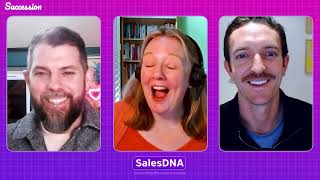
A YouTube interview (released Jan 7, 2025; recorded Jan 2, 2025) where Karen Tkaczyk (Director of Sales, Life Sciences at VistaTech) discusses selling localization and translation services into the life sciences vertical. Key points: localization requires subdomain-qualified linguists (clinical, med dev, cosmetics, software-as-medical-device), regulatory mandates often drive translation needs (informed consent, drug labels), and go-to-market success depends on niching, understanding regulated buyer personas, and networking-driven prospecting. Practical sales advice emphasizes targeting regulated domains first, using multi-touch outreach, and prioritizing referrals from in-person networking.
Chapters
I think there are too many companies where people are doing a little bit. They're selling to automotive and energy, or they're selling into retail and life sciences or whatever combinations. And that can be very difficult because how do you pick your target Personas if you've got all those target Personas? It's hard enough just to pick one in life sciences or a few in life sciences, let alone if I had other verticals to consider. The linguists doing this work have to have domain expertise. You can't do any of the work that VistaTech is selling without domain expertise. And in fact, our linguists are all credentialed, not for just a language pair, but for a specific domain. So even within life sciences, we'd have linguists who are approved for clinical, say, or approved for med dev or approved for cosmetics or something. They need to be subdomain approved. You can't be all things to all people and do it well. We believe in niching down and you get good at something specific and you do that thing right. And I think you two do too, right? You sell only into life sciences. You know, you know that niche. You know, you've niched down as well.
Hey, welcome to the first episode of 2025. This. Yeah, we recorded this actually on January 2nd, and this is going live, you know, this week. So on this episode, we're really excited. We've got Karen Kacchik. She's the director of sales for the life sciences group at VistaTech. And we're going to talk about a lot of fun stuff regarding localization. How to sell what might be considered a horizontal product or service into a vertical market such as the life sciences. I think many or some of you out there probably are selling a product that can be used across multiple industries, and you're trying to figure out how do I apply this into the life sciences. Some great learning for you there. And then we even dump into some of her favorite sales tactics, tips and tricks around networking. All sorts of good stuff in this episode. Would you like Nate?
Cool.
I think as a. As a generalization, as this is the intro and people are about to listen to this or decide which episode they want to listen to. If you like me on a podcast, I did not expect to find translational services as interesting and as enjoyable as I did, because to me, it's something you do because you have to write. It's not. It's not. For me, it didn't sound like the sexy part of the business, but it was really interesting to find out how actually understanding it can drive yourselves. And I think some of those takeaways can be applied when we start talking about things that your businesses have to do and recognizing those and aligning your products to those musts rather than the wants. Yeah, so that stood out for me.
Yeah. I think the other thing, too, from my perspective is like, I would probably do this localization earlier. And I'm also thinking about for when we do lead gen for companies is how can we do a better job of localizing our messaging to certain countries in certain regions? And so, yeah, I think there's definitely some good learnings in here that I took away. So what do we always say, Nick?
Let's dive right in.
Hey, Karen, welcome to the show. We're excited to have you here.
Hi, Harrison. Nick. It's a pleasure. Pleasure. Thanks for having me.
Yeah.
Excited to dig into what we have to talk about today. But before we do that, you know, we ask everybody the same question. Give us a crazy or funny story that's happened in your career.
Yeah. So I worked with thiols in my PhD. The chemicals that are added to natural gas to make it smell. So we know if there's a gas leak. Rotten eggs, Important.
It's important.
You name it. Right. So that smell. So a bad day at work involves stinking out the lab. Usually that happens when I was trying to clean it up or destroy the excess. So that's just. I mean, it's not that crazy. But later, I moved to the US Because I had never met a skunk in the wild. Right. I grew up in the uk. There are no skunks. Right. And we lived in northern Nevada. And I was like, it smells like the lab. Oh, it's a skunk. And I got sprayed by a skunk on an evening walk one time back from a romantic date that turned into the least romantic moment ever. And I can never. I just can't dissociate Every time I smell a skunk or, of course, marijuana these days, it just all comes back to me. And I think about those bad days in the lab when everyone heated me because I was cleaning out my thiols. So it's not entirely crazy, but it's just a nice memory that's followed me.
Through my nice memory short.
Yeah.
I have a similar story of spilling something called sodium butyrate in the lab, which is the thing when you smell sick. The smell you smell is sodium butyrate.
Yeah.
Like a 10x concentration of it in the lab.
So everything.
Everyone's gagging while you're cleaning up. It's not pretty, is it? No. My risk was that people would call the fire department to say that there was a gas leak. That was my. That would. That people were going to call 999 if I had a bad day at work because it meant that everything was smelling so.
But it is a nice segue, which is one of the first things you want to talk about was your transition from smelling up the lab and going into sales.
Yeah. Yes. Well, that has. That took about 25 years. So yes, it's. I am the accidental salesperson. I. So I was a chemist, did a PhD, worked in big pharma as a development chemist, loved it. And then emigrated to the US and worked immediately in a medical device, a topical medical device company. So think wound gels, also cosmetics. So it was a formulation type chemistry. So it's a different kind of chemistry from the active ingredients that I was making in pharma. Then had children, so I had a career break. And as that was ending in theory, we thought we had finished having children. I was looking for something to do. And I was not in a hotbed of pharmaceutical or anything life sciences. I was in Northern Nevada, near Lake Tahoe. For any of your listeners who know it, it's a gorgeous, gorgeous part of the world. But there wasn't a lot going on that I could obviously apply my studies to. So I became a freelance translator. I was a subject matter expert in this domain and I'm bilingual. My husband's French. So I became a freelance translator and started translating all the documentation that's involved. Everything from cosmetics to pharma patents to, to, from SOPs to, to, to informed consents to, you name it. I've translated millions of words of it over the years when my children were small. And then once they were no longer small, I decided to go into account management with a bit of biz dev for a translation company, a company providing their services globally and then switched to another company. And I'm strictly biz dev for life sciences now. So completely nonlinear path you could never have planned or predicted. How did an organic chemist from Ayrshire end up being a translation salesperson in Denver? You can't plan this life, but it's been great. And here I am empty. Nestor. Love the travel that comes with biz dev, which would not have been possible for me at a different phase in life.
Interesting.
And. And I have lived a multilingual, multicultural life. That means I understand the. The translation part of what I do. And then of course, I'm a chemist at heart, fundamentally and have lots of life sciences, broad life sciences knowledge, so.
Oh, go ahead, Nick.
I will say one of my favorite quotes you said it's like completely delineating. You can't plan this life. One of my favorite quotes is life is what happens while you're busy making plans. And I think that's every sales rep you ever talk to. That has definitely been their experience. Right. They fell into this. Something happened like nonlinear bar.
Yeah, well, I like people, you know, I've always liked people. The part of my career when I was a freelance translator was very solitary. It didn't feed my extroversion, but it fed my family flexibility. You know, we need different things at different phases of life. Right. And so this has just been a natural progression and. Yeah, yeah. Certainly couldn't have planned it.
Let's take a quick break from the podcast to talk about what we have going on over here at Succession. We work with 40 plus life science sales companies to help them find more opportunities and close more deals. We provide a range of services to support your sales growth. So whether it's increasing top of funnel opportunities with done for you lead generation in person or virtual sales training reinforced by personalized training plans, recruiting top sales talent, or just building custom AI workflows to help make your team more efficient, focus on selling. So if you're ready to transform your sales strategy, visit Succession Bio and schedule a call with Mick and I and we'll see how we can support you. It's exciting because I think one of the interesting topics that we wanted to dig into is related to like the combination of these things. Right. So it's a combination of you've got your chemistry background and now kind of in the account management side, in the sales side now, but also taking something that is a software service product, but it's horizontal. Right. So meaning you can apply translational services to many different industries, but then you specifically focus on like the life science vertical within a horizontal. Like sort of.
Sort of. Absolutely. So yes. Wow.
Translational is in translating language. Translational, not as in translational science, just all that is.
Absolutely. I get that question once in a while as well. Yes, you're quite right. When I meet people, so you ask a really good question and I can actually contrast it because the previous translation language services company that I worked for did not have their life sciences business unit fenced off in any way. It was just sort of. We all sold into verticals that we had some expertise in and. But that meant I, I ended up helping in all sorts of things where I was, you know, competent. And instead now I work at a company where the, where the life sciences business unit is set apart from the rest of the company. Our QMS is set up just in the way you want to sell into life sciences so that when we're audited we're all prepared for that. We're, we're all life sciences SMEs. So we're ring fenced. I think that might not be the right term, but we're fenced off separately. We're a separate business unit. So I only have to think life sciences day in, day out. If it falls under broad life sciences, that's what I do and therefore it's all I do. And it makes it pretty easy. If it's not life sciences, it doesn't come my way, it gets handed to someone else and it's very clear. So I think you're right. I think there are too many companies where people are doing a little bit. They're selling to automotive and energy or they're selling into retail and life sciences or whatever combinations. And that can be very difficult because how do you pick your target Personas if you've got all those target Personas? It's hard enough just to pick one in life sciences or a few in life sciences, let alone if I had other verticals to consider.
I think one thing people forget, which is important when you say translation as well, we, Harrison and I, with succession, when we do lead gen and training, we specifically focus in life sciences also. And one of the things we tell our clients is that we understand the language. And I don't mean French or English, I mean the language of science, the language of life sciences and biotech or the language of gmp. Everybody has a different terminology and quoquinisms around that. So to be able to understand that and then translate that into another language is a, a unique skill set, I would say. So that's a value add.
That's right. The linguists doing this work have to have domain expertise. You can't do any of the work that VistaTech is selling without domain expertise. And in fact our linguists are all credentialed not for just a language pair but for a specific domain. So even within life sciences we'd have linguists who are approved for clinical thing or approved for med dev or approved for cosmetics or something. They need to be subdomain approved because people who know, I don't know people who know clinical trials don't necessarily know biotech or don't know the device piece. The very technical pieces related to some medical devices or equipment or machinery. Software localization as well. If we're talking about software as a medical device or an app, yeah, that's a different, you know, there's so many domains of expertise that are required. So yes, try. You can't be all things to all people and do it well. We believe in niching down and you get good at something specific and you do that thing. Right. And I think you two do too, right? You sell only into life sciences. You know, that niche. You've niched down as well. Right?
And that's why we do it. Right. It's like that way we have like, you know, our specific expertise that we can provide that, you know, others may not. Right. If you're working for. Looking for another sales training here, lead gen company that is doing, you know, serving all sorts of different industries, right. You're going to miss some of that translational component, pun intended, of your messaging, of how you sell, of the training, the tactics, all those kinds of good things. So, I mean, because even if I even think of just the English words that you use, right, like sponsors for clinical trials, it's a lot different than like a customer or a client, right? Like even just like words like that, like will not. They won't resonate the same if you're talking to different audiences.
Localization, so translation, you translate for a locale. So the UK and the US right, we have a mix of accents here today among the three of us, we all know, because we all know a little bit about various parts of the UK and various parts of the US and we know what's not the same. You don't go buy paracetamol in my local Walgreens, right? I would go to Boots for paracetamol and I would go to Walgreens for Tylenol or acetaminophen. Right? That's very basic localization that we all know and live with. But that imagine in your instructions for use or your marketing materials, that kind of difference matters. And that's what we are good at. That's what we do. We help provide that content for whichever locale somebody wants to sell into.
New UK people use too many U's, use too many U's where they're not supposed to be.
Spelling's the easy part. Spelling is not the tough part. It's things like do you go to hospital or do you go to the hospital? It gets way more complex than spelling right? Into all sorts of cultural nuance. And whether you're talking formally to a patient or Informally, for all the languages that have a register difference for how the verb forms. I could go on and on and on about that.
But you don't translate for cockneys, right? Because then there'd be no H and you began odd Bill. It's completely different.
No, we tend not to go down into regional dialects and slang too much. We have plenty of English variants that we localize into already without going. We just go to UK for instance, or I and Irish. We wouldn't typically have have the fun ones.
That's good. So one of the questions that I had around localization in general, which would be like, why would somebody or company want to really go deep into localization to maybe like work with a company such as yours? I think maybe from both, like the, you know, regulatory go to market side. Kind of curious. Like, are those the main reasons or the other sort of areas to talk about?
So we certainly start with regulatory. People must translate. In lots of parts of the world, you're not allowed to sell a drug on a. Or a medicinal product. We're localizing again already on a. In a pharmacy or in a. You're not like, unless the box is in the language of the person who's receiving the medicine in lots of places. Right. So there's regulatory mandates, there's regulation regarding, for instance, clinical trials. Informed consent forms are going to have to be in the language so that people of the native language or a great language for the person considering doing the trial so that they truly understand what that clinical trial is about. So you can think from the regulatory status side of things. Okay. In terms of go to market. Well, people don't typically buy what they can't understand, Right. They can't read, won't buy is one way of looking at it. Now, a global company may have reasonable sales if everything it puts out is in the language of its origin, English or French or who name Chinese, whatever it is. But you can imagine those sales being much, much higher if everything is localized into the market, in the market where they're trying to sell. Right. It's common sense. Would you buy a package on your shelf in your supermarket in London that was only in German or Chinese? You probably wouldn't, right? As an English speaker, that seems almost ridiculous because as an English native, we are used to everything being in our language. But imagine being in Sweden I or Israel. Is everything in Swedish and Hebrew or is it only in English or is it a mix? Or what's the question? So, so in terms of go to market, you're thinking about what's the benefit going to be of localizing?
I think too like even from, like even not even just a product perspective, like if you're using software or you're being marketed to via an email or on a website, if it's in your language, it's going to be much more impactful. If I go to a website and it's German, I'm going to click the translate to English button on the website, but I'm going to get a watered down version of their website that's translated to English. So there's probably going to be some nuance that's missed there as an example for sure. However long it took for people all the time.
That's right. However long it took that company to write that web copy or marketing content or software ui, the nuance is not going to be carried over. If you're just doing a straight machine translation, a raw machine translation, typically you're going to lose all cultural competence if you like. Right? There's cultural nuance. We've joked about it already about US UK nuance. So just imagine the difference between France and Japan or Mexico and Poland, or you, you pick any differing set, cultural nuance and think about that app that they're trying to use, that, that website browser, that email. Like you, you described marketing email. We all want to read and buy in, in from something that looks like it was written for us fundamentally. Right. And that's why people localize, because it works.
So I should just load up ChatGPT and I would be fine, right?
Yeah. Well, it's fine if you're trying to read a menu somewhere in a foreign country or trying to buy a Lego set on a web browser for your nephew who lives three countries over. Not so fine for an informed consent form or a drug label or the instructions for using an MRI machine. Right. It's about risk. Okay, so your chatbot, if your company has a global website, maybe their chatbot, we use an AI solution because the chatbot can respond quickly in a number of languages. It's low risk, doesn't matter. But then you have marketing content. Well, how much did you spend to create great copy in the first language? It would be a dreadful shame just to nix that and use machine only.
Or just assume everybody knows English at that point. I think I see a lot of companies from the US make that mistake, is that they just use the same content everywhere and, and it's not going to resonate. I mean, even if you translate it, even if you did use ChatGPT to translate it like it's probably going to be better than if you just used English in a lot of cases. Right?
Like, right, so there's low cost solutions, right, for people who don't say people know that they, they really ought to be doing something, but they don't have budget. Then you work with that, you work with a machine translation or an, possibly an AI solution. Although we're still finding that machine translation with trained engines, which is what we call them, is often more effective than AI. We've done a lot of compare and contrast testing pilots. So machine translation with a Polish from a linguist is often a good intermediate for companies that really don't have budget. But that human Polish, I mean we all know how bad the errors are in ChatGPT or in Google translation. We've all seen the silly ones, the rude ones, the shocking ones, the ridiculous ones, the racist ones, the sexist ones. It's like, what is the risk to your brand in using those? You know, what, what, what's the risk?
The best part is you wouldn't even know, right, because you would take that translation, just plug it in because you assume is right and then a patient.
Yeah, our client would come back with a, with a customer, with a complaint or something or this is shocking and such and such. And those make the news. Translation bloopers often make the news. We, we hear about those bad ones. But, but companies with companies in life sciences who, who are selling, let's say into the whole of the EU and perhaps Latin America or some major APAC countries, they have localization programs, they know that they must use, they, they're not only going to translate the regulated, must translate material, they're going to typically also be translating a lot of their marketing content, their corporate websites, other things. They typically have programs set up and they know that. But small biotechs who are growing, it's like suddenly they realize that, okay, so we've got to do this in this language if we want to go to market there. And oh, it's not just one language in that country. They have three national languages. So it's suddenly three times the cost or whatever the case may be. So like every service that somebody sells, sometimes your buyers are mature, sometimes they're less mature and you, you sometimes you have to educate them and help them through an understanding. And others are like, okay, make it flawless for these 17 Asian countries. Let's get it right.
Weird thing is I got one story that I'm going to say allegedly as the story because, just because it's about Astrazeneca So allegedly. But no, the, you know, the flu spray that they give to children, the one that goes up the nose, is actually developed by metamune under. When AstraZeneca got metamine. So in the US this is called Flumist, I believe they give this flonase.
Ah.
So at one point it was flu mist. Right. And then they were going to do it into the U. UK and Europe, which includes Germany. They had to change the name from Flumist to Fluenz. And the reason was, is that mist means manure. Yeah, there you go. So, like just some simple things. You don't really want Flume in your arbinos.
That's exactly it. There are lots of examples like that all over with brand names and drug names. Drug names are typically harmonized nowadays. I mentioned paracetamol and cetaminophen a little while ago. That doesn't happen verymore. It doesn't happen very often anymore that, that a medicine will have two different official names in different parts of the world, typically. Now the major global regulatory bodies are trying to harmonize, harmonize things like that because it reduces risk as well as it reduces risk. You know, there's, there's less likely to be mistakes in prescription and things. If there's a single global name for something, then it's just the brand names that change.
I guess. One other thing I kind of wanted to dig into because you're obviously selling this service as something that probably many people are aware of, but you're focused on one specific vertical, right. So it's like you have your support system, which is great that you have the full life science sales, full life science business unit at your back. And so how do you think about your sales process now when you're going into these target accounts, into these companies to basically try and sell this service? But it's a service that, you know, generally can be applied to any industry.
So you mean how do I sell it into life science?
How do you think about. How do you think about the. Yeah, because how do you, how do you think about tailoring your sales approach specifically in the life sciences when it's like this broader category? The reason I, the reason I kind of asked this is because I know there's people out there that are selling other sorts of. Like maybe it's software or other sorts of products or services that may also go across many industries. And I know there's challenges when they have to think about how do I target one versus another and how do I get.
Yes, yes, yes, no, you're absolutely Right. I clicked what you were getting at there. So it's, it's safety and risk aversion is the starting point for life sciences.
Because of, because you probably made that decision for a reason. Right. That you start with that as you're targeting.
Life sciences companies are risk averse. They are typically slow to change and slow to adopt new technologies. And there are characteristics of life sciences companies and they also must do this. There's an element of must, there's regulated peace therefore and you could say the same of one or two FinTech similar. They have regulations regarding money laundering and know your customer. Right. So there are regulated industries and then it would be different. If you're selling into retail then it's not about risk aversion, it's about the cool brand and the brand awareness is so much more important. Not that brand awareness and the style guide is not relevant to life sciences companies but the balance in what you're selling. Tips towards risk aversion, prevention of error, such strong quality assurance that they're never going to get to the point where they've printed all the labels for the packaging and there's a mistake on them because there wasn't enough quality assurance along the way and they have to reprint. So I think that's what the difference is for life sciences compared with those broad selling situation. Does that make sense? Does that speak to what you know?
Yeah, I'm just trying to think of like a process we could give other reps too. It's like almost like phase one is are there mandatory things that have to be done? Are there regulatory things? And when you're thinking about a new industry, maybe that's the first place to go. It's like, okay, I have to get into this new industry. I've been tasked with getting into the life sciences or whatever it is and so find out what are those things that are required that you can maybe help solve and then maybe from there you can start to navigate into. Oh also we can apply this to marketing, content marketing materials, you know, other retail, you know, setups, whatever it is. Like these sorts of areas then become how you branch off into other teams.
So if I were recommending then I would, you would pick a domain that's regulated. So you might focus on clinical, for instance, clinical trials, clinical research. Or you might focus on software. As a medical device you've got software, you know, if you're into, you might focus on regulatory affairs people, those could be your target Personas. So you could go into different angles within life sciences where there are mandates that could be a place that could be one way to start. Yes. Yeah, yeah.
Kind of get your way in there and then figure out where else it can be applied. Because I think you mentioned this actually might have been, we were talking ahead of time where you see a lot of the localization teams or translation efforts can be into like marketing. They can be in all of these different departments, right?
Yes. It's the hard part of selling sometimes is that there's no single target Persona. So some, the largest companies will of course will have some sort of centralized localization team buyer process. They'll be mature buyers, they'll know what they need, they'll have technology all sorted out, they know what's what. But in a smaller mid sized company, and even some that are surprisingly large, some purchase, some buyers will be in the market. Sometimes it's housed under marketing. So that's where their focus is. The marketing materials, the branding, the brand content, style guides, the design. And other companies, it's housed under regulatory affairs or it's housed under clinical operations. And suddenly there's a different focus. And the other requesters coming in from other places may have different understanding. We also produce content. You know, we do some medical writing in some, you know, we. That's another area. So sometimes it's housed under medical writing. The writers help with getting into any language. So. So yeah, that's part of the hard part of selling is, well, getting the first call with the right person. Right. That's the hardest part. And finding out who that is in any given company is the work of prospecting a lot.
100%. Yeah. And that's kind of what I wanted to get into. It's like if you have to go into one of these new industries, really understand your customer that you're going after, what do they really need, why do they need it? And then who are they and where do you find them within these organizations? And then make sure that that messaging is localized to their needs.
Nicely done, Harrison. Yes. So for me, what they need and why they need it is easy. I know that gut instinct very quickly when I look at any given potential, you know, client potential prospect, it's about finding who in the company can be pretty tough when you don't have an in.
It's probably not like a title that's specifically dedicated to it.
Right. Sometimes. Because one of the things you do when you're thinking about a sales process is you write the Persona up for this or you look up a set of titles that are the likely titles of the buyer and that's just so broad in my case that, in our case that's very, very, very. That's not an, that's not going to be a quick way to go. It's not going to be an easy solution.
It is the same challenge a lot of people have when selling it to like pharma or biotech and like research side. It's like you're selling to the title of a scientist or a principal scientist. Well, that could be, it could be doing a hundred different things in the lab. And so how do you know that you're targeting those right people? And that's where it takes that extra research and the extra analysis and sort of analyzing their profile, the company, you know, what teams they might be associated with. All of those things.
Yeah. And I like the better approach of knowing something and someone in the company who can ask, can find out or answer the question or help me along. That's the faster way of doing it. But that's not as scalable as the hard work that you just described.
But there's something to, you know, just starting a conversation with somebody there. And if you get a conversation with someone, then you can ask them the questions that can lead you to the right place. So it doesn't always have to be, you know, a meeting with your ideal prospects is the first one that you get. Obviously that's awesome when that happens. But it could just be starting a conversation with a human being that exists at that company. Right. Like reaching out to somebody. But hey, just curious, like who's responsible for this at your organization? And that could be a simple way to get in the door and just know who the right people are.
Yes, I know you're going to ask me about my favorite sales tactics.
I was going to. That was a great segue.
So go ahead right into it. Because my favorite is networking really. It's getting those initial conversations. So I mean I think I record what I do and I follow up and those are for me a given for effective sales work. But a lot of salespeople don't like logging at all the CRM. Right, we know. And I also strongly believe in multiple touch points, you know, and through, you know, you met them in person at a networking thing but then you follow up on LinkedIn and then you drop them a note or do you, do you send them something in the mail? The old fashioned or whatever it is. But those are all good things. But my favorite tactic is networking because we do business with people we know like and trust. It's, you know, it's Practically a cliche. But we make those connections. I certainly make those connections when I'm networking with people. And for me, the best lead is an inbound lead that came from a referral from someone I met at something sometime, someone who knows me and liked me enough to pass my name along and who perhaps knows that I've chosen to work for this particular language services provider over all the other ones that are out there. I'm not 25 anymore. Right. I have some choices and I chose to work for the language services company that, that I think it's doing a really great job. Right. So all of that, when someone gets that from a networking interaction, that's the best sales lead, I mean, works for me.
So Nick has a good story about that recently.
You do?
Yeah. What just happened today? You just got a nice little LinkedIn from a networking event that's a follow up to somebody you met in person. Okay, here we go. I'll tell the story for a minute. We put on a networking event the other day here in London for Christmas and we met quite a few people there. It was awesome. It was a lot of fun. And one of the people there was like, hey, Nick, I'll introduce you to some people I know. And we're thinking, okay, maybe it's like he's got like one or two people. He sends over a list of like 15 names of people that he's happy to recommend us to. And it's like, those are. That never would have happened if we didn't do this thing in person, if we didn't have this face to face conversation. Well, also this person is very nice and we thank them very much for doing this.
A connector. Clearly you don't make, I mean, those strong connections. We all know it when we see it, right? It's like the first time we chatted, we liked each other. It's like, you know it when you see it, right? And you know, you get that feeling that you could work with this person, that you would be please to refer this person. Right. And multipliers are the best because. Because there's so many people when you meet them in an event. So I don't get ghosted a lot after, say, a call, but I do get ghosted after trade shows and conferences where I met someone and they say, yes, I'd love to introduce you to the right person in the company, or I'd love to make that just there's a percentage, there's a ratio there of people who actually say it and mean it. And people are never going to do it. And I think it's something to do with people not liking to say no to someone's face. I would much rather they said, actually I'm not comfortable making an introduction. It was nice to meet you, let's stay in touch. But I'm not comfortable with that. But that's not, that's not how people work.
I think.
Yeah, I think the difference with this particular person was. And in networking that makes the differences. So we're big advocates for email and LinkedIn because we believe in the multi channel, multi touch approach. But that includes in person as well. Well, but within person. When I'm talking about something I really believe in, you can tell when somebody talks about something with passion that they believe in. And I think that's what happened with this particular character because I was chatting to him and he's like, oh well, I don't have a use for this, but tell me about it. This sounds really cool because he's great. I can't believe you can do X, Y and Z to connect with people that build these lists. And then because of that he's bought into it and obviously was happy to spend that time on it.
Yeah.
Think about him like a gift in the post tunic. We're clearly old fashioned.
And if you're in his and if you're in his shoes and you are the person that is connecting somebody to that many people now, you've built like a good will, but like us forever. Right. And so I almost want to think about how can you do if you're out there and you're thinking about how can I be like this generous for others? Well, think about ways that you can help like make those introductions yourself, like provide those referrals for others because it's always going to come back around.
It does, absolutely. I'm very keen on the. When people are looking for jobs, I'm happy to make the connections with someone at the company they're applying to when they're, you know, when people often ask you that. Right. I have a big network, like I said, I'm not 25 anymore, so I've got a fairly strong network and I like to connect with people. You know, I like to chat to make that it's a reason to reconnect with that person you might not have spoken to in a while as well. So I think in sales, if you truly enjoy that part of connecting with people. Well, I mean, I can't imagine what it would be like to be in sales if you didn't. If that was A chore that would be pretty miserable. And just trusting that authenticity and being honest about what you know and what you don't know, what your company's good at and not good at. Like that partly niching down, partly authenticity that shines through. And we all know then who we want to do business with, right? When. When we can, we recognize that in each other.
So I think the. I know we're gonna have to stop and say, but I think the point with a network, it is, as I've said it and written a post about it, is network aimlessly. I think if you go into a networking with the goal of selling your product, you're instantly dead in the water. Everyone can sense it. It's an uncomfortable conversation. Go in to build connection and rapport that potentially you leverage later, but just aim to make connections with people. And if you. And it's just for you as well, because you're not like running around trying.
To make sales, well, we all know what bad networking looks like, right? So, yes, absolutely. If you. If you. I go. I met someone, actually, one of the ones I did just before Christmas. I had a conversation with someone who was clearly a little more awkward than I was at having a fresh introduction conversation. And after he said, we exchanged business cards and agreed to connect on LinkedIn. And he said to me, oh, good, I can go now. I've got one new business card. So that was his goal for the evening. But this was a hard thing for him to do now. He was a consultant type and not in translation, but in life sciences. Anyway. I just thought that was fascinating. This poor guy. There was I having a blast, meeting 25 new friends at a holiday mixer. And this guy was thrilled that he'd got his one new connection and was calling that a win for the night.
Well, take your little wins when you can get them.
We do.
That was his first time doing that. He got.
Then it was a big win. That's right.
It may have been his goal just to get him off the couch to go do it. Right. I have to get one. That's all I have to do.
Yeah.
Awesome.
That's right. He said he met his goal for the night, so I felt happy for him and sad for him at the same time.
Yeah, yeah. It's a fairly low goal.
Right.
But then I'm a big advocate of low goals or I wouldn't be married. So, you know, she was fairly low.
Goals, so that's fair.
Where do I take that point? Okay, moving on.
Well, that note, Karen, thanks so much for coming on the show. It's been a pleasure talking with you about all these fun topics. So thanks again.
Thank you both guys. It was my pleasure to be here and to talk about how we both sell into life sciences.
It's fun. Yeah. Well, thanks, everybody, and we'll talk soon.
More from Nick
[Leadership] Creating a culture of coaching and skill improvement with Sai Guduguntla
[Leadership] Founder selling and how AI will change how team's work with Angie Schwab