[Sales] Transitioning from the lab into sales with Owen McIntosh
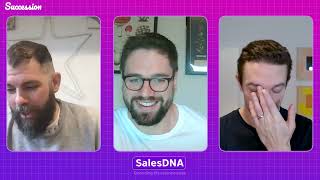
Owen McIntosh moved from a scientific postdoc into sales for next-generation sequencing. He talks through why he made the jump, what surprised him about selling, and how his lab background shaped the way he approaches the role.
Chapters
During my postdoc I was very much sat and thinking what do I enjoy about this part of the life? And it was very much kind of going to conferences, speaking to people and in some ways actually troubleshooting all our students problems in the lab, saying, okay, well we can try this and that will take us down these different avenues and we'll see if that solves the X, Y or Z problem. And then I saw this job where I work now at MGI as a sales representative in next generation sequencing, which is a technique that I've used a lot. I know it pretty well and it's something that gets me excited as well. I. It's a really cool technique and to be able to sell those machines, I thought, oh well, you know, that's, that's quite a good career opportunity for me to, to explore.
Well, this is a going to be a great episode. We've got Owen Macintosh joining us. He has just gotten into sales, left the lab. So he made the trip into the dark side. So we're excited to hear from him and his insights into his new role. Some good stuff though, coming up. Right, Nick?
Yeah, I really enjoyed this one, really fun one to do. Owen's a great guy with some great stories and you should stick around to hear about how he lost his shoe in a puddle.
Oh yeah, that's good. That's definitely a good one. But yeah, we talked a little bit about the transition into sales. Different things that you need to consider and I think most importantly, just put yourself out there and make it happen. So let's dive right in. Hey Owen, welcome to the show. We're pumped to have you.
Thank you. Thank you very much for having me. It's great to be here.
So we did prep you and let you know. So every one of these episodes we start with the same question. What's a crazy or funny story that happened in your career?
So I was thinking I might as well start with the job that I'm actually in now and sort of, I can't have been more than one or two weeks into starting when this, when this happened. And I. When you sort of start a new job, you're not linked into all of the email threads. So I'd missed a meeting that had started at 7 o' clock in the morning, sort of on our European side. So I went out for a run, probably about half seven, got back in at eight and it was a two hour meeting as they do when you come in from a run. Like I was a bit sweaty so I took my top Off. And I saw a text from a manager saying, oh, there's this meeting you weren't invited to. It'd be really great if you could hop onto it whilst you could. I was like, panicked, ran upstairs, got to my computer and then, you know when you're in a bit of a panic and you started to go through all the processes? So, like, right, I'll get on, get my. Turn my computer on, switch my camera off and then join the meeting. And then I can get dressed or whatever and partake in it there. And so I was doing that and then you sort of. So focus on that task that you've set for yourself. You don't really notice any deviations. So for some annoying reason from this one meeting, the camera was actually defaulted to turn off. So as I was going through the process, turn the camera on, join the meeting. I just see sort of me sat there topless in this meeting of about 80 people in there. One or two weeks into the trial, it was recorded as well. So I got. I got a few of my colleagues saying, we've just seen you topless in the recording. So, yeah, that was a. That was a great introduction to the. To the European team.
Awesome. And I guess you're fairly early in your career. Yes. You're going to find out whether that helps your probation period or hinders it.
Yeah. Yeah, we'll see how that goes. Fingers crossed.
Yeah. That is too funny. I feel like that was pretty common, especially, like, early in the pandemic. There was a lot of people forgetting what to do with their camera and whatnot. So that's funny. Great way to introduce yourself to the team. Hey, everybody, I'm o.
At least. At least it was an accident and not just some weird kind of alpha male kind of move or whatever. I'm here to dominate. No, it wasn't that. It was definitely an accident.
Awesome. All right, well, let's dig into it. So you are five months into sales, coming out of the lab. Would love to hear your story. There's a lot of people out there that are kind of thinking about this sort of transition. Just made the transition. What prompted you to get into sales and what learnings can you share with everybody?
Yeah, no, absolutely. So, I mean, yeah, I was. There's a bit of background. I did my PhD in plant biology, so. Or sort of extremophile plant biology. Algae, really, if you count them as plants or not. There's a big kind of debate in that. In that world. But yeah. And then I. I went on to do a postdoc after doing a brief stint in I actually between my PhD and my postdoc, I worked in a COVID testing lab as well. And I just kind of doing my postdoc, I was kind of reaching a point where I just thought I don't see myself going much further here. I wasn't really enjoying the academic lifestyle. It was kind of a bit slow paced I guess really. And what I really missed was actually working in this COVID testing lab. In some ways the 12 hour shifts were horrible, but I actually did sort of miss that almost target driven environment and it was just fast paced. You have the process, you work through it and you, you sort of, you see the results. At the end of the day it's like, oh wow, we got through 10,000 tests in a 12 hour shift. Like well done. That's, that's a great, great result. So during my, during my postdoc I was very much sat and thinking what do I enjoy about this part of the life? And it was very much kind of going to conferences, speaking to people and in some ways actually troubleshooting all our students problems in the lab saying okay, well we can try this and that will take us down these different avenues and we'll see if that solves the X, Y or Z problem. So I, yeah, so that was kind of. And then I saw this job where I work now at NGI as a sales representative in next generation sequencing, which is a technique that I've used a lot. I know it pretty well and it's something that gets me excited as well. I think it's a really cool technique and to be able to sell those machines, I thought, oh well, you know, that's, that's quite a good career opportunity for me to explore.
Did you purposefully look for something that was. You're selling a product that you or service that you, you previously used. It's like you were familiar with it or, or did you just kind of like stumble upon it?
I kind of, I kind of stumbled upon it. I don't know whether that's sort of a good thing or a bad thing. I don't know. Did you guys look into products? You'd know when you first started, but. Oh well, I could tell you.
I haven't. No, I haven't. A sort of slightly infamous story that I won't go into here because anyone listening to the podcast would be sick of it at the end of it. And by accidentally fell into sales because I needed the job, I didn't want to do it. So actually my follow up question is going to be like what would your advice to be people in the lab about this? Because I don't think many lab scientists believe being in cells is very scientific and I've, I've personally found the opposite. So I'd like your view on that for other people.
No, absolutely. I mean especially coming as a person who's used our competitors sequences, you know, I know the sort of downsides of it using it on a day to day basis as well. I was sort of very much getting frustrated with the same problems I know my customers are having. So that's even just from that perspective it's quite useful going into a sales role. But actually you know, like you said, you do use the science background like selling a next generation sequencer. You've got to know how the chemistry works otherwise you're not going to convince the customer that your chemistry and sequencing technology is better, better than the competitors. And it's very much, you know, you go and talk to people from my experience anyway where I have the most productive conversations is looking and sort of seeing what problems they're having. And if I didn't have that scientific background it would mean nothing to me. I wouldn't know what solutions really to bring them.
And I mentioned too something like NGS has a lot of different applications in which the people you're talking to are studying different things, different research areas, therapeutic focuses, whatever it might be. So you actually, I imagine you get to talk to a wide range of different types of people as well, right?
Yeah, yeah. You know so I did my, I did my undergrad in plant biology and then my PhD in plant biology. So I've gone really down a narrow sort of plant biology route. So it's, it's very cool actually broadening, broadening my scientific knowledge now. It's kind of reinvigorated my passion for science in many ways. And you get to see all this cool stuff happening across the board rather than in one very sort of small area in the world. So yeah, no that in very much like. But then it is tricky. So you know, you talk to some scientists and they'll go I'm looking at X protein which does interacts with X molecules and blah blah blah. You're really gonna have to dumb it down to me. I've not touched human biology since A levels like I'm an idiot when it comes to human biology.
Thanks so much for listening to the podcast. If you could do us a quick favor and share it with someone. You know, it would mean the world to us if you wanna up level your sales skills or just network with other life science sales reps? Check out the succession community at Succession Bio. Join. Okay, now back to the show. Well, let's, let's talk about that a little bit.
I wanna know.
We've briefly touched on it in a previous conversation about the extremophile stuff he worked on. We'd love to maybe hear a little bit more about that.
Yeah, yeah. So I, I worked primarily, primarily with acidophiles and metallophiles. So they grow in really acidic conditions and really high sort of metal concentrations which makes, you know, something was great. I worked at a place called Paris Mountain. I think they filmed the scene from the Mortal Kombat film where it was sort of supposed to be a Martian scenery because you have all these, this iron exposed to the surface and it's these beautiful hues of red and then some. You know, I think there's a lot of copper and cobalt in there as well. So you get some if sun hits it. Right. It's a really gorgeous place. But I do remember one time I was going sampling and my foot slipped into a pond. That's about pH1. I just bought some new walking boots and by the time I came back, the solar just completely detached. It just melted all the glue. So it comes with some hazards as well. But it's crazy that, you know, these organisms can live there and that's their, that's their actual happy environment. If you try and grow them in sort of neutral, neutral waters, they just completely die. Really. So yeah, it's, it's very much a cool, cool, cool area of science that we get, we get lots from, you know, all of, all of the enzymes that, you know, your cold washes that they come from organisms that grow in cold environments because those enzymes are there to break down materials in this environment. Sorry, explain that really badly there. But yeah, I mean, do you guys come across much extremophiles in your line of work or.
I was about to ask that question to you. Like now you've changed fields. Do you see any of your customers working with either like a byproduct or an enzyme of an extremophile will come to mind for me is not an extremophile but like in the PCR reaction, right, it has to happen at colder temperature. Do you come across those kind of things that you've spotted an overlap?
Yeah, yeah. I mean it's kind of everywhere. Like you said pcr. I don't know a single lab that doesn't really do pcr these days. It's, it's completely widespread. I, I, to be honest, I don't, I don't know. I don't come across many since, since we, I've started working. Because it's ngs, we mainly target core facilities so we're very much working with the people who run the sequencing. But you know, it's always a passion of mine. I'm very much kind of always trying to go to these, these crazy places and like, hey, do you guys potentially be interested in a sequencer and see where some of the cool labs that I, I kind of can go nerd out to when I'm, when I'm working at the same time?
Yeah, I'm going to be on high alert and see if I can spot the use of extremophiles in any other biotech. I just need to overlap. I'll let you know if I see any.
Yeah, yeah, there must be, there must be some, I mean, you know, all of this biofuels really at the moment that's kind of, I don't know if you guys come across biofuels much in your, in your line of work, but not as much.
Mostly, you know, human related therapeutic type stuff is mostly where we're focused on or most of the people that we probably work with.
Yeah, right. Yeah. Okay. Yeah, no, I can't. Again, as I said, I'm not a sort of human biologist so it's very much just spreading my foot into that world and actually learning what they do.
Well, that's a, that's a good segue. So how do, how do you come up to speed on that type of stuff? Right. So okay, you were in, you were in the lab, you were studying plants for so long and you got your PhD in plants. Right. Haven't done, you know, human biology in a long time. So how do you come up to speed on that? Is it? Yeah, because I can imagine that can be somewhat overwhelming for a lot of other people that maybe came from, you know, a plant background and it might be a big hill to climb to try and think about. How do you apply it to the human biology side?
I don't know. I don't think I fully have that answer yet, to be honest. I'm still, still very much going through that. I mean the best way I sort of learn at the moment is I'm a bit shameless and I'll just say, look, I'm very sorry, I don't know what you're on. Can we, can we dumb this down a little bit and that people, most people are very sort of open to that. I think, you know, as a scientist, people know that they're very, very clever in their aspect of the world. And it's, you know, a lot of them are teachers, if not like at universities, lecturing, they are sort of teaching people coming up through the lab, working those processes that might be quite new to these techniques and stuff. So, yeah, it's very much. People are quite open to teaching you and letting you know, going back to basics.
I think that's really important to call out because a lot of more junior people are scared to ask those questions because they get, say they're newer into sales. They feel like they have to be the expert on every piece of science that exists or know every keyword that comes up. And so there's a, you know, you, It's a. Like being shy isn't the right term. But they're, they're, they're tentative. They're not going to ask these types of questions. And it's clear, right, if you just ask most people are nice enough to explain their complex science that they're doing that they know really well.
I think I was going to say so similar why we're both speaking at the same time. It's really important point and I've seen it a lot from reps. I think the important bit you need to know is like you're talking about sequencing, right? You know this in and out and you know the chemistry of it because you've used it. So recognize the area in that sort of like niche or niche if you're Harrison, and make sure you can add value in that space and don't be shy to ask support outside of it. As long as you've got your area nailed down and you can add value, you can learn the other stuff on the fly. And as you're learning it, you bring the knowledge back and add it into other conversations and you over time build more value. So like, and you see the more senior reps and you can see I'm walking to one meeting in one day and they didn't know something. And by the end of the day they'll ask the same question later that day and they can repeat it. Add value to the customer. And it's like a skill that you, It's a muscle you flex over time.
Absolutely. I, I don't know about how you two felt sort of starting in the sales world as well, but this is something I've kind of going through detached from sciences, you know, I see. I've seen in the films and that kind of stuff, people talking about Q1, Q2, Q3, Q4, as away. Then in one meeting, someone started saying H1 and H2. I was like, what the hell does that mean? Like, I couldn't. I decided, sorry, guys. What do you mean by H2 is like, oh, it's the half. But I. I don't know whether that's just the films and TV that I watch, where they've not talked about it or it's not as popular. It doesn't. Doesn't have that same resonance as Q3 or whatever. But, yeah, it's very much the big. The business lingo that I'm learning at the moment. That's.
And it changes company to company. At JR, no one keeps H1. H2 probably stays the same, but there'll be other ones that they just throw in and you go somewhere else. Especially as this is your first commercial role and you'll throw something out thinking it's normal parlance. And everyone. I look at you like you're an alien. So, yeah, it's all the.
It's all the TLAs, right? Yeah. Three letter acronyms.
It's interesting as well, because I was at a. Speaking of different companies, different lingos. I was there talking to some people at Downpoint at a conference I was at the other week, and they were sort of saying, also, you, business development. I was like, no, no, no, I'm a sales representative. And they were like, but that's us. We're sales representatives. And even in our company, we've got sort of the sales people and then business development as a sort of different part of the sales process. So it's. Yeah, that was a bit. I was like, eye opening for me.
I have a theory on this. And Harrison could tell me if I'm wrong or not. I think the Americans see it as much more distinct roles than the Europeans do. We tend to use BD and rep as an interchangeable term. Right. Whereas what I've seen in American companies, and I've a smaller experience than this in Harrison, is that business development doesn't really have a target. Their role is to go out and build connections, collaborations and larger deals and things like that. Whereas reps have got their target and they've got to sell stuff on a quarterly basis. Right.
That's different targets. Different targets. It's not like it's less of like a quota, per se, like you might have for a rep where you're selling products. They're typically going out, doing partnerships, maybe working on, like, tech like hey, we might want to bring this technology in house. Like how can we license. Might be setting up a larger strategic partnership with government agency, something like that. Just all sorts of different types of things. But I think that bd, yeah, the BD that I think of is more partnership focused where sales rep is more like product service focused. But yeah, I've also seen it all be interchangeable where you're a sales rep and they're called business development. So it's just like. Yeah.
And in a smaller company you generally do both. So unless you've got a big enough company that you've delineated the groups anyway, you'll do both. But yeah, it definitely you, you get called a BD or a rep and it can be interchangeable but they're in theory there should be distinctly different roles.
Yeah, no, that's kind of the understanding that I've kind of came to as well. But then there's sometimes where I'm talking to people as well and it's kind of, you know, I can't do anything for you. But actually maybe I pass it on to BD now because they can, they can potentially take that even further.
Actually I kind of like where we're going with this. You got any other kind of questions that are top of mind as you're, as you're navigating your role?
Loads, loads. But nothing comes to the top of my head. It's very good, very good point.
Yeah.
I mean a whole list of definitions of these TLAs would be brilliant. You know, maybe that's not podcast material, could be a bit dry. But rather than a spreadsheet, one whole.
Episode on defining TLAs that's on the.
Community where we can add their TLAs and explain them.
Yeah, exactly, yeah. I mean for me, I don't know, I. To be honest, I don't know much about your guys background. I've come from a very scientific background but it's hard to kind of transition to learning more about business as a whole. Like there's very much the point in me now where I'm reaching. This is something that I'm enjoying that I'm probably going to continue pursuing. I might need to do an MBA or something to actually understand about the wider business world really. But I don't know, what was your guys opinion on it? How, how did you learn these sort of wider processes?
Maybe give you an mba? Sounds good I think in theory but I don't know that it's always necessary. So I think there's going to be certain things that you'll be able to pick up on the job that you're going to, you know, you'll just learn as you go. But yeah, I mean, there's all sorts of different, like, courses and training out there on sort of either like how to get into sales, sort of like the, the, the terminology, the lingo, the tactics around sales. You could go deep onto an mba, but then you can also do like this is all sorts of like free content out there as well, just on like business in general and sort of like how businesses function. Like if you wanted to learn like P. Ls, like profit and loss statements and just kind of how money flows in and out of a business, like, these are all things that you can. You pretty much find online, which that's kind of my opinion. I don't know that you necessarily need to do an mba. And that shouldn't always be like somebody's first thought if they're trying to figure out how to get, you know, more business acumen. But yeah, I definitely see it as a gap from coming from the sciences into business. There's like that, that learning curve that has to happen.
Yeah. And to add on to that, I'd say that MBA is great. I don't have one, I don't intend to get one now, but I think Harrison's point is great. But if you're going to stay at one company and it's quite a large company and you're in a particular niche, then it's going to be hard to learn from others all of the stuff that you would find within an mba. But if you eventually think that you'll go to smaller companies, companies that do different things, you'll get involved like in a smaller company or regularly after a finance meeting, you know, so you'll be involved in all of these things then actually you can learn them during a process of just learning of being in your career. One thing that you do, I've heard you get from an MBA if you go to a very good university to do it. Like if you do the judge business school at Cambridge, for example, you. The network you get alone is worth the money. So the people in the room that are going to be higher progresses in business is worth the money, I've heard. But yeah, maybe the time is. Is it worth the time as well?
So is that how you guys sort of feel like you've learned those wider business practices, just sort of working these smaller companies and being sat in on the other sort of strategy planning?
Yeah. If you do think about, you know, startups it's, it is great for that because you, you know, it's probably more work, I would say, but it's you, you get to wear more hats and so you get more, more exposure to different areas of the business. You get to work with more cross functional teams. So that can be great for that.
I always make the comment of if you work in a small startup below 50 people, on one day you're going to be asked to change the bins because someone's busy and then the next day you're asked to present to the board. Right. And if you're happy doing everything, you will learn everything.
I've never actually thought about it in that way before in a startup. I guess like it's a bit too early in my career to go and work for a startup. It's probably a bit more high pressured. Yeah. I've not got anything really to back myself saying, yeah, I can sell for you, but it's really crucial in a startup.
Yeah. I would say the other big difference is, is the cross functional nature of what happens in a startup where you really get access to different teams. And I think if you're newer into your career, like it sounds like you've got a pretty good idea, like you're really liking sales, but maybe not everybody kind of has that same feeling and they're not sure. Sometimes at a startup it can be great because you can get into that company and then be able to see you can be more involved in other elements of the business to determine, you know, maybe it's marketing, maybe it's product, maybe I would rather be in technical support, whatever it is. So you can kind of get a feeling for what is the right role as well.
Yeah. And one thing that Harrison and I have spoken about on other podcasts and talk to various people about is the, the silos and lack of communication between like operations and marketing and sales. And often if you get blinkered in that, in a larger company, you can think, well, marketing have ruined this quarter. They've not helped me. Or OPS have ruined my pipeline because they've trashed this. Whereas in a smaller company, OPS is Paul and marketing's like Tallulah. Right. So you know them. Right. So you actually get to see where their pain is. And I think that gives you a really good broad perspective of not just assuming like things are going wrong and actually build those communications in larger companies too.
Absolutely. I think we're in a kind of a unique situation where I work in that our marketing team is actually, we've got a UK marketing team as well that we work quite closely with. So the actual wider marketing department I don't really have much to do with on a day to day basis, but I work quite closely about marketing person in the uk. I don't know if that's kind of standard practice, but we, yeah, we kind of got that thing around. Oh, Katie is, you know, I can see the pain she's going through and it's very. It works pretty well for us, I'd say.
But yeah, often they're two separate people see them as different things. Whereas you're all selling.
Yeah, everybody's trying to sell. Awesome. We're coming up towards the end here on time, but we'd love to maybe get some tips and tricks from you. So you've just recently gone through this process. Anything you want to share with, say, somebody who might be in the lab today that is, you know, thinking about making a transition. Any kind of, you know, tips and tricks you might want to give them?
Yeah, I mean, I don't know whether this is kind of a bit of both before the job interview or after you've got the job, but very much don't really be afraid. It's kind of you, you've just got to go for it. And I don't know whether it's like a personality floor or like a human, a human behavior, but I. Before every call, I still get pretty nervous and then as soon as they pick up, you kind of just hit, hit your strides and I've made an idiot of myself many a time on the calls and, you know, some, some just still come out. Well, it's. But it's just sort of putting it out there and it becomes less and less scary with each, with each call really, or each meeting. I think conferences are a great way to kind of overcome that as well as, you know, it's kind of like speed dating. Turnover's massive and you don't really have time to reflect on where you went wrong. You're just straight into the next, the next pitch and it's so, yeah, it's just very much or even if, you know, you don't know if you will enjoy it. It's. If you dip your toe and just go to. That's what I did. I, I just went to my interview and I kind of got sold on A, the job and B, the company and actually I was like, oh, well, you know, let's go for it. Just see how it goes. There's probably, I could probably still get a postdoc now if I wanted to go back. You know, five, six months out of science isn't going to be a killer. Just give it a try.
Yeah, I love that mentality. It's like, you know, go take the leap, do it. If you're thinking about it and your worst come to worse, you can always, you know, fall back and go. Go back into the lab if you want to.
Yeah, I'm good. I got it. You've been a fun guy. Sorry I had to make the joke, but the poster.
Yeah, it's their pleasure. On that note, we're going to cut Nick off. No more of those jokes.
Could that one be edited out?
No, we're keeping that in for sure. Thank you. Owen, it's been awesome having you here. You'll hopefully. You know, other people have gone through the same process as you thinking about their transition into sales. If they want to reach out to you, what's the best way to get in touch?
Oh, good question. LinkedIn or my email? I don't know. What's the best way to put my email on there?
We get to reach out, get in touch, ask them all the questions we've got.
Yeah, sure, absolutely. Please feel free.
Awesome. Thanks, Alan.
Thanks a lot, guys. Really great to be here.
More from Nick
[Leadership] Creating a culture of coaching and skill improvement with Sai Guduguntla
[Leadership] Founder selling and how AI will change how team's work with Angie Schwab