[Science] How scientists want to work with sales reps: Jared Carlson-Stevermer
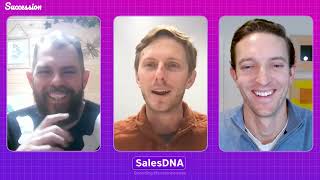
Jared Carlson-Stevermer, Director of R&D at Serenity, explains what scientists need from sales reps: transparent pricing, easy product trials, and reps who understand their actual work. He covers vendor selection in CAR-T research, adoption barriers like repeatability and scalability, and why internal champions matter for getting new tools adopted.
Chapters
Onboarding new technologies. It's really kind of a nucleation event within a company or within an organization. Right. It kind of starts with one and then that one has to trigger the next three and then that next three triggers the next five. And hopefully you kind of just get that knock on effect, you know, analogy that springs to mind is kind of super cold water where you see it, you pop it and all of a sudden it just all goes on and you get this kind of rapid adoption. But in order to get that first little crystal there, it needs to be standout and it needs to be a person that kind of has that pull and has that sway within the organization as well.
Really excited for today's episode. We have Jared Carlson, Steven on the line here with us. He's the director of research cell therapy at Serenity. This conversation was really awesome. Had a chance to talk to all of our potential customers, the people that we try and sell to every day, and really get inside their head on how they like to work with salespeop people. Nick, would you love to. Would you love. In today's conversation, really interested for me.
To hear about Jared's research and how he interacts and some of the crazy stuff that's gone on in his career. But yeah, I really enjoyed chatting with him and hearing some of the gems of how he likes to interact with sales guys and commercial people and how they bring value.
Yeah, I think specifically around transparency, pricing, expectation setting. Right. Basically, don't waste his time. I think these are all really key things that we're going to hear in today's episode. And then if you stay around till the end, you're going to get to hear about how he actually likes to get prosperous affected too. So really great insights there. All right, without further ado, let's jump into the show. Hey, Jared, welcome to the podcast. Excited to have you.
Yeah, thanks. So excited to be here.
Awesome. So, as you know, we ask the same question to everyone who joins. What's a crazy or funny story that's happened to you at some point in your career?
I mean, really, as scientists, most of our crazy or funny stories are just things that went absolutely wrong. You guys know from us all working together at Synthego, we're very automation heavy. And I just remember kind of in my first couple weeks there using some of the Hamiltons, the big machines, they're millions of dollars. You don't want to screw them up and just seeing a plate go careening across the entire thing straight into the trash of a very important Spearman and You just go, you get that sinking feeling in your stomach. You just go, oh, no. As it crashes against a wall and you have liquid sparing everywhere and you know, all of a sudden it's all contaminated. So fortunately it's a good learning experience and you can look back at it being funny, but in the moment it's kind of more crazy than it is funny.
Yeah. What part hurts the most? The fact that the experiment is gone or that you potentially break the Hamilton.
You know, when it's the, your first like month out of grad school. So fortunately it's all self contained. Right. You're like, okay, I'm not gonna lose my hand off of this. I had a mentor though, that would just like reach into it as you're, as you're all moving around. You're like, you're gonna lose an arm. I think, you know, the first month out of grad school though, you're like, oh, I'm going to lose my job. Like, that's worth a couple years salary right there. What is going to happen to me? So after that, when you're like, okay, I'm conditioned, you're like, eh, fine, it's my experiment, Whatever. You get service engineers to take care of that. But in the moment it was like, I can't tell anybody, I'm going to have to fix this myself.
Yeah.
And I think the, the thing is as well, you don't realize how often this stuff happens when it first comes to you. So I used to work on cell culture automation and I won't mention the robot because it used to crash all of the time, but the company would come in and they would refuse to call that a fault or a crash. They called it a feature and they'd be like, oh, what features happened today? So we didn't ask. This is not a feature. Right.
I mean, that's the software thing, isn't it? Right there? Is it a feature? Is it bug? No, no, it planned to fail that way because you just did it wrong. Everybody's just taking this agile development and twisting and turning it to whatever they want it to be.
Oh, that's too good. Awesome. But yeah, really excited to have you here because one of the things that we really want to bring out in this podcast is we're trying to help all Life Science sales reps get better. And so we want to talk to potential customers, right. People on the receiving end of different sales conversations to find out what they like and what they don't like. So be curious, like, what do you, what do you look for when you're potentially searching for a product or service that you want to implement into your experiment or workflows.
Yeah, I mean, really the number one thing I look for is transparency. Right? Like, if, if there's a whole bunch of hoops that I have to jump through to try to get a, to get a quote from somebody. If I have to go through seven layers of service to figure out like what the pricing of something is or what it actually does, it kind of turns me off to the entire process. I mean, I know you guys are sales. It's, it's kind of what you do, but like having a Qlik interface that I can go through and I can figure out what exactly I need, and as I need it, I have support, support to try to work with it, that makes me want to build that relationship, that makes me want to reach out to people to figure out what else we can do to start to expand the relationship. But if it's kind of like, oh, you know, you need to buy this one thing to buy the second thing to buy this third thing in order to even make it work, I'm kind of like, well, give me the all in one solution. Tell me how I can get from point A to point B without having to go to 1A to 2 way to bounce all the way back and forth. To me, that really starts to build a great relationship and wants me to continue to build the relationship with that company and that supplier.
Do look to the sales rep to help provide some of that guidance.
You know, oftentimes I definitely do. It's a lot of times it'll be, I have an idea of what I want to do and I kind of know that the sales rep is the first line there to be like, hey, does this work? Is this possible? Is this something that we can create? Kind of being in the, you know, my, my role is much more in the R and D side rather than process development. And so oftentimes what that means is I need things that aren't necessarily going to be offered. I need things that are kind of off the wall or hey, can you help me? Can I, can I somehow hack your products to make it to do this? And I think that's where the reps really come in handy is they like, hey, what other stuff have you seen in the field? What other stuff have you seen other customers doing? Have you seen, like, it's gotten it to work this way, right? I don't need a 100% guarantee that it is going to, it's going to Work the first time, every time, that would be great. But I also know that kind of a lot of times what I'm doing is off spec. And let's come up with a solution for the ways that we can make this work. Great.
I want to ask you something because you said transparency and you mentioned price, and I've managed a lot of sales teams and something the reps do that I hate. I've.
I will.
I've probably given too much away if I want your opinion on it. And often what they'll do is they think by holding back on pricing and waiting until you're really interested, that then that's going to be fine, you'll pay the price. Because I waited and it was worth the effort. Is that kind of thing ever going to work on a scientist or in that buying process?
Generally not. Not for me. Right. Like, I kind of want to be. I want to be upfront. You know, if you guys have the machine that I need or if you guys have the consumables I need, I want to know getting into if you're holding back. And then, you know, I have to go to my purchasing department and. Or I have to go off to make sure that we have the budget for that. And we don't know that until two, three months down the road. We've done a site install, we've done a bunch of testing. We've, you know, all these different sorts of things. We tried to work out the kinks, and then it comes back and it's out of budget. Or this. My CEO blanks, and he's like, no, we're gonna have to wait till Q3. Like, we just both wasted all of our time. Right. There was, there was absolutely no reason that we needed to do the song and dance to get to this point where it's like, oh, actually, this, this isn't workable. You know, kind of. Kind of along those lines. You'll see times too, where it's like, hey, this is the price. But, oh, if we figure out, yada, yada, yada, we can maybe do a 5% discount, you know, like, give me first price, best price. We're scientists. We're not. We're not on the sales side. We're not negotiators.
We're.
We're bad communicators. As much as we like to write patents and everything, most of us are gunshot. When it comes down to talking to people. Don't. Don't try to give me that, that whole upseller that, like, oh, I'm giving you A deal like if that's what it is, that's what it is and we'll just move forward off of that. I think it's all about working in good faith with each other for the betterment of the field.
Yes. See also I want it so I'm pleased.
Nick's like, oh yeah, that's exactly where I was leading you to go on. You managed to follow the breadcrumbs.
Yeah. But I think it's important though in general it's like the transparency component, whether it's price, whether it's like what a product or service is actually capable of. Right. Sort of the expectation setting is the last thing you want is somebody to promise some sort of deliverable or something that you, that, that you know, you think is going to work every time or in a certain way and then it fails or it's not because like the experiment failed, it's because the like the promise was over delivered. And so it's like that transparency. I mean, you know, you talk about this, you mentioned you're, you're an R and D so a lot of the stuff you do is like trial and error, trying to figure out what works and what doesn't. So like failing is okay, but you want to, you want to fail not based on the expectations or promises that somebody gave you. It's like the experimental validity of failure, if that makes sense.
I want to fail because I had a bad idea or it didn't work. I don't want to fail because, well, granted, maybe I'm an idiot and I just slammed a plate against the wall in automation or something like that. If it's a personal fault, I can understand that. But I want everything else to just be, you know, kind of working successfully, that I don't have to troubleshoot anything else.
Yeah, yeah, that makes a lot of sense. One thing that might be helpful for all the listeners would be maybe a little background on kind of your, your role. Like how do you think about, you know, the landscape of like R and D for what you're, what you're focused on and then where do products and services kind of F that, that landscape?
Yeah, so just little background about my role. I'm the director of R and D at Srotney. We're a small startup company currently located in jlabs focusing on CAR T research, essentially building gigantic libraries of tens of thousands of different CAR molecules that can then hopefully have better effectiveness against solid tumors in a clinical setting. And so we are, we're really kind of out there and so our Needs are very all over the place. And so it's helpful to have a kind of a grounding area. You know, we're products and services all over the place. We like to keep a lot of things in house. And so at that point it's not so much work working with services, but I guess really we do work, we do work with services to kind of go end to end. I know I'm just speaking over myself completely here, so reel me back in when I get off topic. But all along the value stack, as we're working, you know, we're working on building libraries of DNA, we have a partner for that. We're working on building, you know, primary T cells, we have a partner for that. And getting everybody to work in lockstep is, is really important to us and having them focus on their deliverables and having them all work together. Now, unfortunately for us, there's not kind of a full stack development partner that can help us along the way. Probably that's a good thing because then we want to be a research organization anymore. But you know, and then I think kind of the next step in our development is moving that forward to somebody that can take our protocols and move it into a CDMO type scenario. And that's really kind of the next step of growth for a company is somebody that can work with us and partner with us and learn from us in terms of what we're doing and then also take us to the next step. So how can we have a service partner that does what we do better than what we do because they have more time or resources or anything else like that, while still sticking to the core technologies that we've developed.
Thanks so much for listening to the podcast. If you could do us a quick favor and share it with someone, you know, it would mean the world to us. If you want to up level your sales skills or just network with other life science sales reps, check out the succession community at Succession Bio slash Join. Okay, now back to the show. And so when you're, when you go then to say, okay, we've got this particular need, maybe you're coming up on a different experiment. How do you kind of go and do the research side to understand what it is that you need to, to. To maybe buy whether if it's different consumables, different reagents to. Then you kind of get where I'm going with this. It's like how do you, how do you kind of start that search process once you know what you're going for?
A lot of it goes off of what have we used in the past, what has been successful? You know, after that it's kind of what has been worked on in literature or what is also kind of being put out by some of the larger players that are in the game. You know, do we have a partner that's doing it? Is there a Johnson and Johnson? Is there a bms? Is there a Genentech that like, oh, they have a published protocol that we can kind of follow in their footsteps and try to match our processes such that it'd be easier if we ever want to take this into a CRO that then they've already done this process, who's doing the manufacturing for it. And then after that it's also kind of internal benchmarking, you know, working with a couple of different suppliers, a couple of different vendors to figure out what gives the best results in our process. You know, we've kind of gone through this optimization recently even of how do we, how do we maximize CAR T cell expansion? You know, it's a very, very general process. There are many, many different suppliers. Everybody does it their own different way. But I think, as you guys are probably aware as well, there's a little bit of black magic to cell culture. It's a lot more art than science that I think a lot of people are probably willing to admit. And it's all about what works best for your group and how do you get consistent results at that point. And so it's, it's all about that, that kind of trial and error. You do your sort of benchmarking studies to make sure it work. And if you want to switch, you have to have that sort of bridging to make sure, hey, yes, this is actually going to work in our hands and we're going to be able to do it. You know, what, what for us has really become most important is repeatability. Do we have the same results over and over and over again or even could we be pleasantly surprised every once in a while to get better than what we were expecting?
One question. I have people in your position and working with vendors and reps and stuff. How often is it that some, you think I need something and I go out and look for it versus somebody's come to me with a great solution that I didn't know existed. So if you look at those two kind of scenarios, what's more common?
I think a lot of times there is. There's a bunch of inertia going on in the scientific field, right? If it's not broke, don't fix it. And also like, this is kind of what I have used in the past and it has been successful for me. And so a lot of scientists kind of get stuck in their own ways and in order to get them to change lanes a little bit, it's going to have to take a lot of pushing, a lot of pulling and a lot of convincing. And that's probably where the reps come in and say, you know, if the, if you guys have a very clear use case of, you know, competitor A versus competitor B, and I know you can never name names, but say we're doing this and it does markedly different, right? If it's like, hey, we're within 1.5x to, you know, somewhere around those, it's probably not going to move the needle because you know that there's also going to be a quarter's worth of optimization to try to really get it off the ground. If you come, if the reps come in and say, hey, we're willing to work with you, you know, and this is, this is probably not the way it's going to be, but we'll supply the materials for you to try it once, try it head to head against your own process and see how it works with well defined protocols that you don't, you don't have to work, you know, you don't have to do anything. It's kind of more plug and play. It's more, let's build a LEGO set, let's go step one to step two to step three. And it's not going to add a lot. It's not this. I don't need a brand new machine to do it as well because that's going to be another barrier, at least on the consumable side. I think you're going to, you'd get a lot more adoption there. And that's where working with the rep is very helpful to say, hey, we have a brand new technology out, maybe you want to try it, maybe you want to test in your processes to see how it works. When I go off and I kind of do a de novo search of what else is out there, it's because something isn't working well, right? We've identified a huge problem in our process and that's where I'm kind of like, all right, you know, screw, we're not going to go forward with competitor A, let's move over to competitor B because there are lots a lot variation or competitor A, there are lots a lot variation has been atrocious recently or we can't get these turnaround times down, it's. We have to be thinking three months ahead instead of two months ahead, and that's when we go to the other ones. And so I think that's kind of the balance that I find between when I'm going out to looking for something versus when I'm kind of more receptive to, you know, incoming ideas. I think, especially in the. Especially in kind of the car field, people have tested a lot of the various different solutions out there, and they've found their niche and they know that it works with their workflow and they can time it out. And so unless there's a massive improvement, generally, it's hard to make those kind of shifts.
Yeah, it's really interesting. I heard a couple things that I want to try and repeat that.
Absolutely.
I think there's some really good nuggets you gave us, which is one, give them a. Give you. Give your customer a chance to try something. Right. It sounds like you already have baselines of performance for a lot of things that you're already doing. And so if I'm a rep and I want to give you an opportunity to test this new product or technology that we have, I should try and for whatever way I can give you access to it for free to test it, but understanding your baseline and so then we can have a discussion. Okay, where are you at today? What kind of results are you getting? What can we get you to? But then there's that big gap that you said, which is it has to be a big. It has to be a big difference. It can't just be this very minuscule difference that's going to make us go back and change our protocol and really, like, disrupt everything that we're doing just to bring in this new technology. It has to be marketably different to say that this value that this new product is bringing is going to greatly enhance our workflows. Because then there's also the added. Sorry, real quick. The added cost of time on your end to figure this stuff out, and potentially even training on your end to train other people on the team and whatnot, which is added cost to the cost of the product. So it's not just the product cost. It's the cost of the time and effort and energy.
Right. And I think that's a really great idea. It's a really great point too, because it is like, it's not just that you have to convince the one person, the one person that needs to go and convince everybody else, like, hey, you know this protocol that you've been doing for the past 18 months, throw it away. We're gonna go back to development and, and figure it all out. And so like a team like mine, that's a lot easier to do. Right. We're a very small company. We, we don't have a whole bunch of, you know, it's the, the Silicon Valley, like break, break things fast and just move on. But if you have a larger, even a mid sized company where you have a development team that's all running this protocol, you can have two separate production methods like that just at the end of the day that's not going to work. And if you want to go to a therapeutic type thing, you have to get that changes in early into the development process or you have to hope for the next program that they want to change it because program one is already out the door. Program two is out the door. It's IND enabling experiments. You're not changing all that much at that point. It's, it's got to be earlier in the process that you say like this is a market change. And then even, you know, at that point too, it's, it's supporting it all the way up, you know, in our world, at least for the therapeutic, it's got to go all the way up.
Right.
If it's something that I'm going to have to do the R and D at this early stage, but then if I want to go into a phase one type study and I have to change everything, that's a big burden and that's a, that's a huge kind of track change that needs to be considered as well.
So do you look at then some of the things that you're going to have to implement in phases, phase one or whatever or when you, when you transfer to like a cdmo, do you look at some of those things first when you're evaluating R and D, like reagents and whatnot that you might use because that way, you know, you have a more scalable approach.
Yeah. So I would say my mind discovery can be very kind of loosey goosey. Right. If you're in, you're in the very early processes, you say we just need to fill our pipeline. What works, how do we get it to work? I don't care how we have to slam it into our cells because at that point the biology is the biology.
Right.
We could be using Gen 2 lentivirus, which is never, ever, ever going to go into clinic. But it infected the T cells that we needed to kind of, and there, you know, you could get, probably get a variety of different opinions across the industry, but kind of as you start to move into pre clinical, in vivo type studies is where I want to start thinking about how do you actually get this transferable? How do you start using reagents that are more likely to scale from RUO to gmp like to gmp and how do you keep that all kind of in house so you know exactly what's happening with your different suppliers? I think that probably, that probably varies from organization to organization, but that's kind of the, you know, we have, we potentially have a good candidate. Let's make sure that we don't screw this up as we, as we move on down the line.
I think at some point we're gonna have to apologize to, to, to Jared because we're literally telling, hopefully if this is popular, a load of sales reps exactly how to sell to you. And now they're going to abuse that and you're going to be endless emails and phone calls of people knowing exactly how to sell their technology to you.
Which is.
I was just running over that thinking, this is really amusing.
It should be.
I'm pretty good at that delete button though.
So, you know, although to be fair, if they do their job well, then they actually make Jared's job better too. So.
Exactly.
Then they go through the filter and it's like, oh, that was actually successful.
Yeah, there you go. So that's the, that's the hope that we have here is we actually can uplevel all the reps so they do a better job. One thing that you mentioned is sort of this concept of like selling that idea internally. It's like, hey, I want to introduce this new technology. Okay, great. Now how do you actually do that internally? Because we, I just had a conversation with somebody about this and this person that they were referencing had to not only sell their new technology they wanted to bring into their group, they had to sell the value of their group to the broader company as well. So there's like, yeah, I think there's this process of scientists not thinking they're also selling, but when even internally you are also selling, like your ideas, your concepts, you want to bring in a new technology, use a new protocol. Like you have to sort of sell this concept internally.
Yeah, if there's one thing scientists are really bad at, it's selling themselves. I think you can see that at any poster session at pretty much any major conference of like, oh no, this isn't that important. It's like there almost needs to be a Marketing class for every single PhD level grad student just in, just in how to do it. But you're right, I think, you know, in onboarding new technologies is, it's really kind of a nucleation event within a, within a company or within an organization. Right. It kind of starts with one and then that one has to trigger the next three and then that next three triggers the next five and hopefully you kind of just get that, that knock on effect, you know, analogy that springs to mind is kind of super, super cold water. Where you see it, you pop it and all of a sudden it just all goes on and you get this kind of rapid adoption. But in order to get that first little, that first little crystal there, it needs to be stand out and it needs to be a person that kind of has that pull and has that sway within the organization as well.
But yeah, we typically will call them on the sales side, we call them champions. So you have your champion on the other side. But it's interesting because there's also the term called a coach. So a coach is somebody who can give you all the information internally and give you all the details that you need to go and sell, but they don't have necessarily the power or influence to make it happen. So a true champion is somebody who has that power and influence to go talk to, you know, whoever the different decision makers are is go talk to all the different people that might be involved in the decision. And so it's really important to build a champion.
Yeah, I love that we're talking to scientists and most people will go with the wording of a snowball effect, but you went with super cold water and the point of nucleation. Right. That is exactly what you chose over the simple phase of snowball effect. Why it's so fun to talk to scientists more than sales guys. Right.
I should have gone simple and I should have gone to snowball. But no, I just had to up level it for no apparent reason there. So thanks, thanks for pointing that one out. That will probably go a lot simpler but you know, why do simplicate simple when complicated?
That's awesome.
Nice.
Yeah. So I think we're getting up close to time. So we want to end with one question here for you, Jared, which is if there's one thing sales reps should stop doing, what is it? And I say one thing because I'm sure you got a list.
But yeah, no, I'll, I'll erase my whiteboard over here that I had all the checklists of things I wanted to talk About, I mean, the, the one thing I, to me, it's always a little bit disingenuous when it's like, oh, hey, we have this great new thing and it's like it's a gas chromatography, right. For us. Like, we, we don't do that. Understand. Kind of the, the, if you're going to cold call, cold calling is fine. I understand it's completely part of the role. But do a little bit of research behind it too. You know, I, I don't need 17 emails that's going to sell me on the benefits of hplc. If we don't look like we do a chemistry lab, I don't need an ACT up like that. It's just not the kind of thing that I do. And so kind of that, the understanding and the vetting of the company and understanding that there's a good match to provide value I think is a lot more valuable. Right. Because even, you know, I've seen it in previous roles where. And because scientists will take that arm too. Like, they'll be like, oh, you know, I, I saw this company in the past. They just kept reaching out to me about something that there's absolutely no reason that I'm going to do. As I move to a new company, maybe I'm going to work on these kind of things. You know, it's possible for us to change discipline, but like, their lack of attention to detail has kind of turned me off to them in the past. So therefore, when they reach out this time with something that actually might make a difference, I'm not like, oh, yes, I want to give you guys a shot because I don't think that you really know or care what I do, but are more just looking for that market opportunity or that next opportunity to sell rather than kind of what, you know, what I really look for is that partnership and how do we grow this together and continue to have a good relationship?
Yep. We see so much spray and pray messaging. Right? Like, I'm going to make a list and I'm going to go send them the same message and I'm going to hope that something works. And I think the sad part is historically is it would work, right? You would get responses to these types of messages. But now everybody is immune to it because everybody's doing it. And so you have to do something different to stand out. I think you highlighted something really important here, which is doing relevant research on the company, on the person to see. First off, does it even make sense for me to reach out to this person and if so, how can I tailor a message that's relevant to them based on whatever my product or service is?
Right, exactly. And you know, honestly, I. It probably puts a lot of effort into tailoring each. Every individual message. And so a form letter is. It's okay. You know, it's. If it's got a little bit in there, it's worth a little bit more. If it's got a data set, it's like, oh, I might actually look at that. Here's a white paper or something else like that. But it really is to me, the like, you. I, you found my. You pulled my information off of something. You put in a very generic, like whatever the percent name is that fills it in and then didn't even sign it. And I just know I'm like, I have no problem with deleting this because I know that the effort put into it was you clicked a form on Salesforce and hit send to message list. And then just hope for that maybe like half a percent response rate or one person to respond that you got something. And so it's like that, that. That tailoring and that knowing of the subject matter is, is. Makes a lot of difference to me. I mean, it kind of. That actually brings up kind of the second thing that I want is, you know, a lot of people will. Sometimes there's sales reps that will. And it's the strangest thing. You'll get sales reps that almost talk down to you like you don't know your own feel. And it's. It's like, I've been in this for long enough to kind of separate the wheat from the shop. I know what I'm doing. I know the questions that I'm asking. Don't respond to my question like, I've got no idea. There's a very specific reason why I'm trying to lead you onto this pathway to be like, hey, can it do this? If you're just like, oh, I don't even know why you'd want to do that. It's like, okay, you know your subject field a little bit better. You don't have to match necessarily the PhD level scientists that are working on it every day, but have a little bit of an idea of what's going on and what might be other use cases and things like that as well.
We're clipping that last two minutes here that should be sent and shared to every single person in sales. That was super valuable.
I think it's great. And I'm going to play it to any sales team I run in the future. Because often I'm always telling them this. You need to personalize. You need to make this valuable. And I think they look at you like, yeah, great idea, but I ain't got time for that. You know, sometimes. And they just go and carry on with their spray and bracelet. Gold dust.
Yeah. It was awesome. Well, Jared, thank you so much. We really appreciate you taking the time and talking to us today. And hopefully you get a lot of really good outreach from sales reps going forward.
They'll have to beat that inertia. It's been great chat with you guys.
Yeah, have a good one. See you later.
Take care.
Sam.
More from Nick
[Leadership] Creating a culture of coaching and skill improvement with Sai Guduguntla
[Leadership] Founder selling and how AI will change how team's work with Angie Schwab