[Science] Networking, cold calling, and commercializing with Saleha Patel
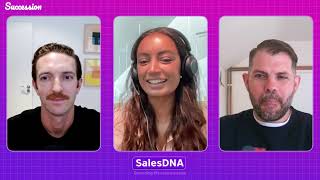
Saleha Patel at AstraZeneca talks about cold-calling her way into a PhD, how she scouts external innovation at the company, and why most sales emails fail. She runs ELRIG, which hosts 10 free drug-discovery events a year, and says networking works when you listen and stay genuine instead of mass-mailing product catalogs.
Chapters
So I would describe networking is like dating. Like, you know, you're building a relationship, right? Like, you know, you're going out there, like you're putting yourself out there and you're like really trying to understand the other person. And it's only going to work if you understand the other person. For me, like just people fascinate me. That's why I think I'm so good at networking. Like, you know, I really like learning about people, like what really drives them, like what they're interested in, what motivates them. And it's all of those things that like, you know, really like helps like me with my network. And you know, because I build meaningful relationships, I never go into chatting to somebody because I'm like, you know what? Like, yeah, I just want to have like that name in my address book. Like, no, it's, for me it really is understanding what they're all about and having that genuine interest in like people.
Before we get into today's show, I wanted to tell you a little bit about what we have going on over here at Succession. So Succession is a life science sales membership that includes on demand courses to up level your sales skills, resources to plan and execute your sales process, a community for peer to peer networking and learning, and live workshops deliver by experts twice a month. You can get access to all of this as an individual for just $79 a month or you can uplevel your entire sales team with courses and customized learning designed for each individual rep. Come and join us over at Succession Bio. Okay, let's dive back into the.
Hey. So this week we've got a good one. We've got Salea Patel. Saleh and I go way back. We're both board members at elric. We've worked together, we worked at the same companies in the past as AstraZeneca. We've known each other for a long time. So it was actually really nice to hear some of her background that maybe I don't always get stuck into when we're just having a coffee or a glass of wine. She spoke a lot about networking, how it's important to her. And I think she's somebody I look to and she's actually really great at networking. So that was really interesting to hear. And some of her work in translating research into commercial companies.
Yeah, I think too like hearing how companies like AstraZeneca, other pharma companies, think about working with external vendors, like always kind of looking out onto the horizon, what's new, what's coming, evaluating new technologies and CROs it's a different angle from I think what we normally have on the podcast where we're talking more to the sales reps. This is more of like, hey, this is a potential type of customer, right, or an advocate that you can leverage internally at one of these organizations. And then if you stay around till the end, she actually shares a little bit about how she does not like certain messaging that reps send her. So be on the lookout for that if you stay till the end. Hey Salea, welcome to the show. We're pumped to have you here.
Me too. I'm excited to be here. Thank you for having me here.
Yeah, so during, during the prep for this, right before the show, I know it was a tough one to come up with but we always ask everybody the same question. Give us a crazy or funny story that's happened in your career.
So actually the start of my career I would say was a crazy beginning. So I was all prepped to go study medicine and then I through lots of different reasons I didn't get my place of medicine. I didn't, you know. Yeah, it didn't happen. So I basically rang up on the day I got my exam results. I was like, right, I've got no plan for a gap year. What am I going to do for the next year? My parents are going to be like on my back. Do I really want to stay at home? No, I don't. So I rang, I got a list of all the UK universities and I just rang them up and I said, hey, like, you know, you're looking for a 17 year old, 18 year old to join your course. I'm very good at biology and chemistry. And so most of them, as you can imagine, said no, no thank you. But the University of York actually said, oh wait, we don't normally go through clearing. But yeah, just like I will hang on to your details and if something comes up, we' give you a call back. And then about two hours later they rang me up and they were like, well, you won't believe what has happened. You know, someone's just dropped off the course. So would you like to come to the university? And I'm like, oh, okay, well yeah, sure, why not? Let's just, let's do that. And yeah, before I knew it, I'd signed up to a biochemistry course in York. I didn't know where York was. I mean this is embarrassing but you know, Yorkshire, you would have thought, but no, thought some. It was somewhere in the Midlands. I mean that's really embarrassing, isn't it? And then, yeah, my parents took me over to see the university. And then before I knew it, you know, a couple of months down the line, I was starting my journey in biochemistry. So that's my unusual story.
So straight out from that, I've known you a long time and I didn't know that story, but anyone listening to this in the sales team are going to be like, you just made a series of prospecting calls to get onto a university course. Your next career move needs to be into sales.
Oh, absolutely. But that's not the first. That's not the first story either. Like that. So when I was. There was another one. So. So when I was picking my PhD, I was young and naive and I was down in London working at Cruk. I remember this really well. And then my boyfriend at the time, he was like, very determined. I'm gonna go study criminology, and I know where, exactly where I'm going to do it. And then I was like, well, what about me? Like, you know, you know, we're living together. Am I gonna be just out on the street now? What am I gonna do? Um, and then I again, like, at Leicester, I just went through the directory of, like, all the PIs, and I was like, well, who's doing some interesting science? Like, who can I actually, like, get in touch with to say, hey, do you have a PhD coming up? And believe it or not, somebody actually got back to me saying, oh, you know, I do actually have a position that's coming up. Will you actually be able to come for an interview tomorrow? And so I got this interview and I was like, okay, yeah, sure. I'm going to go up to Leicester for my interview, got on that train, had my interview, came back, and before I even got home, I got a call to say, oh, we'd like to offer you the PhD position. So. So that's the second story, Nick.
I would say this is like a lesson. We hear these kind of themes repeated in certain people. And people that have normally got the most interesting jobs and interesting careers aren't ones that set out to go after that role. And I think there's a quote I like that says, life is what happens when you're busy making plans. And I think the people we find with the best. The best, the most interesting careers and paths are the ones that have just tried their luck and also taken the opportunities to fall in front of them. And I think that's. You've got to be in it. You just got to keep trying. I think that's a good.
Oh, Absolutely. But what's the worst that happens, right? That's what I always say to myself. Like, you reach out to people, I mean, you'll either get no response or they say no to you. Or actually on the off chance you might get a hey, yes, you know, we want to, we want to have a chat. And I think that's the thing, right? Just taking that risk. And, you know, yes, sometimes cold calling doesn't work, but in this occasion it's worked out twice for me, so.
Well, it's also, it's also because you're being proactive in going out and doing something that's against the norm of what most people do. Like most people will just go look for jobs and then apply. Whereas you took the list and said, who's actually doing cool science that I would want to work with? And then you just reached out to all of them and then numbers game, somebody responds and you go in there, you crush it and get the roll.
Absolutely, yeah.
Awesome. And so know now you are at AstraZeneca for a little bit longer and I think we wanted to learn a little bit more about kind of the role that you had there. And because I think there's some good parallels for how, you know, companies look to external vendors such as, like CROs, etc. In order to sort of make purchasing decisions, kind of understand what's out there in the industry. And I think you had a really unique position where you can share some interesting insights with all of the listeners.
Yeah, sure. So I work in a group called emerging innovations within AstraZeneca and we work across three different areas. So one is open innovation, which is our mechanism for AstraZeneca to engage externally with academic groups and really early stage ideas. And we also share lots of our tools and our compounds and data, et cetera, to really help the ecosystem externally. And it's quite a philanthropic way of doing research with open collaboration and that's open to everybody. So there's a website, people can go and have a look at that and, you know, explore what's available there, especially if you're academic. But the other two areas within our group are indication discovery, which is one area that I supported quite a lot within my role, and that is all around trying to identify new clinical indications used for assets that we already have within the pipeline. So most people are familiar with the concept of drug repurposing, but this is around drug repositioning and pre positioning, actually, which is all about trying to identify disease, new disease areas for assets to go into, but also opportunities earlier on. Be it so most, most drugs can go into different areas, but they happen, they, you know, people are thinking about this. Once you've already got your primary indication, you've been into the clinic, you know, you've potentially you even marketed your asset. And here what we're trying to do is like think more entrepreneurially and think how do we leverage big data sets and new science and technology coming forward? You know, lots of AI and machine learning models now being generated. How do we use that to predict indications and go into some of these areas earlier on? And that also, and it, you know, is around trying to do the right experiments as well and to validate hypotheses at the pre clinical stage. And so when you're doing that, you have to think about, you know, actually does this new area of science exist within the company? Oh no, it doesn't. Who do we go to externally to do that, to leverage our partners, our collaborators. But also when you're designing your experiments, whether that's an in vitro assay or an in vivo model that you need, then you know, you do have to reach out to CROs, you have to reach out to vendors who have those novel tools and technologies that aren't necessarily necessarily within, within the organization. And the third area that our group works in is area called R and D Delta and that is all around horizon scanning and trying to identify what's the next big thing in drug discovery five to 10 years out from now. So what is going to be the next AI or CRISPR type technology of the future. And then identify those early stage ideas in the ecosystem, whether they're in, you know, they're in academic groups, whether they might be a stealth company, there might be a startup for instance, and if it's an area that we think it could be strategically important for the future, then try and build those relationships that generate that proof of concept data for applications for drug discovery or applications that are important to AstraZeneca and then build that body of data so that we can help them scale up and progress it to a point where it is becoming something that gets embedded within the drug discovery pipeline. And again, that's a lot of that is building relationships with VCs, incubators and accelerators to try and source some of these ideas, but then also working directly with the entrepreneurs themselves to help them shape these ideas and give them some mentorship and also co run some studies and some collaborations to do that proof of concept study for pharma applications.
So that's all really just in terms of the emerging technologies and how you connect to those co founders, if it isn't through their investors, then how else do you find them? Is it publications, is it conferences or some.
It's a mixture of everything. So conferences is one of them. You know, publications is another thing. But a lot of it is through the network. You know, that is really how we, how we find them. You know, we have to. There's, you know, in our internal network within AstraZeneca, you know, an external network through all the people that I come across on a daily basis, through all the various organizations I interact with, and then also through networking events as well. There's a lot of events, you know, that you go out there and there's a tech bio meetup somewhere happening in Cambridge and I'm lucky enough to be in Cambridge. So, you know, there's a lot going on in the biotech space and then also, you know, close enough to London as well. So, you know, there's, there's so much, so many of these going on and that's, you know, really how you can leverage some of these kind of environments to try and source new ideas and also to go meet like entrepreneurs as well and just have a chat with them and like see what they're up to.
Yeah, I think networking is something that we should pick up on there because our, most of our audience are sales professionals and networking should be a big part of your job. And it's something I'm a geek about. I love doing it. But we've known each other for a while as narrator and I'd say that outside of sales professionals, you do this particularly well. Right. And it's not, it's not something that has to be your job initially. So my question, I guess is what advice would you give to those. Anyone listening about networking and where to start and how to build it?
So I would describe. Networking is like dating. Like, you know, you're building a relationship, right? Like, you know, you're going out there, like you're putting yourself out there and you're like really trying to understand the other person. And it's only going to work if you understand the other person. And I think that's like, for me, like just people fascinate me. That's why I think I'm so good at networking. Like, you know, I really like learning about people, like what really drives them, like what they're interested in, what motivates them. And it's all of those things that like, you know, really like, helps like me with my network and you know, because I build meaningful relationships. I never go into chatting to somebody because I'm like, you know what? Like, yeah, I just want to have, like, that name in my address book. Like, no, it's that for me, it really is understanding what they're all about and having that general genuine interest in, like, people. And so. So, yeah, and that's kind of how I. How I. How I approach networking. You know, it's really like, more. Less about me talking about myself, but more about listening to what other people are saying. And I think that's the key, especially if you probably. If you're in sales or any role. Right. Is like, listening is always like the. The key to communication. And the other thing to think about is actually, you know, okay, like, you know, that person might have something that you want. Not immediately, but maybe in the future as well. Right. Like those, you know, no connection, I think, is, you know, you know, like a. A wrong connection or a bad connection. I think, you know, they might not be right for that moment in time, but they might come back to you in the future or you might have to go to them in the future. So it's always worth, like, you know, having the same approach to everybody you come across.
And I think, too, you also have to go out and do it. Right. Like, networking doesn't just come to you. No, yeah. It's like you have to actually be proactive, and it's not always easy to put ourselves out there. Like, I kind of consider myself like an introverted extrovert. Right. Like, sometimes I can just sit at home and do nothing and be happy with myself, and then other times I need to be out with people. But, yeah, it's always easy to put yourself out there. But if you want to build a strong network and you want to do it, I mean, it's just so important to go to these different events. There's so many out there that are free to just attend. And so you just gotta put yourself out there.
Oh, absolutely. You just have to do it. Like, you know, there are. There have been some times where I've, like, turned up to something and I'm like, oh, I'm really tired. And I just, you know, why am I doing this? And then, you know, you go there and you, like, start speaking to people and you're like, no, you know, this. It was worthwhile. I've never come out of a networking event and gone, you know, oh, no, that was completely useless. Like, there's always somebody I've spoken to who, like, you know, you've You've like learned something interesting or you go on to work with or, you know, there's, there's something that always comes out of it.
Yeah.
So, yeah, so for us introverts.
Yeah, sure, Nick.
Yeah, yeah, I'm like chasing people down in the street. Talk to me.
Yeah, you're like a, like a golden retriever.
Yeah, let me go talk to them. Oh, no person. What about one?
Yeah, new shiny person. Yeah, he said it was like dating.
So one key question I have is, should I say to my wife I'm off out dating or networking? Which one will give me?
Well, I don't know. It depends. Like, you know, happy wife, happy life. You know, I think she'd be happier.
Knowing I'm off dating. She's like, there's a chance he's going to go.
Yeah, I can't answer that question for you, Nick. You're on your own then.
You're. And so you're. And I guess regarding networking, I'm sure it's led to some of the different organizations that you're a part of as well. Right. So it's not just networking for the sake of your, you know, day job where you're trying to like, you have even sales. It's not like networking just for the sake of closing opportunities, closing deals. There's networking for other sort of opportunities. And I'm sure that's how you landed a number of the different sort of roles you have now. Right?
Yeah, so that's true. So ELRIG is a big part of my life and I volunteer for elrig, so I'm a board director there and I also chair the scientific program work group. But that's not what I always did. I was prior to that, when I first joined elrig, I was actually part of the networking events work group organizing networking events like for. But academia, industry and biotech to come together to find opportunities to learn from each other, share knowledge, innovate, like, make connections and really, you know, through all of that, like find opportunities to collaborate and move the field forward in a specific area. And so that's kind of where I started and then kind of moving like from there. I chaired the networking events work group and then that kind of then became part of the Science strategy work group. And now I'm like, you know, lead this enormous group for the. And have a massive responsibility for the scientific program for elric and you know, we run quite a lot of events. So we run 10 events a year, four very large conferences and six forums. And what's Amazing is, I think, you know, through all of this, like, you know, so everyone is a volunteer within elric, right? Like, or the majority of people are, and it's people giving up their time to really enable networking within the community. And that's really, I think the main purpose of ELRIC is to make those connections and form those connections between all the different areas and the amazing science that happens across the sector. And you know, innovation always happens at the interfaces of areas. You know, that's. And that's, that's the beauty of it. Right? Bring two people together from very different areas and you come up with something potentially that's going to revolutionize the way we go into the future. So, yeah, so I have a very, very fortunate job here of like, you know, being able to bring those people together to try and come up with topics and themes for really cool science events and then go out, you know, even further and then identify those people who are really leaders in this space and to come and talk about what they're doing and the science they're doing. And I think one thing that's also amazing about ELRIG is all our events are free to attend and also all our networking opportunities are free. And I think that's fundamentally, for me, that's very, very important. So you mentioned, like, I'm involved in a number of organizations and I do a lot of work again with, in the social mobility and low socioeconomic diversity space. And there I'm really passionate because I come from a background where, you know, opportunities were limited. You know, I only got to where I got to because it was, it's through, you know, building my network. It's make meeting the right people, building those connections and you know, then hopefully having those opportunities not come to you, but you are being able to easier find more easily find those opportunities. And you know, and a lot of it is around who you know and what you know rather than what you know. Unfortunately, that is the situation. And so, you know, so therefore that, that, like kind of free to attend, you know, opportunity for networking that ELRIG provides, you know, access to that scientific content and that's open to everybody, regardless of what walk of life you're from. I think is really important to me because, because that's, that is, I think, fundamental barrier to, to success is not having those opportunities and not knowing the right people.
Yeah, I mean, I've been to a couple events myself. Yeah, I know you both are on the board there, but yeah, it's an unbiased party. I do really enjoy the Events, because you do get a lot of that. Like, there is, like actual networking time set aside where you can go to meet people. It's very open, inclusive. It's free to attend, which is always nice. And so even if your company doesn't want to, you know, purchase a ticket to go, like, you can still go yourself as an individual contributor, kind of get yourself out there, could just go meet with. Meet with people.
So, yeah, and you're genuinely meeting senior leaders. That's the bit that I found really impressive, like when I was. Because I joined as an early career professional. And I was just amazed and in awe of the fact that, you know, we've got like some serious, like, you know, big people, like, in the industry, like, at these meetings. And I was like, wow, like, you know, starstruck, because some of these are like, you know, people when you're like, you know, a junior scientist thinking they're like, you know, they're like. You're kind of like rock stars of science that are turning up. And I was like, what is this? It's free to attend and there must be a catch somewhere. They even give you a free lunch. Wow. Like, yeah, now there really is something officially going on.
Do they do autograph signings too? They just have them all lined up at the back of the room. You go get everything.
No, but they do network like a boss. Right. If you're an early career professional, you can actually go and like, you know, a lot of senior leaders are willing to give up their time to meet early career talent. And so, you know, there is like our biggest event, which is Drug Discovery happening October later this year. So if anybody's listening and want to sign up, go have a look.
I can say that when they do network like a boss, all of the bosses are not always great because I've been one. So be careful who you network with.
Don't say that, Nick. If you don't get Nick, you're going to be okay. But thankfully he's not going to be one of the bosses this year. Yeah, but, but, you know, we've got the likes of people like, you know, Marcus Schindler who's like, you know, he's the CSO of Novo Nordisk coming up. He's giving the keynote and he's going to be interacting with our early career talent. And then, you know, we've got Steve Rees, who's like a senior VP at AstraZeneca, who's coming to the meeting. So there's a lot of people, you know, if you want to Meet people in big pharma. If you want to meet people in CROs, in biotech, in academia, like, this is the place to be because we cover it all. And it's really, I think it's really important to us that we are open access, we are free to attend just so that people have this opportunity and to like, you know, just get the benefits of it without having to pay extortion at conference prices, which you have to do with some, some conferences.
I think the social mobility point you spoke about is important. As you know, we've spoken before and I come from a more working class background. I say so much so that when I started applying to university, this was back in the day when a prospectus would arrive, like a little catalog and you could read for it of what the courses were. I like three of them arrived in a week. And my dad looked at these things and he was like, what are you doing? Like, this is a waste of time and money. Go get a trade. So he wanted me to go be a builder or something because I want to be a rebiologist. And this was like a waste of time in his mind. He goes, you're going to do three years, spend a load of money and still have to be a builder. Just go be a builder.
Yeah, yeah. And then we, and then we learned just before this that you've got way too pretty hands for that.
It's coming today from August. You'll see my free hands if you want to see.
Oh my God, that's so good. Oh, nice. Yeah, definitely could be a builder.
Yeah. Switching gears a little bit, maybe you could talk a bit about your, your new role where you're working with Green Mary University about tech, transferring ideas out of the lab into industry and into research. Because that's really interesting for me how that process happens.
Yeah, sure. So I was lucky enough to be awarded a honorary title, a lecturer at QML recently. And that was from the. Working with them as a collaborator. So I've been collaborating with them for over four years. Again, another opportunistic moment right through networking. You know, there was another project that we were working on. Somebody introduced me to them after realizing I needed some help building a hypothesis. They had the right models and the right science. So we started talking to this group and turned, you know, ever since then we've been working very closely together and doing some amazing science in an area of very high unmet medical need in cardiovascular disease. Yeah. So I think that role kind of evolved because given my current role in emerging innovations, which is all around, you know, trying to identify early stage ideas through, you know, through our networks, through collaboration, through partnerships. One thing that kind of happened kind of organically through this relationship was actually being introduced to other people in the department and going, you know, oh, how did such and such a body work with industry? Or how do they collaborate, you know, or spin out their ideas or can you introduce them to a CRO or a vendor that has an access to this assay or this model or some expertise? And so that's kind of how that kind of came about. And so now as part of my role there, I am like, you know, continuing to help engage in the science, but also thinking about helping other academics look at translating their research outside of academia into industry potentially, but also thinking about what other kind of companies and organizations that are out there that can help them with their research as well.
And how do you, how do you see this process being different from you're creating like a product, a service, something, something like that versus if you're trying to spin out for like a therapeutic indication, something like that.
So I think that's quite an interesting question. So I think this is what, like the mistake a lot of like, you know, mistakenly, like what a lot of people think is, you know, pharma, they're just out for like new therapeutics. Actually, no, like, you know, there's a massive need for like, you know, translatable assays and models and, you know, tools as well. And you know, there's a lot of things that happen in academic groups that are really innovative, but people are just not thinking about how they commercialize that. They could have some tools that could really change the way, you know, we're gene editing, for instance, or they could have like, algorithms that could really enable us to predict new targets. And it's, you know, enabling and like empowering academics to really think, you know, that actually, no, that assay that I've developed, like really has some commercial potential or that model does not exist anywhere else and could really enable the development of new medicines. So there is a potential for like, you know, me to commercialize that. And so is that it's kind of that giving them that realization that, you know, oh, okay, it's not, I need like the next blockbuster, like, you know, therapeutic. It's. There's a lot of other things that I'm working on that can be really commercial as well. And again, like, you know, it's also, you know, a lot of academics also fear that, you know, I've got this idea and like, if I Commercialize it. I've got to go on and become the founder and CEO of this company. And I'm not commercial at all. I don't have a business mind. But it's, you know, being the founder, does it actually mean. Or having the idea doesn't mean that you have to then go on to, you know, be part of that company or even have any sort of role in that space. You know, you could just have an advisory role or you might decide not to be part of it at all, or you might decide to be the CEO. That's all of those things are fine. But there's definitely lots of different routes to commercializing that idea. Which means that, you know, but also keeping like, you know, the parts of your role that are really important to you and continuing to do the science that you always want to do. So it doesn't have to be either or, you know, you have a choice. You can do both, neither or you can do one or the other. There's, you know, there's lots of routes forward.
Yeah, I'm quite pleased you intro to introduce that concept that way because actually it's pretty much the reason I wanted to start. What we're doing here at Succession is that when interviewing for a position I found so many founders that were falling into these roles of the commercial aspect of trying to do business. They had no real passion or interest in it, but felt they've got to do it. We were like, well, if we could build something that supports these people commercially, that could really help technology end up improving patients lives ultimately. But otherwise a lot of great science just is never going to make it out of the lab. And it's such a shame that it could be making such a big impact and it just isn't.
So what do you recommended those people? How, how do you even know that you have something that's even worse? Like trying to think about commercializing? Right. Like if you don't know what you don't know, do you recommend that people just go and like share what they're working on? Like how do you, how do these sort of insights come out to where somebody can realize that this is something that I can commercialize and I should go down that path?
Yeah. So if you're in an academic institute, they will often have a tech transfer office or some sort of, you know, innovation group there that really supports this type of stuff. So go have a chat to them first because they will have seen lots of this before. They probably have already spun out ideas out of the university. They'll Also be able to help you identify funding as well. You know, if you need to do a key killer experiment that's really going to, like, you know, make your innovation from. Yeah, it's got potential to know, this is amazing. Like, you know, every pharma company wants it in their lab. You know, they'll be able to, like, help you with that. And then also engaging with companies like AstraZeneca. Right? We have an open innovation platform that I talked about. You know, through that you get, you know, access to expertise across AstraZeneca. And, you know, hopefully that'll also help you shape your application and your idea earlier on. And I think that's another mistake that gets made quite a lot. You know, they come, you know, there's an idea, you work on it, work on it, work on it, and then you get to the point where, right, I'm ready to commercialize it, and then it's too late, right? Because, you know, you spent all that time, you know, building something and thinking about an application that might not even be relevant to the industry. And so, you know, if you actually did that, like, right on the onset, like, you know, outset, like we, you know, thinking about it very. As early as you can to make those connections and those interactions at least then you have a really like, you know, much more kind of informed path to, to, you know, commercializing and into, into venture building. Because you want to know as early on, like, okay, am I wasting my time doing this experiment? Am I wasting all this funding doing something that's not even going to be relevant? Like what? Like, you know, we talk a lot about minimal viable product, right, in innovation, and that's effectively what you're trying to get to. And, you know, there's some key things that you will have to do that investors would like to see also, like, you know, partners and collaborators like to see. And so, so yeah, my, my, like, advice would be just, you know, interact with somebody as early as possible and get like, you know, that feedback from your customers and through your kind of your potential market.
Yeah, I think that's so important. It's, I mean, there's. If you're, even if you're not like the founder, right? It's just like, how do you have as many conversations with as many people as possible to like, understand the broad landscape of where you, where you think you might be able to fit this product, service, tech, whatever it is. But it's like it has to come from conversations. It can't just be. And it has to be like a wide background of people from conversations. Because I know, Nick, you've got a good story of an example of you didn't know it was like cosmetics was going to be a market for one of the products you used to sell. Right. And it's like you didn't find this out until you had a conversation with somebody and it was like, holy crap, this is like a really needed product in this particular niche. It's like unless you have that wide range of conversations, you may not find the right place to actually start, like the wedge to start actually selling your product or service to get, you know, product market fit.
Yeah, that was a sensory neuron product we thought we were sending into the pain market. Turns out it was great for irritation assays for the cosmetics market. And it like just blew the numbers out of the water just with the cosmetics leads alone. And we found out that the pain market wasn't big enough because rat models were doing the job. Yeah, like, just because you think you.
Have a better mousetrap, pun intended, doesn't mean it actually is right. It doesn't mean that the market's ready for it or that they're actually going to change. And one of the biggest challenges introducing any new product, right, is you have to break the status quo. People do the same things forever. It's like, this is the way we've always done it and it's so hard to break that status quo. It's like just because you have a new way to do it doesn't mean that people are going to be willing to change what they're doing today. So, so there has to be a big enough like hurdle gap, et cetera, for them to like get over it and disrupt that status quo.
And to be honest, this little group here, we can teach you how to shop. Saleya can get you investment. Just come to us free whistle your ass.
And like Nick's like, yeah, my, like cheerleader for getting me a new job here.
I love it. Well, we're coming up on time and so I know we kind of are hinting at some of the different things sales related towards the end here, but you had a, or you have had so far a good career in the sciences and you've probably interacted with many different sales reps throughout your time. So what is something that you've seen or seen across the board for a number of different sales reps or reps that you didn't like working with as an example that reps should stop doing?
Oh, I tell you what, like really irks me is when I get an email in my inbox. And, you know, they go, oh, here's like, you know, all my product offering, you know, without actually doing their research on who I am. And I'm like, well, you, you know, at first, I don't work in this space. And B, you've just like, you know, annoyed me because I'm like, you should have just at least like, done a little bit of research for me to be able to open your email and actually think, you know, oh, wait, you know, there's some thought gone into this. It's not, it's not difficult to find out who I am. You know, I'm on LinkedIn. I'm quite, you know, active externally. And also it's really easy to see my role. And actually, what. What's even more frustrating is that I can be a really great connector internally. I work in an innovation team, so I might not be the right person for your product, but I could actually connect you with somebody who might be interested in it. And so it's, it's, you know, it's having repeated. Who don't really do their research and really think about, you know, what is it that the product I'm trying to sell and what's the application rather than, here's my entire catalog, have a look at it. You know, it's, it's. I feel that that's quite, quite, you know, quite a lazy way of trying to do sales.
Yeah, it's loading up the spam cannon and fire. Right? Yeah. It's something we always try to coach people against. Right. It's making sure that you are personalizing the email. It's relevant to that individual, and you're focusing on a problem that you can help solve, not dumping every single thing that you do into one email.
Well, I think the biggest issue with dumping all that money or what they're essentially saying is, I'm really busy. If you could just look through all of my stuff and work out what's relevant for you and let me know, then we'll station about that. And that's just. It's really lazy on their part and putting the onus on you to be doing their job as well. And it just, it bothers me a lot when I get them. I struggle not to critique it and send it back, but leave it where it is. No one wants that.
Yeah, I like to say that people don't hate cold email. They hate bad, irrelevant, unpersonalized cold email. I sent you an email that solves a problem that you have right now, and it was personalized. To you. Probably going to respond and be like, great, let's meet.
Absolutely, I would agree with that.
Well, Solea, thank you so much for coming on the show. It's been a pleasure talking to you and I look forward to seeing you at the ELRIG event coming up in early October. And maybe I'll just do a shameless plug for succession because on October 1st we're also doing a sales training workshop event for all of the vendors that are there the day before the event in London. So if you happen to be at Elrig Drug Discovery, come by October 1st and we'll see you there.
Yeah. And one more plug that helps you. If you're a vendor at ELRIG and you show up to the session, then you're able to get a ticket to the chairman's reception which where all those high impact people will be socializing that evening that Silhouette spoke about. And the only way you can get that invite is for attending it or be in one of the presenters.
Wow. We basically did a commercial for elrig.
We did.
Thank you guys.
Awesome. Well, thank you so much. And yeah, we'll talk soon.
Brilliant. Thanks for having me.
More from Nick

[Leadership] Creating a culture of coaching and skill improvement with Sai Guduguntla
[Leadership] Founder selling and how AI will change how team's work with Angie Schwab