Constructive and Productive
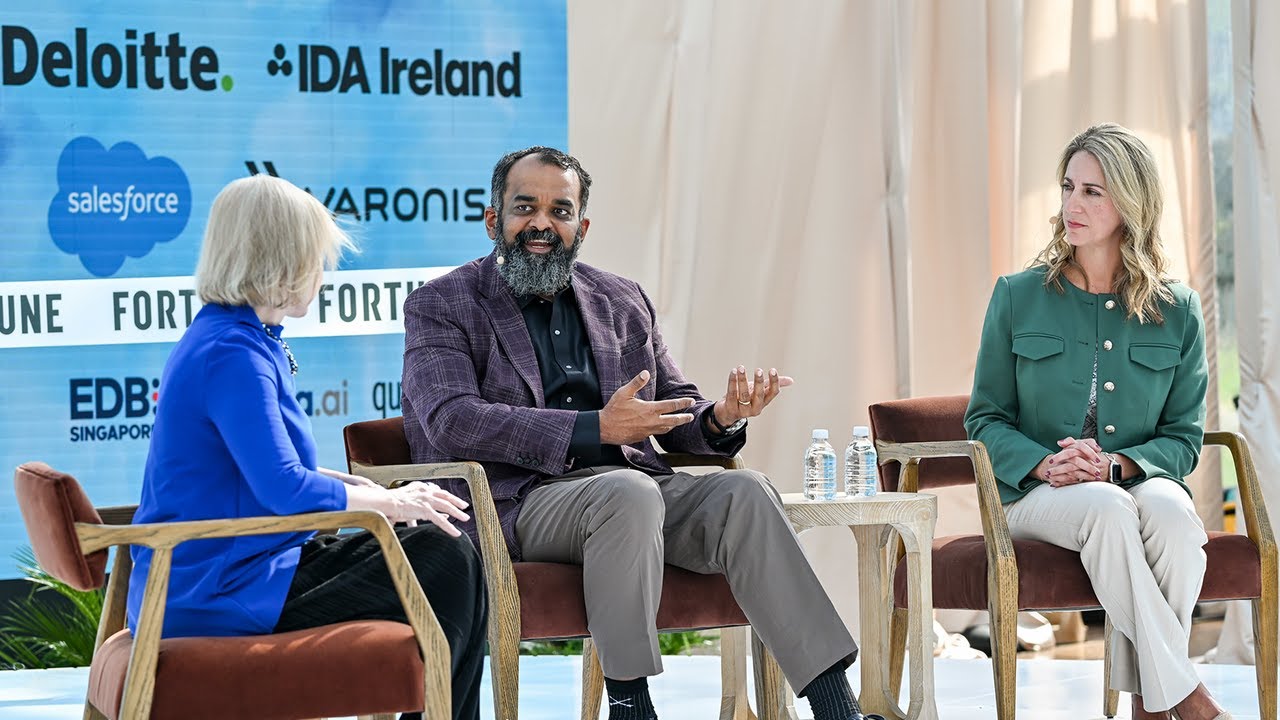
Suresh Venkatarayalu of Honeywell and Jamie from Caterpillar discuss how legacy industrial firms are deploying AI at scale. Honeywell's language models ingest 30 years of asset data, cutting data-ingestion time from weeks to hours. Caterpillar uses digital twins and robotics to move workers out of hazardous environments, while both companies grapple with workforce upskilling and the shift from automation to autonomy.
Chapters
Look, you're both in such interesting positions because you have these large legacy players, of course, and yet you're on the cutting edge of innovation. So I want to start with the wow stuff since this is a brainstorm conference. Talk about what you're able to do now that maybe you weren't able to do, say, 12 months ago. Just give us some sense of what's around the corner. I'm going to start with you, Suresh.
Maybe one other thing that—
And welcome.
Thank you for having me. So one of the things that extremely delighted to bring in, you say large language model, we brought in multimodal within our company. What we were able to do very quickly, taking our 30 years of legacy knowledge and infrastructure, we trained the system. Today we are actually asking our technicians, service engineers, project engineering folks to interact with those models with natural language. That wasn't available. When I say multimodal, this is more about text, images, audio, video, ability to really train and code them into the model. That wasn't available. I think it's brilliant that it's available today. That wasn't— a few years ago, we were dealing with manual workflow processes.
So I'm going to follow up on that, but I'm going to go to you first, Jamie, in terms of what's— give us some sense of what's cool these days at Caterpillar.
I think the problems that we're going to be able to solve for our customers are continuing to evolve and continuing to be more exciting. We have a long legacy of helping our customers solve challenges with autonomy and automation in their businesses, as well as inside our own organization, and the ability to use AI and the different capabilities around perception and physical AI and embodied AI to be able to help our customers create better outcomes and take people out of work environments and job sites that are risky or that are dangerous or that are hazardous. I think it's a really exciting time for what we're going to be able to do for our customers.
So let me now go— I'm going to stay with you a second. One of the things about being in manufacturing, of course, is you're dealing with these old legacy technologies. And I remember it used to be about how to connect them and get them to talk to each other. It's tough to do. So is there anything that you've tried and failed or you would say has been a challenge as you've been trying to do the next wave of innovation?
I would just say that as technology changes, and you all live this, right, how you solve challenges and the way that you approach those challenges continues to evolve. So as we think about connecting our supply chains and manufacturing to be more efficient, more effective, more productive, as well as how we develop products for our customers and help them solve their challenges will continue to evolve. And again, exciting time to approach those challenges in new and different ways.
So, Suresh, you mentioned the 30 years of data, and that also creates a challenge, does it not, in terms of changing the system by which people, you know, get things done, fix them, where those data points, you know, is something 30 years old or 3 weeks old?
I mean, talk about the challenges of just And if it's okay, I'm going to tag along with the topic that you asked the question.
Yeah.
One of the biggest issues that we had, we would say that Honeywell's install base will be close to 150 million assets, buildings, industrial process control, aircraft subsystems. But we have had this issue in connecting. I think we have had this phase of talking about data access rights, connecting to the last mile. But when we went and actually did this whole value stream map, we actually felt like it was a flaw in our side in not able to get this what we call frictionless connectivity. Now we've got this to less than 4 to 6 hours. It used to take probably 6 weeks and 4 weeks, and then it was falling apart. The fact we have connected, we are making the data ingestion seamless. That's the first step. The second question for you is, When you really bring in massive set of data insight, you're building a knowledge graph, knowledge infrastructure. Then you bring in these models to train them in. The biggest change management for us is how would you interact? It's easy to say it's natural language processing, but this whole concept called moving from using a search engine to prompting, the kind of questions you would ask with a search engine is very different when you interact with this model. I think that's the big change management. I wouldn't say more about just an issue at the worker level, even at top CXO level, at the grassroots level, how would you communicate? How would you interact? It's a massive change management.
Turn everybody into a prompt engineer. It's not so easy, is it, Jamie?
No, it's certainly not. And I agree with you completely. The amount of change that we have to do as we deliver technology into the ecosystems that we serve internal to our organizations as well as with our customers, getting the people and process change to be able to use the technology, whether it's prompt engineering, whether it's how operators interact with the manufacturing environment that they're in, working alongside robotics and alongside that technology, or at an operator site, a job site, how they interact with machines or interact with the data from those connected assets, what kind of insights and actions we can help them take from that. It's a significant— we talked about it a little bit earlier. It's a huge change management.
Even the fact that both of you are up here, we— there's not— having Honeywell and Caterpillar on the same panel almost feels like it is something because of AI you're able to leapfrog some of the differences in your industries, right? I mean, let's talk about the human being for a second because there is this impression— Jamie, I'll go to you— that we're going to have automated factories, robotics, and much like these you know, dire predictions for white-collar workforce, we're going to see equally job loss in the, you know, manufacturing sector as well. What do you think about that? Discuss.
Yes, absolutely. And I kind of alluded to it already. I think that it's going to be so much more, not so much about removing people from the job, but moving people from the job. How they interact with robotics or how they interact with technology in the manufacturing environment or on a job site, moving people out of hazardous environments, out of the dull work that is, you know, maybe not as exciting and is very repetitive. Those are jobs that robots and robotics and technology can really do very, very well alongside that human capability and that human creativity to really get more productivity, more safer work— safer worksites. And we talked about it a little bit as well, the labor capability and the labor availability is a real challenge to be solved.
So, The labor availability. We're obviously at a time where manufacturing's growing in the US. That's the aspiration. How are you finding the labor pool, and how are you finding moving them up the curve to the point of where you need them to be to realize the potential of AI?
For the question, and also tagging along with what Jamie said, think about I'm a functional leader, CTO for Honeywell. I have 16,000 technologists and engineers, out of which 6,000 of them are software, embedded software, or application software engineers. We deployed GitHub Code Automation 18 months ago. To give, to give a credit, today we generate 20% of our software code that is accepted, that gets to production by auto-code robotic system or by the models. Now, you can ask the question, did we drop 20% of developers down? We did not. But what it does is there is more headroom for us to really solve the most complex issue. But what has changed is the type of developer skill sets are changing. Today, we are deploying our software engineers at customer site to solve a complex problem in terms of system integration skill sets or a subsystem or solving some of their issues rather than coding altogether. I think same applies in a factory environment. In my warehouse environment or manufacturing environment, it's not about they're losing job, but I think augmenting them—
Yeah.
Assisting them would allow them to move up the value chain. It's for future capacity. I think in our business, either in a software development or IT or in a manufacturing, we linearly added the headcounts for our revenue growth. I think in the future, we don't need to do linearly adding people. You will have both AI plus best talent, best skill sets that you will add to do the work. I think the future is what the answer is rather than worried about today, are we going to lose jobs?
Yeah, that's fair. I want to take questions from the audience because I know we have some people who are in this sector. Just raise your hand. We'll get a mic over to you. We have one over there. And just introduce yourself. Hi.
Good morning. Nicholas Stevens, I lead AI at Zillow. So in real estate, we think a lot about verification and explainability, like why you should make this offer, why at this price point. I can only imagine at your 2 companies when you're dealing with mission-critical systems, that's a whole nother ballgame. So I'm interested to hear about lessons, trial and error of really thinking about trustworthy verification and explainability as you integrate AI?
Yeah, I think it's a great question. Maybe I'll start. I, I— we spend a lot of time making sure that any work that we're doing with AI is traceable, so we understand how the outcome was made and that we can, that we can continue if we were to have issues to troubleshoot and to— and also, you know, we're taking a lot of our customers' data and helping to make insights. We've got to protect that data and make sure that we're using it responsibly and in a way that that our customers are comfortable with so that we can help them make better decisions, be more productive with the work that they do. So I think we spend a lot of time thinking about how we're applying those tools.
It was interesting that you asked that question. I was interacting with somebody this morning in my team. I was talking about the aerospace autonomy in eVTOL industry. I said something like they need 99.9% accuracy. And one of my chief engineers corrected me. It's 99.59s.
Yeah.
And my response was, absolutely spot on. The first thing that we did was we started interacting with EASA, the European Commission. They gave us a 400-page document in terms of a regulatory requirement, certification requirement for a system that you may incorporate AI. I think our duty is bring that conversation back into US FAA. Take the conversation down to UL and SIL so that you're actually starting to bring in— because none of my products will be launched without the certification authorities in place. The more we inject it, we'll actually address those mission criticality, safety criticality. You are absolutely right.
I presume you both have digital twins of your factories. Is that fair to say, or is that easy? Is that tougher than— because, you know, you're not— the cost of trying to retrofit I'd love to get some sense of what you're able to do in terms of the digital twins, and is that sufficient? It's much easier to do a greenfield project. Of course, you're dealing with old technologies. Can you talk a little bit about that?
Maybe I'll start. In our process, we have 4 vertical segments. Aerospace, I think you would hear a lot. Without simulation, you don't really deal with the environment at all. Uh, in process, uh, process industrial solution, uh, we have home-built product called Unisim. Uh, you have to really simulate a plant specification without even deploying a control system. So in a control system environment, we do have. What we have not really done is taking a simulation and emulation platform, really stitching them back, uh, a digital twin environment, and dropping your AI models to really pressure test before you can actually even deploy. I think it's getting to mainstream. Without a digital twin, playing around with autonomy in the future is not a possibility. So we are in advanced discussions with players like NVIDIA and the rest of the folks to say, how do we take our homegrown simulators, integrate with multi-third-party system simulated platforms? That's the foundation for you to really drive autonomy in our industrial environments. So early days, but I think it's a must-do in my opinion.
Yeah, maybe just to build on that, I mean, we use digital twins for some of our improvements within our factories, but we use— I think what's possible more is related to how we develop solutions for our customers and using digital twins to develop and simulate edge case scenarios with autonomy and making sure that, you know, similar to some of what you're talking what you've talked about, being able to bring compute onto the machines. You started out with this earlier. What, what's changed? What's possible that wasn't even possible 12 months ago? The amount of computing we're working with NVIDIA there on their Thor compute platform to be able to bring more of that capability on machine and inside the job site and be able to do simulations and digital twins to be able to develop that capability with the safety and productivity that is needed.
Right. We have a question over here. Hi.
Hi, Rick Chavey with Viax, CEO of Viax. I've been fascinated about— with your companies, having worked with you in prior lives, particularly around the whole configurable product. So from PLM to go-to-market and how, as you digitalize everything and have third parties and different plants you have to bring together, how you're thinking about that in sort of the traditional ways, no-code AI ways? How are you solving those kind of challenges, particularly when you have to incorporate things like regulatory environments?
Who wants to tackle that? Suresh? From a—
is the question around how do you tackle the regulatory requirements or bring them together?
Bring them together. I mean, yeah.
One of the interesting things, I was with one of the large oil and gas customers just 4 weeks ago. We were trying to explain to them how to really bring in this see, think, act, and learn framework and how do you really pull all the pieces together. He actually sat down and showed me 61 additional control platforms that he has within the downstream, midstream, and upstream. So I ended up actually having my best chief engineers on the ground across their oil and gas plants to map all of them in. You're absolutely right because it's to really talk about an autonomy of the future. If you're starting to say, look, I'm Company A, I can only deal with my vertically integrated solution, it's not a possibility. We have to start to really play a very different role in— I won't say open source, but at least the data infrastructure is exposed to the multi-industry to solve the equation.
Yeah, even inside our organization, when you think about product lifecycle management and that digital thread all the way through from the inception of a piece of equipment or even the sourcing of that componentry that goes into that all the way through the 30-year lifecycle of how long that piece of equipment lasts. And you talked about the training large language models to be able to service that information for those 30 years and serve that up in a way that, that technicians can access it and keep our customers running.
That's right.
I think doing that in a way that is— that protects the data, protects the information, and is is aligned with regulatory environments. It's not a single solution, and it's not a point— they're not point solutions. The way that we're solving it and the way we're continuing to evolve how we think about solving that challenge is a really important, you know, continuing to challenge the paradigms around how we would have done that even 2 or 3 years ago.
I want to go back to just the manufacturing sector writ large because we always talk about how AI is accelerating research, innovation. You're young leaders in very old-line companies that are very capital-intensive. We've had a lot of discussion in this country about bringing manufacturing back. How much is technology changing the actual logistics and challenge and intensity of what you do? I mean, you are making Large capital-intensive projects, you're dealing with supply chain challenges, tariffs. I mean, there's many other factors in the environment. How easy do you think it is for the next generation of manufacturers? Is it any different than what created a Honeywell and a Caterpillar? I know, easy questions, 30 seconds or less.
I will split that. We see the markets. I think US and developed market has a different issue, which is labor shortage. The high-growth regions or emerging market, they have a problem which is more skill shortage. The only way to offset the labor shortage and a skill shortage is to augment with something, and that something is AI to an extent. It's going to put a lot of effort. I think there's a question that he asked for us to take our a product SKU and digitizing them, it's going to take months and years altogether. The foundation layer needs to be built, but acceptance is going to be— a pressure is going to be on all the customers of us. Everybody needs to show a higher margin and higher growth and higher productivity. And I think we all, as a control system company, I would say we've been in a business of automation for years. The question is what next? To really push that envelope to solve our customer issues. And then I think we are speaking about autonomy in a looser way, but autonomy is higher level of automation efficiency with probably supervised and then probably fully autonomous stuff. So AI is here to stay, but I think it's for us, for Honeywell, is going to address 2 broader issues for our customers: labor shortage and skill shortage. I think this is the only path, in my opinion, to take. take it forward. That's what we are validating when we talk to our customers too.
When you think about bringing that same kind of challenge internal and bringing manufacturing back in, you know, more into the United States, and we have to reimagine how we're going to do that. I talked about people alongside autonomy and alongside technology, and I think we shouldn't be naive about that, right? We've stood up a $100 million grant over the next 5 years to upskill and reskill individuals that are going to need to be capable working with technology to create those outcomes over the next number of years as we bring more manufacturing and reimagine how that's going to work.
I'd be remiss with 2 technologists not to ask how you're using it yourself. I know you were actually showing off a camera back there that was, you know, fascinating when we said click. We shall not name what the brand is. You can guess. How are you— how is it impacting the way you do your jobs? And you've talked a little about how you're dealing differently with your staff. I'd love to hear a little bit quickly about how you're using it in your own day-to-day lives.
Well, I'll go first. In the past, if I probably walked into my meeting, and I'm sure I'll be talking to my product management team to say, have you validated this hypothesis with your customers? Have you done a market analysis? Nowadays, I would use some of the large language models to get enough insights and input. So you go to the meeting well prepared.
You walk in with the answer. Okay.
And then validate those insights or inputs against what I hear from my team.
Yeah, I think you are able to do a lot more of your own research and do a lot— I can feed my own curiosity in a little bit more way. And then so when you're together with your teams and they've all done that same sort of thing, you can really dig in and extract the creativity and the innovation around the table versus the kind of level setting and helping people understand the research that's already there. So there's not a lot that you go into anymore without having done a lot of work behind the scenes and using the tools that are, that are at your disposal, but certainly augmenting those with other points of view.
I know we just have a few minutes left, so I want to give each of you a chance To give some final thoughts, whether it's lessons, and also, you know, we don't have a chance to really look at what's— how this is impacting the factory floor, how it's impacting the manufacturing process. Any advice or insights or even what's exciting to you? Just, I'm going to go to you first, Jamie, in terms of what you want the takeaway to be.
Yeah, you know, I just, I think what's possible is so exciting, and we talk about there's new challenges, but there's new solutions too. those challenges. And so whether it's how we address energy challenges or how we address safety on mine sites and construction sites or how we address productivity in our own manufacturing facilities or serve up information into insights and recommendations for our customers to be more effective, it's just an exciting time.
Great. Suresh?
You know, for me, I have a task of pivoting or shifting Honeywell, 138-year-old control system company from automation to autonomy, the first impression for me is to look at the automotive world. They have done it. They have done it. They've seen it all for the last 10 years. So we are studying them a lot about what they have done, the 6 levels of autonomy framework. We are taking the car analogy. We are trying to apply this into a building and industrial world.
So it's driving the vehicles.
So to an extent, there is some reference point that exists today for us to follow. And both from a technology and from use cases, that's what we're doing at this point in time. Whichever industry you are, I think we have a reference point to watch and to really learn from them. And that's what I'm doing.
I love that. Please join me in thanking Suresh and Jamie. Much more to come, and they'll be here all day. So thank you very much.
More from Suresh

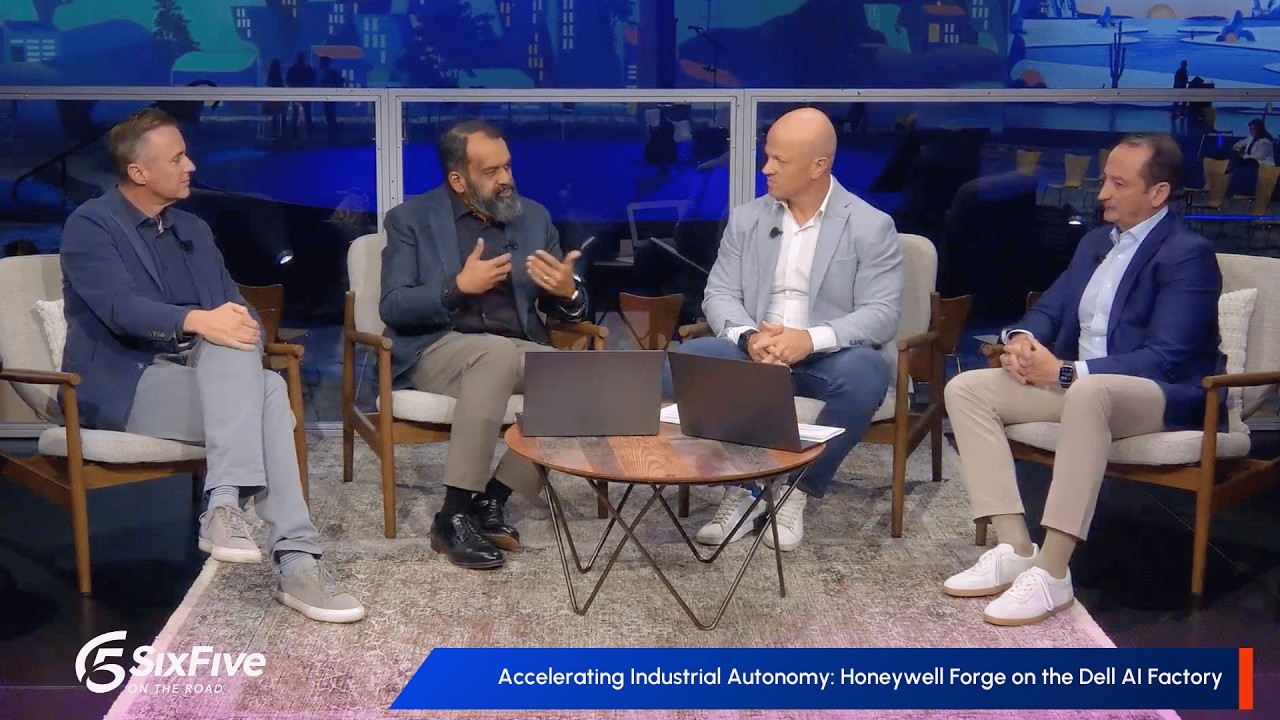

New Way Now: Honeywell paves the way from automation to autonomy with Google Cloud

Sustainability Engineering | Building a Sustainable Future through Digital Innovation
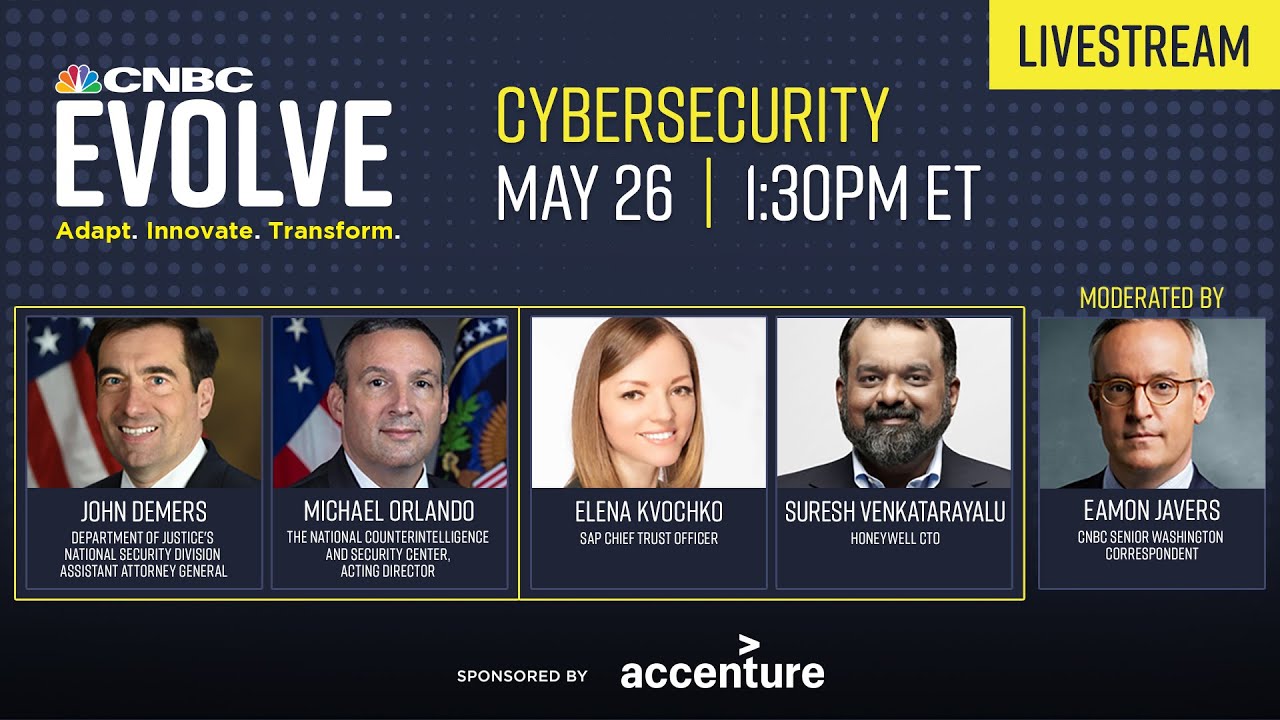
Cybersecurity talk with John Demers, Michael Orlando and SAP and Honeywell leaders — 5/26/21
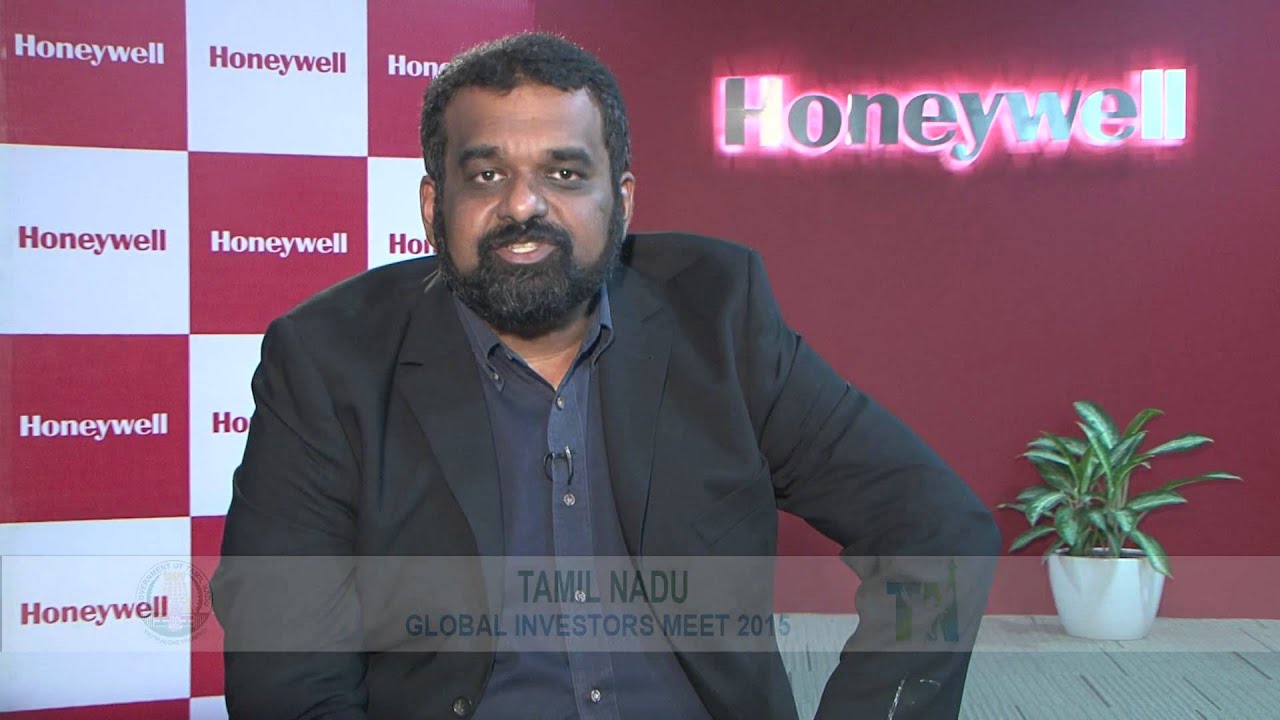
Partners in Progress - Suresh Venkatarayalu, President, Honeywell Technology Solutions