The Hundred-Year Reinvention

In the panel “The Hundred‑Year Reinvention,” moderator Speaker A leads a discussion with Suresh Venkatarayalu of Honeywell and an Ecolab representative (Speaker C) about “physical AI”—applying modern large‑language and multimodal models (OpenAI, Anthropic, NVIDIA, Claude, Gemini) to long‑standing industrial, building‑automation, and water‑treatment assets. Suresh describes Honeywell’s shift from deterministic, rule‑based control systems (a 140‑year heritage) to a hybrid architecture that fuses probabilistic AI models with existing control loops. He outlines training domain‑specific models on building assets (HVAC, fire, security, etc.) via BACnet, creating agents that can “see, think, act, and learn” at scale, and deploying edge compute with over‑the‑air (OTA) updates while preserving safety‑critical uptime. The conversation moves to model strategy: Honeywell adopts open‑source models to fine‑tune for customer‑specific data sovereignty, building hybrid multi‑model stacks that balance energy‑efficiency goals in commercial buildings with yield‑focused objectives in industrial settings. Accuracy requirements (99.9999 % reliability) are contrasted with frontier model performance (≈85 %); the team discusses guardrails, synthetic data generation, and iterative experiments to raise model accuracy to production thresholds. Ecolab’s representative shares concrete physical‑AI use cases: 3D TraceR sensors in piping for predictive maintenance, Dish IQ embedded sensors in commercial dishwashers to reduce water/energy use, and IoT‑enabled pest‑trap intelligence that optimizes service routing. They use both frontier and open‑source models (Claude, OpenAI) while managing token‑omics to keep AI operating costs down, achieving 70‑80 % cost reductions through continuous model optimization. Both companies stress a solid data foundation, ontology and fault‑model training, and an outcome‑first, horizontal AI approach that ties AI initiatives to measurable ROI (e.g., $325 M annual run‑rate savings projected for Ecolab by 2027). Governance models ranging from human‑in‑the‑loop to human‑in‑the‑lead are explored, emphasizing that autonomy is a gradual, trust‑building process rather than a replacement of operators. Audience questions probe open‑source risks in regulated sectors (healthcare), edge‑AI value drivers, and the distinction between successful and stalled AI work streams. The panelists respond with partner‑selection strategies, latency vs. sovereignty trade‑offs, and the need for clear KPI baselines (e.g., 7 % to 30 % energy efficiency gains). The discussion ends with optimism about the intersection of AI and control theory, ontology‑driven fault modeling, and the next wave of innovations enabling semi‑autonomous physical systems.
Chapters
So we're gonna talk about physical AI today, which is something that I hear about in my reporting all the time as kind of the next frontier for AI. So it's not all about chatbots, but we're talking about putting the latest AI models from OpenAI, Anthropic, NVIDIA into physical objects, which is incredibly hard work, especially at companies like Honeywell and Ecolab that have been around for over 100 years and might have equipment that's also been there for decades. So I want to start, Suresh, you talked recently at your Investor Day about your new partnership with NVIDIA. Can you tell us about that and what physical AI means to Honeywell?
Good afternoon. Great to be here. Honeywell, if you really go back and look at 140-year-old company, we have been a control system company either in commercial building, industrial, or process industry per se. So what do we do best? We drive the automation at scale at a physical system. So we automated the physical world, all 140 or 100-year-plus. We believe if somebody asks me a question, do you actually use AI? I actually say these are deterministic models that we have used all our 100 years. These are rule-based heuristic model. And then our customers really demand 99.9999%. So, the last 2 years, you've actually seen the frontier models, which I call a probabilistic model, are available at scale. Now, you're trying to fuse the deterministic and probabilistic together, because what you're really trying to experiment is to drive the self-learning system. Because the control systems actually close the loop on one-dimensional how you train the system. But now you have an ability to train the system at scale. So, The last 10 to 15 months, we are actually trying to say, how do you really bring in see, think, act, and learn framework within a context of a commercial building or industrial system at scale? To do so, the first thing that you do is to train your AI model with your domain. The domain is nothing but buildings or industrial domain. It actually takes you to the different construct because the frontier models that are available at this point in time understands text, images, objects, and videos. Now you're trying to take physical attributes and you're trying to train the characteristics and relationship. That's pretty much what we are doing at this point in time.
So if you were gonna train this room, what would you train the model on?
So as you actually have your compute, or if I instrument a brain behind this building or this room, the first thing is you go back and assess What are the different assets that you may have, building assets, HVAC system, fire control system, to security and access control system? So, you actually connect all of them back, and then you actually allow the AI system to understand what each of these systems, what do they do? What are the relationship between each one among them? And then you hook them to a BACnet protocol in the backend. So, you're actually asking your brain to continue to understand, simulate, emulate, and then you have an ability to run agents at scale so that they actually become a human equivalent, understanding the operation condition. And you can actually really starting to drive, give commands and control to go back and optimize closing the loop at scale. So that's a fascinating world that we are venturing into.
Yeah, absolutely. But this does look very different at Ecolab. So AJ, tell us what you have been up to.
Yeah, so we are a 103-year-old company and the global sustainability leader in water hygiene and infection prevention services and solutions. Obviously it's very similar to what Suresh talked about. So we've had deterministic models and what is there, it's about boots on the ground and servicing. We provide water solutions and also infection prevention solutions. The water solutions, we have things like what you call 3D TraceR. We put that within the piping that we can be able to monitor all the data that comes in. So we didn't do anything with that data before. So then now— What do you mean? we are able to get that data and then provide more value for our customers and do some predictive maintenance and so forth and add more value. And the second one is around, which we call Dish IQ, right? So the Dish IQ is if you walk to a restaurant, there's a 9 outta 10 chance that you are going to a restaurant that we have one of our dishwashers in the back. So it sounds like it's a small thing, but at a restaurant, that's probably one of the most important things in the kitchen. If it breaks down, the whole restaurant shuts down, right? So, We had a model that just essentially used the water and energy. Now we have the ShyQ we reinvented where it embedded technologies that just gives us the data around the water consumption and also the overall operating cost being brought down from the energy standpoint. So those type of things we've done. And the last one is we call the pest intelligence. So we have pest traps that's out there. We have a billion-dollar business just doing pests. And then within that we have IoT devices within the traps that we will go and service it only if it's there. Because it gives us the data. And so that way we have optimized the actual routing of the people and the boots on the ground.
Excellent. I think one thing that's so different about the physical space is that it's not like your phone or computer where Anthropic or OpenAI can just push an update, or our iPhones, they update all the time overnight with no new equipment, same device, different technology. But in the physical world, something like a dishwasher or an HVAC system, I don't I don't imagine it quite as responsive and quick to get the latest tech. Is it possible to keep physical objects up to speed with just the incredible rate of change that we're seeing in AI?
You know, in our space, we're gonna be shipping, in our buildings world, we have something called EBI, which is our controls platform to really run any of our commercial buildings at this point in time. Traditionally, we actually ship those systems through our system integrators. You're right, you got to have service technicians going back and upgrading software and everything else.
Right.
I think what we are gonna be seeing for the first time is to have this compute infrastructure along with it, an ability to do over-the-air upgrade. The over-the-air upgrade, which is there in the automotive world, I think it is going to be available. But the way we're gonna see this change management is going to be operator in the loop or person in the loop, ensuring that they have the latest and greatest patches, and then ensuring that you upgrade. Because when I actually use the word commercial building or industrial environment, these are mission critical and safety critical. Very similar to the car, meaning you actually have a downtime for 1.5 hours in a Tesla, but you cannot afford to have a building shut down for 1.5 hours. So that's the only process we're gonna take at this point in time. I think it's coming. It is doable. And I think we are learning a lot. When you actually talk about autonomy, we are learning a lot from the automotive industry. They've gone through this maturity curve. I think if you really go back and look at how SCA has defined a 5-level maturity and the kind of a technology they have adopted, that's exactly what we're trying to do at this point in time.
And you also mentioned a little bit ago you're using open-source models. So these are models that you can customize more. So does that give you more control over how you're implementing the technology?
The reason that we are taking taking an open-source approach right now is, over a period in time, you have to really train the model with your custom algorithms or control logic. That means you have to start fine-tuning the model. Second, the model has to serve the sovereignty needs of my customer and the region.
Mm-hmm.
So, to, to that extent, we believe that fine-tuning a model with the right weights, Because every autonomous system has to adapt itself. And that's the reason we believe that. And again, it's not going to come back with one model for us. I think we believe that it's going to be a hybrid model. You pick and choose multi-model that you actually collapse together to solve certain equation in a commercial environment. In commercial environment, I have to really close the loop around energy efficiency, operational efficiency. But in industrial environment, it's all about yield. and throughput performances. So we are in the early days, but I think the path we are gonna take at this point in time would be an open source because the customers are demanding the sovereignty of data and model at this point in time.
Fascinating.
In the physical side.
Right. And what models are you using at Ecolab?
We are using both frontier models and open source. And then—
Do you like Claude or do you like OpenAI? What's the closed model of—
Claude, very— Claude? And then some instances we are using OpenAI as well.
Okay, so you're open.
Yeah, absolutely. Because we just say that sometimes you don't have to have the fastest car.
Yeah.
Right? So you can still be able to get the output that you wanna be able to drive because tokenomics is something we had to also watch because you put all this, the COGS can go up and so forth. So the FinOps is something we also watch around that. To answer your question around also that 3D trace that we have, we have a whole intelligence center that monitors what's taking place and then we are putting agents around to just to monitor those and troubleshoot that remotely. So that's something that we've been doing for some time now.
And so in the dishwasher example, what is the model that's doing the sensing in the dishwasher?
So we have IoT devices that's within the dishwasher that's in there that's just sending all the signals back into a central command center that just picks it up and then essentially just driving that.
Okay.
And you've saved billions of gallons of water with this, right?
Absolutely. Not just with that, right? So the dishwashing itself is one solution. So the industrial, side of it. We do the manufacturing cooling, a lot of things that we do more with water than you can imagine, right? So if it's a dairy farm, that's out there, the whole piping with the chemical-based, water-based solutions that we drive and so forth. So then we go the full cycle of the recycling water and so forth. So that's what we do. And then also we are in the business of the entire AI infrastructure as well, right?
Right.
Because you need to have water to produce chips, power chips, and cool chips.
Yes.
So we have the entire cycle that we manage it through our solutions. Right.
That's what's so cool about physical AI is that you can have such tangible impact, like the water— saving water. It's, it's incredible. It is very early days though, and I wanna ask, what have your biggest AI fails been? Like something you tried and it just totally did not work as, as either marketed or as you expected?
You know, we use— I mean, even though I highlighted that we use open source for fine-tuning my control laws for autonomy, we also use all the frontier models with a RAG architecture to solve certain equations. At this point in time, we use Gemini and whatnot. What's interesting is when you pick a model for a specific use case or application, You actually get a point in time, you'll reach the peak point in terms of accuracy. What's important for us is accuracy of the model over a period in time. For us, it's interesting. A control system company is expected to deliver 99.9999%. Frontier models accuracy could be at 85%. So, how do you really get much more closer to a customer requirement and need, and how do you really— Define a guardrail. So there are days that we go through, go through a design of experiment to figure out these 2 to 3 different models in tandem and pick the best.
Right.
And that seems to happen all the time.
Right.
And then there is a race between multiple models and then their launches gets you maybe better throughput or better impact. So our lab in the backend, they continue to do so. I think we are gonna be in the space for a longer period in time.
Wow.
So do we actually fail at many points? Yes. I think it's our duty to really pick the right model for the right use case.
Right.
And then be ready enough to upgrade, change at the right time.
Right. Yeah. I mean, also there are still hallucinations and the AI doesn't understand everything. And if it's the middle of, you know, humid summer in New York, I don't want my HVAC system thinking it's winter and turning the heat on, you know, and making it worse. So is that something that you have encountered? Is it just our AI systems sometimes just not— Smart.
That wouldn't pass our testing cycle. We will not really— we will not get something out because there's so much of layers that we have. But we actually see that during an experimentation phase where accuracy of a model can fall closer to 43%. And how do you really starting to fine-tune? Because you have to start training the model with dataset, your ability to test to the dataset. Sometimes you may not have all the right dataset. How do you get the synthetic data to train the model? So, the time that we have taken is most of the time we would have taken a model moving from 40-ish percent to an 85. So, for us is—
Wow.
You have to hit to an 85% to get to a production environment. So, during that phase, you actually see all permutation combination.
So, I want to add something to what Suresh says. He touched on data. It's super important, the data foundation piece. So, we talk about AI, sometimes we don't talk about as much as about data. And then also the process that you're trying to be able to bring forward, right? So we have this what you call as the value of AI equation that we drive, right? So the process readiness that we brought in and then you just understand exactly the outcome you're trying to drive and then the data foundation and then also the cost discipline around that. Because all those 3 things have equal weight. If one is heavier than the other, then you don't get the value.
Mm-hmm.
Yeah. I mean, are you seeing the ROI?
Absolutely. I mean, some of the— so the products that we put out there, absolutely. And then internally, we've driven this horizontal AI with the customer-back outcome-first approach. And in there, what happened was we put the best model that's out there, high transaction volumes that's in there, the tokenomics go off the roof, right? So sometimes it's more expensive than having humans that's in there.
Wow.
So then what we've done is then we've optimized the model. Right. So, and then brought the cost down by the tokenomics by about 70-80% because it's optimized. So you had to have that continuous improvement loop within that to just to make sure the models continues to be getting optimized.
Sorry, I'm gonna come to questions in a second, but last one for you for now. So over the next 6 months, a year, what is the technology and the change that you're excited about that you think is gonna solve some of your problems today?
Beyond that, AI is part of the equation. For me, fusing AI with my controls, the intersection point between controls and AI is a very fascinating space that we are venturing in.
Right.
Kind of, I talked about in a controls model, I need to teach AI with the physical system. And then there are portions of the businesses where we have chemistry and we are actually saying, how do you actually take the core catalyst formulation and how do you actually teach AI. So, there is a different field of thought. So, AI and controls intersection is important, but there's one area that I didn't— we didn't touch upon it. This whole concept called ontology.
Mm-hmm.
And ontology training with fault models for every physical system with the highest accuracy, I think that itself is a big area of field or innovation that the industry is going to go through.
Mm-hmm.
And I think that's something that I personally spend time to really build the infrastructure so that the systems can be built on top over a period in time. So, the promise on autonomy for me is not just a switch from automation to autonomy.
Mm-hmm.
It's the phase moving into a semi-autonomous world where you bring in operators and human in the loop. As you build the trust with them, their ability to really trigger them off into a full autonomous. I think that autonomy is also not about removing people. But there's so much waste in the system still that we are extracting value.
Absolutely.
For us, we are going to what you call human-in-the-lead models that we're trying to be able to drive.
So that's— yeah, there's human-in-the-loop, human-in-the-lead.
Human-in-the-lead.
Human-in-the-lead.
Okay. So human-in-the-lead, in that case, it doesn't assume it's going to be autonomous. Obviously, there's a human in the lead. And then agents that we are trying to build, technology is not mature enough to just to get that, to drive that at scale. So we have started just to build that. It's not at a point that we can be able to scale it across and then be able to drive those efficiencies.
Makes sense. Okay, great. So we'll take questions. Oh, we have a question.
Great panel. Venk Varathan with Nanowear. We do home-based cardiometabolic diagnostics with the wearable and then feature-based AI for the digital diagnosis So similar to the physical product AI that you were talking about. For healthcare, we have to stay— I was curious, Suresh, on your open source sort of lead. Healthcare, we have to stay closed source, obviously, for FDA regulations and the traceability back to the raw data source and design controls. But I'm curious on— if we could go open source, we'd probably be able to iterate faster, do the fine-tuning, exactly what you were saying. But what about the jailbreaking aspect of it, especially with physical products like us, Right. Obviously, we don't ever want to see Hugging Face's episodes over and over, but with physical products, that could be a really big deal. So I'm curious how you address that.
So what we have done is open source. There are thousands at this point in time, but we handpicked at this juncture. I think she used the word NVIDIA, and we actually have an ability to work with their open source model team, technical team. like a NemoTron. And we have an ability to influence, understand, and we are also trying to really have a long-term relationship to make sure that— because if I go ahead and take a wild, wild west to pick up any open source, not having a right support model, not having the right guardrails like a NemoClaw and everything else, I think it'll be a different zone that'll be dangerous. So I'll pick and choose. the, the technology partner who brings in the entire infrastructure muscle to help us. That's the path that we have taken right now because every step you have to have their support and, uh, and direction too.
I have a question over here too. Um, my name's Adam Shea and I work for Tech Systems Global Services. We're a systems integrator. Um, and my question is 2 parts. One, when you think about AI at the edge, what business capabilities or operating model changes have delivered the most value? And then secondly, when you think about the, you know, the AI value that is being driven within your organizations, what's separating those work streams when it comes to, you know, value generated versus ones that are stalling out or, you know, just don't get off the ground?
Yeah, so I'll start.
Sorry.
So We see AI in 3 types, 3 lenses. Individual AI that everybody uses, that not much value that it adds other than the individual productivity that you can be able to measure at enterprise level. The other one is we call vertical AI, which is within the function that is in there that you're trying to drive. There's a value that drives, but the biggest value that comes from is the horizontal AI, which I talked about, which is outcome-first working backwards. That's what just drives the actual operating model changes. that will change the functions the way we know it, right? Because if you take something like a lead-to-cash process, the outcome to the customer happens at the end coming from sales, sales operations, and customer service, finance, supply chain, and the customer doesn't like it. So when you do outcome-first working backwards approach, then the most important thing is the outcome that you're just defining, right? So that's the model we've done. And we are having huge amount of success because any company that you go and talk to them, they will all say sales teams are spending way too much time just managing orders type of a thing, right? So the organized— second part of your question is the organizations that are driving value, AI should not be just another technology, right? AI is another tool in your toolshed that's gonna drive actual process optimization. It's a force multiplier and it should be tied to an enterprise transformation that you're driving. That's what we've done at our organization called One Ecolab. And that cuts across all, and it just the actual optimization targets goes drive to their plans, all the functions, so forth. So that's what we've done. And that is, that is something we publicly just go out and said, $325 million of annual run rate savings by 2027. And we are exiting this year with significant of those money just already in the bank.
Can I briefly?
Briefly.
Just briefly. On the first point, I think really moving the pendulum or the continuum on where do you really apply edge at— AI at the edge, AI at the on-premises of your customer, or at the cloud. I think it's a question around latency, cost of data transaction, the sovereignty requirement. On the second part of the equation, I think he kind of touched upon it. Our customers are saying, if you have delivered, say, if I say 7% energy efficiency from a current control system, with all the advent of AI and agent and whatnot, can it be 2x? Can it be 30% more, 40% more? So they start defining the baseline and they want us to starting to show a tangible impact on the key KPI right away. So those are the 2 things that we are learning.
Brilliant. Thank you both.
All right. Thank you so much.
Thank you.
More from Suresh
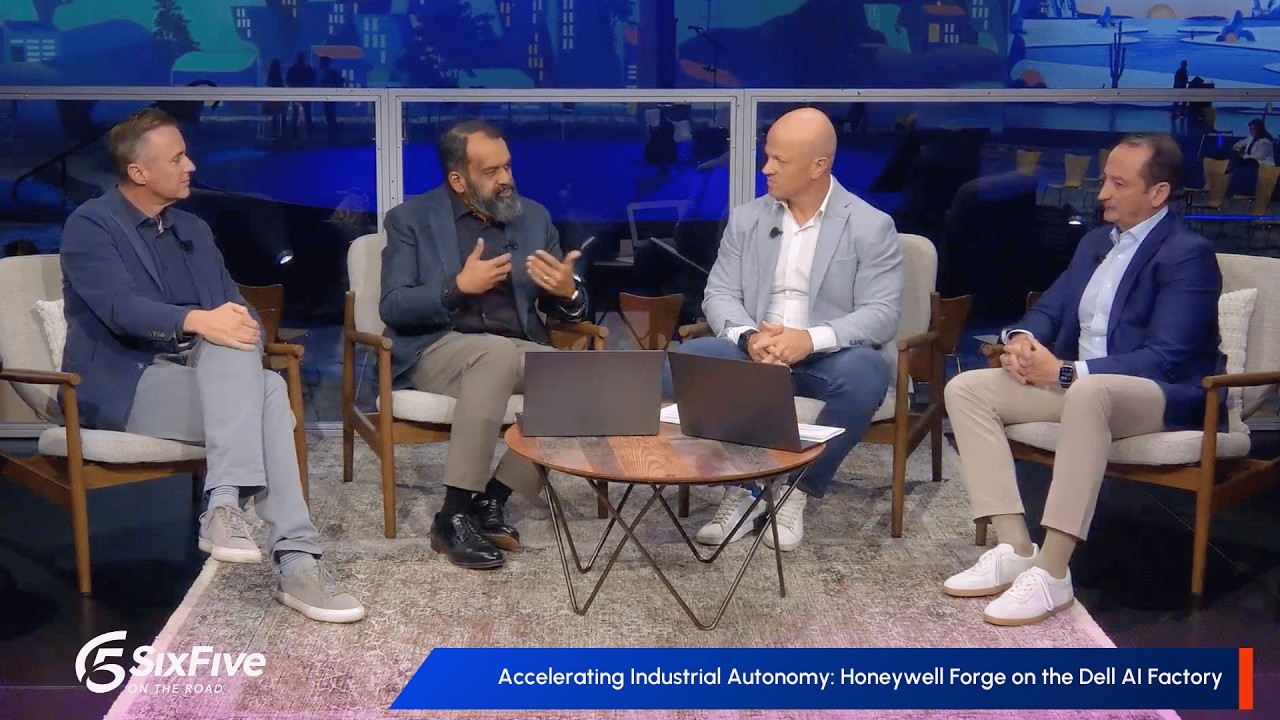

New Way Now: Honeywell paves the way from automation to autonomy with Google Cloud

Sustainability Engineering | Building a Sustainable Future through Digital Innovation
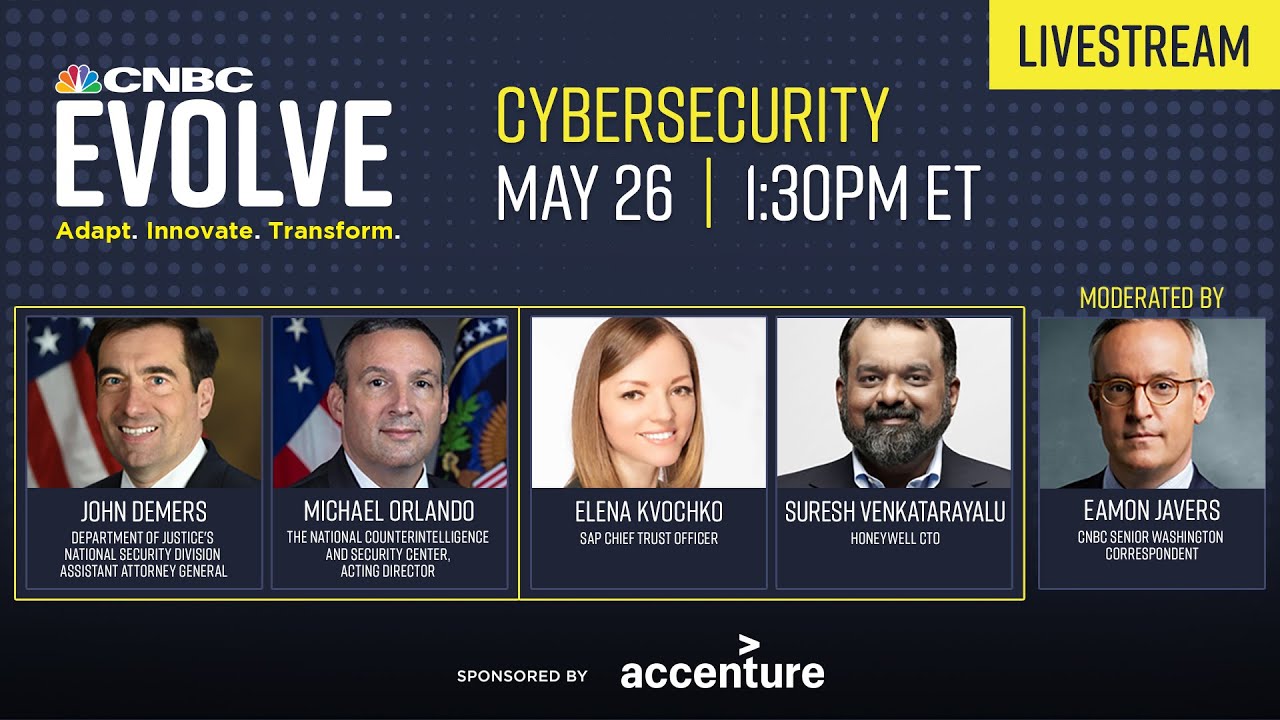
Cybersecurity talk with John Demers, Michael Orlando and SAP and Honeywell leaders — 5/26/21
Partners in Progress - Suresh Venkatarayalu, President, Honeywell Technology Solutions