Sustainability Engineering | Building a Sustainable Future through Digital Innovation

In this 45‑minute panel, moderator Pari leads a multi‑company discussion on how engineering firms are reshaping sustainability strategies. Amit Chaddha frames the conversation around the UN Sustainable Development Goals, highlighting seven goals directly tied to engineering and a projected $31 trillion market. Suresh Venkatarayalu (Honeywell) explains Honeywell’s two‑pronged approach: making its own products more carbon‑neutral and building a $10 billion sustainability‑technology business focused on biodiesel, bio‑jet fuel, flow batteries, plastic recycling, hydrogen, low‑GWP refrigerants, and connected‑enterprise solutions. Sanjay describes the automotive megatrends (electrification, connectivity, autonomy, sharing) and the role of AI‑driven battery‑management and smart charging infrastructure. Anil outlines healthcare sustainability through cost‑containment, tele‑health, remote monitoring, and digital therapeutics, citing CMS incentives and a $50 billion “Hospitals at Home” program. Amit, Jason, and others discuss R&D investments: dedicated labs for battery testing, sensor development, energy‑management tools, AI platforms, and mock‑city simulations. The panel examines evolving business models—outcome‑based consulting, total‑cost‑of‑ownership calculators, and the need for vendors to meet sustainability targets across the supply chain. Talent scarcity, especially in AI, is addressed through global talent hubs (Canada, India, China) and purpose‑driven employee engagement. Finally, participants debate consumer willingness to pay premiums for greener products, noting modest but growing adoption, TCO advantages of electric vehicles, and the importance of aligning environmental and profitability goals. The discussion concludes with a consensus that sustainability is now a core growth engine across sectors.
Chapters
Great, thanks everyone. So what we're going to do is I had the conversation with all of you in topics we're going to cover just quickly. First, we'll talk about your organization's sustainability roadmap and vision. So we start with that. Second, we talk about how is your R&D changing, how's your focus in terms of how you're building products changing. Third dimension we want to talk about is what the business model and changes in value chain in the industry. And fourth is, um, what does it all mean from a talent perspective? Because, you know, everybody already struggling for talent, and there's another additional skill we need the talent to have. And what are you driving to— driving? And how is your ecosystem architecture for sustainable engineering in the future? So those are broad areas we want to cover. Maybe we can quickly go through, we have 45 minutes, we want to keep the answers short and so that we can run through multiple questions and then we can make it more interactive. So each way if you have other questions for others, feel free to interrupt others and then add your comments, you don't have to go through one by one as well. So let's try to drive that. I'd like to start with Amit Chaddha. So Amit, you have a You work with companies across industries, so you can give us like a high-level bird's-eye view in terms of what are you hearing from across your customers when they come to you around sustainable engineering. So what are you hearing? How is their plan changing? And then we can go around and talk about specific companies.
Sure. So thanks, Pari, and good evening, good morning again. See, if we look at sustainability, the United Nations has come back with Sustainable Development Goals, right? And there are 17 of those. that they've come back with broadly from no poverty to zero hunger to good health going on to partnership for the goals, etc., including peace, justice, etc. What we've been seeing is that from an engineering standpoint and I'm going to be focused on engineering R&D rather than IT and I will cover products as well as plants, both of those, right, the ecosystem. There's 6 of those 17 that we believe that are 7 that largely address sustainable or come down to sustainable engineering, right? And these are around good health and well-being, right? There is clean water sanitation, there is affordable clean energy, there is industry innovation and infrastructure, there is sustainable cities and communities, there is responsible consumption and production. And then there's climate action. So those broadly, if you ask me, are about 7 of those 17 that relate to engineering directly. And then if you start going digging deeper, it basically ends up as being either alternative material or being faster, more innovative ways to do things, more automation, more AI. All of that. So I do believe that there is a fair new market opening up and people are talking about $31 trillion being spent in this area. Now will all of that come to engineering companies and R&D offices and R&D departments? No, but there's a fair degree of that that we see happening and we're trying to address some of that. Lastly, before I move off and you wanted to keep answers short, I was briefing some of our young minds in our company last week about this, and there was a mechanical engineer who actually sent me an email later because I kept talking about high-tech and talking about this and that. He came back and said, is there life for a mechanical engineer as well in part of your big bets and part of sustainability? And I actually took the time to go through each of these 7 that I mentioned to you, and I put out for him and his team on what was it that mechanical engineers could do. So I do believe that there's material change, there is work for people working on plants, software of course, AI and all that, and of course hardware. So there is work for everybody to be done, but that is a change. Now from a client standpoint, in some of these areas we've seen clients come and talk to us and actively engaged in the stream of good health and well-being. And Anil, I'm sure, will chip in and add to that. I've seen money being put down, means real projects, rubber hits the road. In some of the other areas like water discharge and pollution and stuff like that, there's still a lot of conversations, but I do believe that we are about 6 months out before we start seeing something there.
Got it. I think right now what we see is companies are putting together their sustainability vision roadmap in the market, right? And to add on to Suresh, I think you also have a new sustainability officer in the company and there's been significant focus on Honeywell and even again similar to L&T work across industry segment and one of your customers, if you look at Shell, came out and said by 2050 they're going to be carbon neutral. For an oil company to be carbon neutral which means They've got to completely change their product portfolio in the next 30 years. It seems like a dramatic change of what's happening in industry. Tell us what you hear from customers.
Yeah, I think beyond customer, there are 2 things that I would say Honeywell sustainable engineering focus falls into 2 categories for us is making product in a sustainable way. And then I would say making products for sustainable market. So there are 2 different things right here, right? Because I think every company has to do the same thing. If I say making product sustainable way. There is a real effort today within Honeywell to reduce the carbon footprint of the products we make. That means we are looking at almost our entire factory, our packaging, and how you really produce it. There's an ongoing scrutiny to really go back and change the process behind it, technology behind it. And that's something that our Chief Sustainable Officer has actually taken that in a big way. So it's a big opportunity and a priority for us as we prob— as you probably realize that we pledged We will be carbon neutral in all our facilities and operation by 2035. Now, we made the pledge, but just, just the data behind the pledge is our commitment to achieve the neutrality in our facilities and operation falls under 2 things we call Scope 1 and Scope 2 emissions. There are probably 4 or 5 key promises: 70% improvement in our energy efficiency. Most of our technology falls underneath that. Second, we said We have actually really driven our projects for the last 8 to 10 years, 'cause PMT has been in that business, Performance Materials Technology, close to around 5,700 sustainability projects that our HSE and operational team has driven, and we wanna continue to drive. And then we have been really focused on our remediation, restoration of our valuable community assets, or driving some of the key productivity initiatives that falls into sustainability. Uh, I think that's only making products in a sustainable way within our ecosystem. But the second bigger thing is making products for a sustainability market. That's our core business, $10 billion out of $30 billion, which is in, in, in process technology for refineries, oil and gas. There, there is a pent-up demand all over the place. It's all about, you know, we keep hearing from our customers. In fact, we start our discussion on sustainability technology solutions. We've actually built up a business, small breakthrough business which can bring in various different technology together. And then we are actually really banking on our legacy strength on control systems.
This is going to be another growth engine for Honeywell as a focus area.
Exactly. Just like the way you probably hear about quantum, we actually built up a sustainability technology solution business with a general manager for the business, and we built up a small group right now. We believe that that would be a huge one moving forward because The way we are investing, Paddy, right now is all around biodiesel, biojet fuel, flow batteries, plastic recirculation technology, all are very, very credibly important for our customers. I think both are going to be extremely important for the industry and we are making the leap progress here.
Yeah, it's very interesting. So like how you build a digital connected business, similarly you're building sustainability, which will bring in different dimensions of Honeywell into that. Awesome. So I want to get into Sanjay. Sanjay, you are in the thick of the industry which is driving the change with Tesla kind of making it very, very hard for everybody else in the industry. And we see that Volkswagen announced a 10,000-people software team with EV being the primary focus. IC engines are going to disappear in the next 10 years, so you have a vantage point of working with all the global tier ones. How do you see that? What's the role of automotive industry in kind of playing in this, in both in terms of industry itself and some fundamental innovation they're going to deliver, which is going to be adopted by other industries?
Yeah, so firstly, I think the initiatives around sustainability is extremely, you know, very important, and I'm just so glad to have have this discussion with all of you and with the rest of the industry as well, because this is a very important, responsible topic for all of us to kind of focus on. I think automotive industry, like you rightly said, is extremely focused on it. You've heard companies after companies coming out and basically pledging to convert their products to fully electric cars. I think overall in the industry, there are 4 megatrends in automotive. that are taking place that cars are going to get electric, connected, autonomous, and shared, right? So these are sort of mega trends, but electrification is probably— connectivity and electrification are probably the 2 most important trends which are going to drive the industry in the coming years. So we're part of that, you know, Sedans is part of that ecosystem to help drive that megatrend through our AI platform and AI software. So from as a company, because we are a software company, we don't have factories. So we don't have to kind of, you know, do things like, you know, what Suresh talked about from a Honeywell standpoint.
You know, you're carbon neutral today, probably, right?
We're carbon neutral to start with, right? But that doesn't— it doesn't really stop there. We have to contribute towards, you know, you know, for example, on the electrification side, we're playing a very, very important role because The biggest hesitation for a customer to adopt an electric car is that for years and years they are used to putting fuel in their car, and they are nervous that, you know, what if I run out of fuel, right? And so kind of, you know, building an AI system which is very proactive in battery management and is constantly in touch with the driver and the passengers to make sure they know that they have enough charge. If they don't have charge, you know, here are the locations where, you know, you can charge. going to take you 15 minutes and you can get so much battery charged again, right? So bringing the comfort back into the drivers to adopt this sustainability technology like electrification is an extremely important role that our company and other companies play in our space.
Got it. So it's very, very interesting, the range of concerns people have. You're able to address that with more AI technology which follows them.
Interesting.
Now getting into Jason, Jason, you have— you're basically like stitching together factories and automating these factories for our customers. And how is— and you also came out with a more sustainability vision for the organization. What are some of the highlights of what your focus is going to be?
So, you know, I think as we discussed previously, and thanks for the opportunity to speak today, Pari. For me, I kind of review— I view sustainability in kind of 3 vectors of energy and effort, and that's reduce, reuse, and renew. That's my personal view, at least. And so I think when we look at different programs that we have as Domatic, our focus along those lines is around products, people, and planet. So when we released our first annual sustainability report, It was structured around those pillars of products, people, and planet. And so I think a lot of what we're doing around products— Suresh hit on it— we're looking at finding ways to reduce the energy consumption, lightweighting materials of construction and fabrication for our equipment, trying to find ways to make the systems we provide more efficient. In the long run, what we're doing for the planet, if you think about our contribution, is We're making the supply chain more efficient. And so you could argue by virtue of what we're doing and how we're investing our talents and resources, we're helping to make the supply chain more efficient, reducing the CO2 footprint, making factories and distribution centers and fulfillment centers smaller, making sure that the CO2 per unit package or however you want to measure it is reduced over time when you talk about operations for our, for our customers and clients. So again, from a product standpoint, I think we're doing a lot of the same things that other companies are doing. We're just really stretching technology to make sure that we're always at the forefront using AI, using software, using our product expertise when it comes to automation and mechatronics. On the, you know, on the, on the people side, I think it's, it's important that we don't forget about the good people that it takes to make all these things happen and the communities they live in, because we have to make sure that we're doing sustainable things You know, for those communities and the people that work for us and, you know, etc. So I think a lot of the things that we're doing, even, you know, especially in the time of COVID and how we're reacting to COVID and showing flexibility with the workforce, trying to invest back in the communities, that's important as well. And again, I think from a planet perspective, I touched on the CO2 footprint and trying to reduce emissions as well from our factories and from our operations. So again, it's about reducing, reuse, renew. And I think on the reduce, it's clear. Reuse, we're trying to reuse as much, or let's say make things out of materials that can be recycled and reused as a matter of our design basis. And renewing just makes sure that as we engineer new products, we're taking into account sustainability targets and goals in the course of doing that. So in a nutshell, that's kind of how we're, we're viewing things with a bit of a personal touch from my side.
Got it. So we can get into more on the R&D as we get to the next question, but quickly I want to get into Anil. Anil, And Jason mentioned about COVID and how— and that's one of the things about focusing on investing in communities and people, and healthcare being in the center of what has happened in the last 18 months. And healthcare delivery has changed quite significantly, and you're building some interesting technology in that area. So what's happening in the healthcare industry around sustainability? What do we foresee in the next few years?
Sure. So I think, you know, the sustainability for healthcare is more in 2 broad categories in my view, right? One is the sustainability in terms of the cost. You know, US spends almost like 20% of its GDP in healthcare, $3.8 trillion out of economy of $21 trillion. It's non-sustainable. So the cost is a big issue for the, for the industry to move forward unless we do something about it. So, US has the cost issue of sustainability, and countries like India has accessibility issue. If you go to any government hospital in India, you will see, you know, lines and lines of people waiting to see a physician. When the physicians come in the office, there is sort of like 50 people outside his door, and, and there are people sort of like stopping them to get into the chamber of the physician. So, there's an accessibility issue. So, I think at the very broad level, we have to see what what the payers, providers can actually do to make it more sustainable business, sustainable industry. So in the US, I will give you a little bit of perspective on the US side. So US is actually, you know, the largest payer is Center for Medicare and Medicaid. They pay almost like 51% of the care. Here, the patients don't pay. It's all insurance-driven healthcare market. So they are basically, you know, suggesting that the care move from facilities— hospitals, nursing homes, clinics— to homes. There is an initiative now called Hospitals at Home. $50 billion has been earmarked for that project. CMS will penalize you if you get readmitted in a hospital for preventable causes. So, they're saying, don't bring the patient back in the hospital. Try to do preventive care. Try to intervene and proactively see if the patient can be managed at home at a lesser cost and at a lesser kind of, you know, access to the larger facilities. So, and then the third thing that they are doing to promote this idea of cost containment for sustainability is to reimburse physicians for virtual care. Everybody knows, I think, the telemedicine aspect moved so rapidly, 14,000% increase in telehealth visits in the last 18 months. So our company, again, we are not like Larsen& Toubro and Honeywell, the manufacturing company. We are a SaaS company. So we have built a platform where The FaceTime is not the idea. The idea is to bring whatever the physician can do in the clinic, you can do digitally on our platform or companies like ours.
Got it.
So you have the telehealth, you have remote patient monitoring, you have questioning, you can engage patients, you can engage family members, and also you can start to do— this is a new area happening in healthcare— digital therapeutics. Can we actually use the AI, you know, Sanjay's area of expertise, to sort of like see if the algorithms could identify which is the best medication for a particular patient and what dosage level? So we are working with some of the larger health institutions like Cedars-Sinai Medical Center to run some clinical trials in the digital therapeutics area. So that's where I think healthcare's bigger impact will be on sustainability. Increase the access. AstraZeneca has done quite a bit of work in that area and reduce the cost. Engineering side, there are— we can talk a little bit more on the engineering side, but I think that's the bigger picture in healthcare.
Got it. Getting into preventive, getting into in terms of telehealth and remote monitoring, all of that provides sustainability in terms of reducing costs and also reducing the overall other use of products and materials and things like that. I want to dive into the R&D focus. And one of the interesting things, Suresh, you mentioned is you really are betting heavily on building a new business in this area, right? Which is a big commitment. It's not just about, hey, we are going to be carbon neutral. We are going to make other companies carbon neutral. And we believe that it's a significant several billion dollar opportunity to drive that.
Yeah.
How do you think through this? What's the R&D focus?
Where are you?
Where is it? And you have multiple business units. Are you letting each business unit— okay, you're going to allocate 10% of your engineering into the specific areas, or there's engineering within the BU, or the BU is kind of enabling everybody else? How are you thinking about engineering and R&D?
Yeah, interestingly, we went and actually took our portfolio management system party, and then we went and tagged the projects that directly or indirectly may serve this market. We were surprised it was somewhere between 45 to 50% of our spend is going to be influencing or impacting the sustainability market.
Oh, okay.
But to cut the story short, huge, huge. There are 3 focus areas for us. One is anything that will fall under energy demand reduction measures. That's one. Second, energy self-generation and storage, which is going to be our next big focus area. The third one is going to be on anything on external, external renewable energy supply. A combination of these 3, the priority projects that we have invested partly in the last couple of years, and we believe that many of them will start to hit the market end of this year and starting next year, will fall under these broad categories. Plastic recycling, you're going to see some of the process, new technology is going to be out.
Okay.
Energy optimization solution, both from a connected enterprise business with Forge and with our core products, you'll see a lot more. Battery energy and storage solution, both in our process solution business and then in the process technology, you're going to see a major thing coming up. Big investment in blue and green hydrogen, low global warming potential refrigerants, again, from UOP business, and then a lot of sustainable management solution and some of the sensors that are going to be going there because you need sensors to detect and connect the dots back with software. So The reason we built it is just like, as you said, in a connected enterprise, we have been doing 100 different ways of developing software and AI and everything else. We kind of really brought them together. So we have a president for the business, Ben Owens, who had been in our process business for the last 10, 15 years. Now he's actually built a business. We are moving all the portfolio together and he's actually leading the discussion. One, portfolio investments, starting to build a pipeline with our customers. selling the sustainable value proposition. So it's very early days right now. I think if anybody wants to have a discussion with us, I think that is the right spot to actually have any conversation with them. But, uh, well, well, uh, established foundation today.
Wow. So it's like a big bet. All the best, uh, Suresh, in terms of Honeywell trying to drive it in the forefront. Like what you have done in quantum computing, nobody knew. Suddenly he has a quantum computing focus from Honeywell.
And also, Pari, for us, this business is— this is what we think. We had UOP that we bought, meaning we brought them into a company 20 years ago. We believe that the industry is shifting and changing. And for us, there will be a point that will limit our core process technology business. You got to rebuild yourself, which will be more outcome-based, which will be more solving the global issues for the next 20, 30 years. And that's the reason this business is already built. It's been there for the last 1.5 years now.
Got it, got it. And Jason, how is, from your perspective, how do you see it, what the R&D spend is going in? Are there any one specific area you're investing a lot more in across all the 3 different areas you talked about, reuse, renew, and so on?
I mean, we're investing a lot of, a lot of money and effort and intellectual capability in developing software and AI platforms. I think that For us, the key to trying to achieve our sustainability goals is to make sure that we're developing more efficient operations for our clients. I mean, that's one of the key things. Obviously, the straightforward targets of power efficiency and reducing weight, those things are happening as well. But to the extent that we can help our clients be more efficient with their footprint and generate more throughput, that's a clear win-win for everybody involved, right? So you're able to do more with less. Got it.
driving more intelligence in terms of how the customers are making decisions and driving optimization on the factory floor and the supply chain and logistics?
That's it, yeah. So from an automation perspective, that's a focus area for us and a key target. The other thing is we're trying to make sure that the supply chains that surround us, that support our business, you know, third-party vendors, OEMs, that they're also committing to sustainability targets. And, you know, from a Keon perspective, which is our parent company, if you like. We have set a target of 25% of our vendor supply base needs to commit to sustainability targets and report on those targets through a different platform or whatever online. But the idea is that by getting your supply chain to commit, it's helping us to improve holistically and not just as Domatic alone. So that's key for us.
Got it. Interesting. So the supply chain also, you're mandating the supply chain and measuring them on those specific goals. Super. You also talked about AI, and Sanjay, coming back to you, so what do you see a role of AI in driving sustainability? One, and Jason talked about, is optimization in factories and automation. What are some of the other dimensions you see in your discussions with all the different OEMs?
Yeah, so it's— the impact is huge, and it's not just only AI. It's about AI and using smart and connected devices and analytics and all that stuff, all combined, becomes the core of the technology. Firstly, as I said earlier, in automotive industry, electrification is a mega, mega contribution towards sustainability, right? So this is happening. It's happening around the world. This is not stoppable anymore. This will happen. You will all drive electric cars in our lives. That's the prediction, right? If you don't own one, you will own one because, you know, that's the— you know, all the OEMs are moving towards, you know, only electric car productions by, you know, I don't know, 2025, 2030 timeframe. You know, you cannot sell a non-electric car in California. Starting, you know, 2035, I think, right? Something like that. You know, in the big infrastructure bill that Biden, Joe Biden, is pushing, there is a— well, he— the talks broke before he left for UK. So, but I mean, they will pass something for sure. And I think electrification once again and having a major charging network in the US is part of that bill. And not just US. I mean, I see this everywhere. I mean, in India, Ola is putting out the biggest 2-wheeler factory in South India to basically produce 6 to 10 million 2-wheelers per year. That's going to be one of the biggest 2-wheeler factory in the world, right? So, and it's all electric, right? So, but the interesting thing is that the contribution that technology is making to make this happen is, you know, AI clearly is one from a learning and intelligence standpoint, but also, you know, the smart and connected devices, et cetera. You know, for example, all the charging points, Right. The charging points, you know, when is available or when is charging a car, that should be monitored and reported to the user. When a car is fully charged, you know, there's no point kind of, you know, leaving the car connected. It's sort of like you going and parking in front of a fuel pump. You start pumping your fuel automatically, and then you walk away for 2 hours. No, you can't do that. Once your gas is fully pumped, you are supposed to move your car away so that somebody else can use that spot. In electrification, that is not there yet, right? Because people just plug their cars and they stay parked in that location forever, you know, for the next 8 hours. That's not on. There needs to be a smart and connected way of telling the user, hey, your car is fully charged now. Move it on. So that somebody else can come in.
All these autonomous aspects and move to another parking spot.
That is right. That is right. You know, so, so this is, you know, all, all of this is, is coming together in the infrastructure that all the companies, OEMs, tier 1s, companies like ours, others are basically building. And it's going to play a very important role in kind of, you know, driving that, you know, sustainability kind of future. Because as we all know, you know, automotives do contribute a lot in emissions, right? And if that can be all electrified, you know, that's going to be good for all of us and our planet here.
Yeah, that's great insights, Sanjay. I want to go on to Amit. Amit, you heard some interesting aspects in terms of where the investment is in digital, there's in AI technologies and material. in terms of material science, energy optimization, talked about supply chain transparency in terms of how they're driving it. So a lot of commonalities across all of these industries, right? What Sanjay spoke about, Jason spoke about, Suresh, what are the kind of investments as an engineering provider? Are you building labs in these areas? Are you trying to cross-leverage industry expertise across? So how are you thinking about it? Is that an Is it a business opportunity for you or are you tactically tackling based on what the customers are asking you to do?
So 2 or 3 things, right, as we see and I know Sanjay spoke to it as well around electric charging and I myself worry about the fact that if I was to buy an electric car how long will I have to waste time to charge my car if I was to drive from here to New Jersey. I mean that's my metrics. and see how long will I have to be at a gas station to recharge. But having said that, I'll take 2 or 3 things that we're doing about it. I talked about it earlier this calendar year, as a company we came together and we've identified 6 big bets that we will focus our energies on as an engineering and technology company. Sustainability is one of the 6 big bets. With the other 5 being around digital manufacturing, AI for digital products, electric autonomous connected vehicles, medtech, and 5G. So those are our 6 big bets that we've identified.
In some level, some of these multiple bets also align to sustainability.
Yes, they do. So if I may, on the— so I may be running the electric bets separately again under the EACV category. But we've actually invested in 2 labs now for battery charging as well as battery management systems testing, and these are based in Bangalore, and we've been running at 100% capacity with enough capacity booked for the next 6-9 months now. And we actually set these up last year while the pandemic wave 1 came down in India is when we launched both of these labs. taken it forward. I know that Suresh talked about sensors being important. So we've actually invested in a sensor lab to figure out as to what kind of sensors, which— what kind of data can flow into it. And again, comes into the sustainability agenda for us, is the second proactive investment made by the company that we've got. Third that we're seeing is around energy management, if I may. And on the shop floor as well as in buildings. So we've got some of our own products that we've launched into the market about 6-9 months ago, 12 months ago around both these aspects to see where it can go. So these are tools that people can leverage, use, etc. At some point we want to generate some product revenue so we think we'll get that going. In fact we're setting up a lab that should be launched sometime in August where we'll have an entire— we will mimic an entire city in about— in a lab to say how does the whole thing come together and work, right from zero discharge to energy efficiency to conservation to actually people movement, goods movement. So we are building a mock-up, if I may, in our own campus in Baroda. And we want to bring that out and show people and they can interplay and see how things work out. So there's some of that happening. The only thing that we've not done yet that we're still working on is positive impact products. So stuff around lightweighting, material distribution. I was talking to some of our engineers earlier this week and one of them brought up this product-to-package ratio. And the example he took was he said, how many times have you ordered something from Amazon and for say a small thing like this you'll get a big package like this. So there's something called a product-to-package ratio that's very important. We haven't done a lot of work in that area and I think we'll see where that goes but there is clear investments that we've been making. I mean, as you're aware, Pari, and I've shared with you, we take about between 1.5-2% of our revenues every year. and we reinvested in labs and R&D, etc., as a company. And we actually did the same last year in spite of COVID etc. Took some dings from the investors, but I think that's required for sustainability of the business more than the sustainability agenda.
Interesting. I think you talked about Amazon as an example, and there are— I think, Suresh, you work with Amazon very closely in terms of automating and other large firms. retail companies. How is the business model changing? Because the reason why they're sending it out is, okay, there is X number of boxes, easy for me to optimize. There's a level of automation optimization which has been done which sends them toothpaste in a big box, which is still— it works out for them. How is it changing and how is business model changing, for example, for you? Is customers willing to pay more for some of the sustainable solutions or— And especially in the US right now inflation is increasing, consumer inflation is increasing. We go to a consumer and say it's going to be a sustainable product but you've got to pay another 10 cents more, are they willing to pay already in an inflationary environment?
So others can bring out their viewpoint but very clearly, Paribh, what we've seen is that number one money is chasing talent and goods, I mean that's a reality. We've seen that happen and there's many articles and we can keep reading about it, we're seeing it in our own businesses but clearly talent goods is scarce. I mean it is a reality, point one. Second is that we have to continue to do more with less. I mean I mean it when I say it, Wave 2 in COVID taught us in India, you still have to run operations with people sick, etc. And there is absenteeism in a lot of our clients on the shop floor. So we've got to do more with less, there's a lot of that happening. Third reality is that where a lot of companies would be the integrators and manage to do some work in-house, give some work to supplier A, supplier B, etc. that in the last 12 months I've seen a lot more aggregation happening because now people are not sitting together anymore. So they are giving up responsibility of chunkier pieces of work being done by a party rather than being in the middle of it and managing it all. So you're saying that— Sorry, because that means that people like us need to start picking up more responsibility, program managing it, providing an end-to-end solution. So I do believe some of that is happening. Now, are we charging separately for, you know, so this is a sustainable solution, therefore we'll charge you? Realistically speaking, no. But I do believe that as long as we can differentiate over a period of time, that will happen.
Got it. So, Suresh, from your side, how is the business model changing? Are the customers willing to pay more or how does it work? And the $10 billion is what, a replacement revenue or that's going to come from completely new revenue.
Yeah, it's an extremely interesting area, right? Because you might want— I might want to just say, ah, it's going to be outcome-based. Uh, but, uh, I'll tell you a story. We sat with, uh, we had a CEO-CEO discussion with the largest retailer a month ago. Uh, we didn't want to show up and say, I have 100 different technologies and you have to buy and you have to believe that we will actually get there. Instead, we actually went and took the carbon emission report that they actually published altogether. We took their 2010 metric ton of CO2 emission data, Hmm. 2019 emission data, and then what is it, 2035 commitment. And then we absolutely built a model. I think we behave partly like you, meaning we actually built a consulting model. We said, if you actually drive HVAC efficiency, if you really drive the lighting efficiency, if you absolutely drive the smart building operational efficiency. So we took the number of our technology few things didn't belong to us. We said, these are the building blocks which we may be able to develop an actionable roadmap with you. Do you believe in it? I think that opened up a conversation because they have not seen that. They have not seen that because hundreds of us go and sell this discrete set of products and then they get confused or they have to really build internally. That opened up a proper discussion. They said, okay, I think this is great. Can we actually sit down and talk to you about this technology with this software, with data, insight, because end of the day, they look for 2 things. Do I get real-time visibility on my consumption? And then can I actually predict their consumption and control their consumption? Those are the 2 things they're looking for, right? And if you can really present a compelling roadmap, I think they, they bring you into the next level discussion. So that has happened. Now we're actually using the same building block. And in fact, we actually sat down and said we have to behave like McKinsey because in this space they have no idea. That means you have to really pull the data, build a calculator, and total cost of ownership and optimizing and reducing it altogether. It's, I think, a very different ballgame. That's where building around that business that I talked about, that's what the team is trying to do right now.
Interesting. You have taken a very consultative, solution-centric view to the customer based on different use cases where they are trying to go. Jason, is that how you think about it? How is that changing in your business?
I mean, I think we're seeing similar things to what Suresh described. And I think if you, if you kind of build back from a customer experience perspective, I mean, everybody wants their products faster. You know, I think that the target now is 30 minutes from click to receipt at your door. And if you think about the pressures that then puts on, on, you know, operating companies in the retail space, etc., e-commerce, general merchandise, I mean, trying to find a way to solve that challenge and be the fastest And the best customer experience is certainly where it's at right now. So to the extent that we can offer integrated solutions, warehouse management concepts, leveraging AI to try to build a better, more efficient operation to improve that delivery speed, being able to support the client with developing the solution so that their analytics and their capability are synergized with what we can bring to the table to improve the overall value proposition. For our clients. That's, that's what they're all looking for. And I think the challenge you have right now is that the speed at which the, the market is changing, uh, in our space. Yeah. Um, especially when you look at the geography in terms of where people are. Um, you know, certainly I think the US is, is a little more advanced, maybe together with Europe, in terms of the amount of investment, um, in supply chain automation. Um, but people are beginning to realize, uh, even in other parts of the world— India, you know, Southeast Asia, China— You have to invest if you want to continue to be able to compete. It's now, you know, it's now there's a matter of urgency involved there. So to the extent that we can—
One of the questions I had is, is the technology keeping up with customer expectations? The customer expecting XYZ, the technology keeping up? So how do you— is there a discontinuity?
Well, it's kind of a joint learning journey, right? We're all kind of learning in the same way. Some are more advanced than others, and I don't need to name names, but I think you know that some people have probably greater access to buying data and buying behaviors and that sort of thing than others. You have some clients that are automating out of sheer urgency, and in which case they do need us to come in earlier and help them to develop that solution together. You have others that have bought a very complex solution out of, out of pure need that don't know how to operate that solution. So even though we can deliver the mechatronics and the software in a flawless manner, they still need support to operate that system longer term. So we're seeing a very broad gamut of needs to address the current demand for supply chain automation. And it's a good place to be. There's a lot of opportunity for innovation, but there's also real-time collaborative development of solutions with our clients and vendors for that matter.
Got it. So, Bob, it's very interesting you said even if you develop the technology and provide, the customer may not have the technology, the talent to be able to drive it, right? Also, what we are starting to see is that there's a convergence of the kind of talent required across industry segments. Sanjay, coming back to you, you talked about AI playing a big role, but AI is relevant in 5G. AI is relevant in cloud computing. AI is relevant in consumer technologies and so on. How are you able to get— and you have built these massive teams across the world, But is it a challenge around talent, and how are you finding the talent? How are you making them relevant for these kinds of technology areas?
Yeah, no, so the fight for talent is absolutely very real in technology in general, but also especially in AI, deep learning, machine learning space, right? Because it's highly specialized. We have about a couple of thousand engineers working in AI across the geography. So we try to basically leverage the talent availability based on—
Andrej, if you tell the number of people you have in AI, people will jump on trying to hire from you.
Yeah, well, you can't— that competition is there, right? even the big tech guys like Google, Apple, Amazon, et cetera, right? But I think the reason I feel fairly comfortable with sharing some details from our company standpoint is because we do have a workforce that's highly committed to our cause, right? So ultimately, it's my job to make sure that the team is aligned behind what we stand for as a company, and the innovations, etc., that we are trying to bring out, and feel passionately about it to be part of our team. Because, you know, end of the day, you know, it's a free world, right? So, people have choices to make.
Linking to the purpose of the organization is very critical.
Yeah, that's very critical, and kind of making sure that People are linked to it. And they, you know, I think ultimately, you know, I'm an engineer, many of us are engineers on this call. You know, we love to innovate and we love to build. And if we can align our careers to kind of, you know, our passion, you know, that's, you know, we want to, you know, stay and be productive, you know, for that cause. In our case, you know, Canada, Montreal plays a very important role. For our AI base. I mean, we have amazing talent there. You know, basically there are 3 very good universities producing kind of great, great kind of AI talent. We know we have— Europe plays a very important role for us and then India and China as well. You know, China, we have been in China for 10 years and, you know, China probably is the most advanced AI country, in my opinion, right? You know, they are, you know, I think giving the US the race in the AI, in the AI technology. And so we have, you know, pretty strong base in, in, you know, Shanghai, Beijing, Chengdu, etc. And absolutely there is, you know, the demand for talent against the Baidus and Tencents and all that stuff, even in China. is huge. And so that's reality of life, right? And something that we have to make sure we understand and incentivize the teams in the right way, right?
Interesting. Even at 2,000 people in engineering, you distributed it globally based on where the hotspots of AI is in China, India, and Montreal, and so on, right? And that's where you're able to tap into the top talent in these locations.
That's right. Ari, can I actually ask a question that has been burning in my mind for some time?
Go ahead, go ahead.
And I think we were talking about this, you know, with, with Suresh and Amit. You know, are there any data that consumers are adopting these green products more, you know, sustainable products in the marketplace? So, you know, you have a choice. And certainly I believe the younger generation, I think, is leaning towards that. But are there any data that says that, look, if I am actually, you know, environmentally more friendly, You know, much more sustainable engineered products, but commercially it is more expensive. The kind of question that you were asking before, what is the trend there? Is there really more adoption of such in the last 5 years, 7 years, or is it basically sort of like, you know, stabilized and not changing anymore?
Correct. I think everybody here is more— not many people are consumer industry, but anybody want to take that question? It's a very good question.
I mean, if I can just— I mean, just add a few comments. I can't really speak for the consumer, right? Because that's the very endpoint in the supply chain, if you like. But I would have to say personally, yes, I would probably pay a little bit more. But at the end of the day, we, you know, everything you buy, you make a decision, you know, spot buy, you know, spot decision with each buy, right? So it just depends on the item.
Listen to— yeah, go ahead.
I was going to say, for example, buying an electric car right now is still quite expensive. So I think a lot of us would still probably buy a petrol engine vehicle, even though we see the benefits of of an electric vehicle. But I do, I do think that when you look at the decision-making in our business right now, sustainability is important to our shareholders. But frankly, it makes us more profitable in the long run. You know, efficiency activities reduce, you know, lightweighting, reducing power consumption, CO2 emissions. All of these efforts, whether we like it or not, you know, this agenda has forced us to become more efficient. In the long run, that will make us more profitable. Maybe there was some myopia in the past about what the implications would be, but now we're beginning to see the benefits. And so I think that that's— now I think the agenda from an environmental perspective as well as a business perspective have converged, and we're at a point where it makes sense across the board. And that's why we're doing it.
And I have an example. I think, you know, a friend of mine in California bought Tesla, and he actually compared, you know, the other car, the petrol, you know, the traditional car with Tesla. It actually turned out with a spreadsheet that actually Tesla was much more economical for him than the traditional cars. So he actually says, you know, obviously engineering by background, he was saying, I was making a decision. And then obviously there was some kind of incentives from the government also that he took advantage of. But in fact, it becomes much more economical in the long run than the traditional cars.
That's the challenge, is developing that TCO value proposition, right? So I mean, it's really Tesla has to do that on behalf of the consumer because consumer is not going to have the spreadsheet every time they do the calculation, right? So it has to go from culture to pure mathematics at some point, because not everybody has the money to spend on these vehicles unless they can see the long-term value, right?
So yeah, I'll just say 2 things. One, on, um, to Anil's question. So one, from a consumable standpoint, what we've seen, um, our customers doing the calculation. So be it soaps, be it detergents, be it, you know, some kind of beverages, etc. We have seen people willing to— so they basically differentiate their own products and they've got environment-friendly products as opposed to regular products, etc., etc. And they do charge a premium and they get paid that premium. So they are able to differentiate and get paid. And that comes in from, Anil, what you mentioned about the demographics of the consumer changing. and therefore taking part of that. But is it really huge? I'm not sure, but it's getting there, it's slowly getting there when you see it. Second, in terms of at the work front or our customers that run plants, etc., wastage is frowned upon across by any operator, plant operator, etc. So that consciousness, if you ask me, we've been seeing it for some time now, etc. Having said that, and maybe Suresh will pipe into this, and I think Jason talked about the ROI TCO calculator, right? Whenever you talk to clients about trying to do a transformation on a digital shop floor or get into more water, air, gas, electricity, steam being more regulated and more optimized, etc., there's this whole TCO thing that comes up along with the ROI calculator and that's the phase that a lot of this stuff is in today and that's broadly as I see it.
Fine, I think we have like a couple of minutes, I know that all of you have to rush through. Thanks a lot for the time, Anil, Sanjay, Amit, Jason, and Suresh. First of all, great to hear that Jason, to your point of there's a convergence in terms of organizational profitability and growth to what the customer is looking for, I think that's awesome. That allows us to do it instead of just talking about it and not really having a business benefit of doing it, which is—
Exactly.
And then looking at— there are lots of different technology areas around, and looks like AI and analytics and data, and even consultative way of positioning solutions, a lot of these are playing a big role. And Anil, you talked about regulatory changes in terms of how it is driving in terms of sustainability in areas like healthcare, which is again very, very interesting, and also consumer behavior changing. Consumers want to buy a certain product, and even though most of you are B2B here, that will trigger changes across the value chain. And Ammidan, you are from a UOPU viewpoint, you've been able to build this lab infrastructure which you're able to cross-leverage across industry segments to drive some of this. So it's great. Thanks everyone for being part of the session. We will summarize the key findings from today's session and drive that. This is not the last of the series of things we are going to do on sustainability. This is going to be a key topic for Zinnov, for L&T to continue to drive through this year, and we'll reach out to you as we do more of these and share with you the insights we're able to find in other such sessions in the future. Thanks again. Anybody has any closing thoughts? If you have one minute, we can go through that.
I mean, just from my side, thanks, Pari, for the opportunity to speak today. I think this is a super critical item for all of us, and I think it's important for our families, for our children, for the planet. So it's, it's, it's good for us to keep this at the forefront of dialogue between, you know, companies and communities. So thanks for this.
Yeah, I will echo the same sentiment, Pari. I think thanks for this opportunity to participate, and I think you are promoting a very critical issue for the, for the planet and for all of us.
Yes, Sanjay, you were saying?
Yeah, no, I said likewise, ditto. Absolutely lovely to participate and I think look forward to more.
Looking forward.
Thank you so much, really appreciate the time. I know Bangalore is opening back up so we can see you in your office finally. I wish you luck and wish you well, stay safe.
Great, thanks everyone, have a great day. Bye.
Thank you.
More from Suresh

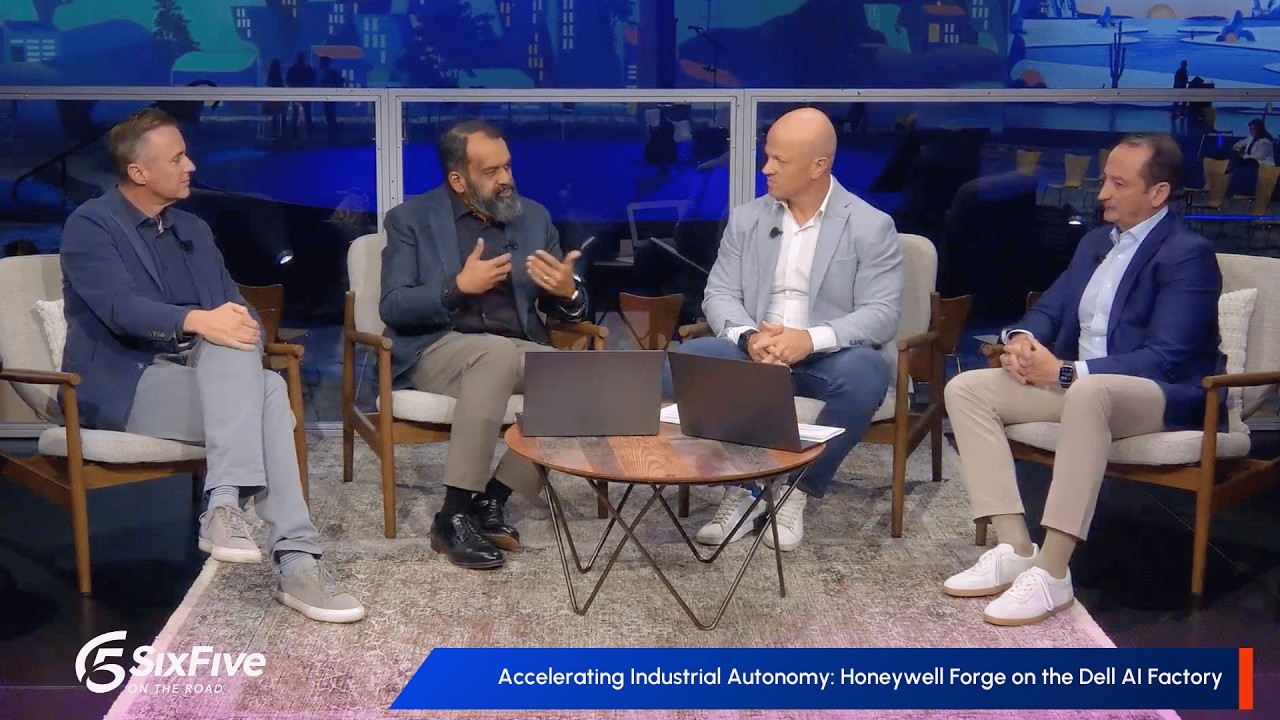

New Way Now: Honeywell paves the way from automation to autonomy with Google Cloud
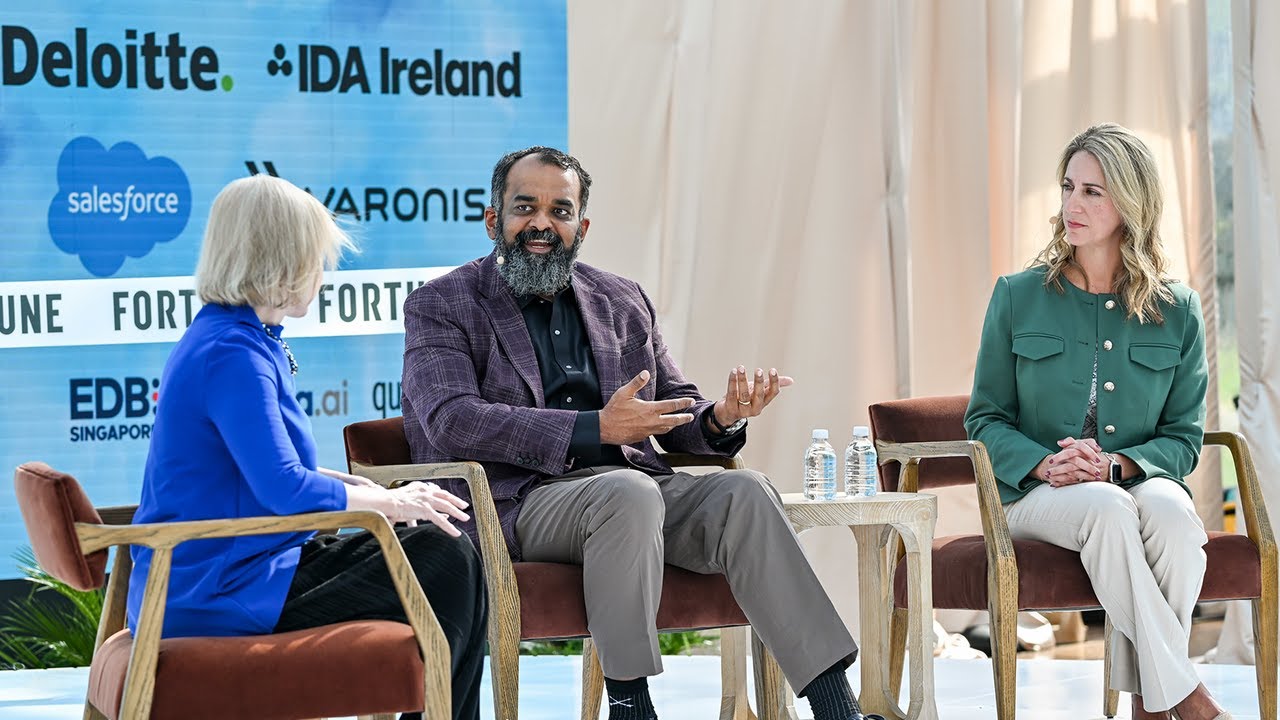
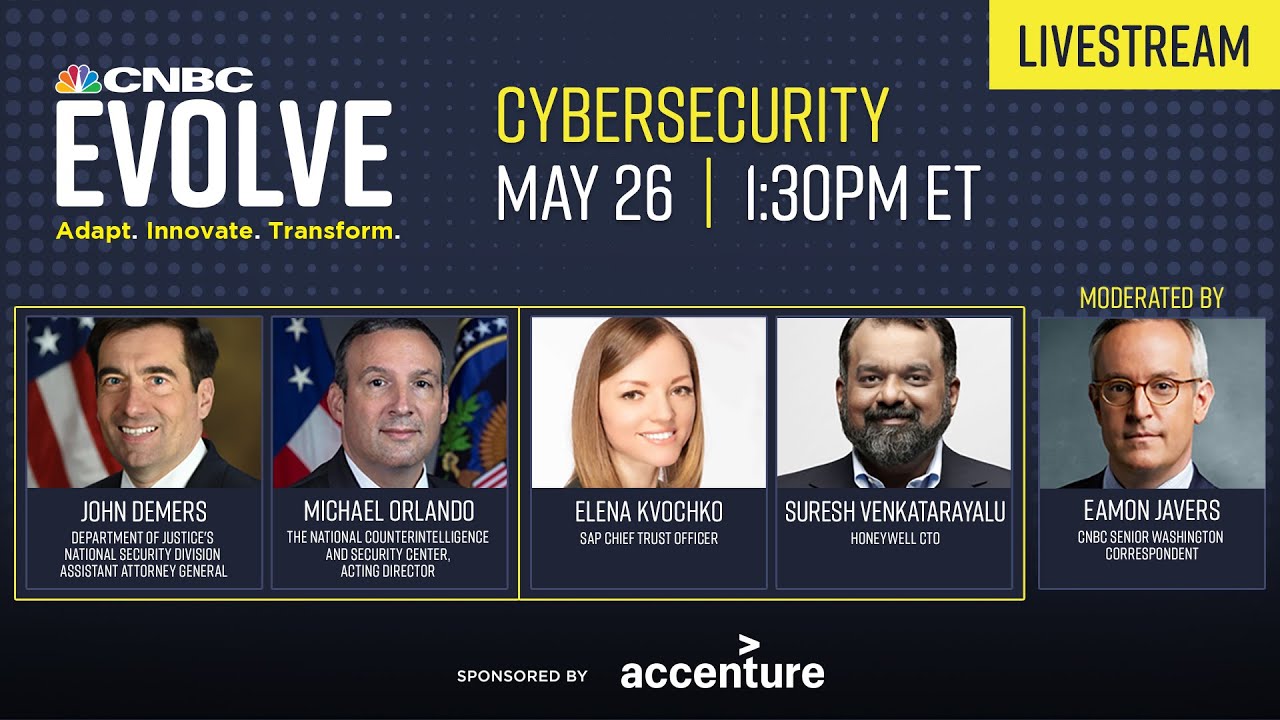
Cybersecurity talk with John Demers, Michael Orlando and SAP and Honeywell leaders — 5/26/21
Partners in Progress - Suresh Venkatarayalu, President, Honeywell Technology Solutions