Honeywell CTO on Physical AI, Honeywell Forge & the Dell AI Factory
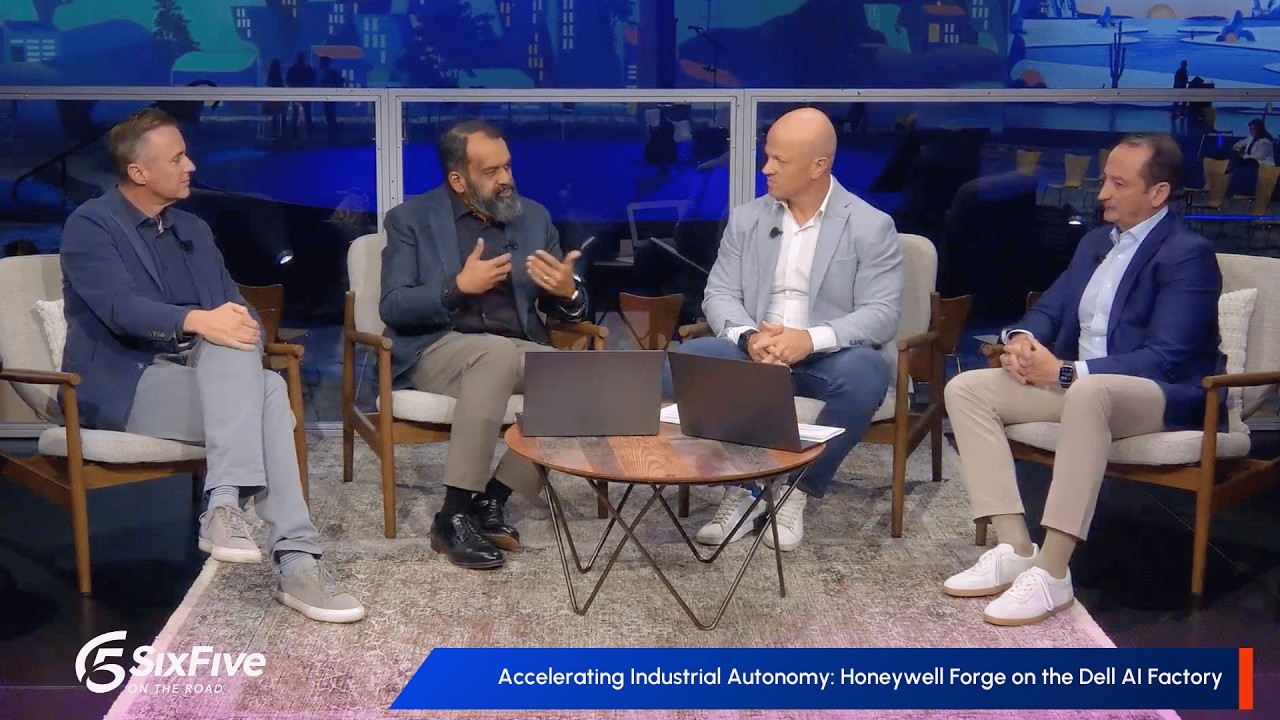
In a panel at Dell Technologies World 2026, Honeywell CTO Suresh Venkatarayalu discusses Honeywell’s shift from traditional control systems to a "physical AI" paradigm. He outlines the evolution of Honeywell’s Forge platform—from an early IoT connectivity stack, to a generative‑AI‑enhanced system, and now to a knowledge‑graph‑driven physical AI that can extend asset lifecycles and multiply operational intelligence by two‑to‑three times. Venkatarayalu explains why Honeywell partnered with Dell’s AI Factory, NVIDIA, and Google to obtain scalable, secure compute, frontier models, and simulation (Omniverse) needed for edge‑to‑cloud hybrid deployments. Dell’s AI Factory is presented as a repeatable, governance‑focused framework that helps enterprises move from proof‑of‑concepts to large‑scale, hybrid AI rollouts across data centers, edge devices, and the cloud. The conversation also touches on the broader industry trend of bringing AI to real‑world industrial, commercial, and health‑science environments, emphasizing the need for hybrid AI, ontology‑based training, and the promise of unlimited throughput when AI is tightly coupled with asset data.
Chapters
If we can extend the lifecycle of an asset and allow it to operate extensively, and then if we can manage the processes, the control system processes around these operations better, I think the throughput is unlimited in a big way.
The Six Five is on the road here at Dell Technologies World 2026 here in Las Vegas. The big theme here is about making agentic AI Real anywhere, including on-prem. That was my biggest takeaway, at least, Daniel.
Yeah, there was a lot. I mean, it was a great keynote, and I think there was a lot about bringing AI to life. And I think there was a lot about bringing the real world and AI together, meaning industrial businesses, pharmaceutical, health sciences. You know, a lot of us technologists, we spend a lot of time playing with the toys and in our little labs, but seeing it brought to the real world and then seeing it being done at a scale scale that enterprises can, you know, operate and realize benefits. I think that was the big theme that Michael and the team had at this year's Dell Technologies World.
Yeah, for sure. Great customer walk-ons. Eli Lilly was great to see. We saw Samsung in a video, but we saw Honeywell, which you and I know very well. Our firms have researched what they're doing on the industrial side. forever. And let's talk about how AI is transforming those industrial operations in real life. And person on the stage, Suresh from Honeywell. Great to see you. It's great that we go all the way from you walking off stage and maybe getting some water and a break to be great to see you. And also, Sam, great to see you as well.
Great to be here as always.
Great to be here.
Yeah, it was great. And it was such an opportune moment for Michael to start to, you know, I think at the end it was the part that really stuck with me was when him and Jensen basically came to that conclusion that we're really just getting started.
Yeah.
You know, it's been 3 years we've been talking and it's like, you know, Sam, you and I shared a meal at one point and we were talking about how far things have come and it's probably been 2 years since that.
Yeah.
And it has come so much farther.
It's laughable. What we were talking about was really cool then a few years ago compared to what we can do now.
It is absolutely wild.
So Suresh, I wanna start out with you.
I mean, you know, you talked a lot about the company's, you know, evolution, traditional industrial controls company. That's kind of what people know. They all have a thermostat from Honeywell and you guys do so much more than that across automation. What has sort of been the driver of that, you know, innovation across the company and how are you guys sort of helping your customers, you know, deliver and realize operational intelligence across all these different industrial and commercial environments?
You know, Dan, joined Honeywell 31 years ago and my, my major was computer science and neural Look, the industry took 31— Yeah.
So you were studying AI before it was AI.
Exactly.
It took 31 years for us to really talk about the transformational impact that it's bringing into the industrial world right now. The reason that I joined Honeywell at that point in time, it was a control system company by heart. And be it aerospace, commercial building, industrial environment, what we have done in the last 140 years is incredible. We actually deliver a controls platform for them to run their operations, either a large commercial building in a data center world or industrial plant at optimal level, our customers expect, say, 99.69 Six Sigma performances. Now, if you ask the question, have we leveraged AI all our years? Yes, it was, it was a deterministic model, machine learning systems. We have used it for a very long period in time. What's interesting in the last 2 to 3 years is you have these foundational models that have come in which is a probabilistic model, idea of incorporating that into a deterministic world to say, all right, we build systems that can see and act, but can you actually build a system that can see, think, act, and learn? I think that's the pivot point. So the question for us is our customers are happy with what we delivered, but with a combination of thinking and reasoning and learning systems, if we can bring it back into the industrial world, The value will be incredible. So at this juncture, as we work with our customers, everyone are looking for a new additional value where they can extend the value of their assets operational side. So our operational intelligence that we had is probably, in my opinion, is going 2x and 3x than what we have done in the past. So it's an exciting, exciting period. That's one of the reasons our partnership with Dell and NVIDIA and trying to really build an AI stack and helping them up. It's a great beginning. Our customers deserve it, and we believe that we can bring that category faster, which we call a physical AI transformation.
Yeah. So, Sam, yeah, gosh, believe it or not, we were all talking about the previous AI wave about 8 years ago, but Dell is very much ingrained in this OT world. And, you know, I remember things like, you know, servers that were applied on the back of a forklift or in an elevator shaft. Pretty much anywhere that you needed the compute, there was a Dell configuration that was available. And here we are now. And I just, you know, I think the previous generation, we just didn't have enough compute to do enough of the AI. Some of it we did and some of it was really good. But it just seems like we can do so much more now. You have— are doing a lot of business in OT. And I'm curious, what is it about the Dell AI Factory that you've optimized for this? You're obviously doing well. What is really hitting?
Yeah. So look, we talked about the 5,000 customer milestone, which we just achieved, Honeywell being one of our great new, new customers that are really seeing the advantages of how do we make it easier for enterprises to deploy this. I would say if you look back to just a few years ago when AI really started to come on, it was the Wild West. Everybody was getting started. People were doing POCs. We've now kind of hit an inflection point where we're going out of that like early discovery phase and into scale. And I think that's the key word for us is how do we take those early learnings as a partner to our customers and say, okay, this is how you take those great ideas and scale it across an organization. That's when the AI factory comes in because organizations are looking for that easier button. I'm not saying easy button because that doesn't exist. It's never going to find it. It's not possible. But we can absolutely take the best practices and playbooks that we're building with companies like Honeywell and others to say this is how you scale an organization with AI. And I think the really interesting dynamic that you're starting to see play out is the answer was always AI in the cloud, SaaS, SaaS cloud. And now you're seeing the shift to more of a hybrid AI movement. It's going much faster than the cloud to hybrid cloud movement we saw over the last decade. Now we're firmly in this spot where organizations are trying to figure out where do I run the AI? Some of it's going to be best run in the cloud. Some of it's going to be run in a hybrid. Some of it's going to be run in the data center. Some is going to be run at the edge at the device level. So the sophistication that's now required to do AI at scale is where I think Dell can really come in and help organizations scale and make it repeatable, secure, deliver the performance, and give you that governance that you're hoping for.
Or just having it operationally aligned regardless of where it sits, it has a tremendous amount of value, I see for sure.
Yeah, it's sort of a metaphoric harness.
Yeah.
And then it becomes a real harness. So Suresh, you were mentioning from the stage, you know, you talked a little bit about in your last answer about Forge. I remember, you know, learning about Forge and I think that was one of the big inflections of Honeywell was when you announced this, you know, kind of this intelligence platform at the edge, industrial IoT intelligence. Share for everybody out there a little bit about what Forge is in particular, and then sort of how is this being used to deliver real-time intelligence, operational outcomes, you know, across customer environments today?
Let me frame it up in 2 ways. I call it as there was a version 1 of our story, a chapter 1 of Forge. For the first 10 years, it was yet another IoT stack. We were able to connect back to our customers' operations, able to pull the operational data. We were able to provide them insights based on connecting to their assets, to the process and control system. And so the first generation brought in a few things— connectivity, visibility, and then providing a workflow-based application for them to solve optimize their operation. But the AI world, the last year or so, obviously things are transforming every single week and every single day. The first generation was generative AI. We brought in generative AI foundational model blended on top of Forge, and we said, look, let's take last 20 to 30 years of our operational insights and domain knowledge, things like technical publication to the service tickets, We trained the model so that it started guiding and assisting the operators, plant operator or building operator, so that they were making decisions very, very quickly. But then in the last 6 to 8 months, you started realizing the physical AI world has evolved much stronger. We felt Honeywell should be leading in this category because we deal with more than 50 to 60 million assets. Those assets are industrial assets, commercial building assets. If we know our fundamentals are simple, if we can extend the lifecycle of an asset and allow it to operate extensively, and then if you can manage the processes, the control system processes around these operations better, I think the throughput is unlimited in a big way. So physical AI was our focus. Then we actually said it requires you to really go back and contextualize your assets and processes. And you need to have a technology. That's how we forged the partnership with Dell and NVIDIA and Google. We said we need the, the both frontier models and we need to start to train the model using ontology and knowledge graph. So I think we are moving into this next chapter where we are training AI with the knowledge of an industry and knowledge of a, of a commercial building, which is, you know, Phenomenal, in my opinion.
Yeah. So, Suresh, you know, on stage today was, you know, you outlined your deployment strategy, basically, you know, bringing the AI to the data, which makes a lot of sense. Michael talked about that in our interview with him previously. But I want to get back to, you know, you have a lot of options out there, a lot of vendors you can go to. What is— why did you partner with Dell for their AI factory? I'm not going to say as opposed to others, but how did you make that step from scaling AI in this centralized infrastructure to deploying it out to the edge?
I know this morning it was— this morning it was quite interesting as you really watched. They actually talked about scale of infrastructure from, from a miniaturized compute device for physical AI world which is, which is if you really— Jensen launched last year DGX Spark to a high-end server category. I think for us what's important was you've got to have a partner who brings this compute, you know, secured and is scalable across wide range that and then that provides my customer a continuation and confidence enough to scale their industrial AI operation. So that actually made it very, very clear. On top of it, the partnership between Dell and NVIDIA makes it a lot more real because AI Factory needed me to really bring in simulation, Omniverse platform, the frontier models, ability to really deploy at scale like in the agent platform with Nemo Claw. A combination of a compute infrastructure, AI frontier model and simulation is so critical in a physical AI world. So it was, it was a very natural, natural transition for us to starting to work with them. Obviously, in the past, we kind of left it as an IT decision to deploy your control system to ship it. But now they're going to be part and parcel of re-innovating our new platforms.
That makes sense.
All right.
Well, Sam, we only have a minute or two left, but, you know, bring it home. Great to hear from Suresh. You know, Dell has been a significant customer zero. That goes back to the conversations we've been having. Just kind of love your take for everyone out there about sort of how do you, whether it's Suresh's examples, your examples, what is it about bringing experimentation to life and doing this at scale? You know, share a few bits of wisdom for everybody out there.
Yeah. Yeah. So it's been a fun journey going from zero customers to 5,000. Now we've learned along the way. I think that's a really critical factor that we bring to the table is those key learnings, those blueprints, those playbooks that we've been building. And we're moving out of that phase of last year. It was just get started somewhere. We're through the get started phase. We're now in make it real and scale it. And that's requiring a full rewriting of workflows end to end across an enterprise. It's no longer a phone a friend or phone an expert when you need some help. No, create the expert flat out and create the most excellent capabilities across an organization. Identify that and then let the humans come in and provide the human touch when required. That's a lot of work. That is a tremendous amount of rewriting. We're partnering with our customers today to really make sure that we provide them the experiences, those playbooks to do that the right way. Think end to end so they can accelerate their journey on AI. So it's been, it's been a blast and Like we were saying earlier, it's like, what a fun place to be in right now. Every single week, totally something new. It's just, it's just so much fun. And getting to work with Suresh has been great.
So, well, Suresh, congrats on all your progress and we look forward to continuing to track Honeywell. Sam, of course, we'll be with you through this journey. Thanks both for spending some time with us.
Thank you.
Thank you so much.
Thank you.
And thank you everybody for being part of This Six Five. We are on the road here in Las Vegas. for Dell Technologies World 2026. Stay with us for more programming. Thank you.
More from Suresh


New Way Now: Honeywell paves the way from automation to autonomy with Google Cloud

Sustainability Engineering | Building a Sustainable Future through Digital Innovation
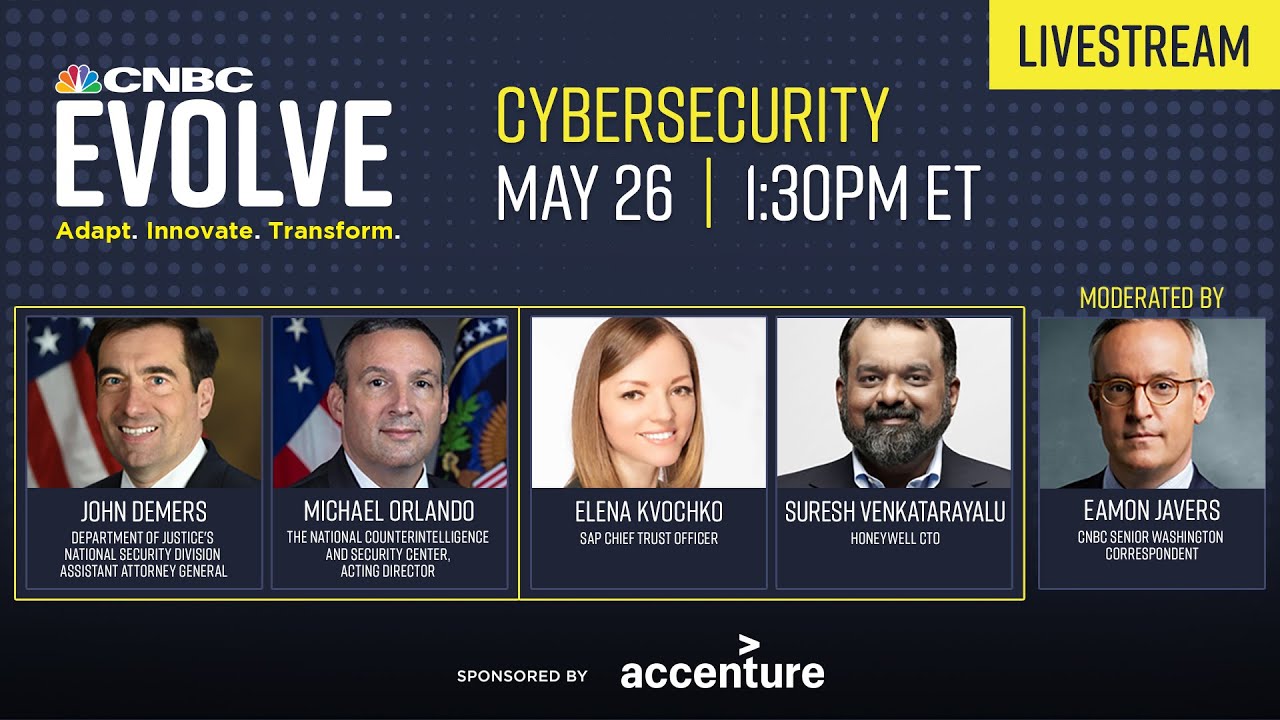
Cybersecurity talk with John Demers, Michael Orlando and SAP and Honeywell leaders — 5/26/21
Partners in Progress - Suresh Venkatarayalu, President, Honeywell Technology Solutions