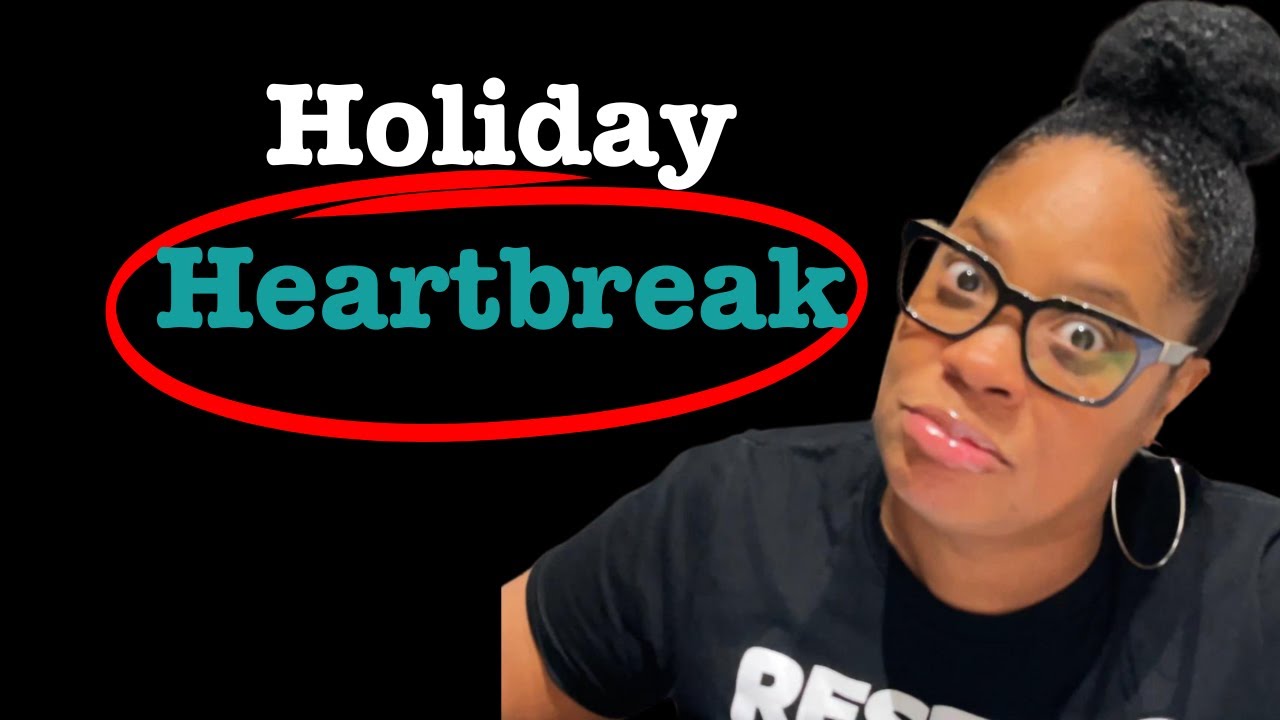
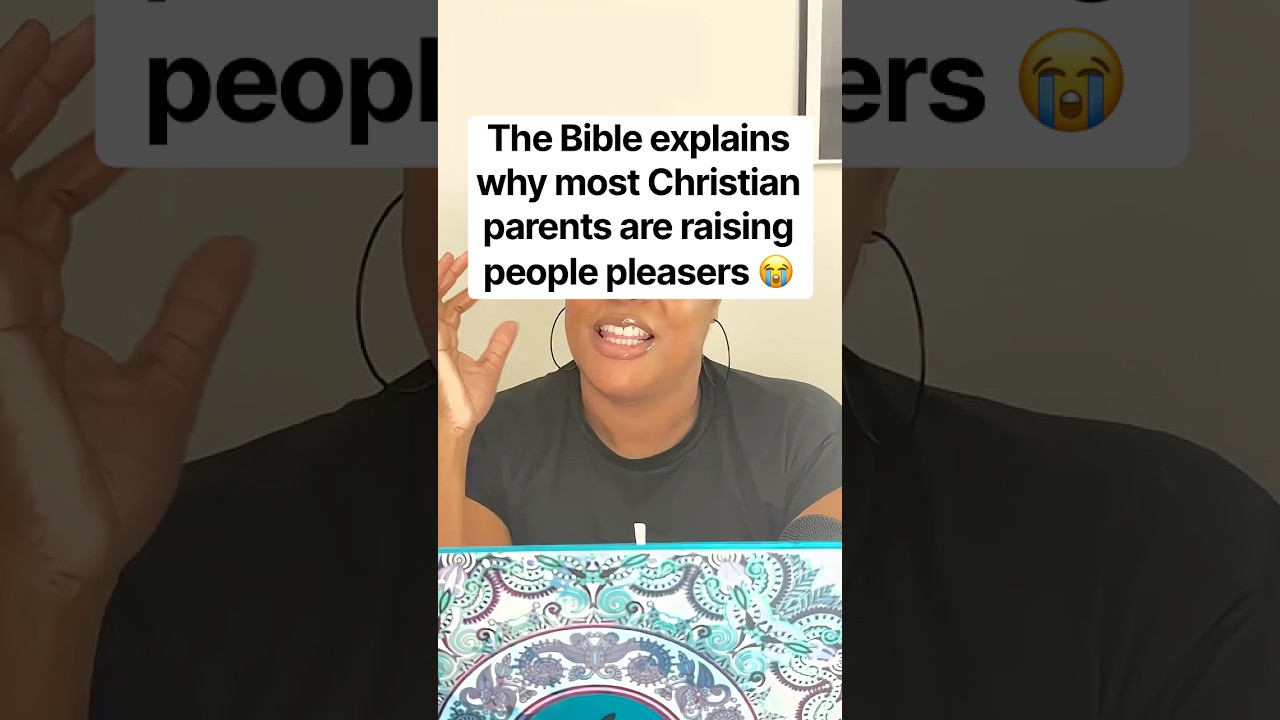
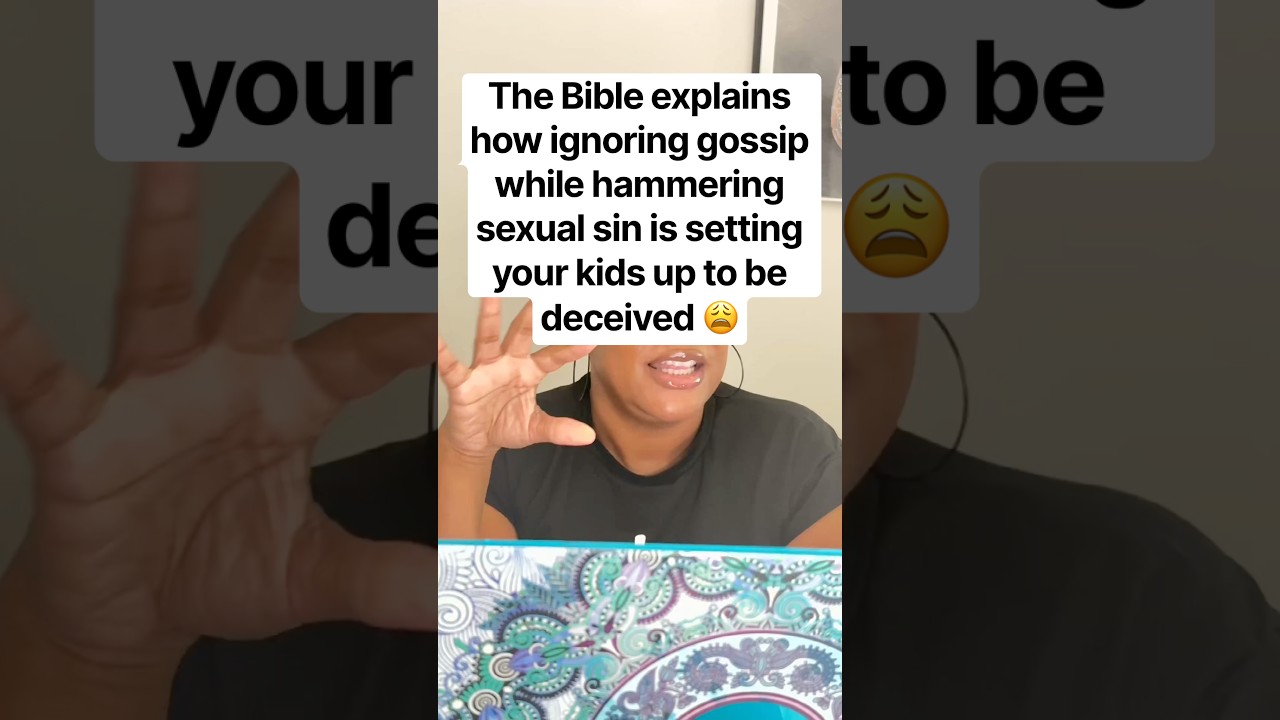
In this YouTube monologue, Fun Coach Tameka shares her personal experience of being estranged from her birth mother for nearly seven years, using the holiday season as a backdrop to discuss the emotional pain of adult‑child estrangement. She grounds her decision to set relational boundaries in biblical passages (2 Corinthians 6:14 and 1 John 4:8), explaining that abuse violates the biblical definition of love. Tameka recounts specific incidents—a brief "HBD" birthday text and a triggering conversation with her sister—that illustrate her trauma responses (fight, flight, freeze, fawn) and the moment she chose to cease contact for self‑healing, supported by therapy. She then critiques a recent article titled "Dealing with Adult‑Child Estrangement: A Modern‑Day Epidemic," arguing that the piece unfairly blames estrangement on mental‑health diagnoses and minimizes the lived reality of abused adult children. Tameka questions why parents are often portrayed as victims and why "good enough" parenting is used as a metric. She pivots to advice for estranged adult children and for parents who wish to break cycles of dysfunction, emphasizing self‑love, assertive communication, early confrontation of mistreatment, and modeling human imperfection with willingness to repair. Finally, she announces plans to launch a community for estranged adult‑child parents, invites viewers to join via a form, and closes with typical YouTube calls to like, subscribe, and comment.
Chapters
Hey y'all, Fun Coach Tameka here and welcome back to my channel. Today we're going to discuss how the holidays shed light on the heartbreak as an estranged adult child. Let's get into it. 2 Corinthians 6:14 says, be ye not unequally yoked together with unbelievers. For what fellowship hath righteousness with unrighteousness? And what communion hath light with darkness? The Bible is very clear on relational boundaries. Notice it didn't say a specific relationship or not this particular relationship. It said all unbelievers, mother, father, brother, sister, uncle, cousin, sister, niece, stepparent, whoever. They're an unbeliever. The Bible says do not be yoked, meaning tied together with them. And if someone is abusing and misusing you, they are considered an unbeliever because 1 John 4:8 says, he that loveth not knoweth not God, for God is love. Love does not abuse. Love is not controlling. Love is patient. Love is kind. Love is not self-seeking. It's not easily provoked. Love is also the ability to say no. If you are not allowed to say no to the mistreatment from another person, that is not love. That is control and abuse. I separated myself due to the excessive amount of psychological, emotional, mental, and sometimes verbal abuse from my mother as an adult. So days like today are particularly hard. Let me first acknowledge that. It's harder because most people lack the capacity to hold space and show up for us who are severely brokenhearted as an estranged adult children. I'm here to hold space for you, my friends. I've been estranged from my birth mother for almost 7 years now. Although she didn't raise me, I attempted to have a relationship with her as an adult. I was the one— after 21 years of not seeing her, I was the one who looked for her, found her and my siblings. I was the one reaching out. I was the one loving and forgiving and trying to make things work until one day I decided to stop. I needed to focus on healing, and I could not heal and constantly be reinfecting the wound through interactions with her. I remember vividly the day that I did it. It was shortly after my 40th birthday. I used to have so much anxiety around my birthday, hoping and wondering and wishing that she would call me or acknowledge my existence. So this particular birthday was no different. I was wondering if she would contact me. 8 PM that evening rolls around and my phone dings. I look down at it. I get excited because I saw her name. Then when I open up the text message, my heart sank. I looked at the text message and 3 letters shook me to my core. HBD. Okay, so first of all, it's 8 PM before she contacts me. Secondly, I couldn't even get the full happy birthday. I was reduced to 3 letters, HBD. So the next thing that happened, I now understand it was a trauma response. I immediately began to fawn and thanked her profusely and even sent kissy emojis. Now let me stop real quick to let you know trauma responses are fight, flight, freeze, or fawn. Fawning means you're trying to kiss up to a certain person. And the reason why I was fawning is because I thought that maybe I could have been overreacting. Like, dang, you know, at least she thought about me because she didn't think about me for a lot of years. You know, I didn't receive any message from her, so at least I should be grateful, right? So I went on about life. A couple weeks after that, my mother and my youngest sister share a birthday. So my sister lives on the West Coast, and it was very early over there. I called her on her birthday to wish her a happy birthday. We talked for a moment, then all of a sudden she says, hey sis, I love you so much, thanks so much for calling me, but Mom is calling on the other I'm on another line, so I'll talk to you later. Talk about triggered. So after that, I couldn't hold it anymore. I was crying uncontrollably and I fell to the floor. I remember I had started trauma therapy and I went to discuss with my therapist how conflicted I was feeling. You know what I was conflicted about? I was conflicted because I knew her treatment of me was not okay. On the other hand, I was feeling these feelings of, well, what am I supposed to do about it? Maybe I should just grin and bear it. I should just take it. Is that what I'm supposed Super grateful that I had the support of my therapist when I made the decision to step away from my mother for a while. So I sent her a text message. I let her know that I could no longer continue on with the abuse and mistreatment from her, and that how the Bible tells us to guard our hearts, and how I thought that it was so sad that I had to guard my heart against my own mother, the woman who brought me into this world. I shared my story to let you know I understand how hard it was for you to make that decision, and I'm proud of you. Now, I saw this article that I want to discuss as we get into the meat of today. Let me start by saying the title of this article is Dealing with Adult-Child Estrangement: A Modern-Day Epidemic. I knew it was going to be a load of crap when I saw the title. However, I went ahead and dug into it. It did not disappoint. Let me just say that. So the article reads, June 20th, 2023. Edward T., a retired doctor from Pennsylvania, has had no contact with his 44-year-old daughter for 11 years. Fiona has bipolar disorder, he said. After a manic episode, she cut off contact, blaming me for hospitalizing her. Edward continues to pay into a trust fund for her. I want to be sure she's provided for, and I won't deny I hope she'll come around. I'm in my 70s with cardiac problems. I hope we reconnect during my lifetime. Do you see my eye roll? Okay, continuing on. Coleman, author of the books Rules of Engagement and When Parents Hurt, acknowledges there are certain situations— physical or sexual abuse, extreme invasiveness, ridicule, or condemnation— that might justify distancing or disconnecting from a parent. But I've worked with hundreds of people who have been good or good enough parents and don't deserve this type of treatment. Okay, so that's enough of the article. I'm not going to read any more about the article. If you would like to dive into it, feel free. The link will be in the description for your entertainment. Now, the first thing I want to ask is, why is it that when parents Are interviewed about their role in the estrangement, they often like to pretty much blame it on a mental health diagnosis. To me, that's scapegoating at its finest. Why is it always blamed on a mental health issue? Now, I purposely said the estranged parent was interviewed because as an estranged adult child, we are often interrogated. Like people ask, "Well, why you don't talk to your mother?" And I could say anything because. They're not really listening anyway. I could say, 'cause Donald Duck is a quack, and they'll immediately follow up and say, well, that's still your mother. The Bible says honor your mother and your father. You know what I find interesting? Everybody knows that scripture, but nobody knows the verse immediately following that in the same chapter where it says, fathers, provoke not your children to wrath. Clearly nobody knows that because nobody talks about that. Well, Well, that's why I'm here. We talking about it now. You're welcome. So back to my points on the article. The author has the nerve to say that he's interviewed hundreds of parents and they've been good or good enough that they don't deserve that, as if it's a punishment to the parent. And my question is, how do you get to tell someone how they experienced another person? How do you measure a parent, in his words, good or good enough? Let me pause for the cause and say, I don't care if 8,199 people tell me that I'm a good mother. Until the 3 humans that I birthed from my body tell me that I'm a good mother, I do not consider myself a good mother. Just saying. If you're an estranged adult child, I just want to let you know that I see you, I hear you, I am you. Up until recently, I didn't realize how Invisible we truly are because we oftentimes cannot be interviewed about our roles in the estrangement. It's always the parents who are interviewed and viewed as the victims. Although we left strictly to heal, to be in a good place, to become better, to not be like them, to honor them, we're still demonized. We're still bullied. And I cringe sometimes at the thought of bringing new people into my life and closer to me because of the dreaded family conversation and the often asked, well, why don't you talk to your mother? Which leads to constantly being scapegoated into believing that somehow I need to be stronger to deal with and tolerate the mistreatment. And so that's the reason why I created this channel, because those of you who have children, let me say this: do not do the opposite of what your parent has done to you, because that's also not healthy. Teach your children to love themselves fiercely and advocate for themselves. Give them the language to communicate and challenge adults who mistreat them, including you. Mommy, I was trying to tell you about my day and you were on your phone. Or, Mommy, I wanted to spend some time with you, but you were really, really snappy at me and it hurt my feelings. I want my children to know that I am human. I I will make mistakes. I will disappoint them and unintentionally hurt them. However, I am 100% willing to rectify it as soon as possible. And that's all I've ever wanted from my mother, the ability to confront and rectify as soon as possible so that we can heal. Teach your children to be confrontational, meaning being open to and willing to confront issues early and often. The only people who are not willing to be challenged and confronted are those who are unsafe and not healthy emotionally. I'm considering starting a community for estranged adult children who are also parents that want to break the cycle of dysfunction, and if you'd be interested in that, I'm dropping an interest form link in the description. Be sure to complete it and I'll get back to I'll get back to you as soon as possible. Hope this was helpful. Be sure to hit like and subscribe and share with a friend. And if you are an estranged adult child, drop a comment below. See you next video.