#183 Toxic Coworkers and What To Do About Them feat. Tessa West
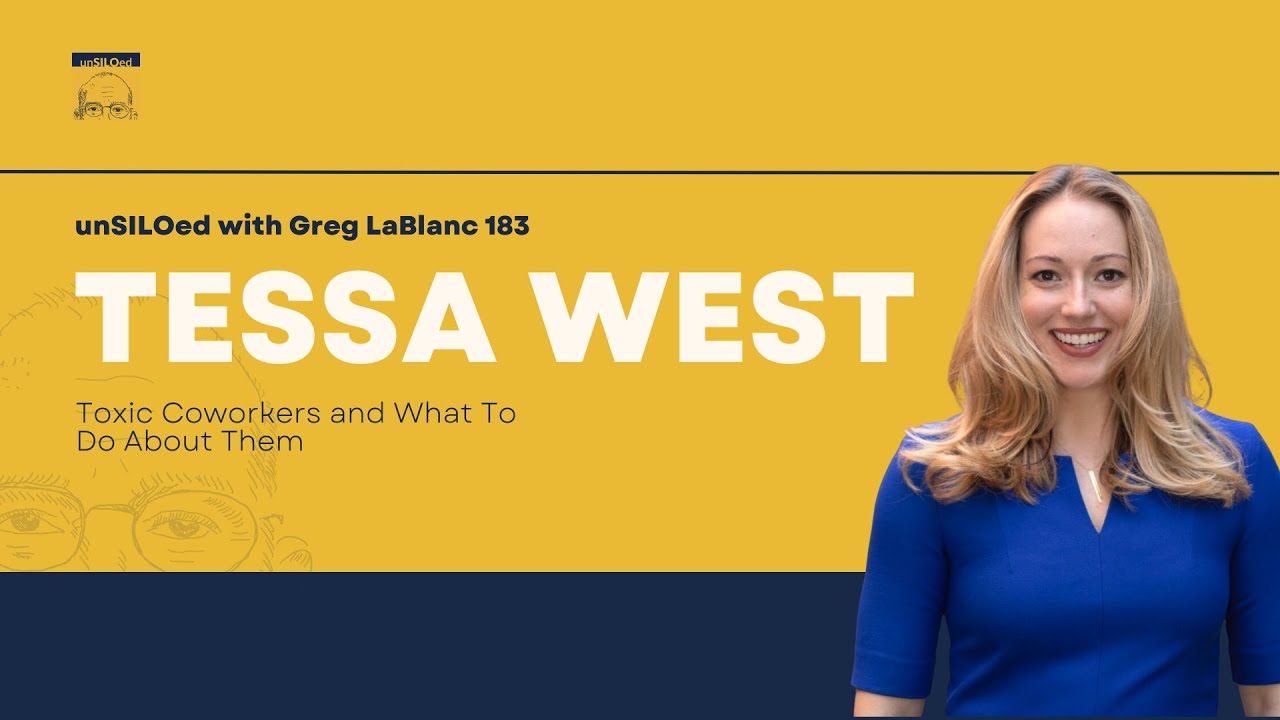
In this Unsilo interview, NYU psychology professor and author Tessa West expands on her book Jerks at Work by dissecting why toxic coworkers persist, how the term “toxic” is context‑dependent, and offering a detailed taxonomy of workplace jerks (kiss‑up/kick‑downers, bulldozers, credit stealers, freeloaders, free‑riders, micromanagers, neglectful bosses, gaslighters). She explains how status‑acuity, organizational opacity, and flawed HR/AI metrics hide harmful behavior, and she proposes concrete interventions: small, specific feedback loops; building informal “advice ties” rather than over‑relying on friendships; leveraging technology for self‑awareness (goal‑implementation intentions, time‑tracking); redesigning manager development with a Moneyball‑style distributed training model; and rethinking 360° surveys. The conversation moves into practical career navigation: when to recognize a breaking point and exit a toxic relationship, using decision rules about the perpetrator’s motivation to change and the employee’s flexibility to move teams; the importance of rigorously interrogating prospective employers—especially in the context of the Great Resignation—to avoid horizontal moves that stall career growth. West also critiques academia’s chronic lack of management training, describing how chairs are often the most productive researchers with minimal preparation, leading to burnout and systemic dysfunction. Finally, she reflects on personal jerkiness, urging self‑defensiveness reduction, honest self‑assessment of one’s own triggers, and public solicitation of feedback to mitigate the universal potential to be a jerk. Throughout, West blends academic research (status acuity, stress contagion, implementation intentions) with real‑world anecdotes from retail, tech, and academia, emphasizing that many toxic behaviors stem from systemic incentives rather than individual pathology.
Chapters
This is Unsiloed, brought to you by Alumni FM, connecting people through stories.
Welcome to Unsiloed. This is Greg LeBlanc, and I'm here today with Tessa West, who is a professor of psychology at New York University, at NYU, and also the author of this book, Jerks at Work: Toxic Coworkers and What to Do About Them. Now, I think what I liked about this book is that it wasn't just simply providing a taxonomy of toxic coworkers and also toxic bosses to some degree, but it also provides not only kind of a how-to guide, like how to, how to manage and how to navigate these folks and potentially maybe even change them and improve them for the better, but, but also it provides, um, I think a little bit of a diagnostic, right? A diagnostic tool, which I think is up on your website, which allows you to kind of You know, figure out whether you have a toxic coworker, whether you are in fact toxic yourself, and whether you can help kind of contribute to detoxifying the work environment as sort of an ally. So even if you're not toxic yourself or, you know, a victim of a toxic coworker, you might spot one and see the damage that they're doing and maybe intervene. And I guess, you know, maybe There's a little bit in there, but probably you could put more on, as a boss, what can you do to kind of reduce the level of toxicity? And I think that's one of the questions that hopefully that we can address today, which is why are we still having this conversation?
Right.
I mean, it seems like there's, especially right now with greater awareness, with the great resignation, and there's a lot of awareness on workplaces. There's a lot of awareness on the impact of toxicity. There's a lot of awareness about the impact of stress, not only on individual health, but on retention. So why are these people still around? Why haven't we cleared them all out? What's the problem? And there's an economics story. There's also kind of an organizational culture story. But I think we have to sort of figure out Why do we still have these toxic— and we can jump into the taxonomy, but why do we still have these people and why do we even need a book like yours?
I know, right? We should not need my book. Well, I think to start, we use the word toxic a lot. We throw it around and everyone says it, but no one really knows what it means. And I actually think it's very much in the eye of the beholder. One person's toxic coworker, toxic boss, Is another person's someone with leadership potential who knows how to get ahead here. And I think part of the issue, at least with the, the types of folks I talk about in my book, is there a lot of ambiguity to their behavior. Some people really like what they're doing, or some people at least don't at all care. Other people, often people who are lower status, find them just incredibly disruptive to work with. And I think the other thing about toxic people is we expect them to be like bad dates where you go on a date with someone and you see how gross and weird they are on the first date. A lot of the people who are toxic at work actually have a lot of good qualities. And, you know, some of the people I talk about in my book are actually very charming. They're well-liked, they're fun to be around, especially people like freeloaders, or they just know how to get stuff done. And so people in power sort of constantly reinforce that. A lot of these folks have failed up for various reasons, some having nothing to do with them, having more to do with the group that had to make the decision of who to hire. And because of that, we end up with a whole bunch of people that have toxic traits or behaviors that are maybe not always bad, but can really turn a workplace sour if under the right circumstances these behaviors come out. So, I think we have to sort of be honest with ourselves about that word toxic and it not always meaning the same thing to all people. I've heard a lot of people complain that their coworker's toxic and their boss just say they're oversensitive. So, it's very much like a touchy, eye-of-the-beholder type of thing.
So, a couple friends of mine founded a company, an HR analytics company, a couple years back in like 2007. And one of their claims to fame was that they could predict whether or not an employee was going to become toxic, right? This is one of their product features that they used to kind of sell their product.
Yeah.
And I remember, you know, talking about them like, well, okay, so if you're using machine learning to predict toxicity, then you need to have some kind of target feature called toxicity. And what is that? How would you code for toxicity? And so they were like, well, involuntarily terminated, there's different things in the HR database that could describe.
Yeah.
But ultimately, I think what they stumbled— what they looked at was retention rate of people in functional proximity. to their role, right? That was sort of their— and I guess if you could measure productivity of people in proximity as well, that would probably also— so is that, if we were looking for an objective definition of toxicity, would it be like the Typhoid Mary, the impact that you have on the people around you? Is that sort of what we would look for?
I think that it's— this is so interesting because I'm doing a lot of research in talent acquisition and HR and how they use AI algorithms to make these kinds of hiring decisions. decisions, and it's, it's a, it's a really tough situation. I think looking at the productivity of the people around you could be an interesting measure. However, there are some toxic people whose behaviors actually lift up other toxic people. And so, if we were to just say the kiss-up kick-downer, you know, they kind of torture people. So, if you can survive them, if you can outwit them, if you're well-connected enough, if you have the hidden curriculum, you actually are also gonna be lifted up by those toxic folks. They'll take you along for the ride. And so, part of sort of surviving and thriving in a toxic environment is actually adapting and learning how to get along with these people. Yeah, I think definitely, I could think of a lot of stuff, performance reviews, 360 feedback, none of that is useful.
So, maybe those folks might enhance the productivity, but get, you know, get their people to burn out much more quickly, right? Maybe we can use reverse engineering.
Yeah, there could be this kind of interesting curvilinear effect here where eventually people burn out or they rotate out of these roles constantly. Um, but I also think there's something to be said for this sort of like silent majority of folks who aren't completely burned out, but maybe their productivity's just down a bit of a, a notch. The productivity of this kind of immediate circle, I think you wanna look at 1 or 2 people who are actually removed from that because toxic people tend to sort of be like viruses. Their behavior spread very indirectly, and often it takes weeks or months to see them. So, when HR is looking to interview people, they tend to only go 1 step out.
Mm-hmm.
You know, they'll talk to someone's immediate coworker, their immediate direct report, their immediate boss, but not 2 or 3, which is actually where we tend to see this kind of toxic behavior manifesting and ultimately impacting people's performance.
Yeah, I think that's something that most people underestimate is the degree of opacity that bosses face, right? So, you talk about, you know, one of the myths is that bosses don't care. Now, look, there may be some bosses that don't care, but a lot of bosses, you know, they do care, but they don't really have kind of visibility into What's really happening kind of on the ground. And part of that is just the nature of delegation, but part of it is also because the toxic folks, the jerks, kind of manipulate the information stream, right? To some degree.
Yeah.
I like to think when you're talking about the kiss-up, kick-downers, I was thinking that they're kind of like these fish that their bellies are silver and their tops are And so, if you're, you know, if you're their boss, you look down and you see one thing, but if you kind of work for them, you know, you see something very different.
Yeah, that's a great metaphor. I have a couple of animal metaphors in my book. I wish I would've thought of that one. Yeah, definitely depending on the view. So, one thing that bosses do is they try to show as much trust in teams as possible. So, there's this whole movement out there to not micromanage, to trust people. We use this kind of vague language that implies that if we're overseeing them too much, if we're communicating with them too much, they're gonna burn out, they're gonna get irritated, they want autonomy, you know, all that kind of good stuff. But smart jerks at work will take advantage of cultures that are trying to sort of create that level of autonomy by sneaking in and actually taking over the reins and communicating for their boss, often for people who are not one step beneath the boss, but 2 steps beneath them. And that's where they can really infiltrate and, you know, spread their negative behaviors and often get away with it, 'cause those people don't feel like they have much voice at work. So bosses think they're doing a good thing. They're not hearing any complaining, Their teams are effective, they're producing, you know, people seem to be doing fine at work, at least the people they see. But meanwhile, all this stuff is kind of growing beneath the surface like a cancer that you can't quite detect until it's really, really bad. So, what they tend to see is a little bit of a rotating door of talent, but not at the level at which they tend to care the most, right? People with big responsibilities that had kind of long onboarding trajectories, it's people who feel more dispensable. And so, that's just not on their radar. They don't like actually see the problem. because it's not showing up right in front of them. And they actually feel like they're doing a good job by not micromanaging, by not trying to, you know, take over every little communication role, by teaching other people how to be leaders, by teaching them how to communicate on their behalf and so forth. So, these good traits can actually be turned against them.
Well, the other thing I think that you talk about, you talk about this in the first instance of the taxonomy, right? You talk about the kiss-up, kiss-downer, right? They seem to have a very, very— they're very good at understanding status hierarchies and sort of very good at understanding kind of who can make their life difficult and who can't, and understanding that they need to kind of win over the people that— I mean, you didn't use the term psychopathy at any point. You didn't talk about the dark triad at any point in your book. There's no mention of Machiavellianism, no mention of psychopathy, no mention of narcissism. And those are the things that people typically talk about. Was that a conscious choice? Because I think, you know, as I was reading through it, I kept thinking, oh yeah, that's, that's sort of like a, you know, Machiavellian trait, right? Understanding where the levers of power are and understanding who you can squish.
It is very Machiavellian. Yes, I intentionally left out discussing narcissism, and the dark triad actually kind of comes to mind a lot when you're thinking about these types of difficult people. But I think that this ability to actually read the room to to like know who's in power and who isn't is a skill that is actually a good skill to have. So, in the paper that I actually just published with a couple people at Stern, we find that this skill, if you have it, is associated with doing well in teams and figuring out how to confer status early so that the teams function well. But if kind of turned on its head, it can be used for harm. So, this very skill that I think in some situations are actually really good, you know, you know when to confer status to certain people, you know who's in power and who you should listen to, You know, when it's your time to step up, can really allow certain people who are high on social comparison, who have those Machiavellian tendencies, to kind of flip it around and use it to get ahead in ways that most of us think are, you know, ethically questionable.
Right. So in other words, there is maybe there's an optimal level of jerkiness that, you know, you want to have, or to some extent, if you want to survive in a world full of jerks, you need to Um, have some element of, of jerkiness yourself? I mean, or at least have empathy for the, for the jerks.
So why did I leave narcissism out of talking about or kind of framing the kiss-up pig downer? So, I mean, you make this interesting point that this, this idea that they can detect and read status has a, has a bit of a dark side. And I think when I was writing this chapter, I thought a lot about the dark triad, these like traits that You know, we see often in CEOs, I think that effect's probably a little bit overstated, but this idea that you're kind of a narcissist and a climber, you're high in social comparison, you're narcissist, and you can read the room all at once is a very bad combination of traits. What I think is interesting about the kiss-up kick-downer is a lot of the traits they have actually aren't negatively inherently. So in the paper that I published on this so-called status acuity thing, this ability to kind of know who has status and who doesn't, What we find is this individual difference, which you can measure by having people watch groups interact, complete strangers, and know the status hierarchy. It predicts how cooperative they are in teams, and it predicts how well those teams do, such that, that the higher that people are, are on this measure, the better those teams do. So being able to read the room is actually really effective for conferring status in your own teams. But if put in the wrong context, people who have that trait Coupled with an environment that sort of only rewards people who climb to the top, it's very zero-sum. That's when I think it can be turned, you know, really, it can turn into something very dark and very negative, but inherently it's not bad on its own, which is kind of why I focused on it in the book and some of the other traits that I think inherently aren't bad, but in the right situation can, can make someone turn very bad.
Yeah. So a lot of this is about, you know, the ecology, right? So to use a biological metaphor, right? You can have these traits or attributes, but if you put them into the wrong ecology, then the, you know, they'll, they'll become something different from what, you know, presumably the organization wants them to become, right? And so it just kind of boils down to what, what's being rewarded, you know, by, by the organization. Um, one of the things I thought interesting about that section was you said, you know, be, be very, be very, uh, worried about, you know, folks like this who may wind up going into some role that looks, at least immediately, as something that's not very threatening. And I was thinking about the Target breach. The reason why the hackers were able to get all the credit card information is not because they hacked the credit card database initially, but they kind of went in through the HVAC system.
Yeah.
And so a lot of people can kind of get into an organization and then sort of you know, figure out what, what, through a committee or something, kind of work their way up. Uh, can you talk a bit about that? I mean, you, you could interpret this as a how-to guide, I guess, if you, if you read it with—
Yeah.
More cynical.
A lot of people say to me, are you trying to breed more jerks? Because someone could read this and figure out exactly what they could do to become one and go fairly undetected for a long time. I think that there is this responsibility we have that we often ignore To make sure that when it comes to thankless jobs, and in academia we have a ton of these, committee work, task forces, you know, all that stuff, we have to spread that stuff out more equally and not just look for the eager people who are willing to do those jobs because they don't have the veneer of power and leadership. But you can make yourself invaluable to a team by taking them on. So this has actually happened in my own job at NYU where—
Mm-hmm.
Some people took over the system for actually organizing all of our job candidates, and none of these people used it for sinister purposes, but they could have because they were the only people— they wrote all the code. No one else knew the code. No one else knew how to actually access the system or run it. And if they got hit by a bus tomorrow, we would've been screwed. We wouldn't have actually known how to work the system. So I think a lot of people who become jerks take advantage of situations like this where they have some skill. It's pretty esoteric. Maybe not everybody has it. You know, in psychology, that's really good. They're great at Python, like where 4 people know Python, and they use it to kind of get ahead. And I think the onus is actually on us to not let that happen. And a lot of us let our guards down and actually do let that happen because we don't see these roles as powerful. They don't have the veneer of power in the same way that leadership or, you know, anything involving the executive leadership team has. But, you know, another example of that would be someone who's in charge of your DE&I mission statement. That seems like a thankless job. It actually has a lot of power because it controls a narrative and it can control other kinds of things. So, we have to just be a little more sensitive to that because I do think those roles get taken advantage of.
Yeah. I mean, academia is a great example because at least, you know, at a lot of universities, the only way you're rewarded is through, you know, publications, right? And research. And so, any administrative work you do is essentially going to be penalized, at least in, you know, in the short run. And so, you're just like, hey, I don't, I don't, I don't want to do that. So, so instead of sort of figuring out, well, who would be the best person for the job, or who has the most to contribute, it's really, you know, who is aggressively seeking out the position, right? You're kind of auctioning it off to the person who cares about it the most. But caring about it the most doesn't necessarily mean that they have the most to contribute.
Yeah. Or they're feeling very insecure, right? And so they want to prove themselves. By doing these jobs.
Well, that what you just described, it kind of overlaps with what you call the bulldozer, right? And bulldozers are people who, at least in part, make themselves kind of indispensable, right? They kind of create artificial bottlenecks and, you know, that you have to kind of go through them to get things done. You could talk a bit about that.
Yeah, I think you have to go through them to get things done. Or you, there's a desperation in the number of people to take on these roles. And so you have to have another body in the room to get the job done. The thing about bulldozers that I find really fascinating is most of us think they're just people who talk too much and they're loud and they sort of, you know, take up space, soak up oxygen in the room. But the ones that are actually the most harmful don't do that at all in the meeting. They go behind the scenes and they sabotage group processes by questioning You know, the democratic process through which things were done, you know, questioning anything that makes leaders nervous. So, for example, you know, if you're doing a vote for a job candidate, I've dealt with a bulldozer who's gone to the chair or to the dean and said, you know, no one really knew what they're voting on. I know a couple people came up to me afterwards and said they weren't comfortable expressing their opinion because, you know, they're junior and they don't wanna contradict folks. You know, those kinds of things. that makes smart leaders' ears perk up and think, uh-oh, that doesn't sound right. Maybe we should take a couple, you know, let's take a little bit of time to kind of walk through this process. And that buys bulldozers time so then they can kind of do their dirty work of going door to door and bullying people to side with them and so on and so forth. And, you know, often they get there because we hand over these jobs to them because we're desperate. We sort of know they're gonna do this. I think most of us have had experience with someone like this. We're like, ugh, this collective groan, this is gonna happen again. So we have to put steps in place, but, but they do make themselves invaluable. So it's very tough to get rid of them once we detect this is happening.
Well, when you talk about credit stealers, I think that's another feature of credit stealers, right? That they behave differently depending on the situation. So they do most of their credit stealing in private, right? But in public, they are very gracious and, you know, they're willing to, to spread the credit around. But then, you know, that's not the thing that the bosses pay attention to. They pay attention more to the behind-the-scenes Yeah.
And I also think it's interesting since I wrote this book, the kind of number one role people complain to me about with credit stealing isn't actually a team member, it's a boss. It's someone you look up to, and it's never someone at the very top. Those people feel pretty confident in their contributions and their jobs. It's like this, like, you know, middle management purgatory land where people feel insecure, but they're in charge. They're still looking up, they're still, you know, trying to climb that ladder. And that's where you see a lot of the credit stealing because people can't complain about a boss who's stolen credit. It makes them look kind of petty and immature. And quite frankly, they have no one to complain to. So it's that one step up where we actually see a lot of credit stealing going on. And the credit stealing doesn't happen in front of the victim often. It happens, you know, in meetings the victim doesn't attend, in leadership meetings and things like that. And so, Often victims of this don't really see it. It's, it's that sometimes you get credit kind of stolen right out from under you in a meeting. Someone, you know, articulates your point better than you do. But more often it's, you know, in those leadership performance evaluation meetings where your leader's talking about all the great work they've been doing and they undercut your contributions to that work. So, you often don't know what's happening until it's very late in the game and you're realizing you're not getting promoted and you kind of don't know why.
Now, for some of these, and we'll go through the rest, uh, you talk about how sometimes it makes sense to kind of go above the person who is the problematic employee, maybe go out, go to the boss. But then there are other situations where the boss is kind of in on it, right, to some extent. You talk about how at least, you know, with the credit stealer, the boss is kind of getting a kickback, you call it.
Yeah.
So, you know, maybe just talk in general about, you know, when is this sort of a a deadly alliance between the boss and the, the employ— the kind of toxic employee? And, and, you know, when is it more where the boss can be your ally to some degree?
Yeah, I think this kind of concept of a toxic protégé is really interesting. Someone who can kind of turn the boss against you, even if the boss doesn't really mean to do so. Um, I think the first step is actually one of awareness. So, we talked about in the beginning about bosses often don't know this is happening. We kind of assume maybe this toxic protégé relationship exists, You actually need to test that hypothesis first. And in my book, I talk about how exactly you can confront a boss about problematic people, not complaining about your feelings, but focusing on behaviors. So I think you have to test that assumption first to actually see if that alliance exists. And if you come to your boss with concrete behaviors that you think are problematic and they're still pushing against you or saying, I know this is a problem for you, but there's not much I can do right now about it. You know, I'm overwhelmed or this and that. And they're not actually willing to make any changes in their management style or their behaviors, they're not willing to confront this person, then I think you have a problem of this toxic alliance. And I think that's the point where you wanna start thinking about an exit strategy. It is very hard to navigate around that if the thing that's happening for you is a deal breaker, if your boss isn't on the same page. The other piece of advice I give people is we often don't think to kind of go up and over. We think of going to the boss or the boss's boss, one person above them. But often the best people to get advice from at work are the people who've worked with your boss in the same level for a long time. They know what makes your boss tick. They're often friends with this person. You know, they know what kinds of arguments persuade them, what, what they find irritating, you know, what their style is. And they often have more institutional memory than you do about this person. So I like to go up and over as much as I possibly can to get advice on, you know, how can I get my boss to actually care about this problem or listen to me? And without feeling like I'm telling on my boss or, you know, my boss finding that out. And so, those kinds of relationships I feel like are, you know, we don't emphasize enough in the workplace and people don't really learn how to create those, but those can be useful to getting advice on how to talk to your boss too, to see if they're aware and if they're open to actually trying to change this dynamic.
Yeah. I mean, in almost all the chapters of the book, you offer some hope that The toxic person can be changed, right? There's always some— and you offer a bunch of different approaches to try to maybe talk to the person who is problematic. And, and you made some references to kind of relationship science, right? And I found this interesting because it seems like there are some commonalities here, right? I mean, we certainly spend at least as much time at work as we do with our partners.
More actually.
Waking, waking hours.
Waking hours, yeah.
And, and, you know, there's, there's There's been research on how to manage relationships, and there's research on how to manage work relationships. These sort of strains, these research areas seem to be evolved independently, but there seems to be quite a bit of cross-pollination that's possible, right? To what extent do you think that being good at managing work relationships makes you good at Managing your personal relationships and vice versa?
Yeah. I mean, I think, you know, honestly, I think when it comes to having conflict, when it comes to feeling stress and threat, there's only so many ways we can skin a cat. We are who we are. And, you know, I think, yes, there's issues of like emotion regulation that are different in the workplace and at home and, you know, spousal issues. There's also choice. We don't have it at work. We often have it at home. I mean, you can't fire children, but you know what I mean?
Mm-hmm.
But I do think the ways in which we have conflict can very much overlap. So if you learn how to have constructive conflict with a spouse, those same principles can be applied at work. You know, you don't wanna do things like kitchen sink. You don't wanna bring up one issue and then talk about 15 other things that are unrelated to that issue that are just pissing you off right now in the moment. And the same is true for the workplace. You don't wanna complain about the fact that you were 5 minutes late and also you're lazy and you have poor hygiene and people think you're loud. You know, you have to sort of use those same basic tactics when it comes to confrontations at work that work at home, that work on your kids. And I think a lot of the tactics I talk about are actually things like framing things around choice, having conversations around goals. I mean, I have a 9-year-old. I have the same types of conversations with him that I have with my colleagues.
The question is, who's the employer and who's the employee in that situation?
I wonder that sometimes about my own, but I get called toxic a lot by my child, and I think, I just think it's over exposure to that word. But I do think there's a lot of carryover. And if we just think strategically about what works for dealing with these issues at home and try to apply some of those things, you know, in the workplace. And I think, you know, basic processes like stress contagion. So, I publish a lot on the, you know, the ability of us to catch the emotions of those around us.
Hmm.
It shows up in our body. The same thing happens at work that happens at home. The stuff that happens at work, we take home with us. So I think we have to understand the interdependence between these relationships as well and how we're not living in these vacuums where we have workplace relationships and home relationships, that the emotions that we feel in both can feed into each other and the strategies we use to deal with both can also kind of be applied in different contexts.
Well, I was wondering if you could talk a bit more about this constructive confrontation because Albert Hirschman talks about kind of exit versus voice. When you've got a competitive market, exit is the easy option, right? So you go to a place, you start working, you realize, hey, this is not great. I'm out of here. But that's difficult to do in a relationship, particularly after you get married. And then it's also kind of, people don't always have that. I mean, there are obviously people here in Silicon Valley, it's like, oh yeah, I don't like Facebook. I'm going to Twitter or whatever.
Yes.
But you couldn't just say, I'm leaving NYU. I'm going to go to Yale tomorrow necessarily, right? I mean, there's some frictions, right? So you have to kind of exercise voice. But if you're somebody for whom stress is difficult, you have to kind of power through that stress in the short run to kind of reduce it in the long run. How can people who are not really— people just want to be— there are a lot of people who just want to be contributors.
Yeah.
They have faith in humanity. They think transparency works, and it's, you know, ultimately the, you know, your virtues will be revealed over time. How do you get someone like that to, you know, become better at constructive confrontation with these coworkers?
Yeah, I think there's definitely an apathy around this right now. This like, I just want to do my work. I don't need all this drama. I don't need to learn how to have all these skills. I think you're gonna have to do the opposite of what your intuition is, which is to sort of avoid it until you absolutely have to, you know, during those, you know, end of quarter meetings or whatever you do. I'm a huge fan of the doing it early and often and making it small type of feedback. You don't wanna have conversations that are about these very sort of high-level personality type things. So you don't want to, by the time you're having a conversation where you're telling someone, I don't trust you at work, That means you've gone too long, 'cause there's about 15 of those independent behaviors that have contributed to that attribution. Instead, you wanna do things that are very small and specific. You know, um, you interrupted 5 times in that meeting. I'm a little bit worried that other people didn't have a chance to speak up, or, you know, you only gave me 20 minutes to turn around that draft. I feel like that wasn't enough time. The more specific and the smaller the things are that you're confronting someone about, the less threatened they're gonna feel, the less defensive they're gonna be. The less anxious you are gonna feel delivering that news. You don't wanna have conflict that's about large, you know, huge issues that are very difficult to change, that don't have a whole bunch of specific behaviors to back them up, or ones that have about 50 specific behaviors, but none of them feel actionable right now. You want things that people feel like they could change right now and that aren't that stressful to hear. And I think part of the onus on us is to also ask for that kind of feedback once we engage in these kinds of small things. You know, to make sure that our behaviors are in line with what people wanna see at work. And, you know, we're really bad at asking for feedback. I hate getting feedback. Nobody likes it. It's uncomfortable. But I try to ask for it pretty frequently, and people are pretty honest with me even when they don't like it, because they realize I don't react in a super negative way, 'cause it's small things. It's, you know, you canceled the last 3 meetings, what's going on? That kind of stuff. So, you have to really get over your fear of having these feedback conversations. And the only way you can do that is if do them frequently and they take 30 seconds, and then you realize they're not that bad. But, but really it's hard to get over that. And I don't wanna underestimate the difficulty there because I study feedback for a living and I still find them incredibly uncomfortable, at least with a new person until we get into a dynamic where we have a flow and they're good at giving and I'm good at giving and we're both good at getting and so on and so forth. But it does take some time to develop that relationship.
And, and is it important to provide that feedback in, in person? I mean, my experience is that, you know, when I, if I email somebody and say, hey, you know, this, this isn't cool, or this could be done better, it, it almost never has a positive outcome.
Yeah. I mean, I could go on a rant for days about how I think hybrid work is a disaster and delivering information not, you know, I study nonverbal behavior and I think, yes, the more you can do in person, the more cues you can give people, the better. Email is good for planning. It is not good for communicating difficult things unless you have to. Email is good for warning someone that something difficult's gonna happen. So I'm all about sort of clarity in those conversations. I wanna have a feedback conversation about your presentation, but I do think that learning how to have eye contact, you know, head nodding, smiling, positive nonverbal behavior, and learning how to read other people's nonverbals is something that we all kind of got really bad at during the pandemic. And we need to really build that skill back up. So yes, as much as you can do in person or, you know, on the phone, you know, whatever, just not, not an email. I think I'm with you on that.
Yeah. And particularly the people who are, I guess, conflict avoidant, they're going to choose email, right? That's going to be their default way of communication and that's going to be the least effective. And so it's going to build up and build up, right?
It's going to build up. And then the person getting that email doesn't really know what to say back. You know, it's usually an awkward situation. And then worse, when they see that person in person, it's gonna be very awkward. Do we need to now talk about that email? We don't have these good social scripts for handling conflict that kind of starts at the most distant form, the most distant medium, and then works its way up to the more, you know, interpersonal. We should kind of go the other direction, start interpersonal, and then we can, you know, warm up to the more distant if you have a relationship where you're really good at reading each other's cues and so on and so forth.
Now, one of the types of jerks that you talk about is one that is dear to my heart, and this is the free rider, right? Because I'm an economist, so— Yeah, yeah, yeah. When you look at mechanism design for most managerial incentive schemes, that seems to be the major concern that economists care about, right? How do you get people to actually work? But as you were going through the description and you're talking about these freeloaders, you mentioned folks who delegated everything. And then I realized, well, Well, I kind of, in my, in my classes, I, that's, that's kind of a virtue, right? If you can—
It is a virtue.
Delegate everything.
Yeah, absolutely. The free rider certainly wins when they're good at delegating, and it's a skill for managers to delegate, right? So like a lot of these traits, they're actually good traits in the right circumstances, but can be bad when they're overused. Um, and I think, you know, I, I like the delegating example because we all think that's a great thing. And, you know, I'm the queen of delegation. There's no way I'd be able to write a book and run a lab if I couldn't delegate, and I wasn't good at knowing who's good at what. But it's when I am hiding the fact that I'm not doing the work, and I am responsible for something, and getting credit for something, that I'm then delegating, I think, is where you run into these issues of teams burning out. I really think the real issue is when managers think the team can handle say, 8 hours of work a week on a certain project because they're assuming an equal distribution of labor. What they aren't really counting on is when that distribution of labor is 20% higher for, you know, a select number of team members, that's when you run into this sort of ironic finding of these teams actually outperforming teams without free riders because they're really good at making up for these folks and actually overcompensating. And so, from the manager's side, they actually see these teams doing even better. than other teams, and they reward them with more work. So, that's where I actually think the real issue is, is when the management isn't seeing that individuals are working X percent higher than they anticipate or believe that they're working on something because of the free rider.
Now, you talk about some of your experience in what we might call menial jobs, and I was, I was very encouraged by this. You know, you worked in retail and, you know, because when I talk about—
I sold men's shoes at Nordstrom's for a long time.
Right? So, when I talk to my, my MBA students, you know, I ask them like, okay, how many of you worked in restaurants or how many? The number is just declining every single year for the last 30 years, right? So a lot of folks don't have experience there, but I learned quite a bit about kind of good and bad management in those roles, just watching, say, the maître d' in a restaurant or the floor manager.
Yeah.
And there were ones that were very, very attentive to who was doing what and who was adding value and who was contributing. And if somebody tried to steal a customer and take them to the cash register so that they could get their commission, right? These good bosses, they were on top of this stuff, right? They could see it. And do you think it's just that, I mean, that environment, there's more kind of transparency? You can kind of see who's— you can kind of hover over the floor and watch what's happening. But in these more kind of idea-oriented organizations, there's just so much more opacity and there's so much more— Um, you know, so many different layers that it's, it's really hard for bosses to, to see who's doing what.
I think the opacity issue is definitely an issue. They tend to be bigger. You know, people have a million different roles versus having just one role. But I also think there's a, a very sort of clear way of measuring performance in these types of jobs, which is sales, right? And, and we're not talking like end of the quarter sales, long-term sales. It's literally how many pairs of shoes did you sell today? So they can see this direct association between performance and negative behavior at work. They could see that if someone was stealing my shoes, you know, was a shoe shark, then my numbers are gonna go down when I'm on shift with that person. It's just very easy to see patterns in the data in those kinds of positions, whereas I think in a lot of white-collar jobs, it's just really complicated to actually figure out who's performing well and who's not. And there's also a lot of teamwork going on. There's not as much of that kind of of silo-y teamwork going on. You know, when you're working on the floor at a restaurant, you know, I've had every job under the sun. You know, those kinds of jobs, it's just very clear. You do X, Y happens. You don't do it, it doesn't happen. And I don't know, I'm a little bit worried about people who haven't worked these jobs. You know, like, I think it's really good life experience to actually see these things. And it was the first time I had a manager who I realized the reason why she wasn't good at her job was because her manager hated her.
Mm-hmm.
And thought she was incompetent. And I never thought of my own boss as someone who had a boss. It's sort of like thinking of your parents as like children of somebody else's kid, you know, parents. It was weird to see that kind of disrespect happening and her pushed to the sidelines and left out of certain conversations that I could then see were trickling down and affecting the rest of us at work. So that was really the first time I could see a true kind of workplace hierarchy playing out because those dynamics are very clear. And I think in restaurants is another place where you really can see this. What is the relationship like between, you know, the, the, the line cook, the maître d', you know, the pastry chef, all of these roles that vary in status. It's very clear just by watching the behavior sort of who's in charge here. And we do lose some of that, um, in the modern workplace, in the white-collar workplace.
Yeah, it's kind of interesting if you go back to that kind of, you know, virus or diffusion analogy, right? There's kind of this like lateral diffusion, but then there's sort of this top-down diffusion. And it made me think of, you know, Robert Sapolsky's work, you know, with the baboons, right? Where the, you know, when the alpha baboon is stressed, you know, it kind of takes it out on the beta baboon. The whole thing kind of ripples down, right? So, you know, bad management is, you know, what do they say, fish rots at the head, you know, so to speak, right? Now, the last 2 types that you talk about, the micromanager and the neglectful boss, well, those are, I guess the last one is the gaslighter, but those 2, they seem to be kind of two sides of the same coin, right? So when you have a neglectful boss and you're like, well, where's my boss? You say that a lot of times they're over there micromanaging somebody else, right?
Yeah.
And it seemed like this, of all the ways of being a jerk, these two seemed like the ones that might be easiest to remedy because here it's really about developing a skill, like time management skill. And this is also something that these folks presumably would be open to and would want to develop, right? If you're a bulldozer, maybe, you know—
You like bulldozing. It's fun.
Yeah. I mean, you know, oh, can I be a better non-bulldozer? Can I be a better— you know, I'd rather be the person underneath the bulldozer. No, no. I mean, but micromanager and absentee boss, it seems like there's interventions here that would kind of benefit them, right? Educational interventions.
Yeah, I think, you know, these are the sort of tragic bosses who work really hard, at least micromanagers do, and they get the least done. And they have good traits. They tend to be very conscientious. They're go-getters. They have attention to detail. These tend to be good things. I think, you know, I, I do think these are the bosses that tend to be the most open. The, the one difficulty with them is a lot of those behaviors are actually coming from the top down. So neglectful bosses often have micromanagers themselves. I mean, especially if they're middle management, they already have no time for anyone 'cause they're answering to their boss all the time. So, you know, to the extent that you have some kind of sense or understanding of how much control they have over their own time, then I think you can pull a neglectful boss back in. You know, you can learn how to sort of out-resource to get help elsewhere. You can learn to knee-dodge all these things. Micromanagers, they tend to do this because they think it's an effective strategy. There's some sort of lay theory that if they spend more time on something, it's gonna get better.
Mm-hmm.
You know, time equals quality. Um, and, you know, they have, I think I talk about the faith in supervision bias that a lot of us have, that they have in spades. So I think if you can kind of shatter some of that and really reel them in with this promise of, you know, long-term goal planning together, they're much more likely to get on your side than if you kind of just complain about how annoying and irritating and disrespectful of boundaries they are. I think they tend to sort of ignore that type of feedback. But yeah, that plus a culture of fear can really breed this. So, if they're horrified of making a mistake, that their manager's going to yell at them, then that's kind of also going to create a micromanager. But if you can get around those issues, then I do think they are the most open to change out of all the types of jerks that I talk about.
Now, there's a lot of sort of a lot of technologies that have emerged lately that are designed to track Right. Employees in a lot of different ways, maybe measure their time, right?
Yeah.
So you can do like a time audit and say, what are people actually doing, right, from minute to minute? Do you think that these technologies will kind of overcome some of the opacity and maybe by bringing in greater transparency, not only help individuals to see their own flaws and their own weaknesses, but also to help kind of bosses and managers to see kind of where, where the problems are?
I think they can. I think this actually relates to some really interesting research that Peter Gollwitzer has done on people setting goals. So, you know, we have a goal, we have to sort of figure out what's getting in the way of, of accomplishing that goal. So, you can develop what's called an implementation intention where, you know, you figure out the, the roadblock here, which is, I, you know, I'm spending too much time micromanaging, or I'm reading my emails too closely. And then you kind of set the, the, the path of how you're gonna accomplish that. But what he finds in his work is that no one is very good at knowing that first thing. We actually don't know what's blocking our goals. We don't know how much time we're screwing around on the internet. It turns out it's a lot. You know, we don't realize we spent 45 minutes editing a document that should have taken us 10 minutes because we're just really bad at knowing those things. So I think what's useful about this, these technologies is they can give us a sense of self-awareness. That we don't have. And I think one of the biggest issues at work around these issues is that lack of self-awareness. So if we can utilize them to create an awareness of, okay, you say you don't have enough time to meet for 15 minutes with all your direct reports because you're too busy. Well, this app showed me that you just spent an hour and a half shoe shopping today, you know, that you didn't realize or you forgot you did or whatever it was.
Yeah.
That can actually really help. It, it won't solve our, our problems of like, you know, dealing with conflict and these kind of sticky interpersonal issues, but it will solve the awareness issue for, I think, for a lot of these issues that involve time management and also talking too much. People have no sense of how much time they spend talking. And so I actually did this study with a, an organization with a C-suite and had them measure how much time they were talking. And the, I remember the CEO thought he talked for about 10% and he talked for something like 57% of the time. Um, because he had no inner monologue. Everything was just thought out loud. So that, that can also help as well.
And, and there are also these apps, I think, you know, Bridgewater uses them, some other companies, where people are giving feedback kind of in, in real time. And, and it seems like, you know, everyone should want that feedback in, in real time. But, but how do you— I mean, how do you prevent that from degenerating into just another Kind of game where people are trying to signal something about themselves. And how do you also prevent retaliation? Because I think in a lot of organizations, the negative feedback inspires some kind of retaliation, particularly in a lot of these 360s where you've got 4 people on your team.
You know who wrote the thing.
You know exactly who wrote it, right?
I think those, I mean, so there's this huge movement of these like poll surveys where, you know, every 5 minutes you get a beep, you're told who hates you and who likes you or whatever. The only kind of feedback people really like getting is biofeedback. They love knowing what their blood pressure is and their heart rate and that kind of stuff. I think those things are a little bit overkill. I'm a big fan of the feedback should be very specific to a behavior that you've done or haven't done. General feedback in the form of a bunch of, you know, like or type scales where you're given a 4 out of 7 on something. You don't really know what that means. That stuff makes me nervous. I'm also a psychometrician, so I, I'm very worried about response set bias. And we know that for 360 feedback, the biggest source of variance is just how people use the scale, right? I might use 4s and you might use 7s. And so that's the biggest source of variance is actually who's filling it out, not the target, not even the dyad, but the, the person filling out the form. So, I'm not quite sure how useful that stuff is. The other thing is I'd say you need to follow it up with something. If they're giving this feedback, if they're getting a buzz that's telling them they're a 4 out of 7 on something today, what are they supposed to do with that? And what does that mean? You know, we always have to kind of think ahead of once you get the feedback, now what? What's the next step? So, there needs to be some kind of planning. So, I would tread lightly around general feedback that's happening all the time. And I agree with you, people retaliate. Or they'll, they'll get annoyed, or it's gonna raise their blood pressure unnecessarily about 20 times a day every time they're getting that feedback. So you just gotta think carefully about how much you wanna actually increase stress of the workplace instead of decreasing it.
Well, I've always found there's this, this bizarre dichotomy in, in, you know, in sports, for instance, you could have a player that makes, I don't know, $1 million a year, and an enormous amount will be invested in Picking apart pretty much everything they do. And then, you know, they'll have a whole bunch of folks kind of help them to become better at what they do. And there's just a ton of resources invested in identifying, you know, who's, who's going to be a good prospect and so forth. And then when we move to the workplace, I mean, you don't have to be that senior in an organization like Google to be making the kind of money that a professional athlete makes. And yet the amount of resources that are invested in helping that person to kind of be better at what they do is only a tiny fraction of what is invested in, say, an athlete. I mean, why do you suppose that is? I mean, it seems like the ROI would be fairly high if you could figure out how to make people better managers, make them better team players and so forth.
Yeah, I think so. The problem you're describing is very much like this rest and vest culture issue where you just throw money at people to take them off the market, And that happens in a lot of careers where they're so afraid— people fall in love with talent. I think, you know, we have a problem with thinking— I, I like Moneyball. That's more my approach to all this stuff. We fall in love with a couple really talented people. We sort of label them as geniuses. We're so afraid they're gonna work for the competition that we pluck them, but then we don't put anything in place to actually train them up or, you know, teach them how to be managers. Where instead, what we should be doing is more like Moneyball. You know, where we spread out the talent, we pluck people who maybe are slightly underrated, but what we spend our money on is actually training them early and often on how to actually become better managers. And not like through the vague stuff, like learn to trust people, like specific behaviors that they should be doing. You know, learning how to detect negativity at work and, you know, learning how to detect free riders very early, and like learning how to have 5-minute feedback conversations twice a week instead of 30-minute feedback conversations once a month, like learning those actual skills, I think, you know, there's much more utility to that than say investing in a handful of people who are talented right now, you know, and who knows what's gonna happen to them in a, in a few years. And I think when we do that, the other problem is when they do run outta steam or they run out of ideas or they stop being great, they're incentivized to do things like gaslight to keep it up because otherwise they are nobody without that kind of ingenious talent that a lot of people lose. So, you need to have a backup plan for what's going to happen once they kind of lose that, you know, whatever genius version of them you hired that they kind of, you know, what else could they potentially do for you now that you're giving them so much money? Well, yeah, you're right. We are very bad about that. And I like the metaphor with the athletes.
Well, the last type of jerk that you describe is the gaslighter. And, you know, I'd heard this term. with reference to personal relationships, right? And I'd never heard this with respect to kind of, you know, work relationships. And I was wondering if you kind of dig into it, because I think you said at one point that this is kind of the worst type of jerk, right? What exactly is a gaslighter?
So a gaslighter is someone who lies a lot, but they're not just a serial liar, right? They lie with the intent of actually creating an alternative reality. And I think a lot of us, when we realize that someone is doing this to us, we get really angry. We wanna know why. And I think that's the part that we get tripped up on. You know, there's a million reasons why. The ones I've seen are, I used to be great, I no longer am, and nobody wants to work with me. So the only way I can get them to work with me is if I tell them that they're hanging on by a thread here, and if it wasn't for me, they would've been fired a long time ago. So the gaslighting is actually just to keep them in place. Sometimes it's more sinister. They're lying and cheating and stealing. I've had a couple cases of this in academia where, you know, people made up data and they had to get a whole lab in on it. And how did they do that? Well, there's fake people, you know, there's all kinds of stuff happening. It's really interesting.
Dietrich Stoppel. Yeah.
Stoppel. And it has fake RA. And I think everyone's named Sandy and she had boxes of things. Anyway, I mean, you know, he was a theater major, so he actually has this interesting background.
He actually wrote, he actually wrote a memoir.
Did you, did you read his memoir? I haven't read it, but I watched his weird talk on a train once. That he gave that I think was a precursor to that.
Mm-hmm.
Um, you know, and, and so there's a lot of kind of creativity that, that goes on. The main thing they do is really cut you off socially. So if you suspect this is happening, there's gonna be this kind of social isolation that's going on. They don't want you fact-checking them. And so they're, they're gonna cut you off from the influence of other leaders, other power players, and even people at your own level. And often they do this through flattery. You're part of something special. You know, you can't tell anyone about this yet 'cause you're gonna give away our sort of big reveal. And in that process, a lot of victims end up doing things for gaslighters that are also unethical. And so the kind of most heartbreaking part of really breaking down, you know, the victimhood is, oh, what did I do that could get me fired that I didn't really realize was so bad? And that's the part that I think a lot of victims have a very tough time getting over when they decide they're ready to come out and speak out against this person.
Now, I think you made a conscious choice in the book to use only anonymous people as examples, right? For the most part. I mean, apart from yourself. But there are so many examples out there, right? Whether it's Theranos or Harvey Weinstein. I mean, there's so many examples that you could have pulled from kind of, I don't know, just from today's news.
Yeah.
Why did you not do that? It seems like, you know, business, business school professor would, would probably have, you know, flip-flopped more into the kind of current news cycle.
Did— Yeah. You know, I, so that's a good question. So one thing I wanted this book to not feel like it was too in this moment, that whatever, whatever story was hitting right now, um, you know, could have completely evolved into something different by the time the book came out. I think Theranos is a great example because when When I was writing this book, I think it was right around the time when her trial was starting, but we didn't actually know all the details yet. But now when I talk about it, I think she's a great example of a gaslighter. So many of those traits in there. But, you know, in an effort to kind of make these— the, the stories are actually all real. I just changed names.
Mm-hmm.
So I, I think I, I tried to go with examples that felt like people had experienced themselves before. That weren't just kind of famous examples, but things that had actually happened to me or to people that I talked to that felt relatable in the workplace. And they weren't, you know, just famous examples. But if I was to rewrite it, could I put a bunch of famous, you know, could I add a couple of those in there to really like make the, the point resonate? I think definitely, especially, you know, Theranos is great. It's a sort of classic gaslighting example. Doesn't sort of get cleaner than that. And the victims are, you know, if you've watched any of the shows on Theranos, any of the specials, they really talk about the experience the way that you hear past victims of gaslighting talking about this.
Yeah, it made me think of that. But one thing I think that goes throughout the book when you're talking about how to deal with jerks at work is you talk about the importance of finding allies, right? Finding people that you can, That you can, you know, find, can bridge with, communicate with, and then also, you know, create these, become an advice tie so that you have a little bit more leverage within the organization. Do you think that people need to set aside time, right? You know, when you're doing your job, do you say, okay, I need to spend 7 hours doing my job and then I need to spend an hour you know, building bridges with coworkers and kind of, you know, lobbying for myself and, you know, doing all this stuff that will kind of safeguard my position and, and maybe even help me to escape from the difficult situation if it's not going to work out.
Yeah, I think it's a good question. And kind of, you know, one piece of pushback I get about this advice is, well, this feels really fake. It would feel very artificial for me to like go to someone I don't know and be like, can you help me here? But I think this really kind of comes down to how we have our everyday casual conversations. You know, who do we actually talk to when we run into people in the hallway, in the coffee shop? How much conversation are we actually having with folks who are physically around or, you know, work in the organization that have been there for a long time that we've never bothered even saying hi to? And so, kind of one example I give in my workplace are the people who work in IT. You know, they're there, they've worked there for 30-plus years, a lot of them. They know a lot of stuff. They've seen our computers. They know all the things. Teams, but we never really have real conversations with them. And I'm the only faculty member that invites them to my, my holiday parties, and they're always really interesting and rich sources of information. I mean, that's not why I just invite them, but it's thinking outside the box a little bit for folks like that, that I think we tend to think very much in terms of interacting role-based and status-based within our organizations, and instead kind of spreading out a little bit. And even just casual conversations like inviting a group of 5 people to lunch, you have to eat anyway. You might as well invite some new folks you don't know just to get to know people so that you don't feel like, people don't feel like they're being used for information or that you're just trying to network, which is a bad word these days. You know, people hate that, I think. So, there is an organic way of doing this, but it takes time and you can't kind of do it all at once. I think it's really how you approach new roles, new positions, who you choose to get to know, I mean, there's a whole front office of people who work at NYU that none of the faculty know, that run their grants, that run their receipts, you know, but it's very sort of role-based interactions that we can violate a little bit more, and we should get more comfortable kind of violating those, those role-based interactions.
And you mentioned that you need to keep distinct kind of your friendship ties and your kind of advice ties. You know, a lot of people say that you're more likely to stay on the job if you have a lot, a lot of friends. But why, why can't you— why can't you, um, I mean, why can't you rely on friendship, can forge friendship, and use friendship as, as your way of protecting yourself and, uh, advancing your career?
I think friendships are key. They're key to getting along at work. I think it's the way we think about what a friend is meant to do for us at work. So I think the problem becomes when we develop a friendship with someone who knows a lot about our personal life, who we go to, that we are confident, the person we complain to, and we also expect them to do things like help solve problems with someone they're not involved in, or our boss, or, you know, get us out of a pickle. And that's not really their responsibility or their job, but because there's this kind I don't know, you know, concept creep almost with these roles. We start to ask too much of people, and it starts to get very difficult to maintain these relationships with 100 different expectations. So, you know, my best friends in life are all people that I've met. My husband is someone whose office is 2 doors down from me. So, I would be a complete hypocrite if I was to say, don't have friends at work. I actually think friends are critical, but it's important to know that the same person who is your best friend shouldn't also have the job of necessarily convincing your boss to listen to you or getting that free rider off your team or telling off that bulldozer when they interrupt you in the meeting, because that's just asking a lot of folks. And I feel like sometimes we end up doing that and it can damage our relationships. The other thing I'd say is status is a slippery thing at work, and one day someone's your best friend and the next day they're in charge of you, and then that gets weird for people. And they're not very good at handling those transitions. So, you know, if we had a little bit more flexibility in the way we think about our relationships at work, I think that stuff would be less awkward, less— it would feel less gross to people when it happens to them.
And I guess the final question, and this gets back to even like the relationship question we asked before, I mean, when do you— when does one give up, right? When does one sort of say, Look, this, this is just too much. I can't deal with this, right? The jerk factor is, is, you know, intolerable. And, you know, tried everything to kind of, kind of overcome it and get rid of it, or just kind of live with it. And it's not working. What do you do at that point?
Yeah, that's what I want to write my next book on is the getting out, you know, how do you actually exit out of these relationships?
There's like an optimal stopping rule, right?
At some point where, you know, it is, but we don't know what it is, right?
It's sort of like, how do you know when to break up with someone?
When is that kind of breaking point? I mean, I have a couple rules. One is the person who's creating these problems, you know, or the person who's in charge of the person creating these problems, are they motivated to change? Are they motivated to fix it? So, if the motivation isn't there, you're not gonna get anywhere. And then the second piece of that is, assuming they're not motivated, how much flexibility do you have at all to shift over to a new team, to a new manager? If you're stuck in this kind of power dynamic, They're not motivated to change, and these behaviors are deal breakers. So just like any relationship, you don't really have much of a choice but to exit. But I would definitely try, you know, having some of those conflict conversations. Don't kind of jump out right away because you think the grass is greener. You know, we're seeing with the Great Resignation, a lot of people are surprisingly wishing they had their old job back because we have very little evidence that the new place we're going to is any better. So, I'd add the kind of last piece of advice is when you're thinking about leaving and you know where you're gonna go next, you have to put them through the same kind of gauntlet that you put your old job through to make sure that those same problems, or even worse problems you've never even heard of, don't exist. And we don't interrogate new jobs in the same way that we interrogate our existing jobs.
Mm-hmm.
We sort of always assume it's gonna be better, but you have to really interrogate them before you, you make that, that step because if you're not careful, you're just gonna have a career of a whole bunch of horizontal moves and it's gonna be very hard to climb up. So, I think, you know, but there are definitely are times when you have to sort of pull the plug on a job, on a boss, on a team, and you have to decide what that is ahead of time so that when you're in the moment, you're not engaging in a whole bunch of rationalization for sticking there. Yeah.
Well, I guess this is the last question, and this is maybe just specific to our industry, right? So, you know, you and I are both in academia, and I always I think, right, the best players don't always make the best coaches.
Or never make the best coaches in academia. Right.
But it seems like in academia, but also in medicine and in law and in architecture, there's certain disciplines where the people, kind of the managers, are oftentimes the same. They're getting there because of their capacity in a non-managerial role, right, to some degree. Do you think that, you know, we as academics have to take kind of management a little bit more seriously? I mean, I'm in a business school and we teach management, but, you know, we're kind of like cobblers with our kids running around without shoes to some degree. I mean, do we need to think more about professionalizing academic management to some degree?
Yes, I think it's a total disaster in academia.
Yeah.
I think that at least the way it works is there's zero management training. No one knows how to manage a lab. No one knows how to manage a single person underneath them. No one knows how to have conflict. We don't learn any of those skills. And at least in my department, when we talk about who's going to be the next chair, it's who is the least terrible option is usually what the conversation is about. And it actually ends up being this very messy business of it's usually the most productive researcher who has the least amount of time to be chair, but they're really good at their job, so they must also be good at this thing called chair. And it rarely works out, and the chair is usually burned out, and they lose a whole bunch of social capital. And what do they make, like $5,000 a year extra or something like that? So it ends up being this kind of emergency situation every single time because no one is getting trained. People get away with all kinds of bad behavior. I think it's a real problem, and I've gone through leadership training at NYU, and it was, it could use some improvements. So I think it's even the top, top leaders. I was thinking I'm going to learn how the sausage is made. I'm going to learn about their training. And I realized they actually had as much training as me doing the training. So we are in a tough spot. And I think it's definitely true in other industries as well. In academia, we get zero training. Unless you're lucky enough to have had a graduate advisor who just happened to be a provost one day and was the first provost in 15 years to be well-liked by the community. So, the rest of us are in trouble. Yeah, I do think it's a real issue.
Well, you know, economists are oftentimes not very good at recognizing dysfunctional incentives when they're close to home. And organizational behavior people oftentimes don't recognize dysfunctional behavior when it's close to home. But it sounds to me like you have that awareness, not just in your immediate vicinity, but also you have the self-knowledge. And you pointed out in the book many examples of where you yourself self-identified your jerkiness and attempted to do something about it, which is pretty, pretty amazing.
I mean, I think that if we all just got a little less defensive, it would help. To be honest, in a lot of those examples, I had to drink a bottle of wine afterwards to stop feeling sorry for myself. You know, I gave myself like 3 hours to feel sorry for myself and then I got over it. But I think we have to kind of walk through that process with ourselves. And putting our heads in the sand doesn't help. I mean, if you're someone who's bleeding talent left and right, and you're always attributing it to something other than yourself, then I think you have an issue. And I think the reality is we all have the potential to be jerks. You know, we all could be a jerk, a different kind of jerk, probably in different situations. But just accept that fact, figure out what your personal weaknesses are, what brings out the worst in you, and then like learn to build behaviors around that. You're not gonna completely change. How big of a jerk you are when you're super sleep deprived and stressed. But know that when you're like that, you're kind of mean to whiny people who are needy. And so just don't interact with them in those situations. You know, learn those Achilles heels you have and then learn how to navigate around them. You know, I think that's the best that we can do and be open to feedback and really showcase it and ask for it publicly in front of people who are lower status than you so that other people hear you. And I think others will say, well, that person's actually asking for feedback. I was like, that's pretty impressive, and not a lot of us do that. So yeah.
Well, Tessa, thanks so much. The book is called Jerks at Work, uh, and if you don't know who the jerk is at work, maybe it's you, right? So the book will help you, uh, uh, identify, um, the jerks that you work with, uh, the jerks that you work for, maybe, um, the— your own jerkiness, and, um, and maybe give you some tools to, to manage with it, uh, deal with it, and, um, potentially eliminate it. Thank you so much. Thanks so much, Tessa.
This is Unsilo, brought to you by Alumni FM, connecting people through stories.
More from Tessa

Finding Work That Leaves You Fulfilled w/ Dr. Tessa West | The Psychology Podcast


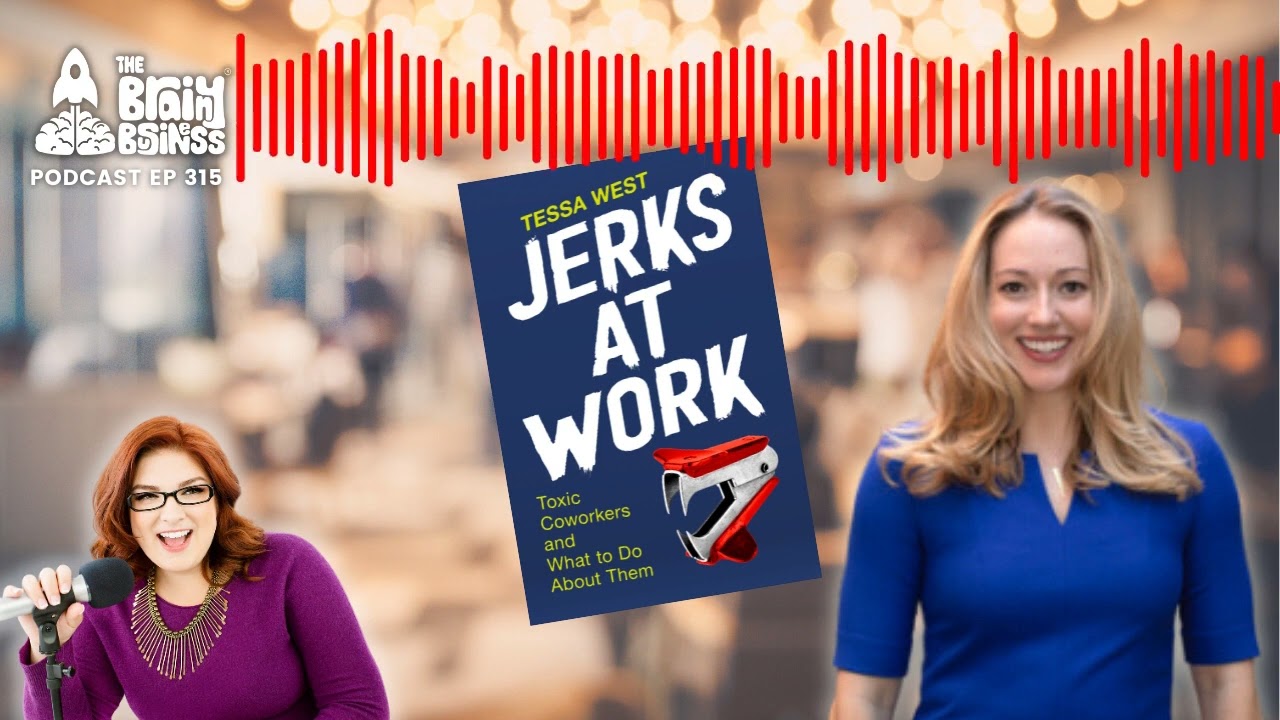
Jerks At Work: How To Deal With Difficult Colleagues, w/ Tessa West | Brainy Business podcast ep 315