Psychologist Tessa West Breaks Down Bad Bosses in Films & TV
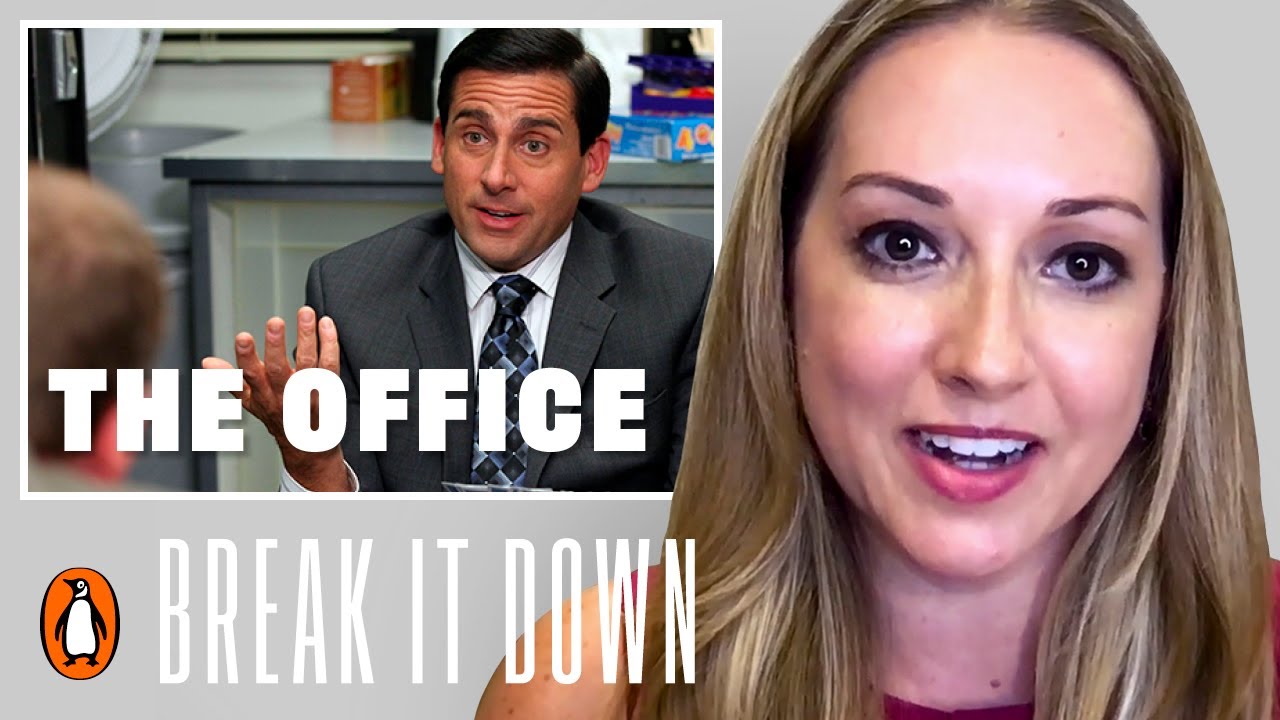
In this YouTube video, NYU psychology professor Tessa West analyzes how bad bosses are portrayed in popular TV shows and movies, using clips from The Office, Office Space, The Simpsons, Mad Men, and others. She pauses each scene to explain the underlying psychological dynamics—such as inappropriate humor in sensitivity training, micromanagement contagion, arbitrary promotion decisions, role ambiguity for personal assistants, the stress of quitting, and power‑play through romantic gestures. West links each fictional example to real‑world workplace experiences, rating the accuracy of the portrayals and highlighting how these behaviors affect employee anxiety, power perception, and organizational culture. The video serves both as entertainment commentary and a practical guide for recognizing toxic leadership patterns.
Chapters
Like, what is that? Why is he kissing her hand? I don't know of anyone who got a hand kiss out of their boss when they left their job. Hi, I'm Tessa West, and I'm a psychology professor at New York University and the author of Jerks at Work: Toxic Coworkers and What to Do About Them. Today I'm going to break down for you how bosses behave on TV and films.
The most fundamental thing about sensitivity training Is that you cannot make fun of a person for something or some action that they have done that they regret. You can only make fun of things that they have control over. Like, Oscar is gay. That is his choice. We can make fun of that.
All right, so let's take our first pause. Definitely sensitivity training is in the air, so I think the most accurate part of this clip is it's capturing the kind of awkwardness that a lot of us feel when we have to go through sensitivity training. Clearly, Poking fun of people for their gender and their sexual orientation is not something we typically see in the office. So a little bit off base there.
We are going to make a do not mock list, OK? Anything that we think might be out of bounds, we put on this list. Anything you put on this list, you cannot be teased about.
So I love this part of this kind of creating a list around things you're not allowed to say to people at work. I've been a part of a lot of workplace sensitivity trainings that involve these kinds of lists. The one thing the office gets wrong about this is they're almost always anonymous. They're submitted to some kind of complaint box or to HR with at least this illusion that we don't know who's complaining about what. The point being, we're not supposed to be able to pinpoint people's insecurities. We're supposed to treat people equally regardless of their backgrounds and so forth. So I love the list. This would be crazy if it happened in the real world. HR would step in right away.
Meredith?
I don't want to say it out loud.
Okay, fine. Come on up here, write it yourself, and don't sign your name to it, and nobody look. Everybody look away.
Look away.
This is amazing. Sex with terrorists. Can you imagine a workplace where somebody actually wrote that down? People love this show because it feels like their real lives. I mean, I think there's so many things about this show that really mirror what it feels like feels like to work for someone who is in kind of a middle-level management position or upper-level management at a small company, and they have a huge ego, and they think they can kind of get away with anything. I think what this show does well that really captures the zeitgeist is this feeling of kind of arbitrariness around what's right and what's wrong, and a boss who just takes everything too far, sometimes with good intentions, but usually self-promotion intentions. And I think all of us know a Michael Scott, and all of us have had an assistant manager to the manager, you know, these various sort of arbitrary levels of management in the workplace. Accuracy out of 10, I'd probably give it about a 3. I think a lot of these things go on in people's heads, but at least these days they're rarely said out loud. And certainly making a list of people's insecurities by their name, that would probably never happen. At least, you know, maybe on a Slack channel, but not by a boss. So the second clip is the US film Office Space.
Yeah, you apparently didn't put one of the new cover sheets on your TPS reports. Oh yeah, I'm sorry about that. I, I forgot. Mm, yeah.
So let's just take a moment here to appreciate the dynamics that we have between these 2 characters. So Bill Lumbergh is the, I think, regional vice president of this company called Initech. And what I love that they've done in this scene is the choices of his clothes. So he's wearing this two-tone shirt, this tie. He's got, you know, suspenders, the whole look. Clearly this guy is going places. He's super motivated to climb up the ladder at work. I think the one thing that's missing are maybe some cufflinks with his initials on it. That would have been a nice touch.
You see, we're putting the COVID sheets on all TPS reports now before they go out. Did you see the memo about this? Yeah. Yeah, yeah, I have the memo right here. I just, uh— Forgot, but it's not shipping out till tomorrow, so there's no problem.
Yeah.
If you could just go ahead and make sure you do that from now on, that would be great.
So we see this boss who's clearly dressed for success, and he's the classic micromanager. He's showing up to tell one of his employees that, you know, he missed some stupid memo that he clearly saw. And I think why people really like this and it really resonates with folks at work is this level of arbitrary micromanagement. Coming by, spending 5 minutes, asking you if you've seen some memo that of course you've seen. And, you know, this show really sort of captures the mind-numbing exhaustion that comes along with working with a micromanager like this.
Hi, Peter. What's happening?
We need to talk about your TPS reports. Yeah, the COVID sheet. I know, I know. Uh, Bill talked to me about it. Yeah. Did you get that memo?
So this is Dom, and Dom is a mid-level manager at Initech. He works underneath Bill, the person we saw in that opening scene here. And what I love about this is clearly there's kind of this micromanagement contagion in the workplace. Bill has probably deputized Dom to go do his dirty business for him, to kind of layer some micromanagement onto the existing micromanagement that Bill has already done. So micromanagement is actually the kind of the most common type of disruptive behavior at work. And I think when we have micromanagers, what we have is someone who thinks of everything as equally important and equally urgent, regardless of whether it's urgent or important. When you work for a micromanager, you're kind of constantly putting out their little fires that they make up in their heads and never getting any real work done. And that's the frustration that comes along with that. And I think anyone who's ever dealt with a micromanager kind of feels that pain on a day-to-day basis. I'd say what this scene doesn't quite capture is that micromanagers often aren't doing it to control people. They're actually doing it to decrease their own sense of anxiety and uncertainty at work. They maybe in their minds think that TPS reports are the most important thing that they absolutely have to get right or their boss is gonna yell at them. And kind of capturing that anxiety and that discomfort is And that's something that this scene misses a little bit. But, you know, maybe Dom is actually feeling that. He's just not expressing it here.
I'd like to move us right along to Peter Gibbons. Now, we had a chance to meet this young man, and boy, that's just a straight shooter with upper management written all over him.
Ooh, yeah.
I'm gonna have to go ahead and sort of disagree with you there. Uh, he's been real flaky lately, and I'm just not sure that he's the caliber person that we would want for upper management. He's also been having some problems with his TPS report.
All right, I love this scene. I think it represents how arbitrary decisions about promotion often feel for people. So you have a bit of this power play between these 3 characters where Bill is about ready to step in and say, mm, I don't think so. You know, Peter doesn't have what it takes. He's basing this on some kind of very recent memory in time of a bad interaction with Peter, which honestly is quite accurate. A lot of these promotion conversations are, are they're really anchored on some recent thing that happened, not on like this whole picture or what someone's leadership potential really is. So great. I love that shift in power right there. So uncomfortable. It's the best part. This discomfort. When you talk to people about the kind of difficult people they work with, a lot of this kind of bad boss behavior is actually done behind the scenes. So here we see that Bill is throwing Peter under the bus, you know, in an effort to kind of help protect his own management style. So he's got this problem with TPS reports. You know, clearly he knows that because he's a micromanager. And I think when employees realize their boss is doing this to them behind the scenes to protect themselves, that's when they get really angry and irritated at work. And I think a lot of times we don't really appreciate how much behind-the-scenes stuff like this happens. I think the minute you threaten someone's position at work, you threaten their status and power, You know, that's really when the claws come out and they're willing to throw anyone under the bus, including the people who work for them, in order to get ahead. And I think this scene sort of captures the subtlety of how that actually goes down in the workplace, what it actually looks like. I mean, I think Office Space is probably like an 8 or 9 in the accuracy of the low-level, mundane, irritating stuff that happens at work, and also kind of the subtle ways in which a lot of these characters express their power and their dominance over each other. You know, Bill is kind of the classic irritating boss that starts to demand coming in on the weekends and these kinds of things. So yeah, I think that this film's pretty accurate. All right, so the next scene is from the show The Simpsons.
Yeah. Now, I realize caring for Mr. Burns seems like a big job, but actually it's just 2,800 small jobs.
I just want to take a pause to appreciate 2,800 small jobs. I think most of us feel like our jobs are actually just 2,800 small jobs.
But this is the chair, right?
Your new duties will include answering Mr. Burns' phone, preparing his tax return, moistening his eyeballs, assisting with his chewing and swallowing, lying to Congress, and some light typing.
I think this seat is awesome. Anyone who's ever had a position like a personal assistant knows that the asks range from completely normal to insane things like moistening eyeballs and, you know, covering up for angry mothers and things like that. I think sometimes managers go into the personal, and I think that This is definitely captured well in this clip.
Oh, hello, Mrs. Burns. I'll see if your son is available.
Uh-huh.
Okay, I'll give him the message. Mr. Burns can't stand talking to his mother.
So what I love about this clip is that it captures how you have to have some kind of insight or gossip information about your boss often to make decisions. You learn what irritates your boss or manager. You learn The types of people who show up in the workplace that are gonna put them in a bad mood so that you can actually avoid having interactions with them in those situations. And I think what Homer's learning here is there's all this weird stuff going on with Burns that he didn't realize, that these little landmines he's gonna have to avoid.
Uh, Mr. Smithers, I don't understand 2,700 of my new duties.
Well, the van's leaving. Which one duty is giving you the most trouble?
What do I do in case of fire?
Sorry, can't hear you. So I love that they illustrate that no one actually knows what they're doing on the job. And I think Homer is like, you know, $2,700, I don't understand. That means he gets $100, which is actually pretty good. But a lot of us are actually hired into these positions where we have no idea what our job is. In fact, there's beautiful survey data showing that if you ask individuals to describe what their goals are and what their individual benchmarks are, like half of people have no clue what they're actually supposed to be doing at work. So that's captured well.
Good Lord, Smithers, you look atrocious! I thought I told you to take a vacation.
Uh, Smithers already left, sir. I'm his replacement, Homer Simpson.
Ah yes, Simpson. I'll have my lunch now. A single pillow of shredded wheat, some steamed toast, and a dodo egg.
But I think the dodo went extinct.
Get going and answer those phones, install a computer system, and rotate my office so the window faces the hills.
So what I love about this is that Burns has no idea who Homer is. He just calls him by the name of the old person who used to be in that position. And I think one of the complaints we hear a lot from junior folks when they start a job is that their boss has no idea who they are or what their name is. And then when they meet them for the first time, they ask for insane things that don't actually exist, like, you know, dodo bird eggs and steamed toast. When you look under the hood, a lot of leaders ask for really inappropriate things, and insofar as they can get away with it at work, they'll do it. If there's a system of kind of checks and balances to make sure those Those requests aren't being made, they won't. But a lot of people will ask for some pretty crazy things, you know, if they can get away with it. I'd say probably 5 out of 10. I mean, they're gonna get some points for just capturing the arbitrariness and the stress of having a new job where you don't know what's going on, but they're gonna lose some points for some of these, like, really insane requests. So the next scene we're gonna watch is from the TV show Mad Men.
I want you to know that the day you saw something in me, my whole life changed.
So there's so much to appreciate with this scene. So Peggy is getting ready to tell her boss that she's about to quit, and what I love about this is they really captured this— the discomfort that people feel having these conversations. So she takes a drink. She takes a deep breath, that sigh. She rubs her hands on her dress, and probably what she's doing is getting rid of the sweat that happens in your palms when your heart is racing and you're about ready to do something super nerve-wracking. And then what she does is she puts her hands together, and you see this tension in her hands as she's ready to deliver this speech that feels very rehearsed. It feels like something that she has probably said to herself in the bathroom mirror about 100 times. Because quitting is one of the most stressful things that we go through at work, and we try to prepare as much as we can, but they really capture the nonverbal signals of anxiety here almost perfectly.
Don't think.
It's been crazy around here, and I know I've been taking you for granted, and frankly, I'm impressed. You finally picked the right moment to ask for a raise.
I love that. You finally picked the right moment to ask for a raise. So what happens when you're a powerful man who's used to getting what he wants? First off, you kind of discount the information in front of you. I've quit, I've already taken another position. And he immediately thinks this is an attempt for her to get a raise. So what's great about this scene is it illustrates kind of the hidden curriculum that often goes on at work among people in power, that if you want to get a raise, what you do is actually quit your job or threaten to quit your job. And that tends to be perceived as kind of a starting point for the negotiation of the raise. So the two of them are clearly not on the same page here, but Dom is used to getting his way. He thinks he's gonna get his way here too. He just needs to know what her demands are.
I'm serious.
You're serious?
It wasn't easy.
Oh, I'm sure it wasn't. Well, good for you. Where are you going?
Cutler, Gleason, and Shaw.
I just want to take a moment to appreciate the bulging neck vein that Dom Draper is rocking in this, in this scene. This is the face, this is the neck vein of a man who's used to getting what he wants. He is trying to regulate that anger, that explosive anger inside of him is much as he possibly can, but this is not something he is used to having to experience at work. Getting told no, and that it's a real no, and it's a no coming from a subordinate. And I think that's, that's a really sort of critical piece here.
You know this is what you would do.
You don't need to wait until the 3rd. I've got a room full of freelancers out there.
So now he realizes he's gonna lose her for real, so he immediately pivots to kind of insulting her and basically telling her she can be replaceable. There's a room full of freelancers out there. You don't have to wait until the third. And this is typical for these kind of, you know, megalomaniac bosses.
I understand.
Like, what is that? Why is he kissing her hand? That scene to me is completely wild, especially given the history of the relationship between them, because they don't actually have a romantic history. I don't know of anyone who got a hand kiss out of their boss when they left their job, but I think it's super fascinating. I also love the power dynamic here of him sitting and her standing. It really kind of captured this weird moment between them where you can see that she's no longer underneath him. And I love her face. She's just grinning and bearing it. She's so uncomfortable. She hates that this hand-kissing business is going on. At the beginning of the In this scene, he reached out to shake her hand and he turned it and he kissed it and immediately kind of turned her into this objectified woman. And she is just so uncomfortable, but she's sucking it up just to get through the moment.
Don't be a stranger.
Whew, intense. You know, people hate giving negative feedback, especially to a boss, and breaking up is the most uncomfortable conversation we have at work. I think if you think about it, if you think about just relationships in general, breaking up in general is a really hard thing to do with any kind of, you know, a friend, a romantic partner. And at work, we're very terrified of how things are gonna come back to haunt us later. And so, you know, you're constantly trying to navigate not your current reputation, but your future reputation as well. And so what we end up seeing, you know, what the trends are is people lie. You know, they lie to their managers all the time about why they quit. They make up external reasons. They say they wanted to live in a different city or they got better compensation. But the number one reason why people actually quit is because of bad bosses. But we don't learn how to give that feedback during our job, and we're certainly not going to do it on the way out. And so I think, you know, because it's non-normative to give any kind of critical feedback to someone in power, we don't know how to quit jobs, especially if it involves that kind of negative feedback. Out of 1 out of 10, I'd probably give it a 6. I think Peggy captures the discomfort with her nonverbal behavior perfectly, so that gets a 10. Don Draper's crazy behaviors, from the sexism and the drinking to the hand kissing, kind of knocks us down a few points. But I think you could take Peggy and shoot that scene in a modern context and keep it as is, and it would stay, you know, it would be very accurate. I think dealing with difficult bosses is something that we all do. One mistake we make is we just never learn how to have conversations about feedback kind of early and often. We wait until things are really bad when we're ready to quit. We've kind of been stewing or sitting on these issues for a long time. But instead, I think we just need to get better at having these small feedback conversations immediately after they happen and kind of taking a step back and looking at what behaviors are contagious at work. Some of these clips we really show, especially between Bill and Dom in the office space, there's a contagion of kind of bad leadership behaviors. And if you're in a workplace like that, you can kind of see that happening. You know, you might want to think about getting out of that role because that, I think, is kind of even more dangerous than the one-on-one stuff when you start to see people emulating the behaviors of these bosses and getting rewarded for it. So I see that combination of kind of looking for that contagion coupled with learning how to ask for and give feedback in small bites that are more efficient and will kind of put these small fires out before you're Peggy and you're wringing your hands and you're shaking because you have to quit. In front of a boss who's not used to hearing no. And, you know, not every boss is willing to kind of take that feedback, but the ones that are open, I think you can start those conversations sooner rather than later. Thanks for watching, and you can click on the link below to get my book in ebook, hardcopy, or audio. And don't forget to subscribe to watch more Penguin videos like this one.
More from Tessa
Finding Work That Leaves You Fulfilled w/ Dr. Tessa West | The Psychology Podcast


Jerks At Work: How To Deal With Difficult Colleagues, w/ Tessa West | Brainy Business podcast ep 315