In the Creative Studio Live - August 07, 2020
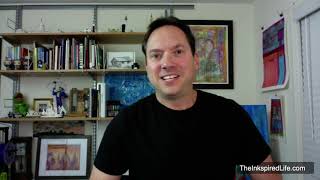
In this unplanned, live “Creative Studio” session, artist‑educator Jason Nicholas returns after a long hiatus caused by the pandemic and personal upheaval. He gives a brief tour of his newly reorganized 8‑by‑11‑foot studio, explains how he maximized limited space with a sliding whiteboard and repurposed storage, and shares the emotional backdrop that led him to abandon a March‑April acrylic painting. Using that experience as a springboard, Jason demonstrates a spontaneous sketch on a blank sheet, employing Sharpie markers, ink‑wash techniques, and layered acrylic inks while discussing line variation, hand flexibility, and color mixing. Throughout, he weaves personal reflections on the “Great Reset” (which he calls the “Great Blank Canvas”), the importance of daily creative practice for mental health, and the role of community interaction via live chat. He draws inspiration from music, travel, Disney architecture, and his background in architecture, and he promotes his new website (theinspiredlife.com), a free travel‑art‑kit checklist, and upcoming online sketching courses. The session concludes with three takeaways—lines, connection, and open‑minded perception—along with a heartfelt invitation for viewers to stay safe, create, and stay in touch.
Chapters
Hey there guys, how are you? It's been a long, long time and it's so awesome to be back. I don't think I have done this since April, March, somewhere back in time. I don't need to go into how crazy it's been out there. But I do, first of all, hope that everybody is doing fine, you're safe, you're healthy, and your family's doing well and you're making it through these times okay. If you're in New Jersey, hopefully you made it through the storm we just had, you have your power back, and you didn't lose any cars or any destruction to your house. I mean, it was pretty nasty out there. So anyway, it's been crazy to say the least. So I figured I would start up again tonight and go back to doing some painting. I'm kind of out of the loop. I kind of want to get back into the practice of doing this. So here I am. So I appreciate you watching and tuning in. If you haven't watched this before and this is your first time, I call these my In the creative studio live sessions. I'll go online and I would say 9 out of 10 times I really don't have anything pre-planned that I'm going to paint or draw or even say. It's really kind of an impromptu creative session focused on you guys. I mean, I want you guys to be engaged and talk to each other, talk to me, ask me questions. It's all about just forming a community and helping each other and inspiring each other. I never know what's going to come out of these. They're a lot of fun to do. I'm in my studio which I just redid. Very small space. I think it's 8 feet by 11 feet maybe. I kind of reworked it a little bit, put some shelving up. And I— well, I'll show you. I'll give you a quick little tour. You don't wanna hear me talking the whole time, right? So I'll give you a little tour of the studio here. And if you're just joining me, thanks. Again, this is In the Creative Studio Live. These sessions are not planned. I don't know what I'm gonna paint or draw. It's really about inspiring each other and keeping a positive community. So thank you very much. Hello. I have— I do see one visitor in the room. Hello, my favorite aunt. How are you? Hope you guys made it through the storm okay. It's just been so crazy. So I'm going to give a quick little tour of the studio and then we'll chitchat and see what happens over here on the paper. So I'm going to switch the camera view. So right now you can see the camera is pointing at an easel with a piece of artwork on it. I'm going to talk about this in a minute, but let's just kind of pan around a little bit. Pardon my hand. So yeah, I kind of just created a kind of a work area over in here. My computer desk area, some shelves, worked out really well. I have a flat file cabinet. Pardon me, I didn't clean the entire room, but it's a working studio and that's one of the things I love about art is being messy and creative. It's a good excuse. You can see I have some apples over there, I've been snacking. This is one really cool feature I did. I don't know if I can get the whole shot in, I probably have to go back further. Unfortunately I can't, but I installed a, I have a closet behind this whiteboard. So I took barn door hardware and mounted a whiteboard on it. So it's actually pretty cool. I'll kind of glide it open. And you can see that, you know, it just slides open and I have my closet in there. So pretty cool idea. Sometimes when you work in confined spaces, you need to maximize everything as much as possible. So I wanted a whiteboard for a long time. When I have thoughts or ideas, it's just a great way to get them out, right? So that's the whiteboard over there. Pretty cool. So I want to talk about this painting you see up here for a second. This is an acrylic painting and I actually started it way back when in the good old days. These are the good new days. I think this was started in April, March, I really don't remember. And then we got hit with all this stuff. As we know, I'm not going to go into all that. Like I said, I hope everybody's okay, your families are okay. We got hit with this stuff. Things went crazy. As you know, I'm a teacher as well, and teaching totally changed within an instant. And I just kind of abandoned this painting. I just I left it. I forgot about it. I got so wrapped up in what was happening every day with, you know, what was happening with the events with COVID and the news. And I don't watch the news regularly, but I just, I couldn't, not that I wanted to escape it, but I couldn't escape being bombarded with news about it. Of course, it's great to be informed, but I don't, didn't really want to be informed 24/7. And then there's the political side, and there's this conspiracy theory. It just got so crazy, man. It just messed— it just kind of fried my mind just listening to all this. I didn't participate in any of that. I don't care about the politics. I don't care about the conspiracy theories. I live for the moment. I live for the now, what's happening in this instant. But all that stuff happened, and I abandoned the painting. I left it. And I just didn't make the time to come back to it. And that really took a toll on me. For me, artwork is about connection. And connection in many different levels, but in this particular instance, it was really about connection to myself. And when I don't have or I don't take the time to connect and create, it's not good for me. I get going down paths that are not harmful, but they're just not productive, or I just don't feel like myself. Creativity is just part of— it's in my blood and I have to do it. And I didn't make the time to do it with with all that stuff going on with the pandemic. So I left this painting here and abandoned it, like I said, back in April or March. And then I've been using this time during the pandemic to kind of reset things for myself. Some people are calling it the Great Reset. I'm calling it the Great Blank Canvas. You know, in times of trouble, Mother Mary comes to me. That was going down a Beatles path there. Just let it be, right? So this great blank canvas time I've been using to develop my art course, my marketing for my art stuff. I'm working on online courses right now. I'm trying to use it to reset my mind. So taking this time to do positive things So I'm coming back to painting. Coming back to painting, why? I gotta make the time for it. Like I said before, if I don't do it, it's just not me. So this is where I left off back in March or April, and we're actually not gonna work on this one today. I'm gonna switch it. I think I'm gonna do some sketching tonight. But I just wanted to relate that story to you. I don't know if you have any stories or if you can relate to what I'm saying, but sometimes we get lost in other people's stuff and it's not healthy for us. We really need to be able to come back and compose our focus and take care of our well-being first. If we don't take care of ourselves first, how can we help other people and be positive, right? We can't be. So that's kind of where I left that and I'm going to pick up tonight and I want to do some sketching. You may know or you may not know, but I'm an architect by trade. I love buildings and I love sketching buildings and architecture. I love— nature inspires me as well. Music inspires me. It depends, right? Different days, different things can inspire me. So today I was kind of longing for a vacation to get away. We haven't really had the chance to get away this summer. So I'm going to use tonight as a mental vacation for me. Maybe you can relate, right? Do you feel like you're kind of stuck and trapped at home and you haven't been able to explore and get out? You know, whether it's travel issues or financial, right? It could be a lot of different reasons. But I think one of the really cool things about artwork and creativity is we can use our imaginations to escape and go to different places. It's a really powerful and positive thing, so I'm gonna try to take advantage of that tonight and see what happens. I kind of have Disney on my mind. I know some people that unfortunately have had to cancel their, their spring break Disney plans and their summer Disney plans, and I really, really feel for you. Yeah, it stinks. So I'm going to show you just how we can use our imagination, just to use it to escape and go somewhere. So let's go over to the sketchboard. And I'm just going to do some very simple sketches tonight. I just want to start off by saying I am not an amazing artist. And my goal is not to be an amazing artist. What my goal is, is really just to be able to take kind of what's in my head or be inspired by things around me and just create something on paper. Whether it's painting or drawing, it doesn't matter for me. So I'm really more about just giving you guys the techniques and ideas and some inspiration. You know, I don't do realism. I can't draw portraits. Maybe I haven't practiced or tried enough, but that's not my goal. My goal is really to create from my imagination, create from my feelings, and create from my surroundings. I have some music on in the background. I don't know if you can hear it. It's kind of travel cinematic type music, and I let that kind of inspire me as well. So I have a blank sheet of paper, and often a blank sheet of paper is the hardest part for people to get started when it comes to drawing or painting. Why might that be? Well, one thing is it's a blank piece of paper, and the question that people tend to ask is, I don't know where to start, or I don't know what I don't know what to draw. Actually, the first statement I usually hear is, "I don't know how to paint. I don't know how to draw." And that's okay. And I'm going to be honest with you. I'm self-taught and I'm not great. I think anybody can do it and I'll see if I can kind of give you some pointers and tips as we're going through it. The second thing is the blank page, where to start. So like I said before, inspiration comes from many different places. It can come from music, from people, from food, from nature, from your interests, your hobbies, from something you saw, maybe from a word, lights, shadows, colors. I'm just kind of brainstorming right now. Places you've been. And that's where we're going to kind of focus. I'm going to just kind of sketch just from memory, you know, just some kind of a building, maybe something you'd see in Miami or Florida or in the Disney area, right? So I'm using a Sharpie pen. I have a couple different sizes here. I have the Sharpie Magnum. This guy is big, great for doing quick loose sketches. Maybe we'll try using that. And then I have a Sharpie, just a, just a regular size or medium point. And the reason I'm using Sharpies is they're permanent because what I like to do sometimes is add color. Or an ink wash to my sketches. So here's an example. This was a sketch I did of Cinderella's Castle at Disney World. And I used a Sharpie pen to sketch it and acrylic inked paint to do what's called a wash, a very kind of opaque or transparent overlay just on certain parts of the image. So that's one of the reasons I like to use a Sharpie is it'll be waterproof. So let me just hang this over here. Pardon me if I block the camera. Let's hang this here. And I wasn't necessarily going to do the castle tonight, but we'll keep it there as a reference and maybe I'll pull some elements out of it. And again, I have nothing pre-planned. One of the things I like to do when I'm sketching or before I start sketching just kind of loosen up my hand. You can do a lot of different things based on your hand and how your wrist is and how tight you're holding the pen. So I like, for this style here, you can see it's very loose and sketchy. In order to create that, you want to just be really flexible with your hand. You don't want to hold it rigid. Holding it rigid will draw straight, sharp lines. You want to be kind of flexible. So sometimes I'll just kind of shake my hand out, loosen it up a little bit. I'll listen to the music and I'll just kind of go. So let's see what happens, guys. Again, there are no right or wrong answers. You see how I'm just being very loose with the pen? I'm not doing solid lines. You'll see I have a line and then a space. That's my hand is just kind of skipping off the page. I'm not pressing down hard. I'm just letting it glide. And I said, you know, Disney-inspired. This may have nothing to do with Disney. I really don't know. You know, let the lines tell your story for you. What I mean by that is, if I take this paper here, a line can tell a story in so many different ways. If I draw a line like this, my wrist was tight, I held it firm and dragged it very, very crisply, crisply up the page. Does that work? Crisply? It is now. But I just dragged it up the page. Very solid line, right? Compared to if I do this. They're two totally different things. This line, when I look at it, is very defining. It makes you feel rigid. It makes you feel kind of uptight. This line is saying, hey, 'Hey, look at me, I know exactly what I'm saying.' This line here is a little more loosey-goosey, right? It's kind of wishy-washy. It's not saying, 'Hey, look at me, I know exactly what's going on.' It's saying, 'Yeah, I'm a little bit playful and curvy. You know, maybe I'll wander this way or I'll go the other way.' So these two lines are telling two different stories. So you can use that to your advantage. Another thing you can do is instead of drawing lines, you can just do dashes, right? And sometimes I'll do this technique because I want you as the viewer to fill in the blanks. I want you to kind of weave your own story, your own thoughts into what is happening in the spaces between the lines. So this is really cool when you wanna communicate or let the viewer of your drawings kind of put their little, their interpretation into what's going on. It's just very loose guidelines just to kind of maybe lightly define something without knowing the whole story. Right? Look at that box compared to this box. Sorry, wrong guy. Right? That's the definite rectangle. This is kind of, hey, what's gonna happen in this space? So lines can really tell a lot of different stories depending on what you're drawing. Oh, another example. If I draw a line like this. To me, that's an angry line. It's kind of, you know, it's letting you kind of your anger or frustrations here in the jagged points. You know, I started off pretty kind of angry here and as it went through the line, it got a little bit softer, the curves, right? And you probably heard it when I was sketching, but you could hear I'm pushing down on the paper. Right, that's anger. You're just kind of getting everything out of your head, "Grrr," out onto the paper. So that's a way you can kind of show, you know, anger emotion. So back to our sketch. So I'm just going to go in and fill in some shapes, adding more lines, just kind of seeing what's coming out. These are very loose representations of maybe some kind of palm trees or something in the picture here in the foreground. I see a building back in here and adding just some some slits here to indicate maybe some kind of a window arrangement. I drew this sphere here. I was kind of thinking Disney Epcot Center kind of a shape here. By the way, I love Epcot. I don't know if you guys have been there and what's your thoughts about it, but I, I kind of love that whole area with the different, um, the World Showcase with the different countries. It's such a really neat place to visit, experience different music and cultures and foods. It's one of the— that's one of the most important things about to me when I go to different places is to try to experience something different. I went to college down in Miami, which is very different than up here in New Jersey. The school I went to was very international, so I met a lot of, a lot of students and made a lot of friends. From different countries, and I got to experience their foods and their language, their traditions, their habits. That's where I learned to take my shoes off when I went into someone's home. I had Korean friends that taught me how to do that. I learned how to speak a little bit of Spanish. I developed a real awesome fondness for Cuban food. And even, you know, being in architecture school with international students was cool because, you know, the buildings where people live, where they come from, are often influenced by the location, the geography, the environment, the weather. So I got to see, you know, learn about different architectural styles of buildings and houses. So I really suggest, like, if you get out and you travel, really pay attention to where you're going and talk, you know, talk to the people. Learn about, you know, learn about their habits and their traditions. It's often inspiring. I'm adding just kind of crisscrosses or Xs here on what I'm envisioning to be maybe some kind of a palm tree. Just to indicate kind of the bark or the pattern on it. So you can kind of see it coming together a little bit here. It's a— to me it's looking like a mishmash of different things that were kind of in my head as I was talking to you. I was talking about Disney, I thought maybe Epcot Center globe here. This has the kind of the inkling of maybe part of the castle. Maybe you would see it, you know, Disney, like the Cinderella Castle here. I didn't want to copy that. This building here probably has nothing to do with Disney. It's— I was thinking about an architect who's done a lot of work at Disney. His name is Michael Graves. Unfortunately, he had passed away a few years ago. He did the Swan Hotel and the Dolphin Hotel at Disney, if you know those buildings. He also did the Disney Team Center. It's a building that has like the 7 dwarfs holding up the pediments of the buildings. I was going to show you pictures of those, but my printer didn't work before I came on live, so I didn't get to print them out. I'll add them later in photographs. But, you know, his kind of work is very postmodern. It kind of has these shapes with the pediments, the curve, the circle windows. So I had kind of him on my brain as I was sketching here. And of course, palm trees, you know, relate to Florida. And that's just a real quick loose sketch. You know, it's a way to get or travel You know, if you're stuck at home and we're not able to get out these days, it's kind of frustrating, right? So sketching could be a way to connect to a place, you know, a way to escape. It's a way to maybe reconnect to a place you've been to, you know, bring up some of those really fond memories. I've been to Disney, I don't know, 10, 12 times. Yeah, I'm one of those. I'm one of those guys. I just love the place. You know, the rides are still cool to me, but I love going there and people watching, and I love the design, the architecture, the Imagineering. Disney Imagineers are the guys, the people that work behind the scenes. They're engineers, artists, architects, designers, fashion designers, interior designers. Computer programmers. I mean, they're the, they're the people that come together to make all the Disney attractions come to life. That's, that's where I wanted to be. Um, if I had another career path, it probably would be something like that. But I just kind of wanted to show you, you know, maybe just a way just to kind of get some lines on paper. Like I said, I'm not a great artist. That's not my goal. My goal is just to express myself somehow. And guys, if I can do this, you can do it. It's— you can absolutely do it. And I'd like to show you. If you want to learn more about it, let me know. Put it in the comments. I'm more than happy to, you know, walk you down the path and give you more tips and tutorials on how to do this. Anytime. And I think I'm going to add some color to this, kind of like the Disney castle over here. Let me break out some of my acrylic inks and I'll show you just how to put a wash on here. We can pull some different elements out, just add a little bit of color to it. Um, if you have any questions or comments, leave them for me in the chat box. I'm checking. If you're here, say hello. I'd like to talk to you. That's always a great thing. Um, this is about community, guys. I want I want us to be a community. I'm here to inspire you and I'm here to be inspired by you. That's what I tell my kids at school all the time. So I'm gonna go over here and get some paints out. I don't know, I'm just gonna grab some colors here. I hope I have some. I do. Yeah, let's just grab these for now, see what we can do with them. All right, so I grabbed some acrylic ink paints. I love these. That's what I used to do the ink wash on here. This was a blue one, obviously. This was a gold one. It's actually metallic. I don't know if you can tell that in the camera shot, but it has a little metallicy look to it in the light. And what I like to do is get my containers, which are in here. There they are. So, uh, one of the things I'm doing during this great reset with a great blank canvas is I'm trying to reorganize things and get rid of things. Um, I would love to get to a minimalism type of lifestyle. That's gonna take a lot of work, but I love the concept. And one of the things that applies to that is these are Pringles containers that I've saved over the years and to repurpose, right? We could be green, environmentally responsible. So I'm just gonna use these to put the ink in. So tell me what's on your mind. Any questions or thoughts? Like I said, I hope everybody is doing well during these times. It is really nice to be back here and doing some painting. Oh no! So this is one of my favorite colors, cerulean blue, and it's empty. No worries. Let's break out some of the, let's see if I say this right, Quinacridone Magenta. Let's just go with magenta. So I know a lot of, if you watch a lot of art tutorials, and I do, I love Bob Ross, I always watch Bob Ross. All, you know, artists are always talking about colors names. I have to say that that's awesome, and maybe I'm just too lazy to memorize that kind of stuff, but I just go with what looks good. It's just kind of a gut or instinct thing. To me, if this is whatever, Quinacridone Magenta versus a Azurillium Magellania, Hybrid yellow magenta. It doesn't matter. I just, I want to know the color. I want to know what's in here. I can see through the bottle. I'm like, okay, that looks like fun color to use. Let's do it. So that's just a, just a personal thing that I do. It also applies to nature. And I really admire people that can memorize plants and their types and their names. I'm very limited. I know roses, I know Black-Eyed Susans, I know irises, daisies, I mean. But sometimes I feel like when we sit there and try to remember the name of something, we're getting— we don't really appreciate the true beauty of what we're looking at, right? If memorizing names is awesome and it's necessary for scientific and cataloging purposes, or unless you're really into that. But I would rather look at a plant or flower and just appreciate it for what it is rather than its name. And I think that can apply to a lot of different things, not just, not just nature. All right, so as I've been chatting, I put some colors in here. I have a I have some red ink, I have some yellow, I have that magenta color, and I'm just going to add some color on here. Now the idea with an ink wash is you don't want it to really cover every single line you put on with your pen or your marker. You just want it to be a wash, very gentle. It's okay if it crosses over areas like here. You know, that helps with the loose kind of feeling we're trying to create. So I have some clean water and just a small size brush. It's a 3/4-inch brush. Let's just do it. Let's just listen to some music for a couple minutes and add some colors. I do feel like I want to get a green though. Let me see if I have any green colors. I have some green, so I'm going to add a little bit of green if I can get the top off. Holy cow, this is on here. There we go. Oh great, there is some. Perfect. So we're going to put some of this green. All right, cool. No particular rhyme or reason. I'm not starting in the front or back of the painting. I'm just going to go with my gut, my gut feeling. Let's do it. I'll be quiet, listen to some music. I'm going to check the comments or questions, so feel free to post. I will say the more water you add to your ink, the more you're going to dilute it, so it's going to be more transparent. It's okay that— I kind of like here how it's running down the page and kind of coagulating. It's dripping down there. That's okay. It's going to go with the loose look we're just trying to create. It's just about the feel. It's good to always have a paper towel on hand. Let's see. Alright, sometimes it takes a little bit of bravery to go with these deep magenta colors, but hey. What have we got to lose, right? It's our world, we're creating it. It's all good. So I added a bunch of water just to dilute it. You can see here where I didn't dilute it, it's darker. I kind of like this magenta color against the background or behind the green there. I'm honestly not even concerned about lights, where the light is or the sun is, where the shadows are on this. I'm not trying to create a 3D type of perspective or drawing. I'm very loose with the brush here. Kind of, you can kind of just— there you go. I was going to go for that blue color that I ran out of. Dagnabbit. Can I make blue? Sure. What colors do we have to mix together to make blue? Hmm. We're not going with blue. I want to use red. I feel like I want some red somewhere. I don't know, maybe down here. You know what, I'm gonna make it a little bit deeper color, so I'm not gonna dip it in water. I want to create kind of a verticality to this, so I'm just gonna Do some broad brushstrokes just kind of up and down in here. You don't have to paint everything solid. You can leave white spaces. That's cool. Let's see, I have a yellow out here I brought. This— sometimes working with yellow is a little wonky at home. It doesn't always come out the way I think it will. Sometimes it's too light, sometimes it's not really yellowy. This is looking good. I'll take it. Can't be too fussy, right? I'm just happy to be here painting. Let me tell you, it's been too long. Like I was talking about earlier. When I don't do stuff that I think I'm wired to do, I lose myself. For me to not paint or draw in such a long time, it's really starting to affect me. I mean, the summer is almost over and I haven't made the time to create artwork. Shame on me. I mean, I've been busy doing a lot of other things, but I wasn't doing what I love to do. And you've got to make the time every day to do the things you love to do and be with the people you love being with, right? Because we never know. We just never know what the next day is going to bring. That's why I'm about living for the moment, appreciating the now. I don't like to get stuck in the past. I do think about the future, but I don't get stuck on the future. I want to be— I'm just kind of focusing on what we're doing at this very second. And that's just being together here, creating and painting. So there we go. So we have some ink on there. I'm gonna let it dry for a second and then just get a— take a look over there at the chat board. Is that what people call it? The chat board? Chat screen? Chat roll? See what's going on. We're gonna let this dry for a minute. The reason I'm letting— acrylic ink dries pretty quickly, which is great. If I kept adding to it while it's wet— obviously you can do it intentionally to kind of mix things together, but if you want to keep things a little separated, I would let it dry before you add a lot of different colors. Otherwise you might get kind of mucky looking stuff going on. So I'm gonna let it dry for a minute, grab a drink of water, and, uh, yeah, see what's going on over here. I found some blue. Let's use it. Blue can be pretty powerful, so I'm just going to put a little bit of ink in the container. Another tip is that I will often have two containers for water, so if one gets too mucky, I have another one that's clean. You might also want to change your water frequently to prevent that. I'm actually going to add a little bit of clean water into the blue ink I have in here just to dilute it because that blue is really, really overpowerful. And I don't want— I just, I don't mind it being powerful, but I just don't want it too powerful. Does that make sense? All right, let's just put some blue on here. See what happens. I'm just going very kind of lightly. Sometimes what I'll do actually is I'll use a bigger brush or something like this. I don't want— I'm not looking for— if I was looking for a lot of detail, I'd use a smaller size brush, but I'm not looking for a lot of detail. I just want to add some color on here. And it's okay if it's going to drip down over What I painted already, that's fine. Switch back to the smaller brush just because I want to kind of get in this area a little bit more. It's looking pretty good with the blue. Let me add a little bit more up here. I just want to soften the top. I have these You see the bristle marks from the brush I used the first time? I just want to kind of soften it up a little bit and just add some darker areas of blue maybe. It's okay if it drips down the page. Again, we're going loose kind of style. I want to bring the blue to the edge of the painting here so when I pull the tape off It leaves a nice crisp line around where the painting is. Let's go crazy and add some really dark— I think I want some really dark blue. I call this just a dripping technique or running technique where it just kind of drips down or runs down the page. I guess that's a pretty good description of it. This is a running or dripping technique. You could do a splatter technique. Uh, maybe we'll do that. A little bit. Yeah, what the heck, why not? I'll do some splattering on here. I feel like it. I want to put some really dark blue in here. I just want to really kind of separate these two structures from each other with a dark band there. Just gotta go for it. If you don't like something, you can take a paper towel and kind of blot it. It's not gonna come off 100%. If you want to lighten it up at least. Cool. Here we go. Yeah, yeah, yeah. I'm just taking a step back. It's always good to take a step back and take a look at what you're working on. Cool. All right, I think it's enough blue for now. Get another paper towel here. Yeah, I like that. So I think I kind of want to bring all these colors together. Somehow in the painting, you know, they're very separated. So maybe, maybe somehow on the bottom I'll try to just bring them together somehow, just kind of tie it all in. I don't know how we'll do that yet. Let's just start by adding some of the colors on there. So we have the red. It's one of these containers up here. There we go. I kind of like the red when it's more intense. Very— we'll do a real intense line across the bottom. So before I was talking about, you know, making your wrist very loose and flexible to create the sketchy loose lines If you want a crisp line, we're going to take our wrist, instead of being flexible, we're going to hold it tight in one position. And what I'm going to do is I'm going to draw just a tight, sharp line of red across the bottom. And in order to do that, I'm locking my wrist and hand together, and I'm just going to pull across like this. I don't know if you can see it or not. I'll do it up here. So, not gonna paint here, but I'll just show you, kind of hold position of locking and drag, lock, drag. You're like one unit. So let's put some paint on here. I'll do that right across the bottom. See how that created just a real sharp line? Across there. I actually want to make it a little more vibrant, a little more intense. I loaded up my brush with more red ink, not diluting it with water. Get that corner there. Let's do it again. There we go. Cool. So we have our nice red crisp line on there. Let's see, I want to add— I have some yellow at the bottom, you can see that. I got the red now. Let's get some of the magenta. Actually, as this dries, it'll become a little bit lighter. And I think I want to intensify some of this magenta over here. So let's just— I'm not going to dilute the paint. Dip my brush right in the magenta ink. Let's see, I don't know, maybe I just want it to kind of pop at the top a little bit here. Right, so now it's kind of really reading. Maybe let's pull out just some parts of it just to give it a little more interest. Dilute it a little bit, and then maybe down here I'll just kind of add a little bit of water and just soften it a little bit. There we go. I feel like I want maybe a little bit down here. Dilute it a little bit. There we go. I just want to give a hint of this building continuing in the background, you know, behind the palm trees. So that's one of the reasons I was just adding some of that, some more of that color in here, that's all. Cool. And now I want to add, maybe add some magenta at the bottom. Again, we're just trying to tie these colors together. You wait, the fun part. Fun is about to happen. Let's just do this first. We're gonna have— we're gonna bring on the super fun. Let's bring on the super fun. Let's see, I'm thinking too much. I don't want to pre-plan this. I just want to kind of go with— listen to the music and see what happens. There we go. Yeah, kind of liking it. Just kind of liking how the colors are all starting to kind of come together down at the bottom. Nice. One of the really fun— for me, one of the fun things about painting is I think it's really cool how you can just build up different layers of things. This is more apparent when you do acrylic painting or oil painting, which I've only done one oil painting in my life. I'll have to try to do it again. I know in acrylic I build up layers and layers. You can do that with watercolors. These ink washes you can do it as well. You know, and what I mean is I'm just kind of adding colors on top of colors. So I added that magenta on top of that red, which was on top of that yellow, just to kind of add a little bit of depth. Not going for 3D, just a little bit of depth or interest. I also— another thing you can do, or a way to express your lines when you're either painting or drawing, is the direction of the line, right? If you look down here, the— I'll do one here. Let me get some paint on the brush. That's more magenta. I'm trying to express verticality, you know. I mean, I don't know, maybe these are some kind of landscaping in the foreground, some kind of flowers growing up, grasses growing up. And I wouldn't paint that horizontally, I would paint it with a vertical line, right? See the verticality? Um, you know, if you look at the Epcot Epcot, because it's not really Epcot. But if you look at the dome structure here, the lines on here kind of help to define the shape of it. So let me get my pointer here, aka paintbrush, right? I mean, look, look at the lines on here. I didn't draw them straight. If I drew them straight on there, it would end up looking like this. Let's get out a little handy sketch pad. Let's do that. If I ended up— if I tried to draw that dome shape or globe shape, right, I got the round part there. If I drew it with straight lines, Right, if you kind of look at that in comparison to the dome above it, globe, there's two very different looking sketches, right? This is very flat, very rigid looking. This here, just by adding the curves or the suggestion of a curved line, it's just giving a little bit of shape. It's sculpting that form on a sheet of paper, right? I'll just do— if I draw it here again— by the way, it took years of practice to hold a pad in my hand and draw at the same time while on camera. I'm just kidding. So here's my globe shape. Right now if I just curve the lines, I'm going to accentuate it. Just so you can really see I'm curving these. And we'll curve this. Right? Those are two very different, different shapes. Different looking objects. The one on the bottom has more of a globe or curved feel to it versus the top which is very flat looking. So lines can tell a lot of different stories. And that's— and there's a basic— that's the basic component of any kind of drawing is a line. It all comes down to the line. So look at that, I picked up my— I was going to do some sketching and that's cool. 'Cause what I'll often do is I'll come back after the ink dries and maybe I'll add some more texture or line work with my Sharpie, just to add some more detail to it. Maybe I want some more windows on here, I don't know. You can always come back after it dries and do that. If you feel like you're missing something. I feel like maybe I want like a spire or something. Maybe some kind of points on top of here. It's almost starting to look like a cathedral. Very cathedral-like. Maybe it is a cathedral. I always wanted to go to the La Familia Sagrada Cathedral. It's an amazing piece of architecture that's been under construction for over 100 years, designed by Antonio Gaudí. It's in Spain. I want to say Barcelona. I could be wrong on that. If you've been there and you feel like letting me know where it is, that would be awesome. But I think it's Barcelona, Spain, or near Barcelona. It's a place I would love to go to. And it's a cathedral. Google it. It's called La Familia Sagrada. Look at it. It's an incredible, incredible work of art. Amazing. I don't, I don't feel like I really need to add a lot more line work to this, actually. Um, just taking a quick glance, think maybe I'll add a little bit more green to it, and I think we might be done with this one. That's some dramatic cinematic music on in the background. I'm loving, loving the energy, the intrigue in this music. It's so epic. I am a huge fan of movie soundtracks, music scores, film scores. They often will influence and inspire me to do artwork. They'll inform my paintings. They'll sometimes put me in the mood to create something I didn't even think I was going to create. So music is definitely a huge, huge influence and inspiration for me. Alright, so I think— oh no, we're not done! I promised splattering, didn't I? We gotta wrap this up with some splattering. So what color should I use? Any suggestions? Hmm, I kind of want something that contrasts, that pops out. I don't know, I'm feeling maybe a little bit of red splatter up in here. Let's try it. So splattering is a fun technique. I used to have a toothbrush somewhere. Let's see if I can find it. I like to use a toothbrush to do some splattering with. Ah, look what I found! Aha! I had some of that cerulean blue right here. Just found some. Oh, it sounds dry, so I don't feel too bad. Um, I don't know where I mentioned toothbrushes. It's okay. You don't absolutely need one. Oh, I found it! Aha! Right here. I think a toothbrush is the ultimate splatter tool. So what I would like to do is dip in some water, put some of that red ink on here, The more water you add on it, the more splattery it's gonna be. This could be really messy, so I'm gonna just take my time and see what happens. So let's do it, ready? Scoot. And I'm just kind of dragging my finger across the bristles, and you can see, see how it's splattering on there? Right? I don't know. Maybe it's the fireworks in the sky. They always have fireworks at, um, these, you know, Disney, at these parks, right? Fireworks are always a huge part of the festivities. I don't know, maybe there's just some kind of fireworks in the background. That's where you can use your imagination. There we go. You can get really carried away with splattering and go totally, totally nuts and end up covering the entire painting. You can do as much or as little as you want. I'm going to splatter a little bit more down in here. I'm not going to get too cray cray. There we go. My finger's all covered with red ink. That's part of the fun. You gotta get into it. Get into your work. Get into your creativity. I don't like to think of this as work. This is not work. This is playtime. It's awesome. I love doing this stuff. Alright guys, I think This one's a wrap. It's currently untitled. If you have any ideas for a title, I would love to know your thoughts. Now let's wrap up over here. Come back to the main screen. Where am I? Oh, there I am. Well guys, that is a wrap. And that felt awesome. It was so good to be back painting live again. It's been way, way, way, way, way too long. I'm just getting back into practice and the groove of it. I have a new setup in here, so I wanted to test that out. I think it's working out okay. And yeah, that's it. So thank you for spending some time with me. I hope you were able to take something from this, whether it was an art tip or some kind of words of wisdom, or you just had fun, escaped for a little bit, that's incredible. I just wanted you to somehow enjoy this experience and benefit from it. Yeah, so I always like to wrap these up with a couple of things based on what we kind of did tonight, what we talked about. So 3, let me see, what would be 3 takeaways from tonight? I'm trying to think. We've heard, we, how about lines? Let's talk about lines. And this will come back again. I am by no means, I love the dramatic music, it's getting me in the mood. I by no means am an amazing artist. I just love to create. I have fun doing it, and that's what it's about. If you can draw a line, you know, like we talked about here, you could do this. That's all you need to do. Yeah, I'm gonna— I'm developing an online sketching course where I'm going to talk more detail about that. So stay tuned if you're interested. Feel free to check out my website, theinspiredlife.com, and you can find out more information there. But I didn't mean to plug— a shameless plug right there. So number 1, lines. You can do this. It's all about just putting lines down. Lines express themselves in different ways and they can inform viewers and tell your story in different ways. Ways. Number 2: connection. You know, I started off by showing that painting that was sitting on my easel since March. I got lost all these months. I was feeling very tired and sluggish. I mean, I was doing stuff, getting stuff done, being productive, cleaning, organizing, doing work, schoolwork. But I wasn't all there. Yeah, I just, you know, the news and stuff going on. Even though I wasn't actively listening, you know, I couldn't escape it. I had to come back and do what I loved, and that's creating, that's drawing, that's painting. I haven't felt this happy in a long time. This is amazing. I can't believe I let this go all these months. Please make time to do what you love to do, to reconnect with yourself. It's really, really, really important. That's number 2. Number 3, let's see, linework connection. I think I kind of want to hit on something I mentioned briefly, and that was the thing I was talking about with the names of flowers. I had mentioned, you know, about the names of flowers and not really knowing what they are. For me, it was more about what they you know, what they represent, their beauty, what they look like. A name is a name. You know, we are a people. We are more than our names. We're humans, right? We have unique qualities, gifts, traits, thought processes. We're all different. It doesn't matter what your name is. Be the best you that you can be. Be open-minded and look at things. Look at what they contribute and look at just the beauty they bring. I can't— I can't get stuck on remembering the names of all the different flowers and trees and what kind of leaf is this. If you do and you can do that, you're awesome. I give you so much credit for that. I'm looking at the colors of the flowers, the shapes. How do they move when the wind blows? Do they make a sound when the wind blows? You know, think about like tall grasses and the wind blowing them. They make a really, really beautiful sound. I think my third point maybe would be just see things in a different way than you're used to seeing them. Be open-minded. You don't know what may or may not inspire you, and you won't know unless you're open-minded. Yeah, I think that's point number 3. Um, on that note, um, I do want to say before I leave that I did start a new website. It is called the— it's called theinspiredlife.com. It's on the bottom of the screen here. Feel free to visit it. I have a couple of different things you can sign up for. I'm trying to develop, you know, a list of customers and people like you, you know, I can stay in touch with and we can, you know, I can let you know when I'm going to be doing future live sessions like this. Or I can let you know when my online courses are coming out. Yeah, right now I have a free PDF you can download of a checklist of the items I use in my travel art kit, the supplies. Feel free to check that out, sign up for some stuff. I'd love to stay in touch with you. So that's called theinspiredlife.com. Yeah, please check it out. There's also a blog on there called Creativity Coffee and Clarity Blog. I think that's what it is. Um, check it out, please. I would really appreciate it. Um, yeah, so guys, thank you so much for spending time with me. I am going to head out. If you're watching this recorded version, please, I'll interact if you leave comments or questions. You can You can email me at jason@jasonjnicholas.com, or there should be a contact— there's a contact form on my website. All right guys, I'm gonna head out. I just— stay healthy, stay safe, start creating something, and share your positivity. Thanks so much. Peace and live creatively. I'll be back again real soon. Bye.





