The Inkspired Life - Inking Out Loud - Tech Testing
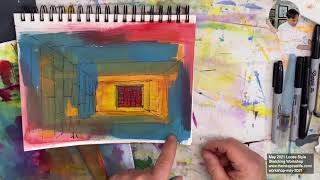
Jason Nicholas sketches live from New Jersey, pulling an old college journal and exploring thumbnail sketches, color mixing with copper and magenta pigments, and quick architectural drawings. He talks through how style evolves naturally rather than as a constraint, takes color suggestions from viewers, and encourages experimenting without overthinking.
Chapters
Hey there, guys! Happy Saturday! 7:45 PM here in New Jersey, the Garden State. And I love the spring because then I understand why New Jersey is the Garden State. Flowers are starting to come out. Um, yeah, nice cloudy day, but nice warm, like 66 today, 67. Awesome, awesome. Hope you guys are doing well tonight. So I just get my stuff here on my desk, and I wanted to grab one thing over here. So let me just grab this. I'm just gonna pick this one. So I always like to just grab a random sketchbook on Saturday nights. I like to grab a random sketchbook off the shelf and take a look through it and see what's in it. Hope you guys are doing well. Karen, good evening, and Becky and Chris, what is going on? Kim, good to see you. Hope you guys are having a great, great day. It is Saturday. So let's start off. So this is something I had been working on. I posted this, I think, today or yesterday. Sometimes it's all one big day. Does that happen to you guys? It kind of just blurs together, not in a bad way, it's just one long day. So this was a cool sketch and I wanted to talk about this and I wrote down this before we started. I don't usually have these planned out but today this was kind of on my mind. I've been hearing this word a lot in the groups and people creating and it's the word style. So I wanna talk about style for a little bit to get things going. So let me keep this out but let's take a look at the sketchbook and we'll go through here. So I like to pull random sketchbooks off my shelf. You can see this has dust on it here. I haven't picked this one up in a while. So I don't know what's in it but sometimes I like to just kinda go down memory lane, see what's in the sketchbooks. I might get some inspiration or some ideas of something I wanna do tonight or something to talk about or just some cool stuff to show you guys. So let's see what's in here. Well, actually, there might not be much in here. This is from Architecture 481 class. This is my landscape journal, Professor Lombard, back in the good old college days. I don't think I did many sketches, so we might have a lot of blank sheets in this one to work with. Let's check it out. Let me zoom in a little bit and I always appreciate you guys tuning in and checking things out. So apparently I took a lot of notes in this. This is from 1992. So I would take lecture notes in these, my sketchbooks, and then I would sketch some images maybe that were on the screen or slides. So, the teacher was talking about. So, cool, you love the ship, Becky. Yeah, awesome. We're gonna check out the ship. Shipshape, it's in shipshape. So in this landscape, these are my notes. Actually, I don't really have too many sketches. It looks like it stops here. Might explain the grade I got in class. I didn't fill my sketchbook up. No, no, I think I did well. I think I got a B. B in it. One of the cool things in this, and I'll bring it up closer, is in college I started doing these really, really small, small sketches. Part of my fingers, there might be a little bit of dirt on my fingernails. I was transplanting a shrub about 20 minutes ago. I did wash my hands. So anyway. Hey, you know what? It's not art unless you wear it. It's not landscaping unless you wear it, right? But anyway, I started doing these really, really small sketches as a quick way to capture ideas and notes during lectures. So this is not— let me hold the Sharpie up here. Gotta bring the Sharpie in. So here's a Sharpie. You can see the size of these drawings. And one of the things I like about doing small sketches is it takes away the overwhelm of having to add a lot of detail to something. Sometimes if we're creating large pieces of art, our brain clicks into a mindset where, hey, it's like, hey, we got a lot of space on this page, we need a lot of detail on it. So that's why I really liked doing small— I still love doing small sketches. It's is my go-to. But it's more about just capturing a moment or capturing the overall shape or form of something. So this is the Villa at Cheswick by Kent. I guess the architect, landscape architect was Kent, or maybe it's in Kent. Anybody here that lives in England? So you can see it's a little villa, right? Not a lot of detail. It's such a small little thumbnail sketch. Some garden gates here. And here, you know, this was an idea, I think— actually, what is this? "The Decameron, the third something, sketch of what I viewed while reading." Oh, teacher said great. I did good on this one. So this— when I was reading this passage, this is what I sketched. I guess we were studying landscape architecture. And here's a really small scene right up here. Of some trees, the sun, a little bird flying. So don't always feel like you have to draw, you know, start off big. You can start off small to get your main ideas out. And if I really love this building, maybe I take it up to the next scale and I would start focusing on the detail. So that's, that's a cool note to get from here. Looks like we're studying maybe some kind of hedge mazes or something. Here's another example. You know, just a facade, a piece of a temple, the front of a building. The Temple of Flora. So again, just a quick, quick thumbnail capturing of an idea or the overall shape of the building. This is the picture— the picturesque garden is a stage set in which scenes are set up for the viewer. So I think this was a concept maybe I had for a project we were doing. Or take away from the class. Again, a very small sketch. Am I making sense, guys? I know I keep repeating myself over and over, but I think it's important, you know, to not think we always have to do large art. Or if you're worried about always adding detail, start with something small. Get good at it, practice it, and then you could always go to the next level up. And I think that was it. What else? And this is my last— oh, this is actually sketches from where I used to live a long time ago, my parents' house. So we used to have a fish pond in the backyard, shed area, a deck. My dad was awesome doing landscaping, yard work, and very creative. We had this really cool koi pond, fish pond back here that the raccoons loved to eat out of. And then we had a Cool garden area with a wishing well that my father had built. And I remember this was an old wrought iron or cast iron bench. You know, it's not great, it's not beautiful, it's not realistic, but I can remember I'm looking at this and I'm remembering, you know, not the exact day, but I'm remembering sitting there sketching this, imagining being back in this location. And sketches do that for me. They trigger these memories of places I've been. And they don't have to be amazing drawings, right? So sometimes we get hung up on the details, the details. If this is cool, let me know. Give me a thumbs up. Hopefully I'm not boring you guys. I'm gonna check the comments there in a second. I hope you're finding this interesting. Again, I don't even know what's in here. This is tracing paper with So this looks like a garden design for something. Yeah, so actually this is a perspective view of a looking down an alley, an alley with trees. I think it's a laie. I think— how do you guys say that in French? Allez, allez. It's French with trees. And this was a some kind of steps coming up to maybe a fountain or pool area. Cool. So that's kind of our sketchbook memory takeaway for today. Hope you guys enjoyed that. Let's check in and see who's watching. You guys are having a great, great day. And we're gonna come back to this and talk about style. And then I'll start sketching something. I have a couple of bullet points in my head I just wanna get out first. Yeah, Chris, hope you're doing well. Anthony! Hey, Anthony, how you doing? Good to see you. Anthony's one of my awesome students. He's my tech guy. Anthony, good to see you on here. Hope you're having a great spring break. I will see you on Monday. Thanks for watching, Anthony. Thank you, Stephanie, I appreciate that. Hey, Julie, how are you? Good to see you. Chris, yeah, no, my dad, Good question. My dad was not an architect. My dad had done many things over the years. He had a carpentry business at one point in time. He was a maintenance mechanic for a major paper products company. So my dad was a very hands-on technical guy, very creative in the landscape and outside, very hands-on building. Fixing cars and machines. He has like all those skills that I don't have. I wish I did. I would love watching him tinker on cars. I remember— gosh, if you're watching, Dad, let me know. I don't think— maybe I was 5 or 6. I remember my dad, uh, I think he had built this hot rod. It was a bright yellow hot rod, really cool. But I remember having that car around the house. So, yeah, my dad was— his gifts and creativity were in different areas. Good question. Appreciate that. Anthony, am I ready for Monday? Anthony, no. I want another week of break. I am actually looking forward to seeing you guys and seeing everybody back in class Monday. So, I am excited to see you for sure. But, I could use another break. How about you? I'm sure you could too, right? So, we'll have a great day Monday. Monday we're going to have kind of a light, easy day and just kind of talk about spring break and some big ideas and inspirations maybe you guys have. Good question, Anthony. Patty, hey! Patty's listening in the car, yes! I'm so honored, that's so cool. Focus on driving, Patty. Focus on driving. We'll be here a while. That's awesome. Alright, you guys are so cool! What? Patty stopped to get ice cream? That's awesome! I forgot to bring my Ben Jerry's in here with me. Man, I'm jealous. I have apple juice. Not quite the same. It's also what kind of ice cream you're getting. Alright, so let's talk about style, then I'm going to do some sketching, guys. I'm sorry I haven't drawn anything yet, but, uh— So this word style has been popping up a lot lately. When you guys see the word style, what does this mean to you? Put it in the chat. What does style mean to you? Anthony, you probably feel like you're in school, right? If we were doing a Jamboard, I would say put it on Jamboard. What does style mean to you guys? I'm just curious. What words come to mind or phrases? We're gonna talk about this. While you're doing that, I know Becky is— Becky likes the tall ship here. Thank you, Becky. This was a fun, quick sketch I had done the other day. We're gonna do another sketch, quick sketch tonight, or 2, or 3, or 100. So you guys tell me what style means. I'm gonna get a drink here. Let you fill in the blanks. "What a great teacher to have students want to watch you even on break." Thank you, Stephanie. Yeah, you know, I don't consider myself a great teacher, but I appreciate that. I just do what I love doing. I just love doing it. I love teaching. And I love the kids. They're awesome. Chris, "make," manner, look, style. Yep, make. "Manner looks." I hear that. We have "make," "manner," and "looks." Karen agrees with Chris. Awesome. You guys are like, "I didn't tune in at 7:45 to listen to this guy ask us to write answers to questions. Why is he quizzing us?" I mean, I'm going I'm getting out of here. I hope you're not thinking that. There's a method to my creativeness. Julie, style, your own personal expression. Yeah, I love that. You guys have great responses. Make manner looks. Style, your own personal expression. I love all that. You're all right. Those are all correct. Style, you know. You know, let's go with your own personal expression when it comes to artwork. I think style is awesome to have, but I'm getting the sense that some people, some of us want to force style or we put a lot of importance on style. Do the quote thing. Where am I on camera? I got to move my thing over. I'm kind of standing all over the place. There we go. I think you guys can see me. Style is awesome and style is something that takes time to develop. But do you need to have a style to have fun creating, drawing or painting or whatever you're doing? Not at all. I feel like people are putting style before the act of creating or drawing or sketching or painting. Or whatever your creative thing is. It's like, how do I say it? I don't know how to, I'm trying to think of an analogy, I can't think of any, but don't let that word style freak you out. It'll happen, something will develop and it'll change over time. It's not gonna be the same. And I thought it would be really cool to flip through this and show you guys kind of what I'm talking about. So yeah, do we all wanna have our own unique voice? Of course, you know, we want our artwork to stand out from other people's, absolutely. And it does happen and it will happen. You have to be patient though. And don't let it stop you from creating. You have to start somewhere and practice. So this portfolio I have has a lot of different things in it and I just wanna show you that for me style There's a lot of different things. It's sketching. I have a certain way I like to sketch. It's a personal preference. It's my expression, right? It took me a long time to develop this. I did them quick on screen, but I've been sketching this way for, you know, 20-something years. But let's look at some other things just so you guys can see that I'm all over the place with style and I don't let it dictate what I do or wanna create. Create from here, my heart and my imagination. I just go for it. So if you see, and this isn't all great and some of it is horrible, but it's all different things I've done. You know, so this is a watercolor piece. Looks nothing like the sketch underneath, right? Two totally different things. You know, I did this. Is this a style of mine? Not really, it was just me playing around. Maybe it'll turn into something one day, I don't know, if I keep practicing and doing the same thing. Now here's another watercolor. And this piece, this is one of my— this is actually an acrylic or mixed media piece. These are all very different, right? I'll put these out at the same time. This is different than this. You know, this is totally different. This is actually Textured metallic acrylic on here. And I'm not showing this as a way of bragging or anything. It's just to show you guys that when I'm working or creating, I'm creating kind of from my imagination and from what I'm feeling in the moment. And I'm not forcing myself to do a specific looking type of end result. Am I making sense? Let me know. Give me a thumbs up. Give me a thumbs down. Thumbs down or sideways or just something. I wanna know if I'm rambling. Let me know if you guys want me to draw and stop talking about this kind of stuff. You know, other things, acrylic, mixed media. I don't know what this is. It's weird, but I was playing around. I was learning how to use materials. This is my favorite. I call this the blackness, the darkness. It's just a piece of construction paper. I mean, this is totally different as well. I mean, this This was actually a piece I created where I had an end result in mind. We had a friend whose son had, sadly, lost his life in the military, and I wanted to create some kind of memorial for our friend. So this was a piece that I had a specific end goal with. But it was my emotion I created this with. It doesn't, you know, it doesn't look like this. Right? Very different. Cool. I'm not gonna go through all these. There's lots of different things in here. But so nowadays, you know, I'm going more towards this kind of style. This is kind of what I'm creating. And it's turning out to be a style. I didn't intend it to be that way, these types of drawings. But the more you do things, sometimes the more your heart and mind will gravitate towards certain things. And that does become your style, okay? But I'm not saying— sitting here saying, "Okay, I need to create this. It has to look exactly like this. This is who I am." I kind of approach art a little bit differently. So I hope that was okay. I know I'm rambling, but I know— here's another great example. I love Hans Zimmer. Hans Zimmer is an amazing composer. You may know him. He's done I don't know how many, maybe hundreds of movie film scores. I got a thing in my email today from Spotify, recommended songs from your favorite artists, right? So I'm looking at the list and what pops up is the SpongeBob, the new SpongeBob movie. I'm like, what? Why are they showing me SpongeBob in my playlist? Turns out Hans Zimmer did the music for the SpongeBob movie. So even these amazing composers out there, you know, they may have a certain undertone that carries through in their different music, different pieces, but they're always changing things up a little bit. You know, the music in SpongeBob, I'm sure, is going to be very different than the movie music from the Batman films. I haven't listened to SpongeBob yet. But I mean, it translates everywhere. So don't get hung up on style. Just create, have fun. That's the point. Styles will happen and you'll have many different types of styles and they'll keep changing. Does that make sense, guys? Alright, let's draw. Sketch. Let's sketch. We'll talk about the difference between sketching and drawing too at some point. To me, it means something different. I don't wanna bore you with that. Alright, got my Sharpies. Let's look at some comments here. Yes, fire trucks. I did hear the fire trucks, Anthony. I know we've had some accidents around here. It stinks. Yeah, Becky, the cart before the horse. Thank you. I should have just said that like an hour ago. Yeah, that makes sense. I think style is just how you paint, how you enjoy painting. I think as you do what you like. Exactly, Patty, exactly. Hey, Linda, good to see you. What's up? "Ooh, I like the teal and pink." Oh, thank you. "But even the others showed your style." Really? That's interesting. That's interesting. I'll have to go back and take a look. "Like Picasso in his different periods." Exactly, Becky. Cool, you guys are awesome. Thank you for your comments and feedback. Let's do some sketching. Let me zoom in a little bit. All right, let's just do it. By the way, I was gonna do an Inky Inky Night sketch, but Michaels does not have them. I was looking for this example. Michaels does not have the markers I needed, so I had to order them. So hopefully I'll pick them up when I go get my second vaccination next week. I'll be right there, not getting it in Michaels. They don't do the vaccines there, but I'll be next door to it. Anyway, but I'll be able to get the markers and then next Saturday night when I have all the supplies, I'm gonna focus on doing the Inky Inky Night sketching, okay? I know a lot of people were interested in that. Just wanna make sure I have all the stuff here. That was a plug, example. Yeah, so here's what I'm talking about. Just in case you didn't know, this is the Inky Inky Night sketch. This is one of them. So we'll do this next week. The markers I like to use are Chartpak AD sketch markers. Honestly, they're the only ones I've really tried using this technique and they seem to work really well. So I like to stick with those. But, so I'll be focusing and we'll be doing this next Saturday night, okay? If you're interested, I could put a list out of the things I use for this, okay? If you guys want to try to play along with me. Alright! Sketch! So I'm breaking out the Sharpie here as always. Got a couple different ones. One seems to work better than the other. Let's see. Yeah, this one is better. They have two different Actually, they don't have different tips on them. One is extra fine point, and one is extra— they changed them, so whatever model, I think this is the newer model, seems to work a little bit better. Can you guys see that okay? So what's coming up on the next few Saturdays? We'll do Inky Inky Night. I would like to do an example of architectural, more technical drawings like we were talking about the other night. So maybe I'll do some examples of that. So Anthony, if you're watching, I'm going to show you how I used to draw architectural plans the old-fashioned way before I had a computer. And I'll be showing you guys in school as well. So I just have some line work going on here. I'm sketching maybe some kind of columns or something here. A couple of columns. Some people call them posts. So I was thinking back to that first sketchbook I showed you from college, and there was some temple sketches. So maybe this is some kind of a garden folly temple or something. Maybe some kind of a flag on it. You know, maybe there's some kind of a structure you would see out in the garden. Maybe there's— I always like to draw steps. I don't know why. Steps always seem to make it on my sketches. So maybe there's some steps going up into it. I like the idea of architecture being— I like the idea of architecture buildings having steps or something to get up into them as a form of like entry. It just helps to define or change your experience of how you enter a building. Sometimes more formal buildings will have all these staircases in front of them, like the Capitol Building. I have a model up here, which I'll grab it. Pardon me, guys. Architecture. That's cool. So I have a Lego model of the Capitol Building. But if— just to show you what I'm talking about, do it this way, right? So, you know, formal buildings would tend to have these grandiose staircases that go up into them, and it just helps to define a building. It gives it some more significance or importance. So I do like to sometimes sketch steps to show entry into some buildings. So maybe this is a little temple building that's in a garden or part of a landscape. And then maybe there's some kind of water or something, maybe a some kind of winding waterway or something that kind of comes in front of it. So this is our new body of water, kind of does something like this. And then in the background, I don't know, these could be either some kind of buildings way in the background Maybe it's this— maybe this is a garden in a city somewhere, and we're just focusing on this one little feature in the garden, in the park. So if these buildings are in the background, I'm going to keep them very, very loosey-goosey, not a lot of detail, because the main focal point is this garden feature. You know, maybe there's some kind of a hedgerow or something down in this area. So I'm just doing some kind of jiggity-jaggity lines here just to indicate some kind of hedge. We'll throw some color on this, I think. We might do some wonky, fun colors there. So maybe there's like a hedgerow that goes across here. You know, maybe the hedgerow continues in the background across this way. I'll go back and my brain just wants to come over here and do a little more of the background. So lots of times I'll work, I'll just be all over the place on the paper. You know, I'll work on this for a bit and my brain will say, okay, let's go over here and do some of this. And maybe like, alright, let's add some more stuff. Maybe there's some growies or something down in front of this, uh, brook. So just show some windows for having maybe a building back, the buildings back here. Just want to define them a little bit more so you can tell that they're or high— there are high-rises, skyscrapers. I love the idea of cities having these amazing pockets of greenery, these gardens, these escapes. You know, Central Park is huge, but which is beautiful, such an incredible oasis in the heart of the city. But I love these little places you discover, these little pockets of greenery. One of my favorite parks in New York City is Bryant Park. I love— I just love Bryant Park, surrounded— the library's there, these incredible skyscrapers all around, and you're just in this green space. And in the winter, it's transformed into— there's different pavilions and shops there. There's ice skating area. It's such a magical place in the winter. So, and I'll just continue kind of the buildings back in here. Again, these are very kind of loosey-goosey. Because I want, I just want this kind of be the star of the show, this piece in front. And this is pretty simple, right? There's not a lot of different When I say simple, I mean like the forms of it, the shapes. There's not a lot of different shapes happening with this pavilion. You know, I have some columns here. You know, if you look here, it's kind of an arc. And everything else is horizontal lines, some vertical lines here, and then I have a little triangle for the flag. So with just those simple shapes, you get the idea of what this is, right? Although I made the water a little too close to it. So, it's okay. It's okay, you walk off the steps and you can go into the stream here. Maybe it's just a regular walkway. Maybe it's not going to be a stream. So I'm adding just some darker lines just to Give the idea of maybe these columns are curved. You know, could I have added detail to those columns? Yeah, I could have done like something like this if I wanted. This is more technical. You know, I could have done that. I could have sketched the cap, the cap of the column. You know, I could have done something like this. Maybe even another layer comes up. That could have been the cap. Maybe there was some fluting on the column. Fluting are the vertical lines you see sometimes in columns. And then we could have had a, a base on here, a more formal type of base. So I could have taken a column like that And I could have added those details here. But it's so— we're going back to the idea of the small scale. This is such a small scale that I really, you know, I really don't feel the need to put all that detail on here. We can tell what I'm trying to draw without it. Hope you guys are having fun. Hope you guys are sketching along or doing something creative at home. Let me know what you're doing as you're watching. Are you eating Ben Jerry's? Are you playing with your cat? Are you hanging out with your kids? Are you cutting the grass? I don't know, that might be hard to do. We know Patty was driving before. Patty, hope you're home safe, or if you're driving, drive safely. Hopefully you're just chilling out. I feel like I'm doing a lot of talking tonight. I hope that's okay. I'm chaffing and chatty. I'm gonna let you guys help me finish this one out and maybe help me pick some colors. All right, so I think I have enough background on here. You guys want to help me pick out some colors on this? Give me some thumbs ups. Thumbs ups. Did I say that right? Did I get the plural right on that? Give me your thumbs up. Let me know. I will break out some colors and give you options. And I might go with them or not. We'll see. But let's see. Got this. We got this, got some watercolor markers we'll break out. I'm not gonna give you too many options. So I do have some watercolor markers maybe we'll play with tonight. I have green, sap green, I think, sap green, yellow, gamboge yellow, cerulean blue, sepia of course. Oh yeah, we also have our Chartreuse. And if we want to get super crazy, if you want to get super crazy, we have some Magenta and we have some Pyrrole Red. All right, I think we did too crazy. And you know what, what the heck, we'll break out some Copper. So I'm going to let you guys help me pick some colors. You can help me pick the colors, but I'm not going to tell you where I'm going to put them on the painting. I'll just put them in different places. So let me know, just put down what colors you think you might want to see, and I'll scan the comments. Hey, Dorothy, thank you. Happy Saturday. Blast from the past. Doric, Iona Corinthian, Don speaking columns. To me. Don, how do you know that? That's awesome. Yeah, we have our Doric columns, our Ionic, our Corinthian columns. We could add Tuscan columns to that. That's awesome. Beautiful buildings with many awkward entries. Becky Lindelof, that sounds really cool. Uh, hang out with my grand— grand eating popcorn and— popcorn and shakes, man, I wish I was there. That is like the ultimate combination. I'm just gonna sit here and just think about that for a minute. Oh man, popcorn and shakes. Hmm. Wow, that sounds awesome. Tee tee tee. Turquoise, Terry Tardy Turquoise. We could do— actually, I think I do have some turquoise in my watercolor palette. That's so funny. I love that you're watching with your grand. That's awesome. Laying on your couch with your dog sleeping across me. He snores. Aw, give your dog a nice pet for me. That's so awesome. I have met so many pets and ceiling fans during our virtual learning these days. I think I've met more ceiling fans than pets because kids like to have their cameras, at least their cameras are on, but I'm always looking at their ceilings. But so occasionally a dog or a cat will come on screen, I love that. Ooh, copper. Karen said, "Ooh, copper." All right, we're gonna break out some copper first. Just for you, Karen. I liked your ooh copper. Hey, Theresa, how are you? Ooh, copper. More copper. Copper on a dome. Heather K, what's up Heather K? Over there on YouTube, I love it. Copper, magenta, and turquoise. Copper, magenta, turquoise. Alright guys, let's do it. Let's break out some copper. Shaking it up. You gotta shake these inks up. Everything tends to settle on the bottom. Plus it's a good way to burn off some calories, so I'm just shaking it up a little bit. I'm gonna put some I have my little Pringles container, so let me put some ink in there. I don't think I have one just for copper, so we'll just— doesn't matter which one we use. Let's use this one. I gotta start eating more Pringles, guys. I need more containers. Pringles are very addicting. I— when I have, I can't eat just one. I gotta eat like the whole Can. So I should stay away from Pringles, especially since I have a follow-up with the cardiologist on Monday. We don't want to have too many salty things before then. Alright, so I got some coppery eyes. Use a water brush. Um, I'll use this one. Actually, I have my thicker ones. That's the fine point one. That is a fine— that is one fine point you have there. All right, what do we got? Here we go. Cool. I think these two are actually the same. All right guys, let's put some copper on. I saw someone say copper on the dome. Let's do it. Can you see that okay? I can't zoom in closer. So this copper actually is metallic. I'll get a close-up of it. I don't know if the metallic will show through on camera, but I'll try to show you. And I don't want to be really fussy with it. I'm going to be kind of loose. So just throwing some of that copper on. Paper towels are Oh, here they are. Paper towels, good to go. So I got some copper thrown on there. What else? Let's see, maybe we'll add some copper, maybe very lightly in the background, some of these building tops back in here. We'll just Dilute the water a little bit and just have some coppers going on in the background. Typically, like, if I have a color somewhere, I like to work it in on other places as well, not just have it in one location. I think it just helps to connect the image a little bit better. If I had the copper just here, you could do that, but your eye would always go here, which I guess in this case is fine, it's the focal point. I just like to mix the colors up. I'm being too careful with this, I want to be a little loose with it. Again, this is really lightly just being brushed on here. So you want to take a little bit of this off, I think, in here. Just gonna blot this out a little bit. There we go. There we go. So here's some copper. I don't know if you can see, it's a little metallic-y, kind of reflective. On there. Awesome. Ooh, almost dropped it. What was the next color I saw? Someone said magenta. Magenta. Let's do it. Making leftover ham and pineapple pizza. That sounds delicious, Melinda. Pineapple— are you making actually homemade pizza? I love that. I love making pizza. I usually make it at least once a week. I haven't made pineapple pizza, just plain pepperoni. Alright, I broke out the magenta, guys. Where am I going to put the magenta? I have no idea. I'm painting from here. Alright, it's saying just— you know where it's telling me to throw down some magenta? In the background. There you go. Alright, I'm gonna throw some down under here. Maybe this is the background, the sky is a magenta color. Right, there's nothing that says skies always have to be blue and grass always has to be green. This is our world we're creating. We can have whatever colors we want to do anywhere we want. Oh, there we go, like that. Yeah, I'm liking the vibrant. So I'm using a bigger brush because I didn't want to think about detail as I was painting, so the bigger brush helps me be looser. I'm just doing vertical strokes up on the paper. Trying to think what I want to do in here. Just going to do some sketching, I think. Where's my Sharpie? Where did I put it? Always have a backup Sharpie. Have one that works. Have a backup Sharpie that works. Do I pull this Sharpie out like every time I'm online? I think I do. I always pull it. I don't know why I haven't thrown it out. That's kind of wacky. So I want to indicate maybe the hedgerow continues back here, but I'm going to dot it in. I'm going to dot in some buildings in the background. There's something going on back here. I'm going to leave it very abstract. Here we go. The brush is splitting, has split ends on it. So I just wanted to bring some of that magenta, you know, back in here. Maybe the sky continues in the background a little bit. There we go. I'm not trying to stay in any lines. It's not like a coloring book where you want to stay in the lines. This is loose, just going with the flow. Alright, cool. I like the magenta. What do you guys think? Is it looking— the magenta is looking really cool with the copper. I love the contrast. So we got some magenta on there. What's next? I think someone had said the blue, right? I have two, I have this metallic watercolor blue I brought out yesterday. I have cerulean blue. I'm not sure which one to use. I'm thinking metallic. Let me grab a drink. Blue and magenta would make copper pop. Yeah, Becky, I agree with you. I totally agree with you. "I love golden yellow skies." Linda, golden yellow skies are beautiful. I agree with you. Hey Sue, good to see you in Australia. Good morning. It's Sunday there already? Oh, Siri just told me what time it was for some reason. She just let me know it's 8:31 PM. Thank you, Siri. Sue, that's great. Thank you for tuning in from Australia. That's incredible. Hope your Sunday morning is off to a great state— great state— great start. Saturday night here. It is Saturday in Pennsylvania and New Jersey. Cool, guys. All right, let's break out some of the blue. I'm gonna just play around with this little watercolor thing I found yesterday, this Hudson Bay Blue. We'll just paint some on. Where? I don't know. Where are we going to put it? So I'm just taking it right off this little pan. Loading up my brush. I don't know, do I want to do the temple? I think I want to do the flag to start with. So let's do the little flag area. Some kind of blue. I feel like I want some blue. Maybe we'll throw some blue down here. We'll pretend there's some kind of water or something going on. I wasn't sure if this is gonna be water or a walkway. We'll make it a water walkway. Here we go. Just want to take some of that blue out. Cool. So this blue has a nice metallic look to it when it dries. Awesome. So we got some of that blue on there. Got 3 colors: 1, 2, 3. I don't usually count the Sharpie as a color, the black. If I was to add one more color, I don't think this is gonna work. I'm thinking the green's not gonna go with this. Am I wrong? See, I feel like I'm getting too literal with like green grass, blue water. So I need to mix it up a little bit. Get playful. There we go. So yeah, I threw some magenta in here. You know, maybe, maybe the sky is reflecting a little bit in this. Who knows? So we got a little bit of magenta in there. Maybe the sky is reflecting. There's a hedgerow back there. Let's, let us try, let's try some of this sap green, and then maybe I'll throw another color in with it. I think it's gonna be too bright. Like me, sometimes people say I'm too bright. No, I'm kidding. I am— that was a joke. That was a joke. I'm gonna use my big brush for this. I like to use a big brush again, less— I'm not thinking about detail. If I go with the 3/4-inch brush, there's a little bit of graphite on there, so it's a little bit dirtied up, which is cool. And it's not showing that well. Here we go. Let's try it. Yeah, there we go. I like the green, sap green. It's a little dirtied up, so it's not so sappy. I felt like it was too bright green. This hedgerow here would kind of just boom, be like right in your face. And I want it to be more subtle, so that's why I have the watercolor brush green and I have a little bit of graphite that was on my board and it's mixing together. It's creating this kind of mucky look, but we can have some highlights of some green pop. Green pop, that sounds like a drink. Has anybody ever drank green pop? What do you call it where you live? Do you call it pop? Do you call it soda? Is there another word for it? So I'm just adding some touches of some green here and there rather than having a whole thing. Yeah, a green, solid green. I think that little pop is adding some interest to it. And I'm not going to add any other colors to this. I think there's more than enough happening. If I start adding other colors, for me it'll start looking too busy. So this is a watercolor brush, and I'm just dabbing it down on the wet areas, letting it bleed a little bit on its own. I think I need maybe— eh, let's do a little bit in the foreground. Just want to add a little in the foreground here just to set off that waterway a little bit. I think we need a little bit green just so it's reading. You guys don't usually see me doing like things so clean and this is, you know, literal, right? Very usually all over the place. This is a little more controlled, a controlled sketch tonight. I really wanted to pull out this temple and then this landscape in the front, this water. So we're talking about style, right? So, you know, combining a bunch of different things, styles I go with. The quick, loose, sketchy stuff in the background, a little bit more controlled with the temple, and then I have even some more— even more controlled, you know, color going on with the greenery for the landscape. So I don't think we all have just one style. I think we all have developed many styles as the more we do this stuff and the more we create. And they're always evolving and you might mix them together and wonderful things will happen. So don't let the word style control you or make you afraid to do any artwork. It'll happen. It just happens. I think someone said that putting the cart before the horse. I think that was Becky. I'm putting this on the wrong sides. There we go. Cool. I do want to add a little bit of I am cheating a little bit. I am adding a little graphite, but I'm not considering it another color. It's just adding a little bit of shadows. All right, let's put some on here. Let me guys know, I hope you're enjoying this one tonight. Hope you're having fun. I love being too chatty. Actually, I hope I am being chatty. I don't get to talk enough. Ha, I'm just kidding. Cool. Woo! So I'm just adding this graphite here and there just to darken some parts of this, just to indicate maybe some shadows. This isn't a study with light and shadow. It's not a study in architectural perfection. It's just trying to capture, trying to capture maybe a special moment in the city. It's a park in the city, a special place in the city. That's my theme for this one, and I'm sticking to it. I'm sticking with it. I'm just going to tone down these buildings in the back a little bit, just throw some graphite on it. I could have broken out the sepia, but I'm just gonna go with the graphite. Actually, it's looking really nice. The city is the backdrop to the park. It's like a stage set. You know, if you go to see a play, they have the stage sets, right? Stage sets support the actors. In this case, our actor is Sir Templeton here, and in the background is the city backdrop. Sir Templeton. All right, cool guys, bring it up a little bit closer. Is it done? I don't think it's done yet. I do want to add, I definitely want to add some more sketchy lines to it. But we're going to let it dry for a minute and check in with you guys. Got a thumbs up. Looks great. Thank you, Becky. Sue, pop or soda is called soft drink. Yeah, soft drink, Sue. How could I forget? We call them soft drink here as well. So cool. I'm learning, I'm learning Australian culture. This is awesome. Wow, these colors look great together. Thank you, Sue. Yeah, thank you guys for helping me come up with the color list. Appreciate that. Ooh, cool colors. Just got home and yes, safe. Yay, Patty's home safe. Awesome. I like the highlight on the columns. Here's the columns a little closer up. So adding that graphite, you can see where I added it, it just gives it a little depth. You know, is it a— are they perfect shadows? No. In my brain I was thinking, okay, maybe the sun is like— how can I do this so you can see it? It's coming like down this way. So I have the shadows kind of on this side. But it's not a study in light and shadow. And we can definitely do those and get into so much detail. Shaky foot down here. Let's see. When I was a kid in Wisconsin, it was always pop. Okay. As an adult, I call it soda. Still in Wisconsin, but we have gotten more cosmo— Yes, Linda, you are getting more cosmopolitan. There in Wisconsin, you have gone from pop to soda. Love it. I've always called it soda here in New Jersey. I grew up here, I'm still here. Soda in Vermont. Soda and grinders. Grinders. Grinders, is that a— what is that slang for? Sub sandwiches? Sub sandwiches or hoagies, I'm guessing. You guys are making me hungry. Flowers! Ooh, Julie! Julia, you know, flowers are a great idea on here. Um, what color would you guys suggest for flowers? I have two different colors in my brain based on this that I would put flowers in. I like that. Maybe we'll pop some flowers in here. I like that, Julie. "Toning down bills, keep focus on Sir Templeton." Alright, Becky, cool. "How do you make stairs?" How do I make stairs? I will show you how to make stairs. Do you mean like for real, like with carpentry? I can go grab my hammer and saw. I think I have some scrap wood. We can build some stairs if you want. Quickly, I can show you stairs, stairs, stairs. Let me get out my— let's bring out the bigger Sharpie. So stairs are pretty, pretty— not simple, what's the word? Well, I'll show you. Let's just say I have a house. Let's do our typical Everybody says house, you kind of think of the shape, right? So we got our typical house there. Now let's say we have a front door. Let's say we're going to have some stairs going up to the house. So I'm just going to draw some vertical lines. I'm exaggerating. This is going to be a lot of stairs to get up to this house. So if you live here, I'm sorry. Let's just say the ground is here. Dark line, that's where the ground is. Right, so stairs are almost, it's like a ladder kind of. In loose sketch form, it's really as simple as that. It basically looks like a ladder. If I wanted to get into detail, I gotta get a thinner pen. I could do this, and I could do a side view. I'll show you a side view as well. I mean, just draw bigger. Say the door is here. So these are our treads, the horizontal pieces that you step on. Called treads. I'm drawing a double line here, so this would indicate some kind of material. It could be wood, maybe some kind of a slate or stone. I'll bring it up closer so you guys can see it. So I have double lines here where the treads are. Oops, I'm drawing this in midair. And then if I wanted to get detailed, I would actually have the tread comes out, this comes down, steps out, down, that steps out. Maybe there's some kind of grass or something down there. Let's add another one here. I mean, that's a quick way to draw stairs. Of course, you could add railings if you want. This actually would be a really good demo to do when I do the architectural technical drawings. I can show you how to do technical stairs. There's a kind of railing in the foreground. If you want to do side view stairs, you can do side views as well. Good question. So, you know, a side view of stairs. The ground is here. This is the top stair. Now, if you want to do like a set of deck stairs, maybe there's a piece of wood called a stringer that comes up like that. That's your platform for your deck. Ground continues like that. Then you have those treads you walk on, would look like this. I'll hold this up closer. So this would be like a side view of stairs. So these are your treads. The vertical part is called a riser. These are risers. And this would be a stringer or a piece of wood if it's like a wood deck stair. That's a quick thing with stairs. I can definitely get into more detail. Um, on this building, its stairs are really simple. Quick sketchy stairs are this, just some horizontal lines. And then I'll typically add some vertical like this, just so it has the illusion that there's a vertical surface here and these are going up. So these would be the stairs on this, right? Again, these are quick, just vertical lines just to give you the idea. That this is rising. Hope that helps. Let me know if that helps. We have bubblas. Bubblas? I am lost on that. What is a bubbla? I think I'm in mid-conversation there somewhere. I love looking at these comments. Does anyone else think that the blue is boring? Can't reply to anyone. Can't scroll up. Can't give thumbs up or down. I know it's good to Oh, so this good comment about this chat bar, I can definitely take it off. Yeah, no worries, I appreciate the feedback. This is cool. Yeah, let me know about that box. You guys can give me yes or no. I didn't know you couldn't comment on it. Let me know if that box is annoying. I will definitely turn it off. I have no problem with that, or I'll put it off the side so just I can see it. You can do that too, actually. Let's see. I think I could put it off so I can see it. Yeah, let me know about the box, guys. I always appreciate your feedback. It's hard for me to know what's going on on your end of things. Feedback is always welcome. So let's put some flowers on. Let's see some magenta flowers, okay? Karen, you're welcome. Yeah, Patty, the vertical lines make the difference. Yes. Yes, let me know in the chat about that blue box, guys. I'm curious now. Now my brain's on the— now I'm thinking about like, when I see blue box, I think of mac and cheese. Um, yeah, I don't know if you— I didn't know you can give thumbs up. Can you guys— you guys can still give thumbs up and stuff in the YouTube chat? I mean, the Facebook chat, right? You can still do that. It's back. Oh, I thought I moved it. It came back on the screen. Let me see. Guys, I'm going to turn off the blue box. It should be gone now. Let me know if it's gone. I'm going to log into Facebook. Facebook here and YouTube for a sec. So I'm going to break out some magenta. Let's do magenta flowers, then I'll do the tech stuff. All right, let's— so I'm not going to get detailed flowers. I'm going to do some growies coming up on here, maybe some growies in the background, vertical lines basically. Maybe some— maybe it's a little overgrown. They haven't cut the grass here in a while. The budget's low in the city, they can't afford the landscapers to come out. They don't have the sheep running around eating the grass. That'd be so cool to see sheep like roaming in— what was I watching the other day? I was watching something and I forget where it is, but it's like a place and I think it's in England somewhere where the horses and the cows, they're just allowed to walk around. Oh yeah, it was the, not the Black Forest, something forest I think. I can't think of the name of the area. But it was so cool to see just like cows like walking in front of the coffee shop. Life doesn't get better than that. Unless you're eating ice cream and you see the cows crossing in front of the coffee shop. Coffee shop. Alright, so for flowers, I'm just gonna take my magenta, dip my brush in there, and I'm just gonna just put some dots down. Basically, I'm just kind of dabbing it down a little bit. Just to indicate that there's some flowers or something growing— going on here. So now that spring's here, I definitely have to get out and start practicing my florals and flowers and all that stuff. I do abstract flowers. I haven't tried to do— I should show you the one up there. I haven't done like very detailed flowers. Some of you guys are doing amazing flower sketches. And paintings are incredible to see. I think adding this magenta is helping to tie it into the background. It's adding some bright colors. It's turned out to be a cool little illustration. Man, I keep thinking of mac and cheese now, that whole blue box. It's so funny. There we go, right? I think it's looking better with just having some pops of color. Anyway, that's some sketchy lines. I think this will be done. I'll move on to something else. It's almost 9 o'clock. Time flies. So I've just grabbed my Pilot Precise Pen. It has a little more of a fine point than the Sharpie. Cool. I'm just making a background, just a little more sketch. Sketchier. Alright, I think that one's looking done. Awesome! You have a goat rental service used to remove invasive buckthorn. Who woulda thunk? That's awesome, a goat rental service. I— there is a business for everything. That is awesome. We gotta rent some goats for this place. That's so cool. Hey, Karen, have a great day. Take care. It's good seeing you. "The goat eats poison ivy in Christmas trees." Really? That's the, uh, poison ivy? Wow. I have never heard of that. "Love your art." Thank you. "Tiny details are pretty cool." Yeah, the details I think add just a little pop to it. Alright guys, so this one I think is good for now. Hope you enjoyed this little piece. Let me have another sheet of paper here. I did— I'm stocking up on my sketchbooks. I got a couple of those coming. Let's do a— I'm gonna break out— I'm gonna do like a color background and then we'll add some sketch on top of it. So let's break out some colors. Let me grab some water here. Would a few dots of copper on some of the flowers work? Hmm, Sue, let's try it. Let's give it a shot. That's a cool idea. So I'm trying to do it up close. Sorry if it's a little shaky, guys. What I like about this Su is that the copper is metallic. Do goats eat copper? They would enjoy these flowers if they do. Hopefully you guys can see me doing that. I'll move it up. There you go. I like that in the copper. Good idea. Cool, cool idea. You guys are awesome. Good, good stuff. "Su, your park and city piece is stunning." Oh, thank you, Su. "Wow, I love the copper flowers." Awesome, thank you, Su. So cool to hear that. "The flowers kind of look like people." That's interesting. Do they? Let's see. Hey, Theresa. That's so cool that you see that. I could actually see that. Very, very cool. I love your thinking. You guys are so visual and creative. I love it. Let me just pan around close up so you guys can see some more detail. There we go. Awesome! That was the, uh, courtesy of the hand cam right here. Whew! With the hand cam, I was kind of moving it like this. That's pretty fun. Yeah, it looks awesome, guys. Thank you for your suggestions, I love that. I think the copper made it pop. You guys are awesome, awesome, awesome, awesome, awesome, awesome. Marsha, Marsha, Marsha. Alright, let's break out the colors. Since we have some copper, let's do a little copper background on this. Hey, can you guys see this okay? It looks like it's off camera. Let me make it a little bit Let me zoom out a bit. There we go. I think you can see it now. All right, let's throw down copper. I think there's an album called Throwing Copper by— oh, whose album is that? Live. I think the band is Live. The album is called Throwing Copper. I think it is. Let's throw down some copper. So I still have some copper in here, I'm just going to brush it on. Change up the tunes a little bit. Uh, just on my computer here for a sec. Just trying to find some— oh, I can go here I think. Yeah, I think I can do it over here. You guys are doing well out there. I'm just on my PC. I'm trying to find a setting on here for that chat box thingy. Oh, I found it. I found what I was looking for. All right, cool. We're in business. I found what I was looking for. Awesome. It says, "Hooray." All right, cool, guys. Thank you, Julie. Take care. Have a great night. Thank you for watching. I appreciate it. Sue, take care. Have a great day. So this might end up being back to some grungy stuff. We'll see. Becky says, "I saw blue on there." Oh, it was Patty. What was the blue color in the water? Metallic paint. Oh, this is called Hudson Bay Blue. I don't know the brand. I just found the pan around here. I don't know who makes it. It's called Hudson Bay Blue. You can see it has a metallic look to it. I just got some pearlescent watercolors. I haven't tried them yet. Thought I'd try them on black watercolor paper. That sounds awesome. Yeah, yeah, yeah, I love that idea. I would love to try that. I don't have any black paper. I have to get some. I think that'd be fun to try. So we're going to play around with this, and I want to break out some cerulean blue with the copper. Two of my favorite color combos. And hopefully it'll dry quick and we'll do some sketching on it. There you go. Just want to put the copper a little richer on here. So I have my scrap piece of paper here with this lighthouse building. I just like to clean my brush off on it and play around with colors. Alright, let's break out some of the blue. It's 9:04, I'm gonna wrap up at 9:30, guys, 9:30. Let me know if you have any questions or comments, give me some thumbs up if you want me to keep going. I'm looking for my brush. I'm like, where is my brush? Where did it go? Here it is! It's in the water. I don't know why, but I love copper and— or sepia and cerulean blue together. So down here, I'm brushing very lightly on the bottom. 'Cause I want that copper to show through. As this copper is drying, it's becoming more metallic-y looking. Ooh, metallic-y. Should I listen to some Metallica while I'm painting? That would be cool. I listen to everything from Neil Diamond to Metallica to movie soundtracks to Classical. I'm liking the way this is blending together. It's getting a greenish patina, copper patina color, which is cool. I want some vibrant, some vibrant areas of blue to pop out, so I'm gonna put it on a little bit heavier in certain places. Places. So this is kind of an abstract color play and then after it dries I'll add some— go back with the Sharpie or my Pilot pen and just add some stuff to it, some sketches on top of it. So I'm just adding some of this blue thick here because I want it to pop a little bit in certain places. I like the way this is drying. It's looking fun. So I'm purposely just pulling some of this paint off on here. I feel like I just wanted to lighten it up in this area. Color play is about playing, right? And just seeing what happens, what doesn't happen. Contrast of colors. Here we go. Let's put the cap on this copper because I will knock it over. What do you guys think? Red? Yay or nay? I feel like throwing red on here. I don't know why. Becky says, "Already creating depth." Yeah, right? So adding colors and layers definitely helps create some depth to the piece. Right now it's very abstract, and that's cool. Alright, I'm breaking out the red, I think. Let's go for it. Going for it. Only live once. Gotta make this exciting for you guys somehow, right? So breaking out the red. Let's make it exciting. I got some dried paint in there. Let me just put that off. There we go. Breaking out the red. Living on the edge. Once, once every show, we have to live on the edge. Today we're doing it with the red paint. Just looking for a different brush. This one, kind of stiff, might have to put in some water. So I think I'm, I'm almost, I think I'm due to start using some new brushes. Some of these have had better days. All right, let's do it. Deep breath. Chris, maybe a pop of red. Yeah, let's start with the pop. I'm seeing a pop of red. I'll show you where I'm seeing pop of red. Not Papa Red like Papa Roni's, but Papa Red. Here we go. There's our Papa Red. Boom! It is there. It is not going anywhere now, unless I cover it up. I like it. So Frank Lloyd Wright, one of his signatures on his pieces was he had— his color was called Cherokee Red, and he always— not always, but he would tend to have these red squares on a lot of his projects. So this could be an homage to Mr. Frank Lloyd Wright. I know we have it there, but I think my brain's— my heart's telling me to add some more. All right, I'm doing it. I like the pop. I'm gonna cheat and put it outside the border first. Mm-hmm. I'm gonna do it. I'm putting some on, guys. Oh yeah, this brush has had it. Ooh, actually, I like the way the copper's showing through the red underneath. Looks kind of cool. Let me switch brushes. This one just keeps, uh, spreading apart. Here we go. I got this one here. This is a 3/4 inch. Ooh, I got the 1 inch. Broken it— broke out the 1 inch brush. I'm not gonna get too crazy with the red. I think I'm crazy enough already. Alright, this is a weird brush. I'm not really sure, I don't know if I like it. It's a little too soft for me. Um, I like the way the red is drying on the copper here. It's actually a pretty beautiful color that's happening in here. It's probably hard to pick up on camera. Looks really, really cool in person. Even this spot down here. Cool. So I'm going to let that dry and I'll put some Sharpie on top. It's Paul Klee-ish. Paul Klee-ish. I would have to Google some Paul Klee. I'll have to Google that one up. I can kind of picture Paul Klee's work. "What is the reddest red you can get? I have Cheap Joe's Red and not real thrilled with it." Good question. So I like Pyrrole Red. This is Pyrrole Red. I think you can get it watercolor as well. So I find it to be pretty intense. Sometimes it has an orange kind of hue to it. For example, this is Pyrrole Red as well, but it's a little more orangey. The Liquitex Ink Red I like a lot. This is Watercolor Ink Graphics. It's also Pyrrole Red, but the two, as you can see, they're two totally different reds. So I like this one, Chris. Watercolor, I don't know I'm sure Winsor Newton, you can see if they have a Pyrrole Red maybe, or maybe a Cardinal Red. Yeah, Patty, I could sell for $10,000, done. I should just sign it and call it a day. Oh, to live that dream. Could you imagine? If I could sell this for 10 grand, holy cow. Wow, red door down a long hallway. Becky, Becky, you're seeing some perspective, some— you are definitely seeing depth on this. I like that interpretation. Awesome. Let's see, I'm just waiting for it to dry a second and we'll Do I want to do— I'm asking myself a lot of questions. Usually I just go for it, right? Tonight I seem to be hesitating and asking myself permission. Do I want to do this? Should I do this? Sometimes it's good to double-check, but don't ask yourself so many questions and keep double-checking that it stops you. It becomes a block. I can see the rest of the night being like, "Should I? Should I use this or maybe this? I don't know. Maybe I'll use this brush or maybe I should use my bamboo brush. I don't know. But actually, maybe I'll just use Sharpie or maybe I'll just paint with the acrylic pan in my hand. I'm not sure." It's great to ask questions and think about your next steps. But don't let it prevent you from moving and taking action, right? That applies to more than just painting. Yeah, this red is— it's drying, it's drying. Well, while that's drying, let's do something else. Let's take a look at this scrap piece. I know Becky said she liked this lighthouse yesterday, so here it is. So this is my scrap paper. I can see I was adding some copper tonight and just brushing my brush off on it. Let's just mess around with this for a couple minutes while this is drying in here. Actually, let me play around with some of this metallic paint I have. This is actually drying pretty cool here. I think you can see the metallic, the shimmer on screen. I'll just do it slow. I love this color combination. Try it. I'll give this 1-inch brush a try again. So I'm adding some blue. Maybe the water's down here. We have a little peninsula coming down to the edge of the water. I want to brush some of that copper on there. I love that. That looks awesome. Where's my copper? Here it is. I think I still have some in here. So I'm just taking a brush, I'm dragging it down, and I actually want the bristles, the brush marks to show here, just to add some texture. Hope you can see that okay. See some of that Pyrrole Red, just a drop in here. I'm just kind of drawing with my brush here, sketching with it. Along the edge of the shoreline. I'll put some down here as well for the— this is intense color. Oh, I just dropped my, uh, sketchbook. I need to put an addition on my table. Does anybody know any good architects? I know a couple. I know one. I don't know if he's good though. Here we go. I've definitely got to put an addition on my table. Yeah, this is looking cool. What do you guys— you guys like this, this piece? The more I add to it, the more I think it's coming to life. I'm just softening the edge a little bit here. Cool. It's looking awesome. What's the red color? Paul Klee. I believe Daniel Smith has a Pyrrole Red. Thank you, Linda. Yeah, Chris, if you try the Pyrrole Red watercolor, let me know how you like it. Jason, are you overthinking? I don't know, Becky, I gotta think about that one. Am I overthinking? I don't know. I don't know, am I overthinking or not overthinking? I'm not sure. Maybe I— I think I am. I don't know. Yeah, definitely overthinking. Ooh, I have a Paul Klee link. I am gonna check out Castle and Sun. Overthinking, we all do that. Love the little lighthouse, yay, happy to see you again, awesome. Paul Simon has a song, "Maybe I Think Too Much." I always put it on when I am overthinking, which is often. I'll have to Google that song. Maybe it's on Spotify here. Cool, man, I'm glad you guys like this piece. Yeah, this is something I just been, honestly, was using as scrap paper. The more I'm adding to it, the more I'm liking it. And it has a really cool shimmery tone to it. Ooh, I think you can see it there. Do you guys see the reflection? Right there? Cool, Dawn, I'm glad you love the lighthouse. They say the left side controls the right, and they say the right has to work Work hard all night, maybe I think too much, no good. Some people say, other people say, no, no. Fact is you don't think as much as you could. Is that from the Paul Simon song? Yeah, this looks awesome, guys. This is really cool. Are you overthinking if you're overthinking? Hmm. Are you overthinking if you're overthinking? That is the perfect emoji, by the way. Love it. I have to think about that one. Yeah, the shimmer is cool with this piece. It has a very iridescent quality. Is that the right word? Iridescent quality to it. Okay, I'm going to hypnotize you guys. I'm hypnotizing you. Alright. Yeah, this is turning out to be a cool piece. I'm going to put it here. We're going to come back and wrap up with this one. I went— oh yes, we were talking about spelling and grammar yesterday. I went to the store. But we won't get into that today. Cool. All right guys, so this is drying up. I'm going to pull out a Sharpie. I might actually use the wider point Sharpie tonight. Let's just do our quick, free, loose style sketching. I'm gonna have music on and just go for it. I'm not gonna overthink. I think I'm not gonna overthink it. But let me think about it. This sounds like a Seinfeld episode. What happens if you're— am I overthinking if I'm not thinking? I don't do Seinfeld. I don't do a good Seinfeld impersonation. Am I thinking about if I'm overthinking? Yeah. Hey guys, that's what you get for the price of admission. You get really bad Seinfeld impersonations right here. Sorry about that. All right, Sharpie, just gonna— I'm clearing my desk. Why am I clearing my desk? Because I just wanna focus and have some Sharpies out to play with. I'm not gonna add any more color. Put these to the side so I'm not distracted. I just want to do some Sharpie sketch time. Put these up top. I have a whole container of Sharpies here. There you go. All right, a little rearranging. Do you guys rearrange your workstations? Perfect. Put the copper lid on. And we got our Sharpies out. Put some good music on here. White House and scene is pretty. Thank you, Dorothy. I just checked my paint box. I have a Pyrrole Red from Dan— oh, Linda, that's cool! Let us know how you like that red. Yes, from the Paul Simon song. All right, guys. Nirvana. Should I listen to Nirvana? Now I'm thinking about the music. Nirvana, Tom Petty. Just randomize it. Whatever comes up, comes up. I'm feeling peppy though. Peppy, peppy. All right, we'll keep this. Alright, guys see that okay? So Becky, I need to set a door in a hallway. I am thinking about this actually, before I sketch. I'm just seeing if how Could I convert this into some kind of a perspective? Actually, I think a perspective, um, we can do that. So, all right, maybe there's some steps here coming up to a doorway. Um, that's okay. All right, so maybe there's some kind of— oh, there's kind of steps coming up. I'm picturing this door actually kind of being the whole— this copper area. And then the red square is part of that door. Actually, maybe it's a, um— oh no, that looks like a prison door. Yeah, we don't want that. I want it to be I don't know, some kind of gated— not gated, uh, screened glass area. Picturing like a, uh, like a Mediterranean type of doorway. Has the ironwork on it, has sometimes those round finials or the details at the end of the ironwork, kind of extends past the window opening. So something like that. Just kind of stairs in the foreground, and then— what else do we have? What else would we have on this? I don't know, maybe some kind of a, uh, a window or something here. Maybe a window has similar character with like the ironwork on it, kind of like this. So maybe it looks something like this. Looks like a high security— yeah, it looks like— it does look like a high security passage. Interesting. Yeah, I was thinking that too when I started drawing the grilles on the window. Hey, oh, Glimmer Paint, I'll show you Glimmer Paint. So it's actually the metallic copper ink. If you look at this piece here, you can kind of see how it shimmers. So that's what we were talking about for this piece. Looks like the stairs to the dungeon. Yes, nice drawing. Thank you, Don. These are the dungeon stairs in some sort of castle somewhere with a dragon. So we went from that to this. It's amazing how things can transform, right, when you're playing around. I have to say, one of the things I like though, look at this area here. Look at it with— before I put the paper on. Now I'm going to put the trace paper on it. If you guys kind of see what I'm seeing— do you guys see what I'm seeing when I added the paper on top? Oh, the— Tamara's asking for the name of the— oh, sorry, Tamara. The name of the shimmery, the blue paint, is, uh, sorry, it's called Hudson Bay Blue, Hudson Bay Blue. I don't know the name of the manufacturer, unfortunately. I just have the pen, but that is the color name, Hudson Bay Blue. I hope that helps. Perfect for inside, whatever. Yeah, it is. It would go well in the castle. Cool, awesome. So what I'm noticing when I put the trace paper down, guys, Inklings out there, inklings everywhere. Look at the glow. I'm loving the color in here. It has an orangey, yellowy, goldish, coppery glow, and I think what's enhancing it is the color of the tracing paper is yellow. So when you put this on, it really pops. We just take a piece of paper and overlay it. So we're kind of just— we actually— I'm looking on camera, so that's before. On camera, it's popping much more on camera than in person, but it's really popping around here, which is really— it's interesting to me. So how could I create that effect without the paper. Like, should I? I'm gonna try. I know I said I wasn't gonna break out more color. I lied. I lied. You caught me. Haha. I said I was gonna focus on the Sharpies, right? It's creative brains. We're all over the place sometimes. You know, we wanna play around, experiment, have fun. So I'm wondering, I'm gonna try Ooh, wait, hold on a sec. Alright. I have— I'm getting old, I can't read this. I really can't read that. Gold something. I have some kind of gold color in here. I also have the yellow. I'm wondering if I add one of these to just this area, what's gonna happen. I wanna pop it a little bit. Let me see what this looks like. It looks weird. It's kind of funky looking in the jar. Let me see what it looks like on scrap paper. Hey, we've seen this one before. So let me just put this on scrap paper. I'm just curious. I haven't really used it, so— That's kind of interesting. So that's what it looks like. So I'm gonna play around with that. I'm gonna try adding some of this in this area and see what happens. Siri, I'm not talking to you. Siri thinks I'm talking to her. But thank you. Let's do it. Seems to be working, getting a kind of a glowy effect around here. It's kind of glowish, right? See how it looks on camera. Yeah, yeah, yeah, I think it is popping it. So we got a little bit of the glowish effect. Not quite the same as the tracing paper on top, but I think the idea is carrying through. There we go. So that was interesting. So this is a gold, I can't read it, it's quad something, it's really small. Quino, guys, I can't read that. Some kind of gold. Starts with a Q, Q-U something. But anyway, yeah, so that's the gold I put around there. I don't know if I want to— do I want to put Sharpie on this? I do, I do. I'm thinking. All right, cool. Is it glowing? Yeah, it looks like it's glowing. A watercolor wash, yeah. So we got that. Uh, Stone Ground Paint Company makes Hudson— thank you, Dawn. Stone Ground Paint Company makes that blue color. That is awesome to know. I'd like to maybe look at getting more of their paints. Yes, Linda, I think you got it. Quinacridone Gold. Sounds like a health food. Quinacridone Gold. Something nutritious. I wouldn't eat it though. I love that. All right, you guys are awesome. Oh, I said 9:30 I was gonna stop. I'm still going. You guys are awesome. I'm gonna take a picture of this before I, pen on it because I like the way it looks. I just want to kind of document it and I can't take a picture because I'm using my phone. Oh, I have my iPad. Let me take a picture of my iPad. Sometimes I like to take pictures of things in certain stages. Here we go. Right, sometimes it's good to document your work if you like the way it looks at a certain point before you go and change it. You might want to come back to an earlier version or at least a picture of an earlier version of it. I'm just putting some— alright. I just had another thought. I am thinking tonight a lot. It's weird. Does not sound organic. Yeah, I guess Ben Jerry's is as organic as I get. I gotta, uh, that's funny. The brown is gone and it does not glow. And it does glow. Oh, good. Yeah, thank you. I'm glad it's glowing. It does not sound very relevant. I need to stop watching people paint and go paint something myself, but this has been fun. Linda, thank you for tuning in. Yeah, paint something. Bring your paints next time, paint with us. Paint whatever you want. You don't have to copy what I'm doing. Paint whatever you want to paint and just hang out and paint with us. Yeah, go create. I'd love to see what you're creating. Always post your stuff. So guys, I am wrapping up in about 5 to 10 minutes, which usually means an hour. Still a little wet in the middle. I'm just looking at it from different angles. I guess we'll keep it this way. All right, we'll turn into some kind of perspective. Actually, you guys are going to see me do something I never— I rarely ever use, and that's a pencil. So I just have a pencil. I just want to do— put a couple light lines down on here. That's all. Just trying to picture her. My Sharpie doesn't work. Alright, this one's going in the garbage. It's official. 2 points! I made it in. 2 points! Yes! 2 points! Got it in the basket. So I'm not going to do stairs. Some kind of pattern, 4 or something. I'm just playing off where the colors are kind of changing, adding some vertical lines on here, letting that just dictate where these lines are going. Since they're already kind of in place, this will work with them. So just, um, going back to the whole depth perspective thing, kind of looking down hallway, a corridor, or something. I don't know, an alleyway maybe. What to do with this piece here. I didn't really like that gate, that thing I was doing before. What we're gonna do, we're just gonna Just gonna break it down to some rectangles and squares on here. Maybe there's some kind of mosaic, mosaic piece back on this wall. Maybe it's a niche with a mosaic artwork in it. All right, I want to— I do want to add some blue on here. I'm going to pop some blue on this I'm picturing some kind of a mosaic wall or tile or something happening in this kind of niche. Uh, where's my blue? Actually, I could just dip this in here. So this is just adding a little bit of detail in the background. I think it's just making it a little more visually interesting. I had the red square, which was cool. I felt like I wanted to break it down to some smaller type of pieces. Just so it helps with the scale, so it looks like this is kind of in the distance a little bit more. I'm not going to cover every square with blue, I just want to pop it in certain places. Just something like that. Ooh, King Tut's entrance. Tomb entrance. I like that, Dorothy. That sounds really cool. Yeah, that was kind of cool. Um, uh, there's plenty of paintings in Elaine's Cove on Cape Ann, Massachusetts. People were swimming. Nice, Patty! People are swimming, I love it. People getting outdoors, fresh air, beautiful weather. That's awesome. That's got to be cold, but at least 6 people. Polar bear. Any Polar Bear Club people out there? I don't know how polar bear people plummet into freezing waters. Pretty amazing. Yeah, post your painting later, definitely. I'd love to see that. Yeah, it's very cool. So I just wanted to pop some blue on there. This really is— piece is really about the color, different color play and color study on here. As it's drying, I'm liking it even more. You can see colors through colors, layers are showing through. It's pretty neat. I don't think I really want to add a lot to to the walls or anything. I kind of like that it's simple. Maybe overdone it with this window here, details on this, but that's okay. Ah, graphite. Let's throw some graphite, create a little more depth. Just cleaning off my brush. Okay, so I'm just adding some graphite on top of this, just just to make it have a little more depth to it. I'm not gonna get too, too nuts. And also it's going to make this gold area pop even a little bit more just by adding a little bit of dark, a little bit of shading around it. Alright, I think this one's done, guys. I'm going to leave it at this for now on here. Definitely, I don't want to overdo it. I think it's at a good point. I might always come back later and add something after it dries more. But I'm just liking where it's at. The colors are really— if anything about this is I love the colors. I'm loving this effect going on here. I actually love the contrast here. I'm liking the red and the gold overlapping here. And actually, I'm liking the way the brushstrokes and the colors are happening down in here. So this is really cool, playing just colors, messing around, right? Awesome. Cool. All right, so we're going to wrap up, guys. I see— have a good night, Chris. Good night. Thanks for watching. Appreciate it. Take care. Have an awesome, awesome day. Have a great Sunday. I appreciate you watching. Becky did a penguin plunge. Oh, wow. Whoa, Lance Champlain in February. I can't even imagine. That must have been— wow, that's incredible, Becky. I'm surprised it wasn't like icy, like ice. Probably came out like an ice cube though. That's awesome. So cool. I give you a lot of credit. I could never do that. Thanks, have a good night, Dre. You're awesome, I appreciate you guys watching. So let's do our wrap-up. This piece came out kind of cool, right? It's different for sure. So we'll do a quick wrap-up here. We'll kind of work backwards. Yeah, so this was really just playing colors and messing around and very abstract, loose. Added some ink. I think it would have been beautiful even without adding the ink on it, but I really like the way it came out. It's kind of a fun piece. Hey, Dorothy, you're welcome. Have a great night. So that was— this is probably an exercise in color and playing. That's my takeaway from that. Always write down your takeaways, guys. What did you get out of tonight? What did you get out and learn from each other? So we did that piece. What else do we do? Oh, we did this one. I mean, look at the difference between this and the one we just did, right? We were all over the place tonight, which is kind of fun. So we went from there to there. This actually looks cool horizontal. Maybe this is like looking down. Maybe— actually, when I'm looking at this, maybe you're looking down. To a grate, like a sewer grate or something in the floor or some kind of tile pattern. So you're looking down a chamber to a floor area. It's kind of cool. So we did that. This was a fun piece. We carried our copper color through, and then this was actually— ended up probably being maybe the coolest thing tonight. I really like the way this is turning out with the shimmery paints on it. Just messing around. So you never know, right? You never know what you're gonna get from just messing around with scrap paper. Pretty cool. Awesome. Hey, you guys are incredible. Thank you for watching. It's 9:57. Holy cow. Yeah, looking— you like the looking down thing? I guess you could see this way looking down too. Right? But for some reason, when I turned it this way, it looked more compressed, like you're looking down, which is— that's one of the cool things about these perspective drawings. You could see them in different ways. If you flip it, I'm not really looking at it that way. This is looking down also, but my brain's telling me to go this way. Yeah, don't be afraid to color, that's your takeaway. Awesome, yeah, looking down. Hey, you guys are amazing, thank you for watching, I appreciate your time. I know I went way, way over, so thanks for sticking around. It really means so much to me and my Sharpies. My Sharpies. Yeah, look, looking down a mineshaft. Yeah, mineshaft, or we can go back to the King Tut tomb idea that, um, Dorothy has said, right? You were looking down something of a shaft that's in a tomb somewhere. Yeah, or, you know, or an old mineshaft, something from an Indiana Jones type of movie, right? I love how you guys think. It's awesome. Good, good stuff. So guys, thank you for your time today. I appreciate it. Hope you had fun. Let me know your takeaways. Becky, is your takeaway— I'm glad you, you Yes, don't be afraid of color, that's huge. And styles, don't let styles stop you. Styles will happen, will develop, it'll come out. Just have fun, that's what it's about, right? Thanks guys, enjoy your Sunday. I don't think I'll be on tomorrow night. Make test drawings with tracing paper. Yeah, Patty. Test tracing paper is a good tool. You can get it in white, cream colors, this happens to be yellow. Excellent point. Good takeaways, guys. I'll see you— today's Saturday. Tomorrow, I don't think I'll be on tomorrow. I got to prep for school. We're back in school Monday. But I will see you probably Wednesday. I'm going to start trying to do Wednesdays as regular times and Saturdays. 7:45 seems to work out pretty well. Thank you guys so much. I appreciate you all. Post your pictures. Let us see what you're working on. Let's give each other feedback. Share this out. Let's keep spreading some positivity through creativity. You guys are amazing. Thank you so much. Peace. Live creatively. Have an awesome, awesome night and even awesomer— awesomer-ish Sunday. Awesomer-ish? Yeah, something like that. Have a great day, guys. We'll see you. Take care. Thanks.





