The Inkspired Life - Sketching & Painting : Inking Out Loud
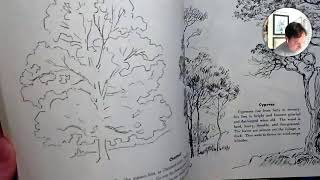
In this live‑stream, artist Jason Nicholas returns after a bout of bronchitis and engages with his online community while sketching maritime scenes, testing new Sharpie pens, and sharing his artistic process. He demonstrates on‑location sketching techniques—using people and door heights to gauge scale, balancing loose gestural work with detailed rendering, and employing color‑tying strategies such as turquoise and pink accents. Jason reviews the performance of Sharpie felt‑tip and roller pens through grid and bleed tests, discusses the feel of different inks, and notes preferences for weight and cross‑hatching. Throughout the session he answers viewer questions, shows travel‑journal versus finished sketches, proposes a future technical‑drawing workshop, mentions compiling a PDF of his favorite tools, and spotlights the 1959 book Drawing Trees by Victor Perard. The stream blends instructional content, community interaction, and personal anecdotes about health, spring break, and playful sketching experiments like “sandwich sketches.”
Chapters
Hey Jacqueline, hope you're having a great Easter. Happy Sunday. Uh, loving your seascapes. Oh, that's awesome. Thank you so much. I'm glad you're enjoying them. I'm loving painting them and sketching them. I have to say, it's been a great way to travel around using my pen and some watercolor. So yeah, so thank you for your feedback. I really appreciate it. I'm actually working on one here. I painted it today, sketched it the other day, and I'm just coming back and adding some ink details on it right now. And it's good to be back online. I haven't been on in a while. I've been sick, bronchitis and all that fun stuff, but I am, I am back.
It's fun to be back online.
So I'm actually using a Sharpie felt tip pen. It's the first time I'm using it. I saw them at Target the other day and I had to pick them up. Uh, and I'm liking it. I'm using it because I want a little thin point here, just to sketch some detail on this. It's working out pretty well. Hopefully I'm not talking too loud. I have the music on, so I might be talking loud. Hey, Deborah, good to see you. Teresa, good to see you as well. Hope you guys are doing awesome, and happy Easter. Happy Sunday. Sunday night sketch time. Yeah, I was saying before, it's just been a while since I've been on and I kind of missed it. Just didn't have the energy to come on. I've been sketching and stuff, but just not the energy to come online. And I didn't want to be coughing while I was trying to talk and all that. Anyway, I hope you guys are doing well. So, um, this is actually a fishing shack in Nova Scotia. Colors aren't realistic, obviously. I just— it's just my take on it. I just did the black and white sketch and wanted to add some color to it, and I worked on it this afternoon a little bit, and I wanted to pop on and just add some details with this Sharpie pen. This one might be almost done, though. I don't know how much more I want to really add to it. Hey, Deborah. Yeah, Deborah, I am definitely feeling better. Thank you. I am, I am back on track. I have to say, school wears me out. I get, I get run down teaching. I have to figure out how to solve that problem. Teaching takes so much out of me in a good way. It's because I put so much into it. And at least one thing leads to another, but I am back, so thank you for asking. And I see Patty's in the house. Good to see you, Patty. Thank you, fever is gone, now fatigue is setting in. Jacqueline, I'm glad you're feeling better. That's awesome. I'm glad you're feeling better. So glad the fever's gone, but yeah, your fatigue has set in. So I hope you can rest up, Jacqueline, and feel better. Patty's in the house, always good to see you join in, I appreciate that. So, um, this, I like the colors on it, it's a little different. So I basically used watercolors on this and some acrylic pink ink, you guys might know This is my favorite acrylic ink right here. This is my favorite color. Amsterdam Ink Reflex Rose. I love that name, Reflex Rose.
It's a beautiful color.
Yeah, I think this one's done. I don't know what else I want to add to it right now. Uh, actually I lied, I do want to add a little bit of shading. Add a little bit of shading and pull this post out a little bit more. Deborah says she is dog sitting this week. 4 dogs, holy cow, that's a lot of pups. I love dogs. I, uh, My goal is to eventually get a corgi one day. I love corgis. They're just so cute. We have a cat right now, and he's pretty awesome, but I have to admit, I'm more of a dog person. I don't really like cat hair that deep. So one day, one day, I'll have a pup by my side. Cool. I'll zoom in so you guys can see some of the details on this. And I have another, um, well, I'll show you in a second. It was actually a scrap piece of paper that I was messing around one day with it, and I worked on it a little bit today. I'll show you what I have going on. Pardon my cough. But they are my adult children's dogs. That's so awesome that you're taking care of them.
So cool.
So I kind of like the sky. It has some oranges, some pinks in it, some yellow. I love Lucy Goosey's sketch of the fishing shack, the posts, the kind of pier coming out here. There's a boat back in here. There's actually a landmass. I just left it white. I could, I could add some sap green or something, but I'm just gonna leave it white, I think, for now. Patty says, "I like your sky. Just got back from the beach and the sunset was the same color." Ooh, that's so cool, Patty. Awesome. I love to hear that. You know, sometimes I have to turn it at an angle. Sometimes the light washes it out. So if I tilt it down, you can see it a little bit better. Yeah, but this is cool. I really like this scene. So I'm going to switch gears and I'm going to show you something I was working on a little bit earlier. I think this one's going to be done. This is Canson 140-pound watercolor paper. It really buckles big time, but that's okay. That's what this paper does. And this is actually the same paper I've been doing my other nautical sketches, shack sketches.
In.
I'll give you— I'll do a little show and tell if you want to see them. Let's change the tunes here. Let's go to, uh, this playlist. Yeah, the turquoise door, I wanted to, um, pop color on here, so I put the turquoise on here. Even the little stovepipe is turquoise as well. And you'll notice what I like to do with colors is I'll try to tie them in across painting sometimes. So I have the turquoise, the turquoise, and it's also in the water as well. So kind of tying things together diagonally this way. Hey, you guys are awesome. Thank you for watching on Easter Sunday. I hope you had an awesome day. Yeah, I hope you were able to chill out, hang out with family, Do something you enjoy doing. Take a nap. Watch reruns of Bonanza. Whatever. Hope you had a great day. I really like this sketch here. I'm not sure what colors I'm gonna do to it yet. This might be one where I just do the background, leave the building black and white. These are all sketched with Sharpies. That was a fun one. Let's see what else we have. This one came out kind of cool too. Again, we have the— you can see I've been working with the same color palette for these skies. There's something about it I really like. I haven't perfected it. I don't know if I ever will, but I'm just experimenting and playing around with these colors. I really like what's happening down on here. Let me zoom in a little bit. I like what's happening here with these colors and the hard edge going on here and the kind of white area as well. That's pretty cool. And then this is an example of where the building is black and white and just the background's kind of painted in. Well, actually, I did kind of a water too. This is my attempt at some kind of bird. There you go. Deborah, I didn't get to take your inking classes. How do you find the top of your house measured in the center? How do you find the top of your house measured in the center? Uh, Deborah, I'm not sure what you're asking with that. How do I find the top of my house measure in the center? I'm not sure if you're talking about the peak here. So, you know, we have, this is a gable roof, comes up to the peak area. So you might be asking about how do I find this height. If so, let me know. "Love the turquoise door." Yeah! "Oh yes!" Jacqueline says, "Oh yes!" How fun! "Without making it too big." I'll do a sketch of a simple komishek and maybe we can talk about that. I think I showed you that one. Where was I? Oh yeah, so we have this one here. These are some— just some studies I did playing around with this building. I wanted to see— this is the Sharpie pen. I also got two new pens. I have a Sharpie felt tip pen, which is this one here. And then I also have a Sharpie roller pen with a really fine point on it. So I was messing around with these actually today just to see what I could do with them. So the roller pen you can get some bleeding with. The felt tip pen is very similar to the markers. It's more permanent. So it was just interesting. So I'm going to play around with these and sketch with these a little bit more. You guys know I love Sharpies. This is just kind of a study page. Deborah says yes. Oh, cool. All right. So we'll talk about the peak. A lot of it is just kind of eyeing things and Depends on the building. But we'll— I'll talk about it for sure. I love this sketch. It's quick, it's loose. I think I'm liking it black and white and nothing— my gut's not saying to add color to it yet. So I'm going to leave this one black and white for now. This was actually based on an on-location sketch I did, which I have in this book here. Just so you guys can see a little bit how I work sometimes. So here, this is— the original is in this sketchbook here. You guys have seen some of these before. Where's the sketch? So these are on-location sketches I've done. Very minimal line work, not a lot of detail. Um, but I actually love the way they look. I'm trying to find the one that this one's based off of here. I know it's in here somewhere. Ah, here it is. So this was the original on-location sketch. This is the one I kind of did after. So original's on top, this is the one I did after. I made some changes as I went ahead, but you can kind of see how they relate. I threw a little more detail into the bottom one, but I really like these kind of gestures. They're not— they're just kind of quick gestures with the pen. Uh, when I'm on location, you know, I'm holding a sketchbook in my hand, trying Right? One hand, I got my pen in the other hand, so I gotta sometimes be kind of quick with the gestures, otherwise my hand will get too tired. Sometimes there's a place I can set the sketchbook down. But yeah, you can see the quick gestures and suggestions, maybe is another word, suggestions of what's happening. I saw a comment, so when I start to draw sometimes around the paper, so here's a really great example, Deborah, of exactly that. This was another on-location sketch I was doing, and I totally didn't have enough room on the right-hand side to finish this kind of ramp area. I wanted to bring it out further. Sometimes it happens, you know. Scale is, um, I think scale is something that takes practice. When you're looking at an object or looking— we'll talk architecture— when I'm looking at a building, one of the things I've tried to do over the years is I'll look, I'll kind of look at the building in the distance, right? And I'll have my sketchbook here. And I'll look at the building. Pretend I'm looking at a building right now. And I really won't look down at my paper too much. I'll kind of look at the building. And I'll just kind of sketch. And this takes a lot of practice. I'll kind of sketch the building as I'm looking at it. And I'll glance at my paper. I have to. But I'm not sitting here focused on my paper looking at the detail. I'm just kind of looking at the building, sketching it to get an overall sense of the proportion or size of it. So that's one of the things that I, I do a lot when I'm sketching. And I don't know if it's like the 80/20 rule where you're looking at the subject 80% of the time, you look at the paper 20% of the time. So that's one of the ways I try to capture scale. Another way is I'll, you know, I'll put a person in. So maybe I'll sketch a person here. Zoom in, I'll show you guys down here. I'll sketch a person and I just assume my people are about 6 feet tall. I know that's not the average height of a person. I'll say this is like a 6-foot-tall person. So I know when I'm looking at a building, house, doors are usually 6 feet 8 inches tall, or we'll say 7 feet. So if this person's 6 feet, I know my door is going to be a little bit taller than them. So that gives me the scale of my door. Windows are usually— the height of windows are usually the same as the top of the door in a typical house. And I know if that's, say, 7 feet— ceilings in the houses are typically 8 feet, you know, I'm talking the standard basic house. So this person's 6 feet tall, if I double it, it's 12 feet, right? Go up again, you go 18 feet. So it gives you kind of a scale. So if this is a one-story house, let's see Let me say that the 8-foot mark would be here. That's the ceiling inside. Sometimes I'll say that's where the overhang of the roof is. And for the peak, you know, it depends. If you're trying to copy something or look at an existing building, you'll look at the angle and try to match it. In this case, I'm not looking at anything, just kind of guesstimating, you know, it's about 18 to 20 feet tall. And here's my 18-foot line right here. There's my person. So you can use people as references to help you get, you know, to get scale as well. If you take a photograph of a building, um, it's always nice, always good to have a person in there. Or if you don't have a person, look at the door, right? The door is usually— I'm rounding it to 7 feet, but Really, they're usually 6 feet 8 inches. So you can use that scale and you can measure it on your photograph. So that's one of the ways you can kind of calculate the height of a building without actually physically being out there with a tape measure and measuring it like, uh, you know, I would do in my architecture business. I would do that. I don't know why I'm seeing Little Red Schoolhouse here. Anyway, hopefully that's a good tip for kind of figuring out the height of a building. You know, use a person or maybe a door as a starting point for your height. This was actually a sketch I was going to work on tonight. This was an on-location sketch I wanted to redo. Cool. Uh, yes, forgot scale size. Thanks, Jason. I miss catch-up duels with you all in the morning since I'm quarantined. Jacqueline, have a good night. Take care. Feel better. Hang in there. You're welcome. Oh yeah, Roo's on. I have spring break. I could actually watch Roo. Oh, I have a— no, I can't. I have a doctor's— I have my annual exam tomorrow. Maybe I'll tune in for a few minutes. You are welcome, Deborah. Hopefully that those tips helped. Oh, there's another one. Uh, so I did one similar to this that actually painted the background of, and I redid another version of it. I have to paint it. So here's an example of one with people in it. So this is based on a photograph I had taken, and you can see the people here. So I have the people in there, and they were a good help. Again, this isn't exact, precise, it's loose, quick, but the people give just to give a sense of the scale of the building.
Alright, cool.
So we'll let this one go over here. And I want to do one other thing. Let's see, I want to break out— so this is what I was working on a little bit earlier today. Excuse me. This was a practice piece. It was a scrap paper practice piece, and then I pulled it out of my watercolor book today, and I was playing around with it. I thought it would be fun just to see what I could kind of create out of it or pull out of it. So I tried to turn it into kind of a scene with some sailboats. Maybe a house in the background. It's kind of loose and abstract, but I was just having fun kind of playing with hard edges here. You know, I was trying to practice. I had a hard— some hard edges going on there. Another one kind of across here as well. So it's always fun. Just keep your scrap paper and practice on it. You know, you never know what's going to happen. I guess they could turn out to be cool, cool paintings. I really actually kind of like what's happening. I want to pull out the masts here of the sailboats. So I'm going to break out the— let's try the Sharpie roller pen on this.
Play around with it.
So I've only used the roller pen once. Earlier today. It's my second time using it. Let me know if you have any questions or comments. I'm so glad you guys are seeing this. It's being broadcast live. That's awesome. I'm, uh, broadcasting to YouTube at the same time. Hopefully it's working on YouTube. I have no idea. If, if you guys can see me on YouTube, if you're out there, feel free to Put a comment and let me know. I have— I don't think— yeah, I have this other app open on my computer. I don't think it's, um, telling me who's on YouTube or not. That's all right, you guys are here and that's all that matters. All right, so let's just clear out this I'm talking a lot because I haven't been on in a while. You guys will notice I usually take the caps off of my pens when I'm sketching. I like to be able to rotate the pen in my hand. With the cap on, it kind of gets jammed when I'm trying to spin it in my hand. I'm not getting too literal. I just want to add some— pull out these lines a little bit. They got lost in the shuffle. The kind of edge of this book got a little lost. And I have this house up on the hill here. I really threw down the watercolor thick up here. I'm gonna leave it that way. I want it very abstract. I have my growies kind of going down here. I know Patty likes my word growies. It's just kind of things growing up here. Flowers, weeds, and we have some trees comin'— these are trees going on back in here. And I'm not— I don't want too much detail. I just want to keep it kind of loose and abstract. And I just want to play around with this roller pen, see how it works.
Cool.
Uh, Patty, you was just going to— excuse me, still have a little cough here. Allergies are kicking in now too. I was just to say your vacation sketches are quite different from your sketches like these. Do you intentionally sketch your travel journal sketches more precisely so you have a good memory, like if photograph, only better. Good question. Your vacation sketches are quite different.
Hmm.
Let's go back to that comparison. So here's Travel Sketch. Here's Travel Sketch. And where's Finished Sketch? That's a good question. Let's, uh, let me pull these out so we can talk about that. It's something I've never really thought about, but we'll see. Alright, so here we are. Let me put it this way so you can see it better. Alright, so top one is Travel Sketch, bottom one is Redo sketch. So Patty's saying, do you intentionally sketch your travel journal sketches more precisely so you have a good memory, like a photograph, only better? Ooh, good question. I don't know. I have to say, I think it depends on factors. So I don't intentionally If you look at these, I have to say I think my travel sketch is much more loose and abstract than the final one in this case. Right, if you look, travel sketch is pretty loose. And here's the final one which has a little more detail on it. So in this case, I don't intentionally sketch that way. I think it depends maybe on the time I have. Of where I'm sketching and what I'm sketching. If I'm very limited with time, it's going to be a very quick, loose, abstract sketch. If I'm sitting in front of a subject for an hour or so, I can really sketch with detail. So I don't intentionally sketch with more detail or less when I'm out in the field. It's a really good question. I take photographs in addition to sketching, so I always have the photo— photographs to go back to for the reference if I want to get detailed. So I don't really worry about on location getting into too much detail. No, it's about capturing the feeling of being here. And in this case, it was the overall shapes and locations of buildings. I honestly have never sketched boats. Before, maybe once or twice. So these boats aren't the best, but I just wanted to capture— I was looking at the shapes of them. So hopefully that helps. But photographs, I suggest always taking photographs while you're sketching, or before you sketch, or after, then you have photographs you can go back to. If you look at the other sketches in here, right, again, this one, This one's a little more detailed, so I probably had a little bit more time. This church, Our Lady Queen of Peace in Boothbay Harbor, very, very loose overall shapes of this building. You know, here's some— here's real quick, I added the color later. The color was not done on location, but the sketch was done on location. Here's another kind of loose sketch. Really good question. I don't know if my answer made any sense, but I don't think I typically sketch with a lot of detail. I think I'm very loose out in the field. Something to ponder though.
I love that question.
Cool. All right, so we have this, this. So I just want to show you guys kind of what I was working on. Just— this was just a fun piece today I did after I was working on this one. Wanted to mess around with this piece a little bit and practice with it. I like it. I was also playing with color on here. I just wanted to see what happened if I popped the pink and with the nice— with the yellow next to it. And I always like this pink with some aqua— not aqua, Some turquoise. Really good color combination. And let's see if it kind of pops some turquoise there as well. Those last few sketches are very detailed. Really? Wow. I guess when you're saying detail, I'm thinking something different. So when I hear the word detail, my architectural brain I was thinking, well, let's do a sketch here. I'm gonna use a scrap piece of paper. So when I hear detail, uh, from as an architect, this is kind of what I'm thinking. Let's look at maybe a window. So if I'm on site sketching a window of a building, you know, maybe I would sketch something like this. You know, and maybe it has shutters on it, I'm not sure. I'll just draw some shutters on it. And then I'll just kind of shade in, sometimes I like to shade in glass. On windows, not all the panes but some of them. Right, so I might sketch something like that. Quick on location. For me, a detailed window sketch would be something more like this. Again, it's probably just my architect brain kicking in. By the way, this is— this Sharpie roller pen is interesting. Very easy for me to create wavy lines with it, which I like the look. I don't know if it's the way the point is gliding on the paper, but when I hear detailed, I'm thinking more technical where the lines are going to be more clean, precise. You know, my grill patterns might be something like this. Right, and then I would probably sketch the trim around the window. Maybe the sill at the bottom of the window here. And then I bring the shutter across. We have to show the panel in the shutter. Horizontal pieces like that. So if I zoom out, so for me, this is, this is what I consider to be more detailed. And this to me is very loose. Ooh, I like the way this writes. I like this pen. Of course I spelled "loose" wrong. No, L-O-O-S-E. I spelled it right. Yes! 10 points for spelling. I can see where time could be a deciding factor. When I sketch on my lunch hour, it's always fast and loose because I like "Because I know I have to get back to the office." Yeah, time could definitely be a factor. That's a really great way. If you guys want to practice loose sketching, set a timer. Give yourself 3 minutes to do a sketch, 5 minutes. You know, maybe, you know, if I was gonna sketch this bottle here, right? I set the timer. Or sometimes I'll even— Excuse me. I'll even use a song as a time and say I have to finish a sketch before the song is done. It's a great way to practice being loose, right? So I have 24 seconds left. I don't know, let's just sketch this ball. Alright, so the song ran out, so, you know, I was quick and loose, was just sketching, giving myself enough time until the song ran out. If I gave myself an hour, I could sketch every little detail of this bottle, even catch the reflection on it. So yeah, that's a really great way to practice being loose. That's what I mean, detailed is more precise. Yeah. Yeah, so that's cool. So yeah, this is— these are kind of loose sketches here, right? Though we notice the window is very, very Loose. Yes, I agree with your definitions, Jason Nicholas Nicholas. Thank you, Patty. Patty agrees with me. That's because you're awesome. Even if you disagreed, you'd still be awesome. There's no right or wrong. It's all in how we think about things, how we approach things. I just have that architect brain. So, you know, either I'm very technical with what I'm drawing or loose, sometimes in the middle. So it's a really good question, actually. This summer I actually want to do a workshop on technical drawing. I have to cough, excuse me a second. So yeah, I'd like to do a workshop with technical drawing. Where we were going to use straight edges and rulers and triangles, tape our paper down to a board, and do some technical drawings. I think it might be interesting, a change of pace from freehand sketching. Try something technical. So if anybody would be interested, let me know in doing like a technical drawing workshop. We'll have some sketching in there as well. You know, maybe we'll sketch a house loose by hand, and then we'll kind of draw it with the technical tools. I think it'd be a lot of fun. Architectural drawings, technical drawings, could be really, really, really beautiful. Uh, they're artwork, guys. I, I feel like technical drawings that an architect produces, uh, they can be artwork. Even the computer ones, but more so the old school hand-drawn ones. Amazing stuff. And I'll show you guys some examples that I've done in the past. Not amazing, but they're pretty cool. The workshop I do is Slow River Sketchers are always timed, 5 minutes per photo. Ooh, do about a dozen in a session. It's a real challenge. Ooh, that sounds fun. I would love to try that. It sounds really, really cool. Patti says, "Yes, technical drawing. This sounds cool." So yeah, we probably would do it after school ends for me. So it would probably be a July workshop and maybe even go into August. So that would be really cool if we can get like at least 10 people to sign up for it and make that thing happen. I think it'd be cool. Hey, you guys are awesome. I'm gonna wrap up soon. I just popped on quickly here. Thank you for all your encouragement. I'm glad you guys are enjoying these fish shacks, lobster shacks, these maritime shacks. You can tell where my heart is architecturally and where my soul is, spirit is as well. I mean, these are the locations I personally love and would love to end up living in someday. So who knows, we'll see. But for now, I can always sketch them and bring them to me, you know, through my imagination and through my pen. Kind of just travel to wherever I want to. That is the power of— for me, the power of sketching is going anywhere you want in the world with a piece of paper and a pen. There you have it. So, uh, Sally Ann Smith said thank you. You're welcome, Sally Ann Smith. I didn't even know you were watching. Good to see you. We still have a few people watching. Hey, you guys are the best. I'm gonna do the whistling cowboy outro if you guys want to give me a number from 1 to 20. Let's do it. Um, I will be going live this week a few times since I have spring break. I do have school homework I have to do to do tomorrow and Tuesday. I'd like to get it all done tomorrow, but if not, I wanna wrap it up Tuesday. Here's the Whistling Cowboy sketchbook. Sally says 8. Is it Sally or Sally Ann? Let me know. Just Sally is okay. If not, Sally Ann it is. Oh, you're awesome. Thank you for putting number 8 down. I appreciate that. So let me go to my playlist here. It is fun being back on. I miss live streaming. Sometimes your body says, hey, I need a break, you got to rest up. Always listen to your health. Health comes first. Um, number 8. 1, 2, 3, 4, 5, 6, 7, 8. Just Sally. Oh right, hey Just Sally. Um, thank you Sally. Number 8 is It's called Where the Road— I have to expand my menu so I can read the whole title. It's called Where the Road Leads Us. Where the Road Leads Us. Alright, cool. Let's sketch using this Sharpie roller pen and our Sharpie felt tip pen. Let's play around with these. Today's the first day I'm using them, so, uh, See how— just mess around with them. You guys are awesome. Thank you for watching. Have an incredible rest of your Sunday. Enjoy your Monday. And I'm gonna try, I think maybe on Tuesday or Monday, I don't know, I might do like a sandwich and sketch session for like a half hour where I'm just eating lunch and I'm gonna come on and just do some sketching. So we'll see how that goes. We'll see if it happens. Here we go, song number 8, Where the Road Leads Us. Hey, thank you guys. Hey, Becky's in the house. Good to see you, Becky. Lunch and Learn with Jason. I like that. Lunch and Learn with Jason. I was thinking of sandwiches and sketches, but I like Lunch and Learn. That sounds fun. Hey, Becky, just in time for the Western Cowboy. Yes. So thank you guys for watching. I am— let me give you some feedback about these pens so far, if that's cool. We'll put some— we'll play some other cowboy music while I'm talking. I really like this song. All right. So if you notice, I was sketching with a Sharpie rollerball pen, and then this is the Sharpie felt tip. Um, so I like them both. I like— they actually— it's hard to tell the difference here which is which, right? They look the same, although the felt tip pen is a little bit lighter than the rollerball pen. It's a little more gray. The rollerball pen glides really nicely on the paper. There's a nice smooth action to it. This is, this is going to be a really great pen for cross-hatching, right? So talk about cross-hatching, right? Let me Let me, uh, just draw a box and let's just kind of give it some shadows. So this is gonna be a really cool pen for cross-hatching because I just love the way it glides. It's fast. I sketch fast a lot, so it keeps up with my hand. Not a lot of friction. It's really great at gliding. Let me try the same thing with— yeah, this definitely is lighter. It's not as dark. I like it though. I do like felt tip pens. I guess it's— I don't know if you call it a marker or a pen. It kind of gets caught up. The felt tip gets more caught up on the paper. It doesn't glide as smoothly. They're both very light pens. I kind of wish they had a little more weight to them, especially this, this one is much lighter. The felt tip pen is much lighter. It almost feels, it really almost feels like you're holding nothing. I like a little more weight to my pen. It anchors it down a little bit. So if I had to pick my favorite so far, it would be the rollerball pen. And the rollerball pen is, uh, you can't bleed the ink with it. So that's just my two cents on these two pens. Two cents on two pens. One of the cool One of the cool things I— let me show you guys another thing. If you're still watching, that's great. I guess you wonder, while we're talking about kind of pens, where's that piece of paper?
Where is my—
oh, here it is. So one of the cool things I do when I test my pens is, something I started doing, is I'll kind of make a grid. Actually, where's the one from today? Here's— this is when I was testing the pens today, the Sharpie roller and Sharpie felt tip. I'll make a grid or a box and I'll do different line types on it. And then I'll do like a bleeding test as well. So this is less than 5 seconds, at 10 seconds, and 1 minute. You can see how it bleeds. Then the same thing, you know, if you use— you can bleed the Sharpie pen under 5 seconds, you'll get some bleeding. 10, not so much. In a minute, just a little teeny bit. But I like to make these grids to see how the pen feels and works. And also I like to see whatever paper I'm using, see does it show through on the other side. And that's why you'll see I have some areas area is colored solid. If you look at these, this is a Pilot Precise test here. And here's, you can see here's a grid where I did line type hatching and shading on it. Sometimes I'll test the pens to see how they smear as well. Especially being left-handed, smearing can be a problem. So here you can see how that smeared. So that was my Pilot Precise Pen, and then I did the same thing with my Lamy here. So this is just a fun way just to test your pens. It's one of the ways I do it. I'm sure there are thousands of other ways that they can be tested as well, but I honestly, I've never really kept that track of that stuff before. I always kept it in my head, but now I'm getting a little bit older, a little more forgetful sometimes. I'm finding that I'm just starting to take a little— take more notes here and there. I have not started color swatching. I know some of you guys are awesome, create beautiful, beautiful color swatches. I'm so jealous of the swatching you guys do. I I guess I'm too lazy. I just, I don't swatch. I haven't, but maybe I will start to keep swatching, or at least swatches of my favorite colors. But that's maybe in the future, we'll see. Cool. All right guys, so we'll wrap up. So again, we worked on this. I should I showed you this kind of scrap piece, and I was just playing around with it. And then this is how this one ended up drying. I like— I do like this one, and you'll see these on Facebook. I'll take pictures and post them. Had to mute, had to cough. All right. Patty, great idea and good to have when we ask about various pens. It's a good reference document. Yeah. Yeah, so I need to put together a list, a PDF, or I want to put together a PDF of all of my favorite tools I use. Everything from pens to Inks. You guys know I like acrylic ink to watercolors as well and paper. So I'm hoping I'm going to be putting together a PDF. I don't know when, hopefully in the next month or so, and I'll make that available on my website for— you can just download it. It's just what I go to. And, you know, brushes as well, like my 3/4-inch flat brushes. And so, Patty, yeah, I think these kinds of charts I just showed you would be perfect, right? I mean, to include as well. So it's good to be organized. Becky says, "Beautiful sunset." Oh, thank you, Becky. I appreciate that. Yeah. Hey, Becky, while you're here, She's like, uh-oh, I got it. I want to show you. I posted this book the other day, but let me show you. I'd like to— let me show you this book while you're on here. I thought this was cool, and I thought of you because you are the tree guru. Um, my friend was cleaning up his parents' house, and his father was into art. He was an artist, and he had a lot of books, and my friend asked me if I'd like this book, and I said sure. So it's called Drawing Trees by Victor Perard. I don't even know when— when is this? This book is from 19— Wow, this is old. I didn't realize it. This is a— 1959 was the latest revision, so I guess this is from 1959. But I'll just show you some of the pages in it. Really cool. So there's a page on shading techniques. I'll zoom in. You know, there's a page on shading techniques. They talk about creating grids to enlarge, replicate scenes. There's a— how to create outlines of things. Some basic, you know, some examples here. So it's a really interesting book. Oh, look at this. Vermont sketches. So I haven't, I haven't, I've only skimmed here. I haven't read through the book. I haven't had it for too long. Maybe this guy is from Vermont. I have no idea. But this was cool. So Becky, this made me think of you and when you showed us, you know, how to draw trees. This I thought of— this reminded me of you and the basic shapes of trees. So it's a really good guide to start with. Again, I'll just flip through some pages here and you can see, you know, apple tree, peach tree, birch. These are my— probably my favorite trees are white birch trees. I love them. So it's a really interesting book. Even has— we end up with a beautiful weeping willow tree. So I don't know if this book is still available or not. Apparently there was a whole series of Pittman art books. How awesome is this? I'm just looking at titles. Drawing, here I could use some of these for animals because you know I do— I'm horrible at animals. Drawing cats, drawing dogs, birds. Really cool, just looking at different books in the series. Finger painting. I would love to do some finger painting. That's— gotta break out the finger painting one of these days. So interesting. Yeah, so it'd be cool to see if any of these are still available. So I just wanted to show you that, a little show and tell.
Cool.
Love the sassy apple tree. Sassy apple tree. Yes. Here it is. It does look sassy. Look at that. It's got some attitude going there. It's pretty funny, right? Trees are like people. No two trees are the same. They're all unique. They all have their own personalities. This one is sassy. I like that. Hey, you guys are awesome. Thank you for watching. I appreciate you all so much. Stay tuned during the week. Hopefully I'll do some sketching and sandwiches during my lunchtime since I'm on spring break. Probably, if I come on, it'll probably be around 1 o'clock or so. And I don't know how well I will sketch while I'm eating a sandwich, but hey, it's always worth a try. You guys are the best. I appreciate y'all. Thank you for the likes. Thank you for sharing this. People are really getting on board, and I have to say that I'm getting a lot more people response, which is thank you. Thanks to you guys and your support. Keep me going. Keep sharing your stuff. I love looking at your paintings and drawings, and you guys are off the charts. Off the charts. Just keep creating that amazing artwork. Guys, you are so inspiring. Have a great, great night. I'll see you soon. Peace and live creatively. Take care, guys. By the way, and I— yeah, my hair— I did not do my hair. Looks like I got some sun though. Um, that's what happens when you do yard work. Take care, guys. Well, not today, I guess yesterday, whenever it was nice out. I'm rambling, looking for the finish button. It is here. You guys are the best. Hang in there. Thank you so much.





