
10 Business Lessons From The Last 100 Podcast Episodes
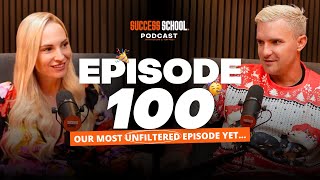
Tim Frey reflects on 100 podcast episodes, sharing 10 business lessons learned along the way. The conversation covers mindset work, growth strategies, and personal stories, including a funny clinic visit anecdote.
Chapters
Mindset work is a non negotiable. You aren't special. You don't have some special mind that doesn't have pre programmed beliefs or ways of thinking that are holding you back.
So what are some things they would be saying or objections they'll be having to know that they have mindset blocks.
You think sales are salesy, that marketing is scammy. Having lots of money makes you greedy. If you have a fear of increasing your prices.
If I tell you to call the leads and you're like, oh no, what are they going to think of me? How am I going to answer the phone? That's a mindset block. If we say run Facebook ads and you say, oh, I don't know how to run them, I'm bad on camera, I can't do it. That's a mindset block.
All of it are mindset blocks and they're all an indication that you need to go and speak to somebody.
Welcome to the Success School podcast. We're on episode 100. We made it. Did you think we were going to make it?
Anything we say we're going to do, we do. I didn't anticipate. I can't wait to hit a thousand.
Yeah, that's a lot. We're going to be like 90 by the time we hit it.
We're going to have to step up and start doing one a day just to get there in a reasonable time frame. No. I'm so palmed. It feels really exciting. I'm very proud of us.
Good.
Yeah.
You look beautiful and excited.
Thank you. I've worn my party outfit. Yeah, you've worn your party outfit?
Yeah. Our dogs Luna and Felix are with us today on my shirt in spirit. So if you guys are on YouTube or you're watching clips back, Love that. Today we're talking about 10 real business lessons from recording 100 episodes of this podcast. Some things we've talked about we want to recap on it, what's worked, what's flopped and what I wish I you sooner personal updates. I'll go first.
Okay, go.
So what was the comedian's name? The. The funny guy? Andrew Schultz. So we were watching Andrew Schultz comedy special, the new one, if you haven't seen it. Essentially he got his sperm tested. So it kind of inspired me to get my sperm tested. And if you're in for a graphic story, keep listening. If not, maybe skip ahead two minutes. I just want to give you guys today. Yeah, that's all it takes. That's all it took. So I went into the Clinic. And I was like, hey, I'm here. And the chick goes, Yep, 100 bucks. Zapped it on clinic. And then this woman come out in, like, full ppe, like, Covid spec ppe. She was like, head to toe mask. She had like a. What do you call, like a head thing on gloves. Like, the gloves were like the ones that they have with horses. They go from finger to, like, elbow. Then she was wearing plastic over her feet. And I was thinking, holy, I'm not going to get it on you, lady. Like, you're not going to be in the room, are you? So she takes me over to this room. She's not saying anything. She's got the most stern face ever. Like, and then she shows me to the closet, which was actually the room, which was. It was so small, it was like a toilet. So I look in the room. The chair is one of plastic chairs, but it's also covered in a layer of plastic on top of this. Okay. Then I look over to the wall, and then there is, like, a really small TV wall mounted with a sign that says, Insert DVDs here. And I was like, this is hilarious. It's like porn, basically.
Was there DVDs?
Stack of porn. Yeah.
No.
And I was like, this is fucking hilarious. So then she's like. She asks you the most intense questions. She's like, when was the last time you ejaculated? What was the volume of it? What time? And I'm like, I don't know. Like, didn't.
I'm not tracking this.
Yeah, I didn't basically go through a science experiment on the last time I had sex. So I fill in this form, get it done, and then once you're done, you got to, like, ring a bell. Then this lady comes back and she's like, holding her arm so far out of her body like it's like hazardous waste. Like it's nuclear material. So I, like, I give it to her. She basically takes it off me and then dismisses me and then walks off. She looked at me like I was disgusting. I was like, this is your job, lady. And anyway, the jury's out. We'll see if. Yeah, it looked like Grace sperm.
So it looks like Poke man's confident but had a really terrible experience. Tim had a really, really terrible experience. But. Holyro story.
Yeah.
And if you haven't watched Andrew Schultz's episode on this, like, his IVF journey, it's phenomenal and it's so worth a watch. It's a really good, funny laugh. My personal update seems really PG now.
Yeah. Okay.
I've been really deep in retreat planning. So we have our next successful ret coming up on in September, and it's on the Gold coast, and I'm super excited. And I've been starting to map out exactly what we're going to be doing over the four days. And on the fourth day, we always like to do. This is new, but we've recently started doing a adventure day or some sort of, like, activity day where we're not really learning, but we're just, like, hanging out and getting to know each other and, like, really building the community, which is just so fun. And it's been my favorite thing that we've added into our retreats. I can't tell anybody because it's a surprise and we don't tell our clients what's happening on retreats until they get to the retreat. So as a surprise. But I'm freaking excited. It's so cool. We say this every time, but it's going to be competitive.
Okay. Love it.
It's going to be fun. There's going to be really good prizes.
Okay, cool. Like, what do you mean, really good prizes?
No, no, I don't know yet. I actually haven't played on. I haven't actually.
I actually have no idea what the price is. This is all made up. It's a marketing bullshit.
No, no, no, no.
It's good.
And I'm really freaking excited. And if you haven't come to one of our retreats, you need to for our successful clients who are listening. And if you aren't in successful, you should join now or soon because our next treat is selling out really fast and I'm so freaking pumped. They're the best thing that we do. They're my favorite thing ever.
Pump for the retreat in September. If you guys aren't in successful, get in successful because you can come to our retreats for free. There's $197 admin fee. Don't blow us up on it. We've had people blow us up on that. We have to.
Yeah, we put on this, like, $60,000 event, but we charge you $197, so just don't problem. And it's a problem for a lot of people. It's a problem for a lot of people. But we would love to see you there. Please join us. It would be the best ever.
All right, guys, we're going to get into 10 business lessons from the hundred episodes. We have no plan for this. We'll just see how this goes. I'll kick off the first one. Never switch off your ads. That might seem very self explanatory, but marketing works with obviously consistency. But what happens with marketing is you create omnipresence and you never really know what thing or piece of content or idea or concept you're going to plant in someone's mind. That is like the moment where they say, all right, I'm going to work with them or I'm going to work with Seth or Tim. But if you turn your ads off, your likelihood of that happening basically goes to zero. Otherwise they're just seeing your email or organic, which, you know, the reach is probably not huge. But ads just kind of keeps you top of mind at all times. And I know a lot of people switch ads off because they think it's not working or they're not getting the results that they want or their lead cost is too expensive. But my argument for that is why not just reiterate what you are doing on your ads and make it better rather than switching them off. Every time you switch it off, you just go back to level zero and then no one sees your stuff and you never really grow your business. It's quite painful.
The two things are honest, right? Like, I am learning a lot about ads, a bit of a rapid upskilling in the last couple of years. But if you're turning them off because your ad cost is getting too high, there's a lot of things you can do before you turn your ads off. Like, please come and talk to us, especially if you're a client, because there's a lot of stuff that you can change before you turn your ads off. But turning your ads off is the no, no. Okay. Unless you have more ads running. So don't just turn them off. And the second one is the bit that you said which is like, they think that they're not working. So like, oh, no one's even signed up. It's like, yeah, but you have to be front of mind. So you might get the sign up on Instagra. That's because they've been seeing you for 32 million times on Facebook and they're like, oh, what's that chick's name again? And they happen to go to Instagram to search you. So it's super important that you never turn your ads off. For sure.
We've definitely had a correlation with our how much we're earning and how much we're spending on ads. Usually there's a multiple of it. So the more you spend on ads, good ads, it basically turns out to be the higher revenue you do earn. Because there is that effect. It's like the flywheel effect of like, you spend more, they see you more, there's more chance of then signing up. You know, the whole thing kind of grows from there.
Yeah. Yeah. Number two, I feel like you could have worn a hat for this. Number two is to track your KPIs religiously. I used to be the anti KPI. I used to be the kind of person who was like, I don't even need to track them. Like, I know what's going on with my business. You know, it's not even that important. Or I used to get overwhelmed with tracking because I didn't know what to track. I didn't know what it meant even if I could get the data. And there's a few really good things you can do to solve that problem. But for me, knowing KPIs now has been the most powerful investment of time, energy and resource that our team. It's actually a very easy investment of resource once you have it set up. But having it set up and having, having our team enter their data in every day has been so helpful for me, especially as sales manager, to be across where things are falling down in our pipeline. Look, a lot of people think that it's a marketing issue. They think they're not getting good quality leads when a lot of the time it's a sales issue. They're not nurturing their leads. They're not getting on enough sales calls, they're not making enough offers. Those are usually the number one problems. They're not actually offering the thing to someone at the end of the sales call. You won't know that unless you're tracking KPIs. You will have a gut feel. And most people's gut feel is wrong. It's. I think my messaging's off. I think my ideal client doesn't want to buy this.
I think I need a new website.
I think I need new offer. It must be my website conversions. And when you're guessing, that just means you're going to spending so much time and money solving problems that are not the real problem. And so KPIs are not here to overwhelm you or stress you out. They're literally here to support you into making, like, better decisions and do your fucking KPIs.
Guys, I've got a bit of a mic drop moment, so everyone prepare. We've got podcast team. Prepare. If you're listening to this right now, prepare.
He's putting a lot of pressure on it.
You cannot scale a business on vibes. Vibes are untrustworthy. Vibes change. Vibes aren't real. Vibes don't exist. No one can feel the vibes. Only you can. Yeah, we have this so often. People are like, hey, here's my problem. I'm like, sweet, send me your KPIs. And it's not the problem, okay? Because we can actually see the data. You can see the number every single day.
Every single day, without fail. So track your KPI's number.
3. Guys, call the fucking leads. Let me say it again. Call the fucking leads. And the call there. That could be changed for text. Email, reach out, dm, contact, contact, whatever.
Contact.
Contact your damn leads. So, guys, when you get a lead in your system, maybe you send them some emails and 30% of people open them. That means 70% of the people who opted in for your thing or whatever it is never actually heard from you. So you're missing out on 70% of the potential in your pipeline, but not contacting your leads in a different way. Okay, email is super easy, but some people don't even email their leads. They're not contacting their leads at all. Business is competitive. You're going to have to be first and front of mind with your leads. So I would suggest texting leads, I would suggest calling the leads, I would suggest emailing the leads. It's not that much. And if you're listening to this podcast, you're probably not at the stage where you're getting 100 leads a day. So me saying call the leads is probably like five to 10 a day. That's not a lot. That'll take you like 10 minutes. And I guess, like, we'll go through some of the objections. People will say to call the leads. They'll be like, what if they tell me to off? Yeah, and they probably will. Some people will. And that's okay. That just means it's a no. But there will be people that are like a yes. And we've had time and time again people in success school, they've called the leads and good things have happened. They've grown their business. They've got leads, they've got inquiries, they got sales. All they did was just call the leads and they just wanted to be of help and assistance to them.
We've had people I think we spoke about in a couple of episodes now, like, they've called the leads. People like, so lovely to hear from you. Oh my gosh, I can't believe I'm hearing from you. Like, it's magic.
It's.
It's actually being of service. And every now and then you're going to get someone who goes, who's this? What? I don't remember. And that's cool. That's totally okay. That's part of it. Like, guys, I just think we've become. I'm going to say it.
Yeah.
I think we've become weak.
Yeah.
I came out of school and I dropped out of university because I realized it was not my, my platform, not my place to be. And I went into retail and I, you know, whatever. Retail was pretty easy, pretty cushy kind of job. Work nine to five, you know, work some Thursday nights, whatever. And I knew I didn't want to work retail forever, so I knew I had to do something different. So I applied for recruitment agency jobs. I thought I could do sales because I've been selling for the last however many years in, in retail. I got into recruitment and I had to do 150 cold calls a day. Now this was before they had autodialers and all these amazing things that come in. I had to manually type people's phone numbers in with my little headset on. And I would get hung up on and sworn at most of the time because these are big companies, so they aren't warm leads. They're just cold people's phone numbers that we've got off the Internet, basically. And that was my job every day, seven days a week. Because that's what you do in recruitment for 30 grand a year. And that was the role. And anyone who's worked in recruitment, shout out because I know you, I see you. Anyone who's worked in solar, dude, you guys are going daughton adore Savage. Like savages. And you're not going to call people who know like and trust you. It blows my mind.
Yeah.
Like, you have to call the leads. You have to get comfortable with it. Sales is a skill that is worth investing in learning.
100%. We funny that. It's like a lot of people want this cranking business and they're just not willing to do the work.
Yeah.
If you want to crank in business, you have to call the leads. Okay. And that's. I don't know anyone that doesn't call the leads and has a cranking business.
And then you don't have to do it forever, guys, obviously. But once you get enough leads and you call them, you got a script and it's working. You know what works? And hire someone to call them for you. Simple. It's so simple. It actually blows my mind. Every single one of our clients, of course, leads gets clients, every single one.
And their competitors aren't mm, so good.
Number four is that the quality of your business is down to the quality of your team. This is a hard lesson and one that takes time. I don't know anybody, unless they have a background in recruitment or management that has just hired the right team straight off. I don't. And I mean, we certainly.
We've had some clangers.
We have had some clangers players and it takes time. We can sit here with our, you know, big lessons and we can say like, you know, it's down to the quality of your team, but it's damn, damn, damn the quality of things. Yeah, damn. It really is. I'm going to give you a perfect example. We had some people who were calling loads for us and they were all right. They were doing the job and had the sop, and we're doing the sop, but there was no additional initiative. And eventually we kind of realized it wasn't working out. We hired someone else. The other person had professional sales training, so they were appointment setters, but they had been through professional sales training processes. They were also passionate about sales, so they had been upskilling and they knew a lot. And so when they came to the company, they brought this wealth of knowledge to the company that no one in our team had. Because of that, we were able to streamline SOPs. We were able to change up the way we converse with people and ultimately get better results. And we wouldn't have been able to do that how we settled for that first person and made that standard okay, even though we all knew it wasn't the standard that was okay for the company. So it does take time. And you don't exactly know a lot of the time you're recruiting for roles that you don't necessarily know what great looks like. And it takes some time, but you've got to get the right people in place of be scared to fire fast.
All right, Number five is don't chase short term revenue for long term happiness. I'm going to speak to this one from a personal opinion. And Steph, you can chime in later. So we often get into moments where we're like, hey, we should launch this thing, judge this much and it's going to be epic and it's going to be some kind of like one on one offer or whatever. The problem with Steph and I with our one on one offers is we give fucking everything. So we give our soul. We Give our heart, we give maximal energy. And the problem with that is when you give your heart, soul and maximum energy, you have nothing left for your own business, which is an issue. So the grab was short term revenue. Yes, let's go. We're making money. And then the long term was we have no energy to actually grow our own business. So for us it's like, yeah, we can say this on our 10 lessons in our high horse and making all this money. But for us, sometimes it's like we need to sacrifice the short term gain of the finances to grow the long term thing. And I know, like, it's, it's really easy for us to say that, but like, I just want you guys to reflect on that. It's like, how are you sometimes saying yes to things that you know you shouldn't be to get the money when putting off the big thing on the back end?
For sure. But this happens way earlier than what we do. Like we, we're just like always looking for ways to grow.
Right.
But this happens when you are transitioning from one to one to one to many. So if you're a coach and you are currently coaching one to one and you're thinking about moving to a group or hybrid model, this will come up so much because as you go to move to your group model, all of a sudden everyone's going to want to do one to one with you. And at some point you have to draw a line in the sand. This happened to me. And if draw a line in this end, you have to go, no, because that's not what I'm building. And while yes, that money is great and right now, and I literally had this conversation with a client this morning, feels really hard to say no to $9,000 when you need money and when you love money. But if you know that you're now going to be caught up for the next six months coaching that client which is going to hold you back. They were the hours that you were dedicating to growing the big thing that was going to earn you $50,000. You have to say no to the short term in order to grow for the long term. And at some point you do have to draw a line in the sand where, you know, especially for growth, like, you will often have to take a steps back to go 10 steps forward. And that's just the way that it is.
Yeah. Number six, keep your emotions out of business. So I think 99% of the time, business should be pure logic and emotion. Emotion should come into it. Yes, you're Allowed to feel your feelings. Yes, you're allowed to have your emotions, but they shouldn't cloud your judgment and they shouldn't have your day to day. Example of this is you're frustrated at a team member for not doing the job. Should you show up to the next team meeting, be catty, be bitchy, be annoying, make them feel like shit? No, of course not. But people do. And that's where things get squirrely in businesses. They bring their emotions into it even though they're annoyed at people. The more emotional regulation you have, the better your business will be. The more emotional leaders that we know and we see, the worse their businesses are and the more fluctuations and inconsistencies they have in their business. So I think every decision you make in your business should be about logic and not your emotion. Emotional intelligence, emotional iq, emotional regulation are like so undervalued in business. And Steph, before you tell a story about me, I'm probably was the craziest fucking business owner in the world. Like super crazy.
When I first met him, he was running his gym basically off pure motion. I would say, yeah, he was really passionate, which is where I think it came from. And he had no emotional regulation. And I don't know if you've met my husband or if you listen to this episodes enough, but you will understand that Tim doesn't really give a fuck about what people think for the most part. And that's actually shifted a lot. Like this is Tim giving a fuck. So you should have met him in his early 20s because damn, shit was crazy back then. He would say whatever came to his mind. He didn't care if he offended people. If a client quit, he would just tell them what he. He would just tell them what he thought of them. He was like, you shouldn't be quitting. You're gonna go somewhere else. It's gonna be anyway, you may as well just stay. And he would just like burn his bridges all the time. All the time.
Staff members, clients, vendors burnt bridges.
Like every bridge was burnt. And because of that, eventually the growth of the gym became harder and harder because people come back. Guys like, if clients leave your programs, if clients leave your gyms, if clients leave your nutrition company, whatever the hell you run right now, website company, whatever. If clients leave, they will come back. If you le a good note, because they're going to go somewhere else, they're going to want to always come back to the person who knows them best. And so they're going to come back. We've had three people come back in the last couple of weeks to our program. They always going to come back. But Tim shut all of those doors because he was emotional. And that eventually slowed down the growth of the company, made it harder for us to grow, that we had to get a lot more warm leads. We couldn't do reactivation campaigns because there was no one to reactivate. And so there was a lot of lessons in that process. And one of the things you've had to learn and I've had to learn as well is to emotionally regulate, to not bring that initial kick, like knee jerk reaction to the business, business, to the team, to anybody, to actually self serve and take a moment and figure out what the fuck you're feeling and why it's happening and all those things and process it and then go and run the business.
And how I did that is like now it's water for ducks back. Like I literally don't care, like I don't give a fuck. Something will happen with the client. It's like cool, whatever, done, like I put it to bed immediately like I don't care and like I've done the work. And you know, everyone says they've done the work, but I'll explain to you what that is. It's not going and doing three sessions with the mindset coach, it's doing blocks of six sessions, 20 times with the mindset coach. So like lots of sessions, hundreds of sessions. Studying, reading books, doing journaling. I've done two NLP courses. I've literally when someone says done the work, I've done the work. I had to release my demons. I had to get through all my angry emotions. I had to go deep into it to become the business owner I am today. And without doing that stuff and without doing the work, I don't think we would have what we have today because I would have fucked it. Like I would have burnt it down, dude.
I almost burnt down our business 75 million times. And I've only think that I've really reached emotional regulation point in the last probably, probably, definitely the last 12 months. And it, it takes a lot. And I've done the work as well. I spent so much money and I do the work I do every single month. I go to hypno sessions every single month. I work with my life coach and I journal and I take note of the things that I'm feeling. And we have nights where we just talk about things on the couch and we get it all up our chest so it's not running through our body and causing havoc in our Day to day behavior. It leads me to point number seven, which is that mindset work is a non negotiable. It's a non negotiable. I'm going to say it again because I really need you to hear it. Mindset work is a non negotia. You aren't special. You don't have some special mind that doesn't have pre programmed beliefs or ways of thinking that are holding you back. Yours does. You may not be aware of them because your subconscious is completely running the show. But you know, I can't even tell you the amount of times that we've gone to clients. You need to do mindset work. You need to do mindset work, you need to do mindset work and then.
Eventually don't do it.
They don't do it. But eventually, sometimes they do. Like a lot of our clients have, which is a shout out to all the clients who do the work. Both work, you know, and one of our clients recently, we told her many times, she needs to do the work, she needs to go do some. We made a recommendation of mindset coach. There was a lot going on in her life. There's a lot going on in her business. She was freaking out a lot about things that was really big, the responsibility of her business. She's got a really good business. It's growing very quickly. And she messaged us after her third session and said, I feel so much lighter. I cannot believe how much my emotions were running the show. I feel completely transformed. Thank you so much for making that recommendation for me. It's like 900 for like three sessions. Like it's. We're talking about no amount of money, guys. Like it's like the smallest amount of money for the biggest amount of unlock. You cannot just do strategy because you will not do the strategy. If you have the mindset issues, you will not be able to implement it. You will not be able to do the work. So you have to do them side by side.
How does someone know? So what are some things they would be saying or objections? They'll be having to know that they have mindset blocks. I'll give a few. So if I tell you to call the leads and you're like, oh no, what are they going to say? What are they going to think of me? How am I going to answer the phone? That's a mindset block. If we say run Facebook ads and you say, oh, I don't know how to run them, I'm bad on camera, I can't do it, I won't do it. That's a mindset block. Just those two things that I said right there. They're going to be stopping you from growing your business. Okay? And they are mindset blocks from things that have happened to you in your life. And they're going to be programmed in your subconscious mind forever. So unless you move past them with action, which brute action in this situation is very hard to do, or you overcome them with mindset coaching, therapy, that kind of stuff, your business isn't going to be where it needs to be. Do you have any others to add?
Yeah. Like if you think sales are salesy, if you think that marketing is scammy, if you think that having lots of money makes you greedy, if you have a fear of increasing your prices. All of these are mindset blocks. And they're all an indication that you need to go and speak to somebody. And it's not about speaking to somebody. This isn't talk therapy, isn't how are you feeling today? It's real work. Like, go and get yourself someone who's trained in nlp. Go get someone who's trained in hypnotherapy, people who are genuinely trained in their thing and are passionate about it and know how to solve the specific problem that you are looking to solve. Go find that person, because that person will change your life.
Number eight, money is a lag indicator of success. So the money you're making right now in your business is a lag indicator of the work you've done previously. Okay, so money and results that people have in business isn't random. Nothing is random in business. It's a result of things you did eight weeks ago to 12 weeks ago, years ago. Everything compounds over time. And that's where it frustrates the shit out of us, especially me, when people give up because there could be three feet from gold. And that's from the book Napoleon Hill. It's like essentially these miners took over where other people gave up. And then three feet from that position where they gave up drilling and digging, they found gold. And it's the same thing in business. You never know tomorrow your dream client could drop in. But if you give up today, you're never going to realize that dream client tomorrow. And this happens, happens every single time in business. And it's like people only look for the wins that they are having right now and not into the future. And sometimes, maybe it's just a sign. The money you're earning right now, the lag indicator or the money you're at right now just means that you haven't done enough work previously.
Yeah, that's the thing is, like, if you aren't earning what you want to earn right now, you have to look back three, six months and go, what have I actually been doing? Because money is just the indicator of what we've done previously. So shout out to one of our clients, Blake.
Yep.
He messaged me a couple of weeks ago, actually literally eight days ago. And I put something up on my story saying, it's hard and if you're in it, I see you. And you know you got to keep pushing because you're probably just around the corner from your next big win. And he messaged me back and he was like on Insta, and he was like, steph, I really feel this right now. I've just been doing all the things and I feel like nothing's coming off. But I'm just going to keep showing up. I'm just going to keep pushing through. We literally sat down to record this episode today, and Tim turns his phone around to me and he shows me a message that he just got from Blake. And Blake just landed a $13,000 client, pay in full, after being called to sold. So came in from a Facebook ad a week ago and paid $13 today, which wouldn't have happened if he gave up last week when he was feeling that it was heavy, when he was feeling that it was hard, when he was feeling like, I don't even know if this is worth continuing on with. Right. So, guys, you are so close sometimes from the next big win that you've just got to keep pushing through number nine. Your networks, sets your standards. I have fallen prey to this a lot. I have to be honest. I guess I, I, I'm probably different to most of the girls that I know. And what that means is that I don't know too many females that want what I want in this lifetime. And, you know, we're talk company, lots of teams, growth branches everywhere, all the time, all the things. And a lot of women I know are really happy with or I don't know if they're really happy, but they choose to be happy with or they choose. They say they're happy, they say they're happy. Maybe they're happy, I don't know. But a lot of people are too scared to go for those things because they're scared of what it will cost or what it would sacrifice to get there. And one of the things that I found was that if I only hung out with people who were happy with what they had, that Made me feel like I needed to limit myself and myself success. And I had to find rooms and force myself to get into rooms of people who didn't want to put limits on their success, who found joy in the growth, who found joy in the grind like I do. And so one of the biggest catalysts for change in the past 12 months for us, we've almost doubled our business in 12 months. And one of the biggest catalysts for change has been the rooms that we've gotten into and the people that we're hanging out with. Because. Because I feel more normal in those groups. This is the kind of environment we try to create at our retreats is like, we want you to feel normal for wanting really big things. In society's world, 1% of people become millionaires. So for you to grow to that standard, you're going to be incredibly lonely. You're going to be not like most people. And it's tricky to find those rooms, but you've got to find them and you've got to be around those people.
Yeah. For me, I can also attest and agree to this. I've got the dark energy and I got the dog in me. And meeting people that are doing 10x what we were. I've got this really unhealthy thing inside of me that says I'm gonna beat them. And that's really healthy for me. And the other day, we won't name her name, but Steph said, offhand comments, yeah, we're talking about someone we know. And she said, yeah, she's just better than you.
It was so offhand.
And in my.
I also said she was more toxic than you.
And I was like, she's not better than me. Fuck that bitch. I'm gonna show you. And I've lifted. And we'll see.
You've lifted. You've absolutely stepped it since then. But, yeah, you will fall. Your goals, your. Your life, your happiness will fall to the level of your standards. And putting ourselves in rooms of people who have just far higher standards than us has been like, whoa, damn, dude, we need a step, right? And that has been one of the biggest catalysts. And it's exciting. It doesn't feel hard or heavy. It feels awesome. And then number 10 on 10 business lessons from recording 100 episodes is that you need to expand both your capacity for happiness and discomfort. I was at an event recently, and the guy on stage said that he's grown a. I don't know. How big is this business? Like 50 million maybe. I don't know, huge. Anyway, and he was on stage and he was saying that there was a period in his business for years where it just felt big and heavy, because as you scale past 10 million, I think it probably gets pretty crazy. I don't know. We haven't got there yet. But he said it was really dark and it was really heavy. And now he's on the other side of that, and it's the most beautiful thing he's ever built, and he's so glad that he stuck through it. And he made a recommendation in a book, and the book is called the Big Leap. And the Big Leap talks about the fact that you can only experience happiness for a period of time before your mind will sabotage it. And so if you. If you desire more happiness, more joy, more ease in your life, you have to expand your capacity to feel that while you're feeling it. So often happy moments are fleeting. And so when they're about to go away, it's about really holding on to that feeling and actively trying just to close your eyes and feel that feeling for 10 extra seconds and expand your capacity for feeling it before the dark thoughts come in about why you shouldn't be feeling that way and you should be feeling guilty and what about that person? And they don't have it as good as you or whatever. Right. And so I've been really working on that in terms of expanding my capacity for happiness. You can expand your capacity for receiving more money. There's a lot of things you can expand your capacity for. But the other thing that you have to expand your capacity for is experiencing discomfort, because business is uncomfortable and growth is incredibly uncomfortable. And you are not going to be good at everything. And there's going to be stuff that you suck at for a really long time until you figure it out. And you have to not just expand your capacity for happiness and receiving all good things, but you have to, if you really want to be successful in business. You have to expand your capacity for discomfort. Because when you're in a small business, discomfort may be for a day or two, but as your business gets bigger, discomfort can last for months. And I'm sure that as you get really big, discomfort can last for years. And so it's about creating space in your body and emotional results, resilience and tolerance to actually expand for discomfort.
All right, guys, as you probably know, this podcast, there's probably 100 episodes. As you guys are listening today, it's probably been hundreds of hours that have gone into this. Just from us, hundreds of hours from our podcast team. We'd like to thank Shout out. Shout out to the podcast team, TBSE Studios. I really appreciate that, Alicia and team. Thank you so much for putting up with us.
We change direction all the time.
Yeah. And just lastly, guys, if you got some value from this, send us a message. Actually, just send us a message. If you're listening to. To this, like, tell us what your favorite moment has been from the 100 episodes. Something that stands out to you. If we've changed your life from this podcast, like, let us know. Don't be that passive listener. I want to hear from you. Steph wants to hear from you. I want to, like, you know, in a couple of weeks, when you guys hear this, I want to go to Steph and be like, here's what this person said to us. Like, I appreciate it, guys. Like, I really want to hear from you. There are literally thousands of you out there right now. We want to hear from you.
We never sell. We never sell.
Yeah, we don't sell shit.
We're not, like, plugging this with ads. We do this because we just want to help you.
So this is, like, pure value.
If you have loved it, we would love. We would love to know. Because we do this, it. It cost us a shitload of money. Shout out to Pod Wave Studios as well for having us in here. But, like, we spend a lot of money.
Yeah. If you knew how much this costs every episode to bring you guys, like.
We work a lot. We work really hard to bring this to your ears. So if you have loved it, we'd love to hear from you. Thank you.
All right, guys, see you next week.










