
Broke to $6.4mil in 4 Years ...The Story Tim's never told
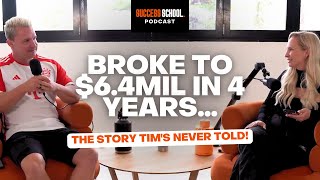
Tim Frey went from a struggling childhood to $6.4M in four years by starting a gym in his dad's pool, scaling aggressively with debt, then pivoting to business coaching. He invested $60,000 to learn in Arizona, filled his first gym by offering cheap memberships, and now emphasizes studying your weaknesses daily and helping people over chasing money.
Chapters
How the hell did we manage to grow six and seven figure companies and make over $6.4 million in just four years? Like, how the heck would we do that? Just figuring it out. Just hustle by hustle, one messy foot in front of the other.
If you want massive success, you need to study it all the time. Like, what is your weakness? Study it every single day. Like, that's my number one piece of advice. Fore. Welcome to the Success School podcast. We're on episode 73 today. Steph, how you feeling? What are we talking about?
How do we get here?
How do we get here? What does that even mean?
How did we get here? And by how did we get here, we mean how did two poor kids just growing up in the hood, broke, Broke poor kids in the hood?
We're in the Bronx or some.
I mean, basically you were and I certainly was. Yeah, yeah, yeah, yeah. But with no entrepreneurial backgrounds, how the hell did we manage to grow six, six, six and seven figure companies and make over $6.4 million in just four years? Like, how the heck do we do that? It's not too bad for a pair of. Of cave people on the. On the Internet. Hey, just figuring it out. Just hustle by hustle. One messy foot in front of the other. But today I'm gonna be quizzing Tim on how did he actually get here? Like, what actually was the pathway? I've asked these questions over the years many, many times. So I'm super excited for you guys to learn a little bit more about this today.
Are you okay for me to have the.
I am excited.
Oh, really? No, you're not. Internally, you're like, fuck this.
Alicia, zoom in on Tim's face the entire time because he is going to be in the spotlight today. But before we do personal updates, as always, let's dive in.
So we have hired a friend of ours, Bernard, to film branding content for us, videography stuff. He basically audited our socials and our marketing, and he said there's not much branding in terms of storytelling. Came to us with an offer, solution, pitch, the whole thing, and we agreed and we got at least six months with Bernard now creating content around our brand, which is going to be super interesting. I'm looking forward to it. We haven't done too much storytelling on our social media, so I'll let you guys know how the ROI is and how that works out for, like, a business point of view. It was cool. We had our first meeting yesterday and there were a lot of uncomfortable questions, I would say, about pulling out Our brand, what we stand for, values, mission, you know, all the normal shit that we talk about with branding. But it's going to be cool to see how he pulls it together in videos and how he tells the story.
He asked some really cool questions that were like. So he asked a question about, you know, like, let's say your startup story and kind of got here and then he would be like, have you ever told the story before? And we're like, no.
And we realized who even cares about it?
Yeah, it's hard when it's you. It's super hard when it's you. And my personal update was kind of was the same, actually. And it was, you know, really about this fact that, like, it is actually really hard when it's you. You don't think you're interesting. You don't think. But even when Tim was starting to kind of tell these stories to Bernie yesterday, I was like, we should do a podcast episode about this because this is super interesting. And even though I've heard bits and pieces of it before, hearing you say it again, like, every time something new lands. And I think the people of the podcast haven't heard your full startup story.
No, they haven't.
From, you know, a child all the way through to multi seven figure entrepreneur, marketing and ads wizard. And so I'm excited to take them through it today.
Yeah. How do we start this? Do I just riff and then you ask me questions?
I have questions prepared for you. I'm so prepared to guide you on this journey. But I want you to riff. I definitely want you to riff. I think everyone wants you to riff. So we're diving into our backgrounds, the untold stories, and kind of a breakdown of how we got here. So, Tim, how do you describe yourself now? Like, if you were to walk into a room and someone say, hey, Tim, Tim Ferray, what do you do? Because there's been an evolution of Tim Ferrari in the last 18 months.
Yeah. How would I describe myself now? I do introduce myself as a business coach, but there is like a little bit of a pause before I say it because it's still not, like, 100% congruent. Mainly because, like, call yourself a business coach for me sounds so wanky. And like, there's just so much bad shit about our industry that, like, sometimes I don't like labeling myself that. But that's what other people call me. I don't know if they actually call me that. Maybe it is like he's the ads guy or he's like the systems guy or Something like that. But that's kind of what people would call me now. Or he's like the gym guy or the strong guy or the. Whatever, the Jack guy, or, like, the really intense guy. I kind of don't know. Like, what are the. What do they introduce me as?
Yeah, well, I mean, I don't know either. Like, I guess I introduce you as Tim, and you're my husband most of the time. In terms of, like, that's just how I hear you getting introduced. If someone's introducing us both. But, like, outside of that. Guys, if you're listening, tell us. And what would you. What would you describe Tim as, but Steph's bitch? Before we. No, before we dive in today, let's go all the way back. Did you always know that you were going to be an entrepreneur?
I didn't really. And we did speak about the dark arts, and I'm not trying to trigger you here, but I'll give you guys the backstory. I. I grew up in a German family, and I couldn't speak English until I was six or any remnants of English. So that's spelling, reading, writing, grammar, anything. So it's funny now. People troll me on the Internet, and they're like, your grammar is so bad for a business coach. And I'm like, this isn't my first language, dude. Like, calm down. Like, I'm doing pretty good considering I went to school, did the whole soccer thing. I thought I was going to be better than Beckham. That's what I said in year seven. I said, when I grow up, I want to be better than David Beckham. And he was not that good of a player anyway, so. But, like, if I got to that level, that would have been epic. Um, and then tore my hamstring off the bone. Went to uni, did sports science, did an exercise science degree. But, like, going through that whole period, teachers always said to me, they said, you're really bad at school, You're a really bad learner, and you're going to be nothing more than a dumb tradie. And I mean that with no disrespect to tradies. That's just what they said to me. And that was kind of like the first, like, dark thing that someone said. And I was like, I'm going to show those motherfuckers, like, who's boss. And then eventually got better. Every year I was at school in uni, and I did a master's degree, which was crazy from a guy that couldn't even read and write from when he was 6. And then at every step, there were, like, doubters and haters. So, like, when I was a personal trainer, I was the only one not on steroids in the gym. I worked at a 247 gym. They're like, you're too small, you're not jacked, you're not strong, you're never going to make it as a trainer. Who's going to want to train with you? And I was like, I'll show you guys. And then I did, and I became the most popular trainer at that gym in terms of, like, how many clients I served, even though I wasn't on steroids, even though I wasn't all those things. And then the opportunity came to go to America and become a strength coach. And I applied for 200 positions. And when I said I applied for 200 positions, I wrote a cover letter, changed my CV, I added whoever, you know, my boss would have been on LinkedIn. I applied for every single one. Took me, like, three weeks to do that. And I got accepted into three positions, had three interviews, and I moved over to Arizona to work for free as a strength conditioning coach, and I spent $60,000 of my own money to become a pro strength conditioning coach. Is this kind of like, where we're going here?
What drove you, like, what made you want to learn so much about it? Like, like, so you said that, you know, you did it. So you wanted to be a professional football player.
Yeah.
Is that what drove you to want to do exercise science?
Well, I got injured and then I thought, no one can teach me what I need to learn in Perth at that time, because physiotherapy and exercise wasn't really where it was. So that's why I went to study it, because I wanted to obviously stop people from getting injured.
Yeah. Okay. So that's when, like, the passion was born.
Yeah, that was like, the passion to help people was born. And then, I guess, you know, like, at University and Arizona, people were like, hey, you should just start online coaching, because, like, it's really good money. You can help a lot of people. And then the problem is when you want to be an online coach, you're like, where do I even start? Like, how do I market? What's the brand? Like, what do I offer? How do I get clients? Yeah. And that's where the kind of business stuff started at that point. It was like, really? That's where it really kicked off in terms of online business.
Did you always know from, like, let's say, being in Arizona and, you know, like, Being a pt, did you always know that you wanted to have your own gym?
Yeah, I think so. I think like the thought of working in a 247 and at the time I was like, I don't want to work in a gym where there's like old people and everyone's like doing one kilo dumbbells is like, I want to have a cool gym where we train hard and we have loud music and we do all the cool stuff that we did at the gym we owned. So there was always the passion for that.
And so talk me through how you first started your first business. So you came back from America.
Yeah.
You just invested $60,000 just to even be there. Just to, just to have the privilege of working for free to learn, you know, from these incredible people and gold medal athletes. And you've invested at this point you have a master's degree at this point.
Yeah, master's degree. And five years experience as a pt, Right.
So you've got five years as a pt, you've got a degree, a master's degree. And you come back to Perth now and you decide, okay, I'm going to open my first gym.
Yeah.
How did you start your first gym?
Well, I told my dad and he said, why don't you put it in the pool room at his house? And I said, there's a pool in there. And he was like, all right, let's just fill it in. And I'm all right, let's fill it in. So let's talk.
Talk me through this pool room.
Yeah, this pool room. So there's a pool room. It's like 60 square meters. There's a huge swimming pool in there. So what we did is we carted in sand by hand, wheelbarrows. Took us three weeks. I had no money, by the way, so this is all like on a shoestring budget. Took us three weeks. Me and my dad just lugging in barrels of sand, had some friends help out, which is also amazing. And then we concreted the pad over ourselves by hand. So we'll mix up literally barrels of concrete and concrete in this thing. And I think it took about five weeks total.
So it was an indoor pool?
Indoor pool.
And you filled it in?
Yeah.
And then what?
And then I covered it with Astroturf. And then I put one squat rack on it and I had 60 kilos of plates. And then.
And then you had a gym?
I had a gym.
And then what did you do?
And then I went to Facebook and I said, hey, guys, I have a gym I'm the now the owner of Helix Sports Performance Science or whatever I called it.
It was such a complex name.
Yeah, complex name. And I said I'm taking on clients for $1, so if you want a session. So I signed 50 clients. I ran that for a month and then I lost 10 cause I increased the price to 50 bucks. And then I was a six figure business owner as I was making 100 grand a year coaching people in my first month.
And I want to touch on this a little bit because I think this is a really cool part of your story. Like so to make your first. So, yeah, so you went to six figures very quickly.
Yeah.
Let's say these are in a couple of months, right. So let's say you made 100k. So let's say you got there in a couple of months and people will be like, oh, that was an overnight success. But you worked for free for a year. You did multiple degrees. You, you had PT clients. Like you stood around in gyms for years without getting any clients at home.
The worst.
Then you worked basically for free. So you have 50 clients. So you make it $50 a week for the first four weeks of coaching these people working 50 hours because they set hours, like almost hour long sessions probably. And some would call you an overnight success, which is crazy, right? It's so crazy.
I had no idea, like no idea about business. And that was kind of like the journey that led us here today because I was like, how do I get people to a gym after I've got this initial thing that's literally a piece of shit. Like it was a swimming pool filled in with AstroTurf and one squat rack. I was like, I need to get really good at marketing. And that's where I started reading Seth Godin. I started reading all the greats, all the books about marketing, sales, persuasion, everything like that. Because I really had to market to get people to come to my fucking shit box of the gym. Like you're trying to sell something that people don't want, which is fitness, and then you're trying to sell it in a really shit location in your parents house. In my parents house. And like it looked like a bomb site, dude. Like it was the worst gym.
And you were young.
I was young man. Yeah, early 20s.
Early 20s. And so at this point you have this gym, you've got these clients and you know, obviously this is the first iteration of Helix Sports Performance and over the years we go to build a really large gym. How did you go from that to being in the Next, you know, position in the next location.
Yeah. So I was running that for a year, and I was like, back to back. I was. It was just like, session, session, session. And then one of my clients said to me, he said, hey, you should open, like, a real gym. And I was like, man, a real gym would be sick. And he said, I'll give you ten grand. So he gave me ten grand, and he gave me. That was like, a shit interest rate. It was like 25% interest or something.
Really.
It was terrible. And then I signed a lease, and I realized 10 grand is not quite enough to open a gym. So then I got, like, five credit cards, and they were all, like, 25% interest. So all, like, five grand each. So I think I had 35 grand. So I went to Flex Fitness, bought 35 grand of equipment. No plan. I didn't even know what I bought. I just bought equipment. And it was just the worst equipment because I didn't need it. Like, the equipment quality was good. I bought, like, med balls and all this bullshit that I didn't even need. So we moved into it, I would say a real business, which was still a shit box. It was, like, the worst.
So small. It was like the size of this lounger.
Yeah. The size of this lounge. And it was terrible. And eventually just started learning the lessons and entrepreneurship kind of happened from there.
Yeah. Yeah. Amazing. And when you moved into that space, I mean, that was about when I met.
Yeah, yeah, we. We met at that time.
We met kind of around this time. And I remember, like, from that space, the next space was probably five times the size.
Yeah.
So that was really a big leap for you to kind of go from, like, all right, so we're a kid. We're messing around. We're filling our family pool. We're off to PT sessions around. We take some loans out. We're now in some debt.
Lots of debt.
We're in lots of debt. And we are just trying to figure this thing out. But the demand was there because you tapped into this marketing resource.
Yeah.
Talk me through kind of those initial days. You're about to jump into the space. It's like four or five times larger.
Yeah.
How did you create so much demand and so much momentum in those first few months or years earlier?
I think it was just, like, offering a great experience. Like, it was just a lot of fun. We had fun. The offer was great. People getting results, people getting strong. Like, the vibes were high. Music was awesome. Like, it was just. It was like, a really good environment. And I was all in. I was like seven days a week messaging my clients, just being like the best PT like possible. I just thought like, I'm gonna go all in on this thing and give it 110%. I think that's why it grew initially. And then this was like when social media was just kicking off. So we kind of were super lucky with the social media thing. I think back then it worked even better. Social media. Cause I didn't care and I didn't even have a plan. I was just posting stuff.
Yeah.
Like I was like, here's this person doing this lift and how cool is that? And it just built this huge traction from. Because it was just very raw and authentic and real and everyone could just see that online, which was epic.
Talk me through the decision to open the most recent facility that you know, we had for the last five years and sold. Yeah, talk me through the process because that was a really scary time for you.
Yeah. We took on a lease that was more than we could afford and more money that we were making at the time, which is super scary. But I knew that if we wanted to get it to a seven figure gym, which eventually it was, we needed to take that risk. And like the gym had to stand for and align with what we were trying to do. You can't build a million dollar gym in a shitbo wangara that's at the back of an alleyway. Like it's just not going to work. So the gym and the facility itself had to represent what we were doing. It was just super scary because the, the rent was heaps like compared to what we're making at the time. And I had to take on another, you know, $100,000 in loans just to even get it. And that it's not 100,000 in one loan, it's 100,000 in 10 loans. And they're all credit cards and they're all 25% interest. So just even paying back the interest on that on top of the loan was like crazy hard. And at this time it's basically just me with like one co coach and it's just pure passion at this time.
Yeah. And so I remember one night we were sitting, had gone to bed and I woke up in the middle of the night to you furiously tapping away on your laptop in the middle of the night, having a freak out, having a fears, having a fears about running the numbers and running the numbers and how many clients do we need and you know, can like you didn't, you didn't have the clients to make the money, like, we definitely were not. It was a big, big jump.
Jump.
How did you justify the jump? How do you know that it's the right risk to take? How did you back it? Like, what? You know, you might not remember exactly what numbers were you factoring in? Like, what was the thought process that you were going through?
It was really simple shit. It was like, here's my outs and this is how much I need to make and then here's how many clients I need. And I was like, can I get whatever it was like 60 clients or something in the next six months to break even. And I don't know how I know, but they're always calculated risks. And you always say this to me is like, how do you know and how do you calculate that? I was like, I don't know, it's just innate. Like, it's just there. I don't think there is like a process to it. I just know I could make it work. Like.
But there's a level of self belief.
Yeah.
I think that comes into all of this. And I've often asked you, you know, from what age did you just know and how did you come across? Like, because you have a real level of like confidence, self assuredness, belief.
Yeah.
Like, you're like, yes, you doubted yourself in that moment. Can I get 60 clients? Damn. Like, okay. You had to go through a lot of like proof, previous proof. Like, okay, I got 50 clients in two weeks from $1 membership. I'm sure I can get people through the door. Like, but there's a level of self belief that's required when you're about to make a jump like that.
Yeah.
I think you have to have a delusional level of self belief.
Yeah, it was super delusional. I think it came from my dad. So I've told Steph this story and she thinks it's super funny. But every time I used to finish soccer game, even if I wasn't, my dad would say, you were the best player on the pitch by mile. And I was like, oh, thanks dad, it's cool. And he said it so often because I was playing so many games that eventually I just started thinking I was the best at everything. So it was like, I'm the best looking, I'm the best at soccer, I'm the best business coach, I'm the best personal trainer, I'm the best weightlifter. And it was just like a delusional state of mind that I was in at all times. I just thought I could do anything. And it was super unhealthy at the time. I think I was like a part time forklift driver and I went and got my forklift license without ever having any experience on a forklift. And I passed the test. It was like, that's fucking crazy and dangerous and ludicrous.
Yeah.
I was like handling loads like 10 meters in the air with like thousands of kilos.
You're still delusional.
Yeah, it's crazy.
Like you still do shit now that like is so delusional. Like you're like, yeah, cool. I've never towed a caravan before. That's cool. We're going to get the biggest one we can. I've never reversed one before. Yep, all good. We're just going to go for it.
Yeah.
Like you do delusional stuff on it. You're like, you back yourself in to be able to do anything you put your mind to.
Yes.
And it's delusional. And, and I think that if you look at any history of entrepreneurs since the beginning of entrepreneurs, you will see a level of delusion that is required.
Yes. Yeah. Well, like, what do you think it is? Just delusion.
I think that it's a level of self belief and I think that if anyone's listening and you're a parent, I think it's really important to. If you want your child to have a delusional level of self belief, to be able to go and really do something magic in the world and make it a change, then you probably really need to make sure that you are telling them that they get the best things, that they're really bloody good and giving them that like, almost like, I'm not gonna say false because it's true. Like the best is a perspective and if you think you're the best, then you are. And that's, that's ultimately what it comes down to.
Yeah, for sure.
So how did you get into business coaching? Like when did that start? How did that begin?
Yeah, so I had this gym and it's kind of like 10 years ago in the making. And I kind of said to myself, what are people ahead of me doing? And I said they were studying. So I finished all my degrees and I'm great at studying. I can study till the cows come home. So I said I'm gonna study an hour a day on business, marketing, sales and anything that is in there. And then once you start doing that, you accumulate a lot of knowledge and then people start coming to you because they're like, how does he do things? So I was getting a lot of pts and business owners that would reach out to me and they would say, how did you do this? How did you build a seven figure gym? How did you, you know, start a nutrition company? So it was just very natural. People would just come to me for advice on that stuff because I was kind of sharing my wins on social media and what I was doing. I didn't, like, hide about it. And then I got into coaching just through that, I guess, like when you started House of Hobby, I kind of became your coach.
Yeah.
Which it all became very real because then I was giving you my systems and processes and. And what I would do. And then you started blowing up. And I was like, oh, if Steph's done this in a completely different niche, using the systems and processes that I have come up with in my entrepreneurial career, maybe this could work for other people. So it's kind of like helping you grow. And then I got a lot of confidence in it, and then I started helping other people on the side. And, you know, before success school, I'd had three or four programs.
Three or four coaching programs.
I didn't go, like, hard at them, but they were there.
Totally. And we had multiple clients come back to success school that were in those programs back in the day. Yeah. Yeah. Incredible. And so for you now, you know, seeing entrepreneurs today and knowing that you've spent the last 15 years to get to this point.
Yeah.
What's something that you think that entrepreneurship has lost over the last 15 years?
Yeah. It's a massive sense of entitlement. It's like, I couldn't even tell you. It was like, literally dragging my knuckles through shattered glass. That's how hard it was to kind of get to this point. And people now are like, oh, I'm not making six figures in my first year. Like, this is bullshit. And I think, man, like, if you.
You have multiple. You had multiple degrees.
Yeah.
You just come back from spending $60,000 to work for free.
Yeah.
And you filled in your parents pool and you still did by hand. And you still did $1 PT.
Yeah. Still did $1 PT.
And didn't make that wrong. Or you didn't make that means about your worth or you didn't. There was not. There was none of that. You just were like, this is what I need to do to get clients through the door so that I can have the impact that I want. Do you think passion's gone?
Yeah, I think passion's gone. There's a lot of, like, doing it to just make money now.
Yeah.
And like, I say this with full transparency. I don't. And we don't check our bank account never. Like nearly as well.
We do every Monday. But like that, it's, it's, that's logistical.
Like, honestly, I don't really care about it. Like, we've come really far away from that. Like, it is really about helping people now. And I think the more people you can help, if that's fitness, if that's business, wherever that is, the more impact and money you're going to make. That needs to be like, your number one focus is helping people.
Yeah.
Like through and through.
I think the money in your account is proportionate to the value that you provide. Right. So the more value that you give to the world, the easier your bank account will grow. And that's the only metric.
When I wasn't making money, there was no part of me that was like, I deserve better, I deserve more. Like, fuck this, I'm fucking epic. It was, this is the value I'm giving the world and this is what I'm getting back. And there is no like, level of like, I'm saying this to someone right now and they're like, oh, you know, you're being mean. It's the reality of the situation.
I don't think you're being mean. I think you're being honest. I think that, you know, if we look at all of the people who have created something magical in this world and all the entrepreneurs that have created really big things, they've really gone through it. It often takes like 15 to 20 years for something to become like fruitful.
Yeah.
And I think we're seeing a lot of entrepreneurs wanting to do that much earlier in their entrepreneurial career.
Yeah, for sure. What is like, you know, from the outset and going full circle to now, like from looking at my journey. What are your biggest lesson or lessons?
I have been very fortunate because I had you as a coach from the very beginning and I had. Have had a very different entrepreneurial journey, which we'll go through in another episode. But I think the unwavering self belief, and I don't. Okay, it's not unwavering. I have seen you doubt yourself. I've seen you go through seasons of doubting yourself because you're a human being. I love it when you don't. I love when you're in that full, like, let's freaking go energy. That's my favorite version of you. But I think that, you know, the self belief that you have is always something that massively inspires me. And I think that you will grind and grind and grind and just do what's necessary to get to the outcome and the whole time that you're doing it, you'll still be playful and fun.
Yeah, no complaints.
You never complain. If you, if you're complaining, you're really, really, really something's really going wrong and it's usually probably got nothing to the business.
Yeah.
And I just love that about you. Like you're not, you're not looking for a quick fix or an easy way or you're willing to do what it takes to get to the next level and you're under no illusion that it's going to be easier than it is. And so there's some of the things that massively inspire me about you. And yeah, the unwavering self belief thing is, has always been super inspiring for me for sure.
Just lastly, like, we've talked a lot about the gym and like the history and stuff, but like throughout this entire, the last 10 years specifically, we've started multiple other companies and businesses along the way and they've all just been byproducts of what people have asked us for. Really?
Totally.
They've all kind of come up like, we haven't just decided to start a nutrition company or a marketing company. It's because people, there's been a genuine need for it and then we've started that on the side. But all in all, I think it's been an amazing journey. I wouldn't change a day or anything that's happened because it's created the company and successful where it is now.
And Helix also was not your first business.
No, it was not my first.
You had a business partner and another business prior to that and it was real ugly.
We could talk for hours on this stuff. It'd be super boring.
Yeah, yeah, yeah. We've had a lot of businesses. You've had a lot of businesses, a lot of incredible business success and, and it's been cool to watch since I've been in it. It's been cool to unpack with you, your parents, your sister. Like, I really dig deep when we hang out with your family. I'm like, how was he always like this? Like, what was he like at school? Like trying to understand the man that, that created like what you've been able to create and what you do for our business and for all of our clients, businesses as well. So I hope you guys really love this episode and we would love to hear your feedback on what landed for you and maybe what inspired you about Tim's journey to here. And I think this is going to be a really fun episode to look back on, and we probably do another one in, like, three or four years as well. It'll be pretty sweet. And yeah, I really am very proud of the men you are. And it's beautiful to witness you.
My number one piece of advice for anyone, guys, if you want massive success, you need to study it all the time. Like, what is your weakness? Study it every single day. Like, that's my number one piece of advice. As always, guys, if you got some value from the show, hit the subscribe button. If you're on Spotify, Apple, YouTube, wherever you're at, hit that subscribe button. We would love to see it, especially if there's a boost after this episode, I'll feel really good about myself.
Please subscribe, guys.
Thanks, guys.










