
Business Coaches Always Make these Mistakes…
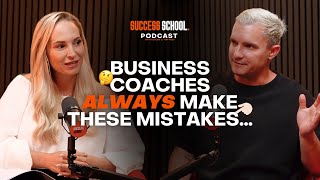
Tim Frey and Steph break down eight mistakes that trap coaches and consultants: no clear niche, skipping weekly KPIs, underpricing, doing busy work instead of revenue-moving tasks, making emotional decisions, letting fear stop them, obsessing over mistakes, and disappearing when things get hard.
Chapters
Your ability to emotionally regulate is going to be your ability to grow your business every single time.
Most commonly in small business, people let their emotions run their business. Their emotions are the CEO of their.
Business teams that want to work for a hyper emotional boss. You want to work just calm people who are like, oh, you made a mistake. That's cool. Here's what we're going to learn from it. Here's what we're going to do next time. Not like, oh, my God, I can't believe she made that mistake. I'm just going to go step for the next three hours and not reply like, guys, if you can just feel the fear and just have five seconds of courage and just do it anyway, your business is going to grow so fast. And you're going to realize that when you feel the fear and you do it anyway, you realize it actually wasn't that bad after all.
Welcome to episode 95 on the success School podcast. Today we're talking about the eight patterns that keep coaches stuck and most people don't even realize they are doing. This is very spicy. Steph, how you feeling?
I'm excited for this Yeehaw.
Yeehaw. Oh, why are you saying yeehaw?
Do you like my segues? Lately I've been really trying. They're a bit better.
They've gone from like, shit to okay.
Yeah, they're okay. My yeehaw was a bit lame.
I need to.
I need to work on my yeehaw. Okay. The reason I'm yeehawing is because. Yeehaw. Sorry. I'm gonna stop doing that. It's because we're going on a cool trip and it's random and I'm excited. We are going to Mexico, which is not why we're here.
That's not the yeehaw. They're not, you know, you've misinterpreted the yeehaw. Yeah.
We're going to Mexico for an event in July, and it's a long way to fly. It's a long way to go. And so I didn't want to, like, waste the business class trip because we're booking using points.
We'd be flexing, very flexing.
All of our points. 3 million points have gone to this flight. So I thought, where can we go while we're there? That, you know, isn't just Mexico that we can go and have a really cool experience now it's summer in America while we're there or in the US And I really want to go to Alaska, but I don't want to go to Alaska in the summer. I want to go in the winter. So I was like, where else can we go? But I also don't want to fly too far because we've just flown all that way. So to get a connecting flight somewhere else, like, I, you know, I'm conscious. I don't want to fly too far. Anyway, I said to Tim it would be pretty cool if we went to Jackson Hole, Wyoming. And he was like, what? Where are we going and why? And I was like, because of Yellowstone. Obviously not. Yellowstone's in Montana. They're neighbors. Okay, they're neighbors. But when I looked up what was happening in Montana, when I looked up what was happening in Montana versus what was happening in Jackson Hole, Jackson Hole just has way more shit to do. And so I was like, let's go to Jackson Hole for a little four day yeehaw and see what it's about. And Tim thinks that I'm a little crazy.
It's kind of like a really weird dirty joke. Oh, what if they put an S on Jackson? I was just thinking about it. Like, why is it Jackson Hole? Like, what does that mean?
Did you put an S on the end of either of those words? It could be Jackson Holes.
Yeah. If you guys will know what Jackson Hole means and why it's named Jackson Hole, let us know. We have phones, but, you know, we could look that up.
Yeah, but we'll forget now. So you guys let us know. Anyway, so that's my. I'm excited. Are you excited?
Yeah.
He hasn't looked into it at all, so he has no idea what I'm talking about.
Where's that? In Kentucky.
Very cool. Anyway, what's going on for you?
My personal update. We've hired an EA executive assistant. As anything in our business, I usually hire them out of the initiative and Steph steals them off me. So. Which has been great for Steph, but I want to run you guys through the process of hiring. I know a lot of people do hire and some mess it up. So I just want to give you my process so you guys can maybe steal this. So we put a job ad up on online jobs. Ph, wrote a description. There was an application form that had to submit a video and their resume. Cleverly, what I did here is I put all the resumes in ChatGPT and I said, get me the top 20 candidates so I didn't have to sift through it. Gave me the top 20. Then I watched their videos and then I made sure they could speak really great English. And you know you could understand them. Then I picked my top eight, invited them for interviews. But before the interviews, I made them do a skills assessment. So the skills assessment was like, categorize emails, I reply to emails, that kind of stuff. Stuff that the EA would be doing. Then I interviewed them for, like, 15 minutes, ran through 10 questions, picked my top three, another interview on the top three, then Steph had an interview with the top one. Then I made a job proposal. Okay, so a very thorough process.
That one was thorough. And it needs to be, because this person is going to be working with us very closely, very directly, at a probably a very high level. So this is probably the highest level, I would say, like, VA role that we've ever hired. And we've had a lot of VAs that haven't been great. And so we really wanted a good one straight away. I think that we've got her. So it's very exciting. And when Tim says I'm going to steal her, it's because that is true. Tim basically hired EA for me because I sometimes get a little O word, and that's not orgasm, that's overwhelmed. I sometimes get a little O word, and I sometimes just need some support with my admin. And that's basically why he's hired Jessa. So welcome to the team, Jess. So we're super glad to have you.
Are you itching for an O word?
I am. I'm not. I do not want an overwhelm, thank you very much.
That's not what I was talking about. All right, guys. So we're talking about the eight patterns that keep coaches stuck and most don't even realize I'll go on the first one. I feel like I beat this one to death and found, like, a. Sound like a broken record here, but.
I reckon it's been the last seven podcasts.
Episodes, seven podcasts. So if you're still suffering from this and we haven't got through to you, I don't know what is going to help you with this.
Okay, you need to come get a niche slap in the face.
Let's go on. The first reason on why people struggle with business, especially coaches and consultants, is they don't have a clear niche and it's not deep enough. If your offer isn't clear or isn't for a specific person and has a specific outcome, it's not going to appeal to anyone and you will struggle to scale your business. I'm not just saying this, guys. I mean it. You have to have a niche. I don't know what I need to tell you for this to hit home with you. But if you're going out there being like, I do websites, or I'm a VA agency, or I'm a fitness coach, or I'm a nutritionist, for who and what outcome do you get? There has to be an outcome and a niche associated with what you do.
Really cool little story about this was we were at an event and a business investor was telling us about how he chooses to invest in companies. And he said that there was a really cool graphic designer that was a client of his and he was doing pretty well, Got his business to 500k, which for a graph designer was like, actually, that's a very good business because, you know, you can't really usually do 500,000 also work on your own. So he's got a little team under him. But he was capped out, like, you know, and he was doing everything. Flyers, business cards, websites, branding, packages, canva graphics, everything. And the guy said, look, I'll invest in your business as long as you do three things for me. I need you to pick one ideal client that you're going to help, and I need you to pick one of those graphic design things that you do to help them with. And we're going to do that together for one year. And if you can do that for me, I will invest in your business. And he said, well, okay, I don't know who to pick or what to pick. I don't know how to make this decision, but here's what I'm gonna do. I like building websites, and I think that they're pretty profitable. Okay, so the first one was, you know, what are you gonna do out of this graphic design stuff? What are you gonna do? So he chose websites. The second was, okay, who are you gonna do them for? And he was like, oh, God, I don't know. Which is probably the way that a lot of people listening to this podcast right now are feeling. I don't know who to pick. He goes, well, why don't you pick someone do you like or things that you like? And the guy was like, I like CrossFit. And he was like, cool. So websites for CrossFit gyms, okay? And they did that for one year. And within three years, that business sold, I think, for $30 million. They cashed out with a $30 million cash out. Absolutely wild. Because one clear audience with one clear offer. They actually called it ward sites. Super cool. Just awesome, guys. So I don't know how else to.
Say it, but they picked a niche.
They picked a niche. Number one pattern that blocks coaches, consultants, and honestly, most business owners. The second one, Tim, you actually have. I wish you had it here, but you don't have it here with you right now is the hat for this. But they don't track their weekly KPIs. Now, again, this is something that I think we could beat home about over and over again. But if you don't track your KPIs, you are basically just running your business based on gut feelings. And I'm telling you right now that your gut feelings are leading you astray. They're not true. They're usually very misrepresented and completely wrong. You need to be tracking your KPIs every single week.
A story on this one. A client in our program, Laura, she celebrated that. She hit three 10k months in a row, so $10,000 a month. And I said, how'd you do it? And she said, tracking my KPIs. That was it. That's all she changed was started tracking her KPIs, and she consistently hit $10,000 a month because she knew what she wasn't performing on and she could fix it. That was it. That was the big change. Guys, I know we're a marketing program and we talk about marketing on the podcast, but just tracking your numbers is the most simple thing you can do to grow, and that'll stop you from being stuck in business. So if you ever get coached by Steph and myself and we ask you for your numbers and you can't produce your numbers, there's no way we can coach you to improve because we're all just going on gut feeling and feelings, you know, most of the time don't really have a place in business. It should be about numbers, it should be about data, and it should be about what's going on. From a week to week basis, we.
Regularly catch clients in our program. They'll start their conversation with like, we're like, oh, so what's going on right now? Like, what do you need help? When they're like, well, look, I feel. And immediately Tim and I are like, cool. This is. Yeah, this is an emotion that you're feeling right now. And so emotions aren't always true and they're not always accurate. And if you're female, they can change week on week depending on where you are in your cycle. And so you know, they're not always true or accurate. And so we will always be like, okay, cool. Then what data do you have to back that feeling up? Like, where is that feeling coming from? And what proof do you have? When you lead with data and logic and proof, like data doesn't lie.
The third pattern that keeps people stuck is the price doesn't match the value. And what I mean by that, usually it's in one of two camps. So it's in way too cheap and you're not making any profit and you really undervalue yourself because it's pretty good or it's way too expensive. No one buys it. And when they do buy it, usually they are pissed off because the value didn't meet what they paid for. So you need to get your pricing right. And there is a model called the west or pricing model. Okay. And essentially what that does is it asks four questions to your target market so you can find 10 ideal clients of yours and you can go ask them, at what price is this way too expensive? At what price does this seem kind of expensive? But I would pay it, at what price does this seem low? And then at what price is this too cheap that it would look like a scam? You're going to have four price points, you're going to ask 10 people, and then you average out the data set and that should give you a good range of pricing. Steph, do you have anything to add on pricing in terms of like, where to go for pricing, what to add?
That's the perfect go do that activity. Like it comes out true every single time. When you've asked people who are actually going to buy your product, then you, you almost pretty much get it right every time. The only thing I'd say is like you just, pricing is a game and you can't make it mean something about you. It doesn't mean anything about you. The price that we charge for success school doesn't change how worthy or valuable I am as a human being. It doesn't change how I look or feel about myself. I wouldn't care if we sold a subscription service for $13. I mean, Netflix doesn't care that it charges a subscription service of 11amonth or something like, doesn't mean Netflix is any less worthy than me. It means nothing about you. And it's a game. It's testing. And sometimes you go in a little lower and then you increase the price and then people stop buying and you realize you probably overestimated and you bring it back a little bit and then people start buying again. It's just a game. It means nothing. You just have to figure out and stress test your audience. So it's a bit of a game up and down. But if you do the Van Westall pricing model, you'll probably figure it out pretty quickly. This one is a juicy one. This is number four, and it's one of my favorite ones. But there are a lot of coaches and consultants and business owners out there right now that work really hard and say that they're doing a lot like, they're working. I'm working on my business, you know, 5, 6, 7, 8, 10 hours a day, and they're not getting anywhere. They're not moving the needle. Nothing's changing in the business. Nothing's moving forward. If you're working that many hours a day and you're busy that many hours a day and your business isn't growing, that tells me that you're focused on busy work and not needle moving tasks. Okay. And there's so much psychology that goes into this. This is not just a, you know, oh, go focus on this task a lot of the time. The reason there's so much that's tied to this from a mindset perspective around, like, you know, not wanting to let go of that task or not trusting the people to do it, or wanting to feel really important and still wanting to feel valuable and still wanting to feel like you give back. Stories that I hear some of our clients say are like, you know, I really need to move the needle in my business and work on these needle moving tasks. But I keep getting dragged back into the business. And when I ask them, why are you getting dragged back into the business? It's because they tell themselves they're running a story of. But I love that work. But if you had to keep doing that work for the next six months, 12 months, 18 months, you know, when you have a baby, when things change in your life, would you still love that work? Like, well, no, not really. I really want to be doing this. And I'm like, cool. So you're telling yourself a story to keep yourself safe, to keep yourself busy so you don't actually have to work on the stuff that really matters. And the stuff that really matters is probably the shit that you're avoiding. And you're avoiding it because it's going to be uncomfortable, because it's going to be challenging, because you don't know how to do it. And so oftentimes you'll jump back into the things that you know how to do so that you don't have to feel uncomfortable and so you don't have to feel unsafe. Okay. So much of this is. Is mindset and energetics because I think a lot of people know what they need to do to move the needle in their business. And they avoid doing the work. Like direct outreach, like running ads, like, you know, upskilling, like getting on sales calls, like offering calls, like starting conversations in dms. If you're not doing that stuff and you're avoiding that stuff, that's the stuff that's honestly going to grow your business.
The next one is making emotional decisions over logical decisions. So I'm going to preface this by saying we're all humans and we all have emotions. And I do understand that some have more emotions than others, and that's fine. But most commonly in small business, people let their emotions run their business. Like their emotions are the CEO of their business. And I'll give you an example. We speak with a lot of clients and they don't want to reprimand or have performance meetings with VAs or underperforming team members because they don't want to hurt their feelings or they don't want to have the hard conversation because they're making it emotional. Business shouldn't be emotional. It should be about KPI's numbers and data. Every single person on your team, including yourself, should have KPIs that they should be meeting. It shouldn't be an emotional decision. You shouldn't not want to have a conversation because you're going to hurt their feelings. There is a way of delivering that and there is a way of managing that situation where it's not emotional. But at the end of the day, guys, you have to run this like a business. And businesses aren't run emotionally. And if they are, they get found out and they're not going to have a good time. They're not going to last long.
Yeah, and your teams don't want to work for a hyper emotional boss like, you want to work just calm people who just get it. People who are like, oh, you made a mistake, that's cool. Here's what we're going to learn from it. Here's what we're going to do next time. Not like, oh my God, I can't believe she made that mistake. I'm just going to go to the next three hours and not reply. Like, guys, your, your ability to emotionally regulate is going to be your ability to grow your business every single time. The sixth pat that keeps coaches and consultants stuck is that your fears are just running the show. You've got a fear of posting online, you've got a fear of being seen. You've got a fear of doing direct outreach. You've got a fear of getting on sales calls, you've got a fear of reaching out and trying to get speaking gigs. And the reason you have all those fears is because you have a fear of rejection. You're scared of failing publicly. You're scared of what people will think. You're scared of being judged. And when you let those fears run the show, when you let those things stop you from taking action, it's going to stunt your growth. And it happens time and time again. We see it all the time where, you know, the number one thing that would unlock a client's next level of growth would be pitching to speak on stages every single week, or pitching to speak in people's containers every single week, or starting 50 new conversations. And they're wondering why they can't grow their business, but they just don't want to do the thing because they have a visceral fear. You have to feel the fear and do it anyway. I promise you. I know it feels. It's crazy because when you hear me say this, this, and when I'm saying it, it feels so obvious, like, you're not gonna die. Fear is the body's response to try and keep you safe so you don't die. Okay? And our fear senses have been so dysregulated over the hundreds of thousands of years of evolution. And so we think that getting up on stage or pitching somebody and them saying no is gonna make us die. Like, that's the emotional. That's the reaction we're having in our physiology. But. But it's not the case. It's just so freaking obvious. Like, just send the freaking email. Like, send the email, get the outcome. It's a yes or it's a no. You move on to the next person. It's a numbers game. And if you can just feel the fear and just have five seconds of courage and just do it anyway, your business is going to grow so fast and you're going to realize that anything, like anything in life, when you feel the fear and you do it anyway, you realize it actually wasn't that bad after all.
The seventh pattern is you obsess over everything that goes wrong instead of just focusing on it as the process. And I'll give you an example. We run a fortnightly ads call in success school and we had someone come up, up and they showed their ads and they weren't great and they weren't converting. They were very expensive. And I pointed out why it wasn't going to work and they had a little bit of a tears about it. And I kind of was just thinking to myself, like, what's the tears about? Like, what's the, like, meltdown about? You don't come out of the womb being an ads and marketing expert. Like, there is no way you can be good at it without going through the process. Everyone, guys, you're going to be at sales, you're going to be at marketing, you're going to be at writing content, you're going to be at coaching, you're going to be at tax, you're going to be at everything. Nothing prepares you for this. You're on the roller coaster and you're just strapping in. You're just learning as you're going, you know, mouth open, drinking through a fire hose. It's just crazy. You just have to accept that this is part of the process. So if you get feedback from a coach, someone like Steph, right, It means nothing about you personally. It's just a part of the process and you just need to strap on and strap in for that ride.
The last pattern that is keeping coaches consultants stuck is that when things get hard, you go missing instead of stepping up. Guys, it is hard. It is hard. I actually wrote a post about this recently and I was like, you think that maybe we've had it easy? If you were joining us now in our world and you hadn't seen the last decade of our life, you would think they got lucky, they had it easy, they've got skills, they were always going to make it, whatever, right? But the reality is that when it gets hard, we step the fuck up. When it gets hard, we kind of lock in and we're like, this is what it takes. Because if you want to take the easy road like everybody else, like literally 95, 99 of society, if you want to take the easy road and you want to go get your corporate 9 to 5 and you're happy just churning through it and you take you four weeks at leave every year and then you're happy just being like everybody else. And I have a feeling that if you're listening to this podcast, you are not okay being like everybody else. But if that's what you want for your life, then that's cool. That's absolutely. No judgment with that. But if you want to be the 1% of people who actually really make something, who really have an impact, who really use their voice, who really make a difference, then you've got to prepare for it to be fucking hard. Like, it is not going to be simple. There are going to be days where you question everything. There have been More days that we have questioned everything in the last two years than in the 10 years prior where we have laid on the couch at night and we have said, do we really want to do this? But we have fantasized for weeks on end about just selling everything and moving to Hawaii and living in a hut on the beach where we have cried and questioned whether we're cut out for this, whether this is really what we want, whether this is really worth it. And in those moments, we choose to get relentless. Okay, if this is a problem, then it just needs solving and we step up. One of the points of our business, a couple of years back, we realized that money wasn't so good. We realized that we had like a pretty good business, but it was in and out and there wasn't a lot of cash flow left over. And we were just about to sign up to a really expensive coaching program that was $60,000. And Tim said maybe we should pump the brakes on the coaching program. Like it's pretty expensive. And I, you know, maybe we shouldn't spend 60 grand right now and lock in for a 12 month contract when money's not so great. And we both decided in that moment that that was not the right suggested that was not the right solution. And we both said no. That's exactly why this is exactly when you need to step up. That's exactly when you need to put your money where your mouth is. And we signed up for that coach and in the next six months, we had our highest ever cash month. And that's what happens when you. And I don't want to say lock in, but that's what happens when you get relentless. When you, when you get hungry, you step up rather than stepping back when things get hard.
Leads us into our listener question today. And this is perfect. And I'll go first. This is from Kelly. What's the one trait you see in people that always means they fail?
Such a good question.
Such a good question leading into this, and I'm just going to say they have no grit. And what I mean by that is when things get hard and they're not being successful, they give up or they falter or they flop or they take three days off or they feel sorry for themselves or they take a week off or a month off and then they throw in the towel, they stop marketing and then they lose all momentum and then they're not doing anything in their business. They just have no grit to the failures that happen. And I think Steph did allude to it, but sometimes people think oh, it must be nice for them. Them must be nice where they're at. I had a gym that nearly went bankrupt during COVID I've had a mom that, you know, was suicidal twice in my life, and I had to go, go there and be there for that. I've had family members die in Covid during times of great stress. We had a health diagnosis, get our dog, died of cancer. This was like, all in the same period. And people are like, how did you get through it? Literally, what I did is I open my laptop every single day and I worked and I kept going and I kept putting one foot in front of the other because I told myself, this is grit and this is what I would show and this is what I would teach and this is what I would tell my clients to do when things got hard. And that is one of the reasons we are successful, is because we do that when things get hard. We show up, we show the up, we show the up more. We go even harder when things are hard. So the trait is grit for me. And people don't have grit. Maybe they've had an easy life or they haven't had bad stuff happen to them, or they didn't get bullied at school, they didn't get kicked in the face and punched and whatever it was. But life ain't easy. And no one's gonna hand you the success that you want from this business on a silver platter. You have to earn it, you have to get it, you have to get after it every single day. And if you don't have that, that killer instinct, and some people say it's the dog in you, you're gonna have a hard time and you're probably gonna fail.
Love it. It's not too dissimilar. And it's a victim mentality. It's when things go wrong, you think, why is this happening to me? Why am I not there? Why is everything so hard for me? You see people doing things wrong to you and you immediately fall back, like, someone needs to come and save me. Who's going to come and help me get out of this mess, right? No one's coming. I'm going to say it again. No one is coming. I used to be a victim. I grew up in a victim household. And my mum was actually a victim of some pretty awful shit. And so I grew up being a victim. It was all I knew. I knew how to get sympathy, I knew how to get attention. And my victim mentality was really, really thick. And I remember when I first started dating Tim and know we moved in together and where you can't hide all of your stuff anymore. I remember sometimes I was sitting on the couch and, tim will not come, and Tim will not come and save you. It's one of my favorite traits about Tim. He's really helped me to become someone with more grit. I remember sitting there being like, I can't figure out this money stuff. And Tim was like, well, just sit there until you do. And I remember being like. But I just. And I was freaking out, and I was crying, and I just. I was being childish. I was actually being really dramatic, trying to get you to come in and swoop me up and do it for me. And I realized that I had to have a really hard way with myself in that moment. You left the room. And I remember thinking to myself, steph, no one's coming to save you. Like, you're just gonna have to learn this. So it's time to just, like, get it done. Like, learn it. Like, do the fucking courses. If you don't know finances, learn finances. If you don't know sales, learn sales. If you don't know marketing, learn marketing. If you don't know ads, learn ads. No one's coming to save you. You've got to stop thinking that everything is happening to you and just start being like, you know what? What? The person who's going to turn this story around is actually me. And so I'm not a victim. I'm excited. I'm the kind of person who takes bad shit that happens to me and turns it into my superpower, and. And that's it. And I think if. If you can get out of that victim mentality of waiting to be saved and waiting for the perfect moment and, you know, thinking that somebody's going to come and just teach it all to you, or that just because you sign up to a program that you should magically get the result. Like, no, you have to do the work. If you're not willing to do the work, then it's never going to work.
All right, guys, that was great episode. If you around here, hit that subscribe button. We loved having you on. Next week we're on episode 96. We're getting close to the big hundred. What do you want to do for the 100? I'm thinking something a bit different.
Should we podcast naked?
Yeah, podcast naked. A couple of drinks, maybe a joint or something.
Oh, fun. I might just have a cocktail, but you can have a joint.
That'd be fun. That'd be fun. I don't know if this place will like me smoking a joint in here.
You're probably right. Let's not do that. But maybe. Maybe a beer. Maybe a cocktail. Guys, if you love today's episode, we would love to hear what you loved about it. Send us a message on Instagram. That's where we both hang out. But thanks for being here today. Today.
Thanks, guys.










