
DOUBLE Your Profit With These 5 Business Hacks
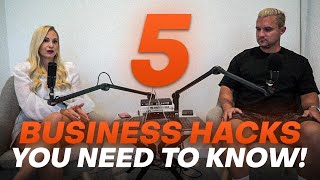
Episode 32 of the Success School podcast (YouTube video) with hosts Tim Frey and Steph gives five tactical, implementable ways to increase business profitability: evaluate expenses for ROI, outsource low-value recurring tasks, apply an 80/20 simplification to products/processes, raise pricing regularly (every 6–12 months) after improving the offer, and systemize→automate→delegate work. The episode also includes lessons on landing-page clarity, decision-making about opportunities, listener Q&A (mindset, running multiple businesses), and a program promo (apply to Success School).
Questions this video answers
Episode 32.
February 25, 2024.
Under $10,000 per month.
US$5–10 per hour.
Every 6–12 months (price creep or annual increase recommended).
Chapters
Most small business owners are like, we don't know the numbers. We're not looking. The only way to take control of it is to take control of it. This one's really spicy.
Now. You get a heat on this.
You get a little bit of heat on this for the last couple of weeks.
How on earth to snap out of the no action overthinking, thinking you're not cut out for a cycle into the get shit done no matter what mindset? Excellent question, Steph. I woke up this morning and I chose violence. So. Welcome to the Success School podcast. We are on episode 32 today. We're talking about 5Xing your business profit with these hacks. As always, guys, our podcast is. Is very tactical, very applicable, and all you can do is just write this down and go and do it in your business and you're going to extra profit really easily. Okay, in this one episode. Steph, how are you feeling today?
Do you know what my favorite thing is right now? I'll tell you. My favorite thing is going into our free Facebook group and seeing people like Rachel Short. Yeah, we appreciate you, Rachel, Rachel Short.
Thank you.
Thank you so much. But like, people like Rach jumping in and being like, hey, I listen to your podcast and here's my notes and here's what I'm doing. Like, yes, sister, you are going to go the whole way. We 100% believe you. Like, guys, if you are not. If you're listening to podcasts just to consume, like, you're really not learning because what's our.
What's our read, write, recite.
There it is. Read, write, recite. If we're not. If you're not, like, reciting. If you're not reading, if you want to get to, well, you know what you mean, like, listen, write, recite. But yeah, guys, like, we love that. Thank you so much, Rach and others. I know other people are doing it. Let us know if you are doing it.
All right, guys, we're gonna kick off with our lessons of the week and it is customary for me to start. So I'm gonna get into this. So today I'm Talking about the 5 second rule of landing pages. So Steph and I have seen our fair share of landing pages. I would say thousands, almost. We've seen some great landing pages and we've seen some, I would call them, mud. Okay? So I'm gonna stop your landing page from being mud in this little lesson of the week right now. Okay? So the five second rule of landing pages, this is something we actually go through or we went through in our Bali retreat is when someone gets on your website or landing page in the first five seconds, can they tell who it's for, what you do, and is it for them? Okay. And if the answer is no, no, no for any of those, you're going to lose the conversion. Okay. Because people log on a landing page and they. They have the attention span of goldfish at the moment, so they're going to look on there, and if it doesn't give them the information that they want immediately, they're going to log off and you've lost the opportunity to change their life with whatever you're selling in that moment. So the most important thing with landing pages is that header section. The first section has to be hot. I've seen some where there's just a photo and there was zero context to anything that they were trying to do or sell on the landing page. The issue here is, you know, us as the professional or the knowledgeable, the expert in this situation. We think we're putting on the landing page what we think they need to see. A lot of the times it's what you think they need to see or what you want to see on the landing page, not the consumer. So we've spoken about this in the podcast a bunch of times, but when you're designing a landing page, you need to put yourself in your consumer's shoes or your prospect shoes and give everything that they need to make an educated decision about your product or service or, you know, the consultancy that you're offering on the landing page, it has to be very clear. If your landing page is not, you are not going to make the sale.
I love it. I'll give you guys an example because I think this is a really good point to be able to make is like, if someone falls on your website and it says, like, it says, feel better with mmr, like, the minute I get on there, like, I have no idea what MMR is. I don't know what kind of am I going to feel mentally better, physically better, emotionally better? Like, what kind of better am I going to feel like? It tells me nothing. But when you're the consumer, when you're the business owner and you write that, you're like, it feels so good and it feels so obvious, like, my program is going to help you feel better, but it tells me nothing, what would be a better opportunity? I don't know what MMR is. I'm just giving you an example of.
Someone who might recurring marketing.
Yeah. But, you know, I think that a Better thing would be like, you know, increase your energy with, you know, and you might name the program or you might say increase your energy within 12 weeks using blah, blah, blah, blah, blah. Like that's going to be so much more clear to somebody when they fall on your website. Like, okay, I'm going to get more energy. I know what I'm going to feel better doing. I could see that it's using supplementation or whatever you're trying to sell and I can see that that's a timeframe that's going to happen to me by. Is this for me? Yes. No, it's an instant thing that happens in their mind.
And so, so just think about, just lastly on this topic, if someone, you know, they come off your TikTok Instagram, Facebook, you meet them in a referral or a networking or whatever it is, and they log on your website and it sucks, it's going to be a pretty bad first impression. From a digital point of view, I would say your website or your landing page is the, one of the most important things that you need to get right in your business.
Yeah, absolutely. Especially if that's where, like, which it is where you are selling, which it should be. Then yeah, it's going to be really tough for you if it's not good.
All right, Steph, do you want to give us your lesson of the week? I've seen the notes. Looks a little spicy.
They've been spicy lately, haven't they? You're a sassy, sassy lately. Sassy Steph. So I, I, we recently got asked a question. How do you make decisions on business opportunities? And I reflected on a little bit and it's been really interesting for us. I think this has probably become the most prominent it's ever been in the last four months for us as a business couple. We have had a lot of opportunities come our way in the last 12 months every week. Yeah, honestly, people like want to partner with us. They want to, you know, they want us to come and invest in their.
Business, give us their business.
They literally have people try and give us their businesses. And all opportunities are very exciting. And when you're going through a phase of, of, of really generating and putting energy out there and generating a lot of opportunities, it can kind of like every opportunity feels pretty exciting. Like you can see the potential in most opportunities. And I wanted to kind of answer the question with the fact that like, as you get further and further into business, more and more like you are not going to have a lack of opportunities. In fact, it's going to compound. You're going to have more opportunities come at you than ever before. So if you're getting opportunities now, girlfriend, just get ready because it is going to be boyfriend, boyfriend. It is. You're going to get more. And it's not about saying yes to every opportunity. It's about figuring out which ones are the right ones. They're going to take you in the direction you want to go. And so my piece of advice or my lesson for the week for ourselves and something that we have learned this year really prominently has been like, we've said yes to opportunities that were not the right opportunities for us. And we've said, we've said yes a couple of times, to be completely honest, to opportunities that weren't right for us. And then we've had to scale out of them or we've had to change our direction or we've had to, in some cases, let people down. And it's not a great feeling. But also, we're not perfect at making the right decision. And you're not going to be perfect of making the right decisions either. The only way you're going to know whether opportunities are right for you is sometimes they're going to feel like a heck yes and they're going to make perfect sense. Other times they're going to be like a heck no. And you're going to know 100 this is not for me. But the ones that are in the middle, the ones that might feel like a heck yes, the only way you're really going to know is by trying. And I think a lot of people are trying to avoid taking a risk or saying yes to an opportunity. And I think that oftentimes, like you're, you're kind of limiting yourself to, you know, not getting the experience. And just knowing that if you say yes for an opportunity doesn't mean you have to do it forever. You can say no, you can duck out, you can leave it. But I would hazard, I would hazard you that most of the time, and this is probably where the lesson really lies, when you say yes to an opportunity, you're saying no to something else. And when you say yes to an opportunity that is going to take you away from your business, that's going to take you away from the direction you're currently on, you are going to split your time, your energy, and therefore you're not going to have growth fast in either direction.
I think this is like a muscle you have to build as well. You have to say yes to a lot to know that there are A lot of no's as well. You can't, like, there's no hack to this either. Like, there's no formula, there's no template. There's no way that you can tell what opportunities are good or not. I would say, you know, when I first started in business, like many years ago, over 10 years ago, like I'd see a, a guy with a nice car and a Rolex and he was trying to sell me something and he told me that this was going to be the way to make money. Or like it was network marketing or it was like, you know, building a business overseas or whatever. And everything just seemed like a great opportunity because I was like literally a business virgin, like out there in the world. Just had no freaking idea. But you just go through essentially the school of hard knocks and you work it out and then you just realize that there are actually not that many good opportunities. And the good opportunities are the ones that you create for yourself. And that's how you know that the opportunity is great, is once you've built it for yourself, you're going to profit off it and do much better off it in the long term than you are building someone else's thing.
Mic drop. So just wanted to.
That was unscripted.
That was beautiful. That was really beautiful.
All right, Steph, do you want to give us a little intro of what's coming up today?
So today we are going to give you five practical ways to double your profitability with these business hacks. Now these are very tactical and they just need to be implemented, so you need to set aside time to do them. Okay. I want you to consider this as your personal reminder to step back and evaluate what's going on in your business and then make decisions based on the health of your business, which you are going to identify today. So Tim, over to you.
All right, so the first one is evaluate your expenses. And I know what you're thinking, that you're just going to start cutting everything willy nilly. And I've seen this happen in small business many, many times. If your expenses are low, and I mean like under 10k a month, then there's probably not going to be that much to cut. So yeah, we may be talking about a software expense where you can save 20 bucks a month, but it's not going to be anything. That's absolutely revolutionary for you. So, you know, if you're trying to cut nothing to nothing, then you know you're not going to make a huge ROI from this. But in terms of expenses, you want to look at like the big ones from like the big point of view here. So you know, we're talking about rent or we're talking about team, we're talking about staff, we're talking about maybe there are some software expenses that you can cut or insurances or these types of things. You want to look at your expenses and ask yourself, are they giving you an roi and what is that roi? So typically for us for business expenses, we look at it as like a two to three multiple. So if I'm spending $1,000 or something, am I getting two grand to three grand? If no, I'm going to look at the expense but instead of cutting it immediately, I'm going to say am I making the most of this? Okay. Rather than just cutting it. So there may be an email software or a platform that you're using, maybe using mail, a lot of go high level or principal or whatever you're paying for and you're like, I'm not getting $97 a month value from it. But is that the software's fault or is that your fault? Okay. Because usually it's your fault. So how can you get 300amonth worth of value from the $100 thing is a better question. Before you start cutting it, maybe you need double, triple, quadruple or 10x your emails. Then it's going to be pretty freaking valuable if you're getting 10 clients a month from it. Okay, so what I want you to do is print a bank statement, go through all of your expenses. How I like to categorize it for my businesses is I categorize it from one time expenses, so I'll put a one next to it. I do this shit manually even though we have zero because I just like it way better or whatever accounting software. So I put a one next to it for a one time expense, I put a W next to it for wages, and then I put an R next to it for reoccurring expenses. Okay. Then I categorize the three and then I can track them monthly for the one time expenses. Usually they're, they're just write offs of things or equipment or stuff I needed to buy for the reoccurring expenses. That's the one you want to look at and you want to see if there's any adjustments that you can make there. Generally from, from what most people I see, they can save anywhere from like 500 to $1,000. If it's a team member or a role that can be automated or something like that, you can be saving a lot More than that.
My favorite thing that Tim just said was at the very beginning he was like, I know what you're thinking. Evaluate expenses. I'm going to make you cut everything. And I was like, well, they're probably not thinking that. They're probably thinking, oh my freaking God, I don't want to look at my bank account. Cause I'm too scared. Most small business owners are like, we don't know the numbers, we're not looking. But this is like, guys, yeah, for sure. And if you have money mindset, stuff like that is going to be the feeling that comes up for you. And the only way to take control of it is to take control of it. So doing this once a month as a non negotiable is so powerful. Okay, I wanted to talk about, when we're talking about doubling your profitability, I wanted to talk about. Oh, this one's really spicy now because we've been getting a little bit on this lately.
We're getting a heat on this.
Yeah, getting a little bit of heat on this topic for the last couple of weeks. Outsourcing. So we. It's no secret to you guys that we have team members. We have team members both in Australia. We have team members offshore. But we like any really basic admin, recurring admin task, we outsource to our offshore ba. She's based in the Philippines. Okay. And I think that when you are growing a business and especially when it's a small business, I think that there are a lot of. And I want to just touch on this really quickly because I do. We have been getting a little bit of backlash on this lately. Onshore, we have onshore bas in our program. We love onshore bas. We have no problem with the fact that they're Australian bas doing incredible work for Australian companies for sure. Most of the Australian bas that we work with specialize in some sort of level of support that is quite complex. So you know, we have VAs that specialize in allied health. We have VAs that specialize in events based, you know, rollouts of events and things like that. So you know, really specialized and high level that you literally probably couldn't give. You know, someone in the Philippines that's not in your know, in the, in the country, you couldn't give them those tasks. However, I do believe that if for a small business just getting started in business, you don't usually have the money to be able to throw up to 75 an hour at an Australian based VA to do some work for you. We understand that and that's why we teach this method. Do we think there's a place for Australian VAs? Absolutely. Do we think that they absolutely have the skills? And do we think that a lot of people will choose them because they're too scared to go offshore? Absolutely. And that's also fine. I think that there is 100% a place for them. But I think that you as the business owner, regardless of whether you hire someone in Australia or offshore, it doesn't bother me. But at the end of the day, you shouldn't be doing the tasks that are very base, administrative and recurring because what it does is it keeps you stuck in the weeds of your business. It means that you are always in the day to day. I'll give you an example. Chasing up failed payments is not an abundant task for you in your business, okay? For a lot of reasons. It's very administrative and can be done by somebody else, first and foremost. Secondly, it doesn't feel good, okay? It doesn't feel good to chase up foul payments. It doesn't feel good to get the replies. It doesn't feel good. It's very is the opposite of abundant. And when you are trying to charge forward and grow your business and stay in a really abundant place and not get sucked into lack of scarcity and not get sucked into those stories, it is just not a good place for you to be spending your time, okay? And so those tasks should be outsourced to somebody else. Now we recommend if you're a small business just getting started, you can outsource these tasks for as little as five to ten dollars an hour, okay? And they are phenomenal. And we have an incredible VA in our business and who is the most incredible woman in the world and we love her. She's got five children and she is just such a legend and she does all of this stuff for us in our business. And I really don't believe when we look at our tasks, Tim and I, we will write down a list of all the tasks that we're doing and then we'll highlight which ones should be $5 an hour tasks, which ones should be $50 an hour tasks, and which ones should be, you know, a thousand, a hundred dollars or a thousand dollars plus tasks. For example, I would never outsource my social media real creation or social media content creation to somebody else at this level of my business because that literally makes us money.
Thousand dollar.
It's a thousand dollars an hour task. I wouldn't outsource that to somebody else. But chasing up a failed payment or taking A piece of content I've created and turning it into an email to send to our list. That is a five to one hour task. That is a very administrative task.
Anyone can do it.
Anybody could do it. Like, I could literally go to my mom's house who has absolutely no skills and who also doesn't listen to this podcast. Love you, mom. But. And I could give her this task and she would be able to do it. Okay. It's very, very easy task. And so that's a $5 an hour task because anybody could do it. You could get an intern to come and do it in your business for free. Okay? So I think that you need to take us take stock of all of the tasks that you're doing in your business, and you need to start identifying what. Which ones are the ones that actually have a return on investment, and they are the ones that you, as the business owner, should be doing.
Yeah. We had a client in our program and she came to me and she was a little bit scared about outsourcing. So I said to her, write down all your tasks for me. And she did. She came back to a call and she presented me her list. And I asked her, I said, which of these do you think a VA could do for $10 an hour? And she. She listed like 30% of them. And I went back to her and I said, I would guarantee you with three months training, a hundred percent of all the tasks you are doing could be done by your va. And she looked at me a little bit baffled, and I said, the only limitation that a VA has is the one that you put on them. Okay? Because everyone goes out there and I think they can't do that because I'm so special and I do X when most of the time is like, we're all humans. And, you know, if your IQ is over 80, you can probably learn a task again. You can be taught a task, and with time and patience and coaching and mentoring, you know, you can get a team member up to that level, which is going to free you up to do the other stuff. The other stuff, or in her case, you know, she needed to find other stuff to do to grow the business and not focus on the tasks that she shouldn't be focusing on. But the thing here is, guys, is you want to focus on the tasks that you need to focus on to grow your business, not the shit that's just working in the business.
And let's be really clear. When she freed up all of those tasks by outsourcing to somebody else, her business has the ability to grow exponentially because now she can designate 100% of her time to growing the business. Imagine you, if you had 20 hours a week just to grow the business, because everything else was getting done in the business by somebody else, like, phenomenal. And some of the businesses we've seen with the biggest growth, we've got clients that have 50,000, $60,000 a month, and they're pretty much 90% profit because they have an all offshore team that's running the entire business. And they're just doing the strategizing, the running of the business. The client calls, the sales calls, the client connection stuff. So they're spending like 10, 20 hours a week on that stuff. Plus the. Just the marketing and the growth of it. And the whole. The whole business is running like that. And we don't. We know agencies that podcast agencies that are running end to end like that. There are so many opportunities. And yes, you can't. We also know website developers that are running full onshore teams as well. And that's also great and fine. But guys, the truth of it is you shouldn't be doing everything in your business. And I think that's the point that we're really trying to make.
So make no mistake, guys, the easiest way to increase your profitability is to make more sales. So, you know, the easiest way to make more sales is to give yourself more time to make more sales, okay? And that's what this whole outsourcing thing is about, is creating time for yourself to make more sales. Our third way to double your profitability in your business is to do an 8020 on everything, okay? So Steph and I is like, usually in our relationship, how it works is I'll plant a seed, okay? A very creative seed that is well placed into a conversation. And I'll plant an idea in Steph's head. And this idea went a couple of years ago, probably about 18 months ago, I was like, PMP. Steph's old program may need a reform, okay? In some way, I think there may be some redundant processes, Some things we can improve. We can improve the profitability and the outcomes for the team and the coaches and stuff like that. And then I planted that seed. I nurtured it. I nurtured it over time. But what I was trying to do with that was do an 80:20 on the business and focus on the things we actually needed to get a result for our client. And when we sat back and we analyzed the things that we actually needed to do to get a result for our client, we realized it was having a really good curriculum and it was having really good coaching. Okay. Not that it wasn't that, but it could always be better. And that's what we focused on doing with success School. So we did an 8020 on the program, we looked at all the stuff that we didn't need for the program and then we made the cuts and we did an 8020 on our own business, which is a Pareto principle, is that 20% of your 20% of your actions will be getting 80% of the results. We did that, you know, we reduced our profit in the organization dramatically. We improve the results that our clients get dramatically because we did the hard thing. We stepped back, we looked at what wasn't working or what was working well, and then we doubled down on that rather than we just keep running this massive clunky machine that didn't work super well. And now, you know, Steph, I can speak for Steph here, she has the business of her dreams. She works as much as she wants to. She's creative, she's happy, she's joyful. She does the task she wants to do because she did the hard thing and she did the 80 20.
Yeah. And I think when we created PMP, just to give you a little bit more context, which is the program before Success school, I was pretty new to business coaching still. Like I'd, I'd probably been doing it in, in smaller group coaching like for like programs launch based for maybe a year and a bit beforehand. So I was pretty new to coaching. And I grew dramatically in that time as a business coach. I grew dramatically as an entrepreneur in that time. And some of the stuff that we'd created at the beginning of that program, some of the processes and the procedures and the things that we'd created were no longer relevant for the business that we were running in the business that we were creating going forward. But it took me to really step back and it was very hard to do because I was very emotionally attached to it. It took me to really step back and go, okay, do we really need, you know, all of these emails? Do we really need to do all of this tracking? Do we really need to, you know, have all of these team members? Do we really need to have 15 minute calls to lead into 30 minute calls to lead into like this? Do we really need a system with like a seven step onboarding process? Do we really need like all of these things that I'd created out of necessity, no longer suited the kind of business that I wanted to run? And so I really had to step back and go, 80 20. Like, what do our clients really need to get a result? And what we found is that less is so much more. Our clients getting results so much faster because we're not bugging them down with emails every single week with, you know, like, so much content that we're shoving down their throats. They can't handle. Like, we really had to simplify the entire process to get them a result. And that is what eighty twenty will allow you to do. We are. We increase our profitability by, like, at least 60%. You know, huge amounts of profitability came back into the business. Way less workload for myself, for the team, and it's just been so much better ever since. So I cannot recommend doing 80 20. It's really hard to do, guys, when you. You have built a business and believe that this is the only way of doing it. There is so much more that can be done, and. And by making some hard changes, you can unlock so much more growth.
So I just want to give you a practical example of how I did this in. In my gym. So I started my gym, and it's called Helix Sports Performance. So we did, you know, a bunch of different programs. We actually had 26 different programs that were running at the same time. 26 programs. Think about that. There's like, 26 programs running at the same time in a gym. So the coaches would have to coach 26 different programs. Okay? Some will be on some two on one, one on the other. Whatever it is you think about the workload, that is for the coach. When. If you think about a gym program, the most important thing for a gym program is adherence. Okay? So if they show up to the gym, you're winning. The second thing is that they have a hard session. So how do you get a hard session? You get a group, and then you get a group of people that are doing the same thing at the same time. And it builds the vibe, builds a community, builds energy. So if you get those two things, you get people showing up and you get them pushing hard, you're well on your way to getting a result. So what was I doing messing around with 26 different programs to get a result? Was I making it too hard? So what that evolved to be, it went 26 programs to 12, to 6, to 5, to 4, to 3, to 2, to last week, one. And we have one program. We have more people showing up. We have people going harder. We have people getting better results. I did an 8020 from 26 programs to one. So what could you do in your business to make things simpler and get better results? If you really step back and you ask yourself, how am I getting a result for my clients? And how can I get the result for them faster and better, simpler, and with less hassle, there's probably a lot of improvements that you can make in your processes and systems.
And if you're listening to this and you're in successful, please jump on a call. Let's talk about this. If this is something that you're like listening to and you're like, I think this is my problem. We would love to help you with this. Okay, so the next one for me is Tim said before, one of the best ways to increase your profitability is to double your sales. I couldn't agree more. However, this one is also just as important. If you are running right now a business where it's all in, all out. So all cash flow comes in, all cash flow goes out, and you end up at the end of the month with no money in the account. It indicates to me that you have a pricing issue as well. Okay? So one of the easiest ways to increase your profitability is to increase your pricing. Okay. And the best way to increase your pricing, first of all, is that you should be iterating on your, on your offer all the time. So what I mean by that is that you need to be improving it regularly. Okay? You should not be running the same, like exactly the same business model last year into this year. It should be in some way better for your clients. You should have upskilled. You should have learned something. Tim's just halfway through a course that was 240 hours long. He's learning that so that, yeah, we can be better for us, great, but also so that he can teach our clients, and he's teaching them along the way. He actually presented on it in Bali already. Okay? So guys like you should be upskilling in so many ways. Like, one of our clients does website building, and this week she signed up for a program which was going to help her to know more about conversion rate optimization on her clients websites. Like, you should be getting better year on year at what you do so that you can offer even better results for your clients, so that you get more raving fans and so that you can increase your pricing. Okay? So absolutely, it is so important that you increase your prices. We recommend at least a price increase every year, but I think you could do one as regularly as every six months. Okay. As long as you have a reason to be increasing the pricing.
So you Know, the example in success goes like, you know, why do you guys think We've launched successful 2.0 so a new and improved version of it? Because we are making it better for our clients because we want them to get better results. You know, every week on a Sunday, Steph and I talk about our coaching calls and how we can make them better and get better results. Then we talk about our PhD programs, the monthly things that we do every month to upskill our clients and get them better results. We're always adding better, new, upgraded stuff so that at the end of the day when a client goes to resign with us, they're like, cool, that was sick value. My business grew. They are always pushing to try and get better clients. Remember that stuff. You know, it's not like a, it's, it's a, it's a give and take relationship in business. So you've always got to be giving as well, not just taking, taking, taking.
Yeah. So I highly recommend increasing your price every six to 12 months, but only if you've already improved your service, improved your offer, improve it, improved your delivery, improved your customer service, or innovated on your original offer or original idea, and then you have reason to increase your pricing every six to 12 months. So that's one of the fastest ways to. And we recommend, like, increase pricing. Like, I think the crazy thing that I see people do is like, they try to double. They're like, okay, like, you know, I'm charging three grand, I think I'm going to go for six. It's like, hold up. That's quite a big jump. I probably wouldn't recommend doubling your, you know, your pricing straight away. I would recommend edging up over a couple of months if that's the, if that's the way you want to be. I do think that if you're undercharging right now, cool, that's fine. Like, we all have been there. We've all been in a place where we've undercharged. I would recommend a price creep. So, you know, every couple of months, bumping it up a little bit for any new clients that come in the door. And over the, over the course of, you know, maybe six months, increasing your price point a couple of times to get there. I do think, you know, doubling every price point does is hard, especially if you have some level of word of mouth because people are going to be recommending you that are in your, that's in. That are inside your world right now based on the price point that you currently have and doubling it is going to make that really unaffordable for all of the people they're going to recommend to you, which means you're going to be turning away, you're getting a lot of no's really, really quickly, which can store momentum in your own growth and your own business. And all the mindset stuff that comes up with getting lots of no's at once, which will ultimately send you probably further backwards than forwards at the end of the day.
And lastly guys, on the ways to double your profit with scaling your business. I'm going to give you guys an analogy or an acronym here. What is. It's an acronym. It's an analogy, but it's along the lines of. Well, it is in. In theme with what Steph has been presenting in her lessons of the week. It is. So systemize, systemize, Automate and delegate. Okay? In that order. So you want to look at all of your systems and processes and see what you can systemize. Okay.
Are they, it's not sad, it's the best. It's like how, how annoying that that is the spelling of it. Sorry, keep going.
So systemize, automate, delegate, look at your processes. You want to see what you can systemize? Okay, Are there any operational inefficiencies in what you do? Are the processes listed out? Are they easier to follow? Are they completed in the most timely manner possible? And then like before that we did speak about 80 20, but do you even need that system or do you even need that process? So I want you guys to look at all the things you do, all the systems and processes and if you don't have any, I'd be a little bit worried and maybe start thinking about creating some systems and processes because they too make your business more profitable and salable down the track. Then we want to talk about Automate. And this is funny because I had a girl come on a call the other day and she said I just want to automate my business. And then I said to it like, do you think that there is just this like AI automation lord that just can automate every aspect of your business and you never had to do anything? That's really just not how it works. Okay, so automation is, is, is really this big overblown thing.
I agree.
Like out there in the tech world at the moment, you can automate some stuff, but you're still going to have to do the work again. What I mean by like automating is you can automate some emails, you can automate some texts, you can automate some follow ups, like what else can you even automate from there?
Like that? Like you can automate, you know, people signing up to your course and then them getting the email that goes out that signs up to the course. You can automate some announcements that go out. Like there's not. Like you can't automate, like creating your social media post using like chatgpt to post to. Like you can't automate your. I think people feel like, oh, I just want to be able to press a button and my clients get their notes and their session recording and this gets uploaded to the cloud and these things happen. Like there's no button for that. Like there's like there is stuff that is going to have to be done manually, like in your business. But when we talk about automating, we're talking about, okay, what are the date, like, what are the repeatable pieces of contact that we're sending out to our clients? And you know, that might be an onboarding process, that might. An offboarding process, that might be a nurturing process. Okay, you can automate probably most of those things for sure. But when it comes to actually like, you know, posting on social media or doing engagement, like there are some automations that you can use for those. I personally wouldn't use them. And, but at the end of the day, like you have to do some work in your business. Like that's, that's the reality of it.
And lastly, we're on delegate. So we did touch on that previously. But delegating anything that you shouldn't be doing in your business to focus on the things you should be doing that are going to move that needle in your business. So we are going to get into listener questions now. And we have a Stephanie K. And she says how on earth to snap out of the in brackets, no action, overthinking thinking you're not cut out for a cycle and into the pick up your phone, just do a live, make a real get shit done no matter what mindset. Excellent question, Steph. And I'm going to have my Steph jump over and answer this one first.
Oh, there's so much that goes into this. But I'm gonna hit it from the mindset angle because I know that you're gonna hit it more practically than this probably. But I think that like, if you're in a no action, overthinking thinking or not cut out for a cycle, and the, the fear really is in that last sentence, like thinking you're not cut out for a cycle, then I think that that's the first thing you need to attack. I don't think more strategies are the answer. I don't think there's an easier strategy for you to execute. The problem is that you don't believe that you can do it, and that's why it's not getting done. Okay, so my advice to you is to get out a piece of paper. This is really practical. Get out a piece of paper and divide it, like draw a column down the middle so that you have two columns, a left and a right column on the left hand side. I want you to write down this question, what's really stopping me from taking action? And I want you just to brain dump all the things. So you just said like one of the things that you've said here, Steph, is, you know, thinking, I'm not cut out for it. It might be like, I don't have time. It might be like, no one's going to buy anyway. I don't think anyone wants what I'm selling. Like, I want you just to write down all of the reasons that you feel like you're not taking action. So what's really stopping me from taking action is what you're going to answer in the left hand side. Then on the right hand side you're going to write down the opposite. So if the, the, you know, if you're saying that, you know, you don't think you're cut out for it. I am cut out for it and I will do what it takes. Right, so you've got your left hand side which tell you, which is all your negative story bullshit. And then your right hand side is all of the positive affirmations version of that. I want you to take a look at those two columns. Once you've written them all down and written the opposites for each of the ones you've written down on the left hand side. And I want you to look at them and go, which column do I choose to believe today? Are you going to continue to look at the column where you feel like shit and what, you're speaking super negatively to yourself or you don't look and read to the column where it says like, I'm the fucking best and I'm going to learn this and I can actually do it and, and I'm. And I want you to read that column every single day when you wake up in the morning. And then I want you to take action on that because the way that you feel ultimately comes down to the language that you use to yourself.
All right, Steph, I woke up this morning And I chose violence. So what I'm going to say here is, burn the fucking boats. So I think that if you go into this thinking there is another option besides actually doing the work, you're always going to choose the other option here. So obviously in life at the moment, there's not that much to fear if you're not scared of the repercussion, of not taking action. I would give myself no option other than taking the action that is required for me to get the results. Maybe you just need to make yourself a little bit more uncomfortable in your circumstances in your life with what you're doing, so that it really matters, the outcome really matters. You've got something to lose. Because when you've got something to lose, you're going to take way more action than is required, okay? Because you've got nothing to fall back on. Like, some of the most famous or successful entrepreneurs in the world come from nothing because they really had to get out of their circumstances. I think, like, this is a big detriment or can be a reason why a lot of, you know, Western entrepreneurs or Australian entrepreneurs never really make it that big. Because life's so fucking good here, okay? And when life's really good, you never really have that push or that drive to take it to the next level. So, you know, my choose violence today is just give yourself no other option but to succeed and do the work.
I'll give you an example. When I first started dating Tim, I had a small hobby business that I'd started and, and I wasn't taking it seriously. And we kept coming to the same conversation. I was still working my day job, I had this side business, and I wasn't taking it, you know, wasn't serious. So we kept coming to this conversation. I was like, why am I just not taking enough action? And Tim said, because you still have the safety net. Because you still have your corporate day job income, you're not taking the action as required. And he was basically telling me to quit my fricking day job and just go all in on this thing. He was like, the minute that you have no choice but to make money from this, you will make money from it. And I am not saying that that is what you should do. If you were listening to this podcast and like, there's definitely a lot of financial. Yeah, like there's a lot of financial stuff that needs to be considered. And it's probably an episode, a conversation for another day. But when I did remove the safety net and I got completely frickin uncomfortable, you can bet your bottom dollar I turned it up and I made it work. So I do think that Tim is really right, and I think there's a lot of ways of doing that. It might just be like, you know, it depends on your level of comfort, your risk tolerance, and those sorts of things. But, yeah, if you're really comfortable, it's time to get uncomfortable. The next question from Bonnie W. Is, how do you juggle three businesses?
Yeah. So, Bonnie, the really short answer here is you don't. I have been one. You know, if we were talking about astrology here, I'm a manifesting generator, Virgo, Moon, whatever that is. You're the manifesting generator, which means I just do a lot of shit, which is not bad, but not great either, because you end up putting less effort into all things. So at the end of last year, Steph and I had a chat, and we kind of said, like, what's our focus for the year, et cetera. I had multiple projects on the go. I think at one time last year, I had, like, five or six projects, four businesses on the go. So I quit everything besides success, school, and my gym. So I've. I've literally reduced the workload to two. But there's always going to be that one thing that you're not focusing on at any one time, which leads it to not grow as well as it could. So for us, you know, Steph and I had to have the. The chat about, like, what are our focuses actually this year? And, you know, we had to agree on that. It's probably not for this podcast episode for you to give us. For us to give you the details of what exactly those focuses are. But, you know, like, for us, it was, what do we want to focus on? And then we went. After that, I reduced the things that I'm spending my time on because, you know, after all, Steph might not agree, but I'm only human as well, and I only have a certain amount of energy that I can put into things. It's like, once I've done 8, 10, 12 hours a day, I'm out of energy. I can do that six days a week. I definitely need a day off. So there are limited hours. And then, you know, potentially we're looking at adding a baby in the mix and all the other stuff that, yeah, we actually want to do with our life. There's just not enough time. So we had to step back and just evaluate what we actually wanted. And that's what I would encourage you to do, Bonnie, is just step back and ask Yourself what you want and how you're going to get there. Because I know you're someone that has a lot on Stephen.
I. I think that the other thing I'm really gonna push to you, Bonnie, is like, while Tim may have multiple businesses now, he had 10 years where he didn't, and I had five years where I didn't. And so when we first got together, you know, we very much. Until we got. Pretty much, until we got married, our businesses were completely separate. We'd help each other, we give each other advice, but we ran them individually. And so I ran, you know, the coaching business started and my other business started just as me, and the coaching business started just as me, and I ran that business. I. I grew pmp. And, you know, it. It wasn't until we could, of course, we helped each other. And Tim ran helix, and so 100% of Tim's focus was helix and 100% of my focus was the coaching business. And so we ran those businesses individually and now we run them together. Right? And I think that that is. I think that we can run multiple businesses now because we run them together. So if Tim takes his eye off the ball and he has to go focus on the gym for a couple of weeks, that's cool because I can go 100% on Success School. That's no biggie if I take my off the ball because, you know, hopefully we will at some point have a baby. And there's going to be some time, guys, where I'm not going to be able to do some of the things that I usually would be able to do. Right.
Solo podcast with Tim. Let's go back to it.
And so, you know, at that point, like, Tim's going to have to give it 110% of his effort. And so I want to be really clear to answer this question. We don't. We. We don't just run multiple businesses from the ground up. We built two fricking insane businesses by focusing 100% on them, and then we started running them together. So I wanted to be really clear about that.
Awesome. Guys, if you like what we talk about on this show and you want to get a little bit more hands on coaching from us, I would extend the opportunity for you to apply for success school. We would love to, you know, at least talk to you about the program and see if it's a good fit for you. So this is for you if you want to grow your business to high six and seven figures with scale sales and marketing. Okay? We teach you that in our program. We coach you through it. We jump on four calls a week. We do all the stuff. If you show up and put in the work, there is. I have no doubt that you will achieve your goal if it's 6 months, 12 months, 18 months, whatever it is, you will achieve it if you put in the work and show up to it. As always, guys, the number one thing we want to get, besides personally Instagramming me about how cool the show was, is we would love for you to subscribe and follow the show. That's our number one thing. Steph, anything from you as we wrap up.
As we wrap up. Guys, last week, you sent him so many messages. We appreciate you so much. It makes his day. And then we get a little bit competitive, so send me some messages this week.
Someone actually brought up favorites today.
Yes.
And I was like, no, no, I don't want to know that Steph's a favorite. Like, every. Every biz baby in the world does.
Want to know that he's the favorite, though.
So feel free to check I'm your favorite. Please let me. If Steph's your favorite, do not let me know.
Guys, it was so lovely to be here in your ears again this week. We will see you.
Sam.










