
EXACTLY how much we spend on marketing (real numbers from a 7-figure business)
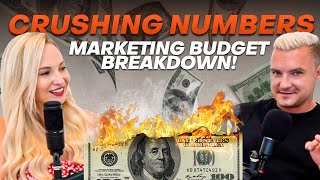
Tim Frey and Steph break down their marketing spend from a seven-figure coaching business: $15-20k monthly on ads, 15 pieces of content weekly across platforms, and 4-6 emails to 10,000 subscribers. They share how to add $10k/month through hiring a VA, automating admin work, and targeting bigger clients.
Questions this video answers
15 pieces of content per week (redistributed across platforms).
Approximately 4–6 emails per week to a list of about 10,000 subscribers.
About $15,000–$20,000 per month on ads.
A Lamborghini (orange with a spoiler) by the end of 2024.
Chapters
This month you might want money. You say yes to all of the work that you can get access to next month. You regret saying yes to all of the work that you just said yes to because now you don't have enough time.
I just want to give you guys a practical example of what we're doing at this point with our actual marketing. I want to give you the exact stats, etc. Like how much we're spending, how many posts we're doing, where we're posting it, all that type of stuff.
To add 10k month to your business, you simply need to do more marketing.
Mic drop.
Most people just are not doing enough.
Welcome to the Success School podcast. We're on episode 42, how to add 10k a month to your business. Steph, we are finally through all the tech issues. Our podcast is working super well. Now. Let's go.
I. I love this room. We are turning. I think we're going to turn this into like more of a stream studio. Yeah, it's going to require a little bit more work, of course. Are we just making things hard for ourselves so we stay busy? Guilty of telling our clients not to do that. And yeah, here we are making things hard. But it's been fun. It's been really enjoyable.
Guys, if you have pressed the follow button in the last couple of weeks, thank you so much. We pray for you every single night. We are so grateful for you. I'm kind of being a little bit sarcastic, but I'm kind of not at the same time. And if you haven't pressed the follower button yet, guys, please do. All right, guys, I'm going to give you my personal update. So I have been hell bent on buying a Lambo. Okay, let me say that again.
Hell bent.
Hell bent on buying a Lambo. I've been nudging at Steph for the last couple of months and it started as an idea and now it's a full blown thing. I'm going to buy a Lamborghini by the end of 2024. The reason I want to buy a Lambo is because why the fuck not? Okay? I have wanted a Lambo my whole life and Steph's more of a Ferrari girl, which I think is pretty lame, but Lambo's a life. And we're going to get a orange Lambo with a spoiler. I'm going to get it so loud that it shakes the entire neighborhood when I started up. And I'm going to get s school license plates on it with a QR code. And we only need to Sign up one person a month to pay for the Lambo. I think that's a fucking no brainer. What do you guys think? Send me a message. Should I get a Lambo? I don't really care what you say, I'm going to get one anyway. But send me a message and support.
It's been a really interesting process. The Lambo situ is really interesting. You actually put up a post yesterday or a couple of days ago on social media about the Lambo and you got trolled immediately. It's a really interesting thing. Like, these sorts of purchases trigger people a lot. And I think that was part of the reason why I was like, really? I didn't actually want one for a little while was because I was like, oh, my God, like, people are going to hate us for having this. Like, you know, everybody knows that people in cars like that get judged. So, like, whereas Tim and I might be, like, sick, how cool. We know that our dads are like, oh, he's compensating for something.
Yeah, my dad was pissed about it.
Yeah. Yeah. And so there's this really interesting thing that happens, but also, yolo, it's your life. And so just do what you want. And if we can teach you guys anything throughout this podcast, just throughout our own experience of business and life and earning money, it's like, you only get this one shot. And, you know, it actually leads me personally, like, perfectly into my personal update, which is like, guys, there is just like, so limited amounts of time on this earth. Like, really, truly there. Like, we are so.
We grapple with this every day.
Every day Tim and I talk about this and it's like, so uncomfortable for us, just like, how limited our time is on this earth. Like, how are we, like, 33, 34? And, you know, we're probably only going to get like 80 maybe at best, 80 good years before we, like, are, you know, maybe not so well anymore, not really able to experience life to its fullest. And I just think, like, wow, like, we are almost halfway through the best part of that. And so why are we. When we see people waiting for things, like waiting for things to get better or waiting for things to change or waiting for the economy to turn around or, you know, waiting to leave their job or waiting to, you know, ask that person to marry them, or waiting for anything in life, it blows my mind because we are just, we have such limited time. And we did a charity event last week at Helix for a friend who. And client who had sadly taken his life last year. And it was a really vivid reminder for us that, like, again, you have such a short amount of time here, so why not grab life with two hands, right? Why not run as fast as you can towards what you want in life? Because we just don't have enough time on this earth. We just don't have enough time.
So a bit of a personal opinion here, and a lot of you are not going to agree with me, but I don't know why any single person in the world doesn't have their own business. And Steph thinks it's absolutely crazy that I think this, and I know everyone's not cut out for it, but, like, living your best life, I feel like entrepreneurship is the best way to do that.
Yeah. But, like, that is.
Yeah, it's hard as well.
Like, I get it hard, but also, like, it's your personal experience. Like, Tim. I don't. If anyone has met Tim or even just listens to this podcast, you'll know. Like, could you imagine, like, managing this guy? Like, that's what I mean. Like, there would be no one that could manage you. Like, you were just not built to be an employee. It was just not in you.
I've been an employee for a little bit, and I rocked it.
Yeah. Until you. Until I wanted to be. Yeah. Correct.
I was like, give me this place. Like, I should be the boss of this place.
So, like, yes. And then also, who would work for people? I personally think that we do need people to obviously work in society. And also I do believe that not everyone shares the same values that we do. So therefore. But I love it. I agree with you, though, and I love that you just want to be an entrepreneur.
I love being an entrepreneur. Into my lesson of the week, guys. So Steph and I go out to breakfast way too often. Basically every day, six days a week out of seven. Yes, you heard that correctly. So that's why you should have your own business. You can go to breakfast whenever the you want for team meetings.
I keep buying bacon and eggs, going off in the. In the fridge because we keep not using them.
And we sat next to two older ladies, and I am a little bit of a busy bee and overheard the conversation, and I heard her say, I don't want to talk about it. And I kind of thought to myself, oh, that's weird, because when Steph and I have an issue or a problem, we talk it out straight away. And the reason we talk it out straight away is because it creates stress in your body, and that stress in the body creates illness. Okay. Believe it or not, but A lot of people avoid having the hard conversation, okay? And when they avoid having the hard conversation over and over, they end up getting themselves in a really weird spot in life. And sometimes there's a spot where things haven't been said, where things haven't been done or they haven't made the right decision. But having the hard conversation is the way. Because, you know, when you guys have all had that feeling in your body, when you haven't had the hard conversation, you haven't said the thing, or you've got something looming over, you've got the white elephant in the room, it just feels pretty fucking gross, okay? And that gross feeling in your body manifests into stress. Stress. You know? You know what happens when you have a lot of stress in your body. But my lesson of the week, guys, if this is you and you haven't had the hard conversation, I challenge you to have the hard conversation. Because life gets better when you have the hard conversation and you go after what you want.
I have been working on a project just to make content creation easy for me. And I think there's a lot of people out there doing a lot of really good stuff with content, but making it pretty freaking complicated, to be completely honest. Like, transitions and, you know, just really, like, hard things where you have to, like, really, like, even, like, talking face to camera, guys. Like, you will know it's hard. Like, it's hard to do. And so it's, you know, you have to be ready. You have to be prepped. You want to try and, like, mimic the script. You want to kind of make sure you hit on your dot points. Then you might not do it right. Then you go back, you have to do it again and again and again and again again. It just becomes too hard to make one piece of content. And so I have been working on project make content easy and valuable again. And a little hack that has been working for me is actually acknowledging my thoughts. Obviously, guys, you have thoughts every single day. So do I. I have many of them, but most of the time, you know, they come up in the most random places. Like, I'll be driving in my car, or I'll be just getting off a zoom call or in the middle of a zoom call with clients, or I will be, you know, folding away the washing or whatever it is.
You will fold away the washing.
Okay, maybe not.
You will not fold away the washing ever. We have our housekeeper, and she folds away our washing.
You might be folding away the washing. And so these kind of thoughts, often they come after conversation. For me so I'll be having a conversation with Tim. And the other time that it comes to me is when I'm driving or going out for a walk. And so I've gotten the habit of just acknowledging the powerful thought and actually just writing in my notes and my notes on my phone, I'll literally be in the middle of a zoom call. And if I say something that I think is quite profound or quite powerful or feels really true for me, or I can see that everyone's nodding, I can see that people are getting value from it, I'll just quickly open up the notes app on my computer and I'll just write down the thought. And every day I'm writing down two to three thoughts. Some of them I share on my stories on social media just to get to see, you know, how does it sound when I'm writing it? Is it landing? Do people. Are people reacting to it? But mostly I'm just categorizing and storing them so that when I go to make content on a, you know, Monday or whatever for the week, I have all of these concepts and I'm not sitting down to kind of a blank page. And they're all my own concepts. Which is the best? Like, really sharing that thought leadership. It is so much easier for me. And I highly recommend you guys get in the habit of just acknowledging your thoughts as well.
What are your thoughts? Like, I'm hungry, I'm sad, I want sleep. Like, what are some of the very profound thoughts? Yeah, yeah. Dumb, dumb, dumb, dumb.
Just go and check out my Instagram and you will see just how many incredible thoughts I've been having lately.
Good. All right. Love that. Speaking of thoughts, guys, I had a thought that it would be incredible if you guys subscribed on YouTube. So if you're on YouTube, hit that subscribe button. We appreciate every single one of the subscribers we have at this day and time.
Okay, on to today's topic. How are we going to add 10k a month to your business? So this episode is all about unlocking your next level. We thought, why not help you add an extra $10,000 a month to your bottom line? And we're going to go through a couple of ways in which we can help you to do that today. So the first thing is, guys, you've got to have the time. Most business owners, when they're trying to scale up to 10k a month or add an extra 10k a month to their business is the first thing they go to do is they go to sell more of themselves. So they Go to, I would call it pimp themselves out. Right? So they're going to pimp themselves out. They're going to go okay, what more of my time can I sell? I see this all the time. They're like oh, should I do some consulting? Should I add some one to ones in? You know, should I do these extra calls? Should I do these audits, should I do these? And it's like, okay, all those things will add money to your bottom line but they will take away from your time. And your time is the only thing you have to be able to actually grow your business. So if you wanted to go 10k months, yes, that might be the way. But if you wanted to go to 100k months that's definitely not going to be the way to get you there. And so we don't want to cap you out because most business owners burn out because they over commit. So this month you might want money. You say yes to all of the work that you can get access to next month. You regret saying yes to all of the work that you just said yes to because now you don't have enough time. And so firstly you have to make sure you have the time. And so the first thing you need to do and you need to do this before you are ready. Too many people do this way too late because they're scared of like making the commitment. You have to get rid of all your non money making activity tasks to a va. Okay, Hire a VA way earlier than you think you need to. Okay. Like I have mine when I was like still working full time in my day job. I have mine from the very, very, very beginning. Even though she was just doing five or six hours a week, those five or six hours, especially if you're working in your day job of the most powerful five or six hours you can spend to do your marketing, to do your sales, to create offers, to refine your, to refine your service, all of those things. You have to be focusing on those things first. So get rid of all your non money making activities to a VA use AI. Well now when it comes to I'm speaking about this purely from a coaching perspective and I think where most of the people who coach go wrong is they spend so much time. The coaching itself is actually not so much the issue. It's all of the admin around the coaching. So it's like getting the bookings, it's making sure that the time slots are booked in, it's the reminders, it's the sending out of the session notes after the session, it's the booking of the follow up call, it's the, the next invoice being sent out. Like guys, so much of that can be automated. Pretty much all of that can be automated. Your post session notes, set it as a transcript. You can use Chat GPT to tidy it up or a VA could do that for you. There are just so many additional things that like all of that time that you could spend, you could spend 5 hours coaching and 10 hours on admin and it's just crazy because if you could just open up another 10 hours a week of coaching, you would well and truly add another 10k a month to your bottom line. So start to use AI. I don't really use ChatGPT, but Tim uses it really effectively and it teaches our clients to use it a lot and I think it can be really helpful. But obviously since ChatGPT has come out, I probably had a little bit more space and time my business where I haven't needed to use it. But if it was out when I was in that stage of my business, it would have been my best friend. And then last but not least, guys, have an ideal week structure. Okay? You will take as much time as you give yourself to do tasks. So if you every single day give yourself, you know, an hour to make a piece of content that you're going to post that day, you'll take an hour. But if you give yourself five, if you give yourself five minutes, you'll take five minutes because you'll just get it done. It's kind of like, I always use the analogy of like if you were going out on a night out and you were running late and you had 20 minutes to get ready for dinner, you would get ready in that timeframe and then, but if you had an hour, you would take an hour to get ready. So you will take as much time as you give yourself. And so an ideal week structure really sets out. When are you going to do your grocery shopping, when are you going to do your marketing? When are you going to open up for sales calls? When are you going to actually see clients? And it's about taking control of your time. Because too many entrepreneurs that want to add an extra 10k to their month, they just don't take control of their time. They're giving it away to their clients, they're giving away to everyone else. They don't put their boundaries in place and they're not even sure how and where they spend their time. You have to make sure that you take control of your time. So that you can add that extra 10k to your business. Tim, where do most entrepreneurs lose time?
Great question. I think they lose time with not having a structure. So they'll just wake up, they'll look at their emails, then they'll go about the day, they'll start doing some content, some sales calls, some marketing, etc. And then they get like a bing, ring, ding. Message goes off, phone rings and then they completely lose focus. And then their whole day will be thrown with just responding and reacting to stuff, rather than having a set plan. So I teach a concept in success school, so if you guys sign up www.success, you guys will get access to this. But it's plan your week and plan your days. And the plan your days revolve around creating power lists, a power list of three to five items. So these are big items that are gonna move the needle in your business. After you have created them, you're gonna execute them in a deep work session. So a deep work session is essentially time where you don't have any distractions, you have no notifications, you don't have your phone ringing or binging or whatever it is, and you go and execute those three to five tasks in an hour. Two, three, whatever it is or whatever you give yourself. And then you're going to stack these deep work sessions on them. So if you do one a day for five days, you've got, you know, potentially five, 10, 15 hours of deep work done every week. Where entrepreneurs go wrong or small business owners is they just don't do this enough and they just get distracted doing shit that doesn't even matter. Okay? So if you're spinning your wheels in business, I'd probably say with great certainty that you're just doing shit that doesn't matter. Okay? Or it doesn't move the needle in your business. So have a look at the tasks you're doing. If you don't even know what you're doing, you know, there's probably a sign there that you're probably not doing the right stuff. It should be shit that matters. Okay? Heaps of small business owners, entrepreneurs that we speak to every day. I'm like, cool, so what do you do during the week? And they're like, I don't know. And if you don't know, bing, bing, bing, bing, bing. There is an alarm that should be going off in your head that's saying, I'm probably doing shit that doesn't matter. Steph, do you think, you know, while you're laughing here, do you think people are more Scared of failure or success?
I had this question here because I thought, like, what actually stops people from using their time? Well, and, and usually it's some level of fear. And sometimes it's like, okay, if I like, let's say you free up the time guys in your business and then you actually have to go and do the things that you said that you were going to do to be able to actually create the extra 10k a month. I thought to myself, what actually stops them? And usually it's some level of fear. And I started to wonder to myself, I wonder if it's more of a fear of failure or a fear of success. And I, I think for small business owners and for especially female entrepreneurs, I actually think that it's more of a fear of success than, than failure. And I don't know, I think for men, maybe it's the flipped. I think maybe men have more of a feel of failure than success because of society's expectation of men to carry a lot of the finances and the load and that sort of thing, whereas women, I think it's like a fear of success. Like if this actually takes off, then I will have to, then things will change. Then my, you know, friends and family might treat me differently. Then I might have less time, then I might get to have to spend less time with my kids. Then I might, you know, I might become really different. I might have really, really confronting realizations. You know, I might end up having to actually go on stages and actually start to say yes to the opportunities that I really, really want. But I'm actually terrified to take up the space and actually have. And so I think that for females it might be a fear of success, but for, for men, I think maybe a fear of failure.
100% agree. So moving into our second teaching point, we've got find the right lever or model to add an extra 10k a month to your business. So, couple of examples here. What is going to be harder or easier for you? Would it be signing up one client at 10k or would it be signing up 100 clients at $100? Obviously signing up 100 clients at $100 is way harder. Everyone thinks that the low ticket or the low cost thing is easier to sell when the reverse is often true. I don't know too many people, probably like five or six out of all the people I know that are doing low ticket really well. But everyone thinks that doing low ticket is the answer to creating more money in your business. You know, with a disclaimer, here we are selling digital Products and low ticket courses at the moment, after we have got the high ticket thing nailed first. Okay, so success school, the growth engine. Getting 40 calls a month booked, you know, signing up 20 clients every single month to our program is something that happens on autopilot for us. So we have done that and then now we are focusing on building out low cost courses that are going to run on ads and digital products, etc. But people go and add that way too soon when they should probably just go and add the big fish to their list first or go after the big fish or the big clients, the people that you want to sign up or you want to add to your business service product, whatever it is. The big ones are usually easier to sign up than you think they are. And it's much harder to sign up the small fish because they're probably less willing to invest.
Yeah. And so I want to give you an example of big fish for a small fish. We have a client in our program, her name is Jess, and she has a VA agency and she at first started working with like small business owners and she was getting them VAs for like 5 to 10 hours a week. And then, you know, that was fine, that was working and that was no problem solution, scaled it really well and then she landed a big fish client. So it was like a, a real estate agent company that had like, you know, hundreds and hundreds and hundreds of employees. And they took on so many VAs with Jess that 80% of our income ended up coming from this one big client. And so guys, there is like sometimes just one big fish out there that you can land that you'll be able to feed on and feed on and feed on that will feed everything that you wanted to your whole family, your lifestyle, everything. Instead of having to try and capture all of these small fish and, you know, almost like starving to stay alive. And that's what we talk about, big fish versus small fish. And I think a lot of the reasons why people are scared to go after those big fish clients are because they don't maybe trust themselves enough to be good enough. But actually, usually your big fish clients are way, like way, way, way easier to service because they're usually very chill and they're just very grateful and they have the money and they're not so holding on so tight to it just.
To have a review for you guys to take this point home with you. So go look at all the clients that you have in your business and I can almost guarantee you with 100% certainty, the ones that pay the least are the biggest pain in the ass. Okay. And the ones that pay the most, the most chill and easiest to deal with. So I'd like you to go and, you know, today when you guys are listening to this podcast, go and do a little review of your books. This is also a concept by Mark Malkowitz, okay. Called the Pumpkin Patch. So what he does is he goes and looks at his best clients. So two metrics here. His best clients, who he likes to work with, and the ones that pay the most. Most of the time, they are two and the same. Okay? And that's how some people grow their businesses, is on referrals by just going after those seed clients. The best clients that pay the most, and they're the best to work with. Oftentimes you're going to ask them for a referral and then they're going to refer you to other clients like them. Whereas if you go and look at the clients that pay the lease and they're most pain in the ass, they're probably the same people as, well, you don't want to ask for a referral from them because they're all obviously going to be bad.
And just one last thing on this topic, guys. A lot of the times you are projecting your own money sheet onto your other clients. So what might be happening is that in your world, in your friendship circles, in your connections, in the people who are in your world right now, you might be hearing a lot of, it's really hard. We have no money. The economy is really tough. It's really difficult right now. And if you continue to believe that everybody has no money, then you're going to find it really hard to go and have the confidence to land a big fish client. However, in those circles that we roll in, we never hear these conversations super rare. And when we do hear them, we're.
Like, oh, my God, like, that's the real world.
That's the real world. I'm so, so sorry that people are going through that and how can we help? Right? So, but you've got to remember, guys, like, your reality makes up the things that you see. And so just being mindful that if the people that you are hanging out with, and that's okay, but if everyone is really struggling right now, which a lot of people are, because, yes, the economy is. Is really hectic at the moment. We aren't saying that it's not true at all, but that doesn't necessarily mean that's true for everybody. And that just might be, you know, your. Your corner of the world and not to maybe take everything so literally, like, and make, you know, outlandish statements like, everybody is struggling. Because, yes, a lot of people are struggling and it's fricking awful. And, you know, we want to do what we can to give back. But also there are a lot of people who are doing really fine. I'm very comfortable. And those people still need your help. Point number three is that to add 10k months to your business, you simply need to do more marketing. Mic drop two More marketing. Most people just are not doing enough. Most people, when they say, hey, Steph, I need to get more leads, I need to get more inquiries when we have a look and I'm like, cool, what are you doing currently? Like, oh, yeah, I post on social media. Yeah, I do. I post on social media three to four times a week. And then like, maybe they post in a couple of Facebook groups a handful of times a week. And I'm like, okay, that's good. Great job. I'm being consistent with that. I love that for you. However, if you really, really want to scale and grow a business and add an extra 10k a month to your business, the most limiting factor for most small businesses is that not enough people know about you. That is the most limiting factor. The more people know about you, the more they see you, the more they hear from you, the more they know about you, the faster you're going to be able to convert them. We just added this new metrics tracking system and apparently it takes like five days for when somebody finds us and engages with us to when they will purchase, which is so, so fast. And the reason it's so fast is because we have so much content for them to consume. One, because they probably seen us a lot before they even landed in our world, because we're running a lot of ads, we've got a lot of stuff all over the place. But two, because once they land in our world, often the first place they land is this podcast. And so they're getting to know us really quickly because they're deep diving all of our content. And so we're able to really speed up. Then we send regular emails, we're putting out lots of content. We have Facebook ads as freebies, as downloadables is our Facebook group. There's so many ways that people can engage and get and connect with us. And because of that, we're rapidly closing the gap between how long it takes for someone to, you know, engage with us to when they buy with us. And most people just aren't doing enough marketing. So Tim, what other kinds of marketing should a business owner be doing that is trying to add 10k months to their business if they're doing currently just doing social media?
Great question. I just want to give you guys a practical example of what we're doing at this point with our actual marketing. I want to give you the exact stats, et cetera, like how much we're spending, how many posts we're doing, where we're posting it, all that type of stuff. So we're a multi seven figure coaching company just to give you guys context on this. So, you know, if you don't want to go to seven figures or you just want to go to high six figures, just take this with a pinch of salt. Okay. Or just like adjust it for where you're at in your cadence. So I do 15 pieces of content per week. Okay. And that's on. I'm redistributing that on multiple social media platforms. So That's Facebook, Instagram, TikTok, Twitter, whatever it is. So if you do four platforms by 15, that's 60 pieces of content. That's just organic. Steph and I, between us, we average about four to six emails a week to our list of about 10,000. So that's 60,000 emails a week. Okay. Across there. And then that's about 75 pieces of content each. Then we're spending 15 to 20k a month on ads on top of that. Then we do one long form content piece on YouTube and then we put it out across all the social media channels, plus all the outreach, plus all the other stuff as well. So we're taking massive fucking action there, guys. And you could probably hear that like the way I said that, that sounds like a shitload of work. Because market is honestly, outside of coaching, the number one thing we do, we are marketers. That's essentially what we sell. So our marketing has to be good. It has to be in high volumes. So if you analyze what you guys are doing in your marketing efforts compared to that and compared to the results we're getting right now, there's probably going to be some discrepancies in there. Volume is key, but it has to be high quality as well. And that's something that Steph and I work on. So what kind of marketing should they be doing? So there are only three ways you can market and sell. The first one's outreach, the second one is with content, and the third one is with ads. Okay. A lot of the times if you listen to this podcast, if you're under that seven Figure you probably don't have a massive ads budget, which is fine, but you can do a lot with great content and good outreach. So outreach is one of the most important things that you can do. And I would probably start with warm outreach. So warm outreach would be anyone that's in your network that you know. So friends, family, you know, anyone you've done business with before, colleagues, etc. That would be warm outreach. So I'd be setting a minimum KBR or target every day that I'm going to reach out to five people, okay, in my warm audience. And then let's say you do 10 in your cold audience, or 10 people that you just want to reach out and connect with. Second way is content. Steph and I talk about content all the time. This should be the backbone of what you do. Why? Because people are going to go and check you out, okay? And they're going to go check your content. If your content stinks, they're going to think you stink, okay? In terms of as a business or a service or whatever it is. So content is very important. Steph and I put a massive emphasis on this in all of our businesses because people do a very thorough stalk and research of you, so your content has to be really hot. The second one is networking and connections. So, you know, Steph did this a lot in the early days was networking and connections, because it does work. Steph went and spoke in an event the other day and got two clients from that. So speaking engagements are really good. So if you can go to lunch and learn speaking engagements, you can get on podcasts, these types of things, These are also really good. One of the big pillars that we often always recommend for everyone is posting in groups. I think people do the posting and group thing wrong a lot of the times where they're trying to extract all the time. They're trying to get clients straight away. A lot of our marketing efforts are all about just giving value. So if you're on our email list or you're on our social media, we're giving all the time, okay? We're always giving stuff away. Like I was giving away CRO last week. We lead magnets every week in our group. We're giving away or giving away all of our secrets all the time. And we're doing that in groups a lot of the time because there are a lot of people in groups in specific niches. That's where groups are really, well, really good is niches. So you've got a group for females in business, you've got a Group of guys that like fishing. You've got a group for guys that like four wheel drives, and you can be giving value in there all the time and becoming a valued member of that group. Then when they have a problem or they have a need, they're going to go to you as the expert that's been posting in the groups. Okay, next up, we've got ads. We've spoken about this on the podcast at nauseum. Most of our ads is around lead magnets. So we spend quite a considerable chunk of change every single day giving out lead magnets for whatever problems our avatar has. We get them on our email list that we nurture them, we send them to our podcast. That's essentially our funnel. And then we offer discounts and offers. Not discounts, but offers, you know, every month or six weeks to join success school. And that's like a majority of our ads funnel is very simple. Then emails. So we do a weekly email every week for our podcast. Then, you know, we invite them to join success school, et cetera. So from all of these guys, you've got outreach, you've got podcasts, you've got influencers, you've got Facebook groups, we've got ads, and then we have presentations and trainings. Okay, There's a bunch of stuff that's getting done here. I didn't purposely touch on influencers because I want you to talk about this stuff. Hmm.
So I have used influencers to grow my businesses, like all the businesses that I've run so far, probably. And I think that it's a really missed opportunity because I think people put influence up on pedestals and, you know, are too scared to ask them or whatever. Like it's a human being that, you know, might need your help. And so that's the way that I see it. And so, so much this marketing that Tim spoke about, presentations and trainings, connections and networking, cold and warm outreach, you know, getting on, nothing that was podcast, Facebook ads. It's all about being seen by other people. Right? And so if one of the first ways I had a beautiful friend, now friend and client, Danny. And when I first started business coaching, somehow, you know, praise Lord, hallelujah, she found me on social media and she was like, I think, you know, we had a sales call and she at the time wasn't even a big influencer. Well, she was, but she had influence. But it was a smaller audience compared to what she has now, I think around 20k. But for my little, like, you know, I think I had like maybe 1500. Yeah. Followers at the time. So I was like, oh, my God, she's such a big deal. And I remember cutting a deal with her. I said, look, I want to work with you. I think you're a powerhouse. I'd love to help you. Even though I was shit scared, even though I was so nervous, even though I wasn't sure if I actually could do it, I just was like, I want to kind of deal with you. So I tell you what, I'll give you 50 off the coaching service. And if you love it, if you love it, all I ask is that you tag me on social media and you share, you know, after each session, which she did in abundance and still does to this day. And I'm so very, very grateful for you, Danny. Thank you. And it's. And, you know, we worked in there and we. We built her business up and she now earns. I think she's on track for seven figures this year, which is absolutely insane. Over the last few years, she's really worked on that and influences really have changed the game for me. I've worked with quite a few influences over the years. Most of the time they've come to me. But there have been times where I've outreached, especially when I had my first business, House of Hobby. And, you know, we would outreach and we would invite influencers in and, you know, because people of influence obviously have audiences that are going to be influenced by what they're doing. And so it makes sense that if they have an audience of people who would be ideal audiences for you, for you to work with them and to say, hey, like, I'd love to cut a deal. And influencers are stoked for that. That's exactly what they do. They influence. So they get cheaper stuff, free stuff, stuff that helps their audience. And the best thing is you're only offering it if they're having an incredible experience, which they usually always do. And so for me, it's been in a really, really powerful way to grow my audience and my brand. I think even just working with Danny alone, I reckon over the last years, few couple of years, I've probably grown by around two to maybe two and a half thousand people just from one person. I also worked with Steph Pace for a period of time and I got, you know, like thousands of followers from working with her as well. And so there are lots and lots of people who I've worked with over the years who have had big audiences. Michaela is another one who's really helped us out with a lot of audience and so the growth comes really easily when you tap into the influencer network. And so I think that there is. It's a really missed opportunity for people simply because they're too scared to ask.
I just have a little bit of a random question off topic, just thinking about influences. What would it take for you to influence for someone else?
Well, I'm.
Yeah, because like, you're not influencer, but, like, you are.
No, I have influence, but I refuse to influence.
Yeah, but like, why?
It's just too much work. Like, I'm not. I wouldn't say that I'm a particularly good content. Like what, like what am I going to. So, okay, so this comes down to.
I think you're underselling yourself here.
Well, guys, don't ask me if once. I'm terrible. But this comes down to a time versus money thing. Like, I.
That's what I was getting at.
Yeah, I could good influence for somebody, you know, and I could get kickback for whatever, but I could also just spend that time creating my own content and then if I nail my own content, I'll get a client for $10,000. It just, it doesn't make sense for me to spend my time there. Personally. I don't care to be an influencer. It doesn't interest me to try products and test them and record the footage and all. It just, I'm terrible at it. And so I. And I. It's of no interest to me personally. Yeah, that's a. Yeah, yeah. But I. But people love it. I know a lot of influencers who love influencing and so find one of those people and help them.
Yeah, just a bit of a story on that, guys. Just find the right influencer as well. So we had, you know, we've used influencers for various things and we've had people with half a million followers that I could sell more training programs than someone with half a million followers as a fitness influencer, which I have 7,000 followers. So it's a little bit concerning there. So just because someone has a massive audience doesn't mean they're a great influencer as well.
Yeah, it needs a massive engaged audience. Yep. Absolutely. Awesome. So let's dive into our listener questions. Louise M. Has asked us a curly one today. Tip and I were a little bit like, oh, goodness. We always thought about maybe changing the question because we were like, let's see how this goes. So Louise M. Has asked, how do you define your own version of success and not just scaling for the sake of it? Tim?
Okay, Louise. So I was thinking about this before and before the topic. So it's a great question. But this changes so often for me. It's crazy. So I'm just going to give you guys a little bit of a rundown or history lesson on me. You might not have mastered this, but I'll give it to you anyway. So when I signed up with my first ever business coach, Sean Greeley, he said to me, how much do you want to earn? And I said, six figures. And at the time, that was baffling for me that I could potentially earn six figures. And then, you know, I signed up with a few other business coaches. I've had about 12 over the last couple of years. And then it got to seven figures, then we hit seven figures and I thought that was absolutely crazy. And I thought I'd never have a seven figure business. And now we're going on multi seven figure. And it's just absolutely crazy for me to think that all the wildest dreams that you ever have are so possible for you if you just keep putting one foot in front of the other and keep working at it and surround yourself with the right people. My version of success changes so often. It's always usually about like, you know, it sounds so weird, but like, I am living my best dream or my wildest dream every single day. Like, I have amazing wife, I have amazing dogs, I have amazing friends, family, house, like all the things. So my version of success is more around, like how I spend my time now. And Steph and I are getting away from just scaling for the sake of it, like slowly and slowly. I think this year will probably be, you know, if I'm honest, probably our last year of scaling for the sake of it. And I'd say next year we'll probably get into more of a zone of like scaling because we want to, to a certain point. I'm speaking for Steph here, but like, it kind of feels like we've set these goals this year, which we're going to hit, by the way, but it might not be what we want to do forever. And we honestly, we do evaluate these things quite often and we have these conversations probably quite regularly more than someone would think. It's like, what is the point for us in scaling this thing or the next thing or whatever it is. So you know for us, what this year was getting to two and a half million, which we're going to do. And then I'd say we'll reevaluate after that. So how do I define my own version of success? I'm Currently living my own version of success. I wake up and really I can do whatever the I want every single day without a care in the world. Really. Like, yes, I do have to run two businesses, but I do love them as well. So for me, it's probably discovering what that next level looks like of help and who I want to help in my big vision, why and mission.
But yeah, Stephen, Yeah, we've just booked a trip to Fiji coming up and in a couple of months. And it's to be in rooms with people who are earning eight figures and beyond.
Yeah, 100 million.
100 million. So people who are earning millions of dollars a month, which is quite, is quite crazy for us, guys. Like, I find it personally really hard to see what's possible until I've seen what's possible. I'm a very visual person and so I really need to see someone doing it, really to see how they're doing. I really need to actually feel and be in the room with that person and meet them and recognize just how fucking possible that thing is. Once I do that, like, it's like, it's like I'm uncapped in my potential. I can absolutely go ahead and get it. I just need to see it first. And so, Louise, to answer your question, we just scaled here so much faster than we thought we would. And so because we're already here, we're kind of just like really enjoying this process of success for us right now. And every day we talk about like, do you want to do, should we do something else? Should we grow something else? Should we try something else? Should we keep growing this? Like every day we're having this conversation and every day we're just reevaluating and being like, okay, well we're really happy right now, so let's just enjoy this period while we're in it. Tim really loves the build. So his version of success would be to enjoy what he does every day. He likes to work and he likes to build. And so he wants the opportunity to be able to build more low ticket offers, more courses, more things that can impact more people, build his audience. As long as he's got that kind of run and that momentum of build, he's really happy. And I'm super happy just to run. So I'll run the things that he builds and until that stops working, you know, right now we're really living our version of success. But to answer your question, that might be for you, Louise, is like, how do you define your own version of success? I think it's like, you really have to look inwards and go, okay, out of all the things that I've defined as success, because I defined a lot of things as success at the very beginning. Like, you know, I wanted my first business, I wanted to franchise it because I thought that sort of success looks like. And then, okay, what are the pros and cons of franchising? Like, would I actually want to do that? There'd be a lot of travel, it's going to cost a lot of money. Franchise agreements start at like 60, 70, $80,000 to even just buy into getting into franchising. Is that really what I want to do? My gut was like, not really. So put all of your versions of success that you've put up on a pedestal in front of you. Maybe it's us, maybe it's other people. Like, what does the version of success look like that you've created? And then actually look at, like, would that feel right for me? And we've been having a lot of conversations with our clients around this lately. You know, a lot of people have been like, hey, I want to run a business just like yours. And then when they actually come to running a business just like ours, they actually don't enjoy it because we show up a lot load in our business. We coach four days a week, show up every single day. We show up every single week, every single year, all year round, because we love it. Like, that's how we've designed it, but that doesn't necessarily mean that's how someone else is going to design it. You know, we see people who run retreats because we run retreats, but they don't actually want to run retreats. So they don't even have the finances to run the retreats. And so it's like, don't just blindly, don't just copy or copy. Like, you know, feel free to, but just make sure it's what you want. And so there's that real check in of like, okay, who are you pedestaling for success? And then what does success actually, like write the pros and cons down? Like, would that actually appeal to you? And this is a real intuitive, gut based thing. Like, it has to feel like a yes in your body. And when you get that yes, that green light, you will just go, all.
Right guys, that was a fun episode. If you're a listener and you love the show, even if you're just here for the first time, guys, the most important metric to us is follow the show. So if you're on Apple or Spotify or YouTube or wherever it is. Guys, make sure you follow the show. That is all we ask. And we're going to keep delivering zingers and amazing episodes for you. Thanks, guys.
Thanks, guys. See you next week.










