
How To Boost IG Story Views & Engagement To Make More Sales In 2024
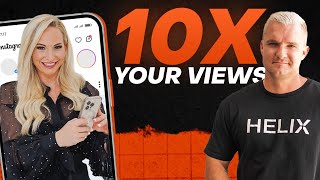
Tim Frey and Steph share tactics to boost Instagram Story views and sales. Post one strong story per 24 hours to increase views, use vulnerable content over teaching, and write hooks that make people stop scrolling. For email, test subject lines with numbers and bold words.
Questions this video answers
Episode 38.
59 (they say: 'We appreciate all 59 of you').
~7,000 followers and an example of ~1,200 story views after using the one-photo-per-24h tactic.
1,000 downloads per episode (to trigger flying a listener out for a VIP day).
Chapters
If you are putting your offers out there, if you're putting content out there, but hardly anyone is watching, no one is inquiring and it's feeling hard to get engagement and sales. Then get your notes ready because today this is a highly tactical episode that we are diving into.
If you share something to your story, it can actually decrease your engagement or story views and it can kick your algorithm a little bit. So if I notice my story views are getting a little bit lower, I will execute this next tactic that I'm going to share with you guys.
Hello and welcome to episode 38 of the successful podcast. We are mixing it up this week and I am doing the intro. We love a little bit of a role reversal, don't we?
Wow. So many innuendos with that one.
It's just hook, line, syncoje. Just.
Now, Steph, I'm feeling a little bit of a emo vibe. How do you feel about it? I'm like reveling in my punk rock era.
He is in his punk rock, punk rock era and he's also got a chalk top hair at the moment. Is. You're all just random. You just, you're, you know, you're in a phase. You're in an era of just punk rock. Don't give a. I love it.
I feel like a little bit of competition with that intro is coming up now. Like you're trying to one on me, like with the volume of it.
If you guys are listening, I'd love to know who you prefer to have intro.
I haven't told you about all the messages I've been getting about this.
Oh, no. So let's dive into. Tell me a little bit about what's going on for us right now. Give us. Give everyone a bit of a life update.
Yeah. So I have been feeling a bit guilty, a little bit like a piece of okay from a friend point of view because I've been canceling friend catch ups like it is going out of fashion. So I've just had a few people try to catch up with me and I keep canceling or rain checking because we're so damn busy and I feel guilty about it. But then I'm like the mission. And I know the mission is, you know, to build a thousand six figure businesses and 107 figure, but that's okay. So I'm kind of just like looking at it as a phase. Like it's just a little bit of a hustle phase. And you know, maybe you have to turn down the friendship dial and just being like a social person a little bit just to get to this next level in business. But in all honesty, I've been feeling a little bit bad about it. Should I be?
I don't know. So this is a really interesting topic because I do think that there does need to. I think we call it periods of hustle. I call it periods of hustle. And I think you go through phases in your business and I think if you're listening to this, you probably have also been through a phase of this where drive forward really hard for a period of time and it's all you focus on. It's 110% of your energy goes into it. And then there are periods where you're like, oh, okay. Well that was awesome. I got a lot of momentum in the business and now I just want to like take a step back a bit, spend some time with my friends, like, go have some fun, you know. And Tim, I've noticed that for us over the last, you know, five years, that or 10 years almost that we've been in business for, I have noticed that cycle for us has been pretty hardcore. And I feel like in these periods of hustle, we actually go so hard and we can create so much forward momentum in our business that it does require an all in mindset. And so, you know, we were supposed to go away with the caravan this weekend and we haven't done it because we, we are in a period of hustle where like got to do, got lives to change, we've got courses to build, we've got lead magnets to get out, like, and we're excited by it. And so I think that like, I don't know, is there a level? And maybe this is just our experience and our take on it, and I definitely would say so, but maybe this is just the season we're in and that's okay.
Yeah. So I've been doing a lot of study which leads into my lesson of the week. And the email guy, he's on again, talking about email. So my lesson is about email particularly. We're talking about email subject lines here. Okay, so we've got three hacks to improve your open rate. And just before we get into that, I want to give you a little bit of context. You could write the best email in the world. If no one opens it, it don't matter. Okay. So the subject line is probably the thing that gets the least effort or the least amount of work that goes into it when it probably should just be the other way around. Because it is the one thing that's going to get you opened or not. You know, if you go to spam or whatever it is, they're not going to see you anyway. But you know, the subject line is the most important thing. So I'm going to give you guys three hacks or improvements to make your email subject lines better, therefore open rates better, therefore click through rates better, therefore making more money stacking cash, buying a Lamborghini, like I'm going to do at the end of the year. So the first one is you want numbers in your subject lines. And that sounds very specific, but numbers have been proven to get a higher open rate in emails. Okay? So if you want to throw some numbers in there, the second point is you want statistical percentages because that creates curiosity. So numbers and percentages, they kind of go in the same. So if you can get a percentage sign in there and a number, your email open rates are going to improve incrementally. The third one is boldened words. Okay, so a boldened word, not all bold and words. So you just don't want to be typing in caps lock, like open this damn email, you know, all in caps locks with, you know, 72% on it. Okay, so what you can do in most email servers or platforms or whatever it is, mailchimp or, you know, go high level or whatever you use, you can do a split test. So you can test different email subject lines on the same email. Okay, so you could test two or three or whatever it is, whatever the capability is. So one of them you can try bold words. One of them you can try percentages. One of them you can try numbers and you can mix and match and see which gets the biggest open rate. So just to recap that, guys, is we want a bolden word, we want numbers and we want percentages or statistics in the email subject lines.
Would this be a good email subject line? Because I feel like it also taps into curiosity. Don't try to math this math, I promise. So like you might have an email line that says or subject line that says only 4% of entrepreneurs do this. Would that be something that people would be more like, one, it's got curiosity. Two, it's got that 4% and there's no bold and words. But I think, would that be a good one? Maybe?
Yeah, you could do that. Or 4% do this in capitals.
Interesting.
Like something like just even a little bit shorter, a little bit more punchier. You're like 4% do what? Like what the fuck is he on about?
Yeah, interesting. Okay, cool. Love it. So cool.
Lesson of the week for you, Steph.
We have been watching YouTube at night, which I've been loving, and one of the videos that I watched while Tim was fast asleep one night on the couch, because he's been falling asleep quite early in this period of hustle, and he'd fallen asleep to the dulcet doubt, dulcet sounds of Paul Mosey's voice. And so we were watching this video, and I'd heard him speak about it before, but the way the video. And he's put it up on his Instagram recently, too, and it's a really awesome video. He talks about building and, you know, you've heard us talk about it before, that, you know, if you want to build a skyscraper, you can't build on the foundations of a house, right? But he showed this really cool example of stacking these bricks, and he kind of had these little boxes that he was stacking up, and they were rectangle. And so if you imagine if you're watching on YouTube, it's going to be a lot easier to see this. But if you're listening, you want to imagine that you've got this rectangular box. It's empty and. And it's flimsy, okay? And if we said to you, you have to stack it as high as you can, in the next 10 seconds, you're going to turn it on its thin end so that it's longer, like higher than it is wide, and you're going to stack it up high, but you're only going to get to four or five boxes, which is great because that is the fastest way you could build it in 10 seconds. However, obviously at four, after four or five boxes, you're not going to be able to stack anymore because it's too flimsy, it hasn't got enough foundation. He said, imagine if I gave you 10 minutes to build as high as you could, what would you do differently? And so, of course, if you had 10 minutes to build it, knowing that you could build that in 10 seconds, but he couldn't go any higher in 10 minutes, you'd lay the boxes flat. So instead of, you know, like, stacking them on the short side, you'd lay them flat on the floor, and then you could build wide and high, and because it has a really solid foundation, you would be able to build much higher. And the point of this story for you guys and the point of this video that Alex was sharing was that how often are you trying to push to get to the end result too quickly? And I had a conversation with a client this week. And she was like, do you think that I could launch this offer? That it's going to be her hero offer? Do you think I can launch this offer in the next four weeks and build it and launch it and the whole. And I was like, do I think you could do it? Yes, I think you could do. I think that you should. No, I don't think that you should. I think that if this is going to be your core offer, this is going to be the offer that takes you to a million dollars, which it will be for her. I want you to take a little bit of time to build it. I want you to build it right and build it properly. Because we rush to build, we don't do our best work. We maybe don't think about all of the things. We don't maybe don't plan it out as well because we're so desperate to get to the money making outcome. She was like, april is my best month for sales. I want something to sell. And I was like, cool, so let's just sell something else so it's really easy to build really quickly. And then let's put time and effort into building the hero offer because we want to build it so that it lasts. And so I really loved that thought process.
Yeah. So if you guys want to see what Steph was doing with her hands there, which was quite a thing. Okay. Jump on over to our YouTube and check out the. Yeah, it was quite a thing. Check out the Success school podcast on YouTube. Make sure you guys hit the subscribe button. We appreciate all 59 of you guys right now. That has actually gone up quite quickly. I'm actually pretty happy with that.
Thank you guys for watching us. I can't believe. Just watch us sit here and talk. I like, I appreciate you. I love you. Please don't stop by. Really makes me happy. We're trying to get a little bit more interactive for you so that you enjoy watching it.
We've been moving our hands. We've been doing presentation courses. If you guys feel a difference with this, let us know. Steph, what are we talking about today? We're boosting stories and shit.
Yeah, yeah, yeah. Boosting stories and shit. So if business isn't going how you expected it to so far in 2024, it's probably a really good time to listen to this episode. Okay. So from the thousands of business owners that we've met and worked with, 90% of them have slow sales periods. And those slow sales periods, I can pretty much connect directly to a lack of eyeballs okay, so not enough people are seeing your content, not enough people are seeing your offer, which of course is going to lead to low sales conversion. Okay, There are, of course, a lot of factors that play into this. So if you're getting lots of followers and engagement and views, then. And you're not getting the sales, then it's probably an offer or messaging issue. But if you are not getting lots of followers, lots of engagement and lots of views, we want to speak to you about how to increase that today. So if you are putting your, your offers out there, if you're putting content out there, but hardly anyone is watching, no one is inquiring, and it's feeling hard to get engagement and sales, then get your notes ready because today this is a highly tactical episode that we are diving into. So first and foremost, we're going to talk about how to boost your Instagram story views and your engagement to make more sales in 2024. So the first one here is vulnerable content. And we spoke about this a little bit on last week's episode. But this is really around real thoughts on post. So we have both been, Tim and I, to be really clear, have both been playing around with sharing more real content. So hashtag real, more vulnerable content, more thought leadership, our real thoughts on things, a lot more unfiltered and the honest behind the scenes of kind of what our business and life look like. And honestly, it's been going off, hey, like crazy. We have seen a huge, dramatic increase in like, especially engagement. Engagement has been absolutely insane. And so I think that people, I think the platforms are really craving. I just think humans are just craving connection with other human beings. And so the more real and unfiltered you can be, the better it is. We find that often our, you know, our iPhone taken photos do a lot better than our professional images. Like, we find that if we tell a story, and especially this. And this leads us into point two, if we tell a story that focuses on sharing rather than teaching, which I'm going to break down for you shortly, that the increase, the increase in engagement shares and views is just crazy. So let me break down the difference between teaching and sharing for you.
Before we get into that, I just want to say, you know, vulnerable content people take this a little bit too far.
Totally.
So if your life's a mess, don't tell everyone that your life's a mess. Okay? Especially if you're in the business world. Like, there's a point where vulnerability is cool, but then, you know, it detracts from you as an operator as well, which is not what you want to do. So, you know, maybe, you know, if everything's falling apart around you and you're posting every single thing of your life and what's going on right now might not be the best look for your business.
Totally. Unless you are a like lifestyle content producer. So I think if your business and your brand is built on the vulnerability of everything falling apart and that's how people connect with you, then there are a few influencers online that we know that do that really well and they have built entire businesses on that. But I think being really mindful that you need to choose which bucket you're going to be in. Are you a personal brand, an influencer who shares every single step of their life, or are you a business that's trying to professionally help more clients, you know, to make money? Yeah. And especially in the life coaching space, there's vulnerability. But also if you're going to lead someone through a lot of deep stuff, they want to see that you are, you know, at some level really in control and, and on top of your stuff. So I do think that a vulnerability doesn't have to look like crying on camera. Like we don't do that stuff really. So vulnerability for us is really just sharing our thoughts, thoughts on things, our opinions, our unfiltered view of the world. So the second part here, like I was just speaking about before, is around teaching versus sharing. So a sharing lesson rather than a teaching lesson would look like here's what I did or here's what I learned growing a seven figure business rather than teaching, which would be how can, here's how you can grow a seven figure business. So we, when you take that instead of teaching, how can you grow versus how did I grow? We're seeing a huge shift in content that is really focused around the story of me or the story of my clients or the story of our business. That is the sort of content that's getting the most reach right now. So we want to tell more stories. You know, as human beings we've been wired to tell stories since we were evolved basically. So, you know, even in caves before we had language, there were stories on walls and so, you know, drawings and things like that. Like, we have always been wired to tell stories. So if you are not telling stories in your Marketing, you are 100 missing out, Tim. You are actually just crushing. Like the size of your audience and the amount of engagement you're getting right now is pretty out of control. Talk me through your process of how do you Write these stories and how do you get great hooks?
Yeah, so story writing for me falls under two categories. So I like to think of survival needs of my prospects and what they would be going through or thinking right now in terms of their own survival in their business. So some examples of survival needs would be like, how do I get my next client? What is my other one? Steph?
I'm survival need. Well, it depends on which client we're looking at. But let's say we're looking at a client who you know, is 0 to 5K. A survival need will be like, I need to get this marketing working right now so that I can get clients. I need to, you know, get these invoices paid. And like, why are my clients not paying me? Why am I doing so much work but not getting paid enough? Like, you know, I feel like I'm working all the time, but I'm still struggling to, you know, give my cash to get by. Like those real survival needs of like, you know, I've got, I've got a client that's not paying their invoices on time. I've got a client that's not sticking to the scope of work. They're always asking me about stuff outside of workplace hours. Like, you know, those real survival needs that things that people are really, really struggling to get in their lives so that they can actually survive. The basics of living.
Yeah. So I would have the ideation process which would be that. So finding the survival needs, the other ones, I would be looking through our group. I'm looking through posts. I'll be looking for common themes, I'll be looking for what's going on online. And. And once I have the idea of what I'm going to post, I would come up with a hook. Arguably the hook is the most essential part of writing a story. It's how you capture someone, engage them from the outset. Social media is very loud at the moment. Okay, so the better your hooks, the better your writing, the more engagement you're going to get. So, you know, what I'm going to write here is I'm going to look for examples of hooks that are going to catch people in and catch their interest. So usually it's something around a question, it's something around like a need or a desire that they have. So it could be. This is how I made $642,000 in the last three months using X. Okay. So that could be an example of a hook. It's very specific, the outcomes in there. Someone that is in my audience might Want to learn how to use email or whatever that is to create that. So every step of the process of writing a story needs to sell the previous step or the next step. Okay, so the hook needs to sell them on the next line, the next line needs to sell them on the next line, and then so forth. Okay? So your writing in every step has to be good. So how I would write something, I would come up with the hook first. That's the first part after the ideation. Then I would write a couple of dot points on where I want this to go from a story. So I'm mapping out the story from like a high level holistic point of view. Then I'm going to have the CTA at the end. Then after I've done all that, I'm going to fill in the blanks and I'm going to go through and read and edit over and over. So from a high level point of view, guys, we're talking about a hook. We're doing the dot points of how I'm going to elaborate and tell the story and come up with a conclusion. Then I'm going to do a cta, fill in the blanks, go through and edit over and over. Usually I won't post a story that I've written on the same day. I'll go back and rewrite it and edit it the next day. And I'm going to look to take away words that I don't need to. I'm going to look to add more descriptive words, AKA telling stories with a little bit of flavor. So we want to write as we speak as well. So like, you know, what can they see from a visual point of view? What can they feel? What were some thoughts that were going through my head? You know, how can I take them on a journey here? Okay, so I'm very descriptive in the way I write. So it's a little bit of copywriting in there, but it's a little bit of story writing. So I didn't read a lot of books when I was younger, so it was quite hard for me to, to write creatively and write well. But I'd say like from an overall point of view is just have your structure go through, read, write and then edit. Go through these things over, take away words, adwords, and then just make sure they're really good stories.
That sounds like it would take a long time, but it doesn't. So once you get into the habit of it, it's really quite quick. I think that a lot of the time people expect results on Social media, but they're not really willing to put in the work. Now you got to remember that, you know, when Tim talks about there being a lot of competition online, something that you need to keep in mind is the fact that there are some people online right now, content creators, who are spending hours and hours and hours on just one piece of content. They are who you're competing with. So if you don't put time into something on your social media, whether that's the reels, whether that's the content, whether that's the story, you're going to get left behind quite quickly because no one's going to want to engage with your stuff because there's more interesting stuff on the Internet. And so you do need to find a way to make this easy for you. One of the things I loved that really helped me, you know, with story writing from that perspective was just, you know, if I'm telling a part of a story, I will quickly check in at multiple points throughout that story and I'll say, how was I feeling? How was I feeling in that moment? And one of the ways that I might be feeling might be that, you know, I felt sick. Like at that moment, that exact time in that story, I felt sick to my stomach. And so I would add that line into the story because it's descriptive and because people know that feeling and they relate to the feeling of the story, they get more interacted in it.
Awesome. So we're going to go to our second teaching point here, guys, of how to boost your IG story views. This is really specific on this, but I actually learned this from a content creator on YouTube. But most of the time when we share stuff to our stories, it's pretty random and it's willy nilly. So Steph and I, as you can imagine, we get tagged quite a lot daily, like multiple times a day. But sometimes if you share something to your story, it can actually decrease your engagement or story views and it can kick your algorithm a little bit. So if I notice my story views are getting a little bit lower, I will execute this next tactic that I'm going to share with you guys. So the tactic is you're only going to share one photo or, you know, inspirational line or thought leadership or motivational post in a 24 hour period. So you're going to delete everything else. Okay, so that's one really simple, highly engaging story. Can be a photo of you can be with some words, whatever that is. And for me, I've done this multiple times and you know, to give you guys, a little bit of context with this. I have 7000 followers, keeps going up to 6991 and then in between 7200 in the last couple of days. But I have 7000 followers and I can get over a thousand people watch my story, which is pretty big compared to, you know, some people have accounts with 30, 40, 50,000 and they're getting 3,000. So just to give you guys context, like I can get a small audience and I can get a thousand views on my story just by doing this when I'm sharing a bunch of clients tagging me and stuff, when they're excited for the session or, you know, gym lifting or whatever it is. And I've got 10 stories in a row. Sometimes it can go down to 400, 500 people see my stories.
What's the one that's worked best for you? Because you did one last weekend and it just crashed.
Yeah, so I just wrote by hand a quote that I was going or that I was thinking of right now was something about work ethic or whatever it is. I think I got 1200 views on.
So it was a. So what Tim had done is he'd written this quote on a piece of paper, then he took a photo of it and then he put that photo on his story and that was all he put up. And yeah, like 12,000, sorry, 1200 views on his stories just in one day. So. So for us, like this works really well for us on weekends. Cause that's when the views for our business are the highest or our personal brands are the highest on weekends. So if you are wanting to have a little. Because you know, obviously once someone engages with your story, once they view your story, they're more likely to see more of your stuff throughout that week. So this for us is a really great hack on how to get more engagement for the week ahead is by doing something like this. And one of our clients this week, Carissa, she has been hell bent the last few months on creating some better content on social media. And she's come on every day, you know, a lot of the times on group calls being like, hey, I just, I need to get more eyeballs, I need to get more views. And one of the things that we told her was look at the days where you have the highest because she runs a workshopping business, the highest sales. And then on those days you want to post sales like content. So you know, if she gets the highest sales on, like, I think for hers it was like Thursdays or Fridays are her highest sales. Days. So on those two days, all of her stories should be pointing to her workshops. And then every other day she just creates content for the sake of creating content, like beautiful content, connection content, valuable content, share content. And her Instagram has grown by two and a half thousand followers in like two weeks just from doing that. So she's not selling all the time anymore. And she only sells on the days where she makes the most money. Plus her business is getting more sales than ever before. So this really works like, to make sure if you like want to boost engagement, if you want to boost stuff, like, you've got to play around with the content. But this one photo on your stories is so great.
All right, we're going to be talking about writing specific stories as our teaching point number three. We're going to be talking specifically about writing a vehicle story. Okay? This is not about a McLaren or a Lambo or a Holden Commodore. This is the vehicle as your business. So vehicle based content will be, you know, why your business is special, you know why your competition is not special. What you guys do that is great. What your competition doesn't do that's not great. And we're just essentially telling a story about your product or service or, you know, like the thing that you actually do.
So vehicle content is content that basically you've created a vehicle, you have an offer. We have an offer. Is Successful Success School is the vehicle that we use to take our clients from where they are to where they want to be. Right. You guys will also have an offer that is a vehicle. So it's a vehicle from A to B and you help them get in the vehicle and transition to where they want to go. Right? So the reason that you created that vehicle, that is the kind of content that you want to share. So a lot of people create a vehicle like we have created successful because we've bought so many courses that were just honestly really fucking complicated and really, really like long videos, hour and a half long videos that you just have to sit through and it's nonsense. And you get to it and you're like, I really think that you probably could have told me all of that information in 20, 30 minutes. Why am I sitting through an hour and a half piece of content? It was confusing. There was no curriculum. It was, you know, there was lots of teaching. There was no coaching. And so we created success school to be everything that we had experienced and hadn't liked about other coaching programs and created something that we would love and that we think would help clients get the results fastest. Based on everything that we've learned. And so our vehicle comes from a place of pain, of, you know, wishing that we could have done it faster. Like, our clients are getting way faster results than we got at the beginning of our business. Like, wait. Like, one of our clients messaged me this week, she was like, I'm on track to make my first $50,000 a month in 18 months. Like we didn't have that sort of Runway. Right. Like, we're able to help our clients get these results because we're able to show them what they like, how the shortcuts and how to get through it. And that is part of the vehicle story that you might tell. So it's about really just, just describing like why you created it, what pain you were experiencing, what problem does it solve. I'll give you an example of how a vehicle post might sound or look. So I used to dream of hitting $50,000 months, but it felt so far off. I was already working 10 hour days and making less than $10,000 a month. But I saw other coaches crashing and I kept wondering to myself, how the hell are they doing it? But then I found a way. And then you would introduce your methods. So, you know, it might be the simplified scale system. You know, I did X and then I did Y and then I did Zed. And all of a sudden I was hitting 50k months, working less than ever before. And this is the method that I share with my clients and every day and this has helped us get hundreds of client results. And then you might tell them to book a call or whatever. Right? But can you see how I've talked about the pain that I was in, the actual visceral emotion I was feeling like I was looking at other coaches. I was so disappointed. I really just wanted to be where they were. And then I found a way and then I implement introduced my thing and then I told them away. They can work with me. So that's how you really talk about like vehicle content. And I do think a lot of the times when we are doing our sales posts, when we see clients do sales posts, they're just so focused on being like, here's the offer, here's how much it costs, here's what's included versus, like, that post that I just gave you an example of is so much more exciting and powerful for people to read rather than just like, here's all the stuff, buy my stuff. You could do the exact same thing with a story from a client. So, you know, we've done that a lot recently doing a lot of client results. Like here's how Nikki got this, here's how Jess got this. But the key here is to share stories that your ideal client will feel and resonate with because they have to see themselves in a story. Okay. And I'll give you an example here as well. Like, you know, I've bought a lot of nutrition programs, nutrition consults, had nutrition coaches and number the number one reason why I will buy from a nutrition coach is if I see a woman that looks like me in a photo. So if the before photo is a woman that looks like the same body shape as me, I will buy and that it goes the same thing that if you think about product based businesses right now, if you go online and you can see a woman the same shape as you in the photo, you're more likely to buy than if it's just someone who's like a size 8, right? Or if you only see like a plus size model in it, you're not going to be sure how it's going to fit on you. And so the more that people can see themselves in your product, in your service, in the story, the more likely they are to buy. So that was a short, sharp one today on how to use content, how to use vehicle posts and how a really, really quick hack to get some engagement if you need it this week. But we're going to dive into a pretty juicy listener question today. So Tim, I'm going to ask you. This is from Olivia M. She said my business is two years old and it's product based. It had a cracker of a first two years but so far this year it's been slow. This is my first lull in the business and honestly it's scary. What would you do to shake it up First, I've gone in on email marketing hard. I'm sending two emails a week because I wasn't doing that before and I wasn't doing it well. Was this a good choice?
Oh, this is hilarious. Thank you for submitting that question. Olivia. Two emails a week I wouldn't say is going hard. Like I, I'm laughing because I know people that said two emails every hour, every day, you know, like in email. So like for me going hard on email would be sending three emails a day. That would be my range of hard. But I guess like from not doing emails like that could be considered your favorite product businesses.
I get emails every day from Showpo, multiple times a day. I get emails every day from like any swimwear company I've ever bought. From like once you get hooked into a product, like I'm pretty sure like you know, whoever is going to be like Portman's, whatever, like any sports girl, wherever you shop in and shop from, you're going to be getting like Rebel Sport. You're going to get hundreds of emails like all the friggin die and they don't stop. Right. So I think in a product business, yeah, like I think you could probably go harder on email to be fair.
Yeah. So let's zoom out a little bit and look at this more holistically. So you know, if you're having a lull in sales in a product business, I would probably say without knowing too much more that you may have exhausted your audience here. Okay. Depends on how hard you've gone on audience building. But I know a lot of Ecom businesses do a lot of paid ads because they want to reach new audiences. And I know the whole game with E Comm is average order value. Okay. So um, if you've got like one product that you're selling over and over and you've been doing it organically on Instagram to the same people over and over and you've got the email list and they've all bought your product before, there's probably not too many more sales you can make. Okay. It depends what this product is. Olivia. I don't know too much about this. So you know, my advice here would be look at your profit margin and see if you can invest that profit margin in some kind of paid ads. You know, is this the same product that you're selling to the same audience over and over? Obviously they're not going to rebuy it if it's a one off purchase. If it's something that's a repeat purchase that they're buying every single month. It might just be a marketing plan thing. I would just be like stepping back and listing out. You can do this by hand, you can do this in notes. But how can I reach more people and how can I create more awareness about my product? That would be number one. Number two, how can I create like an offer where I can get them in to purchase the thing a little bit more? The offer might not be juicy enough for them to entice them, so whatever that looks like for you. And then thirdly, I would definitely look down the paid ads route, check out the profitability, check out whatever's going on in your business to make that work for you. But I think like Ecom products not making sales comes down to, you know, could be A poor landing page. Could be some CRO things that are not going on. Could be marketing isn't going the way it should be, could be not enough awareness. Like there's literally endless things that could be going wrong here. But for you, developing a well rounded marketing plan that is going to be effective for your business and product, it would be key for me.
I love that. And I, the one thing I would add here is, you know, you had a cracker first two years and this year it's been slow. This is pretty typical of a business at about two to three years. The first kind of 1.5 to two years, you're kind of the new kid on the block. And you know, most people are excited to see the new thing, they're excited to work with the new brand, they're excited to try the new thing. And then over time, you know, the, the job or the business becomes how do I continue to innovate on my marketing to keep this fresh and shiny? Right. And so there might be like, you might get to a point where, you know, you're three years in now and it's a bit scary because going through a lull, it's like, well, what you were doing before isn't going to work forever, unfortunately, especially when it comes to marketing and especially because marketing is constantly, it's ever changing. Like it's always going through like there's new things that are cool, there's new things that are working. And you know, I know TikTok's bringing out TikTok shop and so that could be a really cool opportunity for you. And so there's just a lot of new stuff and you kind of have to be ready to innovate. Like, this is a really cool opportunity, Olivia, for you. I want you to look at this rather than like this is your first lull and freaking out and going into scarcity. I want you to really like see this instead of as a failure, but as a challenge. So it's a challenge. Yes. It's hard. Yes. But I can't wait to win. And so the way that you win here is to innovate. So I would be going and doing a bit of a competitor analysis. I'd be going and looking at other people who are in your industry and looking at, you know, are they, are they running paid ads? What kinds of paid ads are they running? How much are they doing on their socials, how many followers do they have? Are they sending emails, their list, you know, like doing as. Getting as much information as you can to see. Okay. What are they doing that I'm not? And how can I potentially step up what I'm doing to make it even better?
So this hopefully is a little bit of a mic drop comment, but for every really fucking terrible time I've had in business, on the other side of that has been an amazing time. Okay? Because you're going to go through great pain, then you need to learn from that pain, and then you need to develop an action plan. What goes wrong here is people get a lot of pain and then they quit. Okay? And then they never really get the rebound or the, like, learnings from that pain. Every great. Like you. You fall over, you hit your knee, you're like, fuck, I've learned my lesson there. I'm going to stop falling over and hit my knee. Unless you're really old and you just keep falling over and keep hurting your knee more. But, like, for a young person, you know, when you make a mistake or you fall over, you do whatever it is. You get to learn from it. Okay? You need to treat this period, Olivia, as a learning period for you. Therefore, you're going to learn the lessons, create a better plan, come up with, like, action strategies that you can do to sell more of your product, and then go forth from there.
I'm just over here just clicking because I'm like, that was it nice. Love that.
All right, guys, so that was a great episode. If you got some value, send us a message, give us some feedback. But the one thing that we ask from you guys is to subscribe and follow the show. So if you're on Spotify, you're on Apple, you're on YouTube, whatever it is, make sure you follow the show. We appreciate every single follow.
Thank you so much, guys. We are actually thinking about doing a little competition soon, and we're thinking about. We'd love to get your feedback on this. Should we do this? We're thinking about potentially once we hit. If you help us to hit this, it's going to happen faster. But once we hit a thousand downloads per episode, we want to go and run a competition where maybe we fly someone out to come spend a day with us. Come hang out with us. Hopefully Tim has his Lambo by then, so we can take you for a ride. But also just come do some business stuff, get our minds in your business. Do a full VIP planning day on your business. We'll fly you here, we'll put you up in a hotel. If that sounds like something that you would be down for and want to go in a competition to win. We would love to know on our social media, send us a dm, send us a message. We'd love to know if this would be something that you would be so down for and share the show with your friends because that's how we get more listeners. That's how we're get to a thousand downloads and that's how we're going to be able to run a competition like this.
So let me say that again. We would fly you in from wherever you are in the world for free. Put you up in a hotel and you come do a day of business with us. You can ask us anything. We can write your landing pages, we can do your copy, we can come up with a marketing plan, we can go through your sales system, whatever it is. Imagine a day with Steph and I. We've done 6.3 million in the last four years. Imagine what work we can do with you in a full day and we'll fly you out and cover the whole thing.
Yeah, it's exciting and we are really excited to do it, but we have to get to a thousand downloads per episode first. And so please, please, please share the show. Get your friends listening, get them to have a listen. We're pretty close. I think we're over halfway there, so. Well over halfway there. So we're not that far off. As soon as we hit that thousand, this competition is going to go live. You can go in the draw to win. We are so freaking excited.
Thanks, guys.










