
How To Sell & Create A Personal Brand On Social Media With Ease
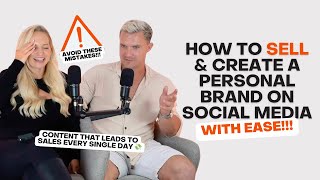
Tim Frey and Steph break down how to build a personal brand that sells on social media. They argue authenticity and consistency beat the noise, recommend long-form content like YouTube and podcasts to show your work, and suggest live events so prospects can get to know you deeper. The biggest obstacles are mindset: fear of judgment and imposter syndrome.
Chapters
What actually makes the way that we do business different to the way that someone else does business is us. Right? It's our drive for lifestyle freedom. It's our no bullshit approach to business and giving feedback to our clients. It's the fact that we do work every single day in checking in our clients so they can get the support that they need and the fact that we are heavily and highly consistent in everything that we do. They're the sorts of things that might make somebody want to work with us over somebody else.
The number one pitfall is for social media is being fake as people want authenticity and they want you to be real and they can see right through it. Welcome to the Success School podcast. We're on episode 55. Today we're talking about how to sell on social media with ease. Steph, how you feeling?
Yeah, I wanted really. I'm excited to dive into this topic with you guys today because it has changed and we have seen a big change in the way that people are using social media. And we want to share with you what's working and what has worked really well for us and how you can replicate our success and our client's success. And so I'm really excited to dive in, but I think you want to go through some cool shit that we're doing right now.
Yeah, we're. Well, I think it's cool. No one else would think this is cool. And yes, before you have the thought in your head, I am compensating. So I bought a Ram 2500 that the biggest truck ever. And I'm so excited about it because it is going to make our trips in the future so much better and our business.
Yes, he's, again, he's, he's trying to justify this purchase. I did approve the purchase. All purchases that we do, we both approve. But I love that he is trying to justify it this way. And it is, it's a cool car. And you know what, I was actually discussing this with my mum the other day. Mum was like, I find it so funny that Tim, like, claims his German heritage because, like, he just doesn't seem German. And just FYI, Tim is German and his parents are German and he speaks fluent German. And if you've ever met Tim, you will know that basically Tim is not Australian. There's nothing like, if you think about Australian, that's. It sounds Australian and that's it. Like, Australian culture is like, we're laid back, we chill, you know, we're very relaxed and like, Tim's none of those things. So, like Tim is, I reckon, half German, for sure. He's got the efficiency, you know, the intelligence, the drive, you know, wants everything to be perfect. Really high standards. And then he's also just. The second half of Tim is just a big, big old redneck from Texas. And he likes, you know, all things boys. He likes big trucks. He likes guns, he likes cigars. He likes working out. He's such a redneck. So if you've ever wondered about the man that I married, that's a little bit about him. But he's very excited about his ram. 2500.
Yep. Redneck City. Let's go. I've got the full quadrant now. I just need another motorbike, and then I'm back to it.
No more motorbikes.
We'll see about that. What's up with you, Steph?
So Tim and I had a pretty cool conversation while we're away, and one of the things that came up was that I can be pretty. Being consistent with everything, basically. And so that. And that's a pattern, and that's a pattern that I've had to constantly keep working on and keep coming back to. And, you know, Tim and I speak a lot about this. And you would have heard in previous episodes that Tim is planning on starting a second business or has started a second business called the Standard. And it's really about wanting to encourage people to set standards in their life to meet. And it's not about, you know, make.
My business sound lame.
No. Okay. Sorry.
To set standards in your life. That is not what it is. Anyway, back to that.
We're not. We're not marketing it yet, so we're not even gonna tell you guys what it is. It's still definitely in progress. But one thing that is really important is that when you say you're gonna do something, you do it. And, you know, I have been guilty in the past of getting comfortable, of, you know, only moving when I'm in pain, of, you know, only getting support when something is going wrong. You know, once things start going right, like, I'll use nutrition as an example. You know, oftentimes, you know, I'll be really good on the diet. And then the minute that I start losing weight and I'm like, yeah, getting some progress, I'll start to, you know, allow in another piece of ch. Chocolate. And then that's a very slippery slope. And then all of a sudden, I'm back to where I started, and I'm like, why does it not work for me? And it's because my standards slipped and that pattern that you have in any one area of your life will play out in every area of your life. And that's what happened to me. And I definitely noticed that on this trip, you know, I, I was like, we're on holiday, I get to kick back and relax. And Tim was like, steph, you can't say that every time we're away because we go away a lot. And so, you know, we run a lifestyle business, which means that yes, we go away a lot, but we have to work while we're away. And that's the price you pay for being able to have the lifestyle where you can you on all these incredible trips and experience all these cool things. And so he was like, you can't let your standards sleep. And so it was a really cool conversation for me. I went away, I did some journaling and I sat down and I wrote down, it's currently my screensaver on my phone. And I wrote down what are my non negotiable standards for myself every day. And every day since we wrote those standards down, I have met them. And I'll get the example of yesterday. I was really tired, really exhausted. We just got back from our trip, we had a big work day because we needed to catch up on a heap of stuff. And at the end of the day, Tim had gone in the morning and trained. I had a big presentation that I was doing for a mentorship that I'm part of. And then at the end of the day I was like, I really don't want to exercise, but my number one thing on my list is do what you said you were going to do. And number two is train every day, whether that's stretching movement or running or going to the gym. And so I was like said to Tim Yesterday afternoon about 3:30, I was like, I'm going to go to the gym. And I think you were shocked because old Steph wouldn't have done that.
Baffled.
Yeah. And I think it's just really cool. And you feel fucking proud. Like I felt proud of myself that I did that. I felt proud that I did what I said I was gonna do. And I think if we can hold ourselves to a standard that we set the standard that we set for ourselves, we feel proud, we create momentum. You know, we. I came home from the gym, I felt better, I ate better because I felt better. Like it's just the knock on effect is so powerful of just saying you're gonna do something and then actually following through. And it builds self trust and it builds self integrity and it Builds self respect and those things are so important in business and in life and it's been really game changing me. So thank you for that conversation because it really has changed my life.
It was a hard conversation.
Yeah, it was uncomfortable and I hope that inspired you in some ways, but maybe to buy around 2500, but otherwise. We came on here today to talk about what's working in social media, how to do it with ease. And I think describe before we even jump into this, Tim, what does selling on social media with ease mean to you?
To me it is people reaching out to you, wanting to work with you. So more pull based marketing versus push. Pull based marketing is based your client attraction machine, they come to you. Push is like hustling dms, cold outbound ads offers that kind of stuff. So Steph and I, we push and pull in our marketing. We do both. We're better at pull, I would say. What about you?
Yeah, I think with ease there's two factors. One definitely attraction based marketing, but the other thing I think is for it to be working without you really needing to push it. And I think, you know, there's a couple of things that we're going to talk about today, but it's not always having to like be on the apps and being on the platforms and you know, being really present there. I don't think that you need to live your life that way and definitely not the way that we want to live our lives. And so we do have some processes and systems and stuff that allow us to not do that, which we're going to dive in with you guys today. But you know, I think that the main thing is the attraction based marketing. How can you be the person that people come to and how can you be the person that people are like? You know, if you look at, and I'll give an example of our own business, but if you look at business coaches, there's plenty of, plenty of business coaches on the Internet. Millions, millions. Like you can find a million business coaches to work with and you can find a million business coaches that say the same stuff as us. Like you go focus on your marketing, you got to focus on your sales processes, you know, you gotta focus on your systems. Like those things are not unique by any means. But what actually makes the way that we do business different to the way that someone else does business is us, right? It's the, it's our drive for lifestyle freedom, it's out no bullshit approach to business and giving feedback to our clients. It's the fact that we do work every single day and checking in our clients every single day so they can get the support that they need. And the fact that we are heavily and highly consistent in everything that we do, they're the sorts of things that might make somebody want to work with us over somebody else. Right. And so the best thing that you can do in your business is actually to showcase that, because we literally had a message of the day. We're literally on people's vision boards. Like, they want to work with us so badly. Like, they can't afford to yet or they're not ready yet.
Naked or closed?
I hope we're closed. I don't know how we will get photos of us not naked. Are they on the Internet?
Post some thought. You stuff.
You post some thoughty stuff.
So do you.
So, you know, we're literally on people's vision boards. They want to work with us. Even though there are a million business coaches in the world, they are choosing us. They want to work with us. And I think that's a really, really important distinction. And that comes from the marketing that we do and the social media that we create. So let's dive in.
Yeah. So I've got a little point on that. And that was cool because they want to work with us. Yes. But if you're listening to this and you're like, oh, I don't have that type of pool yet, your prospect may not know of other options. Okay, so there are a million business coaches out there. But because, Stefan, I know them because we are business coaches. You're an accountant and you might know a million other accountants out there, but they don't know them. Okay, so it's also about making noise and getting in their face. So you are in their orbit. So, Steph, you know, give us your, like, top two things. What's changed in social media selling in the last six to 12 months?
Yeah. So the first thing that's changed in social media in the last 612 months is that more people have got on it. So we are seeing a huge rise, especially with the economic downturn. You know, people turn up their marketing and they're trying new things and they're trying new ways of making noise to get seen and to get noticed. And so we are seeing a flood of people going on to new platforms and trying new things and also showing up a hell of a lot more than they were before, because now they have to. That means that there's probably double, if not triple the noise on social media. So that's one thing. So it's harder to Stand out because there's more people making noise. Okay. And people, when they're desperate, they can make a lot of noise. So, you know, it's getting harder to stand out. The second thing is that people are no longer just buying because the offer sounds good or because you got a great copy writer to come in and write your copy for you. They're no longer buying just based on the marketing that you're doing. They're actually doing a lot more research into are these people legit? There's more scammers on the Internet than ever before. You know, this is a big investment. Am I going to waste my money? Are these the right people for me? So they're deep diving the heck out of you. And if you don't have a way for people to actually experience you and to deep dive the heck out of you, then they're going to choose someone who they can do that with. So like using the accountant example, if there was an accountant with a personal brand, and I'm sure there is one, they would crush.
We don't know that.
We don't, we don't know that many that do it. But like if you really wanted to explode your accounting firm, the best thing that you could do is like to start, if you think about like the cool accountant, be a cool accountant. Because like it's really easy to stand out in that niche because there's not very many cool accountants.
Yeah.
You know the tradies, like all the tradies that have just blown up recently on social media because they do all these cool like dancing reels with their hat because they're showing personality. They're not just another tradie. And so people choose that company because they're like, I like those guys. Those guys are cool. And this is the economy that we are currently living in. People want to buy from people they like. People want to buy from people who have proof. People want to buy from people who are showing up consistently and people want to buy from people who they feel like they know and get along with and share values with and, and it's just really hard to showcase that in social media posts alone. It's really, really hard to show that in social media post alone.
Yeah, I think probably a move to long form is probably the biggest thing. I don't think it's all about reels and captions and posts anymore. I do think that is like a part of the overall marketing mechanism or creating omnipresence. I just think it's not a one stop shop anymore. It's Just social media. I think there has to be like multiple facets to your marketing and brand and building a brand where probably like 6 to 12 months ago you could probably just get away with having an Instagram profile and that was it. And then just posting some value. Yeah, like very vaguely.
What does it mean for business owners? So we've changed. So yeah, we've had an economic downturn. There's more noise on the Internet. You know, people are doing a lot more research before they purchase. What does this mean for business owners now? If they're coming into it, if they've been in business for a couple of years now, like, what needs to change? What does it mean for them?
I just think you need to get better at it and you need to get better at it. So not outsourcing it, not just giving it to some rando to do or a Filipino marketing VA or whatever it is. You need to get better at it. Steph and I are like firm believers in personal brands. And I don't know if that's okay with everyone or I don't know if that's fine for everyone. We think that like everyone in success school or our community should have a personal brand around the thing they do. Because I feel like that is the best way to attract people to you and to work with you. I almost say this a lot on coaching calls is like, some of our clients get on the calls and they're like, what do I do for marketing? And I'm like, just show people what you're doing. Like, it's literally that easy. Like, who are you working with? What are the results you get? What do you do on a day to day basis? What does a day in the life look like for you? What does BTS look like? And then when people see that, they're like, oh, that's cool. I like that person. I know like, and trust them. It's more likely for them to reach out to you. And like, Steph used the example of accountant. I've never seen an accountant do that.
But how cool. I mean, I think like, yeah, we have a couple pretty well. But like, yeah, imagine if you, an accountant was like just finished someone's tax return and guess what, found 20k worth of savings. You'd be like, hi, can you please do my accounting? I want to do $20,000 worth of savings. Like, it's so easy. It's so easy to be like, here's what a day in my life looks like. I have a coffee, you know, I sit down at my computer for 55 million hours. And then I watch Netflix on TV. How was your day? That's fine. It's funny because that's how a lot of people's days look. And so it's like, guys, you think that you're not interesting, and I get it because I have the same feelings. You think that you're not interesting. You think that no one cares. People just want to know, like, if you just. If you're a website designer, you just show whose websites you've done. That's freaking amazing. Because people are gonna be like, I love those people that they did that website for. I want a website like this. Sick. I'm gonna sign up, Right? If you're a graphic designer, same thing. If you're a copywriter, same thing. Copywriters, even more direct. Graphic design is more direct. Reach out to their competitors and actually say, hey, I did the graphic design for this company. Want some help? And they're gonna be like, of course. Because I want a competitive edge against that company. There are so many ways to win this game just by showcasing the stuff that you do. And if you're a coach and you're listening to this, you are 100% missing out on millions of dollars worth of sales simply because you don't actually show that you live what you teach. And I'm gonna say it again, you don't actually show that you live what you teach. If you're a wealth person, show how you factor wealth into everything you do in your life. If you're at the shops, how rich you are. Yeah. Or show how rich you are. Right. And if you're not rich and you're a wealth mentor and you're a savings, that's fine. But then showcase how you use that. Hey, I'm at the shops today, and I was choosing between these two, and this is my process that kicked in because this is my process that I teach my clients. Like, there are so many opportunities for you. If you're a health, showcase your health. If you're a nutrition, showcase you eating nutrition. Like, this is how it works. And if we were preaching lifestyle freedom as an example and we weren't living it, and you could just see that we were trapped behind our computers 50 hours a week, and we're saying that we have lifestyle freedom, you guys would be like, it doesn't sound right. It doesn't feel right. My gut says, no, we're not going to sign up with them. So the best and easiest way to just attract clients is to just show people what you're up to. So easy, for sure.
You know, on that note, Steph, what's working right now besides showing people what they're doing and what's working?
So long form is working, and we want to talk about this because I think long form can be broken up into multiple different areas. So there's podcasting, there's YouTube, there's master classes, there's mini courses, there's. There's all sorts of ways that you can do long form. But effectively, long form is the ability for somebody to consume pieces of your content for longer periods of time. What's working really well right now for our clients? And this has always worked, and this is really interesting because I think things do always work. You just have to tweak the process of doing them. So something that's working really well for us and our clients right now, Master classes. Yeah, really great. You can do, you know, a 20 to 30 minute masterclass. Absolutely. Blow their minds, Teach them something, give them some value, show them what it would be like to be in your world, especially if they're live, and then invite them to take another step or another action if it feels right for them. And so I think that it's a really good way for people to buy into your energy, buy into your brand, buy into your thought leadership, buy into your process by showcasing master classes. So those are working really well right now. And businesses are struggling. And so more and more people are open to learning new ways of doing things right now. Which is why I think masterclasses are having such resurgence right now.
Yeah. For like, free or low and paid. Even if they don't become like a client of yours, they will at some point. And I think a lot of people play the very short game with these types of things. They're like, ran a masterclass, only 10 people came. I didn't make any sales. I fucking suck. What's the point? It's a waste of time. Those 10 people can't afford it right now. But when they do have the problem, who are they going to come to? You. And you need to play the long game.
And they're going to refer their friends.
Yeah.
Like, they might have a friend who absolutely needs what you have. And you know, we have clients. I literally have people in my DMs right now. They're like, hey, Steph, January 2025. I'm signing up. And I'm like, sick, let's go. And they've had sales calls and they've had conversations with our team and we've been talking for years, and they're like, it's just a financial thing, you know, we're settling on our or we're just about to move country, we're just about to do this. And it's logistical. It's just a, it's a not right now thing. That doesn't mean that we're like, see ya, we're not gonna bother talking to you. Or like, oh, it's such a failure. Like, yeah, in January, sister, we're gonna be here and we can't wait to work with you. So I think that, yeah, you're right. People do really play a short game when it comes to their marketing efforts.
Yeah. So a couple other ones, guys, obviously YouTube, we've mentioned it a few times. I think it's a really valuable platform if you've got something to teach. I would be teaching at least once a week. I'm gearing up for that at the moment. So if you guys want to keep an eye on my personal YouTube channel, I'm going to start teaching business content on there, which is exciting. So I'll be doing one a week. I've committed to a year of that. So 52 videos plus a bunch of vlogs as well. I found the vlog thing has been incredible for business as well. I'm not directly selling anything, but I'm showing my personality, which is no luck and trust for the right type of people and the people we want to attract. And it's been crazy jumping on YouTube and just like the titles, the tags like those types of things, they just go like viral and searchable in their own way. I didn't understand how powerful YouTube was until I started. And then I was like, sweet, how if 600 people watched 80 of my Gib river vlog for 19 minutes, 600.
People, that's like a lot.
And I look at and that might not sound like a lot for you, but you know, the total watch hours is like 97 watch hours. Like 97 hours on one piece or whatever it is. You think about like a four second reel and yeah, you've 40,000 people have seen it for four seconds. It's more watch time on my 600 views on YouTube.
Yeah, but it's not even just that. It's like it's so intentional. Like the four second people who watch your reel just kept scrolling whereas people have clicked on and gone to and settled in for 19 minutes of you talking about stuff like that is so intentional. It's such an intentional buy in. It's a such, you know, it's not just like oh, yeah, you can rate the views on a reel. It's like you can do that by someone tapping through on stories and it will count as a view. Like, it's nothing like. Whereas this is so intentional. I think that's why it's been so powerful.
Yeah, yeah. Obviously podcasting works. It's a bit of a slower play, so if you want a faster results, I'd say YouTube. If you're in for the long game, I'd say podcasting is also great. Anything else that's like really working at the moment? I think, like authenticity being real, like those types of things. I'll let you hit on those.
Yeah, yeah. And I think like, you know, invite people to your stuff. Like if you have, you know, a client event, if you have an in person thing, like, get people to experience you. Like, if people can experience you, they will probably buy from you. If you're good at what you do, if you actually are good at what you do and you know, you're actually the expert at what you do and you are really passionate about it, just find ways for people to experience you. Reach out to local government, run workshops. Like, just find ways for people to experience you. I think part of the reason why, you know, I created success quite early on in my business was because it was such a high touch experience environment. My first business was very high touch. We did workshops and people would spend three or four hours with me and that would happen on a weekly basis. And so, you know, we did create quite a lot of raving fans because people got to be in my presence. I didn't realize that that was a thing that people would love because I didn't really think that I was that special. But that is what people love. And you might be feeling the same way. Like, I'm not that special. People don't want to experience me. Like, yeah, I get it. That's how I thought too. But they do trust me. They want to be in your energy, they want to be around you, they want to know what you know. You're inspiring to people and if you don't choose to believe that, it's going to keep holding you back for sure. So, Tim, traps or pitfalls to avoid in social media.
I was so excited for you to ask me this. We are going to have completely different opinions on this.
We really are.
But the number one pitfall for social media is being fake as fuck. Okay? People want authenticity and they want you to be real and they can see right through it. So if you're like. And we had this comment. On a caravan trip, There are some YouTubers, and our friends met them, and then they met them in real life, and they were like, they are completely different online than they are in real life. Worst thing ever. Okay? And if that happens to you and you've met someone like that, honestly, it breaks trust, like, the snap of a finger. We know a few people that do this, and they're completely different people. And people comment on that like they're a different person online than they are in person. Nothing breaks rapport faster, and people just want other people to be real and cut the shit. Like, cut the lies. So I think the number one pitfall is you just need to be yourself online. I think that's one of the most important things to building authenticity and building a personal brand. What are some other pitfalls?
Just on that we have someone that we know who has a cool brand online that is actually even cooler in person. Like, actually just a total legend in person. And she doesn't showcase much of it online because she's scared of. I think, probably scared of being judged. And it is a shame because I actually think that it would grow her business so much faster if she was actually just completely herself online. She kind of has this, like, Persona that she puts on that's like a bit more of the, you know, whatever, good girl or professional or whatever. And I just think, like, it's a personal brand, and the minute that we like. And I used to do that, man. Wow. I used to this so hard, right? And I used to, you know, I wanted to be professional. I wanted people to see me a certain way. I didn't swear online. You know, I was very careful about what opinions I shared. I always wanted to make everyone feel good. I didn't want to make anyone feel bad and, you know, all of these things. But at the end of the day, if you come into my container and I get on one of my passionate rants, like, you're going to experience that. And I swear. And I swear. Yeah. And sometimes, you know, my clients know, like, we're very loving. We always will be very honest. And. And honesty can be confronting. And so, you know, if you are listening to this podcast and you love the way that we talk and you love that we're honest, you love that we're no bullshit. Yeah, we're probably for you. If that terrifies the fuck out of you, we're probably not for you, which.
It does for a lot of people.
Yeah, for a lot of people. I got told I was intimidating this.
Week and steph was like, wait till you meet Tim.
Yeah. I was like, don't join our program because if you think I'm intimidating, you are going to be terrified by Tim. And so, like, it's one of those things. And I actually shared this with my stories yesterday. I was like, you know, we've been having a lot of wins lately. I've been a bit scared to share them. You know, I don't want to feel like, you know, we're bragging. And I don't want people to think that we're unrelatable or any of those things. But then I also have to remind myself that the right people are going to see that and go, that's so cool. I love that. And I want that. And I want to work with this person. And. And that's so inspiring. And that's made my day. And I put it on the Internet and I shared all this stuff. And then I had a flood of messages of people just being like, please don't stop showing us. Please keep telling us. Please keep reminding us this is possible for us. You know, thank you so much for being yourself. Thank you so much for going first. And I just really think that, you know, with this one person that I have in mind right now, like, if she showcased just the depth of her personality, she would just crash. Like, crash because she's cool as fuck, but she hides it online because she thinks that people won't like it. And it's.
Even if you're not cool as fuck, show it because someone's gonna like that.
Someone's gonna think you're cool. Someone's gonna think you're dorky. You might think it's dorky. And they're gonna love it. They're gonna love it. This is one guy, just really quick segue or story. But who's the guy on the Internet that you follow? And he just does. He just has a camera and goes to the gym and just trains.
Ah, Sam Sulek.
Sam Sulek. Now, Tim told me about this guy. He sometimes watches this guy on YouTube. And literally, the dude, it's so boring, but it's not even boring, which is the best part. And if you want proof, you have to go watch this dude's YouTube channel just for 10 minutes, and you will see proof. He gets millions of views. Dude just literally wakes up like, huh, I'm gonna go to the gym. And then he puts his phone in the car, and then he talks about what he's gonna do at the gym on the way to the gym. And then he goes into the gym and you just watch him work out. That's it. That's his entire thing. And it's not even funny. Yeah, it's not even.
Can't joke.
He's not, he's got no personality. Like, he's not like someone who's like really like. Oh, it's like, you know, he's not like James Smith. He's not like, like got anything about him. And he is viral AF and people are obsessed with him because he's just himself. And I think that that's what makes it so interesting is you got this dude who just is completely himself and just had a crack and just cracked it. And it's amazing.
I'm gonna give you one more example. I want you guys to go look this guy up. And I, I don't. I think I've showed Stephen before. I just like one day, my Explore feed, I saw this bald, older, middle aged dude DJing in his living room and he was just jamming out to D and B tracks, like going for it and I was like, I love that. Like, clicked his profile, looked at it and he's got, got kids. And then he just started with like a little shitty DJ set and eventually started getting more followers. So he was like, oh, I'm gonna keep doing this. He starts doing remixes, he starts DJing and then all the famous D&B DJs start following him and sending him all their unreleased tracks. So like sub focus, like all the big ones. And then he keeps doing it and now he's getting invited to festivals to DJ. This guy from, he was like a 45 year old man. He was DJing by himself with 10 views and now he's DJing at festivals around the world just because he showed his weirdness of him dancing around. He does the weirdest with his hands. It's like, it's totally uncool and I just love watching this guy dj. It's incredible.
Yeah, we'll link these people below. Guys, you have to go and have a look because it doesn't matter what story you are currently trying to tell yourself right now about why it wouldn't work for you to build a personal brand. You know, whether you're like, I have kids and I don't want to like show their faces. So don't, that's, that's cool. Don't do that.
That's a Facebook one.
Yeah, yeah, like we get it. Like you don't have to cry on camera. You don't have to like show, you know, like you don't have to do any of those things, right? Like, Tim and I just got a video out. We're like, hey, we're on the road and we're about to go to a water crossing.
People like, that's so cool.
Like, and it's just. It's just so simple. Guys, reality TV has been a thing since forever because people want to watch people. Give them an opportunity to watch you. Give them an opportunity to buy into who you are. Whether you're weird, whether you're wacky, whether you're boring, whether you're odd, whether you're dorky, whether you're cool, whether you're fun, whether you party, it doesn't matter. Just show us and your people will find you. And then you become non fungible. So fungible means that you can be replaced by something else. So if I have an accountant and then I don't like my accountant, I could just go to another accountant, right? Fungible is. That's fungible. So I could just swap it out. Like, you know, we're using this light right now that's facing on us. We're using these mics and we don't like them anymore. We're going to swap them for another mic that becomes fungible. But you know what's not fungible is when you build a personal brand, you become the product and no one can be you, and so therefore you are no longer can be swapped out. So it's so different to like, you know, I'll give an example, and this is probably a terrible example, but like, you know, if you go to a plastic surgery doctor, you're not going to just go to another one next time. Like, you're probably going to stay with the same one for the rest of your life or any kind of doctor, really, because they have a brand and because you trust them, because you built. Built no like and trust for them and because, you know, whatever. And I just, I think that there are so many examples of times where we try and be different with like our customer service or I want to know or like, whatever. But like, realistically, it looks the same to the customer, to the consumer. And the biggest way to have a point of difference is to be the person that people want to work with. So how do you build a personal brand?
Awesome. I my second most exciting question of this podcast today. So I've kind of just jumped into this probably really like heavily in the last six months, and I feel like I've done a pretty good job of it. Like the, you know, I did touch on it before, just be authentic and like share your thoughts. So thought leadership, authenticity. I like to write not controversial pieces, but like thought pieces around certain things that are coming up in the marketing, sales, business, industry. And then basically I've just become like a mini influencer. I'm basically just sharing what I'm doing on a day to day basis. My thoughts and essentially everything to do with it. They're my top ones.
Can we all just have the confidence of Tim? Like I, I love, I just love your confidence. You inspire me every day with it. You're like, yeah, I've been doing this personal brand thing for six months and I think I'm doing pretty well. And actually I'm a bit of a mini influencer, so. But I love it. Like, yes, you are not an influencer in the way of like being sponsored by things. But I'm sure he's open to it. So, you know, if you want to sponsor Tim for anything, I'm sure he'd be down.
I actually get called that like people you are though.
No, because you're a person of influence. And I think we need to rewire the way we see influencers. I have this conversation a lot with our clients and you know, if you want to work with an influencer, total segue. But if you want to work with an influencer, it's not about just getting someone with hundreds of thousands of followers that's no longer an influencer. Because people could have hundreds of thousands of followers and have absolutely no influence over those followers at all. Right. Because they've just built that following, you know, based on how they look or whatever. Whereas you are a person, you're a key person of influence. If Tim recommends something, can guarantee hundreds of people buy it. Like for sure. Guaranteed. And so it's no longer about just big followers. It's about finding people who have the ability to influence. It's a very different process. It doesn't need to be a huge audience, but you could get 100 clients from a very small audience because the person has influence. So that's you. In terms of building a personal brand, I think we've covered off on a lot of it, but I think, yeah, if you can invite people to experience you. And I think you just need to get the hell out of your own way. And you know, I think you need to define what personal brand means for you. It doesn't mean you have to talk about your kids, doesn't mean you have to talk about your relationship. It doesn't mean you have to talk about anything that you don't want to talk about, but it means that the thing that you talk about, you talk about honestly and openly. You know, there was a time where I didn't talk about things in business, opinions that I had because I was scared that it disagreed with someone else's opinion on the Internet that may have been more famous than me or bigger than me or had more pull than me. And for a long time, not sharing those opinions really held me back. Now I share any opinion. I think I'm like, you know, guys, like, we need to stop taking each other down on the Internet. Or, like, you'll see me, if you follow me. You'll see that I regularly troll back my trolls. I've really leaned into just using my voice and actually saying what I think and saying what I think online on social media to my clients. And it has been profoundly impacting. And I think that we have started to build, both of us, a bit of a cult following simply from sharing our actual thoughts. Not a filtered version of them.
Keyword. Not a filtered version of them. Steph, do you think personal brands are the way of the future?
I think they're the way of the future in this economy. I think that when the economy turns around and it will. That, you know, people will prosper and it'll be easy to sell again, and, you know, people will be a little bit less cautious about where they put their money. But I really think that a personal brand is so powerful, and I think it's the way of the future, and I think it should be the way of your future if you're listening to this, because you might change direction a thousand times. I mean, Alex Homosexual is a really cool example of someone who's changed direction, like, three or four times. And, you know, because he's got a personal brand, it doesn't really matter what he does. Whether it is acquisition.com or he goes into AI or he goes into school or he goes into wherever the fuck he wants to go. It doesn't matter because he's Alex Hormozy and people enjoy watching the guy, right? And I think that that's where personal brands come in so powerfully is like, yeah, we're business coaches right now, but we might be wealth mentors in the future. We might be property investors. We might, you know, do some property development. We might become real estate something or others. Like, we could do anything. And how cool. Like, we could be astronauts. Like, you know, whatever you want, whatever you want in this lifetime, like, you can do it, right? And especially if you have a personal brand. Whereas if you are all of your business brand and then you close that business, you're fine, you have to start again from scratch. Whereas if you have a personal brand, you never have to start from scratch. So, yeah, I love. I'm. I wouldn't have called me a personal brand probably 12, 18 months ago, but now I really, really see the value in it.
Yeah, I've got a little conspiracy here and I think this is the right time for it. And this is not like I'm gonna piss someone off conspiracy. Although I'd love to do that, but Steph won't let me.
Is this a tinfoil hat conspiracy?
No, this is not a tinfoil hat conspiracy. So the way AI is going, it's getting so good at replicating people and the deep fakes and there's all this crazy stuff. I feel in the next couple of years we're going to get to a point where there are going to be like business coaches online that aren't real and they're people like behind a computer screen that looked nothing like them creating this brand. And this, whatever this is or this could be in any industry, by the way. I think the only real value of currency is going to be live coaching like we do on our calls and in person events. I feel like that's where it's going to go in terms of service because people are going to really value real people. Not robots, not AI, none of the stuff. I think there's like a bit of a rejection to AI, which a lot of people have as well, like in some areas. And I feel like, you know, obviously we can get on this, but as sooner you get your personal brand happening, the sooner you are going to impact more lives, crush and make more money.
Totally great. Let's talk about the mindset blocks that somebody might have to having a personal brand. They might have a fear of being judged online, they might have a fear of being seen, they might have a fear of, like, what people think of me. And. And we've both been there 100. So how, like kicking? Yeah, yeah, yeah, yeah, Totally. Yeah. How have you gotten past that to build? Because. Because 18, I would say 18 months ago, you didn't. You had one. But it was like accidental. It was just really. Because you were updating your life on social media. It wasn't like intentionally building a personal brand. And when you stepped into the business coaching space, like, guys, when you do anything new, there's imposter syndrome every time. Right to. When Tim first stepped into business coaching, he had all of the feelings that anyone would, like, who am I to do this? Why? Like, you know, blah, blah, blah. Like, all those thoughts come up. How did you get past it and just fucking do it anyway? Like, talk me through the mindset of if someone's sitting there right now and they're like, oh, I'm listening to this, and I really want to build a personal brand, but I'm scared of getting judged. People are going to watch me. I'm terrible on camera. Talk me through it.
Honestly, I think the easiest way to get over it was just to show what I was doing, so it wasn't a lie. So if it's not a lie to me, then it couldn't be a lie for anyone else because I'm literally just sharing what I'm doing. So I was like, hey, my client X is doing this. How cool is it? Hey, my client X had X result. How cool is it? And then in terms of, like, my personal thoughts and opinions, I got trolled for so long and for so many years, and Steph could attest to this, that became, like a normal thing for me. So every time I would post, I would, like, if someone, you know, arcs up at it or like, you know, says something bad to me, I wouldn't really care. I think it's more of a. Like, you just get a thicker skin over time. The first time sucks, and then every time after that, it just gets a little bit less worse. Whereas now I really don't even delete troll comments. I just leave them up and I just let them, like, create engagements. It really doesn't affect anything for me, what I post online. Like, I'm so comfortable within my own skin and I'm so comfortable with what people think of me that I actually am at the point now where I don't give a fuck. The only people who I really care what they think of me is, like, you and our two dogs. Like, honestly, that. That's, like. That's the peak of it at the moment. So it's just something that you need to do and get over. Like, someone's opinion of you doesn't change anything about you. And I think that's a really important point to miss. Is there anything I missed?
We had that really cool podcast that Alex Almoise was on with Modern Wisdom, and that was a really cool conversation that he had. He was like, he talked about this and he was basically saying, like, the only person whose opinion matters of you really is yours is yourself. And so if you think that you have something passionate that you want to share with the world, and you think that the way that you share it is correct. Right. And you're passionate about it, then we've got to stop outsourcing our validation. We've got to stop looking externally for the love and the appreciation that we seek, and we need to actually start giving it to ourselves. Because I think if we just gave ourselves the love and the appreciation and the kudos and, like, you're clever and you're smart. Like, this is. You know, you guys wonder why Tim is where he is. Like, you hear him on our podcast, he's like, I'm pretty good at this. I'm really good at this. Like, but all that matters is what Tim thinks. It's. It's a belief system. It's not that he's arrogant. It's not that he's, you know, confident. It's not. It's because he believes in himself. And if he doesn't, it starts here. It starts in you. And if you don't believe it, whatever belief system you harbor, other people are going to see and also believe. And so it just becomes one of those things where it's like, at the end of the day, like, the only people that we're ever trying to please are ourselves and maybe seek validation and approval from each other, but mostly ourselves. And at the end of the day, if we're okay and we can get behind and we can stand behind what we say on the Internet, and if someone disagrees with me and I'm happy to sit in the arena and I'm happy to. Happy to have that debate and I'm happy to have that conversation, then bring it. Because I wouldn't be posting something and sharing something publicly and online that I wouldn't fully endorse and back for myself. And at the end of the day, you have to be comfortable with that.
Yeah, for sure. Another, like, just a strategy on that, guys, is I just do the old post and ghost. So I just turn off my notifications on anything, and if there's something like that, I'm like, oh, I'm not sure about this. I'll literally just post it and then just not check social media for 12 hours. And then when I wake up in the morning, I come could deal with it, but usually it's not even that bad. And then in the morning, you got a fresh head and you're like, whatever.
Yeah, it doesn't matter. Yeah, don't keep sitting on online looking and seeking for validation.
Yeah. Yeah.
Tim, to wrap this episode up, I would love to know, like, you know, this episode was about selling on social media with ease. Personal brand turned into personal branding with these, you know, what, what advice would you give? What three things would you tell people to do right now on social media if they like, you know, wanted to build a, a personal brand or wanted to stand out in, you know, the very noisy world that is currently social media?
Yeah. So just start sharing your thought leadership from a day to day on your story. That doesn't have to be you talking to camera. It can just be written those absolutely crush for me. So many replies.
Can you give an example of thought leadership?
So, you know, hey, just got back from the give. It was an amazing trip. Here's the three things I learned. Here's what I think everyone else should do. If you're contemplating like a trip like that, that would be one. You know, I haven't said it yet, but we saw it on someone else's story. Bye bye button. You know, thought leadership, like something controversial on that. Like, here's what I think of business coaches ratting out other business coaches and just give like a bit of thought leadership on that. Just stuff that comes up in our world day to day. Like Steph and I just note down what pisses us off and then we'll usually just talk about it.
Thought leadership is just having thoughts and then sharing them. Okay. I want to be really clear about that's what thought leadership is.
Yeah.
And we get our thoughts, you know, that we have hundreds of thousands of thoughts a day, obviously, or whatever. But the thoughts that matter most are like, if a client asks us a question and I think it's a good question, I'll note it down and then I'll share what my thought is on that later. Or my strategy or my take on it is if something happens in the world, like, you know, the Biden Trump debate that we all just witnessed, you might have some thoughts around that. And so I would say, like, you know, maybe you want to share that online if you want to. You don't have to make your platform political, but you can if you want to. At the end of the day, it's like, you know, we have to thought leadership. I'll have a thought like, God, if only we all saw the world this way. Or I might have thought leadership about something that I've just learned about myself. And I might go, oh, you know, I just realized this about myself. The way you do anything is the way you do everything. And I might share my thoughts on that. And that is what thought leadership is. And I think very few people actually spend time articulating their thoughts and your thoughts are actually what makes you different. So I love that. So share thought leadership. Make it easy. Yeah, what else?
Just share what you're doing on a day to day basis. Doesn't have to be like super boring or crazy or exciting or fun. It just is what it is. Like just turn it into a story as well. I think like hey just went to the shops. Like that's a bit naff. But like hey just went to the shops and an old lady, you know, swore at me for taking her car spot. Like you know her or whatever. Like something like that. It doesn't have to be like so terrible. Tim, whatever. Like example, so always aggressive examples. So thought leadership and then showing what you're up to. And then the third thing is just answering the questions of your consumers or prospects. So like what are the top 10 or 20 questions that your prospects have? And you can just create content around that. So just answering like value based stuff. Anything I missed?
No, I think that's perfect. And, and just to summarize this guys, like it is no longer good enough to be on one platform and it is no longer good enough to just share like very vague stuff on the Internet. Like you have to spend some time on this. It doesn't have to be a lot of time, but you do need to spend time curating and creating content that showcases who you are and how you are different. And if you don't know those pieces of information, you need to sit down and actually think it through. Think about it, do some market research. Figure out how you're different. Figure out how you stand out. Figure out how your philosophies and your belief systems are actually making you the kind of person that will be detract a certain type of, of client and start to share them and start to showcase them. And the easiest way to turn anything into a story is to go like, you know, we could literally tell a story right now about, you know, these microphones and what you can learn from them. Okay. So it's like if you wanted to, you know, share a story, it's like these microphones are not the first ones we bought and over the last few years we've bought quite a few. But these are the ones that have been our favorite because they're so reliable. And then I could turn that to a story about how people love buying from reliable brands. And then I could talk about how to, how to become a reliable brand. And so you can just turn like and that was just on the spot. So get into the habit of turning everything into a lesson about what you do. And once you start looking for it, you will find a hundred ways to do it. I used to play this game with myself where I'd be like. I'd tell my clients to just throw a word at me, like, red high heel, and I would turn it into, like, a business post about business, even though it was about something or a frangipani or a palm tree or whatever. And it really helped me to work on my ability to go, hey, like, everything is connected and everything applies. And I can turn anything into a story for somebody who's watching that they can actually learn from. Like, it's like, how do we take this thing that I've experienced, which is a lesson? And we know that if the way you do anything is the way you do everything, that means that lesson applies across all areas of life. And so it's just about finding the pattern and then actually showcasing it to people and telling people how.
Yeah. All right, guys, that was great. Tons of good value in there. If you love the show, leave us a review, obviously, ratings, and then send us a message. Tell us you loved it. Until next week, guys. That was epic. Chat soon.
Chat soon.










