
How We Made $61K In A Day: Black Friday Sales Recap
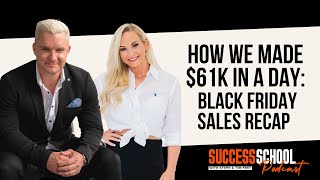
Tim Frey and Steph Gordon made $61,000 in one day selling seven spots in Success School. They broke down what worked: multiple offers, big value stacks, clear dollar savings, public countdown timers, and lots of emails. New offers and vague bonuses flopped.
Chapters
Foreign. Hey, guys, welcome to the successful podcast. We're super excited. This is episode 20. What the. That has gone so quick.
It has come up so fast. Episode 20.
And just before we get into this, guys, I want to thank you so much for the Spotify recommendations that we've had. I officially feel like I've entered the biz babe world, so me among all the biz babes in your top 20 charts. Thank you, guys. I do appreciate that a lot. Steph, how you feeling after the charts?
Yeah, the Spotify wrap up. I feel very honored, guys. Thank you so, so much. The Steph Gordon show, which is now successful, combined with myself and Tim, I feel like we're going to have an even bigger and better year this year because this podcast, as much as our previous podcasts individually, did really well, our together podcast does way better. You guys love it way more. So thank you.
And speaking of doing well and having fun, we are wearing fun hats. So if you're watching on YouTube, guys, let us know in the comments below. If you love the hat, if you want one, you have to come to Bali. And then to come to Bali, you have to be in success school. So success School IO if you want to join.
So, Tim, let's kick off with lesson of the week. I know that you have got a juicy one here, so I'm excited to hear it.
Juicy and controversial. And if you find it juicy and controversial, please let me know as well. So Steph and I are always studying. We're always learning. We're always wanting to learn more about business growth, sales, marketing, and scale. Essentially, that's what we teach. So what I have come to realize is actually no one knows what they're doing on social media. They can't give you a direct answer for exactly what to do to get a result. I don't mean that there aren't experts. I don't mean people don't know what they're doing. I just mean, like, no one has the magic code for social media, which I assume there was a magic code because there's generally a magic code for everything in business outside of just working hard. So there are tons of experts and we've done every course under the sun. And what I've realized, there is actually no method. There is. And that is the truth about social media. There is a bunch of advice that says, just provide value and you'll grow. And I find that is the worst advice ever. Recently, Steph and I just did a 25k course on social media, and then we realized that the Person that was teaching it had an unconscious competence around social media. So they didn't know exactly how they got a result, but they got a result. And this is pretty common in the online coaching space and marketing spaces. They can't actually teach you exactly what they're doing because they don't know how they did it themselves. So I wanted to give you guys three tips to to improve your social media. And this is from spending around 50k on courses. So the first one here is create content for one platform and then repurpose it for many. So a lot of our clients are in B2B and they're going to create content for LinkedIn and then they're going to repurpose it to Instagram, Facebook, TikTok, et cetera. The second one is write stories. Okay, so if you have a look at my Instagram, in the last couple of weeks I've gone hard on story writing that has created a lot of know like and trust and conversations with my audience. And what happens online is everyone starts doing reels because everyone says reels are hot. And then what happens when everyone starts doing reels is everyone's doing reels and you just blend in. So you want to do stuff that's different. Watch this space. Now a lot of people are going to start doing stories and then my tactic will be fucked. And then the last one is to do a long form piece of content like a YouTube or a podcast, chop it into clips and that's how you get an amazing amount of volume. Last little hack here guys, is don't copy what other people are doing. You will just blend in, you'll have no impact and you'll make no money. Steph, what is your lesson of the week?
I love that lesson, Tim. And if you listen to our podcast episode last week, we did speak about content that crushes and it kind of ties in a little bit to that. But yeah, definitely don't copy. And I really, really love that whole like, you know, repurposing as much content as you can because let's be honest, we're all time poor. My lesson of the week was that on Black Friday, which has just gone, there was. And I actually, Tim told me this statistic and it blew my mind. Around the world, $4.2 billion was spent on Black Friday per minute. So I'm just going to clarify, not per day, not per hour, but per minute. $4.2 billion per minute spent on Black Friday. And people are saying that people don't have money. People are saying that the economy Stuff people are saying that it's really tough to make money out there right now, and I just really don't believe it's true. And this really leads us into the topic of today, which is what we about Black Friday this year, both from our perspective and our own sales, and also what we saw clients do and what we saw online. I saw a lot of people kind of debating in Facebook forums and on social media, wondering if Black Friday was worth doing. And let me tell you, based on the fact that people spent as much money as they spent, it definitely is. You just have to do it well. And so we went on a deep dive of all Black Friday sales that we saw, and we wanted to break down for you what worked and what didn't. And so that's what this podcast episode is gonna be about today. Now, you can learn, like, I know that Black Friday is not going to come around for another year, but please make sure that you create a process for this, put it in place for next year. But this really goes for any time that you go on sale. This really goes for any offer that you create. And so we're going to dive in and speak about this. This is relevant now, both from a learning perspective and also from an implementation perspective. If you have Christmas sales, Boxing Day sales, if you have new year sales coming up, any sales that you have throughout the year, this. These tactics are going to be plug and play for every sale across the board. So, Tim, based on what we saw in our deep dive on Black Friday, what do you think worked?
So let's hit this one by one. I'll do one, you do one. So the first one was making offers. And I know that sounds so simple, but I've worked with a lot of business coaches and mentors who have mentored me, and they say that the number one metric that is related to you being successful is how many offers you make. Black Friday was an incredible time and opportunity for you to make offers. So you had to have made an offer on Black Friday. And if you did make an offer, there's a high chance or a high opportunity if you did it right, that you would have stacked cash and filled your bank account and sold a bunch of stuff. So the thing you guys need to take away from this is make offers and make more offers. The more you make, the more money you make. We've seen that in every business we've ever worked with. Steph, what have you got for number two?
So the key is, yes, making the offer, but how do you make it an offer that Sells. Some of our clients in Success School made offers and they. Some did well, some absolutely crash, and some didn't do as well. And here's the difference. The number one thing is that you have to have a huge value stack. So, you know, if you saw our Black Friday offer come out, we literally had clients who the email went out to that message me and said, if I wasn't already in, I would have bought again. Because the value stack on our offer and the value stack on some of the offers that we saw online, it made it so that it was like. And when we talk about value stacks, guys, we're talking about like really listing out all the inclusions, all the bonuses, really listing out how much every inclusion and bonus is worth. When you make a fat value stack, people end up looking going, oh my God, like, this is so crazy. The value in this program or this offer is so insane. I'd actually be crazy for not buying it right now. Right. So the key is, yeah, make the offer to value stack the offer to the moon. Throw anything in that you can. And we've spoken about value stocks before and Tim's done an episode on this on the Success School podcast previously. Guys, value stacks are absolutely key to making your offer go off. Tim, what else?
So the next one we have is big bonuses. So we put the bonus of coming to our Bali retreat, which is $5,500, and then we chucked in every course we've ever done on top of that. I think the total value stack was in the 10,000. I didn't actually see the total bonus or value stack that went out, but.
Tim didn't even see the offer.
I made the offer, so there were massive bonuses in it. And the key that you guys need to know is there are bonuses, but the bonuses need to be not something that takes heaps of time away from you. So don't offer like 1001 on ones if you buy this thousand dollars thing because that's going to CR time across your profitability. So it has to be something that's easily replicatable and is high value to the client.
Yeah. So our bonuses included a five and a half thousand dollar Bali retreat which we're running. You nailed that one. We gave them a thousand dollars off if, like for a friend, as a gift card for a friend. A free Success School hat as well, which you get when you join these bad boys that we have on at the moment. And so they were the three high.
Value, high value guys. When you talk about high value, 19 wholesale. Let's fucking go.
$49 RRP though. I mean, wow, a $50 big bonus. I mean. And you know, the thing is that even though it's actually a very affordable bonus, it's high value because there's limited runs, there's limited editions of them. You can only get them by earning them. Right. And so there's this really cool thing that happens when you create something that's exclusive, so it doesn't have to be high value, but exclusivity also matters. Now, something that worked for us and that we saw worked for a lot of our clients was also counting down on socials. So if you say that you've only got five spots or if you say that you've only got 10 single time someone purchases, make sure that you count down on your socials like as if to say 10 left and then, oh my God, someone just bought. We've only got nine left. Counting down on social starts to create that urgency in that FOMO that people are like, oh my God. Okay, I think I've been thinking about it. Oh my gosh, oh my gosh, oh my gosh. Now it's time to do it. Right. And so counting down on socials, like whenever you, whether that's within a launch, whether that's in Black Friday, whether that's in any kind of offer or sale, counting down on socials, will 1000% support you to get more sales? What else, Tim?
We had a big pay in full discount. I think ours was like 15 or $1600 from this bonus that I think I saw.
Again, Tim has absolutely no idea.
Yeah, so the only way you can offer a painful discount if you know your margin on this. Okay, so I'm not going to tell everyone to make a massive discount if you're not actually making any profit on your service or product or whatever it is. But you have to know your numbers here and if you know your numbers and you know that you're going to make X for reoccurring, you can knock some off the top for paying full. So painful discounts typically anywhere from 10 to 30%. Generally some in the E comm space can go higher than that. And that is super juicy and Spicy. Ours was $8,000 paying full. It's not like a swallowable sum for a lot of people. So we do have like a payment plan on that as well. So it can be a good idea to offer a painful, but it has to work within your margins. Okay. Any good business coach worth their skin is going to tell you to learn your margins first before you Go offering discounts to people.
Yeah. And this comes up like, I think later on in this episode we're going to be really touching on this. But like guys, like, if when it comes to sales and offers things like Black Friday or Boxing Day or any kind of salad offer, it's really important that you have the margin to be able to make offer. Right. So it's like if you don't have the margins, then first of all you should be talking to us so that we can help you create businesses that have really good margins but paying full discounts. Obviously cash flow is king. So when you have that upfront cash allows you to really mobilize and do more with it. Last but not least on what worked was sending many emails. I find so many people just do not send enough emails. If you have a list, if you've been working your list, they are on there for a reason. They've downloaded your stuff, they're interested in your stuff. So don't just send one email that could get lost. Send many. I think over the Black Friday process, which was a three day process for us, we sent five emails. So two on two days and then one on the last day. So many, many, many. At least like, and at least like that was just us kind of honestly being probably a bit lazy. Like we could have sent definitely more in that time frame. The more emails you send, the more opportunity you have to be able to get in that person. Because there's so many emails going out on Black Friday, you have to make sure that you're constantly the top of their inbox. So many, many emails.
Yeah. One of my one on one clients, Sasha, she sent, I'm gonna say something like 14 or her offer and it's been absolutely crushing. The more emails she sends, the more money she makes. You just got to get over that shit that you're annoying people because everyone's getting emails all the time. They're not going to say you're annoying because you're sending a bunch of emails. So, Steph, what didn't work? We've done what did work. So what didn't work.
So I think trying to sell a new offer is not a smart thing to do for Black Friday. So if you, if you suddenly want to like, you know, and we saw a couple of clients try this, like create a new offer to sell for Black Friday. It's like, well, people haven't been desiring that. Like the whole point of Black Friday, Sal, is I really have been war this thing and now I can get it for like a discounted rate, or now I can get it for a better deal. So don't try and sell a new offer on Black Friday. It's not smart. Make sure that you've got the margins and the offers, or you can add or value stack bonuses. But please don't create a new offer for Black Friday because no one knows what it is. They haven't bought into it. They haven't had sales conversations with you about it. They haven't heard about it before. It doesn't make sense to do that. One of the other things that didn't work was not offering a dollar's savings. So whether that's like, guys, there are so many ways that. And you know, we're actually running a masterclass about this coming up in the next couple, in the next week or so, if you're listening to this now, but not offering dollars, like a dollar savings. So it doesn't mean that you have to, that you have to discount, but you do have to add bonuses. Like, for example, our Bali retreat, it's free for all of our clients. Obviously it does cost us money. But our offering that it's the last time we ran a Bali retreat was five and a half thousand dollars. So that's a five and a half thousand dollars savings. Guys like that. And even though, yes, it is costing us money, it's not discounting our service at all. Right. So you can offer bonuses that have usually got a cost that you are offering now for cheaper or free, which creates a dollar saving. Right. So just making sure that you're actually offering, you know, savings and dollar savings and really spelling that out for your clients. I saw a lot of people go up with just like, oh, this is the rate of the program. And you know, when I asked them about, they were like, yeah, but it's cheaper than my other offers. And I'm like, yeah, but cool. But did, does your audience know that and can they see that? Really, simply, it has to be super freaking clear. You're going to say five and a half thousand dollars. Our bonuses altogether came up to $9,222, I believe. And so I had that plastered everywhere. I made sure that everyone was really, really aware of that. So make sure that you're spelling out exactly how much is being saved.
And last but not least, Tim, we have overcomplicating office. So I did see this from one of our clients, and don't quote me on this, but they were trying to sell like tarot readings, basically doing your nails and then like massages. Like, are Just completely non related and complicated and no one wants to buy that. So they have to be related. The offer has to be related to what you're selling. So we sell business and we sell a business retreat. Okay, so other people sell fitness and they sell nutrition. These are related things. And many people made things too hard and overcomplicated.
Yeah, definitely. It's like if you sell, if you're a graphic designer and you're also selling a branding package, you're also selling a web package, also selling a, you know, social media giphy graph like graphics. It's like you just make it really complicated. Just like do one of those things. Make it a. Heck yes. Offer a really simple social media over whole offer and value stack it to the moon. Like keep it really simple so that people don't have to read it. Because the thing is that you've got to remember on places like Black Friday, everybody's making offers, right? And so they're going to pick the one they understand the most. And so you don't want to overcomplicate it. Tim, what can we learn for next year?
Okay, so you've heard all the stuff we've been talking about on the podcast so far and the number one thing that should be standing out to you is you can't discount a service that you're not making profit on. So you need to have a high profit offer ready to discount for next year, otherwise you won't make money and you'll be in the exact same predicament. So my minimum recommendation for profitability on a service is 50%. Okay, if it's not 50%, there's probably no point running it after tax, GST, all the other stuff that comes off it. Okay, so 50% minimum ready for next year. So you've got 12 months till that point. So if you need to do four price rises, four small price rises in that time to get your service or product to that point where you can offer a discount, that is what I would recommend.
And if you're not in the business of offering discounts, which is also so fine, we know that's not for every single person, then please start accumulating bonuses so that you can create a big value stack. So one of the things that we teach within our program is to do like a 12 weekly, we actually do on a six weekly cycle ourselves. Let's do a 12 weekly cycle. And that 12 weekly, we call it a lead generation cycle. We will get people to create one lead magnet, to build out one masterclass and run it and to create one sale or offer to their audience in that 12 week period. Right? And we have a whole process for it that we teach. And so over the course of a year, if you ran that every 12 weeks, over the course of a year, you would have fully magnets, full masterclasses and four offers that will be available to go. So that when you come to a day like a Black Friday sale, you have four masterclasses that you can throw in, you have four lead magnets that you can add as you know, as part of the value stack, like these freebies that you are usually valued at $49 or whatever. So start accumulating these bonuses so that you can actually create a big value stack. And if you don't know what your bonuses should be and you don't have profit margin, then it definitely sounds like you need a coach. But definitely, guys, get some help with this because this stuff really matters.
And lastly, guys, your marketing needs to clearly articulate how much dollars are being saved. Dollars, dollars are being saved on that offer. So you need to know your numbers, you need to know what they are, you need to know the discount, you need to know your profit, you need to know all the numbers associated with this. So, Steph, give us a breakdown of why our Black Friday offer crushed and we had seven signups into success call on our Black Friday offer, which total value was 61k. Not bad. Chunk of change to add to the bank account. And thank you for those guys for joining. We do appreciate it.
Yeah, guys, so we made 61k in a day, which is wild, right? Like, like that's so awesome. Like never in our wildest dreams did we ever think that we'd have 61k days. Like, that's awesome. That's not even including all the recurring, you know, like monthly recurring payments that came in from clients. So absolutely phenomenal. And so we wanted to break down exactly what we did on our Black Friday offer to make this work. Now let me be very clear. I'm not gonna sit here and pretend like we're something that we're not, because we aren't. We didn't sit down and plan this Black Friday offer for weeks.
Literally the day before.
We literally planned up. We never even spoke about it. We didn't even think that we were going to do one. We'd not even spoken about it. Literally the day before, like at like 4pm at night, we were driving to the beach to go. It was the Thursday night before Black Friday. We were driving to the beach and I was like, babe, do you reckon we should do a Black Friday sale? And he was like, yeah, why not? And I was. So I wrote, wrote the email in the car on my notes app. Like then the next morning we scheduled the email to go out, right? So it's not like you have to be super prepared to be able to run a Black Friday sale, but let me tell you exactly why ours crashed and when we had a $61,000 day. So first of all, we have a high profit offer which allows us to actually do a dollars discount. So usually our program is $10,000 for the Black Friday sale. We sold it for just under 8,000. So we're able to make that sort of offer because of the high Prof. Margin product that we have. And that's because we know our numbers. That's because we measure our numbers. It's because, you know, we're really clear every year on our profitability. And so we make sure that the alpha, like it worked for us in that way. And so if you're the kind of person that has a high profit offer, awesome, amazing. If not, then point number two is going to be for you. We have tons of bonuses that we can add in, guys. We have a bonus for almost every single thing that is in our program, whether that sales from sales decks, pitch decks, you know, sell by chat, DM templates to, you know, sales email funnels to landing pages. In marketing, we have posts for Facebook, group post for your personal Facebook. We have posts for LinkedIn. We have templates for literally everything, guys. And because of that, every single one of those templates, if we want Etsy and wanted to sell them all right now, they'd be worth so much money. And so we have tons of bonuses that we can add in. We sent five emails over the course of three days. So we made sure that we contact. It was actually, and here's the secret, it was the same email with different subject lines for the entire five emails. Nothing changed.
Except I just want to jump in here and make a note. We have a massive email list, okay? That's why this works. So we can come up with an offer the day before at 4pm, write on notes and send it out because we have a massive email list. This is one key distinction that we need to get through here. So we got 12 months time. Hypothetically, if you went into paid ads right now and spent $10 a day on lead magnets or whatever and you got five subscribers a day for the next year, okay, 365 days, that's 1500 people on your email list in the next year that you could send a Black Friday offer to. And if you don' know how to do that, I will be teaching that in January on how to exactly do this. We had a massive email list. That's why it works. I think we have six or seven thousand subscribers on ours, which is not massive, but that likes pretty sizable, which helps out heaps over to you.
Yeah, and I think that on that guys, like a lot of people think that email marketing doesn't work and it's probably just because you don't have a big enough list. Like if you have a list under a thousand people, it's. It's really hard to get traction with email marketing. So, you know, I used to think that emails were like kind of work, kind of didn't work. But now that we've got an email list of almost 7,000 people, like, we are guaranteed when we send an email out, we'll make sales like every day, single, single time. So like building that list, guys, should 1,000% be a priority for you? Because it is the asset that just keeps on giving. So we sent five emails out. It was literally the exact same email with different subject lines. For the, for the three days, again, I counted down on socials and I celebrated the people who joined. So if you were watching me in that period, you know we had the offer was actually for five people. We extended it for seven. But the first five people that signed up, I celebrated them on my socials. I like, I personally chatted with all of them to get them into, into the offer. And so it was really, really awesome. And the more I counted down and celebrated people, the more, the faster people were signing up. Right? Because there's that fomo, that urgency element that happens. I didn't even have to say, I didn't even have to create any urgency. I didn't have to say like only like one spot left. Like people just knew because they'd read the email and they'd seen us talking about on social media. And so there was that immediate FOMO that was happening. And I guess last but not least on this guys, and about the email list, like, because we do have a big enough email list, but also we've been nurturing our list and our audience for a really long time. And anyone who was on the fence because like, because of that was immediately in. So to give you an example of what our nurture sequence looks like, I will hand over to Tim because he.
Actually, Steph has no idea what goes.
On here because Tim actually writes the emails.
Every week. So we sent three emails. We sent a podcast. So thanks for listening, guys. And then we have two stories from Steph. Wink, wink. That Steph carefully curates every week.
Yeah. And so we send story emails, and they story emails that Tim beautifully writes and that really sound like me, which is the bomb. They're really. They really show who we are and they're really educational, they're really informative. And the reason that we do that is because we don't really believe in just take, take, take, take, take. So we very rarely actually take from our list. If you think about it like a piggy bank, you want to deposit a lot before you start, you know, withdrawing money out, right? So we deposit a lot. So every single week, we. We send out three emails. They're all super high value. We don't ask for anything in those emails. We don't ask for anyone to buy anything. We don't. There's no call to action. It's really, really simple. We just give, give, give, give, give, and emails people who are listening to our podcast. We give so much value in these podcasts as well. We give, give, give, give, give. So that when we ask, people are like, I mean, I've been on the fence, but 100%, I mean, now. And so there's. Anything that you guys can learn from this one? Get a high profit offer. If you need help with that, contact us. Have tons of bonuses to add in. Send lots of emails and really prioritize growing your email list for the next 12 months. Count down on socials, especially if you have a certain or limited amount of spots. Nurture that list. So send emails that just give value.
A lot of. Awesome. Steph, do you want to kick us off with a listener question? You have been doing a lot of talking, so I'll get a word in here.
Listener questions. So thank you to the crew in our Facebook group who have been asking questions. We really appreciate you. Rebecca has asked, what would you prioritize creating a website or an email list? Interesting. I'll be doing both, but which one should I start with?
Okay, my answer to this is, I would never work with someone that doesn't have a website. And that is my first answer. I think it is just a sign of professionalism, and I think, especially if you want to do business with higher quality people, they're going to be checking you out. They're going to be looking at your socials, they're going to be looking at your Insta Facebook website. They want to see everything's hot. They're going to be looking at your podcast, they're going to be reading emails, they're going to be doing all of this stuff. So you need to make sure your ducks are in a line with this stuff. So for me personally, I would do the website first. And then how you do a website is you just find a savage in your industry, your field, your niche around the world. Don't copy them, but look at their website and look at it for inspiration. Easiest way to create a website from scratch. Don't sit there with the empty cursor being like, cool, what the hell do I write on this actual website? Is you want to go to someone that's killing it, look at their website, take inspiration, recreate it. Then after that's done, start building your email list, build a really good lead magnet. What do you think, Steph?
Yeah, I mean, a hundred percent. And like, where are you going to collect the emails if not on a website, right? Like, if you. Where are you going to host your lead magnet? So, yeah, a website is important. And I think the thing I love about website building that when I first started in business, business, Tim was my first ever mentor. And he said to me, just so sweet, honored, so sweet. I was a mess back then. Well, still, I knew he was gonna say that, so. And he said to me, steph, just create a website. And it took me six months to build the website. And the reason it took me six months is because I think a website is a really cool opportunity for you to figure out what the heck you do and who you are and what you offer. Because, you know, to create an About Me page, you have to get really unhumble. To create a services page, you have to get really clear on what the heck you do, what you're pricing it as, what your offer is. You know, to create an entire website, you have to full and truly understand what your business is here to do. And so it's a really cool activity. Our second question from Rachel S. Tim.
I'll read this out. All right, Rachel, what is the better option? Selling and starting again or restructuring and rebranding in brackets, same niche, same service offering. I'm a little confused by this. Steph can decipher this for me.
So I think, look, without knowing too much more context, it's going to be hard to know because if it's completely different service offering, then it might be better to start again. Like, for example, if we were selling a gym membership for mums, and then, then we were also going to sell business coaching for moms, it's a. Even though it's the same niche, it's a very, very, very different service offering. Right? So it really depends on how different it is. If you think that the audience you currently have will be interested in buying, then I would probably recommend restructuring and rebranding because you've already built so much goodwill and loyalty within that audience and they're probably going to come with you on the journey. As long as there's a really good. Like, this is going to have to be a staged approach. You're going to have to explain the why and the transition and really get them involved as part of that transition. But I think that, you know, I think always, like, and I get asked this a lot, even about Instagram. It's like, should I start another profile because I've done something different. I'm like, definitely not definitely. Where possible, use the audience you've already got. Because starting from zero is so, so hard. Tim.
Yeah, I fully agree. I think I would probably be a case in point. An example on this. My Instagram was like full fitness. Everything I did is fitness. I switched to business and essentially it's the same niche, but it's different service offering because now I'm selling, selling business. I'm not selling fitness on my personal account and I didn't start afresh because it was my personal brand and essentially it is me. It's just a different aspect of me. So I am selling people that have done fitness with me into business as well. So, you know, if that's a case in point and example, it can work for me. So it definitely can work for you. That would be my 2 cents on it.
Yeah, absolutely. I think just like don't start from scratch if you absolutely don't have to. Epic episode. Stay, Tim. I love this chat.
Good fun. All right, guys, if you got some value from the show, as always, subscribe, follow. Don't forget to leave us a review. Five star review only. The way we grow is word of mouth. Our growth has been incredible and we really do love all the support we've had. If you are a follower of the show, please let us know. Okay, Message. Steph and I, not just Steph, I would love to hear from you guys too. That would be incredible.
Thanks, guys. We'll see you next week.










