
Our Financial Plan To Hit $3mil in Business & 10 Investment Properties
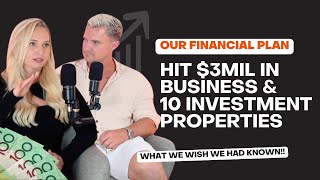
Tim Frey and Steph outline their plan to grow their business to $3M revenue and buy 10 investment properties in 10 years. They need roughly 16 new clients per month, which means 25 to 400 leads depending on their funnel. They each pay themselves AU$180,000 yearly and invest in index funds, crypto, silver, and property.
Chapters
Tim and I are really big believers in spending for enjoyment. You can't take it with you when you die. People are like, yeah, but you can leave it to your kids. Like, yeah, but we had to figure it out on our own, and we're just fine. And we've loved the process of that.
My first year in business, I earned like five grand, and then it went up to 10 and 20 and 30 and 50 and then 100, and then in the last year, 180. So it's kind of doubled in the last year. That's how business works, really. Like, just all of a sudden you just click your fingers and you've made.
Foreign.
Welcome to the Success School Podcast. We are on episode 56. Today. We're talking about our financial plan to hit $3 million in business and buy 10 investment properties. How exciting.
It's so exciting. We always, like, I think people are really nosy, and that's cool. We don't care. We're really open. So we've been asked a lot about kind of, like, what we do with our money and how do we manage it and how does it work and blah, blah, and. And we were like, let's just do an episode on it. Let's just tell everyone, because we're not hiding anything. By no means is this financial advice today. Yeah, by no means are we financial. Like wizards, gurus. Do we know what we're doing? Not really. We're figuring it out just like everybody else is. But we're super happy to share it with you. So we're not sitting here being like, we got it all figured out, because we probably don't. And any accountants and bookkeepers are saying, probably, like, well, like, that's cool. Reach out. Tell us.
We would love to hear, but we're just cave people. We're just having a crack.
We're just two cave people that just have some conversations and figuring out as we go, and we might know a bit more than you. And so we thought we'd share some stuff with you guys today.
Yeah. So mentor always said to me, like, if you know 10% more than someone else, you've got a right to share that with them. So I feel like I know 10% more about money than most people.
So, yeah, don't take. This is not financial advice.
Yeah. Not financial advice in any capacity at all. This is just exactly what we're doing. So, personal update. I hit a ice bath. Pb okay, so we just got an ice bath at home, so, like, fuck, yeah. Send me a virtual high five through the screen right now. Bop. The virtual high five could look like a subscription to the show. So hit that button or leave us a review or send me a message. That'd be great too. But anyway, icebox. 10 seconds. 10 second PB. How good I was in there today.
And talk about celebrating the small stuff.
And I got my knees in and I was like, man, you're basically Wim Hof like at the moment, which is incredible.
And no, no, no, the funniest part.
No, no, no, let me, let me tell the story. So I was like, damn, this is cold. Looked at the temperature, temperature wasn't showing. And I was like, no, this is freezing. And I realized the ice bath wasn't even on. That was. That was a room temperature water. That was fucking okay.
It was cold. We are in Perth. It is winter. It was cold water, but it was. It wasn't even on. And he couldn't even barely get in. 10 seconds.
10 seconds.
Lord, it's hilarious. Actually gave me so many giggles this morning. So good. But congratulations.
Thank you.
That's amazing. My personal update, we have. Well, I have. I'm sure Tim's probably been fine for a long time. I have money. I don't know if I've ever told you guys this, but I have stuff.
What a great episode for it.
Yeah, it's perfect. It is, it is. It does segue really beautifully. I do have money stuff. I grew up really broke and, you know, my family went bankrupt when I was very young. And so I have a lot of deep, deep seated belief systems around money that I work on on a very regular basis and have been working on the whole whole time that I've known Tim. And they come up every year without fail. I have to work on money stuff in my head, in my body, and in my soul. And so, you know, I have a lot of tendencies to hoard money as I'm a very good money hoarder. And one thing that has felt that was really stretchy for us last year when we went to our Europe trip was buying business class flights. We actually made a really big deal out of it because it's very exciting.
She says, oh yeah, it's stiff.
It was all me. Because, like, there was something I always dreamed of doing and never ever thought that we'd be able to afford to do. And honestly, pressing the buy button on those business class flights back then, it was really stretchy. Like, you know, we were financially in a pretty good position. I just never spent that much money on transport before, so it was really uncomfortable and we've just booked our flights to go to Europe again this year. We're going to go business class again. And it felt really normal and really not scary and not edgy and not stretchy. And my beautiful friend Brianna reflected that to me, and she said, that's growth. That is, you know, when you find new levels of normal, you find new levels of comfort. Where previously there was fear, where previously there was doubt, there's growth. And you, yes, we're talking about the concept of business and money, but this could be across anything that, you know, you're experiencing right now when you feel that edge. You know, for some of you, it was edgy to post on social media for the first time. For some of you, it was edgy to hire first va and things are just so normal now in your world. Right. And I just wanted to kind of. Yeah. Share that. You know, sometimes we feel like we're hitting up against an edge, but the minute you pass it, it just becomes like a new level of normal. And I think that's just a really incredible proof of that. You know, we all grow and we all change.
I love that. And thanks for sharing that on the podcast. So, Steph, we, you know, we can all attest to your math abilities, especially she's highly skilled, so whatever she says next, just take it with a grain of salt. It will be a number. Maybe it'll be close, maybe it won't be. So what is our financial plan to hit 3 million in business? Steph, let's. Let's hear it. This is completely unplanned and unscripted, by the way. Yeah, we just have questions.
Before we jumped on, I was like, tim, do we have the answers to these questions? So, okay, so when we first started this business 12 months ago, we wanted to hit 2.4 million. So I know the numbers for this amount of money. At the end of the day, things change, and your business is going to change. And this is why we're not really big sticklers for make a business plan for three to five years. Because, like, things change so much that you can't be, you know, you need to pivot and change. So we've just done a price increase for successful, which means that we actually need a lot less clients to be able to hit these sorts of goals, which is awesome, because then we can increase our serviceability and go a lot deeper with our clients, our quality. A lot of all those things are really cool. So we're really stoked about it and, you know, just valuing ourselves enough. Also to do it as well. It's a big jump and it's always uncomfortable, as you guys will know, to put your prices up. And so it was a really cool jump for us. And so we need definitely a lot less clients than we needed before to work it out. 3. Thank you, please. To hit our $3 million revenue goals. But it feels really sustainable. So if you could figure it out for two pieces of math, one, how many clients would need and then two, how many clients would need per month, that'd be super helpful. We need 16 clients a month, basically 16 new clients a month to hit that. And that's not even factoring out our retention rate, which is actually really high. So we would actually need probably less, a lot less than that because a lot of our clients stay for years. And so, you know, we probably don't even need that many to hit our goals, which is just. Can we talk about how fucking crazy that is? And I think we actually did this. We just gotta piece that in our easy. In our eight week plan that we do with our clients, one of the things that we do is we get the goal and then we work backwards. So we want to hit $10,000 a month. You sell something for $1,000, you need 10 clients a month. You break that down into a weekly number, that's going to be 2.5 clients a week. Oh my God, I it so well.
So to fact check that math, someone.
2.5 clients a week. You know, we recommend that you need probably 10 times the amount of leads to the amount of sales that you make. So that mean that you'd need at least 25 leads, probably more in this economy, to be honest, to be able to make that sale. And so it's just numbers, it's just logic. It's just numbers. And it's really, really simple when you break it down. But most people, most entrepreneurs don't spend time breaking down their numbers. They don't actually know what it's going to take. And they think then it's going to be a lot harder than it actually is. And one of the things that always comes out of our eight week planning when we do it with our clients is they're like, oh, this is actually so achievable. I actually only need some people only need like point five of a person per week. Like they need one person every fortnight, you know, and it's so surprising, like for us to hit 3 million, only 16 people a month, that is crazy. Like guys, if you only need 16 people a month and to make $3 million. Like that's so doable. Like you guys can do it too. So yeah, that's what it's gonna take for us. That's our financial plan to hit 3 million that, that we just figured out.
Solid plan, solid plan.
What is the actual plan behind that? Took. Took me through it.
Okay, so we need 16. That means we will need about 32 sales calls, maybe a few more. So touch up, we'll round it up to 40, which means we would have to have, you know, 400 leads a month. Like at least good quality leads. Her name, email number, Instagram handle, or have downloaded one of our like low cost courses or something like that. So then we know we need to get 400 leads. Then we just need to work out the marketing spend to get 400 leads and then we nurture them with our podcast, YouTube, organic, personal, Facebook, all that type of stuff. So like when you like math it out, like that doesn't sound too hard. Where people come unstuck with this is just the consistency of it. Like they just can't show up all the time. And I know we talked about this on a podcast episode. Steph and I could probably show up with a broken leg or a missing toe or like just got out of hospital or whatever it is. We'd still do it. Like it wouldn't. There would be nothing that would stop us from doing it. So yeah, that's the plan. Just the rough plan.
And off the back of that, like let's talk about why 3 million, why is that the goal? Why is that the number? You know, what does it mean to us now? Like talk us through why.
Personally, for me, it sounds cool.
The number one reason for anything, I.
Reckon like 1 million is like doable. Like 2 million is like good. And then 3 million, not many people can do. So I was like, cool, 3 million.
Yeah. And I. For a more serious answer, I don't know. This is going to be a helpful podcast episode.
Very helpful. If you guys are loving, loving it, let me know.
Yeah, yeah, yeah. But we do have a long term wealth plan. Ish.
And that was the other one.
Yeah. And 3 million is kind of the minimum requirement that we would need to hit our long term wealth goals. We only just created our long term wealth plan because honestly we've just been learning just how to make and sustain money that, you know, like it's new for us. Like where the generation break is in our family. Like we come from broke, come from really broke families. You know, we. They don't have anything that Living off Centerlink. Like it's, you know, we are really the only people that are, you know, we both have siblings who haven't changed the, the generational cycles. And we are. And so, you know, at first it's just like, holy shit, like we're making money like, oh, let's go buy some cool stuff. Because we've never been able to afford to buy cool stuff before.
And we bought everything, then we bought.
Everything and then we're like, oh, that was kind of cool, but not as cool as I thought it was gonna be. And you know, we've just been kind of having a bit of fun with it for the last few years and now it's, now it's like, okay, cool. We should probably make a bit of a plan for like long term wealth. And for us, we've decided there's a lot of ways you can do it. We're going to diversify, which sounds like a very clever way of saying we're going to put lots of eggs in different baskets. And so one of the ways that we're going to do that is with investment properties. And so we have a plan to buy one investment property a year for the next 10 years and then that will be able to help us hit our long term wealth goals. But we're also investing in index funds. We also buy precious metals and a few other things as well. So we have a few different ways in which we're planning on just making our money work harder for us. Talk about our plan for one property a year.
Yeah. So where this goes wrong, and this is not financial advice, this is just from my understanding of this is where you get capped with buying property, is they rate your borrowing power on your personal liabilities. So once you buy a house, you have, let's say a $500,000 liability against your name. So that just limits your borrowing power for more. The way you get around it is if you put the property in a trust and then the trust owns the property you don't, which frees up your personal borrowing capacity again. So if I buy a house, rent it out, you know, it might be positively or negatively geared. So you might make money or lose a little bit of money on it. If you paid 20% off, you're probably not going to lose money on it, might be positively geared on that, and then you just go again and repeat the cycle. So what you need for that is you need a great accountant and you need basically to put some money aside to set up all these trusts. So what you do is you Buy your one, put it in a trust, then you free up your borrowing capacity, buy another one, put it in trust, free up your borrowing capacity, and then keep going from there. How the long term wealth is built from this is basically inflation is the greatest thing working in your favor for building wealth because everything gets more expensive, including property. And you know, there's debate on this. If, like actually you're making money or the value of your money is going down. That's not for this podcast. But let's hypothetically say we buy 10 properties for 500 grand and in 10 years they go up to a million dollars. Well, you've made $5 million. Okay. On that just by owning the 10 properties. And that's if you held the 10 for the 10 years. I get that we're buying one a year, so that's not going to be the exact equation. But let's say some of them go up by more than that amount and some go up by less. Like that could be the plan on it. So then you've got your $5 million and then, you know, you could pay capital gains tax. If you've got a great account, you could get around that and that could be your nest egg that you invest and you never have to work again. So that's Steph and I's plan is we want 10 properties plus business, and then by the time we're in our 40s, we can do whatever the we want because we're going to have this nest egg and then we're going to be super successful from there.
So, Tim, you mentioned before that you free up your personal borrowing capacity.
Yep.
How much do we pay ourselves personally from the business in order to be able to buy a property a year, every year?
Yeah. This is a great question because our clients ask this quite often and they, they have assumptions about this for their own business. So every hundred dollars we earn in success school is not ours. Okay.
A lot of people think we're like millionaires in cash.
Yeah. So just because we earn $100 doesn't mean we get to keep $100. So we are actually employees of our company, which is quite a surprise. So we have company, it owns success school and we are employees of it. So we get paid a wage, we get paid super. We get paid all that stuff. So we're basically running this thing as employees. A lot of our clients, they might have a sole trader set up or they might have something different. But what really where this goes wrong is they assume that everything they earn is theirs. Okay. And that's where it gets nasty because you start getting tax bills, you start getting attached to the money, you start thinking, you know, the 50k a month you earn is yours in your pocket. And that's where it gets very dangerous and they get very hurt about it. Yes, you can make a lot of money in business, but it's not the way you think. Yeah, let me say that again. Yes, you can make a lot of money in business. It's not the way you think. Usually the way you make money in business is you build a business, you pay yourself as an employee of the business, and then you grow that business and sell it. Okay. And that could be three years, five years, 10 years, 20 years, whatever it is. And let's say we built up success school when we got 300, 400, 500, 600 clients in the program, great success. Got it up to a, you know, 6, 7 million dollar revenue, and then we had like a 3 or 5 or 10x value on that. Then obviously we're going to be killing it. That's where you make the money. In the meantime, we have our personal wealth, which is building our personal portfolio of investments. Okay, so two separate things here.
Yeah. And so the. How much we pay ourselves. Would you skirt it around? We pay ourselves $180,000 a year each. So that's a combined net salary of $360,000 a year. And that's why we're able to have such, you know, that's obviously a great household income. So we're able to continue. Buying one house every year allows us to save up all of our deposits. The 20 deposit that we need every year, it allows us to, to save that, to be able to buy the next house. And so that is, that is kind of, that's our process. We've only just increased our salary. We were on 120,000 a year before that. And then before that. Tim, how much were you earning per year?
I think like my first year in business, I earned like five grand. And then it went up to 10 and 20 and 30 and 50 and then 100, and then just in the last year, 180. So it's kind of doubled in the last year. That's how business works, really. Like just all of a sudden you just click your fingers and you've, you've.
Made it, you figure it out. Yeah, it feels like overnight, but it's not because it's taking you a long time to get there. So, yeah, full transparency. That's what we pay ourselves per year at the moment. What else are we Investing in. So I've mentioned a couple of things. I've mentioned that we're investing in some index funds. You want to talk people through what that looks like?
Yeah. So what we do is we have an index fund. So currently we're doing the Vanguard High Yield Growth fund. So we just have a debit from our accounts goes into the Vanguard account. So that's S P 500. So it invests in the top 500 performing companies in the world automatically on our behalf. So we just have a weekly debit into that or a monthly. We also do crypto, same structure. So we just have a weekly debit into that. It just debits and then we just buy Bitcoin or Ethereum and then we buy precious metals. So silver, silver is just a really good long term wealth preservation. It's not like a, like you're going to get rich off it because the value of silver doesn't really go down where the value of money goes down or fiat currency or whatever it is. So we've got ETFs, we've got crypto, we've got silver and we've got houses. So we're quite diversified across the board. And then obviously we've got cash as well in the business. And then personally, so like the world goes to. And there's a World War III or whatever it is, we're going to be fine with the silver. If the banks shut down or all the money goes away, we're going to be fine. We've got crypto, so we're kind of just hedging our bets across the board on a lot of different things. And if the property booms like crazy, we're killing it.
So the index funds are great because the yield on those is so consistent, like 8% on average every single year and has the compounding interest as well. So it's just like, it is just, it's. And it's really easy. Like we don't have a stock broker, we don't have someone like bidding on our behalf or any of that stuff. Like we just created a Vanguard account and threw 500 bucks into the index fund and it's just yielding 8% and it's just sitting there. We don't miss the money. It's a couple hundred bucks a week just goes out, just, you know, like. And I think that we've heard a lot of people talk about this like it is if someone, I think we actually were listening to a podcast, it may have been Scott Galloway again, I think, and he was basically saying that he had a choice. He was living in New York and he had his children, and he could have put them into the best school possible, like Ivy League school, that sort of thing. It was going to cost $63,000 a year to put them into school. And he was like, but, you know, also, like, there's part of that that's like keeping up with the Joneses. Like, he's wealthy. He wants to, like, say that he's put his kids in this school. You know, there's a lot of it that's just that sort of stuff that comes up. And he was like, you know, you want to give them the best start at life, but the school down the road, that's not as expensive is maybe not as good, but it's. It's going to give them a good enough education. They're probably not going to, like, you know, go and deal drugs or something on the streets, right? Like, it's. They're going to turn out to be pretty good humans, like entrepreneurship. Tim went to a public school and I went to a private school and I dealt drugs and. No, he didn't. And so, you know, I think it doesn't necessarily matter. Right. Which was the point that he was getting to, is that if you have good kids with good morals, as long as you catch them, you know, potentially hanging out with the wrong people, and you move them out of those circles pretty quickly, you know, they can go to pretty much any school and they're going to probably grow up just fine. And he said, if you took that $63,000 instead of, you know, investing in their education, which they're probably not going to use anyway because we have kids don't care, invest that into an index fund for them every year. And, you know, in 10 years time, if they're struggling or if they need to buy a house, if they need to buy a car, if they need surgery for their kids, or if they need something like that, they have $5 million just sitting in an account that's there that's had compounding interest all this time. And people like, I want to give my kids the best start at life, so I'm gonna pay all these really expensive school fees. It's like, well, just send them to a public school, put that money that you're gonna spend on school fees into an account for them, and they're always gonna have a nest egg, right? So that's not to say that, you know, we think that that's necessarily right, but in that example where he was like, he was just Sending them to that school so he could have bragging rights, that he could send them to that school. The school down the road was just as good and much cheaper, so he just put all the difference into a fund for them. Insanely smart. Insanely smart.
I love that. Steph, let's talk money mistakes. We've made tons. What are some that we made were early on, or you made early on, and then we can both speak about them.
Yeah, I made. I made some. I made.
Here.
Ones that we are still paying off. Now. One of the things that I did, Tim mentioned earlier, I thought that all the money that I earned in my business was my money, even though it was a company. I wasn't a sole trader at the time. I was a company, and I thought it was all mine, so I thought I could spend it however the hell I wanted. And so, you know, I pulled $80,000 out to white House a couple of years ago, and that was not my money. And so that was the company's money. And what happens when you bring income out of a company and use it for personal use? You have to pay tax on it, of course. And, you know, we didn't, so we just moved around and moved it and bought something else. And that now gets put down as something called a director's loan. And a director's loan, effectively is where you owe your company money. So I basically borrowed a loan. I've taken this $80,000 out. I borrowed it from the company, and now the company needs it back. Okay. Even though it's my company. And I didn't know that you couldn't do that. I didn't know that was a thing. And now we're paying off this director's loan. We've had paid it off, but it comes at it a higher interest rate. And there's all this stuff that goes on that just like, no one tells you advice from me. I don't care what size purse you are right now. Get a good accountant. It really matters. Like, we've only probably just found our first really good accountant. You know, we've had okay ones before that, but ones that just weren't able to educate us the way that we needed to. Communication's been the biggest piece, is the communication. And I'd say for everybody listening here, the communication, like, people like, what am I looking for in a good accountant? It's someone who can explain the information to you in a way that you understand that is the main thing, because you could have a great accountant. Like, our last accountant was probably the cleverest accountant that we had. But he was definitely not a good communicator. He was really good with numbers. Not a very good communicator. And he just couldn't tell us. We would tell you guys, don't outsource your social media, don't outsource your Facebook ads unless you understand them right. We didn't understand our numbers and our accountant couldn't tell us because he was a terrible communicator. And so because of that, we never really understood what was going on with our money. We were having to read heaps of finance books and try and educate ourselves because we couldn't get it, because our accountant couldn't explain it to us. We have a new accountant who just explains it and it just makes sense. Super easy, super straightforward. I totally understand it.
Like we're talking to you right now. Same way.
Yeah. Like just in ways where you're like, oh, that makes sense. Okay, I see now with examples and you know, and so the best thing, if you're looking for an accountant, it's someone who can. Yeah, they get back to you fairly fast. I think that's, you know, that's important. It's not, you know, you don't want to be waiting months for a reply on something. But you know, they're business owners too, so they're not always gonna get back to you straight away. But someone who when you do have a meeting with them can sit down and you're like, ah, that makes so much sense. Thank you for explaining that way. And takes the time to explain it to you. Game changer. Absolute game changer. Yeah.
Yeah. My biggest mistake would probably just not be putting away for taxes. I think everyone makes this mistake. You make it once and then you make it twice and then hopefully you learn your lesson after the second time. Yeah. So just I've been hit with discussing tax bills just because I was unprepared for it. Especially in the early days and when I started making big money at the gym, I'd have some, yeah, crazy like multi five figure tax bills that I was just unprepared for. My process now, and this is not financial advice is I run a report on Xero or I did when I had a gym run a report on Xero and I just put all my tax and GST into another account. So it's not there. So I just know that everything in that account is, is ours. That's just a really easy way just to not get stung with it. And I'm sure your accountant listening to this could probably Help you out with a process on that.
Totally. What's your thoughts on investing in growth? Like personal growth, business growth and how did you. I know what your thoughts are. Probably everyone listening is going to know what your thoughts are. But, but say them first and I'll ask you a follow up question.
Yeah, so like as a general rule of thumb, I'm all for about 10 of total revenue on investments in growth and that's personal growth between us. So like mentorships, coaching, books, courses, you know, like travel to places to do that type of stuff. So that's just a general rule of thumb, like personally for us in the business, our goal is obviously pay ourselves our wage and I'm sure we're going to increase that wage eventually. And then, you know, if there's stuff left over, then obviously we're going to invest it for the growth of our company, improving our podcast studio, you know, hiring more marketing people or whatever that is, because we want to grow and succeed. Our mission is to help create one hundred seven figure business owners and a thousand six figure business owners. So our whole like investing strategy in the business itself, not personally, is to help us build towards that. And you might be out there being like, what do I invest in? Well, obviously we could give you help with that, but it's like Steph's tennis example. You don't become a great tennis player by like reading about it, you become a great tennis player by doing it. So investing in stuff is, you kind of need to feel it out yourself. You need to do courses, you need to do coaching, you need to get mentorship, you need to go to events, you need to do this stuff and you need to find out what works for you. Fought you. Okay? You can't be a sideline investor and scared of investing in your business for growth and then just never actually investing.
Yeah, totally. And I think my sense on investing for growth is like my first business coaching put on a credit card. Because I knew, I just knew. I knew right from the beginning that I was not going to be able to do this on my own. I just, I just knew it. Like, even with you in my corner, I knew that I wanted to learn from people who had come before me. I knew that that was going to be the fastest way to learn. I knew that because I'd read books and I was like, this is fucking amazing. Imagine what would happen if I was in a room with this person. Imagine what happened if I could talk to this person daily. And so for me it's, we invest heavily every year into our personal development. We invest heavily every year into our business. I'd say a lot of our worth, our net worth or our income goes back in, you know, obviously now we do make a bit more money, so the percentage is probably less. But there have been years where we've made, you know, a very little amount of profit because we reinvested so heavily in the growth of. Of the business or the growth of the brand. And I think that's okay. I think that's got us what we are. And I'm really happy with what we did.
Yeah, it kind of ends up being dead money anyway as well, because you can't really do too much with it. It just looks great on a balance sheet.
Yeah.
Steph, talk to us about how you're. We've touched on money mindset. Just like, how is your money mindset changed? And like, did it cost us? What were the, you know, repercussions of it?
I am going to just tell you a little story. So I mentioned the beginning of the podcast. I have been a money hoarder. I've been a money hoarder my whole life. My dad went bankrupt and so he taught me about savings. And so he went bankrupt when I was seven. And if you don't know much about when we development agents and things like that between the ages of three and I think 1 and 7, even when you create most of your belief systems in life, so happened at a very pivotal age point for me to create a lot of money belief systems. One of the things that dad said was always have a nest egg, don't spend more than you earn, that sort of thing. So, you know, I didn't have simple advice. Yeah, good advice.
That's good advice.
Yeah. And he taught me how to a budget. And so I always had my little spreadsheet and I was. You had a budget and things like that. And so was very good with money. But, you know, budgeting is great and, you know, all of that was great and savings are great. But, you know, I'm taking advice from somebody who did go bankrupt and probably honestly didn't learn the lessons from it because he remained broke for the rest of his life. And so I would say that, you know, my tendency when I started making money was actually to hoard it. And I had. I got enjoyment from watching my bank account go up. But it's probably one of the things that's held us back the most and something that I've changed very recently in the last probably 12 months is the ability to actually let go and know that there's no point in having all that money just sitting there because it's not doing anything for us. It would be far better off having that money in an index fund at, you know, at 8% growth. It would make us so much more money there. It would make us so much more money if, you know, we like, we spent it and actually enjoyed it, that would bring us a lot more joy. But staring at it in, banking out is doing nothing for us. And, and actually money that's sitting in a bank account is going backwards because of inflation. So there really is no benefit. If you're a money hoarder and you're putting your hand up, you're like, I do that. I love watching my bank account go up. I don't like to spend the money that's in my account. Like, you have to start looking at investing, whether that's in yourself, whether that's in your business, whether that's, you know, just in your fucking life, like enjoying it. Tim and I are really big believers in spending for enjoyment. You know, you can't take it with you when you die, so there's just literally no point in, you know, and people like, yeah, but you can leave it to your kids. Like, yeah, but we had to fucking figure it out on our own and we're just to going fine. And we've loved the process of that. And you know, everyone knows those rich kids that are super entitled that, you know, no one wants those kids. So we're super happy to like spend our money, enjoy it. And I think my money hoarding was actually a scarcity thing. And that energy with money is really gross. And I think that energy with money really held us back for a long time.
Yeah. If you're resonating with any of the stuff that Steph is saying right now about money, mindset, hoarding, etc, it's probably something that you should clear up if you wanted to be more successful and more financially successful and abundant because it's like, it's a negative energy associated with it that other people will feel in one way or another and it will limit your success. I think we kind of like nailed it. You know, what would be, you know, maybe your biggest piece of advice on if someone wanted to build a 3 million dollar business or buy 10 investment properties and then I'll do mine after. I don't mind going first. If you don't want to.
You go first.
I would say, you know, as always, and, and this is the biggest theme in success school, but you have to have the skills. And you have to have the skills in money. So money is a skill. Getting rich is a skill. Getting wealthy is a skill. Okay. And you have to put time and effort and energy into it. A lot of the times we see a lot of people, and I know I say that line all the time on this podcast, but they just kind of like throw their hands up in the air and they say, I don't know money or I don't know investing or I don't know. Well, like, newsflash, no one does, okay? Everyone learns eventually. So educating yourself on money, financial abundance, and how to create it is going to be an incredible thing for you, your family, and the rest of your life if you take it on.
Yeah. We might add a book list here as well for you guys. Or feel free to message us and we'll send you a link to our favorite books on wealth and money because there have been quite a few that we've read that have really changed the game for us that, you know, weren't dead boring and that were actually quite interesting as well. For me, it's know your numbers. So I would say that, you know, I spoke to you guys at the very beginning of the podcast and we took some time to figure it out for ourselves. But, like, what are you trying to get to financially and like, why? So for us, it's 3 million. Why? Tim said, because it's a cool number. Yes. But also because it actually allows us to be able to, you know, do our long term wealth play, which is to acquire a property every year for the next 10 years. And so know your numbers. Know why they're important to you know where they're leading to. Because it's like, not just like, oh, like a lot of our clients, just like, I want to hit 1 million because I want to hit 1 million. I get it. We've done it too. But at the end of the day, like 1 million at, you know, 2% profit versus 500,000 at 50% profit, you're better off having a smaller business that's easier to run, that actually pays you where you want to go long term. So it really is important that you know your numbers, that you know why they're your numbers, and then that you know exactly how many clients you need, and then you manufacture your marketing efforts around acquiring those clients every week rather than reactively being like, oh, fuck, I've got no money. I need to get money, I need to do marketing, which is how most people approach business. So I think if you can sit down, work out Your numbers and my last thing here. And I know there was only one thing that you said, but the next thing is you have to dissociate the numbers and you. And I'm just going to say it again. You have to dissociate the numbers and you. There's no worth involved in any of this shit. Like, you are worthy. You were born worthy. You don't need to prove to anyone you're worthy. Money won't make you any more worthy. The guy down the road that earns no money, that's on set, My dad's worthy, and he's on Centerlink like, it makes no fucking difference. Okay? The amount of money that you have or do not have does not make you any more worthy or not worthy. It just means nothing about you at all. They're literally numbers on a screen. And so if you can dissociate all of the meaning that you have created about money, like, oh, I'm not earning very much money. That means that I am a failure. That means that I am not good at what I do. That means. Means that I suck at this. That means that I'm never going to get successful. Dissociate all that meaning. Because even just saying that gave me the ick. Like, I felt, you know, I felt that in my body, and that's such a shitty thing. It's like, I'm not making money right now. That means that something needs to change and I need to do something different. That's it. That's all that it means. And so if you can dissociate the emotion from the money, you won't get sucked into the scarcity. You won't get sucked into the doubt and the fear. It's so much easier to run a business and live your life and take action.
All right, guys, it's a bit of a different episode today. Probably a little bit off sales, marketing, and scale. If you enjoyed it, please send us a message because we would love to know some feedback on this episode. The, you know, 500 of you guys that listen to every episode, we love you. So give us some feedback on this. If you're new here, guys, hit the follow, hit the subscribe button and then leave us a review and we will see you next week. Thanks, guys.
Yeah, thanks, guys. And really genuinely do message us because this is an unusual episode for us to. To kind of share. Yeah, we'd love to know if it was, like, not good, if you were like, hey, that was cool, but, like, maybe, like, more of this other stuff also say that we live this. We do this for you. So, you know, if you found that interesting, sick, amazing, let us know. If you were like, hey, I prefer more episodes or more like marketing and tactics, like, let us know what you want. We will tailor this stuff for you.
We can talk about anything.
Anything. We just want to make you guys happy and hope that you enjoy the show. So thank you so much for being here and we'll see you next time week.
Thanks, guys.










